1. Search Result
Search Result
Results for "

ABCG1

" in MedChemExpress (MCE) Product Catalog:

14

Inhibitors & Agonists

1

Biochemical Assay Reagents

2

Antibodies

3

Oligonucleotides

Targets Recommended:
Cat. No. Product Name Target Research Areas Chemical Structure
  • HY-W020012

    22-NBD Cholesterol

    Fluorescent Dye Metabolic Disease
    Fluoresterol (22-NBD Cholesterol) is a cholesterol-specific fluorescent probe with cholesterol-mimicking binding properties. Fluoresterol is ineffective orally and does not cross the blood-brain barrier. Fluoresterol specifically binds to cholesterol transport-related proteins (such as ABCA1 and ABCG1) and is primarily used in cholesterol metabolism research, particularly for the visualization and quantitative analysis of cholesterol absorption, efflux, intracellular transport efficiency, and reverse cholesterol transport (RCT) processes. The commonly used concentration of Fluoresterol in in vitro experiments is 0.1-10 μM, and the commonly used dose in in vivo experiments is 5-20 mg/kg (gavage or intraperitoneal injection), with excitation/emission wavelengths of 472/540 nm. Fluoresterol can be applied to the study of cholesterol metabolism mechanisms related to hyperlipidemia, atherosclerosis, and non-alcoholic fatty liver disease (NAFLD) [1] .
    Fluoresterol
  • HY-18282

    LXR Cardiovascular Disease Metabolic Disease Cancer
    AZ876 is a selective, orally active agonist of liver X receptor (LXRα/β) (Ki=0.007 μM [LXRα, human], 0.011 μM [LXRβ, human]. AZ876 induces the expression of target genes such as ABCA1 and ABCG1, promotes reverse cholesterol transport (RCT) and regulates lipid metabolism and anti-inflammatory effects. AZ876 increases cardiac polyunsaturated fatty acid levels, reduces myocardial fibrosis, and reduces lesion area and monocyte adhesion in atherosclerosis models. AZ876 can be used in cardiovascular disease research, such as preventing and treating β-adrenergic-induced cardiac diastolic dysfunction and inhibiting the progression of atherosclerosis [1] .
    AZ876
  • HY-NP203

    HDL (human)

    Apolipoprotein NO Synthase LPL Receptor Akt PI3K p38 MAPK Neurological Disease Metabolic Disease Inflammation/Immunology Cancer
    High density lipoprotein (human) (HDL (human)) is a human-derived high-density lipoprotein. High density lipoprotein can cross the blood-brain barrier, and partially acts on endothelial nitric oxide synthase (eNOS) by activating surface receptors such as SR-B1 and S1P3R, as well as intracellular signaling cascades involving Akt, PI3K and MAPK, thereby inducing the production of NO in endothelial cells. High density lipoprotein (human) can be used in research related to type 2 diabetes, Alzheimer's disease, cancer and atherosclerosis [1] .
    High density lipoprotein (human)
  • HY-123148

    LXR Inflammation/Immunology
    IMB-808 is a potent LXRα/β dual agonist with EC50 values of 0.53 μM and 0.15 μM (0.15 μM, using GAL4-pGL4-luc reporter plasmid) for LXRβ and LXRα, respectively. IMB-808 promotes expression of genes related to reverse cholesterol transport (ABCA1 and ABCG1). IMB-808 can be used for the study of atherosclerosis research [1].
    IMB-808
  • HY-RS17499

    Small Interfering RNA (siRNA) Others

    Abcg1 Mouse Pre-designed siRNA Set A contains three designed siRNAs for Abcg1 gene (Mouse), as well as a negative control, a positive control, and a FAM-labeled negative control.

    Abcg1 Mouse Pre-designed siRNA Set A
    Abcg1 Mouse Pre-designed siRNA Set A
  • HY-RS00076

    Small Interfering RNA (siRNA) Others

    ABCG1 Human Pre-designed siRNA Set A contains three designed siRNAs for ABCG1 gene (Human), as well as a negative control, a positive control, and a FAM-labeled negative control.

    ABCG1 Human Pre-designed siRNA Set A
    ABCG1 Human Pre-designed siRNA Set A
  • HY-W674245

    ATP-binding cassette (ABC) transporters Cardiovascular Disease
    10-Hydroxyhexadecanoic acid is a hydroxy fatty acid found in Camembert cheese. 10-Hydroxyhexadecanoic acid can promote cholesterol efflux from ABCA1 and ABCG1, preventing the accumulation of excess cholesterol in cells. 10-Hydroxyhexadecanoic acid can be used in anti-atherosclerosis research [1].
    10-Hydroxyhexadecanoic acid
  • HY-RS23956

    Small Interfering RNA (siRNA) Others

    Abcg1 Rat Pre-designed siRNA Set A contains three designed siRNAs for Abcg1 gene (Rat), as well as a negative control, a positive control, and a FAM-labeled negative control.

    Abcg1 Rat Pre-designed siRNA Set A
    Abcg1 Rat Pre-designed siRNA Set A
  • HY-18282R

    LXR Cardiovascular Disease Metabolic Disease Cancer
    AZ876 (Standard) is the analytical standard of AZ876. This product is intended for research and analytical applications. AZ876 is a selective, orally active agonist of liver X receptor (LXRα/β) (Ki=0.007 μM [LXRα, human], 0.011 μM [LXRβ, human]. AZ876 induces the expression of target genes such as ABCA1 and ABCG1, promotes reverse cholesterol transport (RCT) and regulates lipid metabolism and anti-inflammatory effects. AZ876 increases cardiac polyunsaturated fatty acid levels, reduces myocardial fibrosis, and reduces lesion area and monocyte adhesion in atherosclerosis models. AZ876 can be used in cardiovascular disease research, such as preventing and treating β-adrenergic-induced cardiac diastolic dysfunction and inhibiting the progression of atherosclerosis [1] .
    AZ876 (Standard)
  • HY-121671

    RAR/RXR Neurological Disease
    TBTC is a selective agonist with the activity of improving behavioral deficits in Alzheimer's disease model mice. TBTC can effectively activate the heterodimerization of RXRα with LXRα or PPARγ. TBTC stimulates the expression of apoE, ABCA1, and ABCG1 genes and reduces Aβ content in cells and animal models [1].
    TBTC
  • HY-115780

    LXR ATP-binding cassette (ABC) transporters Cardiovascular Disease
    E17110 is a liver X receptor β (LXRβ) agonist with an EC50 of 0.72 μM. E17110 can increase the expression of ATP-binding cassette transporter A1 (ABCA1) and G1 (ABCG1) in RAW264.7 macrophages. E17110 also reduce cellular lipid accumulation and promoted cholesterol efflux. E17110 can be used for the research of cardiovascular disease, such as atherosclerosis [1].
    E17110
  • HY-186045

    Histone Methyltransferase Apoptosis DNA/RNA Synthesis ATP-binding cassette (ABC) transporters Cancer
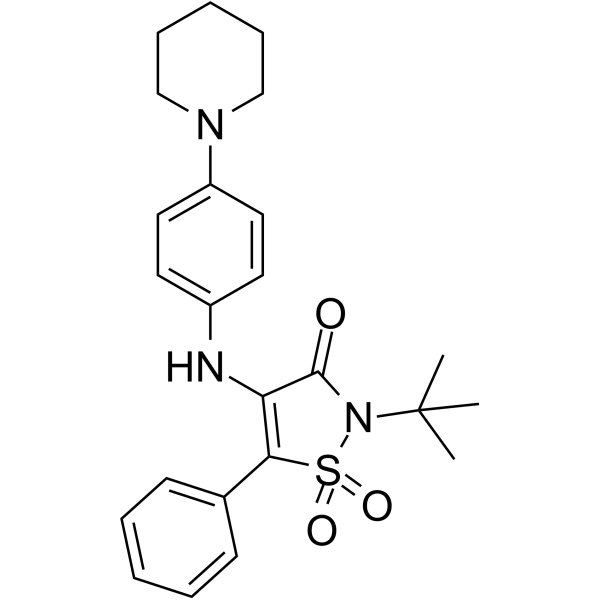
    SKLB06489 is a selective and orally active inhibitor of type I PRMT enzymes, with IC50 values of 64.55 nM (PRMT1), 4.21 nM (PRMT6), and 51.27 nM (PRMT8). SKLB06489 inhibits cell proliferation, colony formation, DNA replication, and DNA damage repair in cancer cells. SKLB06489 induces G0/G1-phase cell cycle arrest and apoptosis in cancer cells. SKLB06489 enhances intracellular cholesterol efflux via ABCA1 and ABCG1 upregulation, disrupts cholesterol metabolic homeostasis, and suppresses tumor growth in subcutaneous xenograft models. SKLB06489 can be used for the research of triple-negative breast cancer (TNBC) [1].
    SKLB06489
  • HY-181509

    Reactive Oxygen Species (ROS) Interleukin Related ATP-binding cassette (ABC) transporters Inflammation/Immunology
    TNF-α/IL-1β/IL-6-IN-1 is an anti-inflammatory agent. TNF-α/IL-1β/IL-6-IN-1 exerts anti-inflammatory effects by downregulating the expression of pro-inflammatory cytokines such as TNF-α, IL-1β and IL-6, and inhibiting the production of ROS. TNF-α/IL-1β/IL-6-IN-1 upregulates ABCG1 to promote cholesterol efflux. TNF-α/IL-1β/IL-6-IN-1 can be used in the research of inflammatory and lipid metabolic diseases such as atherosclerosis [1].
    TNF-α/IL-1β/IL-6-IN-1
  • HY-179535

    TAM Receptor Discoidin Domain Receptor TGF-β Receptor Hedgehog Cancer
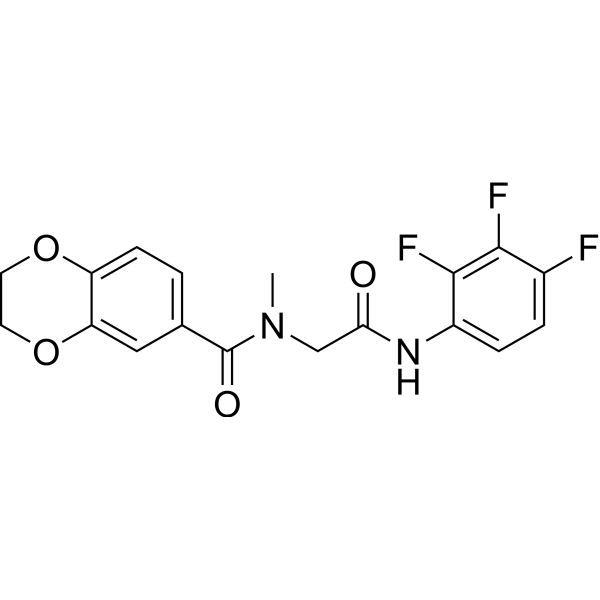
    Axl-IN-21 is an orally active and selective AXL inhibitor (Kd = 2.7 nM, IC50 = 4.0 nM). Axl-IN-21 displays kinase selectivity and retains strong activity against cancer-related mul-kinases (Mer with Kd = 1.4 nM, DDR1 with IC50 = 22.2 nM, HIPK4 with Kd = 11.0 nM and LOK with Kd =10 nM). Axl-IN-21 overcomes tumor microenvironment-driven resistance by blocking CAF-derived GAS6-induced AXL/STAT3/ABCG1 signaling, restoring chemosensitivity and inhibiting drug efflux in gastric cancer (GC). Axl-IN-21 suppresses TGF-β1-induced epithelial-mesenchymal transition (EMT), migration, and invasion in MDA-MB-231 cells. Axl-IN-21 exhibits no significant cytotoxicity in non-cancerous cells. Axl-IN-21 can be research for triple negative breast cancer and gastric cancer [1] [2] .
    Axl-IN-21

Inquiry Online

Your information is safe with us. * Required Fields.

Salutation


Country or Region *

Applicant Name *


Organization Name *

Department *


Email Address *


Product Name *

Cat. No.


Requested quantity *

Phone Number *


Remarks

Inquiry Online

Inquiry Information

Product Name:
Cat. No.:
Quantity:
MCE Japan Authorized Agent:

