1. Search Result
Search Result
Isoforms Recommended: ACSL4
Results for "

ACSL4

" in MedChemExpress (MCE) Product Catalog:

18

Inhibitors & Agonists

3

Natural
Products

1

Isotope-Labeled Compounds

2

Antibodies

3

Oligonucleotides

Targets Recommended:
Cat. No. Product Name Target Research Areas Chemical Structure
  • HY-173432

    ACSL Family Ferroptosis Neurological Disease Cancer
    LIBX-A401 is a selective long-chain acyl-CoA synthetase 4 (ACSL4) inhibitor with a human IC50 values of 0.38 μM and a Kd of 0.72 μM. LIBX-A401 binds to ACSL4 in an ATP-dependent manner, stabilizes the C-terminal domain, alters the fatty acid gate region, and interacts with residues A329 and Q302 within the fatty acid binding site. LIBX-A401 exhibits anti-ferroptosis properties in cells. LIBX-A401 can be used for the researches of cancer and parkinson's disease .
    LIBX-A401
  • HY-113167

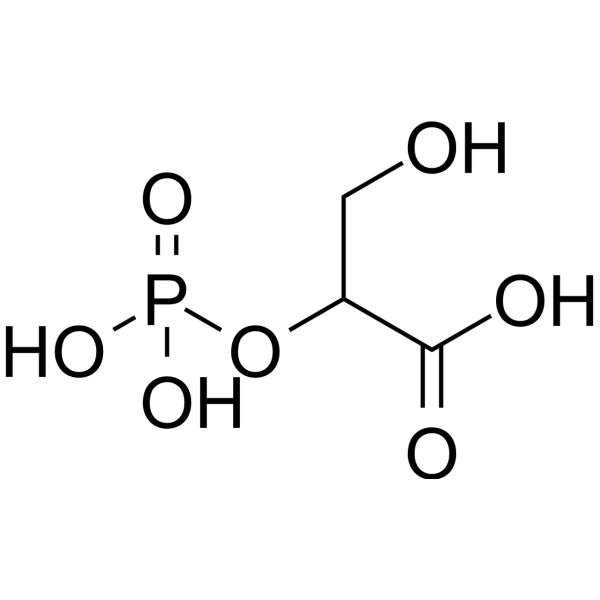
    DL-2-phosphoglyceric acid

    ACSL Family Endogenous Metabolite Ferroptosis Glutathione Peroxidase Reactive Oxygen Species (ROS) Metabolic Disease
    2-Phosphoglyceric acid (DL-2-phosphoglyceric acid) is a glycolytic substrate that is catalyzed by enolase to form phosphoenolpyruvate ester (PEP). 2-Phosphoglyceric acid inhibits the ferroptosis pathway by down-regulating ACSL4 and up-regulating GPX4, and has significant neuroprotective effects. 2-Phosphoglyceric acid reflects the overall metabolic state and flux of the cell .
    2-Phosphoglyceric acid
  • HY-175328

    ACSL Family Ferroptosis Neurological Disease Cancer
    LIBX-A403 is a potent, selective and reversible ACSL4 inhibitor with a human IC50 of 0.049 μM and a Kd of 0.29 μM. LIBX-A403 binds in the ACSL4 fatty acid pocket in an ATP-dependent manner. LIBX-A403 prevents cell ferroptosis. LIBX-A403 can be used for the researches of cancer and parkinson's disease .
    LIBX-A403
  • HY-RS16556

    Small Interfering RNA (siRNA) ACSL Family Others

    Acsl4 Mouse Pre-designed siRNA Set A contains three designed siRNAs for Acsl4 gene (Mouse), as well as a negative control, a positive control, and a FAM-labeled negative control.

    Acsl4 Mouse Pre-designed siRNA Set A
    Acsl4 Mouse Pre-designed siRNA Set A
  • HY-121246
    Fluorofenidone
    1 Publications Verification

    AKF-PD

    ACSL Family NF-κB ERK TGF-beta/Smad Inflammation/Immunology Cancer
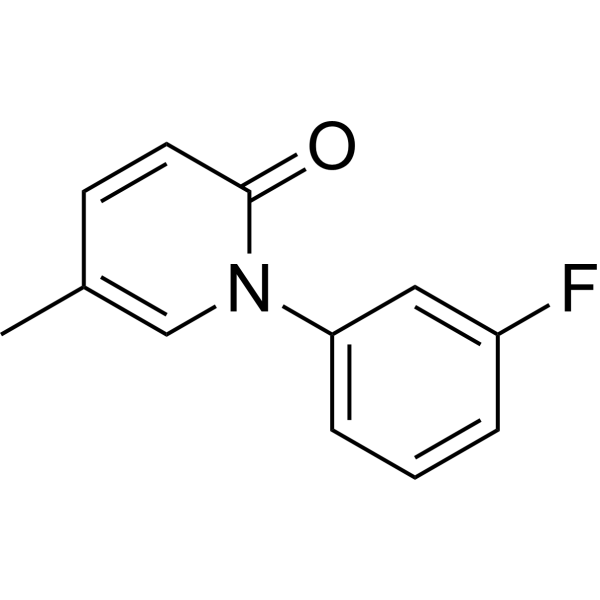
    Fluorofenidone (AKF-PD) is an orally active compound with anti-fibrotic, antioxidant, and anti-inflammatory pharmacological effects. Fluorofenidone downregulates the expression of ACSL4, upregulates GPX4 expression and inhibits the NF-κB signaling pathway to alleviate inflammation and fibrosis. Fluorofenidone ameliorates cholestasis and fibrosis by inhibiting hepatic Erk/-Egr-1 signaling and Tgfβ1/Smad pathway in mice. Fluorofenidone demonstrates protective effects against chronic lung injury in mice. Fluorofenidone can be used for the study of chronic obstructive pulmonary disease (COPD), pulmonary interstitial fibrosis (PIF) and non-small cell lung cancer (NSCLC) .
    Fluorofenidone
  • HY-175327

    ACSL Family Ferroptosis Neurological Disease Cancer
    LIBX-A402 is a selective, ATP-dependent inhibitor of ACSL4 (hACSL4, IC50=0.33 μM, Kd=3.3 μM) and an inhibitor of ferroptosis. LIBX-A402 targets the fatty acid-binding pocket of ACSL4 and prevents cells from undergoing ferroptosis. LIBX-A402 can be used in the research of cancer and Parkinson's disease .
    LIBX-A402
  • HY-RS00202

    Small Interfering RNA (siRNA) ACSL Family Others

    ACSL4 Human Pre-designed siRNA Set A contains three designed siRNAs for ACSL4 gene (Human), as well as a negative control, a positive control, and a FAM-labeled negative control.

    ACSL4 Human Pre-designed siRNA Set A
    ACSL4 Human Pre-designed siRNA Set A
  • HY-115701

    1-Stearoyl-2-15(S)-HpETE-sn-glycero-3-phosphoethanolamine; 15(S)-HpETE-SAPE; 15(S)-hydroperoxyeicostetraenoic acid-SAPE

    Ferroptosis Inflammation/Immunology
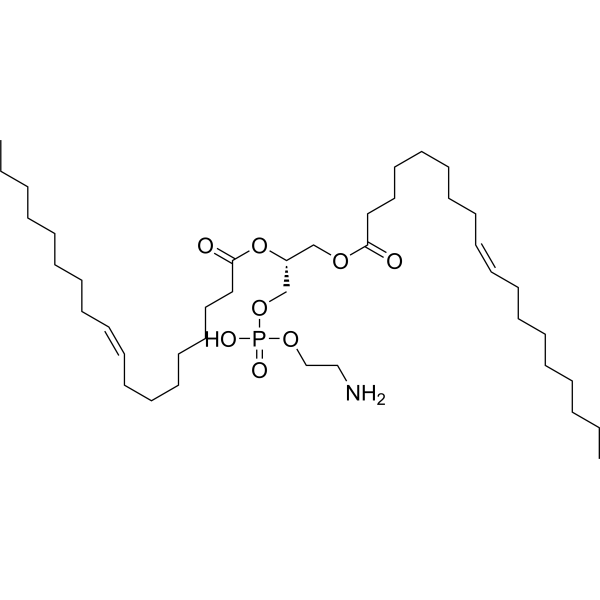
    1-Stearoyl-2-15(S)-HpETE-sn-glycero-3-Pe is a phospholipid that contains stearic acid (HY-B2219) at the sn-1 position and 15(S)-HpETE at the sn-2 position. It is produced via oxidation of 1-stearoyl-2-arachidonoyl-sn-glycero-3-Pe (SAPE) by 15-lipoxygenase (15-LO). 1-Stearoyl-2-15(S)-HpETE-sn-glycero-3-Pe (0.6 and 0.9 μM) increases ferroptotic cell death in wild-type and Acsl4 knockout Pfa1 mouse embryonic fibroblasts (MEFs) treated with the GPX4 inhibitor RSL3.
    1-Stearoyl-2-15(S)-Hpete-Sn-Glycero-3-Pe
  • HY-RS16244

    ACSL Family Small Interfering RNA (siRNA) Others

    Acsl4 Rat Pre-designed siRNA Set A contains three designed siRNAs for Acsl4 gene (Rat), as well as a negative control, a positive control, and a FAM-labeled negative control.

    Acsl4 Rat Pre-designed siRNA Set A
    Acsl4 Rat Pre-designed siRNA Set A
  • HY-174345

    ACSL Family Ferroptosis Glutathione Peroxidase Reactive Oxygen Species (ROS) Cancer
    Ferroptosis inducer-8 is a ferroptosis inducer with high selectivity for other cell death mechanism. Ferroptosis inducer-8 induces ferroptosis by affecting ACSL4, GPX4, and FTH1, thereby disrupting intracellular iron homeostasis and the GSH/GPX4 antioxidant defense system, ultimately leading to the accumulation of lipid peroxidation. Ferroptosis inducer-8 also induces ROS production. Ferroptosis inducer-8 inhibits tumor growth and can be used for research of triple-negative breast cancer (TNBC) .
    Ferroptosis inducer-8
  • HY-155852

    Ferroptosis Apoptosis ACSL Family Glutathione Peroxidase Reactive Oxygen Species (ROS) Inflammation/Immunology Cancer
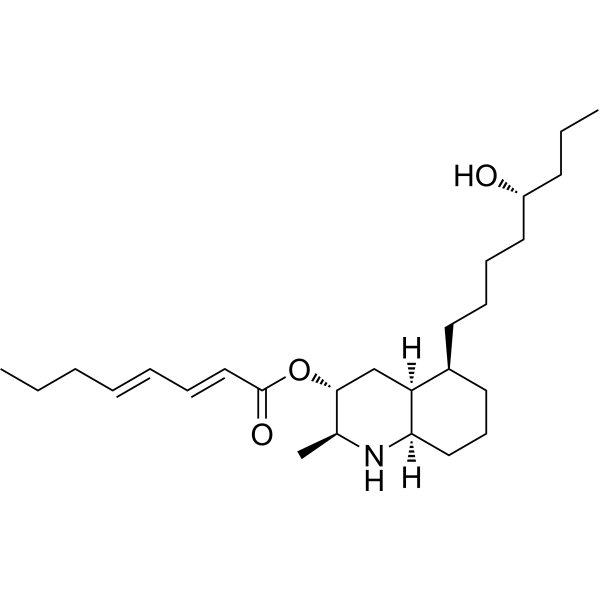
    Lepadin H is a ferroptosis inducer and apoptosis inducer with in vitro cytotoxicity and in vivo antitumor efficacy against cancer cells. Lepadin H reduces GPX4 and SLC7A11 levels, increases p53 and ACSL4 expression, drives lipid hydroperoxide production, elevates reactive oxygen species (ROS) levels, reduces cellular glutathione (GSH) levels, induces lipid peroxidation and G2/M phase cell cycle arrest, and suppresses clonogenic growth and migration of cancer cells.Lepadin H can be used for the research of melanoma .
    Lepadin H
  • HY-179384

    ACSL Family PROTACs Ferroptosis Glutathione Peroxidase Transferrin Receptor Reactive Oxygen Species (ROS) Cancer
    PROTAC FSP1 degrader 1 is a highly efficient and selective PROTAC degrader targeting FSP1. PROTAC FSP1 degrader 1 significantly induces the accumulation of intracellular lipid peroxides. PROTAC FSP1 degrader 1 exhibits synergistic induction of ferroptosis with GPX4 inhibitors. PROTAC FSP1 degrader 1 can induce ROS production. PROTAC FSP1 degrader 1 upregulates the mRNA expression of ferroptosis-related proteins (GPX4, FTH1, ACSL4, TfR1, FSP1). PROTAC FSP1 degrader 1 can be used for the study of triple-negative breast cancer .
    PROTAC FSP1 degrader 1
  • HY-175698

    ACSL Family Ferroptosis Microtubule/Tubulin COX Glutathione Peroxidase Cancer
    Ferroptosis inducer-9 is a ferroptosis inducer and colchicine site tubulin polymerization inhibitor. Ferroptosis inducer-9 inhibits MCF-7 cell growth with an IC50 of 14 nM and inhibits [ 3H]colchicine binding. Ferroptosis inducer-9 reduces expression of GPX4 and FTH, increases COX2 and ACSL4, lowers GSH, NADP+, and NADPH levels, increases LPO, MDA, and Fe(II) levels, and decreases SOD concentrations. Ferroptosis inducer-9 demonstrates significant anti-tumor efficacy in HCT116 CRC xenograft model. Ferroptosis inducer-9 can be used for the study of triple negative breast cancer (TNBC) and colorectal cancer (CRC) .
    Ferroptosis inducer-9
  • HY-155851

    Ferroptosis MDM-2/p53 Glutathione Peroxidase ACSL Family Cancer
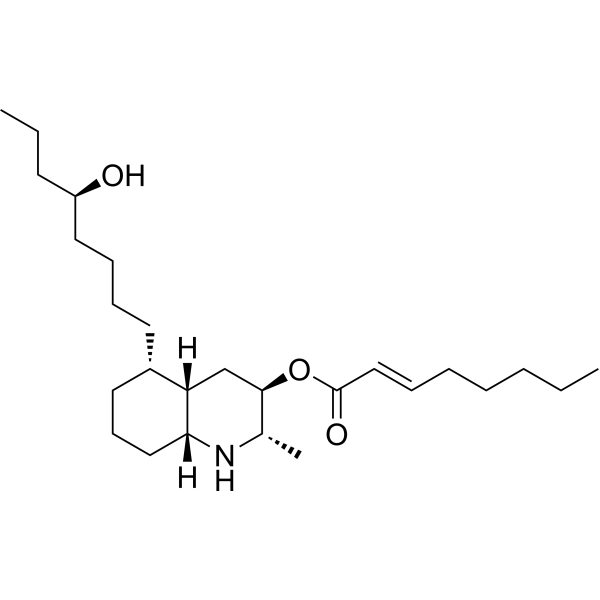
    Lepadin E is a significantly cytotoxic ferroptosis inducer that induces iron death through the classical p53-SLC7A11-GPX4 pathway. Lepadin E promoted p53 expression, decreases SLC7A11 and GPX4 levels, and leads to increased ROS and lipid peroxide production, and upregulated ACSL4 expression, thus causes cell death. Lepadin E has significant antitumor effect .
    Lepadin E
  • HY-121246R

    ACSL Family Reference Standards NF-κB ERK TGF-beta/Smad Inflammation/Immunology
    Fluorofenidone (Standard) is the analytical standard of Fluorofenidone (AKF-PD) (HY-121246). This product is intended for research and analytical applications. Fluorofenidone is an orally active compound with anti-fibrotic, antioxidant, and anti-inflammatory pharmacological effects. Fluorofenidone downregulates the expression of ACSL4, upregulates GPX4 expression and inhibits the NF-κB signaling pathway to alleviate inflammation and fibrosis. Fluorofenidone ameliorates cholestasis and fibrosis by inhibiting hepatic Erk/-Egr-1 signaling and Tgfβ1/Smad pathway in mice. Fluorofenidone demonstrates protective effects against chronic lung injury in mice. Fluorofenidone can be used for the study of chronic obstructive pulmonary disease (COPD), pulmonary interstitial fibrosis (PIF) and non-small cell lung cancer (NSCLC) .
    Fluorofenidone (Standard)
  • HY-121246S

    AKF-PD-d3

    Isotope-Labeled Compounds ACSL Family NF-κB ERK TGF-beta/Smad Inflammation/Immunology Cancer
    Fluorofenidone-d3 (AKF-PD-d3) is deuterium labeled Fluorofenidone (AKF-PD) (HY-121246). Fluorofenidone is an orally active compound with anti-fibrotic, antioxidant, and anti-inflammatory pharmacological effects. Fluorofenidone downregulates the expression of ACSL4, upregulates GPX4 expression and inhibits the NF-κB signaling pathway to alleviate inflammation and fibrosis. Fluorofenidone ameliorates cholestasis and fibrosis by inhibiting hepatic Erk/-Egr-1 signaling and Tgfβ1/Smad pathway in mice. Fluorofenidone demonstrates protective effects against chronic lung injury in mice. Fluorofenidone can be used for the study of chronic obstructive pulmonary disease (COPD), pulmonary interstitial fibrosis (PIF) and non-small cell lung cancer (NSCLC) .
    Fluorofenidone-d3
  • HY-183791A

    Ferroptosis Apoptosis Glutathione Peroxidase ACSL Family Reactive Oxygen Species (ROS) Mitochondrial Metabolism Caspase Bcl-2 Family Cancer
    Ferroptosis/apoptosis inducer-5 (Compound 14) is an orally active inducer of Ferroptosis and Apoptosis. Ferroptosis/apoptosis inducer-5 downregulates GPX4, upregulates ACSL4, promotes ROS production, activates the Caspase cascade, induces Mitochondrial dysfunction, and alters the Bcl-2/Bax balance. Ferroptosis/apoptosis inducer-5 significantly inhibits tumor growth in a pancreatic cancer xenograft mouse model. Ferroptosis/apoptosis inducer-5 can be used for the research of pancreatic cancer .
    Ferroptosis/apoptosis inducer-5
  • HY-182002

    Apoptosis IAP Cancer
    Apoptosis inducer 61 (Compound 4E) is an Apoptosis inducer. Apoptosis inducer 61 significantly downregulates the expression of BIRC3 and activates Apoptosis. Anticancer agent 313 exhibits anticancer activity against ER + breast cancer cells, triple-negative breast cancer cells, and gastric cancer cells .
    Apoptosis inducer 61

Inquiry Online

Your information is safe with us. * Required Fields.

Salutation


Country or Region *

Applicant Name *


Organization Name *

Department *


Email Address *


Product Name *

Cat. No.


Requested quantity *

Phone Number *


Remarks

Inquiry Online

Inquiry Information

Product Name:
Cat. No.:
Quantity:
MCE Japan Authorized Agent:

