1. Search Result
Search Result
Results for "

ATR kinase

" in MedChemExpress (MCE) Product Catalog:

36

Inhibitors & Agonists

1

Screening Libraries

1

Peptides

1

Isotope-Labeled Compounds

2

Antibodies

Targets Recommended:
Cat. No. Product Name Target Research Areas Chemical Structure
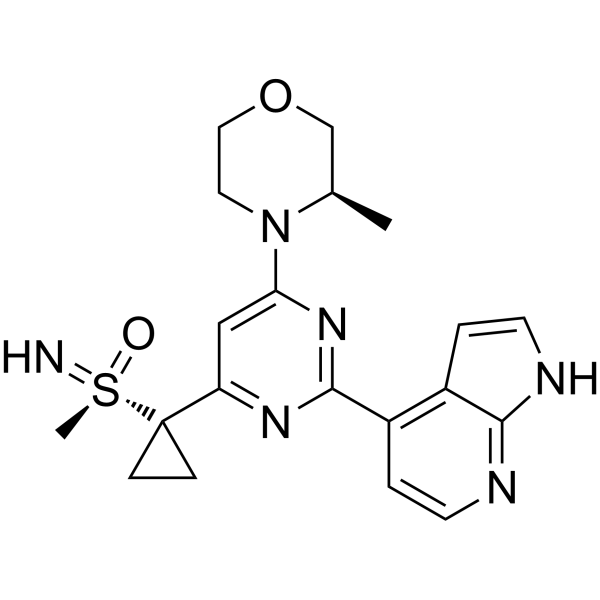
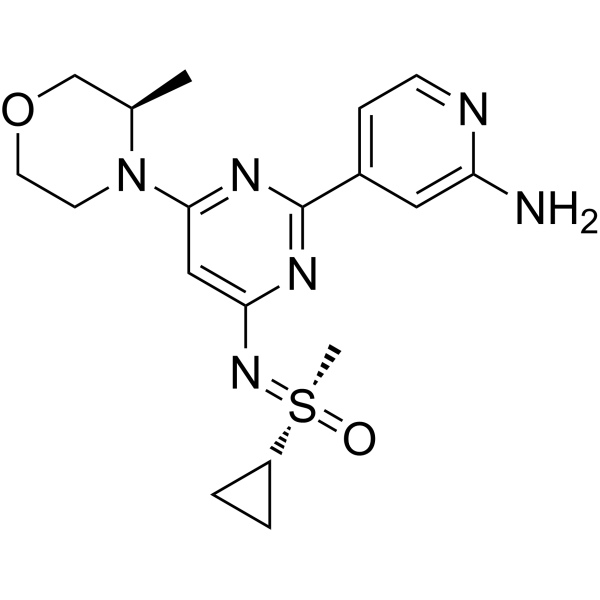
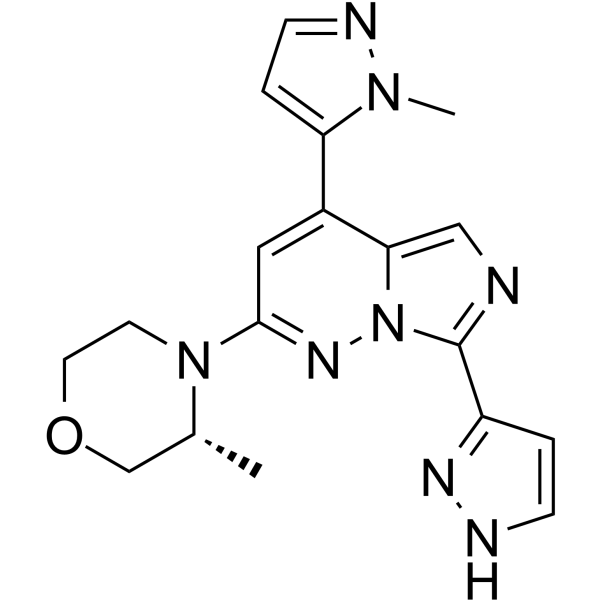
  • HY-19323
    Ceralasertib
    Maximum Cited Publications
    60 Publications Verification

    AZD6738

    ATM/ATR Cancer
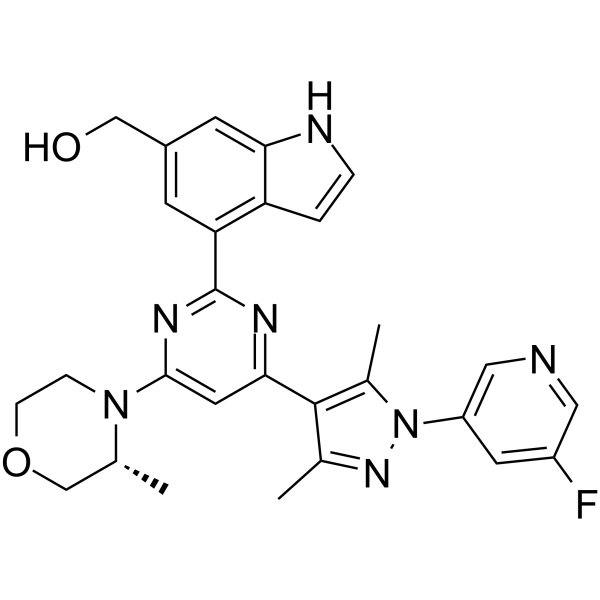
    Ceralasertib (AZD6738) is an orally active and bioavailable inhibitor of ATR kinase with an IC50 of 1 nM.
    Ceralasertib
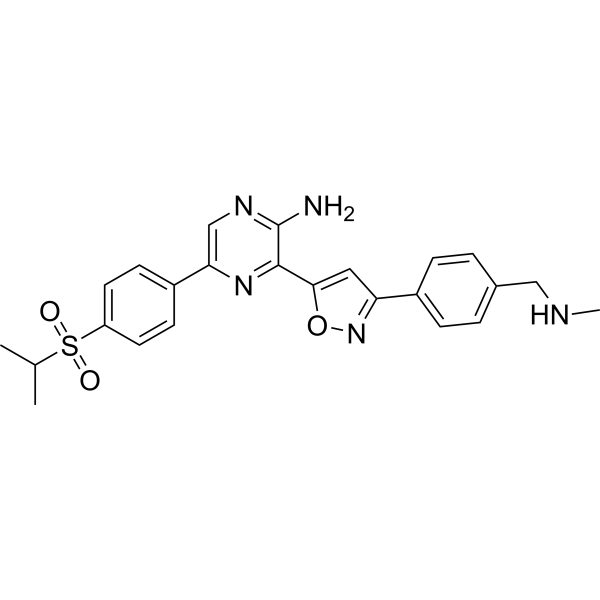
  • HY-13902
    Berzosertib
    20+ Cited Publications

    VE-822; VX-970; M6620

    ATM/ATR Apoptosis STING Caspase Infection Metabolic Disease Cancer
    Berzosertib (VE-822) is an orally active, CNS-penetrant, and selective ATR kinase inhibitor. Berzosertib blocks ATR kinase activity, abrogates G2/M cell cycle checkpoint, impairs DNA damage repair. Berzosertib induces apoptosis, inhibnits conlony migration, inhibits cell proliferation, and activates cGAS-STING axes in cancer cells. Berzosertib can be used for the research of cancers, such as head and neck squamous cell carcinoma, and colorectal cancer .
    Berzosertib
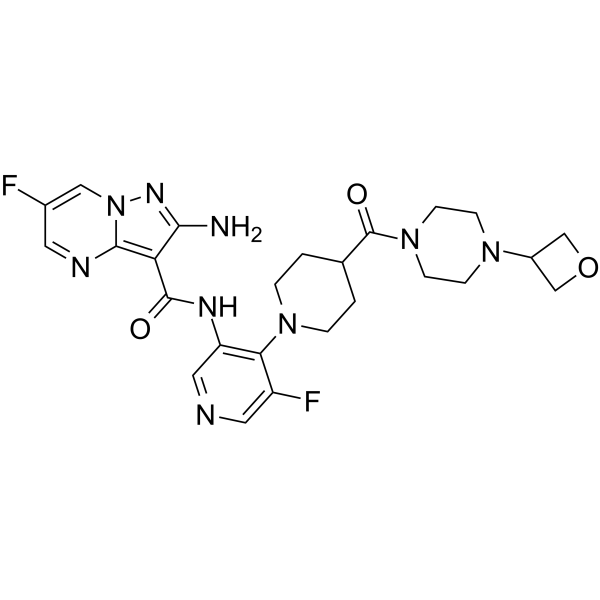
  • HY-136270
    Gartisertib
    5 Publications Verification

    VX-803; M4344; ATR inhibitor 2

    ATM/ATR Cancer
    Gartisertib (VX-803) is an ATP-competitive, orally active, and selective ATR inhibitor, with a Ki of <150 pM. Gartisertib potently inhibits ATR-driven phosphorylated checkpoint kinase-1 (Chk1) phosphorylation with an IC50 of 8 nM. Antitumor activity .
    Gartisertib
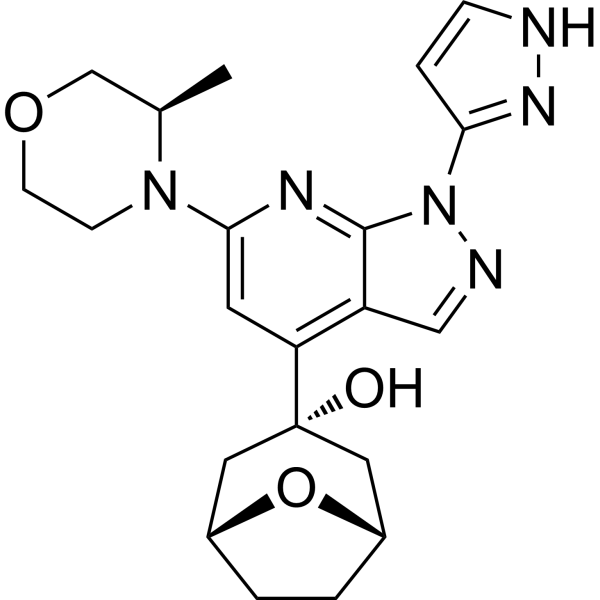
  • HY-139609
    Camonsertib
    2 Publications Verification

    RP-3500; ATR inhibitor 4

    ATM/ATR mTOR Cancer
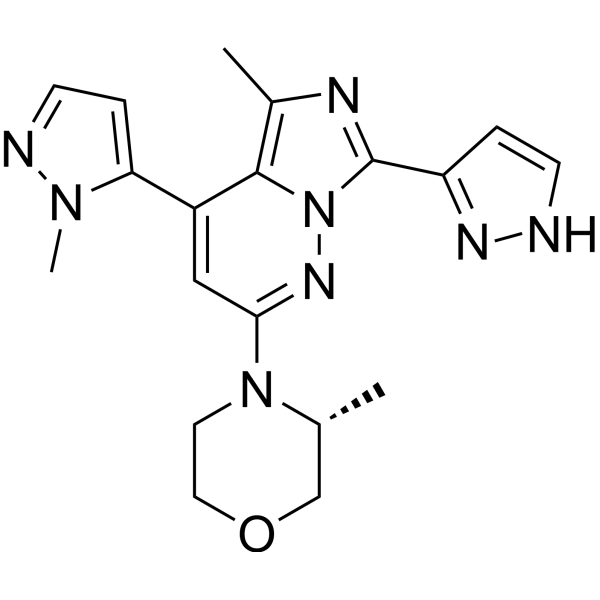
    Camonsertib (RP-3500) is an orally active, selective ATR kinase inhibitor (ATRi) with an IC50 of 1.00 nM in biochemical assays. Camonsertib shows 30-fold selectivity for ATR over mTOR (IC50=120 nM) and >2,000-fold selectivity over ATM, DNA-PK, and PI3Kα kinases. Camonsertib has potent antitumor activity .
    Camonsertib
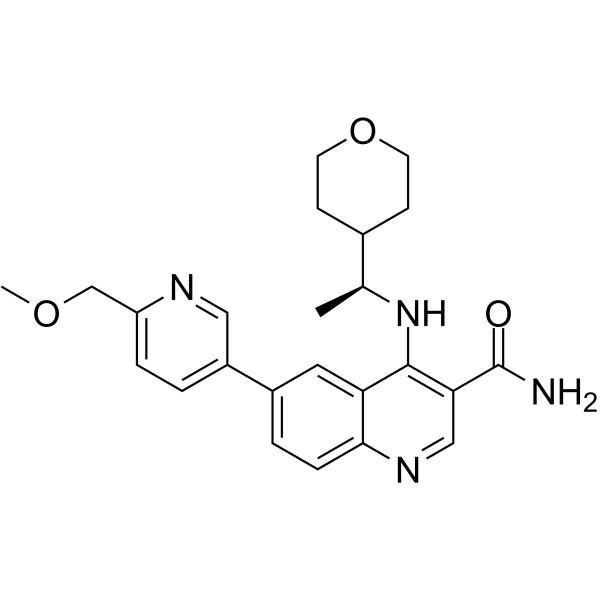
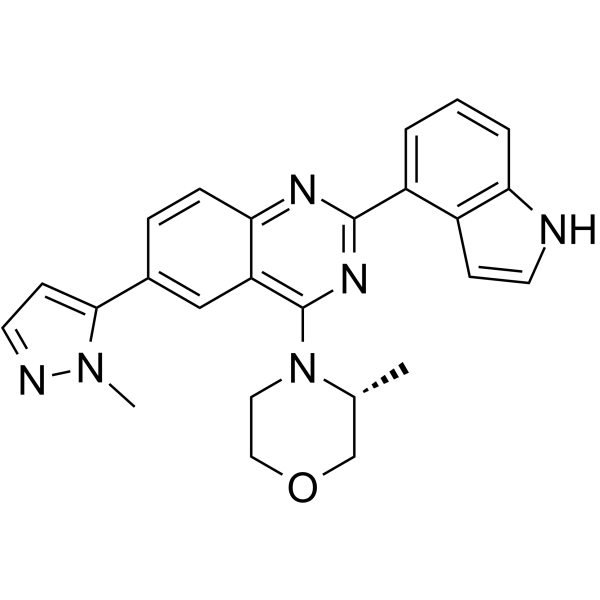
  • HY-157941

    ATM/ATR Checkpoint Kinase (Chk) DNA/RNA Synthesis Cancer
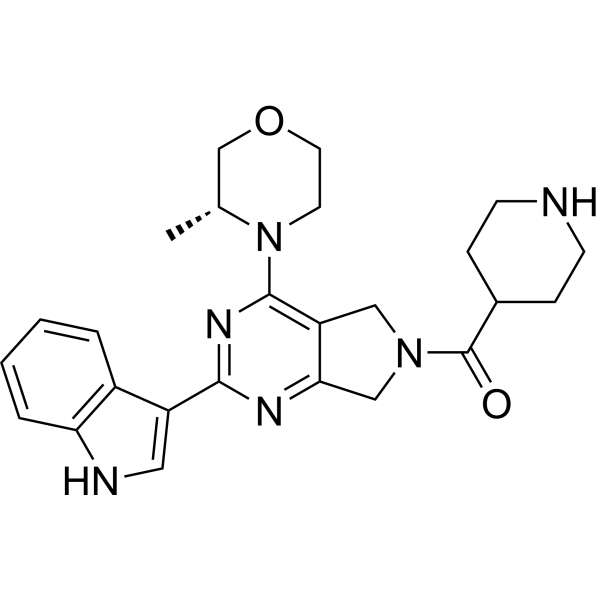
    ART0380 is a potent, selective and orally active ATR kinase inhibitor. ART0380 potently inhibits human ATR-ATRIP complex with an IC50 of 51.7 nM. ART0380 binds the ATP pocket of the ATR-ATRIP complex, blocks ATR-dependent Chk1 serine 345 phosphorylation, and induces cell cycle disorder and DNA damage. ART0380 demonstrates potent and selective antitumor activity in preclinical models with varying types of ataxia-telangiectasia mutated (ATM) gene aberrancy. ART0380 can be used for the research of cancer, such as colorectal cancer and prostate cancer .
    ART0380
  • HY-150617
    Lartesertib
    1 Publications Verification

    M4076; ATM Inhibitor-5

    ATM/ATR STING PD-1/PD-L1 Cardiovascular Disease Inflammation/Immunology Cancer
    Lartesertib (M4076) is an inhibitor of the serine/threonine protein kinase ATM with high potency. Lartesertib can inhibit the growth of multiple hematopoietic cell lines. Additionally, when combined with the ATR inhibitor Tuvusertib (HY-111451), Lartesertib can promote the death of tumor cells, activate the immune signaling pathway, and exhibit anti-tumor activity .
    Lartesertib
  • HY-161615

    PROTACs ATM/ATR Apoptosis Inflammation/Immunology Cancer
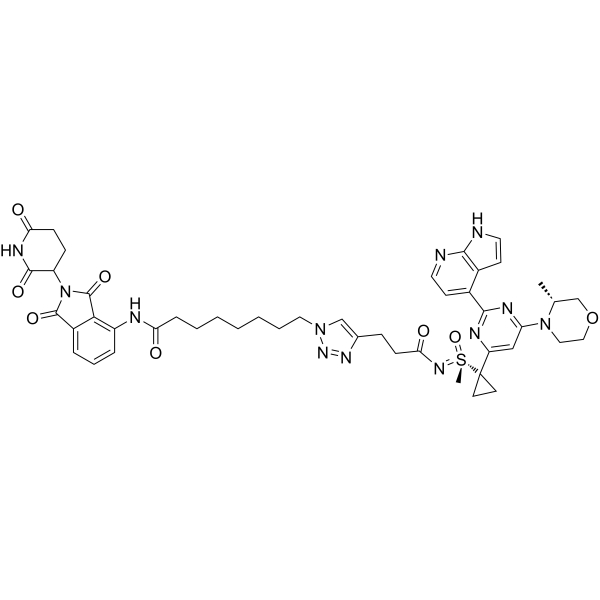
    PROTAC ATR degrader-2 is a selective ATR PROTAC degrader. PROTAC ATR degrader-2 degrades ATR in acute myeloid leukemia (AML) cells MV-4-11 and MOLM-13, with DC50 values of 22.9 nM and 34.5 nM, respectively. PROTAC ATR degrader-2 has an IC50 of 29.6 nM against ATR, and its IC50 values against ATM and PI3K are both greater than 2000 nM. PROTAC ATR degrader-2 induces apoptosis, DNA damage, and upregulates p53 expression. PROTAC ATR degrader-2 inhibits cancer cell proliferation through the kinase-independent function of ATR protein. PROTAC ATR degrader-2 is applicable to research related to acute myeloid leukemia .
    PROTAC ATR degrader-2
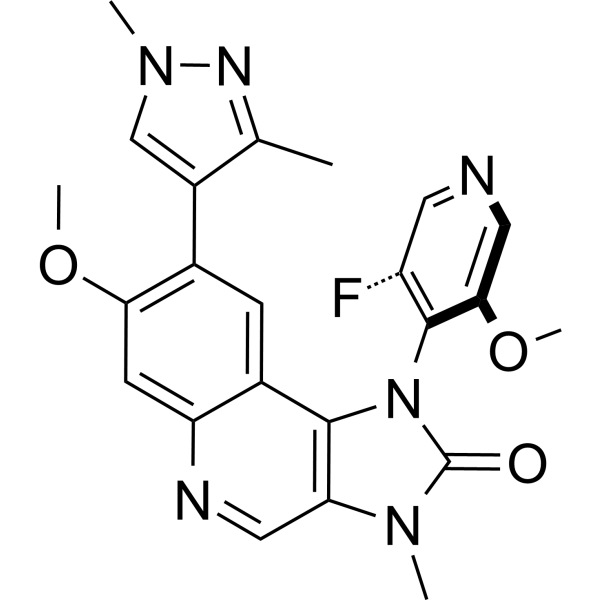
  • HY-112198

    ATM/ATR Cancer
    AZ31 is a a potent, highly selective, and orally active ATM inhibitor with an IC50 of <1.2 nM for ATM enzyme, and an IC50 of 46 nM for ATM in cell. AZ31 shows excellent selectivity over ATR (>500-fold) and excellent PIKK-family selectivity and pan-kinase selectivity. AZ31 is a potent radiosensitizer in vitro, it can be used for the research of cancer .
    AZ31
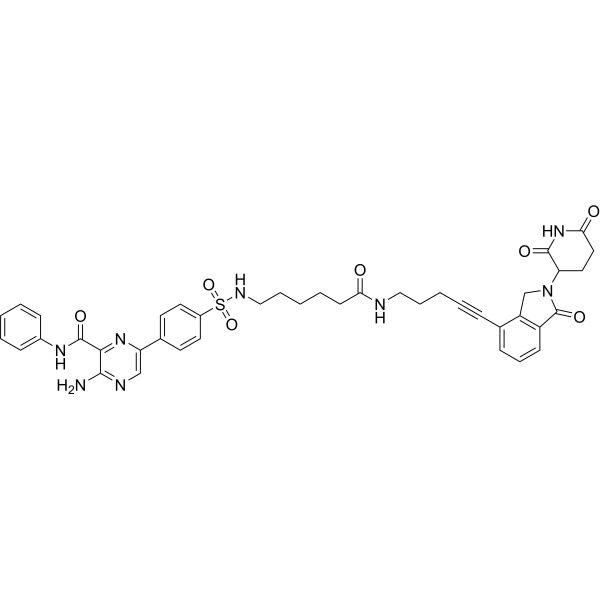
  • HY-157767

    PROTACs ATM/ATR Cancer
    Abd110 (compound 42i) is a Lenalidomide-based PROTAC ATR kinase degrader. Abd110 selectively decreases ATR and phospho-ATR without affecting related kinases ATM and DNA-PKcs .
    Abd110
  • HY-P10280

    ATM/ATR Cancer
    ATR kinase substrate peptide (ASELPASQPQPFSAKKK) is a peptide substrate for ATR protein kinase and can be used to detect ATR kinase activity .
    ATR kinase substrate peptide
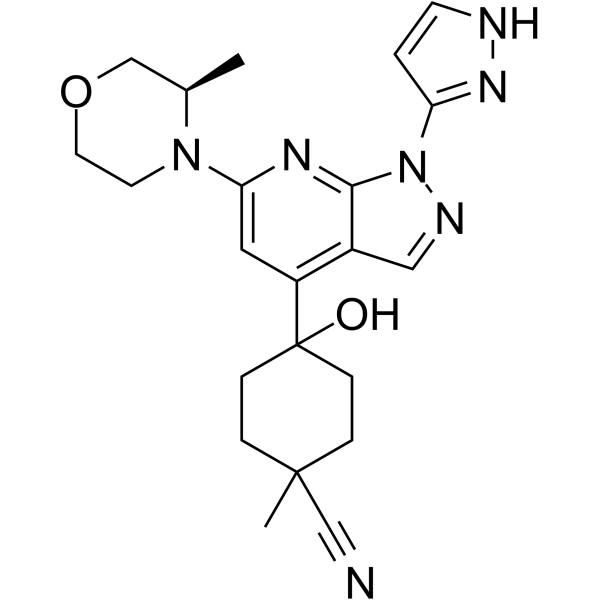
  • HY-145312

    ATM/ATR Cancer
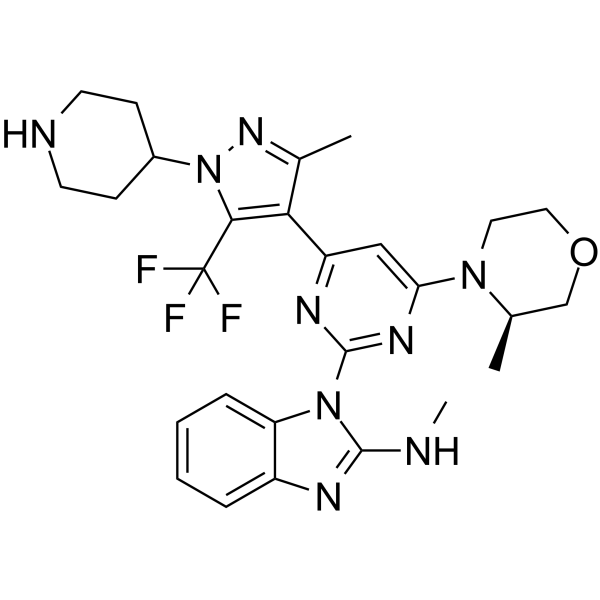
    ATR-IN-4 is a potent ATR (Ataxia telangiectasia mutated gene Rad 3-associated kinase) inhibitor. ATR-IN-4 inhibits growth of human prostate cancer cells DU145 and human lung cancer cells NCI-H460 with IC50s of 130.9 nM and 41 .33 nM, respectively. (Patent CN112142744A, compound 13) .
    ATR-IN-4
  • HY-144217

    ATM/ATR Cancer
    SKLB-197 showed an IC50 value of 0.013 μM against ATR but very weak or no activity against other 402 protein kinases. It displayed potent antitumor activity against ATM-deficent tumors both in vitro and in vivo.
    SKLB-197
  • HY-171745

    ATM/ATR Cancer
    ATR-IN-32 is an orally active ATR inhibitor. ATR-IN-32 potently inhibits the proliferation of MIA PaCa-2 cells. ATR-IN-32 exerts significant tumor growth inhibition in mice bearing LOVO and HT-29 xenografts. ATR-IN-32 can be used for the study of cancers mediated by ATR protein kinase, such as colorectal cancer, pancreatic cancer .
    ATR-IN-32
  • HY-145450

    ATM/ATR Cancer
    ATR-IN-9 is a potent inhibitor of Ataxia-telangiectasia and RAD-3-related protein kinase (ATR) extracted from patent WO2020087170A1, compound 59, has an IC50 of 10 nM .
    ATR-IN-9
  • HY-144435

    ATM/ATR Cancer
    ATR-IN-11 (Compound Hit01) is a potent inhibitor of ataxia telangiectasia and Rad3-related (ATR) kinase. ATR kinase is a key regulating protein within the DNA damage response (DDR), responsible for sensing replication stress (RS). ATR-IN-11 is a promising lead compound for subsequent agent discovery targeting ATR kinase. ATR-IN-11 has the potential for the research of cancer disease .
    ATR-IN-11
  • HY-142671

    ATM/ATR Cancer
    ATR-IN-5 is a potent inhibitor of ATR. ATR is a class of protein kinases involved in genome stability and DNA damage repair, and is a member of the PIKK family. ATR-IN-5 has the potential for the research of ATR kinase-mediated diseases such as proliferative diseases and cancer (extracted from patent CN112047938A, compound D24) .
    ATR-IN-5
  • HY-142672

    ATM/ATR Cancer
    ATR-IN-6 is a potent inhibitor of ATR. ATR is a class of protein kinases involved in genome stability and DNA damage repair, and is a member of the PIKK family. ATR-IN-6 has the potential for the research of ATR kinase-mediated diseases such as proliferative diseases and cancer (extracted from patent WO2021233376A1, compound A22) .
    ATR-IN-6
  • HY-153729

    ATM/ATR Cancer
    ATR-IN-29 is a potent and orally active ATR kinase inhibitor with an IC50 value of 1 nM. ATR-IN-29 shows antiproliferative activity .
    ATR-IN-29
  • HY-147569

    ATM/ATR Cancer
    ATR-IN-17 (compound 88) is a potent ATR kinase inhibitor. ATR-IN-17 shows good anticancer activity in LoVo cells, with an IC50 of 1 nM .
    ATR-IN-17
  • HY-147568

    ATM/ATR Cancer
    ATR-IN-16 (compound 46) is a potent ATR kinase inhibitor. ATR-IN-16 shows good anticancer activity in LoVo cells, with an IC50 of 410 nM .
    ATR-IN-16
  • HY-147566

    ATM/ATR Cancer
    ATR-IN-14 (compound 1) is a potent ATR kinase inhibitor. ATR-IN-14 inhibits ATR signaling pathways downstream CHKI protein phosphorylation, with inhibition of 98.03% at 25 nM. ATR-IN-14 shows good anticancer activity in LoVo cells, with an IC50 of 64 nM .
    ATR-IN-14
  • HY-144214

    ATM/ATR Cancer
    ATR-IN-10 is a potent and highly selective inhibitor of ataxia telangiectasia mutated and Rad3-Related (ATR) kinase with an IC50 value of 2.978 μM.
    ATR-IN-10
  • HY-147567

    ATM/ATR DNA-PK PI3K Cancer
    ATR-IN-15 (compound 1) is an orally active and potent ATR kinase inhibitor, with an IC50 of 8 nM. ATR-IN-15 also inhibits human colon tumor cells LoVo, DNA-PK and PI3K, with IC50 values of 47, 663 and 5131 nM, respectively .
    ATR-IN-15
  • HY-169930

    ATM/ATR Cancer
    ATR kinase-IN-2 (Compound I-G-27) is a ATR protein kinase inhibitor with the Ki of 0.01 ~ 1 μΜ and can be used for study of cancer .
    ATR kinase-IN-2
  • HY-169931

    ATM/ATR Cancer
    ATR kinase-IN-3 (Compound I-G-28) is a ATR protein kinase inhibitor with the Ki of 0.01 ~ 1 μΜ and can be used for study of cancer .
    ATR kinase-IN-3
  • HY-150617A

    (Rac)-M4076; (Rac)-ATM Inhibitor-5

    ATM/ATR STING PD-1/PD-L1 Cardiovascular Disease Inflammation/Immunology Cancer
    (Rac)-Lartesertib ((Rac)-M4076) is an isoform of Lartesertib (HY-150617). Lartesertib (M4076) is an inhibitor of the serine/threonine protein kinase ATM with high potency. Lartesertib can inhibit the growth of multiple hematopoietic cell lines. Additionally, when combined with the ATR inhibitor Tuvusertib (HY-111451), Lartesertib can promote the death of tumor cells, activate the immune signaling pathway, and exhibit anti-tumor activity .
    (Rac)-Lartesertib
  • HY-147565

    ATM/ATR Cancer
    ATR-IN-13 (compound A9) is a potent ATR kinase inhibitor, with an IC50 of 2 nM. ATR-IN-13 can be used for ATR kinase mediated diseases research, such as proliferative diseases and cancer .
    ATR-IN-13
  • HY-144436

    ATM/ATR Cancer
    ATR-IN-12 (Compound 5g) is a potent inhibitor of ataxia telangiectasia and Rad3-related (ATR) kinase with an IC50 value of 0.007 μM. ATR-IN-12 displays good anti-tumor activity and significantly reduces the phosphorylation level of ATR and its downstream signaling protein. ATR-IN-12 is a promising lead compound for subsequent agent discovery targeting ATR kinase .
    ATR-IN-12
  • HY-147570

    ATM/ATR Cancer
    ATR-IN-18 (compound 2) is an orally active and potent ATR kinase inhibitor, with an IC50 of 0.69 nM. ATR-IN-18 shows antiproliferative activity in LoVo cells, with an IC50 of 37.34 nM. ATR-IN-18 has anti-tumor activity .
    ATR-IN-18
  • HY-172247

    ATM/ATR Cancer
    ATR-IN-31 is a selective ATR kinase inhibitor with an IC50 of 7 nM. ATR-IN-31 does not significantly inhibit ATM kinase activity. ATR-IN-31 inhibits viability of prostate cancer cells.ATR-IN-31 can be used for the research of prostate cancer .
    ATR-IN-31
  • HY-13902A
    Berzosertib hydrochloride
    20+ Cited Publications

    VE-822 hydrochloride; VX-970 hydrochloride; M6620 hydrochloride

    ATM/ATR Apoptosis STING Caspase Neurological Disease Cancer
    Berzosertib (VE-822) hydrochloride is an orally active, CNS-penetrant, and selective ATR kinase inhibitor. Berzosertib hydrochloride blocks ATR kinase activity, abrogates G2/M cell cycle checkpoint, impairs DNA damage repair. Berzosertib hydrochloride induces apoptosis, inhibnits conlony migration, inhibits cell proliferation, and activates cGAS-STING axes in cancer cells. Berzosertib hydrochloride can be used for the research of cancers, such as head and neck squamous cell carcinoma, and colorectal cancer .
    Berzosertib hydrochloride
  • HY-181618

    ATM/ATR Cancer
    ATR-IN-33 (compound A) is a ATR kinase inhibitor that can be used in tumor research .
    ATR-IN-33
  • HY-136270S

    VX-803-d8; M4344-d8; ATR inhibitor 2-d8

    Isotope-Labeled Compounds ATM/ATR Cancer
    Gartisertib-d8 (VX-803-d8) is the deuterium labeled Gartisertib (HY-136270). Gartisertib (VX-803) is an ATP-competitive, orally active, and selective ATR inhibitor, with a Ki of <150 pM. Gartisertib potently inhibits ATR-driven phosphorylated checkpoint kinase-1 (Chk1) phosphorylation with an IC50 of 8 nM. Antitumor activity .
    Gartisertib-d8
  • HY-153658

    Cancer
    ATR-IN-27 (Compound I-G-12) is an ATR inhibitor with a Ki value greater than 0.01 μM but less than 1 μM. ATR-IN-27 sensitizes colorectal cancer cells to Cisplatin (HY-17394) .
    ATR-IN-27
  • HY-182017

    Ligands for Target Protein for PROTAC ATM/ATR Others
    ATR ligand 2 (Compound 26) is a ATR PROTAC ligand. ATR ligand 2 can be conjugated with E3 ligase Ligand (HY-W077589A) and linker to synthesize PROTAC ATR degrader-3 (HY-182016) .
    ATR ligand 2
  • HY-181786

    ATM/ATR Cancer
    ATM-IN-13 (A36) is an orally active, selective ATM kinase inhibitor with a human IC50 of 0.3 nM. ATM-IN-13 blocks the ATM-mediated DNA double-strand break repair signaling pathway, reduces the phosphorylation levels of ATM and p53, and inhibits ATM-dependent DNA damage response. ATM-IN-13 can be used in the research of colorectal cancer .
    ATM-IN-13

Inquiry Online

Your information is safe with us. * Required Fields.

Salutation


Country or Region *

Applicant Name *


Organization Name *

Department *


Email Address *


Product Name *

Cat. No.


Requested quantity *

Phone Number *


Remarks

Inquiry Online

Inquiry Information

Product Name:
Cat. No.:
Quantity:
MCE Japan Authorized Agent:

