1. Search Result
Search Result
Results for "

ATX/LPA

" in MedChemExpress (MCE) Product Catalog:

14

Inhibitors & Agonists

1

Isotope-Labeled Compounds

Cat. No. Product Name Target Research Areas Chemical Structure
  • HY-145561

    BLD-0409; PAT-409

    Phosphodiesterase (PDE) LPL Receptor Inflammation/Immunology Cancer
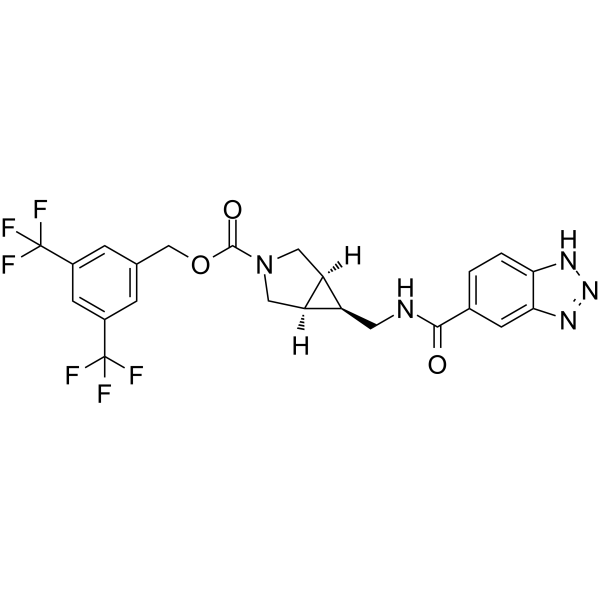
    Cudetaxestat (BLD-0409; PAT-409) is an orally active and noncompetitive autotaxin (ATX) inhibitor. Cudetaxestat inhibits the activity of ATX, reduces the production of LPA, and thereby blocks the signal transduction of the ATX-LPA axis. Cudetaxestat can still maintain nanomolar-level biochemical efficacy even when the concentration of the LPC substrate increases. Cudetaxestat can be used for the study of various diseases related to LPA including fibrosis, tumor metastasis, inflammation and autoimmune diseases, etc .
    Cudetaxestat
  • HY-124772
    BI-2545
    1 Publications Verification

    Phosphodiesterase (PDE) Inflammation/Immunology
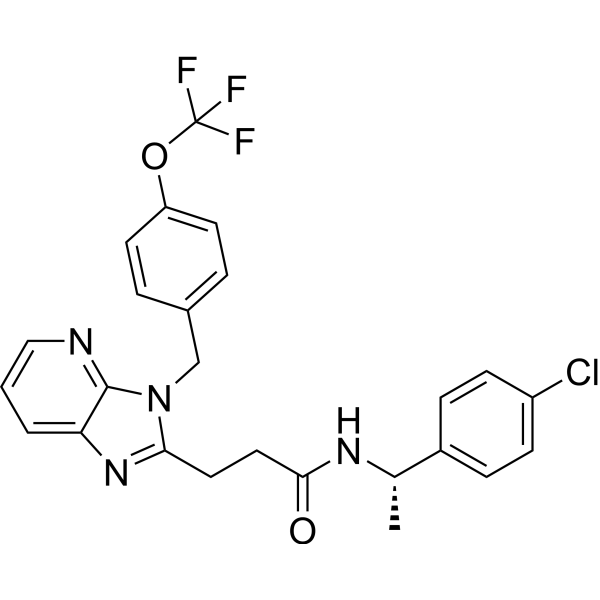
    BI-2545, a chemical probe, is a potent autotaxin (ATX) inhibitor that significantly reduces LPA, with IC50s of 2.2 nM and 3.4 nM for human ATX and rat ATX, respectively .
    BI-2545
  • HY-120797

    IOA-289

    LPL Receptor Cancer
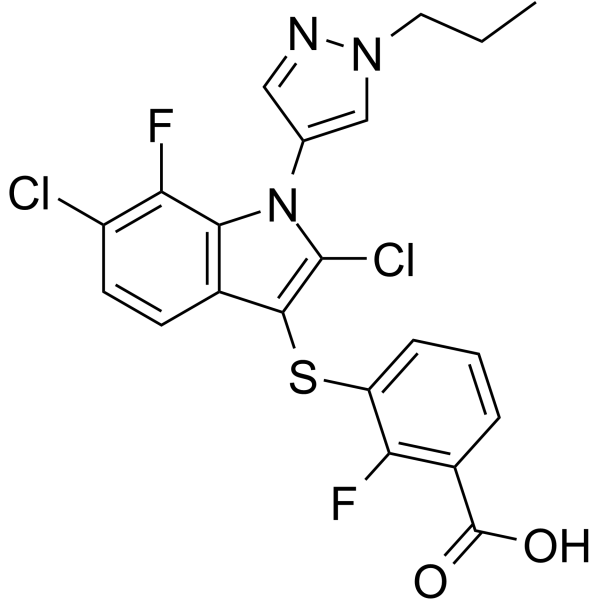
    CRT0273750 is an autotaxin (ATX) inhibitor and modulates LPA levels in plasm (IC50 = 0.014 μM). CRT0273750 can be used in ATX/LPA-dependent models of cancer .
    CRT0273750
  • HY-116100A

    Phosphodiesterase (PDE) Inflammation/Immunology
    HA-155 is a potent and selective autotaxin (ATX) inhibitor with an IC50 of 5.7 nM .
    HA155
  • HY-126233

    Phosphodiesterase (PDE) Metabolic Disease
    PAT-347 is an Autotaxin (ATX) inhibitor. ATX is a secretory enzyme that hydrolyzes lysophosphatidylcholine (LPC) and regulates lysophosphatidic acid (LPA) production in the blood .
    PAT-347
  • HY-148291

    LPL Receptor Phosphodiesterase (PDE) Cancer
    BrP-LPA sodium is a pan-opposite agent for lysophosphatidic acid (LPA). It has antagonistic activity against LPA1 (IC50 = 4520 nM), LPA2 (IC50 = 468 nM), LPA3, and LPA4. BrP-LPA sodium also has partial agonistic activity for LPA5, with its EC50 being 1282 nM. BrP-LPA sodium has ATX inhibitory activity. BrP-LPA sodium effectively inhibits the migration and invasion of breast cancer cells. BrP-LPA sodium achieves tumor regression and anti-angiogenesis in mice breast cancer xenograft model. BrP-LPA sodium can be used for the study of breast cancer .
    BrP-LPA sodium
  • HY-173509

    Phosphodiesterase (PDE) LPL Receptor Infection Cardiovascular Disease Neurological Disease Cancer
    ATX inhibitor 27 (Compound 31) is an ATX inhibitor. The IC50 values of ATX inhibitor 27 against human autotaxin (hATX) and lysophosphatidylcholine (LPC) are 13 nM and 23 nM, respectively. ATX inhibitor 27 reduces LPA levels in vivo by inhibiting ATX enzyme. ATX inhibitor 27 can be used in the study of ATX-LPA-related diseases such as inflammation, neurodegenerative diseases and cancer .
    ATX inhibitor 27
  • HY-174267S

    Phosphodiesterase (PDE) Inflammation/Immunology
    ATX-IN-2 (Compound 25) is an orally active and potent ATX inhibitor with an IC50 value of 3.27 nM. ATX-IN-2 reduces lysophosphatidic acid (LPA) secretion. ATX-IN-2 is promising for research of ATX-mediated diseases, such as inflammation, pulmonary fibrosis .
    ATX-IN-2
  • HY-160823

    2ccPA18:1 sodium

    LPL Receptor Inflammation/Immunology Cancer
    2ccPA sodium is a lysophosphatidic acid (LPA) receptor agonist. 2ccPA sodium modulates processes such as cell proliferation, migration, and apoptosis by activating LPA receptors and inhibiting autotaxin (ATX) enzyme activity. 2ccPA sodium is promising for research of cancers, inflammation, and fibrosis .
    2ccPA sodium
  • HY-126230

    Endogenous Metabolite Others
    PAT-494 is an ATX inhibitor with significant activity in biochemical and plasma assays. PAT-494 can reduce LPA levels in rat plasma through oral administration. The structure-activity relationship study of PAT-494 shows that its binding mode with ATX is novel and it can effectively occupy the hydrophobic pockets and channels of ATX .
    PAT-494
  • HY-119601

    Phosphodiesterase (PDE) Cancer
    GRI918013 (compound 1) is a selective and competitive autotaxin (ATX/NPP2) inhibitor with anti-invasive and anti-metastatic activity. GRI918013 competitively binds to ATX, blocking lipid substrates such as lysophosphatidylcholine (LPC) from entering the ATX active site, thereby inhibiting ATX-mediated hydrolysis of LPC to lysophosphatidic acid (LPA), and consequently inhibiting ATX-LPA axis-related tumor cell invasion and metastasis. GRI918013 inhibits ATX-mediated hydrolysis of the LPL substrate FS-3 (IC50=31.42 nM, Ki=12.98 nM). GRI918013 can be used in research on cancer invasion and metastasis, such as melanoma, and can also serve as a tool compound for ATX-LPA axis-related diseases such as fibrotic diseases, neuropathic pain, and cholestatic pruritus .
    GRI918013
  • HY-126233A

    Phosphodiesterase (PDE) Metabolic Disease
    PAT-347 sodium is an Autotaxin (ATX) inhibitor. ATX is a secretory enzyme that hydrolyzes lysophosphatidylcholine (LPC) and regulates lysophosphatidic acid (LPA) production in the blood .
    PAT-347 sodium
  • HY-W725737

    LPL Receptor Phosphodiesterase (PDE) Neurological Disease Cancer
    BrP-LPA is a LPA antagonist/ATX inhibitor. BrP-LPA shows pan-antagonist activity towards LPA1-4 GPCRs. BrP-LPA decreases blood vessel density. BrP-LPA dose-dependently inhibits Lysophosphatidic acid-induced head-dip counts. BrP-LPA exhibits anticancer activity against breast cancer, colon cancer, and lung cancer. BrP-LPA inhibits anxiety-like behavior .
    BrP-LPA
  • HY-179580

    PPAR Phosphodiesterase (PDE) Inflammation/Immunology
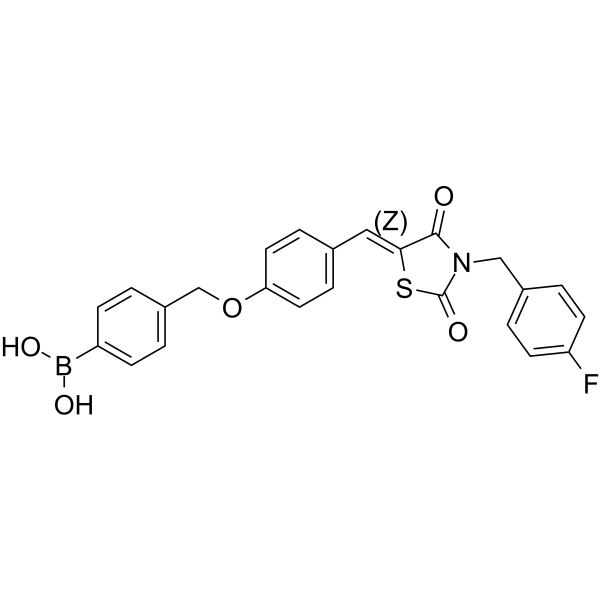
    EL244 is a dua Autotaxin (ATX) (IC50 = 50 nM) inhibitor and PPARγ (IC50 = 1.3 μM; Kd = 1.3 μM) agonist. EL244 demonstrates low cytotoxicity in human HepG2 cells (EC50 = 81.2 μM) with minimal inhibition of the cardiac hERG potassium channel (12% at 25 μM). EL244 significantly reduces pulmonary Lysophosphatidic Acid (LPA) levels, attenuates fibrosis, and restores respiratory function with limited systemic absorption in vivo. EL244 can be used for idiopathic pulmonary fibrosis and interstitial lung disease (ILD) research .
    EL244

Inquiry Online

Your information is safe with us. * Required Fields.

Salutation


Country or Region *

Applicant Name *


Organization Name *

Department *


Email Address *


Product Name *

Cat. No.


Requested quantity *

Phone Number *


Remarks

Inquiry Online

Inquiry Information

Product Name:
Cat. No.:
Quantity:
MCE Japan Authorized Agent:

