1. Search Result
Search Result
Results for "

BRCA2

" in MedChemExpress (MCE) Product Catalog:

41

Inhibitors & Agonists

1

Screening Libraries

1

Biochemical Assay Reagents

1

Peptides

4

Recombinant Proteins

2

Isotope-Labeled Compounds

3

Antibodies

3

Oligonucleotides

Cat. No. Product Name Target Research Areas Chemical Structure
  • HY-10617A
    Rucaparib
    Maximum Cited Publications
    47 Publications Verification

    AG014699; PF-01367338

    PARP Cancer
    Rucaparib (AG014699) is an orally active, potent inhibitor of PARP proteins (PARP-1, PARP-2 and PARP-3) with a Ki of 1.4 nM for PARP1. Rucaparib is a modest hexose-6-phosphate dehydrogenase (H6PD) inhibitor. Rucaparib has the potential for castration-resistant prostate cancer (CRPC) research [2] .
    Rucaparib
  • HY-10617
    Rucaparib phosphate
    45+ Cited Publications

    AG-014699 phosphate; PF-01367338 phosphate

    PARP Cancer
    Rucaparib (AG014699) phosphate is an orally active, potent inhibitor of PARP proteins (PARP-1, PARP-2 and PARP-3) with a Ki of 1.4 nM for PARP1. Rucaparib phosphate is a modest hexose-6-phosphate dehydrogenase (H6PD) inhibitor. Rucaparib phosphate has the potential for castration-resistant prostate cancer (CRPC) research [2] .
    Rucaparib phosphate
  • HY-177512

    FLAP Cancer
    MSC778 is an effective and orally active flap endonuclease 1 (FEN1) inhibitor with an IC50 of 3 nM and a KD of 2.9 nM. MSC778 exhibits 145-fold, 516-fold, and 65-fold selectivity over EXO1, GEN1, and XPG, respectively. MSC778 selectively kills BRCA2-deficient cells and potentiates the activity of Niraparib (HY-10619) to induce tumor stasis in a BRCA2 KO DLD-1 mouse xenograft. MSC778 can be used in the research of colorectal cancer .
    MSC778
  • HY-124691
    D-I03
    3 Publications Verification

    DNA/RNA Synthesis Cancer
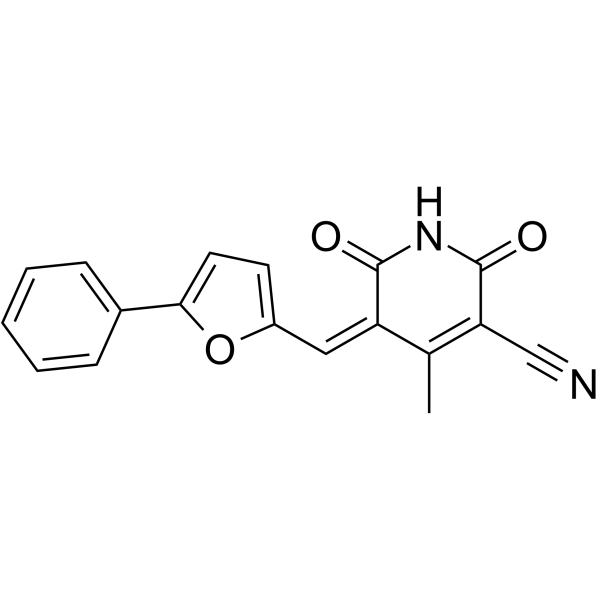
    D-I03 is a selective RAD52 inhibitor with a Kd of 25.8 μM. D-I03 specifically inhibits RAD52-dependent single-strand annealing (SSA) and D-loop formation with IC50s of 5 μM and 8 μM, respectively. D-I03 suppresses growth of BRCA1- and BRCA2-deficient cells and inhibits formation of damage-induced RAD52 foci, but does not effect on RAD51 foci induced by Cisplatin [2].
    D-I03
  • HY-122639
    ZINC05007751
    3 Publications Verification

    NEKs Cancer
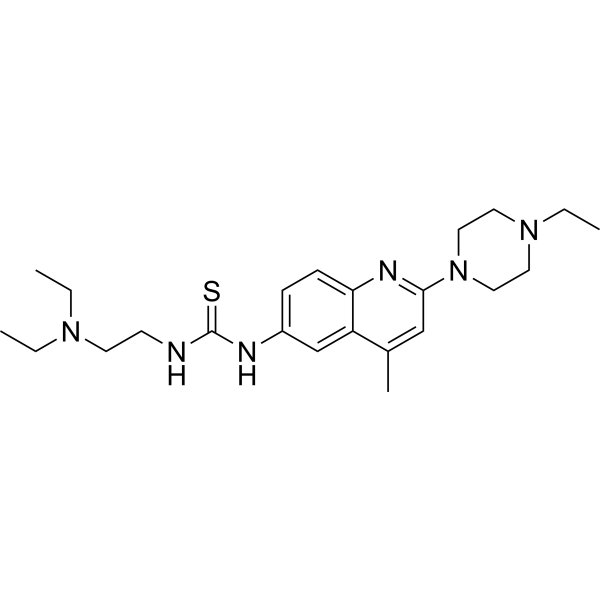
    ZINC05007751 is a potent NIMA-related kinase NEK6 inhibitor with an IC50 of 3.4 μM. ZINC05007751 shows antiproliferative activity against a panel of human cancer cell lines, and displays a synergistic effect with Cisplatin and Paclitaxel in a BRCA2 mutated ovarian cancer cell line. ZINC05007751 is very selective against NEK1 and NEK6 with no significant activity was observed against NEK2, NEK7, and NEK9 .
    ZINC05007751
  • HY-150147
    CAM833
    1 Publications Verification

    RAD51 Apoptosis Cancer
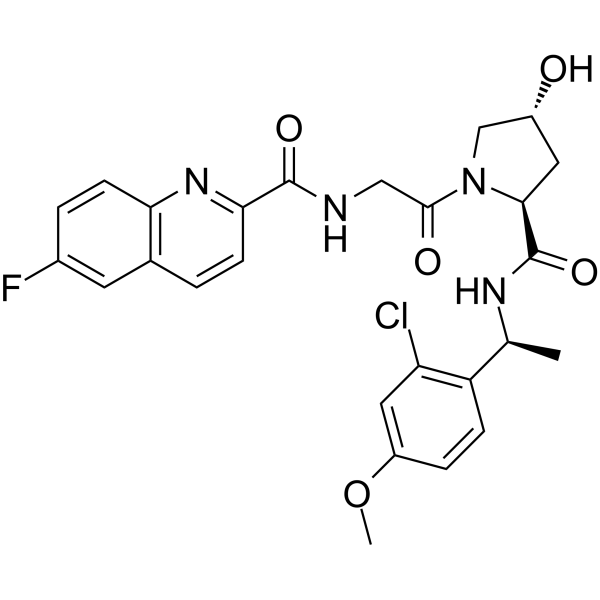
    CAM833 is a potent orthosteric inhibitor of the interaction between BRCA2 and RAD51 with a Kd of 366 nM against the ChimRAD51 protein. CAM833 also inhibits RAD51 oligomerization. CAM833 increases the progression of G2/M-arrested cells into apoptosis .
    CAM833
  • HY-102003
    Rucaparib monocamsylate
    35+ Cited Publications

    AG014699 monocamsylate; PF-01367338 monocamsylate

    PARP Cancer
    Rucaparib (AG014699) monocamsylate is an orally active, potent inhibitor of PARP proteins (PARP-1, PARP-2 and PARP-3) with a Ki of 1.4 nM for PARP1. Rucaparib monocamsylate is a modest hexose-6-phosphate dehydrogenase (H6PD) inhibitor. Rucaparib monocamsylate has the potential for castration-resistant prostate cancer (CRPC) research [2] .
    Rucaparib monocamsylate
  • HY-151462
    RP-6685
    3 Publications Verification

    DNA/RNA Synthesis Cancer
    RP-6685 is a potent, selective and orally active DNA polymerase theta (Polθ) inhibitor with an IC50 value of 5.8 nM (PicoGreen assay). RP-6685 shows antitumor efficacy in mouse tumor xenograft model . RP-6685 is a click chemistry reagent, it contains an Alkyne group and can undergo copper-catalyzed azide-alkyne cycloaddition (CuAAc) with molecules containing Azide groups.
    RP-6685
  • HY-162706
    BSJ-5-63
    1 Publications Verification

    PROTACs CDK Cancer
    BSJ-5-63 is a potent CDK12, CDK7, CDK9 PROTAC degrader. BSJ-5-63 BSJ-5-63 decreases the protein expression of CDK12, CDK7, CDK9, RNAPII, Cyclin K. BSJ-5-63 decreases the mRNA expression of BRCA1, BRCA2. BSJ-5-63 shows anticancer activity and has the potential for the research of prostate cancer (Pink: ligand for target protein (HY-150948); black: linker (HY-W140827); Blue: E3 ligase ligand (HY-112078)) .
    BSJ-5-63
  • HY-148183

    RAD51 Cancer
    Homologous recombination-IN-1 is a novel RAD51-BRCA2 protein-protein interaction inhibitor (EC50=19 μM). Homologous recombination-IN-1 can interfere with homologous recombination .
    Homologous recombination-IN-1
  • HY-170844

    Endonuclease Cancer
    MU147 is an MRE11 nuclease inhibitor and chemical probe with anticancer activity, which is lethal to Ehrlich ascites tumor cells both in vitro and in vivo. MU147 also eliminates the double-strand break repair mechanism dependent on the MRE11 nuclease activity without impairing the activation of ATM. MU147 also impairs the degradation of nascent strands of stalled replication FOX and selectively affects brca2-deficient cells .
    MU147
  • HY-158346

    DNA/RNA Synthesis Cancer
    RP-2119 is an orally bioactive Polymerase Theta (Polθ) inhibitor, with an IC50 of 0.7 nM against human Polθ ATPase. RP-2119 reduces Polθ activity and exerts antiproliferative effects in BRCA2-deficient cancer cells. RP-2119 exhibits antitumor activity in BRCA2-deficient cancer cell xenograft mouse models . RP-2119 can be used for the research of cancer and homologous recombination-deficient cancers, including brca1/brca2-mutant cancers and shld2-mutant cancers [2].
    RP-2119
  • HY-168993

    Reactive Oxygen Species (ROS) Inflammation/Immunology Cancer
    BRCA2-IN-2 (Compound 3i) has a strong binding affinity to the BRCA2 protein. BRCA2-IN-2 can inhibit the proliferation of breast cancer cells and scavenge DPPH free radicals. BRCA2-IN-2 has anti-tumor and antioxidant activities .
    BRCA2-IN-2
  • HY-170845

    Endonuclease Cancer
    MU1409 is an inhibitor of MRE11 nuclease with an IC50 of 12.1 μM. Additionally, MU1409 also inhibits FEN1 and EXO1, with IC50 values of 24.2 and 176.4 μM, respectively. MU1409 affects DNA repair in cells, preventing the degradation of stalled replication forks in BRCA2-deficient cells, making it a promising candidate for research on BRCA2 mutation-induced cancers .
    MU1409
  • HY-161431

    DNA/RNA Synthesis Cancer
    RTx-152 traps Polθ on DNA and is an allosteric Polθ-pol inhibitor (IC50: 6.2 nM). RTx-152 selectively kills HR-deficient cancer cells, and suppresses PARP inhibitor resistance in multiple genetic backgrounds, including homologous recombination (HR)-proficient cells. RTx-152 selectively kills BRCA2-null cells .
    RTx-152
  • HY-40041

    Biochemical Assay Reagents Drug Intermediate Cancer
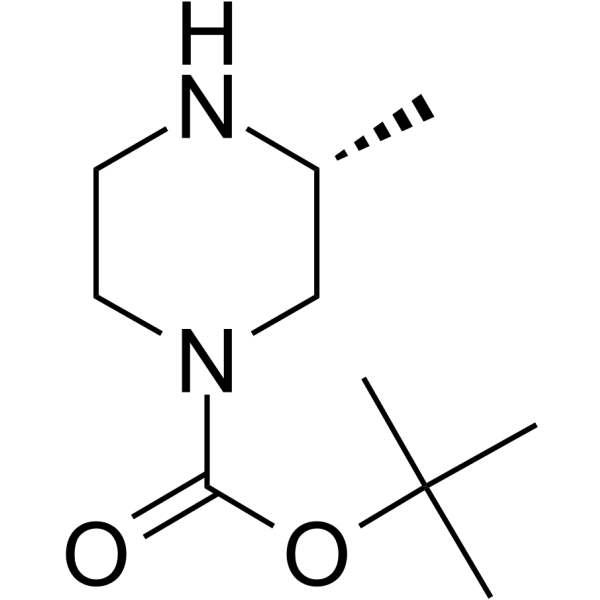
    (R)-1-Boc-3-methyl-piperazine (Compound I3-1) is a chemical intermediate. (R)-1-Boc-3-methyl-piperazine can be used for the preparation of Compound I3. Compound I3 exhibits anticancer activity against colorectal adenocarcinoma with BRCA2 gene deletion .
    (R)-1-Boc-3-methyl-piperazine
  • HY-115552

    PARP Cancer
    Simmiparib is a highly potent and orally active PARP1 and PARP2 inhibitor with IC50 values of 1.75 nM and 0.22 nM, respectively. Simmiparib has more potent PARP1/2 inhibition than its parent Olaparib (HY-10162). Simmiparib induces DNA double-strand breaks (DSB) accumulation and G2/M arrest in homologous recombination repair (HR)-deficient cells, thereby inducing apoptosis. Simmiparib exhibits remarkable anticancer activities in cells and nude mice bearing xenografts .
    Simmiparib
  • HY-135782

    Poly(ADP-ribose) Glycohydrolase (PARG) Cancer
    iso-ADP ribose is the small-molecule ligand for protein nucleic acid modification, comprising parts of two consecutive ADP-ribosyl units within the PAR chain. iso-ADP ribose specifically binds WWE, FHA and OB-fold domains, enabling PAR-dependent functional responses like ubiquitylation and supporting DNA damage signaling and repair. iso-ADP ribose can be used for cancer research .
    iso-ADP ribose
  • HY-RS01594

    Small Interfering RNA (siRNA) Others

    BRCA2 Human Pre-designed siRNA Set A contains three designed siRNAs for BRCA2 gene (Human), as well as a negative control, a positive control, and a FAM-labeled negative control.

    BRCA2 Human Pre-designed siRNA Set A
    BRCA2 Human Pre-designed siRNA Set A
  • HY-RS23267

    Small Interfering RNA (siRNA) Others

    Brca2 Rat Pre-designed siRNA Set A contains three designed siRNAs for Brca2 gene (Rat), as well as a negative control, a positive control, and a FAM-labeled negative control.

    Brca2 Rat Pre-designed siRNA Set A
    Brca2 Rat Pre-designed siRNA Set A
  • HY-162104

    RAD51 Cancer
    BRCA2-RAD51-IN-1 (Compound 46) is a BRCA2-RAD51 inhibitor with an EC50 value of 28 μM. BRCA2-RAD51-IN-1 has antitumor activity .
    BRCA2-RAD51-IN-1
  • HY-153338

    DNA/RNA Synthesis Apoptosis Cancer
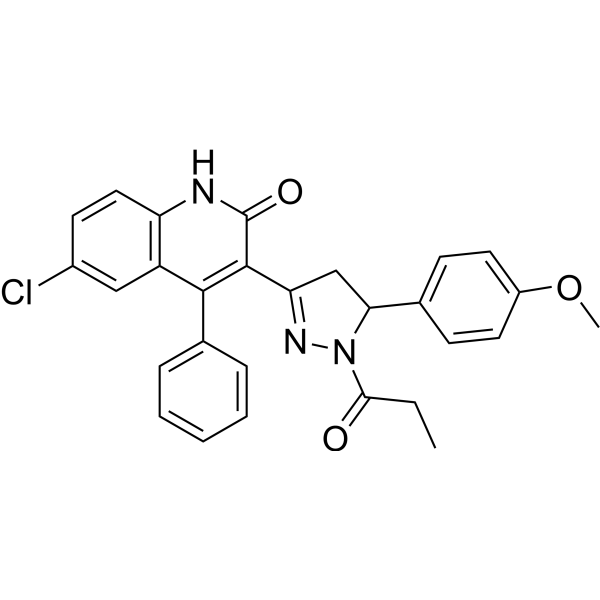
    C791-0064 is a RAD52 inhibitor. C791-0064 specifically binds to RAD52 and disrupts its single-strand annealing activity. C791-0064 specifically inhibits the proliferation of cancer cells with BRCA2 deficiency, inducing DNA damage and apoptosis (apoptosis). C791-0064 can be used for the study of BRCA mutation-related cancers (such as breast cancer and ovarian cancer) .
    C791-0064
  • HY-173345

    RAD51 Cancer
    BRCA2-RAD51-IN-2 (compound S-35d) is a BRCA2-RAD51 inhibitor and inhibits homologous recombination repair in combination with 10 µM olaparib (HY-10162) .
    BRCA2-RAD51-IN-2
  • HY-179219S

    DNA/RNA Synthesis Cancer
    RTx-303 is an orally active, selective DNA polymerase θ (Polθ) inhibitor (IC50 = 5.1 nM). RTx-303 exhibits significantly high cellular potency and strongly potentiates PARPi in BRCA1/2 mutant cells and patient-derived xenograft models. RTx-303 can be used for the study of BRCA2-mutated breast cancer .
    RTx-303
  • HY-122583

    RAD51 Cancer
    D-G23 is a selective RAD52 inhibitor. D-G23 disrupts RAD52-mediated DNA repair pathways and suppresses the growth of BRCA1- and BRCA2-deficient cancer cells. D-G23 is promising for research of homologous recombination-related cancers, such as hereditary breast cancer and ovarian cancer caused by BRCA1/2 mutations .
    D-G23
  • HY-150958

    RAD51 Cancer
    RAD51-IN-8, a new RAD51 binder, is a RAD51-BRCA2 inhibitor that inhibits the RAD51 BRCA2 protein protein interaction. RAD51-IN-8 also is a protein−protein interaction (PPI) inhibitor. RAD51-IN-8 has inhibitory activity for H4A4 with an EC50 value of 19 μM .
    RAD51-IN-8
  • HY-RS16825

    Small Interfering RNA (siRNA) Others

    Brca2 Mouse Pre-designed siRNA Set A contains three designed siRNAs for Brca2 gene (Mouse), as well as a negative control, a positive control, and a FAM-labeled negative control.

    Brca2 Mouse Pre-designed siRNA Set A
    Brca2 Mouse Pre-designed siRNA Set A
  • HY-173151

    Reactive Oxygen Species (ROS) Cancer
    BRCA2-IN-1 (Compound 3j) is a potential BRCA2 inhibitor that exhibits antiproliferative activity against the breast cancer MCF-7 cell lines. BRCA2-IN-1 also demonstrates DPPH radical scavenging ability, with an IC50 of 12.36 µM .
    BRCA2-IN-1
  • HY-P10516

    DNA/RNA Synthesis RAD51 Cancer
    BRC4 peptide is a specific peptide in BRCA2 protein that interacts with RAD51 protein to help repair broken DNA chains. BRC4 peptide can be used to study DNA repair mechanisms and cancer occurrence .
    BRC4 peptide
  • HY-102003A

    AG014699 camsylate; PF-01367338 camsylate

    PARP Cancer
    Rucaparib (AG014699) camsylate is an orally active, potent inhibitor of PARP proteins (PARP-1, PARP-2 and PARP-3) with a Ki of 1.4 nM for PARP1. Rucaparib camsylate is a modest hexose-6-phosphate dehydrogenase (H6PD) inhibitor. Rucaparib camsylate has the potential for castration-resistant prostate cancer (CRPC) research [2] .
    Rucaparib camsylate
  • HY-135782A

    Poly(ADP-ribose) Glycohydrolase (PARG) Cancer
    iso-ADP ribose TEA is the small-molecule ligand for protein nucleic acid modification, comprising parts of two consecutive ADP-ribosyl units within the PAR chain. iso-ADP ribose TEA specifically binds WWE, FHA and OB-fold domains, enabling PAR-dependent functional responses like ubiquitylation and supporting DNA damage signaling and repair. iso-ADP ribose TEA can be used for cancer research .
    iso-ADP ribose TEA
  • HY-181561

    RAD51 Cancer
    BRCA2-RAD51-IN-3 is a RAD51-BRCA2 protein-protein interaction inhibitor with an EC50 of 29.35 μM and a Kd of 75.14 μM. BRCA2-RAD51-IN-3 blocks RAD51-BRCA2 binding, impairs homologous recombination in cancer cells, and induces synthetic lethality. BRCA2-RAD51-IN-3 acts in human pancreatic cancer cells and shows no activity in normal pancreatic cells. BRCA2-RAD51-IN-3 can be used for the research of pancreatic cancer .
    BRCA2-RAD51-IN-3
  • HY-168094

    PARP Cancer
    PARP1-IN-30 (Compound 3) is a specific and potent PARP1 inhibitor with cytotoxicity. PARP1-IN-30 allows precise inhibition of PARP1 in tumor cells with breast cancer 1 protein (BRCA1) or BRCA2 deficiencies. PARP1-IN-30 is promising for research of cancers .
    PARP1-IN-30
  • HY-155766

    PARP Apoptosis Cancer
    PARP1-IN-14 (compound 19k) is a potent PARP1 inhibitor, with an IC50 of 0.6 ± 0.1 nM. PARP1-IN-14 exhibits antiproliferative effect against both MDA-MB-436 (BRCA1 −/−) and Capan-1 (BRCA2 −/−) cells with IC50 values below 0.3 nM .
    PARP1-IN-14
  • HY-10617AR

    AG014699 (Standard); PF-01367338 (Standard)

    Reference Standards PARP Cancer
    Rucaparib (Standard) is the analytical standard of Rucaparib. This product is intended for research and analytical applications. Rucaparib (AG014699) is an orally active, potent inhibitor of PARP proteins (PARP-1, PARP-2 and PARP-3) with a Ki of 1.4 nM for PARP1. Rucaparib is a modest hexose-6-phosphate dehydrogenase (H6PD) inhibitor. Rucaparib has the potential for castration-resistant prostate cancer (CRPC) research [2] .
    Rucaparib (Standard)
  • HY-163816

    Cytochrome P450 Cancer
    Antiproliferative agent-53-d3 (Compound C1) is an inhibitor for theta-mediated end joining (TMEJ) in HEK293 cell with an IC50 of 0.14 µM. Antiproliferative agent-53-d3 is the inhibitor for CYP2C19 and CYP2C9 with IC50 of 0.77 and 3.1 µM. Antiproliferative agent-53-d3 inhibits the proliferation of DNA repair-compromised cells, with IC50 of 8.1 µM for BRCA2 -/- DLD-1. Antiproliferative agent-53-d3 exhibits good pharmacokinetic characteristics in CD-1 mice .
    Antiproliferative agent-53-d3
  • HY-10617R

    AG-014699 phosphate (Standard); PF-01367338 phosphate (Standard)

    Reference Standards PARP Cancer
    Rucaparib (phosphate) (Standard) is the analytical standard of Rucaparib (phosphate). This product is intended for research and analytical applications. Rucaparib (AG014699) phosphate is an orally active, potent inhibitor of PARP proteins (PARP-1, PARP-2 and PARP-3) with a Ki of 1.4 nM for PARP1. Rucaparib phosphate is a modest hexose-6-phosphate dehydrogenase (H6PD) inhibitor. Rucaparib phosphate has the potential for castration-resistant prostate cancer (CRPC) research [2] .
    Rucaparib phosphate (Standard)
  • HY-181557

    DNA Alkylator/Crosslinker DNA/RNA Synthesis Apoptosis Cancer
    SY-589 is an orally active DNA polymerase Polθ helicase domain inhibitor (IC50=2.29 nM) and DNA damage inducer. SY-589 inhibits the ATPase activity of the Polθ helicase domain and blocks the Polθ-mediated microhomology-mediated end joining (MMEJ) DNA repair pathway (IC50=0.85 nM). SY-589 also induces the accumulation of DNA double-strand breaks by increasing γ-H2AX levels. SY-589 exerts antiproliferative effects on BRCA2-deficient cells and is used in the research of HR-deficient tumors .
    SY-589
  • HY-179413

    DNA/RNA Synthesis Cancer
    Polθ-IN-9 is an orally active Polθ polymerase inhibitor (IC50 = 9.6 nM, Kd = 47.5 nM). Polθ-IN-9 shows remarkable selectivity with no inhibitory activity against other human DNA polymerases, including Pol α, Pol ε, Pol γ, Pol λ, and Pol μ. Polθ-IN-9 exhibits strong antiproliferative activity in DLD1 BRCA2 KO cells (IC50 = 2.9 μM), and high sensitivity to MDA-MB-436 cells (IC50 = 4.9 μM). Polθ-IN-9 increases DNA damage accumulation, induces γH2AX levels, and inhibits tumor growth in combination with Olaparib (HY-10162), in the MDA-MB-436 xenograft model. Polθ-IN-9 can be used for the research of homologous recombination (HR)-deficient cancers such as breast cancer .
    Polθ-IN-9
  • HY-102003R

    AG014699 monocamsylate (Standard); PF-01367338 monocamsylate (Standard)

    Reference Standards PARP Cancer
    Rucaparib monocamsylate (Standard) is the analytical standard of Rucaparib monocamsylate (HY-102003). This product is intended for research and analytical applications. Rucaparib (AG014699) monocamsylate is an orally active, potent inhibitor of PARP proteins (PARP-1, PARP-2 and PARP-3) with a Ki of 1.4 nM for PARP1. Rucaparib monocamsylate is a modest hexose-6-phosphate dehydrogenase (H6PD) inhibitor. Rucaparib monocamsylate has the potential for castration-resistant prostate cancer (CRPC) research [2] .
    Rucaparib monocamsylate (Standard)
  • HY-182322

    DNA/RNA Synthesis Cancer
    POLQ-IN-1 is a DNA polymerase θ (POLQ) inhibitor with a pIC50 of 8.2. POLQ-IN-1 inhibits the proliferation of homologous recombination-deficient cells. POLQ-IN-1 is used for the research of homologous recombination-deficient tumors .
    POLQ-IN-1

Inquiry Online

Your information is safe with us. * Required Fields.

Salutation


Country or Region *

Applicant Name *


Organization Name *

Department *


Email Address *


Product Name *

Cat. No.


Requested quantity *

Phone Number *


Remarks

Inquiry Online

Inquiry Information

Product Name:
Cat. No.:
Quantity:
MCE Japan Authorized Agent:

