From 11:00 pm to 12:00 pm EST ( 8:00 pm to 9:00 pm PST ) on January 6th, the website will be under maintenance. We are sorry for the inconvenience. Please arrange your schedule properly.
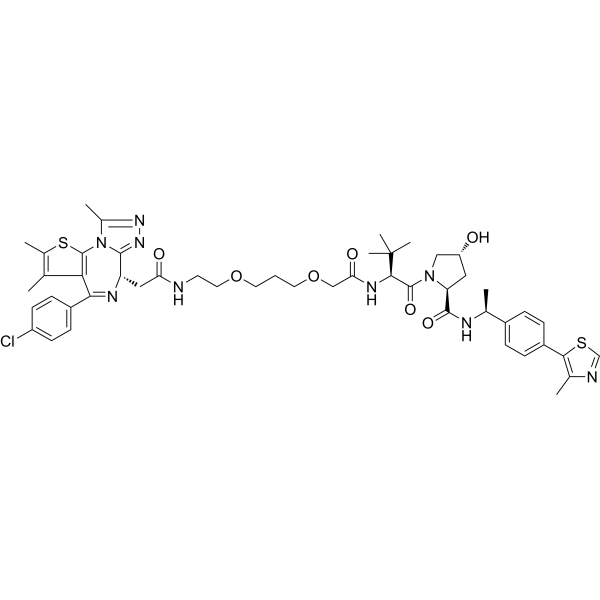
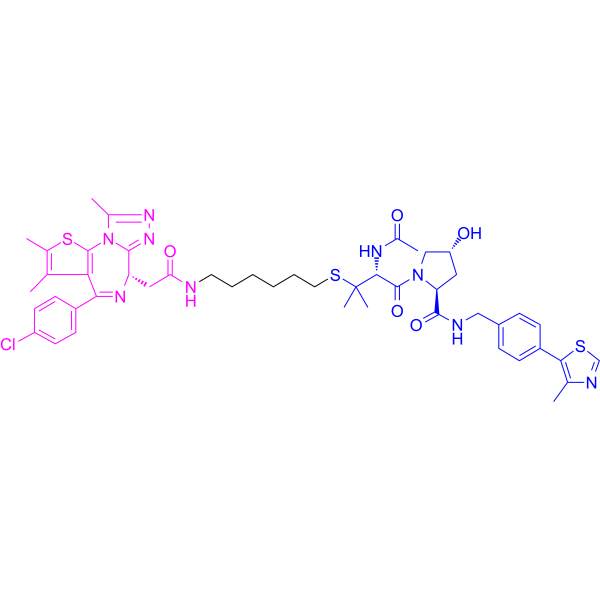
ARV-771 is a potent BET PROTAC based on E3 ligase von Hippel-Lindau with Kds of 34 nM, 4.7 nM, 8.3 nM, 7.6 nM, 9.6 nM, and 7.6 nM for BRD2(1), BRD2(2), BRD3(1), BRD3(2), BRD4(1), and BRD4(2), respectively .
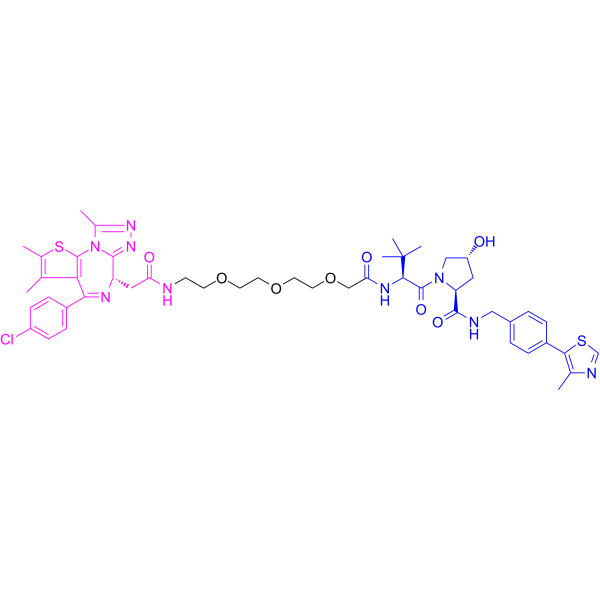
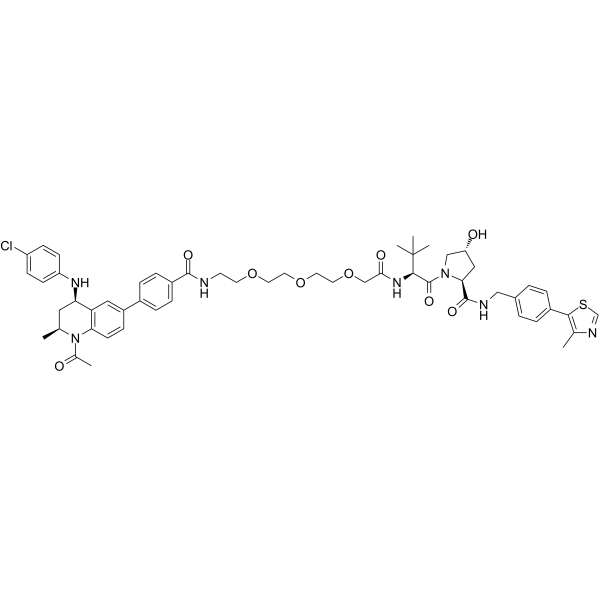
MZ 1 is a PROTAC connected by ligands for von Hippel-Lindau and BRD4. MZ 1 potently and rapidly induces reversible, long-lasting, and selective removal of BRD4 over BRD2 and BRD3. Kds of 382/120, 119/115, and 307/228 nM for BRD4 BD1/2, BRD3 BD1/2, and BRD2 BD1/2, respectively .
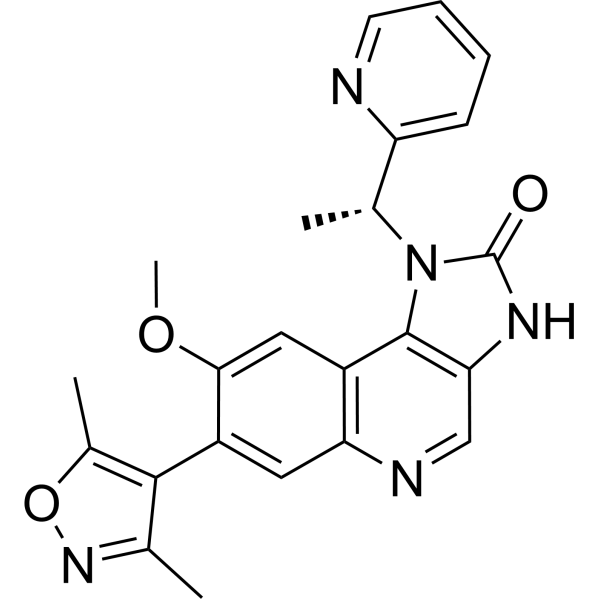
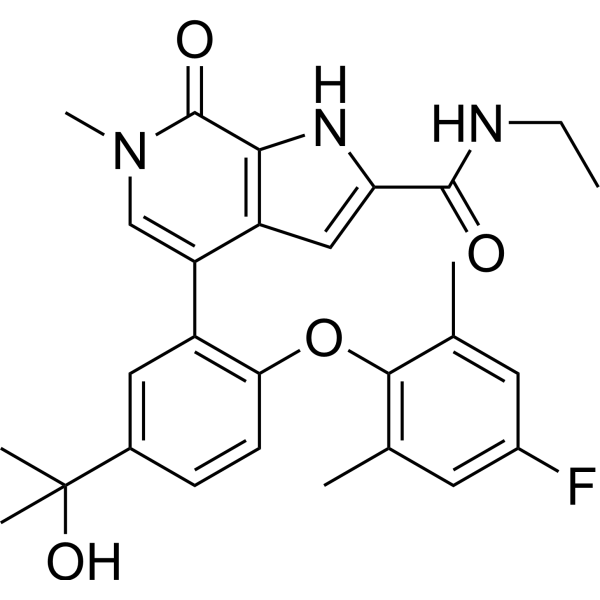
ABBV-744 is a first-in-class, orally active and selective inhibitor of the BDII domain of BET family proteins with IC50 values ranging from 4 to 18 nM for BRD2, BRD3, BRD4 and BRDT. ABBV-744 is primarily metabolized by CYP3A4 with agent-like properties enable the investigation of its antitumor efficacy and tolerability .
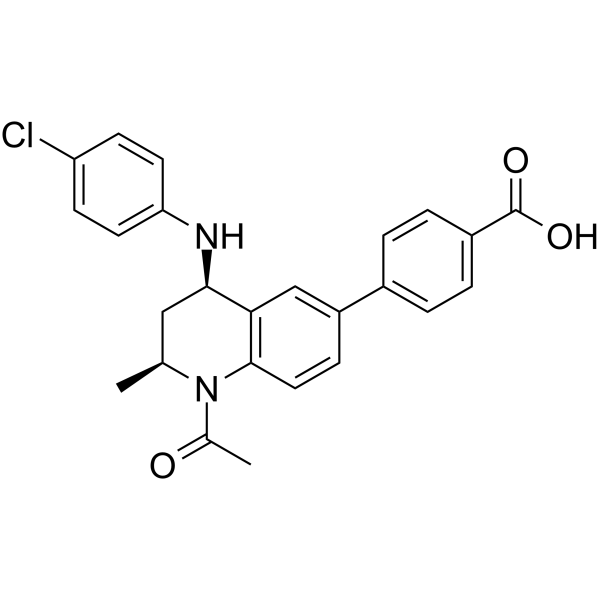
GSK778 (iBET-BD1), a chemical probe, is a potent and selective BD1 bromodomain inhibitor of the BET proteins, with IC50s of 75 nM (BRD2 BD1), 41 nM (BRD3 BD1), 41 nM (BRD4 BD1), and 143 nM (BRDT BD1), respectively. GSK778 phenocopies the effects of pan-BET inhibitors in cancer models .
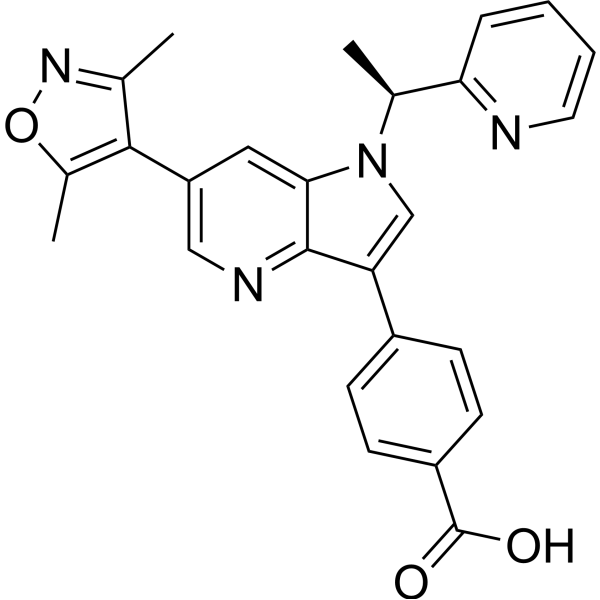
GSK1324726A is a novel, potent, and selective inhibitor of BET proteins with high affinity to BRD2 (IC50=41 nM), BRD3 (IC50=31 nM), and BRD4 (IC50=22 nM).
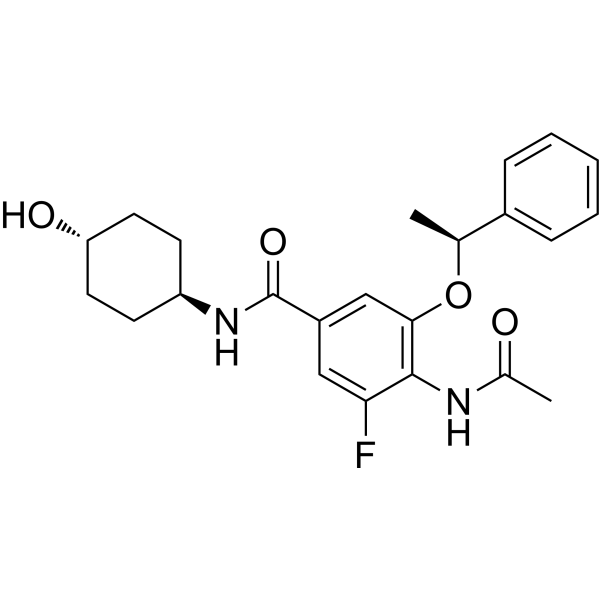
PLX51107 is a potent and selective BET inhibitor, with Kds of 1.6, 2.1, 1.7, and 5 nM for BD1 and 5.9, 6.2, 6.1, and 120 nM for BD2 of BRD2, BRD3, BRD4, and BRDT, respectively; PLX51107 also interacts with the bromodomains of CBP and EP300 (Kd, in the 100 nM range).
GSK046 (iBET-BD2), a chemical probe, is a potent, selective and orally active BD2 bromodomain inhibitor of the BET proteins, with IC50s of 264 nM (BRD2 BD2), 98 nM (BRD3 BD2), 49 nM (BRD4 BD2) and 214 nM (BRDT BD2), respectively. GSK046 has immunomodulatory activity .
BBC0403 is a selective BRD2 inhibitor with Kds of 7.64 μM and 41.37 μM for BRD2 (BD2) and BRD2 (BD1), respectively. BBC0403 exhibitS higher binding specificity for BRD2 compared to BRD3 and BRD4. BBC0403 has the potential for osteoarthritis (OA) research .
NHWD-870 is a potent, orally active and selective BET family bromodomain inhibitor and only binds bromodomains of BRD2, BRD3, BRD4 (IC50=2.7 nM), and BRDT. NHWD-870 has potent tumor suppressive efficacies and suppresses cancer cell-macrophage interaction. NHWD-870 increases tumor apoptosis and inhibits tumor proliferation .
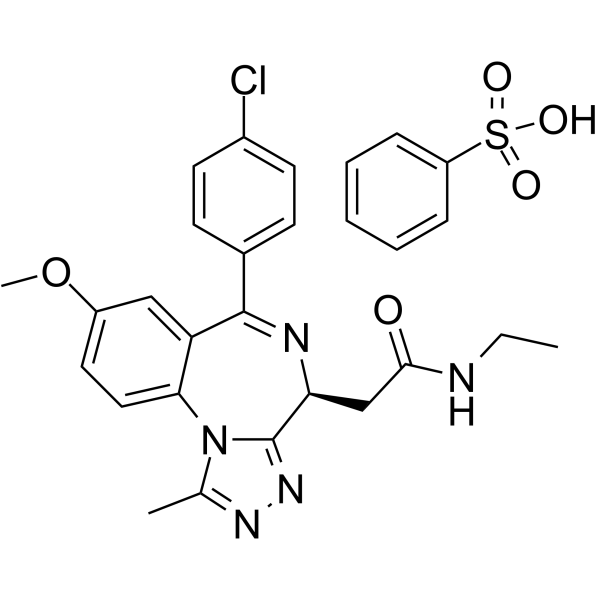
Molibresib besylate (GSK 525762C; I-BET 762 besylate) is an orally active pan-BET inhibitor that targets and binds to BRD2, BRD3, BRD4 and BRDT. By competitively occupying acetylated lysine binding sites, Molibresib besylate disrupts the interaction between BET proteins and chromatin, thereby effectively inhibiting MYC expression and target gene transcription. Molibresib besylate exhibits broad antiproliferative activity, which not only inhibits cancer cell growth and induces growth arrest, but also downregulates mitosis-related genes and upregulates the level of p-ERK1/2. When combined with MEK inhibitors, Molibresib besylate shows a significant synergistic effect, reduces tumor burden in mouse models of leukemia, modulates the immune microenvironment and prolongs survival. Molibresib besylate is widely applicable to research related to acute myeloid leukemia, multiple myeloma, triple-negative breast cancer, small-cell lung cancer and various advanced refractory solid tumors [3].
MS402 is a BD1-selective BET BrD inhibitor with Kis of 77 nM, 718 nM, 110 nM, 200 nM, 83 nM, and 240 nM for BRD4(BD1), BRD4(BD2), BRD3(BD1), BRD3(BD2), BRD2(BD1) and BRD2(BD2), respectively. MS402 blocks Th17 cell differentiation and ameliorates colitis in mice .
HJB97 is a high-affinity BET inhibitor with Ki values of 0.9 nM (BRD2 BD1), 0.27 nM (BRD2 BD2), 0.18 nM (BRD3 BD1), 0.21 nM (BRD3 BD2), 0.5 nM (BRD4 BD1), and 1.0 nM (BRD4 BD2) . HJB97 can serve as a ligand for target protein (Ligands for Target Protein for PROTAC) for the development of PROTAC BET degraders with antitumor activity . HJB97 can be used for the synthesis of BETd-260 (HY-101519).
(S)-JQ-35 (TEN-010) is an orally active, blood-brain barrier-permeable bromodomain inhibitor that selectively targets the bromodomain and extra-terminal domain (BET) protein family (BRD4, BRD3, BRD2 and BRDT). (S)-JQ-35 blocks the activation of Myc gene expression by BRD4, thereby inhibiting cancer cell proliferation and promoting cancer cell apoptosis. (S)-JQ-35 can be used in research related to NUT midline carcinoma and neuroblastoma .
BD-9136 is a potent and highly selective BRD4 PROTAC depressant. BD-9136 has low-nanomolar degradation potencies against BRD4 , and its degradation selectivity for BRD4 is 1000 times that of BRD2 and BRD3 proteins. BD-9136 has antitumor activity .(Pink: Desmethyl-QCA276 (HY-44103); Black: 3-(2-(4-Methylpiperazin-1-yl)ethyl)azetidin-3-ol; Blue: Thalidomide-4-OH (HY-103596))
TMX1 is a covalent, selective BRD4 molecular glue degrader. TMX1 binds to the JQ1-binding site of BRD4BD2, forms covalent bonds with Cys58 of DCAF16 and Cys87 of GAK in a BRD4BD2-dependent template-assisted manner, stabilizes the BRD4-TMX1-DCAF16 ternary complex, and promotes the ubiquitination of BRD4 via the CRL4DCAF16 ubiquitin ligase complex. TMX1 induces selective degradation of BRD4, mild degradation of BRD2 and BRD3, as well as DCAF16-dependent cytotoxicity .
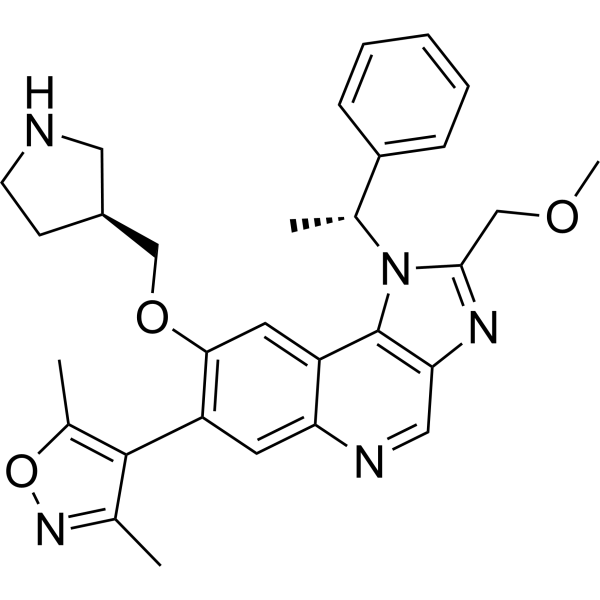
CF53 is a highly potent, selective and orally active inhibitor of BET protein, with a Ki of <1 nM, Kd of 2.2 nM and an IC50 of 2 nM for BRD4 BD1. CF53 binds to both the BD1 and BD2 domains of BRD2, BRD3, BRD4, and BRDT BET proteins with high affinities, very selective over non-BET bromodomain-containing proteins. CF53 shows potent anti-tumor activity both in vitro and in vivo .
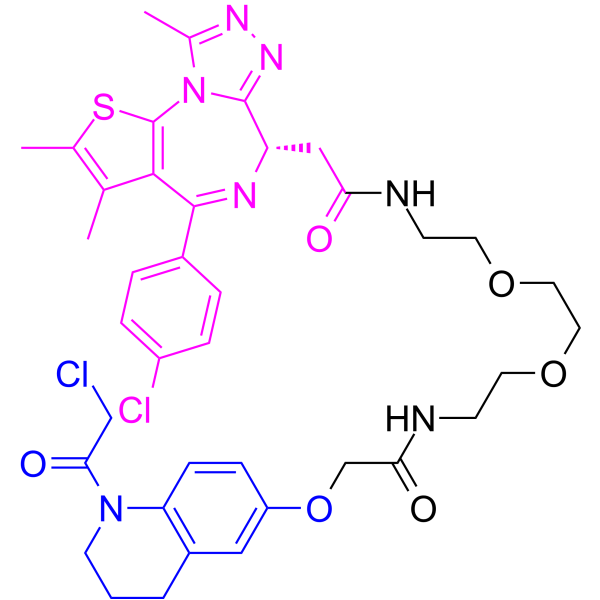
IBG1 is a molecular glue degrader targeting BRD2 and BRD4 (DC50: 0.15 nM). IBG1 has no significant degradation effect on its paralogue BRD3. IBG1 can inhibit the growth of cancer cells and can be used in tumor research. (Pink: BRD2/BRD4 Ligand (HY-111139); Black: Linker; Blue: DCAF15 ligand-1 (HY-W037495)) .
I-BET282 is a pan-inhibitor of all eight BET bromodomains, and selectivity over other representative bromodomain-containing proteins. I-BET282 shows pIC50s ranging 6.4-7.7 for BRD2 (BD1/BD2), BRD2 (BD1/BD), BRD3 (BD1/BD), and BRD4 (BD1/BD) .
BET bromodomain inhibitor 1 is an orally active, selective bromodomain and extra-terminal (BET) bromodomain inhibitor with an IC50 of 2.6 nM for BRD4. BET bromodomain inhibitor 1 binds to BRD2(2), BRD3(2), BRD4(1), BRD4(2), and BRDT(2) with high affinities (Kd values of 1.3 nM, 1.0 nM, 3.0 nM, 1.6 nM, 2.1 nM, respectively). bromodomain inhibitor 1 has anti-cancer activity .
KB02-JQ1 is a highly selective and PROTAC-based BRD4 degrader (molecular glue), but does not degrade BRD2 or BRD3. KB02-JQ1 promotes BRD4 degradation by covalently modifying DCAF16 (E3 ligase) and can improve the durability of protein degradation in biological systems. JQ1 binds ubiquitin E3 ligase ligand KB02 via a linker to form KB02-JQ1 .
OARV-771 is a VHL-based BET degrader (PROTAC) with improved cell permeability. OARV-771 shows DC50s of 6, 1, and 4 nM for Brd4, Brd2 and Brd3, respectively .
RVX-297 is a potent, orally active BET bromodomain inhibitor with selectivity for BD2. RVX-297 shows IC50s of 0.08, 0.05, and 0.02 μM for BRD2(BD2), BRD3(BD2), and BRD4(BD2), respectively. RVX-297 suppresses inflammatory gene expression in multiple immune cell types. RVX-297 is effective in acute inflammation and autoimmunity models .
PROTAC BET Degrader-12 (Compound 8b) is a PROTAC degrader for bromodomain and extra-terminal domain (BET)-containing proteins, which degrades the BRD3 and BRD4 in a DCAF11-dependent manner. PROTAC BET Degrader-12 inhibits cell viability of KBM7 with a DC50 of 305.2 nM. (Pink: ligand for target protein (+)-JQ-1 (HY-13030); Black: linker (HY-159077); Blue: ligand for E3 ligase (HY-159076))
GSK973, a chemical probe, is a highly selective, orally bioavailable inhibitor of the BD2s (second bromodomains) of the BET family, with a pIC50 of 7.8 and a pKd of 8.7 for BRD4 BD2. GSK973 displays a 1600-fold selectivity for BRD4 BD2 over BRD4 BD1. GSK973 shows good potency against BRD2 BD2, BRD3 BD2, and BRDT BD2 (pIC50=7.4~7.8; pKd=8.3~8.5) .
ET-JQ1-OH is an allele-specific BET inhibitor. ET-JQ1-OH can serve as a Ligand for Target Protein for PROTAC, and is used for the development and design of PROTAC Brd4 degraders, such as AB3145 (HY-180923).
SJ46420, a SJ46421 (HY-168634) pro-drug variant, is a potent and selective BRD3 PROTAC degrader. SJ46420 degrads BRD3 in a KLHDC2-dependent manner, thereby partially reducing the levels of BRD2 or BRD4 (Pink: ligand for target protein (HY-13030); Black: linker (HY-20797); Blue: E3 ligase ligand (HY-159973)) .
GSK789 is a selective inhibitor of BETBD1. GSK789 inhibits the growth of leukemia cell lines. GSK789 inhibits LPS-stimulated production of MCP-1, TNFα and IL-6 in human whole blood. GSK789 exhibits antiproliferative, anti-inflammatory and immunomodulatory activities. GSK789 can be used in research related to cancers such as leukemia, as well as inflammatory and immune diseases .
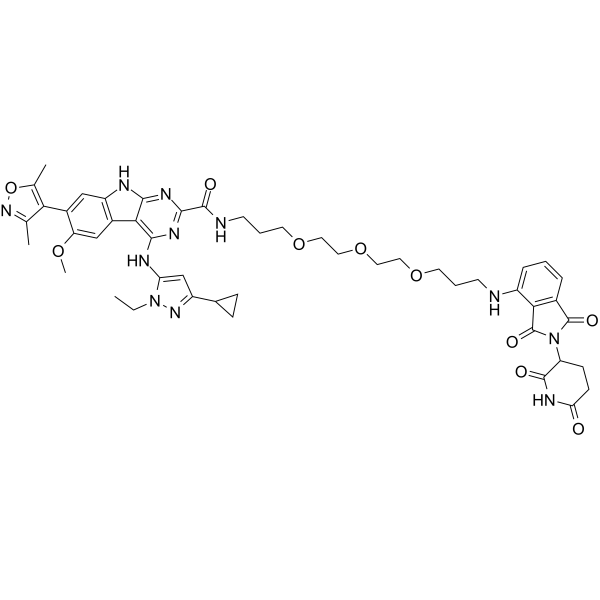
PROTAC BRD3/BRD4-L degrader-2 is a PROTAC molecule and can selectively degrade cellular BRD3 and BRD4-L with Ki values of 16.91 and 2.8 nM, respectively. PROTAC BRD3/BRD4-L degrader-2 also has robust antitumor activity in mouse xenograft models. PROTAC BRD3/BRD4-L degrader-2 can be used for the research of cancer .
Brd3 Rat Pre-designed siRNA Set A contains three designed siRNAs for Brd3 gene (Rat), as well as a negative control, a positive control, and a FAM-labeled negative control.
Brd3 Mouse Pre-designed siRNA Set A contains three designed siRNAs for Brd3 gene (Mouse), as well as a negative control, a positive control, and a FAM-labeled negative control.
BRD3 Human Pre-designed siRNA Set A contains three designed siRNAs for BRD3 gene (Human), as well as a negative control, a positive control, and a FAM-labeled negative control.
PROTAC BRD2/BRD4 degrader-1 (compound 15) is a potent and selective BET protein BRD4 and BRD2 degrader, connected by ligands for Cereblon and BET. PROTAC BRD2/BRD4 degrader-1 rapidly induces reversible, long-lasting, and unexpectedly selective removal of BRD4 and BRD2 over BRD3. It effectively inhibits solid tumors with low cytotoxic effect. PROTAC BRD2/BRD4 degrader-1 is composed of the BET inhibitor, a linker, and the ligand thalidomide for cereblon (CRBN)/cullin 4A .
SJ44236 is the PROTAC degrader for BET that degrades BRD2 (DC50 = 0.127 nM), BRD3 and BRD4. SJ44236 exhibits cytotoxicity in cell MV4-11 and HD-MB03 with IC50s of 0.12 nM and 0.92 nM. SJ44236 downregulates the expression of c-Myc, upregulates the expression of p53. SJ44236 exhibits a good orally bioavailability of 45% in mice . (Pink: ligand for target protein JQ-1 carboxylic acid (HY-78695); Black: linker (HY-W012935); Blue: ligand for E3 ligase Cereblon E3 ligase Ligand 54 (HY-W890189))
PROTAC BRD3 degrader-1 (compound D072) is a potent and selective PROTAC BRD3 degrader. PROTAC BRD3 degrader-1 selectively degrades BRD3 in mice, leading to the downregulation of H3K18ac without affecting BRD2 or BRD4. PROTAC BRD3 degrader-1 reduces intraocular inflammation in the experimental autoimmune uveitis (EAU) mouse mode and inhibits proinflammatory microglia in both uveitis retina and LPS (HY-D1056) treated mouse microglia cell line BV2. PROTAC BRD3 degrader-1 can be used for uveitis research .
SJ46421 is a (+)-JQ-1 (HY-13030) based KLHDC2-BRD3 PROTAC protein degrader. SJ46421 induces cooperative ternary complexes with KLHDC2 and BRD3BD2, with an IC50 of 7.8 nM. SJ46421 selectively inhibits KLHDC2 substrate ubiquitylation. SJ46421 promotes polyubiquitylation of the BD2 domain from BRD2, BRD3, or BRD4. SJ46421 possesses poor cell permeability. (Pink: ligand for target protein (HY-13030); Black: linker (HY-20797); Blue: E3 ligase ligand (HY-168536)) .
BET-IN-6 is a potent and high affnity BRD2/BRD4 inhibitor. BET-IN-6 is the ligand for target protein BRD2/4, and is used for the systhesis of PROTAC BRD2/BRD4 degrader-1 (HY-130612) .
RX-37 is a selective BET inhibitor. RX-37 binds to BET bromodomain proteins (BRD2, BRD3, and BRD4) with Ki values of 3.2-24.7 nM. RX-37 can be used for research of cancers .
GSK778 (iBET-BD1) hydrochloride is a potent and selective BD1 bromodomain inhibitor of the BET proteins, with IC50s of 75 nM (BRD2 BD1), 41 nM (BRD3 BD1), 41 nM (BRD4 BD1), and 143 nM (BRDT BD1), respectively .
GXF-111, a PROTAC molecule, can promote selective degradation of cellular BRD3 and BRD4-L. GXF-111 has binding affinities for BRD3 BD1 and BRD3 BD2 with Ki values of 11.97 nM and 2.35 nM, respectively. GXF-111 can be used for the research of cancer .
LO-3-61, a JQ-1 (HY-13030) analog bearing a truncated fumaramide handle, is a PROTAC (proteolysis-targeting chimeras)-like BRD4 degrader. LO-3-61 degrades both the long and short isoforms of BRD4 CUL4DcAr16-dependently in cells. LO-3-61 shows selectivity for BRD3 and BRD4 degradation in MDA-MB-231 cells .
WNY0824 (PLK1/BRD4-IN-1) is an orally active dual inhibitor of PLK1 and BET protein families, with IC50 values of 22, 402.5, 150.7, 103.9, and 311.9 nmol/L for PLK1, BRD2, BRD3, BRD4, and BRDT, respectively. WNY0824 induces cell cycle arrest and apoptosis by inhibiting AR- and MYC-mediated transcriptional processes. In addition, WNY0824 also inhibits tumor growth in Enzalutamide (HY-70002) resistant CRPC xenograft tumor models .
AB3067 is a PROTAC degrader for BET protein, that recruits two different E3 ligase Cereblon and VHL with good affinity (IC50=559 nM for VHL in live HEK293; IC50=190 nM for CRBN in live HEK293), and degrades BRD2, BRD3, BRD4 and CRBN with DC50 of 2.1~2.3, 1.6, 15 and 75 nM, respectively. AB3067 inhibits the proliferation of RKO cell with an EC50 of 111 nM . (Pink: ligand for target protein (HY-131633A); Black: linker (HY-170391); Blue: ligand for E3 ligase VHL (HY-112078) and CRBN(HY-W998346))
BRD4-IN-11 is an orally active and selective BRD4 inhibitor (IC50 = 26.35 nM (BD1), IC50 = 72.81 nM (BD2)). BRD4-IN-11 is approximately 3- to 18-fold more potent against BRD4 than againstBRD2, BRD3, and BRDT. BRD4-IN-11 enhances H2S release and inhibits the upregulation of fibrotic markers (α-SMA and fibronectin), c-Myc, and CDC25B. BRD4-IN-11 reduces apoptosis in LO2 hepatocytes. BRD4-IN-11 significantly improves liver and lung function in a hepatopulmonary fibrosis model and can be used to study hepatopulmonary fibrosis .
KB-0118 (BBC0115) is an orally active BET bromodomain inhibitor. KB-0118 selective binds to BRD2 and BRD4 over BRD3, with Kd values of 36.7 μM for BRD2 BD1 and 47.4 μM for BRD4 BD1. KB-0118 inhibits pro-inflammatory cytokines, including TNF, IL-1β, and IL-23a and selectively suppresses Th17 cell differentiation. KB-0118 modulates Th17-driven inflammation occurs through epigenetic suppression of BRD4, confirmed by downregulation of STAT3 and BRD4 target genes. KB-0118 has immunomodulatory effects in inflammatory bowel disease (IBD) model.
I-BET151 dihydrochloride (GSK1210151A dihydrochloride) is a BET bromodomain inhibitor which inhibits BRD4, BRD2, and BRD3 with pIC50 of 6.1, 6.3, and 6.6, respectively .
BY27 is a potent and selective BET BD2 inhibitor, shows 38, 5, 7, and 21-fold BD1/BD2 selectivity for BRD2, BRD3, BRD4, and BRDT. Anti-cancer activity .
BET-IN-27 (compound 6C) is an oral BET inhibitor with the IC50 values of 3.3 nM (BRD4-BD2)、3.4 nM (BRD4-BD1)、4.1 nM (BRD2-BD1)、20.4 nM (BRD3-BD1) and 42.0 nM (BRDT-BD1), respectively. BET-IN-27 shows anti-proliferative activity .
Me-SJ46411 is an E3 ubiquitin ligase ligand, which can be used for the synthesis of PROTAC molecules. For example, Me-SJ46411 combined with PROTAC linker Boc-Piperazine-OH (HY-20797) and target protein ligand (+)-JQ-1 (HY-13030) can be used to synthesize the selective BRD3 PROTAC degrader SJ46420 (HY-168635). .
BRD4 Inhibitor-28 (Compound 18) is an orally active BRD4 Inhibitor. BRD4 Inhibitor-28 inhibits BRD40-BD1, BRD40-BD2 with IC50s of 15, 55 nM. BRD4 Inhibitor-28 also inhibits BRD2-BD1, BRD3-BD1, BRDT-BD1 with IC50s of 19, 25, 68 nM. BRD4 Inhibitor-28 has anti-melanoma activity .
Me-SJ46411-PEG1-Piperazine-Boc is a conjugate of E3 ubiquitin ligase and PROTAC linker, which can be used for the synthesis of PROTAC molecules. For example, Me-SJ46411-PEG1-Piperazine-Boc combined with target protein ligand (+)-JQ-1 (HY-13030) can be used to synthesize the selective BRD3 PROTAC degrader SJ46420 (HY-168635). .
I-BET282E is a pan-inhibitor of all eight BET bromodomains, and selectivity over other representative bromodomain-containing proteins. I-BET282E shows pIC50s ranging 6.4-7.7 for BRD2 (BD1/BD2), BRD2 (BD1/BD), BRD3 (BD1/BD), and BRD4 (BD1/BD) .
XY153 (compound 8l) is a BD2-selective BET inhibitor and selectively binds to BRD4 BD2. XY153 binds to BRD4 BD2, BRD3 BD2 and BRD2 BD2 with IC50s of 0.79, 5.31 and 5.09 nM, respectively. XY153 shows potent antiproliferative activity against multiple tumor cell lines. XY153 can be used for the research of acute myeloid leukemia (AML) and cancer .
PROTAC BRD4 Degrader-27 (compound 6b) is a PROTAC that selectively targets BRD4 (rather than BRD2/BRD3) and can also inhibit the expression of KLF5 transcription factor and exert anti-cancer activity. PROTAC BRD4 Degrader-27 is composed of E3 ubiquitinase ligand Thalidomide-4-OH (HY-103596) (red part), PROTAC Linker γ-Aminobutyric acid (HY-N0067) (black part) and PROTAC target protein ligand PROTAC BRD4ligand-3 (HY-162876) (blue part), of which the active control of the target protein ligand is Mivebresib (HY-100015), and the conjugate of E3 ubiquitin ligase ligand + Linker is Pomalidomide 4'-alkylC3-acid (HY-131875) [1] .
GSK785 is a BRD2/4-selective, BRD3-sparing bivalent BET inhibitor. GSK785 inhibits production of the MCP1 cytokine in human whole blood. GSK785 can be used for the research of cancer .
TK-285 is a potent TSLP inhibitor that suppresses the production of TSLP and inhibits the expression of interleukin-33 mRNA. TK-285 exhibits a selective binding preference for the BD1 domains of BRD2, BRD3, BRD4 and BRDT. TK-285 can be used in research related to atopic dermatitis .
MZ 1 (Standard) is the analytical standard of MZ 1 (HY-107425). This product is intended for research and analytical applications. MZ 1 is a PROTAC connected by ligands for von Hippel-Lindau and BRD4. MZ 1 potently and rapidly induces reversible, long-lasting, and selective removal of BRD4 over BRD2 and BRD3. Kds of 382/120, 119/115, and 307/228 nM for BRD4 BD1/2, BRD3 BD1/2, and BRD2 BD1/2, respectively .
ARV-771 (Standard) is the analytical standard of ARV-771 (HY-100972). This product is intended for research and analytical applications. ARV-771 is a potent BET PROTAC based on E3 ligase von Hippel-Lindau with Kds of 34 nM, 4.7 nM, 8.3 nM, 7.6 nM, 9.6 nM, and 7.6 nM for BRD2(1), BRD2(2), BRD3(1), BRD3(2), BRD4(1), and BRD4(2), respectively .
TKP-5 is a PROTAC protein degrader targeting BRD4. TKP-5 can binds to BRD2, BRD3, BRD4 and BRDT, with Kd values of 150 nM, 100 nM and 150 nM for the first three proteins respectively. TKP-5 inhibits the production of thymic stromal lymphopoietin and suppresses the expression of IL-33 mRNA. TKP-5 is applicable to studies related to tape-stripping induced skin injury .
PROTAC BRD4 Degrader-46 is a heterobifunctional BRD4PROTAC degrader. PROTAC BRD4 Degrader-46 binds to both BRD4 and CRBN, thereby triggering ubiquitination and proteasomal degradation of BRD4. PROTAC BRD4 Degrader-46 downregulates the levels of downstream BRD2, BRD3 and MYC. PROTAC BRD4 Degrader-46 can be used in the research of cancers such as multiple myeloma .
Lenalidomide-C7-NH2 is a synthetic E3 ligase ligand-connector conjugate that can be used for the synthesis of PROTACs, such as GXF-111 (HY-153414). GXF-111 is a BRD3/BRD4-L PROTAC degrader with anti-tumor activity .
PROTAC BET Degrader-1 (Standard) is the analytical standard of PROTAC BET Degrader-1 (HY-103633). This product is intended for research and analytical applications. PROTAC BET Degrader-1 is a PROTAC connected by ligands for Cereblon and BET, decreasing BRD2, BRD3, and BRD4 protein levels at low concentration.
PROTAC BET Degrader-15 is a BET PROTAC degrader with DC50 values of <0.10 nM, <0.01 nM, and <0.01 nM against BRD2, BRD3, and BRD4, respectively. PROTAC BET Degrader-15 induces significant G2/M phase cell cycle arrest and triggers apoptosis. PROTAC BET Degrader-15 causes marked downregulation of c-Myc, accompanied by upregulation of the cell cycle inhibitory protein p21, downregulation of CDK6, and an increase in the apoptosis marker cleaved PARP. PROTAC BET Degrader-15 is applicable to the research of hematologic malignancies and lung cancer .
PROTAC BET Degrader-16 (Compound A10) is a BETPROTAC degrader with a DC50 of 0.31 nM against BRD4, and it preferentially targets BRD4 over other BET family members. PROTAC BET Degrader-16 degrades BRD2, BRD3 and BRD4 via the ubiquitin-proteasome system, a process that requires target binding and recruitment of the CRBN E3 ligase. PROTAC BET Degrader-16 induces cell cycle arrest and promotes apoptosis. PROTAC BET Degrader-16 exerts anti-tumor activity against acute myeloid leukemia .
BET-IN-30 (Compound 11d) is a BTE family protein inhibitor, which can act as a BRD2/BRD3/BRD4 target protein ligand and be used for the synthesis of PROTACs, such as PROTAC BET Degrader-15 (HY-181729). BET-IN-30 exhibits potent anti-proliferative activity against acute myeloid leukemia (AML) cells such as MV4-11. BET-IN-30 can be used for the study of AML .
PROTAC BET Degrader-17 is a potent BET protein PROTAC degrader. By recruiting the VHLE3 ligase, PROTAC BET Degrader-17 specifically degrades BRD2, BRD3 (DC50=0.09 nM) and BRD4 (IC50=4.3 nM). PROTAC BET Degrader-17 exhibits strong anti-tumor activity in acute myeloid leukemia (AML) studies; it not only inhibits cancer cell proliferation, induces cell cycle arrest and apoptosis, but also effectively suppresses tumor growth in xenograft mouse models. PROTAC BET Degrader-17 can be used to explore targeted therapies for acute myeloid leukemia .
PROTAC BET Degrader-14 is a highly efficient PROTAC targeting BET (bromodomain and extra-terminal domain). PROTAC BET Degrader-14 can degrade all BET (BRD2, BRD3, BRD4) family proteins. PROTAC BET Degrader-14 potently degrades BET proteins in U2OS osteosarcoma cell lines (BRD4DC50 = 130 nM) and KYSE180 esophageal squamous cell carcinoma cell lines (DC50 = 40 nM). PROTAC BET Degrader-14’s dependence on the ubiquitin-proteasome system. PROTAC BET Degrader-14 decreases levels of BET-regulated gene products c-Myc, RUNX2, and KRT14. PROTAC BET Degrader-14 can be used for the study of osteosarcoma .
RAJQ14 is a BRD4PROTAC-like CAP-TAC (Proteasome Cap Targeting Chimeras) degrader. RAJQ14 binds to 19S proteasome cap subunits RPN1, RPN10, RPN13, and USP14 to recruit target proteins to the proteasome for ubiquitination-independent, proteasome-dependent degradation. RAJQ14 can be used for the research of cancer (Pink: BRD4 Ligand (HY-181496); Blue: Proteasome Ligand (HY-128978); Black: Linker).
BRD4 degrader-7 (Compound ZZ1) is a CTLH-dependent BRD4 degrader and c-Glue with a DC50 of 489 nM. BRD4 degrader-7 converts to a sulfinic acid derivative inside cells, interacts with the basic pocket of YPEL5, mediates the bridging of BRD4 BD1 to the YPEL5 subunit of the CTLH E3 ubiquitin ligase, and thereby promotes the formation of a ternary complex. BRD4 degrader-7 can be used in research on Ewing's sarcoma and leukemia .
BRD4 ligand 15 (compound 5) is a BRD4 ligand and alkyne-modified chalcone derivative, which serves as a building block for the synthesis of BRD4-targeting PROTAC TKP-5 (HY-182370) .
JQ1-JX5 is a DCAF16-based BRD4 PROTAC degrader. JQ1-JX5 covalently modifies Cys58 of DCAF16, promotes ternary complex formation with BRD4, enables BRD4 ubiquitination and proteasomal degradation. JQ1-JX5 induces time-dependent degradation of BRD4 long and short isoforms in AGS cells with DC50 of 43.97 and 16.77 nM. JQ1-JX5 can be used for the research of cancer, such as acute myeloid leukemia .
ZX079 is a dual BRD4 and CBP PROTAC degrader with a BRD4 DC50 value of 0.035 nM and a CBP DC50 value of < 0.02 nM. ZX079 induces dose- and time-dependent degradation of BRD4 and CBP proteins through recruitment of the cereblon E3 ligase. ZX079 induces apoptosis in MV4-11 and MOLM-13 cells, reduces tumor growth in an acute myeloid leukemia xenograft model. ZX079 can be used for the research of acute myeloid leukemia .
BRD4 ligand 15 (compound 5) is a BRD4 ligand and alkyne-modified chalcone derivative, which serves as a building block for the synthesis of BRD4-targeting PROTAC TKP-5 (HY-182370) .
Brd3 Rat Pre-designed siRNA Set A contains three designed siRNAs for Brd3 gene (Rat), as well as a negative control, a positive control, and a FAM-labeled negative control.
Brd3 Mouse Pre-designed siRNA Set A contains three designed siRNAs for Brd3 gene (Mouse), as well as a negative control, a positive control, and a FAM-labeled negative control.
BRD3 Human Pre-designed siRNA Set A contains three designed siRNAs for BRD3 gene (Human), as well as a negative control, a positive control, and a FAM-labeled negative control.
Inquiry Online
Your information is safe with us. * Required Fields.
Western blot analysis of extracts from THP-1(lane 2(20μg), Jurkat (lane 3(20μg) and NIH3T3(lane 4(20μg) using FOXO1A (HY-P80132) Rabbit mAb. Proteins were transferred
to a PVDF membrane and blocked with 5% non-fat milk in TBST for 2 hour at room temperature. The primary antibody (1/1000) and Loading control antibody (Beta Actin, HY-P80438, 1/10000) was
used in 5% non-fat milk in TBST at 4°C overnight. Goat Anti-Mouse/Rabbit IgG-HRP Secondary Antibody (1/10000) was used for 1 hour at room temperature.
Western blot analysis of extracts from THP-1(lane 2(20μg), Jurkat (lane 3(20μg) and NIH3T3(lane 4(20μg) using FOXO1A (HY-P80132) Rabbit mAb. Proteins were transferred
to a PVDF membrane and blocked with 5% non-fat milk in TBST for 2 hour at room temperature. The primary antibody (1/1000) and Loading control antibody (Beta Actin, HY-P80438, 1/10000) was
used in 5% non-fat milk in TBST at 4°C overnight. Goat Anti-Mouse/Rabbit IgG-HRP Secondary Antibody (1/10000) was used for 1 hour at room temperature.
Western blot analysis of extracts from THP-1(lane 2(20μg), Jurkat (lane 3(20μg) and NIH3T3(lane 4(20μg) using FOXO1A (HY-P80132) Rabbit mAb. Proteins were transferred
to a PVDF membrane and blocked with 5% non-fat milk in TBST for 2 hour at room temperature. The primary antibody (1/1000) and Loading control antibody (Beta Actin, HY-P80438, 1/10000) was
used in 5% non-fat milk in TBST at 4°C overnight. Goat Anti-Mouse/Rabbit IgG-HRP Secondary Antibody (1/10000) was used for 1 hour at room temperature.
Western blot analysis of extracts from THP-1(lane 2(20μg), Jurkat (lane 3(20μg) and NIH3T3(lane 4(20μg) using FOXO1A (HY-P80132) Rabbit mAb. Proteins were transferred
to a PVDF membrane and blocked with 5% non-fat milk in TBST for 2 hour at room temperature. The primary antibody (1/1000) and Loading control antibody (Beta Actin, HY-P80438, 1/10000) was
MedchemExpress Validation 03
Western blot analysis of extracts from THP-1(lane 2(20μg), Jurkat (lane 3(20μg) and NIH3T3(lane 4(20μg) using FOXO1A (HY-P80132) Rabbit mAb. Proteins were transferred
MedchemExpress Validation 04
Western blot analysis of extracts from THP-1(lane 2(20μg), Jurkat (lane 3(20μg) and NIH3T3(lane 4(20μg) using FOXO1A (HY-P80132) Rabbit mAb. Proteins were transferred
to a PVDF membrane and blocked with 5% non-fat milk in TBST for 2 hour at room temperature. The primary antibody (1/1000) and Loading control antibody (Beta Actin, HY-P80438, 1/10000) was
used in 5% non-fat milk in TBST at 4°C overnight. Goat Anti-Mouse/Rabbit IgG-HRP Secondary Antibody (1/10000) was used for 1 hour at room temperature.
MedchemExpress Validation
Western blot analysis of extracts from THP-1(lane 2(20μg), Jurkat (lane 3(20μg) and NIH3T3(lane 4(20μg) using FOXO1A (HY-P80132) Rabbit mAb. Proteins were transferred
to a PVDF membrane and blocked with 5% non-fat milk in TBST for 2 hour at room temperature. The primary antibody (1/1000) and Loading control antibody (Beta Actin, HY-P80438, 1/10000) was
used in 5% non-fat milk in TBST at 4°C overnight. Goat Anti-Mouse/Rabbit IgG-HRP Secondary Antibody (1/10000) was used for 1 hour at room temperature.
Western blot analysis of extracts from THP-1(lane 2(20μg), Jurkat (lane 3(20μg) and NIH3T3(lane 4(20μg) using FOXO1A (HY-P80132) Rabbit mAb. Proteins were transferred
to a PVDF membrane and blocked with 5% non-fat milk in TBST for 2 hour at room temperature. The primary antibody (1/1000) and Loading control antibody (Beta Actin, HY-P80438, 1/10000) was
used in 5% non-fat milk in TBST at 4°C overnight. Goat Anti-Mouse/Rabbit IgG-HRP Secondary Antibody (1/10000) was used for 1 hour at room temperature.
MedchemExpress Validation
Western blot analysis of extracts from THP-1(lane 2(20μg), Jurkat (lane 3(20μg) and NIH3T3(lane 4(20μg) using FOXO1A (HY-P80132) Rabbit mAb. Proteins were transferred
to a PVDF membrane and blocked with 5% non-fat milk in TBST for 2 hour at room temperature. The primary antibody (1/1000) and Loading control antibody (Beta Actin, HY-P80438, 1/10000) was
used in 5% non-fat milk in TBST at 4°C overnight. Goat Anti-Mouse/Rabbit IgG-HRP Secondary Antibody (1/10000) was used for 1 hour at room temperature.
MedchemExpress Validation
Western blot analysis of extracts from THP-1(lane 2(20μg), Jurkat (lane 3(20μg) and NIH3T3(lane 4(20μg) using FOXO1A (HY-P80132) Rabbit mAb. Proteins were transferred
to a PVDF membrane and blocked with 5% non-fat milk in TBST for 2 hour at room temperature. The primary antibody (1/1000) and Loading control antibody (Beta Actin, HY-P80438, 1/10000) was
used in 5% non-fat milk in TBST at 4°C overnight. Goat Anti-Mouse/Rabbit IgG-HRP Secondary Antibody (1/10000) was used for 1 hour at room temperature.
MedchemExpress Validation
Western blot analysis of extracts from THP-1(lane 2(20μg), Jurkat (lane 3(20μg) and NIH3T3(lane 4(20μg) using FOXO1A (HY-P80132) Rabbit mAb. Proteins were transferred
to a PVDF membrane and blocked with 5% non-fat milk in TBST for 2 hour at room temperature. The primary antibody (1/1000) and Loading control antibody (Beta Actin, HY-P80438, 1/10000) was
used in 5% non-fat milk in TBST at 4°C overnight. Goat Anti-Mouse/Rabbit IgG-HRP Secondary Antibody (1/10000) was used for 1 hour at room temperature.
MedchemExpress Validation
Western blot analysis of extracts from THP-1(lane 2(20μg), Jurkat (lane 3(20μg) and NIH3T3(lane 4(20μg) using FOXO1A (HY-P80132) Rabbit mAb. Proteins were transferred
to a PVDF membrane and blocked with 5% non-fat milk in TBST for 2 hour at room temperature. The primary antibody (1/1000) and Loading control antibody (Beta Actin, HY-P80438, 1/10000) was
used in 5% non-fat milk in TBST at 4°C overnight. Goat Anti-Mouse/Rabbit IgG-HRP Secondary Antibody (1/10000) was used for 1 hour at room temperature.
MedchemExpress Validation
Western blot analysis of extracts from THP-1(lane 2(20μg), Jurkat (lane 3(20μg) and NIH3T3(lane 4(20μg) using FOXO1A (HY-P80132) Rabbit mAb. Proteins were transferred
to a PVDF membrane and blocked with 5% non-fat milk in TBST for 2 hour at room temperature. The primary antibody (1/1000) and Loading control antibody (Beta Actin, HY-P80438, 1/10000) was
used in 5% non-fat milk in TBST at 4°C overnight. Goat Anti-Mouse/Rabbit IgG-HRP Secondary Antibody (1/10000) was used for 1 hour at room temperature.
MedchemExpress Validation
Western blot analysis of extracts from THP-1(lane 2(20μg), Jurkat (lane 3(20μg) and NIH3T3(lane 4(20μg) using FOXO1A (HY-P80132) Rabbit mAb. Proteins were transferred
to a PVDF membrane and blocked with 5% non-fat milk in TBST for 2 hour at room temperature. The primary antibody (1/1000) and Loading control antibody (Beta Actin, HY-P80438, 1/10000) was
used in 5% non-fat milk in TBST at 4°C overnight. Goat Anti-Mouse/Rabbit IgG-HRP Secondary Antibody (1/10000) was used for 1 hour at room temperature.
MedChemExpress values your privacy and your trust is important to us. We use cookies to enhance your website experience. Some cookies are necessary to run the website.
Privacy and Cookie Policy

