1. Search Result
Search Result
Results for "

BRDT

" in MedChemExpress (MCE) Product Catalog:

43

Inhibitors & Agonists

1

Natural
Products

2

Recombinant Proteins

1

Click Chemistry

3

Oligonucleotides

Cat. No. Product Name Target Research Areas Chemical Structure
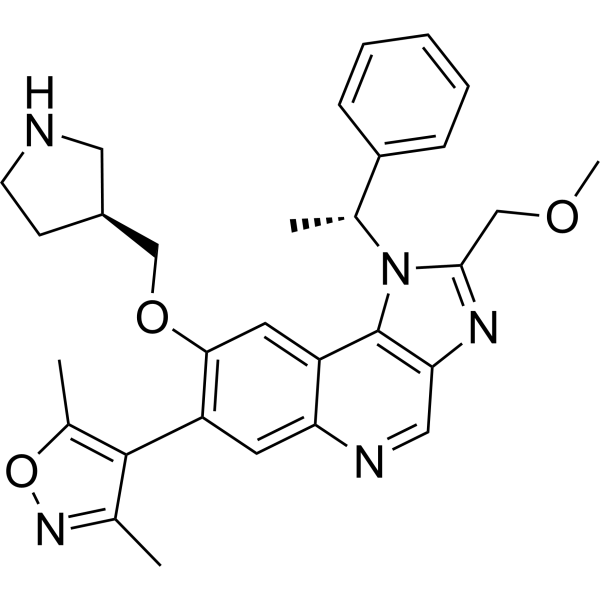
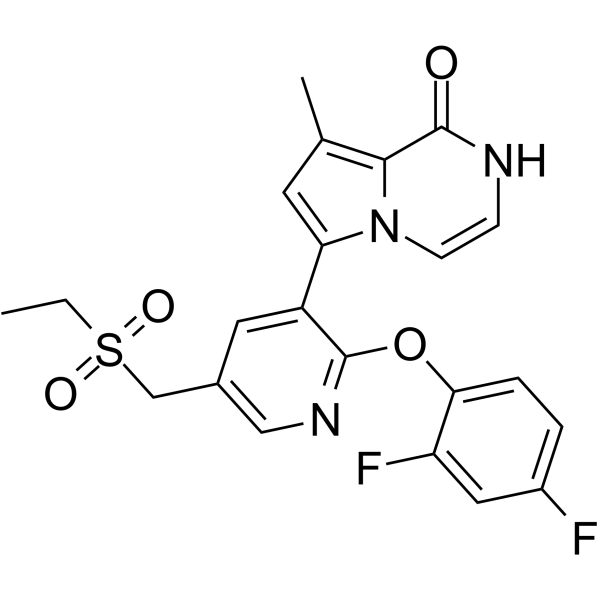
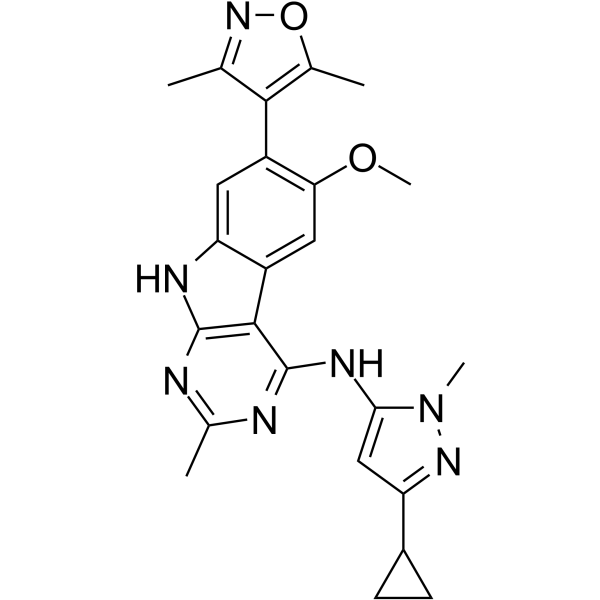
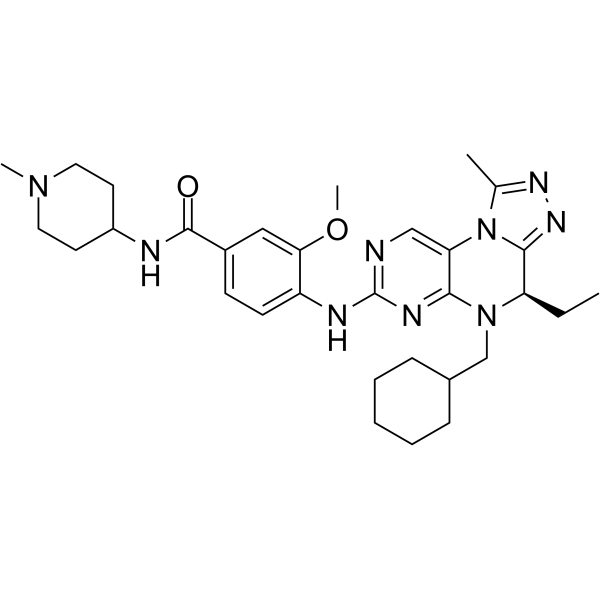
  • HY-112090
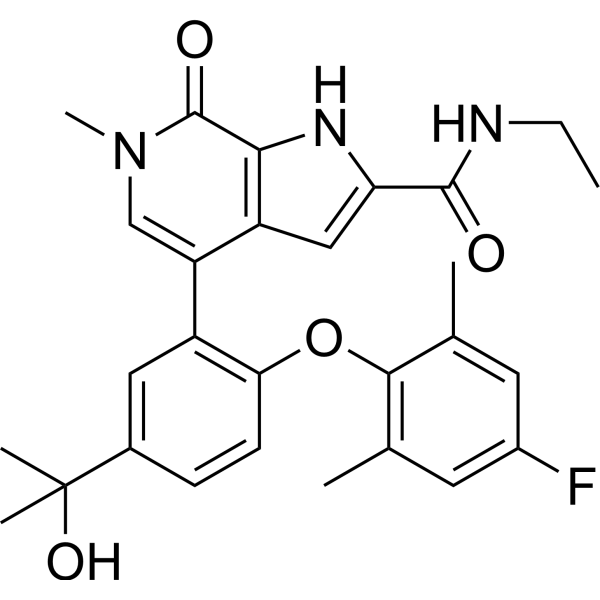
    ABBV-744
    5+ Cited Publications

    Epigenetic Reader Domain HIV Infection Inflammation/Immunology Cancer
    ABBV-744 is a first-in-class, orally active and selective inhibitor of the BDII domain of BET family proteins with IC50 values ranging from 4 to 18 nM for BRD2, BRD3, BRD4 and BRDT. ABBV-744 is primarily metabolized by CYP3A4 with agent-like properties enable the investigation of its antitumor efficacy and tolerability .
    ABBV-744
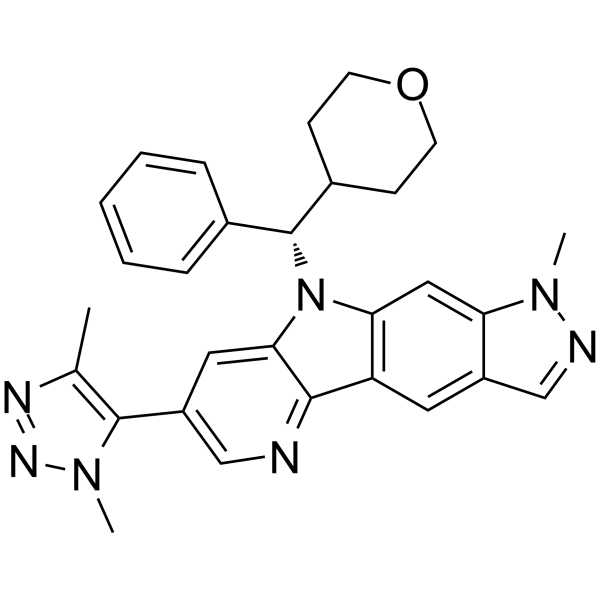
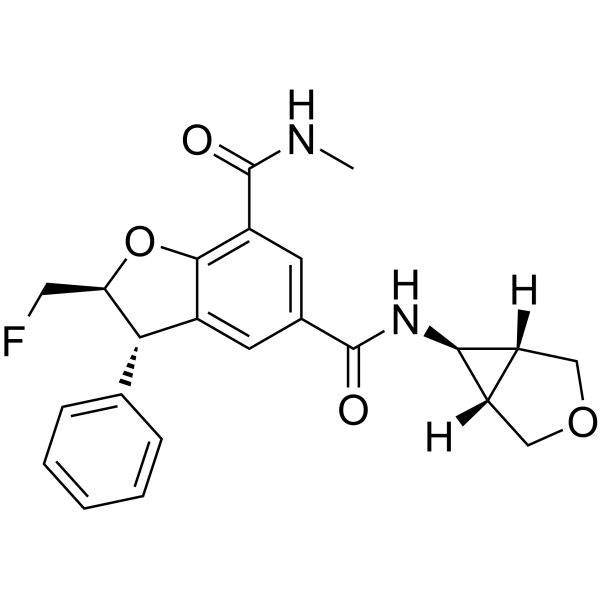
  • HY-136570
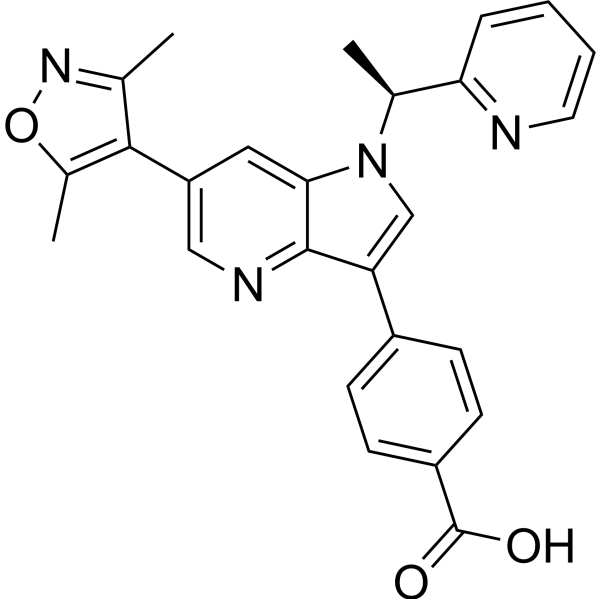
    GSK778
    1 Publications Verification

    iBET-BD1

    Epigenetic Reader Domain Apoptosis Inflammation/Immunology Cancer
    GSK778 (iBET-BD1), a chemical probe, is a potent and selective BD1 bromodomain inhibitor of the BET proteins, with IC50s of 75 nM (BRD2 BD1), 41 nM (BRD3 BD1), 41 nM (BRD4 BD1), and 143 nM (BRDT BD1), respectively. GSK778 phenocopies the effects of pan-BET inhibitors in cancer models .
    GSK778
  • HY-111422
    PLX51107
    3 Publications Verification

    Epigenetic Reader Domain Cancer
    PLX51107 is a potent and selective BET inhibitor, with Kds of 1.6, 2.1, 1.7, and 5 nM for BD1 and 5.9, 6.2, 6.1, and 120 nM for BD2 of BRD2, BRD3, BRD4, and BRDT, respectively; PLX51107 also interacts with the bromodomains of CBP and EP300 (Kd, in the 100 nM range).
    PLX51107
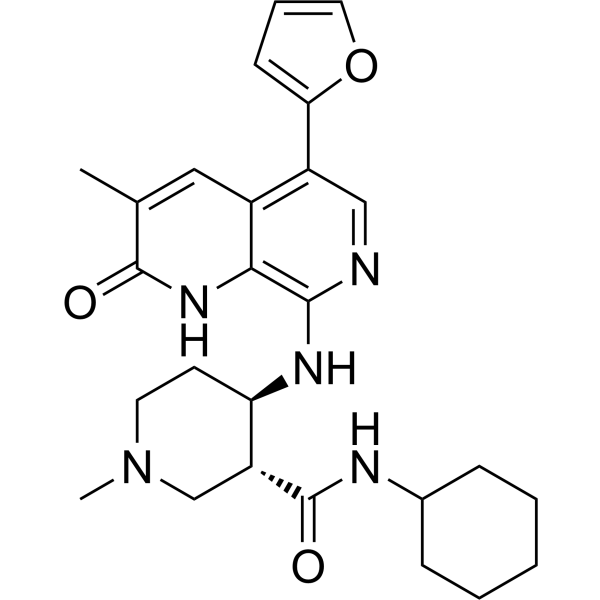
  • HY-136571
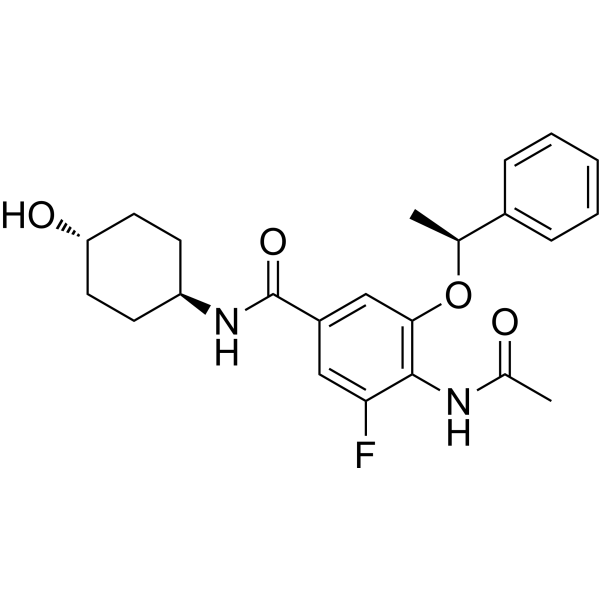
    GSK046
    3 Publications Verification

    iBET-BD2

    Epigenetic Reader Domain Inflammation/Immunology
    GSK046 (iBET-BD2), a chemical probe, is a potent, selective and orally active BD2 bromodomain inhibitor of the BET proteins, with IC50s of 264 nM (BRD2 BD2), 98 nM (BRD3 BD2), 49 nM (BRD4 BD2) and 214 nM (BRDT BD2), respectively. GSK046 has immunomodulatory activity .
    GSK046
  • HY-13032B
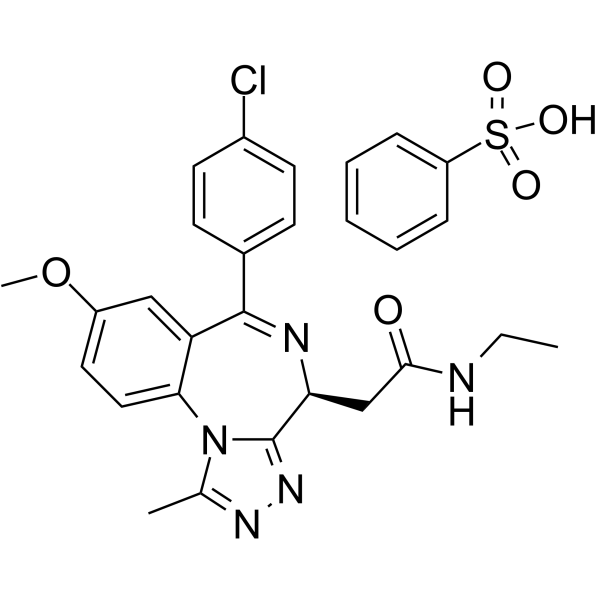
    Molibresib besylate
    Maximum Cited Publications
    21 Publications Verification

    GSK 525762C; I-BET 762 besylate

    Epigenetic Reader Domain ERK Cancer
    Molibresib besylate (GSK 525762C; I-BET 762 besylate) is an orally active pan-BET inhibitor that targets and binds to BRD2, BRD3, BRD4 and BRDT. By competitively occupying acetylated lysine binding sites, Molibresib besylate disrupts the interaction between BET proteins and chromatin, thereby effectively inhibiting MYC expression and target gene transcription. Molibresib besylate exhibits broad antiproliferative activity, which not only inhibits cancer cell growth and induces growth arrest, but also downregulates mitosis-related genes and upregulates the level of p-ERK1/2. When combined with MEK inhibitors, Molibresib besylate shows a significant synergistic effect, reduces tumor burden in mouse models of leukemia, modulates the immune microenvironment and prolongs survival. Molibresib besylate is widely applicable to research related to acute myeloid leukemia, multiple myeloma, triple-negative breast cancer, small-cell lung cancer and various advanced refractory solid tumors .
    Molibresib besylate
  • HY-134463
    NHWD-870
    1 Publications Verification

    Epigenetic Reader Domain Apoptosis Cancer
    NHWD-870 is a potent, orally active and selective BET family bromodomain inhibitor and only binds bromodomains of BRD2, BRD3, BRD4 (IC50=2.7 nM), and BRDT. NHWD-870 has potent tumor suppressive efficacies and suppresses cancer cell-macrophage interaction. NHWD-870 increases tumor apoptosis and inhibits tumor proliferation .
    NHWD-870
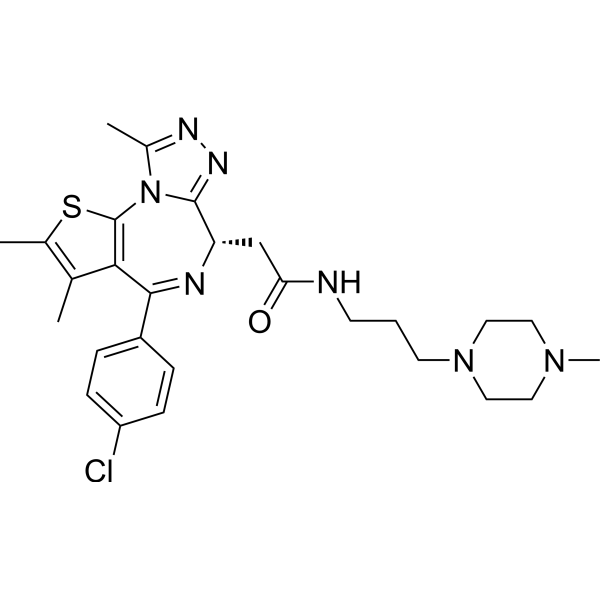
  • HY-117286

    TEN-010

    Epigenetic Reader Domain Apoptosis Neurological Disease Cancer
    (S)-JQ-35 (TEN-010) is an orally active, blood-brain barrier-permeable bromodomain inhibitor that selectively targets the bromodomain and extra-terminal domain (BET) protein family (BRD4, BRD3, BRD2 and BRDT). (S)-JQ-35 blocks the activation of Myc gene expression by BRD4, thereby inhibiting cancer cell proliferation and promoting cancer cell apoptosis. (S)-JQ-35 can be used in research related to NUT midline carcinoma and neuroblastoma .
    (S)-JQ-35
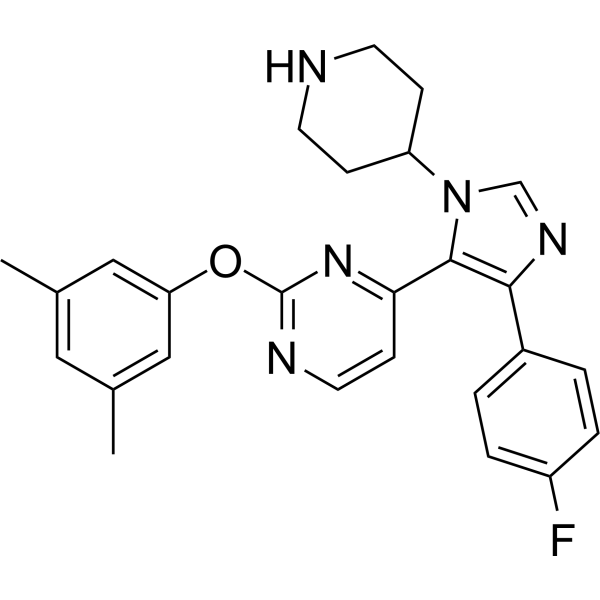
  • HY-131061

    Epigenetic Reader Domain Cancer
    BET bromodomain inhibitor 1 is an orally active, selective bromodomain and extra-terminal (BET) bromodomain inhibitor with an IC50 of 2.6 nM for BRD4. BET bromodomain inhibitor 1 binds to BRD2(2), BRD3(2), BRD4(1), BRD4(2), and BRDT(2) with high affinities (Kd values of 1.3 nM, 1.0 nM, 3.0 nM, 1.6 nM, 2.1 nM, respectively). bromodomain inhibitor 1 has anti-cancer activity .
    BET bromodomain inhibitor 1
  • HY-112610

    Epigenetic Reader Domain Histone Acetyltransferase Cancer
    CF53 is a highly potent, selective and orally active inhibitor of BET protein, with a Ki of <1 nM, Kd of 2.2 nM and an IC50 of 2 nM for BRD4 BD1. CF53 binds to both the BD1 and BD2 domains of BRD2, BRD3, BRD4, and BRDT BET proteins with high affinities, very selective over non-BET bromodomain-containing proteins. CF53 shows potent anti-tumor activity both in vitro and in vivo .
    CF53
  • HY-138563

    Epigenetic Reader Domain Cancer
    GSK973, a chemical probe, is a highly selective, orally bioavailable inhibitor of the BD2s (second bromodomains) of the BET family, with a pIC50 of 7.8 and a pKd of 8.7 for BRD4 BD2. GSK973 displays a 1600-fold selectivity for BRD4 BD2 over BRD4 BD1. GSK973 shows good potency against BRD2 BD2, BRD3 BD2, and BRDT BD2 (pIC50=7.4~7.8; pKd=8.3~8.5) .
    GSK973
  • HY-160558

    Epigenetic Reader Domain Polo-like Kinase (PLK) Cancer
    PLK1/BRD4-IN-3 (Compound 21) is a selective dual inhibitor for bromodomain 4 (BRD4) and polo-like kinase 1 (PLK1). PLK1/BRD4-IN-3 inhibits BRD4-BD1, PLK1 and BRDT-BD1, with IC50s of 0.059, 0.127 and 0.245 μM, respectively .
    PLK1/BRD4-IN-3
  • HY-138623

    Epigenetic Reader Domain TNF Receptor Interleukin Related Inflammation/Immunology Cancer
    GSK789 is a selective inhibitor of BET BD1. GSK789 inhibits the growth of leukemia cell lines. GSK789 inhibits LPS-stimulated production of MCP-1, TNFα and IL-6 in human whole blood. GSK789 exhibits antiproliferative, anti-inflammatory and immunomodulatory activities. GSK789 can be used in research related to cancers such as leukemia, as well as inflammatory and immune diseases .
    GSK789
  • HY-136794

    p38 MAPK Epigenetic Reader Domain Inflammation/Immunology Cancer
    SB-284851-BT is an inhibitor of BRD4/p38α/BRDT. SB-284851-BT inhibits BRD4-BD1 (IC50=1.7 µM), p38α (Kd=0.47 nM), BRDT (1) (IC50=18 µM) and BRD4 (1)(IC50=3.7 µM). SB-284851-BT reduces IL-8 production by inhibiting p38α, as well as inhibiting BRD4 to down-regulates c-Myc and NF-κB gene pathways in cancer. SB-284851-BT can combined with the bromine domain and extra terminal (BET) .
    SB-284851-BT
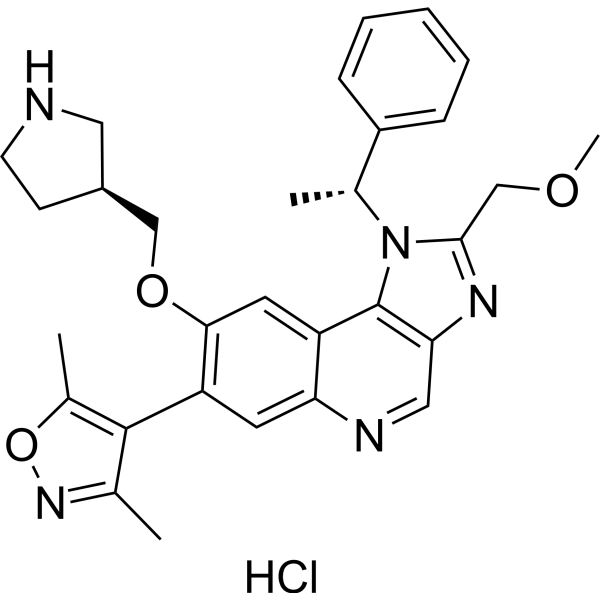
  • HY-136570A

    iBET-BD1 hydrochloride

    Apoptosis Epigenetic Reader Domain Inflammation/Immunology Cancer
    GSK778 (iBET-BD1) hydrochloride is a potent and selective BD1 bromodomain inhibitor of the BET proteins, with IC50s of 75 nM (BRD2 BD1), 41 nM (BRD3 BD1), 41 nM (BRD4 BD1), and 143 nM (BRDT BD1), respectively .
    GSK778 hydrochloride
  • HY-143471

    PLK1/BRD4-IN-1

    Polo-like Kinase (PLK) Epigenetic Reader Domain Apoptosis Androgen Receptor c-Myc Cancer
    WNY0824 (PLK1/BRD4-IN-1) is an orally active dual inhibitor of PLK1 and BET protein families, with IC50 values ​​of 22, 402.5, 150.7, 103.9, and 311.9 nmol/L for PLK1, BRD2, BRD3, BRD4, and BRDT, respectively. WNY0824 induces cell cycle arrest and apoptosis by inhibiting AR- and MYC-mediated transcriptional processes. In addition, WNY0824 also inhibits tumor growth in Enzalutamide (HY-70002) resistant CRPC xenograft tumor models .
    WNY0824
  • HY-175033

    Epigenetic Reader Domain Phosphatase c-Myc Apoptosis Inflammation/Immunology
    BRD4-IN-11 is an orally active and selective BRD4 inhibitor (IC50 = 26.35 nM (BD1), IC50 = 72.81 nM (BD2)). BRD4-IN-11 is approximately 3- to 18-fold more potent against BRD4 than againstBRD2, BRD3, and BRDT. BRD4-IN-11 enhances H2S release and inhibits the upregulation of fibrotic markers (α-SMA and fibronectin), c-Myc, and CDC25B. BRD4-IN-11 reduces apoptosis in LO2 hepatocytes. BRD4-IN-11 significantly improves liver and lung function in a hepatopulmonary fibrosis model and can be used to study hepatopulmonary fibrosis .
    BRD4-IN-11
  • HY-RS01613

    Small Interfering RNA (siRNA) Others

    BRDT Human Pre-designed siRNA Set A contains three designed siRNAs for BRDT gene (Human), as well as a negative control, a positive control, and a FAM-labeled negative control.

    BRDT Human Pre-designed siRNA Set A
    BRDT Human Pre-designed siRNA Set A
  • HY-RS01615

    Small Interfering RNA (siRNA) Others

    Brdt Rat Pre-designed siRNA Set A contains three designed siRNAs for Brdt gene (Rat), as well as a negative control, a positive control, and a FAM-labeled negative control.

    Brdt Rat Pre-designed siRNA Set A
    Brdt Rat Pre-designed siRNA Set A
  • HY-153593

    Epigenetic Reader Domain Cancer
    BET bromodomain inhibitor 3 is BET bromodomain inhibitor. BET bromodomain inhibitor 3 has inhibitory effect against BrdT with Ki value of > 40 µM. BET bromodomain inhibitor 3 can be used for the research of contraception, cancer, and heart disease .
    BET bromodomain inhibitor 3
  • HY-150684

    Epigenetic Reader Domain Cancer
    GXH-II-052 is a potent bivalent bromodomain and extraterminal domain (BET) inhibitor. GXH-II-052 shows binding potential for BRD4-1, BRD4-2, BRD4-T, BRDT-1, BRDT-2, BRDT-T with Kd values of 28, 9.1, 4.8, 0.6, 8.4, 2.6 nM, respectively. GXH-II-052 shows antiproliferative activity. GXH-II-052 decreases the expression of c-Myc .
    GXH-II-052
  • HY-150683

    Epigenetic Reader Domain Cancer
    NC-III-49-1 is a potent bivalent bromodomain and extraterminal domain (BET) inhibitor. NC-III-49-1 shows binding potential for BRD4-1, BRD4-2, BRD4-T, BRDT-1, BRDT-2, BRDT-T with Kd values of 0.095, 0.32, 0.29, 0.089, 5.5, 0.058 nM, respectively. NC-III-49-1 shows antiproliferative activity. NC-III-49-1 decreases the expression of c-Myc .
    NC-III-49-1
  • HY-177143

    Epigenetic Reader Domain Endocrinology
    CDD-1498 (Compound 12) is a potent inhibitor of BRDT-BD2. CDD-1498 has an IC50 of 978 nM against BRDT-BD2. CDD-1498 can be studied in research on nonhormonal contraceptive agent .
    CDD-1498
  • HY-177145

    Epigenetic Reader Domain Endocrinology
    CDD-1132 (Compound 8) is a potent inhibitor of BRDT-BD2. CDD-1132 has an IC50 of 13 nM against BRDT-BD2. CDD-1132 can be studied in research on nonhormonal contraceptive agent .
    CDD-1132
  • HY-177144

    Epigenetic Reader Domain Endocrinology
    CDD-1128 (Compound 11) is a potent inhibitor of BRDT-BD2. CDD-1128 has an IC50 of 521 nM against BRDT-BD2. CDD-1128 can be studied in research on nonhormonal contraceptive agent .
    CDD-1128
  • HY-177139

    Epigenetic Reader Domain Endocrinology
    CDD-1349 (Compound 15) is a BRDT-BD2/BRD4-BD2 selective inhibitor. CDD-1349is an analog with sixfold selectivity for BRDT-BD2 versus BRD4-BD2. CDD-1349 has an IC50 of 22 nM against BRDT. CDD-1349 can be studied in research on nonhormonal contraceptive agent .
    CDD-1349
  • HY-149806

    Epigenetic Reader Domain Cancer
    BD-IN-1 is a pan bromodomain (BD) inhibitor with KD values of 250, 420, 130, 430, 67, 240, 970 nM for BRD4(1), CBP, BRPF1B, BRD7, BRD9, BRDT(1), CECR2 respectively. BD-IN-1 shows antiproliferative activity .
    Bromodomain IN-2
  • HY-177140

    Epigenetic Reader Domain Others
    CDD-1147 is a BRDT-BD2 inhibitor with an IC50 of 94 nM. CDD-1147 can be used in the research of non-hormonal contraceptives for men .
    CDD-1147
  • HY-177141

    Epigenetic Reader Domain Endocrinology
    CDD-1154 is an aminopyrimidine analog. CDD-1154 is a BRDT-BD2 inhibitor (IC50: 139 nM). CDD-1154 is used in male contraceptive research .
    CDD-1154
  • HY-153574

    pArg-JQ1

    PROTACs Epigenetic Reader Domain Infection
    BI01826025 (pArg-JQ1) is a bromodomain1 of BRDT (BRDTBD1) PROTAC degrader. BI01826025 can be used for testing the regulatory effect of ClpC2 on the ClpC1P1P2 protease .
    BI01826025
  • HY-126325

    Epigenetic Reader Domain Cancer
    BY27 is a potent and selective BET BD2 inhibitor, shows 38, 5, 7, and 21-fold BD1/BD2 selectivity for BRD2, BRD3, BRD4, and BRDT. Anti-cancer activity .
    BY27
  • HY-153573

    dCym-JQ1

    PROTACs Epigenetic Reader Domain Infection
    SRG-II-19F (dCym-JQ1) is a bromodomain1 of BRDT (BRDTBD1) PROTAC degrader. SRG-II-19F can be used for testing the regulatory effect of ClpC2 on the ClpC1P1P2 protease .
    SRG-II-19F
  • HY-183247

    Epigenetic Reader Domain Cancer
    BRDT-IN-1 is a BRDT-BD1 and BRDT-T inhibitor with BRDT-BD1 IC50 19 nM, Ki 8.8 nM, Ka 1.6 nM, and BRDT-T IC50 56 nM, Ka 5.0 nM. BRDT-IN-1 displays in vitro metabolic stability and limited cellular permeability in MDCK-MDR1 cells. BRDT-IN-1 can be used for the research of multiple myeloma .
    BRDT-IN-1
  • HY-183248

    Epigenetic Reader Domain Cancer
    BRDT-IN-2 is a BRDT-BD1-preferring inhibitor (Ki=10 μM) with higher affinity for BRDT-BD1 than BRD4-BD1. BRDT-IN-2 preferentially binds BRDT-BD1 without direct interaction with BRDT-BD1’s Arg54 residue. BRDT-IN-2 binds BRD4-BD1 with lower affinity via structured water molecule displacement in its binding pocket. BRDT-IN-2 can be used for the research of multiple myeloma .
    BRDT-IN-2
  • HY-172210

    Epigenetic Reader Domain Apoptosis Cancer
    DDO-8958 is an orally active and selective BET BD1 inhibitor with a KD of 5.6 nM for BRD4 BD1. DDO-8958 exhibits low nanomolar inhibitory activity against all BET BD1 bromodomains except for BRDT BD1. DDO-8958 can inhibit the proliferation and migration, induce apoptosis and cell cycle arrest of tumor cells. DDO-8958 has anti-tumor activity .
    DDO-8958
  • HY-168628

    Epigenetic Reader Domain Cancer
    BET-IN-27 (compound 6C) is an oral BET inhibitor with the IC50 values of 3.3 nM (BRD4-BD2)、3.4 nM (BRD4-BD1)、4.1 nM (BRD2-BD1)、20.4 nM (BRD3-BD1) and 42.0 nM (BRDT-BD1), respectively. BET-IN-27 shows anti-proliferative activity .
    BET-IN-27
  • HY-149519

    Epigenetic Reader Domain Cancer
    BRD4 Inhibitor-28 (Compound 18) is an orally active BRD4 Inhibitor. BRD4 Inhibitor-28 inhibits BRD40-BD1, BRD40-BD2 with IC50s of 15, 55 nM. BRD4 Inhibitor-28 also inhibits BRD2-BD1, BRD3-BD1, BRDT-BD1 with IC50s of 19, 25, 68 nM. BRD4 Inhibitor-28 has anti-melanoma activity .
    BRD4 Inhibitor-28
  • HY-RS01614

    Small Interfering RNA (siRNA) Others

    Brdt Mouse Pre-designed siRNA Set A contains three designed siRNAs for Brdt gene (Mouse), as well as a negative control, a positive control, and a FAM-labeled negative control.

    Brdt Mouse Pre-designed siRNA Set A
    Brdt Mouse Pre-designed siRNA Set A
  • HY-160800

    BR-DT

    Drug Derivative Inflammation/Immunology
    Bilirubin ditaurine (BR-DT) is a mimetic compound of conjugated bilirubin. Bilirubin ditaurine can completely prevent the oxidation of phosphatidylcholine induced by reactive oxygen species in multilayer liposomes or micelles. Bilirubin ditaurine does not significantly decompose 18:2-OOH on its own, but it can greatly accelerate the decomposition of 18:2-OOH catalyzed by copper ions. Bilirubin ditaurine can be used to study the detoxification effect of conjugated bilirubin .
    Bilirubin ditaurine
  • HY-182370

    PROTACs Epigenetic Reader Domain Inflammation/Immunology
    TKP-5 is a PROTAC protein degrader targeting BRD4. TKP-5 can binds to BRD2, BRD3, BRD4 and BRDT, with Kd values of 150 nM, 100 nM and 150 nM for the first three proteins respectively. TKP-5 inhibits the production of thymic stromal lymphopoietin and suppresses the expression of IL-33 mRNA. TKP-5 is applicable to studies related to tape-stripping induced skin injury .
    TKP-5
  • HY-155891

    Epigenetic Reader Domain Cancer
    BET-IN-18 (Compound 3) is a pan-BET bromodomain small-molecule inhibitor, with Ki values of 0.69 μM and 0.37 μM, and Kd values of 1.6 μM and 8.4 μM against BrdT (1) and Brd4 (1) bromodomains, respectively. BET-IN-18 potently and competitively inhibits the binding of the known BET inhibitor (+)-JQ1 (HY-13030) to Brd4 (1) and BrdT (1), with IC50 values of 1.0 μM and 2.3 μM, respectively. BET-IN-18 also competitively inhibits the binding of acetylated histone substrates to Brd4 (1) (IC50 = 0.90 μM). BET-IN-18 can be used in the research of multiple myeloma .
    BET-IN-18
  • HY-173315

    Epigenetic Reader Domain Cancer
    pan-BET/BD2-IN-1 (compound 6b) is a selective extra-terminal (BET) protein inhibitor (BRDT-1 Ki = 1.05 μM and BRD4-1 Ki = 0.68 μM). pan-BET/BD2-IN-1 inhibits MM.1S cancer cell growth with an IC50 of 2.6 μM .
    pan-BET/BD2-IN-1
  • HY-182362

    Epigenetic Reader Domain Inflammation/Immunology
    TK-285 is a potent TSLP inhibitor that suppresses the production of TSLP and inhibits the expression of interleukin-33 mRNA. TK-285 exhibits a selective binding preference for the BD1 domains of BRD2, BRD3, BRD4 and BRDT. TK-285 can be used in research related to atopic dermatitis .
    TK-285
  • HY-182371

    Epigenetic Reader Domain Ligands for Target Protein for PROTAC Others
    BRD4 ligand 15 (compound 5) is a BRD4 ligand and alkyne-modified chalcone derivative, which serves as a building block for the synthesis of BRD4-targeting PROTAC TKP-5 (HY-182370) .
    BRD4 ligand 15

Inquiry Online

Your information is safe with us. * Required Fields.

Salutation


Country or Region *

Applicant Name *


Organization Name *

Department *


Email Address *


Product Name *

Cat. No.


Requested quantity *

Phone Number *


Remarks

Inquiry Online

Inquiry Information

Product Name:
Cat. No.:
Quantity:
MCE Japan Authorized Agent:

