




1. Search Result
Search Result
Results for "

CD4 binding

" in MedChemExpress (MCE) Product Catalog:

32

Inhibitors & Agonists

1

Biochemical Assay Reagents

4

Peptides

7

Inhibitory Antibodies

1

Natural
Products

1

Isotope-Labeled Compounds

Cat. No. Product Name Target Research Areas Chemical Structure
  • HY-108831A
    Natalizumab (Anti-CD49d)
    3 Publications Verification

    AN100226; BG00002

    Integrin Inflammation/Immunology Cancer
    Natalizumab (Anti-CD49d) (AN100226; BG00002) Solution is a humanized monoclonal IgG4 antibody inhibitor that selectively targets α4 integrin (CD49d), blocking the interaction of integrins such as α4β1 (VLA-4) with vascular cell adhesion molecule VCAM-1, intercellular adhesion molecule ICAM-1, and fibronectin by competitively binding to the α4 subunit. Natalizumab solution inhibits the adhesion, retention, and transendothelial migration of immune cells (such as CD4 + T cells), reducing the infiltration of inflammatory cells into the central nervous system or lesion sites, thereby exerting anti-inflammatory and immunomodulatory activity. Natalizumab (Anti-CD49d) solution is used in the study of relapsing-remitting multiple sclerosis (RRMS) and is also applied in the research of autoimmune or inflammation-related diseases such as Crohn's disease, B-cell lymphoma, and non-infectious uveitis. Natalizumab (Anti-CD49d) can also prevent lymphocytes from entering the central nervous system, thus preventing acute demyelinating relapses .
    Natalizumab (Anti-CD49d)
  • HY-15440A
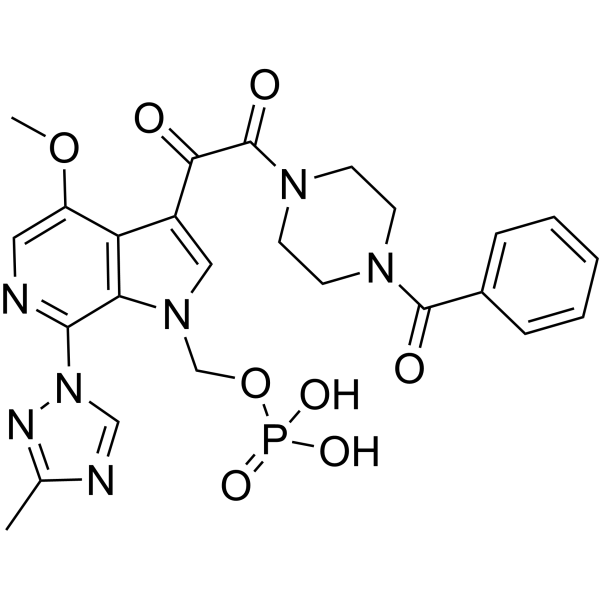
    Fostemsavir
    2 Publications Verification

    BMS-663068

    HIV Infection
    Fostemsavir (BMS-663068) is the phosphonooxymethyl prodrug of BMS-626529. Fostemsavir (BMS-663068) is a novel attachment inhibitor that targets HIV-1 gp120 and prevents its binding to CD4 + T cells.
    Fostemsavir
  • HY-15440
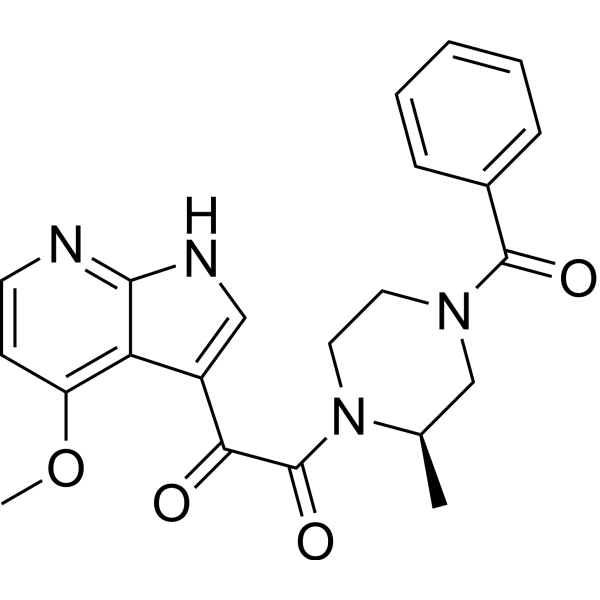
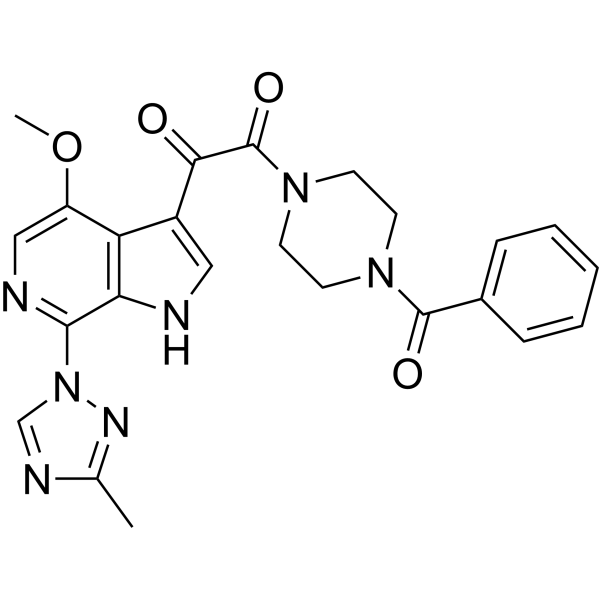
    Temsavir
    5+ Cited Publications

    BMS-626529

    HIV Infection
    Temsavir (BMS-626529) is a novel attachment inhibitor that targets HIV-1 gp120 and prevents its binding to CD4 + T cells.
    Temsavir
  • HY-D0976
    NF279
    1 Publications Verification

    P2X Receptor HIV NTPDase CXCR Infection
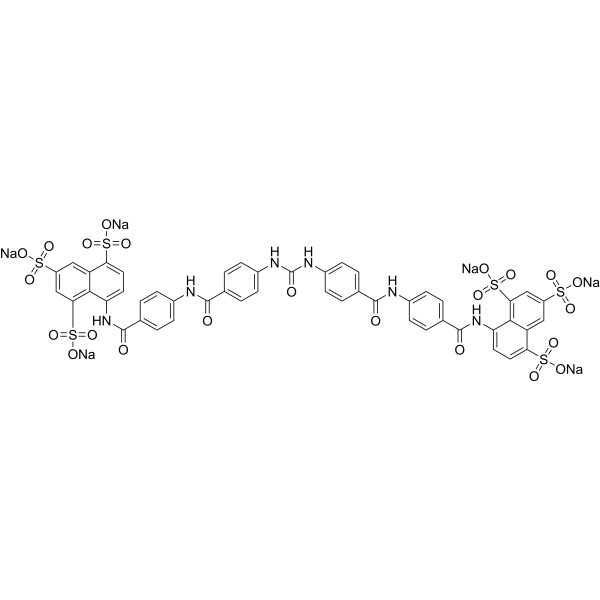
    NF279 is a selective P2X1 receptor antagonist and NTPDase inhibitor, with a P2X1 IC50 value of 19 nM. NF279 suppresses GABA-evoked currents, reduces ATP-excited respiratory activity, alters hypoglossal nerve burst parameters, and blocks CXCR4, CCR5, CXCR3, and CXCR7-mediated calcium responses. NF279 arrests HIV-1 fusion downstream of CD4 binding, inhibits R5- and X4-tropic HIV-1 strains. NF279 can be used for the research of HIV-1 infection .
    NF279
  • HY-P11303

    CD74 MHC Neurological Disease Cancer
    PADRE peptide is a pan-HLA-DR binding epitope and immunostimulant. PADRE peptide binds to the peptide-binding groove of MHC class II molecules for presentation to CD4 + T cells, thereby effectively stimulating specific immune responses. PADRE peptide not only enhances anti-tumor immune responses, inhibits tumor growth and prolongs survival; it also significantly increases the frequency of E7-specific CD8 + T cells and improves therapeutic efficacy against TC-1 tumors when used in combination with E7 peptide-based vaccines and poly (I:C). The intensity of the immune response induced by PADRE peptide is lower than that of the Ii-PADRE DNA vaccine, and it fails to enhance the immune effect of CRT-E7 DNA. PADRE peptide is widely applicable to research on related tumors such as melanoma, glioblastoma and cervical cancer .
    PADRE peptide
  • HY-108831
    Natalizumab
    3 Publications Verification

    Integrin Inflammation/Immunology Cancer
    Natalizumab (AN100226; BG00002) is a humanized monoclonal IgG4 antibody inhibitor that selectively targets α4 integrin (CD49d). It blocks the interaction of integrins such as α4β1 (VLA-4) with vascular cell adhesion molecule VCAM-1, intercellular adhesion molecule ICAM-1, and fibronectin by competitively binding to the α4 subunit. Natalizumab inhibits the adhesion, retention, and transendothelial migration of immune cells (such as CD4 + T cells), reducing the infiltration of inflammatory cells into the central nervous system or lesion sites, thus exerting anti-inflammatory and immunomodulatory activity. Natalizumab is used in the study of relapsing-remitting multiple sclerosis (RRMS) and also has applications in the study of autoimmune or inflammation-related diseases such as Crohn's disease, B-cell lymphoma, and non-infectious uveitis. Natalizumab can also prevent lymphocytes from entering the central nervous system, thereby preventing acute demyelinating relapses .
    Natalizumab
  • HY-P0272

    HIV Infection
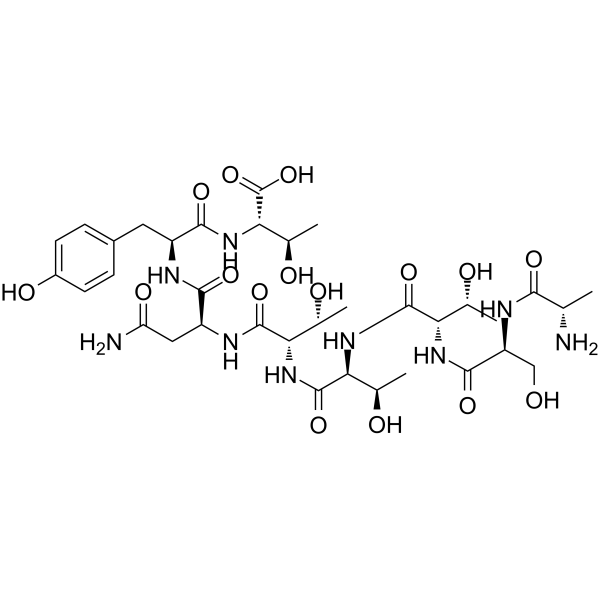
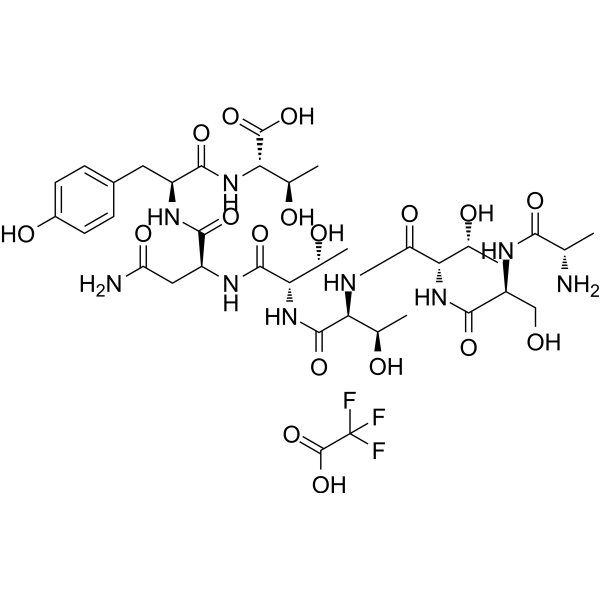
    Peptide T is an octapeptide from the V2 region of HIV-1 gp120. Peptide T is a ligand for the CD4 receptor and prevents binding of HIV to the CD4 receptor.
    Peptide T
  • HY-14134
    BMS-378806
    Maximum Cited Publications
    7 Publications Verification

    BMS-806

    HIV Infection
    BMS-378806 is a potent HIV-1 attachment inhibitor that interferes with CD4-gp120 interactions. BMS-378806 selectively inhibits the binding of HIV-1 gp120 to the CD4 receptor with EC50 of 0.85-26.5 nM in virus.
    BMS-378806
  • HY-P991246

    Virus Protease HIV Infection
    VRC01LS is a humanized monoclonal antibody inhibitor targeting the CD4-binding site of HIV-1 envelope glycoprotein (Env). VRC01LS blocks the binding of HIV-1 to host cell CD4 receptor, inhibiting viral entry. VRC01LS is promising for research of HIV-1 infection .
    VRC01LS
  • HY-W181026

    Fluorescent Dye Inflammation/Immunology
    KLF10-IN-1 (#48-15) is a KLF10 inhibitor with an IC50 value of 40 μM for KLF10 reporter gene. KLF10-IN-1 can inhibit KLF10-DNA binding and transcriptional activity, block the conversion of CD4+CD25 T cells to CD4+CD25+T regulatory cells, and inhibit the expression of KLF10 target genes. KLF10-IN-1 can be used as a useful mechanistic probe to study KLF10-mediated effects and T regulatory cell biology .
    KLF10-IN-1
  • HY-15440B
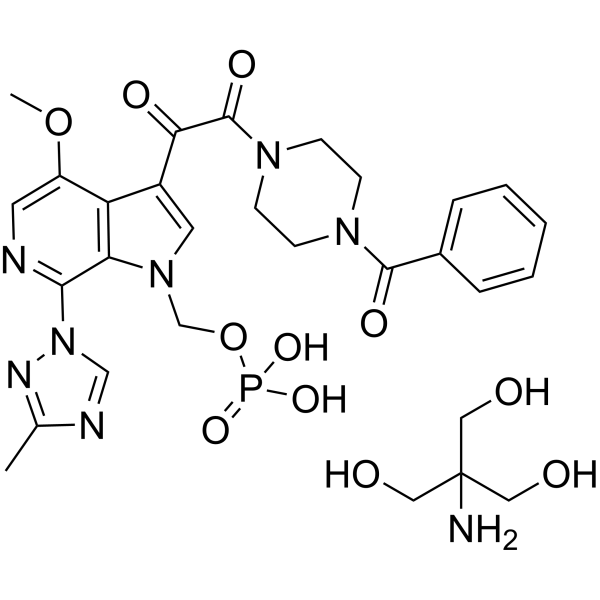
    Fostemsavir Tris
    2 Publications Verification

    BMS-663068 Tris

    HIV Infection
    Fostemsavir Tris (BMS-663068 (Tris)) is the phosphonooxymethyl proagent of BMS-626529. Fostemsavir Tris (BMS-663068 (Tris)) is a novel attachment inhibitor that targets HIV-1 gp120 and prevents its binding to CD4 + T cells.
    Fostemsavir Tris
  • HY-160267

    HIV DNA/RNA Synthesis Infection Neurological Disease Cancer
    iPAF1C is a inhibitor of the polymerase-associated factor 1 complex (PAF1C) with specific targeting to the PAF1 binding groove of CTR9 (a key subunit of PAF1C). iPAF1C disrupts PAF1C assembly by interfering with the PAF1-CTR9 interaction. iPAF1C selectively impairs BRD4-mediated recruitment of PAF1 to chromatin at hypoxia-responsive genes and inhibits RNA polymerase II (RNAPII) pause release. iPAF1C increases the population of HIV-1 NL4.3 Nef-IRES-GFP infected primary human CD4 +T cells in a dose-dependent manner. PAF1C can be used for the study of infection and diseases associated with abnormal hypoxic adaptation (e.g., cancers, neurological disorders) .
    iPAF1C
  • HY-P99028

    TMB-355; TNX-355

    HIV Infection
    Ibalizumab (TMB-355) is a humanized anti-CD4 IgG4 monoclonal antibody. Ibalizumab prevents HIV cell entry by binding to CD4 receptor. Ibalizumab can be used for the research of infection, such as HIV-1 infection .
    Ibalizumab
  • HY-116282W

    DSS (MW 6500-10000); DXS (MW 6500-10000)

    HIV Inflammation/Immunology
    Dextran sulfate sodium salt (DSS) (MW 6500-10000) is a polymer of dehydrated glucose with a molecular weight of approximately 5000. Dextran sulfate sodium salt with different molecular weights exhibits different biological activities. Dextran sulfate sodium salt (MW 6500-10000) has antiviral activity against HIV-1 and HIV-2. Dextran sulfate sodium salt (MW 6500-10000) blocks the binding of virions to CD4 T lymphocytes and inhibits syncytia formation. Dextran sulfate sodium salt (MW 6500-10000) also prevents experimental urolithiasis due to its cytoprotective actions. Moreover, because of its biocompatible and highly charged properties, Dextran sulfate sodium salt (MW 6500-10000) is a suitable choice for pharmaceutical systems .
    Dextran sulfate sodium salt (MW 6500-10000)
  • HY-P0272A

    HIV Infection
    Peptide T (TFA) is an octapeptide from the V2 region of HIV-1 gp120. Peptide T is a ligand for the CD4 receptor and prevents binding of HIV to the CD4 receptor.
    Peptide T TFA
  • HY-121820

    HIV Infection
    DMJ-I-228 is a CD4-mimetic. DMJ-I-228 binds to HIV-1 gp120 within the conserved Phe 43 cavity near the CD4-binding site, thereby blocking CD4 binding and inhibiting HIV-1 infection .
    DMJ-I-228
  • HY-15440R

    BMS-626529 (Standard)

    HIV Reference Standards Infection
    Temsavir (Standard) is the analytical standard of Temsavir. This product is intended for research and analytical applications. Temsavir (BMS-626529) is a novel attachment inhibitor that targets HIV-1 gp120 and prevents its binding to CD4+ T cells.
    Temsavir (Standard)
  • HY-123902

    Zizanin A

    CCR HIV Infection
    Ophiobolin C inhibits CCR5 binding to the envelop protein gp120 and CD4, which is responsible for mediating the entry of HIV-1 into cells . Ophiobolin C is also cytotoxic to chronic lymphocytic leukemia cells .
    Ophiobolin C
  • HY-P991479

    GS-8588

    HIV CD3 Infection
    Amtabafusp alfa (GS-8588) is an envelope-targeting bispecific T-cell engager for HIV treatment. Amtabafusp alfa redirects effector T cells by binding to CD3 via a humanized anti-CD3 Fab domain and to HIV envelope proteins via an engineered CD4 domain 1 variant. Amtabafusp alfa exhibits potent, broad-spectrum activity against a variety of HIV isolates and specifically kills HIV-infected cells. Amtabafusp alfa can be used for research on HIV infection .
    Amtabafusp alfa
  • HY-13644

    15-Deoxyspergualin

    Others Others
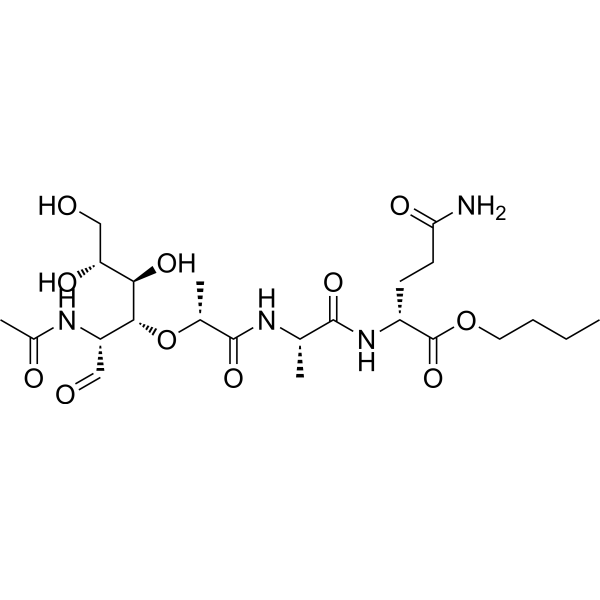
    Gusperimus is a fully synthetic racemate that has a novel mechanism of action by binding to the intracellular heat shock protein hsp70 and interfering with intracellular signal transduction. This mechanism of action can enhance the effect of immunosuppressive therapy. Gusperimus can inhibit the differentiation of T cells into cytotoxic T cells, reduce the expression of IL-2 receptors on CD4 and CD8 cells, and inhibit IFN-γ-induced B cell maturation. In addition, when used with cyclosporine, tacrolimus or mycophenolate mofetil, Gusperimus can enhance the immunosuppressive effect and prevent allogeneic transplant rejection.
    Gusperimus
  • HY-171859

    PROTACs HIV Cancer
    FC-14367 is a PROTAC degrader targeting HIV-1 Nef protein. FC-14367 forms a ternary complex by binding Nef and Cereblon E3 ubiquitin ligase, inducing Nef ubiquitination and proteasomal degradation, restoring cell-surface CD4 and MHC-I expression and inhibiting HIV-1 replication. FC-14367 can be used in research on HIV infection and AIDS . (Black: Glycolic acid (HY-W015967); Blue: 2-(2,6-Dioxopiperidin-3-yl)phthalimidine (HY-138793))
    FC-14367
  • HY-P3554

    HIV Infection
    Carbomethoxycarbonyl-D-Pro-D-Phe-OBzl (compound (CPF(LL)) is an HIV-1 inhibitor. Carbomethoxycarbonyl-D-Pro-D-Phe-OBzl interacts with gp120 to block gp120 binding to CD4 and preserve CD4-dependent T cell function .
    Carbomethoxycarbonyl-D-Pro-D-Phe-OBzl
  • HY-N5178

    HIV Infection
    Chloropeptin I inhibits the binding of gp120 to CD4 with IC50 of 2.0 μM, with the activity of selective anti-human immunodeficiency virus (HIV) .
    Chloropeptin I
  • HY-119202

    (S)-BMS-806

    HIV Infection
    (S)-BMS-378806 ((S)-BMS-806) is an orally bioavailable HIV-1 inhibitor with activity against gp120-CD4 interactions. (S)-BMS-378806 exhibits micromolar inhibition of HIV-1 gp120-CD4 binding. The design and synthesis of (S)-BMS-378806 was based on a comprehensive study of protein-ligand interactions, which guided the identification and design of novel symmetrical N,N'-disubstituted aminoureas and thioureas. (S)-BMS-378806, synthesized in aqueous media using microwave irradiation, was validated for its inhibitory activity in HIV-1 gp120-CD4 capture ELISA .
    (S)-BMS-378806
  • HY-15440AR

    BMS-663068 (Standard)

    Reference Standards HIV Infection
    Fostemsavir (Standard) is the analytical standard of Fostemsavir. This product is intended for research and analytical applications. Fostemsavir (BMS-663068) is the phosphonooxymethyl prodrug of BMS-626529. Fostemsavir (BMS-663068) is a novel attachment inhibitor that targets HIV-1 gp120 and prevents its binding to CD4 + T cells.
    Fostemsavir (Standard)
  • HY-15440AS

    BMS-663068-d8

    Isotope-Labeled Compounds HIV Infection
    Fostemsavir-d8 (BMS-663068-d8) is deuterium labeled Fostemsavir. Fostemsavir (BMS-663068) is the phosphonooxymethyl prodrug of BMS-626529. Fostemsavir (BMS-663068) is a novel attachment inhibitor that targets HIV-1 gp120 and prevents its binding to CD4 + T cells.
    Fostemsavir-d8
  • HY-15440BR

    BMS-663068 Tris (Standard)

    HIV Reference Standards Infection
    Fostemsavir Tris (Standard) is the analytical standard of Fostemsavir Tris. This product is intended for research and analytical applications. Fostemsavir Tris (BMS-663068 (Tris)) is the phosphonooxymethyl proagent of BMS-626529. Fostemsavir Tris (BMS-663068 (Tris)) is a novel attachment inhibitor that targets HIV-1 gp120 and prevents its binding to CD4+ T cells.
    Fostemsavir Tris (Standard)
  • HY-P991824

    Transmembrane Glycoprotein Inflammation/Immunology
    Anti-Mouse CD4 Antibody (YTS 177) reacts with the mouse CD4. Anti-Mouse CD4 Antibody (YTS 177) shows non-depleting but binding does induce rapid internalization of CD4 on both CD4 + Foxp3- T cells and Foxp3 + regulatory T cells. Recommend Isotype Controls: Rat IgG2a kappa, Isotype Control (HY-P990679) .
    Anti-Mouse CD4 Antibody (YTS 177)
  • HY-W387035

    MHC Metabolic Disease Inflammation/Immunology
    D-α-Methyl DOPA is an inhibitor of the binding of DQ8 peptide to MHC class II molecules. D-α-Methyl DOPA occupies a pocket along the DQ8 peptide binding groove. D-α-Methyl DOPA inhibits the binding of a DQ8 peptide to an MHC class II molecule for presentation to CD4 + T cells, thereby slowing the development or progression of type 1 diabete or celiac disease .
    D-α-Methyl DOPA
  • HY-182690

    HIV Infection
    CK147 is a Sec61α translocase inhibitor that blocks the co-translational translocation of proteins by binding to and inhibiting the Sec61 protein translocation channel on the endoplasmic reticulum membrane. CK147 exhibits potent CD4 downregulation activity with an IC50 of 0.04 µM. CK147 prevents HIV entry into host cells and shows significant cytotoxicity. CK147 can be used in studies related to HIV infection .
    CK147
  • HY-P992434

    PD-1/PD-L1 SHP1 Interleukin Related Cancer
    OSE-279 is a high-affinity humanized monoclonal bivalent antibody targeting PD-1, the recommended isotype control is HY-P99003. OSE-279 blocks PD-1 ligand binding, inhibits PDL1-induced SHP1 phosphorylation, restores T cell activation, and promotes reactivation of primary T cell effector functions. OSE-279 binds hFcRn receptor, predicts long half-life, induces CD4 and CD8 T cell proliferation, and promotes interleukin 2 and interferon gamma secretion. OSE-279 can be used for the research of advanced malignancies, colon cancer, hepatocarcinoma, mesothelioma .
    OSE-279
  • HY-181673

    Microtubule/Tubulin Apoptosis Bcl-2 Family Caspase PARP Cancer
    ICD inducer-2 is a immunogenic cell death inducer. ICD inducer-2 binds to the colchicine binding site on tubulin to inhibit tubulin polymerization. ICD inducer-2 exhibits broad-spectrum antiproliferative activity across multiple cancer cell lines. ICD inducer-2 inhibits cells migration, causes G2/M phase and induces apoptosis. ICD inducer-2 promotes infiltration of CD4+ and CD8+ T cells into the tumor microenvironment. ICD inducer-2 downregulates antiapoptotic protein Bcl-2, upregulates proapoptotic proteins Bax and Bim-1, and increases cleaved caspase 3, cleaved caspase 9, and cleaved PARP levels. ICD inducer-2 overcomes paclitaxel resistance in xenograft models and achieves tumor growth inhibition. ICD inducer-2 can be used for the research of cancer, such as lung carcinoma .
    ICD inducer-2

Inquiry Online

Your information is safe with us. * Required Fields.

Salutation


Country or Region *

Applicant Name *


Organization Name *

Department *


Email Address *


Product Name *

Cat. No.


Requested quantity *

Phone Number *


Remarks

Inquiry Online

Inquiry Information

Product Name:
Cat. No.:
Quantity:
MCE Japan Authorized Agent:

