







1. Search Result
Search Result
Results for "

CTL response

" in MedChemExpress (MCE) Product Catalog:

22

Inhibitors & Agonists

1

Fluorescent Dyes

1

Biochemical Assay Reagents

20

Peptides

2

Inhibitory Antibodies

1

Oligonucleotides

Cat. No. Product Name Target Research Areas Chemical Structure
  • HY-126666

    ADC Payload Inflammation/Immunology Cancer
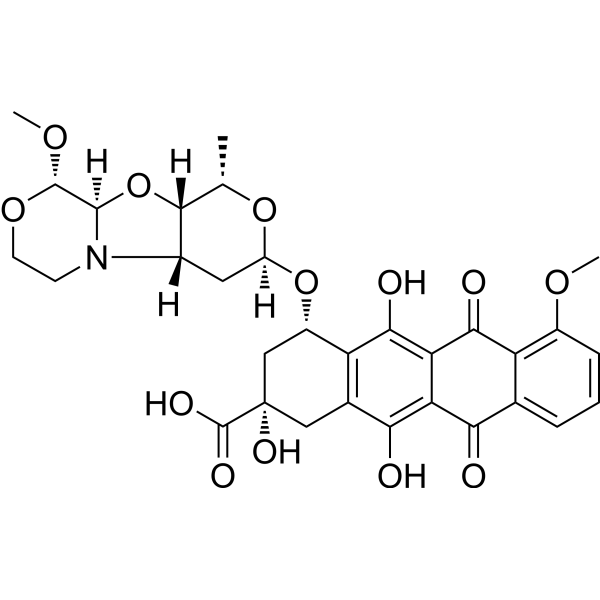
    PNU-159682 carboxylic acid (Compound 53) is a potent ADCs cytotoxin and encodes a member of the C-type lectin/C-type lectin-like domain (CTL/CTLD) superfamily. PNU-159682 carboxylic acid has protein fold and diverse functions, such as cell adhesion, cell-cell signalling, glycoprotein turnover, and roles in inflammation and immune response .
    PNU-159682 carboxylic acid
  • HY-P1907

    HPV Cancer
    Human Papillomavirus (HPV) E7 protein (49-57) is a cytotoxic T lymphocyte (CTL) epitope peptide derived from HPV16 E7 protein (sequence: RAHYNIVTF). Human Papillomavirus (HPV) E7 protein (49-57) induces E749-57-specific CTL responses. Human Papillomavirus (HPV) E7 protein (49-57) can be used for the research of cervical cancer .
    Human Papillomavirus (HPV) E7 protein (49-57)
  • HY-P5470

    EBV IFNAR Inflammation/Immunology
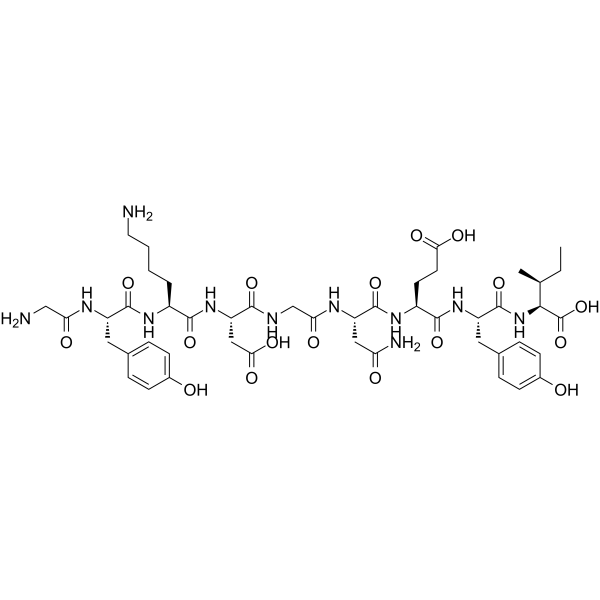
    LMP2A (426-434) is a HLA-A2-restricted cytotoxic T lymphocyte (CTL) epitope of Epstein-Barr virus (EBV) latent membrane protein 2A (LMP2A). LMP2A (426-434) can trigger an immune response in individuals expressing different HLA-A*02 subtypes (A*02:01, A*02:03, A*02:06 and A*02:07). LMP2A (426-434) can induce a strong IFN-γ secretion response, stimulating the production of a high proportion of CD8 + IFN-γ + T cells. LMP2A (426-434) induces specific CTLs to effectively kill target cells expressing LMP2A. LMP2A (426-434) can be used to study EBV-related malignant tumors (such as Hodgkin's disease and nasopharyngeal carcinoma) .
    LMP2A (426-434)
  • HY-P2455

    Listeriolysin O (91-99)

    Bacterial Infection Inflammation/Immunology
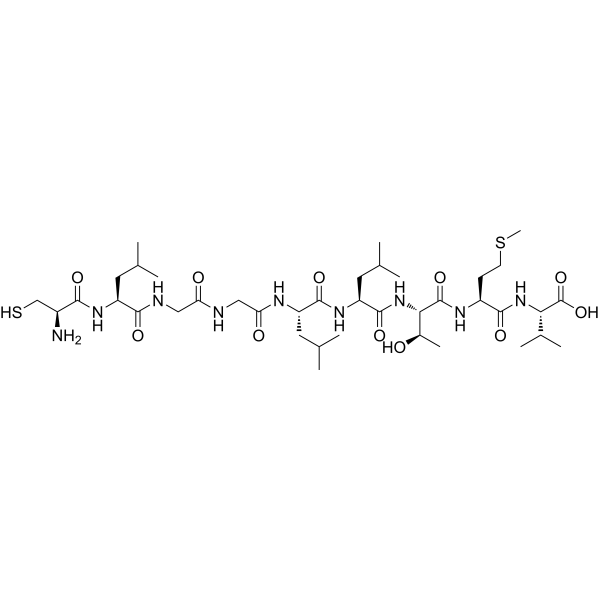
    LLO (91-99) (Listeriolysin O (91-99)) is an exotoxin and class I MHC-restricted T-cell epitope of listeriolysin (LLO). LLO (91-99) is processed by antigen-presenting cells, binds to MHC class I molecules and is presented to the cell surface. LLO (91-99) induces CTL responses and effectively eliminates Listeria from infected cells. LLO (91-99) can be used in the research of Listeria infections (e.g., listeriosis) .
    LLO (91-99)
  • HY-P1837

    Influenza Virus HSV Infection
    Influenza HA (518-526) is an H-2d-restricted CTL epitope derived from influenza virus hemagglutinin. Influenza HA (518-526) is highly conserved across various H5N1, some H9N2, and H1N1 strains. Influenza HA (518-526) binds to the mouse MHC class I allele K d to form a complex, which is then recognized by specific CD8 + T cells. Influenza HA (518-526) is an immunodominant epitope in influenza-infected BALB/c mice, and it stimulates CD8 + T cells to secrete IFN-γ to induce a robust immune response. Currently, Influenza HA (518-526) is widely used in research related to respiratory syncytial virus (RSV), influenza virus, and H5N1 influenza .
    Influenza HA (518-526)
  • HY-P10610A

    MDM-2/p53 Cancer
    Peptide 234CM TFA is a peptide containing isoleucine at position 3, corresponding to the sequence of a point mutation in p53 codon 234. Peptide 234CM TFA induces potent cytotoxic T cell (CTL) and antitumor immune responses against mutant p53 .
    Peptide 234CM TFA
  • HY-P10610

    MDM-2/p53 Cancer
    Peptide 234CM is a peptide containing isoleucine at position 3, corresponding to the sequence of a point mutation in p53 codon 234. Peptide 234CM induces potent cytotoxic T cell (CTL) and antitumor immune responses against mutant p53 .
    Peptide 234CM
  • HY-P10593

    Transmembrane Glycoprotein Influenza Virus Cancer
    Influenza A NP (383-391) (HLA-B27) is a peptide sequence derived from tetanus toxin. Influenza A NP (383-391) (HLA-B27) is a broadly immunogenic CD4+ T helper cell epitope that enhances CD8+ cytotoxic T lymphocyte (CTL) responses. Influenza A NP (383-391) (HLA-B27) can be used in breast cancer research .
    Influenza A NP (383-391) (HLA-B27)
  • HY-P10497

    Bacterial Infection Inflammation/Immunology
    EBV BZLF1 (190-197) is an immunodominant CEF-controlling peptide derived from Epstein-Barr virus (EBV). EBV BZLF1 (190-197) is a suitable epitope for CD8+ T cells to stimulate the release of IFNg. CTL responses to EBV BZLF1 (190-197) are diverse and cross-recognize similar peptides from both host self-proteins and bacterial proteins. EBV BZLF1 (190-197) can be used to study autoimmune diseases .
    EBV BZLF1 (190-197)
  • HY-P10497A

    Bacterial Infection Inflammation/Immunology
    EBV BZLF1 (190-197) TFA is an immunodominant CEF-controlling peptide derived from Epstein-Barr virus (EBV). EBV BZLF1 (190-197) TFA is a suitable epitope for CD8+ T cells to stimulate the release of IFNg. CTL responses to EBV BZLF1 (190-197) TFA are diverse and cross-recognize similar peptides from both host self-proteins and bacterial proteins. EBV BZLF1 (190-197) TFA can be used to study autoimmune diseases .
    EBV BZLF1 (190-197) TFA
  • HY-P4046

    HIV Inflammation/Immunology
    HBV Seq2 aa:179-186 serve as effective motifs for CTL response in H-2b system after in vitro restimulation of the primed T cells. HBV Seq2 aa:179-186 is a novel epitope identified on the surface antigen of hepatitis B virus .
    HBV Seq2 aa:179-186
  • HY-153209

    Biochemical Assay Reagents Others
    Adjuvant-4 is a vaccine adjuvant that enhances antigen-specific antibody titers and cytotoxic T lymphocyte (CTL) responses . Adjuvant is generally an oil-in-water emulsifier of mineral oil and mannitol monooleate.
    Adjuvant-4
  • HY-153209G

    Biochemical Assay Reagents Others
    Adjuvant-4 (GMP) is a GMP grade Adjuvant-4. Adjuvant-4 is a vaccine adjuvant that enhances antigen-specific antibody titers and cytotoxic T lymphocyte (CTL) responses . Adjuvant is generally an oil-in-water emulsifier of mineral oil and mannitol monooleate.
    Adjuvant-4 (GMP)
  • HY-P2521

    Influenza Virus Infection Inflammation/Immunology
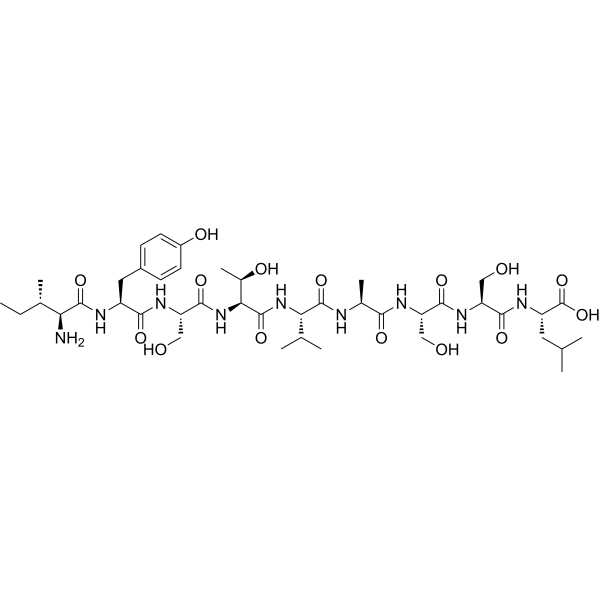
    NS2 (114-121), Influenza, the 114-121 fragment of influenza nonstructural protein 2 (NS2), is a influenza-derived epitope. NS2 (114-121), Influenza can be used for the research of CD8 + cytotoxic T lymphocyte (CTL) in antiviral immune responses .
    NS2 (114-121), Influenza
  • HY-P5742

    EGFR Cancer
    ELAAWCRWGFLLALLPPGIAG (P5) is derived from rat HER2/neu protein with 21 amino acid length (aa 5-25). ELAAWCRWGFLLALLPPGIAG can induce cytotoxic T lymphocyte (CTL) responses in mice bearing HER2-positive tumours .
    ELAAWCRWGFLLALLPPGIAG
  • HY-P5742A

    EGFR Cancer
    ELAAWCRWGFLLALLPPGIAG TFA (P5) is derived from rat HER2/neu protein with 21 amino acid length (aa 5-25). ELAAWCRWGFLLALLPPGIAG TFA can induce cytotoxic T lymphocyte (CTL) responses in mice bearing HER2-positive tumours .
    ELAAWCRWGFLLALLPPGIAG TFA
  • HY-P10869
    dCNP
    1 Publications Verification

    Natriuretic Peptide Receptor (NPR) Inflammation/Immunology Cancer
    dCNP binds to NPR-B/C receptor, activates cGMP signaling pathway, and regulates vascular function. dCNP exhibits anti-hypoxia property through downregulation of hypoxia-related genes expressions like HIF1α and HIF2α. dCNP inhibits the induction of tumor stroma and exhibits anti-fibrosis activity. dCNP upregulates CTLs, NK cells, and conventional type 1 dendritic cells in tumors, and activates immune responses .
    dCNP
  • HY-P991354

    PD-1/PD-L1 Cancer
    GR-1405 is a human monoclonal antibody (mAb) targeting B7-H1/PD-L1/CD274. GR-1405 enhances cytotoxic T lymphocyte (CTL)-mediated antitumor immune responses against PD-L1-expressing tumor cells. GR-1405 can be used in Lymphoma and Solid tumours research .
    GR-1405
  • HY-P10607

    EBV Cancer
    IALYLQQNW is a specific nonapeptide sequence derived from the tumor-associated antigen latent membrane protein 1 (LMP1) encoded by Epstein-Barr virus (EBV). As a latent T-cell epitope, IALYLQQNW is able to activate EBV-specific cytotoxic T lymphocytes (CTLs), which are able to recognize and kill EBV-infected cells expressing LMP1. IALYLQQNW plays an important role in the immune response against EBV-associated tumors and can be used in the study of Hodgkin's disease and nasopharyngeal carcinoma .
    IALYLQQNW
  • HY-P991530

    Biochemical Assay Reagents Inflammation/Immunology Cancer
    YH004 is an anti-CD137 agonistic monoclonal antibody, with immunostimulating and antineoplastic activities. YH004 activates CD137 expressed on a variety of leukocyte subsets including activated T lymphocytes and natural killer cells. YH004 enhances CD137-mediated signaling and induces cytotoxic T-lymphocyte (CTL) proliferation, cytokine production and promotes anti-tumor response mediated by CTL. YH004 induces NK-mediated tumor cell killing and suppresses the immunosuppressive activity of regulatory T cells. YH004 can be studied in anticancer research .
    YH004
  • HY-P11397

    MHC Cancer
    VLPDVFIRCV, a melanoma antigen-derived peptide, is the intron sequence (nt 38-67) of the N-acetylglucosamine transferase V (GnT-V) gene. VLPDVFIRCV has a high affinity for MHC-I class molecules, but it cannot activate the immune response against natural tumor cells. The cytotoxic T lymphocytes (CTL) induced by VLPDVFIRCV can specifically lyse T2 cells loaded with this peptide in the chromium release experiment. VLPDVFIRCV can be used for vaccine design research .
    VLPDVFIRCV
  • HY-P11714

    EBV MHC Infection Cancer
    EBNA3 246-254 (RYSIFFDYM) is an EBV peptide. EBNA3 246-254 is submitted by HLA-A24. EBNA3 246-254 is amplified in vitro, followed by HLA multimer staining to measure EBV-specific CTLs. EBNA3 246-254 can be used for the research of lung cancer .
    EBNA3 246-254

Inquiry Online

Your information is safe with us. * Required Fields.

Salutation


Country or Region *

Applicant Name *


Organization Name *

Department *


Email Address *


Product Name *

Cat. No.


Requested quantity *

Phone Number *


Remarks

Inquiry Online

Inquiry Information

Product Name:
Cat. No.:
Quantity:
MCE Japan Authorized Agent:

