11 Results for "

D-Arabitol

" in MedChemExpress (MCE) Product Catalog:
Products (11)

11 Results for "D-Arabitol" in MCE Product Catalog:

2
2 Cited Publications
Cat. No.: HY-B0910A
CAS No.: 10049-83-9
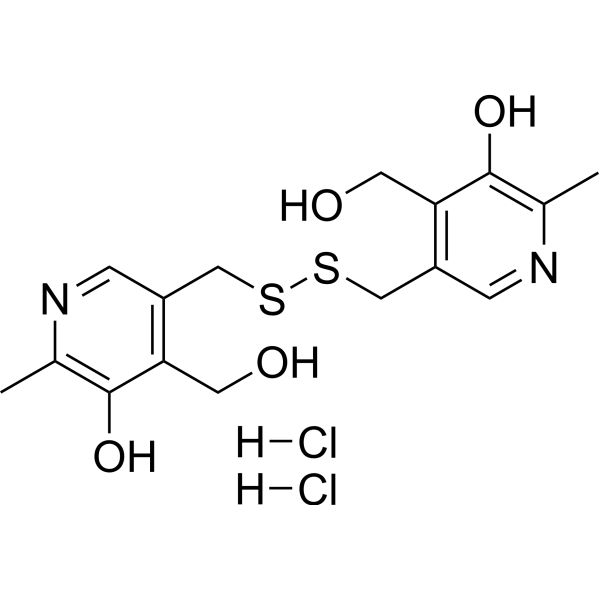
Synonyms: Pyritinol dihydrochloride; Pyridoxine disulfide dihydrochloride; Vitamin B6 disulfide dihydrochloride
Pyrithioxin (Pyritinol) dihydrochloride is the dihydrochloride salt of Pyrithioxin (HY-B0910). Pyrithioxin (Pyritinol) is an orally active neurodynamic compound. Pyrithioxin can promote the metabolism of glucose and amino acids, increase carotid blood flow and improve cerebral blood flow. Pyrithioxin exhibits anti-inflammation, anti-tumor and neuroprotective effect. Pyrithioxin can be used for the researches of cancer, inflammation, immunology, metabolic and neurological disease such as cerebral infarct, epilepsy, fibrosarcomas and rheumatoid polyarthritis .
loading...
    loading...
2
2 Cited Publications
Cat. No.: HY-B0910
CAS No.: 1098-97-1
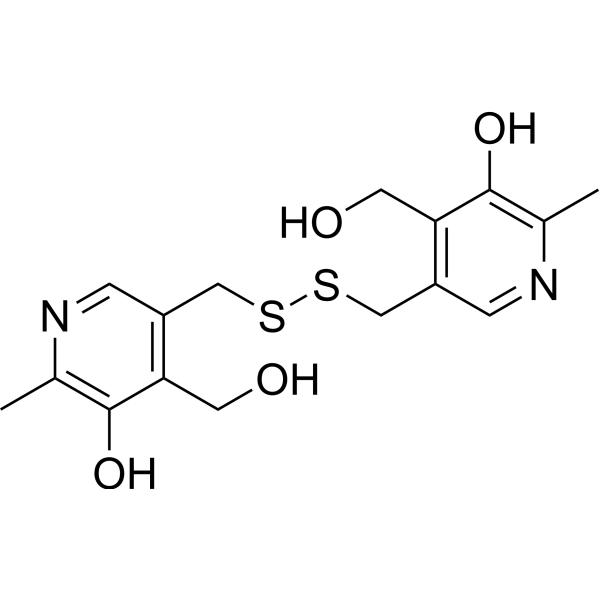
Synonyms: Pyritinol; Pyridoxine disulfide; Vitamin B6 disulfide
Pyrithioxin (Pyritinol) is an orally active neurodynamic compound. Pyrithioxin can promote the metabolism of glucose and amino acids, increase carotid blood flow and improve cerebral blood flow. Pyrithioxin exhibits anti-inflammation, anti-tumor and neuroprotective effect. Pyrithioxin can be used for the researches of cancer, inflammation, immunology, metabolic and neurological disease such as cerebral infarct, epilepsy, fibrosarcomas and rheumatoid polyarthritis .
loading...
    loading...
Cat. No.: HY-N3686
CAS No.: 488-82-4
Target:  

AMPK PGC-1α

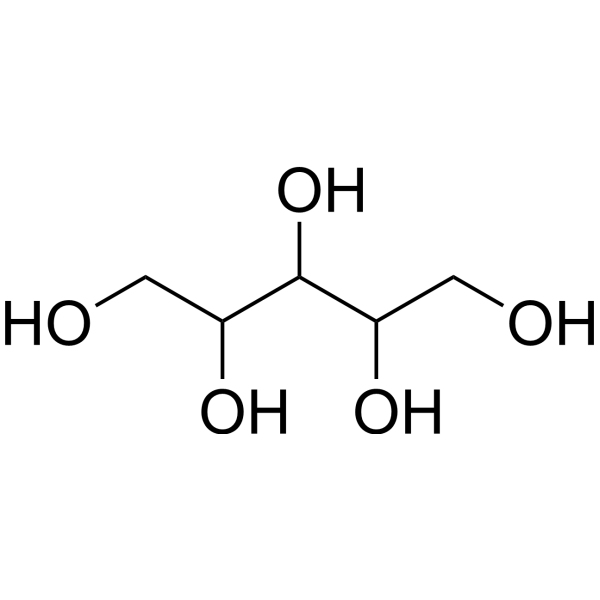
D-Arabitol is an orally active D-enantiomer of arabitol. D-Arabitol modulates the composition of gut microbiota, increases short-chain fatty acids, and promotes AMPK-PGC-1α-related browning of white adipose tissue. D-Arabitol improves weight gain, fat accumulation, insulin resistance, lipid deposition and inflammatory responses. D-Arabitol serves as the sole carbon/energy source for Bacillus methanolicus MGA3, a strain that can co-utilize it with mannitol. D-Arabitol is applicable to obesity-related research .
loading...
    loading...
Cat. No.: HY-N3686R
CAS No.: 488-82-4
D-Arabitol (Standard) is the analytical standard of D-Arabitol. This product is intended for research and analytical applications. D-Arabitol is an orally active D-enantiomer of arabitol. D-Arabitol modulates the composition of gut microbiota, increases short-chain fatty acids, and promotes AMPK-PGC-1α-related browning of white adipose tissue. D-Arabitol improves weight gain, fat accumulation, insulin resistance, lipid deposition and inflammatory responses. D-Arabitol serves as the sole carbon/energy source for Bacillus methanolicus MGA3, a strain that can co-utilize it with mannitol. D-Arabitol is applicable to obesity-related research.
loading...
    loading...
Cat. No.: HY-N3686S
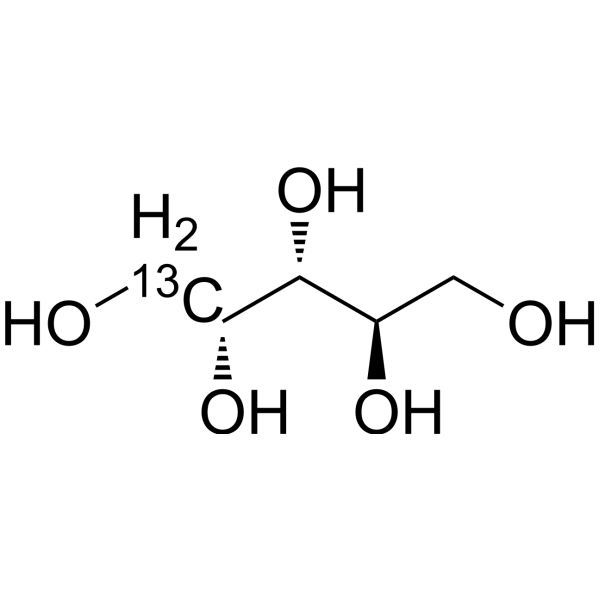
D-Arabitol- 13C is the 13C labeled D-Arabitol. D-Arabitol is an orally active D-enantiomer of arabitol. D-Arabitol modulates the composition of gut microbiota, increases short-chain fatty acids, and promotes AMPK-PGC-1α-related browning of white adipose tissue. D-Arabitol improves weight gain, fat accumulation, insulin resistance, lipid deposition and inflammatory responses. D-Arabitol serves as the sole carbon/energy source for Bacillus methanolicus MGA3, a strain that can co-utilize it with mannitol. D-Arabitol is applicable to obesity-related research.
loading...
    loading...
Cat. No.: HY-N3686S1
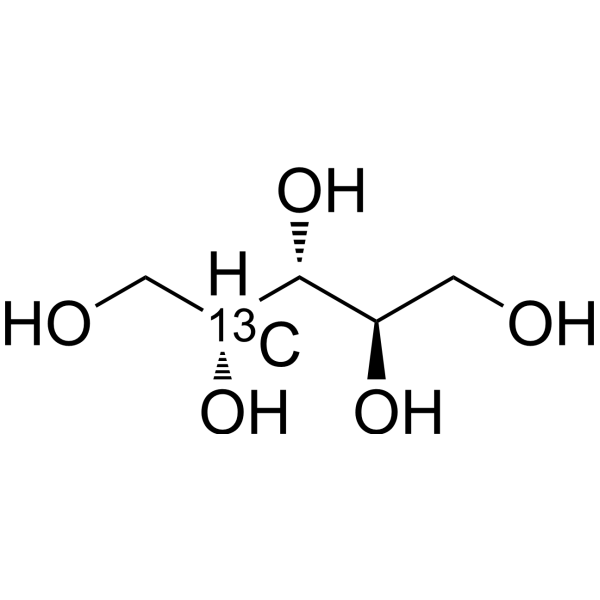
D-Arabitol- 13C-1 is the 13C labeled D-Arabitol. D-Arabitol is an orally active D-enantiomer of arabitol. D-Arabitol modulates the composition of gut microbiota, increases short-chain fatty acids, and promotes AMPK-PGC-1α-related browning of white adipose tissue. D-Arabitol improves weight gain, fat accumulation, insulin resistance, lipid deposition and inflammatory responses. D-Arabitol serves as the sole carbon/energy source for Bacillus methanolicus MGA3, a strain that can co-utilize it with mannitol. D-Arabitol is applicable to obesity-related research.
loading...
    loading...
Cat. No.: HY-N3686S2
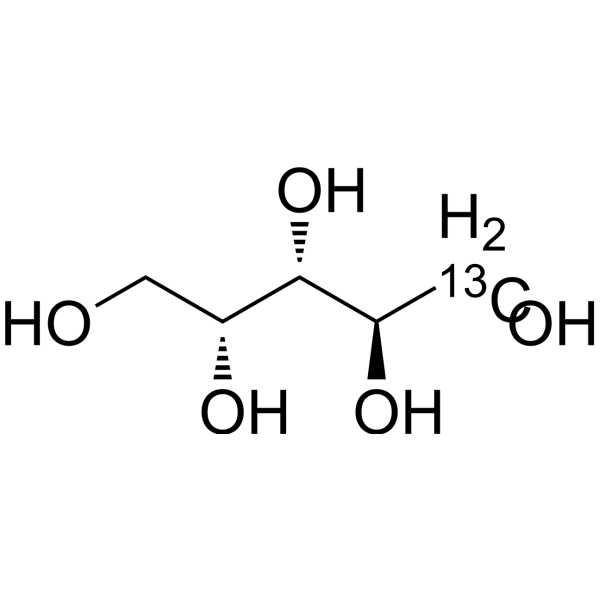
D-Arabitol- 13C-2 is the 13C labeled D-Arabitol. D-Arabitol is an orally active D-enantiomer of arabitol. D-Arabitol modulates the composition of gut microbiota, increases short-chain fatty acids, and promotes AMPK-PGC-1α-related browning of white adipose tissue. D-Arabitol improves weight gain, fat accumulation, insulin resistance, lipid deposition and inflammatory responses. D-Arabitol serves as the sole carbon/energy source for Bacillus methanolicus MGA3, a strain that can co-utilize it with mannitol. D-Arabitol is applicable to obesity-related research.
loading...
    loading...
Cat. No.: HY-W711807
CAS No.: 2377475-83-5
D-Arabitol-d7 is the deuterium labeled D-Arabitol (HY-N3686). D-Arabitol is a polyol and its accumulation may cause a neurotoxic effect in human.
loading...
    loading...
Cat. No.: HY-B0910AR
CAS No.: 10049-83-9
Synonyms: Pyritinol dihydrochloride (Standard); Pyridoxine disulfide dihydrochloride (Standard); Vitamin B6 disulfide dihydrochloride (Standard)
Pyrithioxin (Pyritinol) dihydrochloride (Standard) is the analytical standard of Pyrithioxin dihydrochloride (HY-B0910A). Pyrithioxin (Pyritinol) is an orally active neurodynamic compound. Pyrithioxin can promote the metabolism of glucose and amino acids, increase carotid blood flow and improve cerebral blood flow. Pyrithioxin exhibits anti-inflammation, anti-tumor and neuroprotective effect. Pyrithioxin can be used for the researches of cancer, inflammation, immunology, metabolic and neurological disease such as cerebral infarct, epilepsy, fibrosarcomas and rheumatoid polyarthritis .
loading...
    loading...
Cat. No.: HY-W981453
CAS No.: 80924-06-7
1,3-o-(S)-Benzylidene-D-arabitol is a class of biochemical reagents used in glycobiology research. Glycobiology studies the structure, synthesis, biology, and evolution of sugars. It involves carbohydrate chemistry, enzymology of glycan formation and degradation, protein-glycan recognition, and the role of glycans in biological systems. This field is closely related to basic research, biomedicine, and biotechnology .
loading...
    loading...
Cat. No.: HY-E71567
Research Areas:  

Others

2-Hydroxymethylglutarate dehydrogenase (EC 1.1.1.291) is an NADPH-dependent D-ribulose reductase—a type of oxidoreductase—that catalyzes the reduction of D-ribulose to D-arabitol. It plays a key role in pentose metabolism, sugar alcohol metabolism, and carbon source utilization in microorganisms and fungi.
loading...
    loading...
  • 1

