

166 Results for "

Delta Opioid Receptor

" in MedChemExpress (MCE) Product Catalog:
Products (166)

166 Results for "Delta Opioid Receptor" in MCE Product Catalog:

13
13 Publications Verification
Cat. No.: HY-156131
CAS No.: 53179-11-6
Synonyms: ADL 2-1294
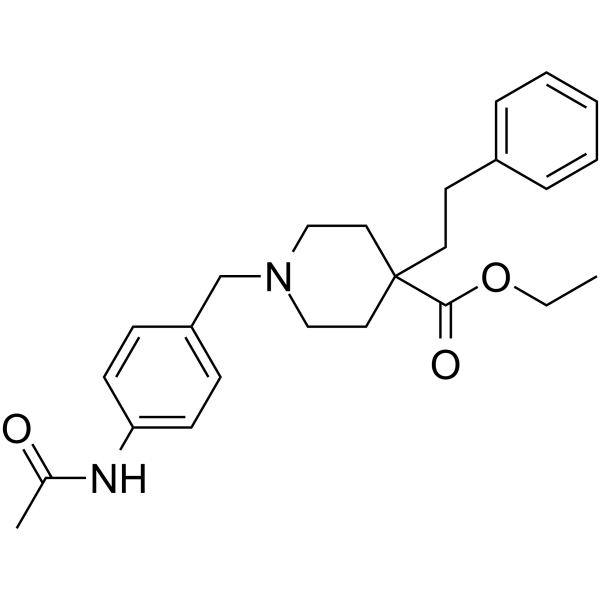
Loperamide (ADL 2-1294) is selective and orally active μ opioid receptor agonist with Ki valuess of 3, 48 and 1156 nM against μ, δ and κ opioid receptor, respectively. Loperamide produces antinociception and antihyperalgesia. Loperamide exhibits peripheral selectivity, enhancing fluid, electrolyte, and glucose absorption, reversing PGE2 (HY-101952)- and Cholera toxin (HY-P1446)-induced intestinal secretion, and reducing intestinal motility. Loperamide can be used for the researches of inflammatory pain and protracted diarrhoea .
loading...
    loading...
3
3 Cited Publications
Cat. No.: HY-101302
CAS No.: 122517-78-6
Purity:  99.65%
Research Areas:  

Inflammation/Immunology

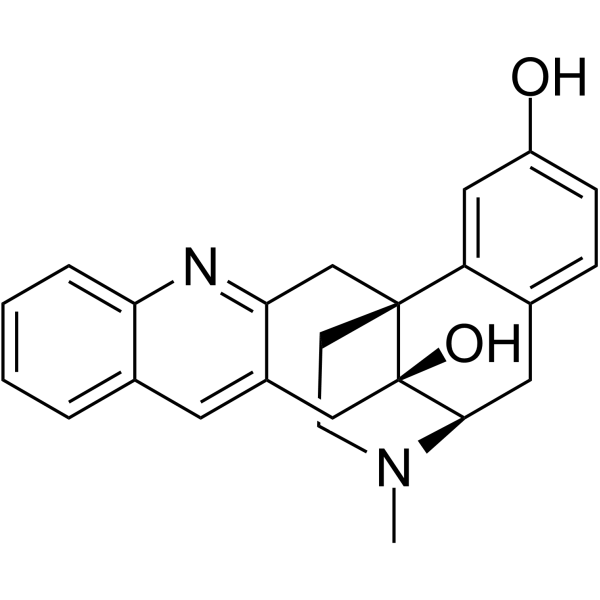
Naltriben mesylate is a potent δ2-opioid receptor antagonist and a TRPM7 activator. Naltriben mesylate shows Ki values of 0.013 nM, 19 nM and 152 nM for δ, μ and κ receptors, respectively. Naltriben mesylate enhances glioblastoma cell migration and invasion. Naltriben mesylate can be used in research into neurological diseases and cancer .
loading...
    loading...
3
3 Cited Publications
Cat. No.: HY-P1334
CAS No.: 88373-73-3
Target:  

Opioid Receptor

Research Areas:  

Neurological Disease

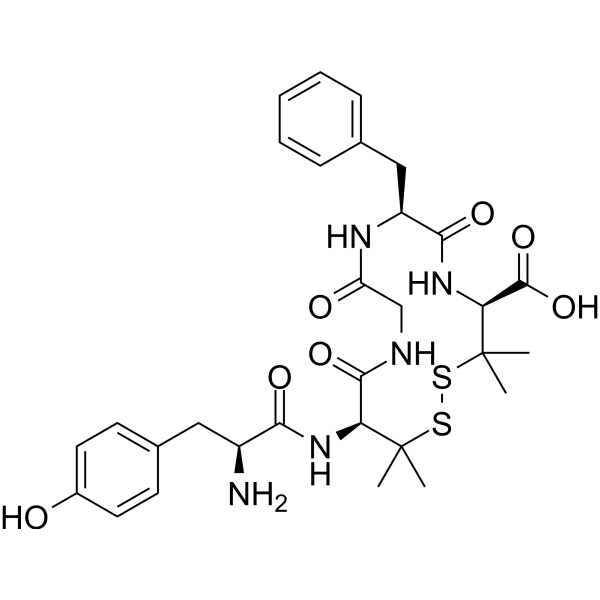
DPDPE, an opioid peptide, is a selective δ-opioid receptor?(DOR) agonist?with anticonvulsant effects .
loading...
    loading...
3
3 Cited Publications
Cat. No.: HY-P1334A
CAS No.: 172888-59-4
Target:  

Opioid Receptor

Research Areas:  

Neurological Disease

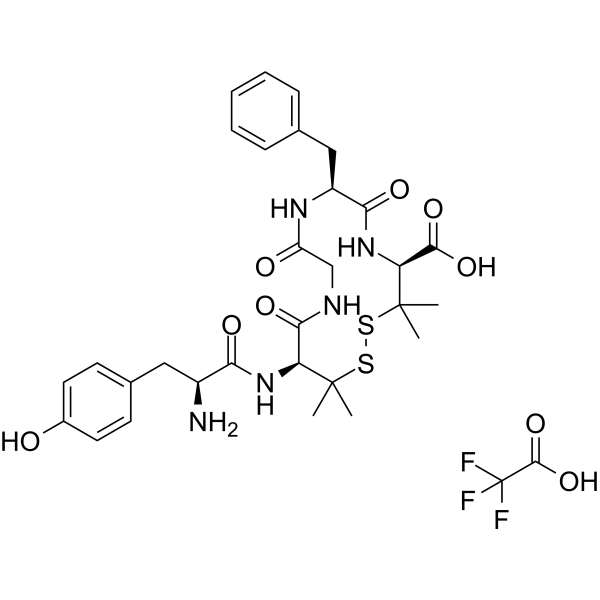
DPDPE TFA, an opioid peptide, is a selective δ-opioid receptor (DOR) agonist with anticonvulsant effects .
loading...
    loading...
3
3 Cited Publications
Cat. No.: HY-P1013A
Synonyms: [D-Ala2]-Deltorphin II TFA
Target:  

Opioid Receptor

Research Areas:  

Neurological Disease

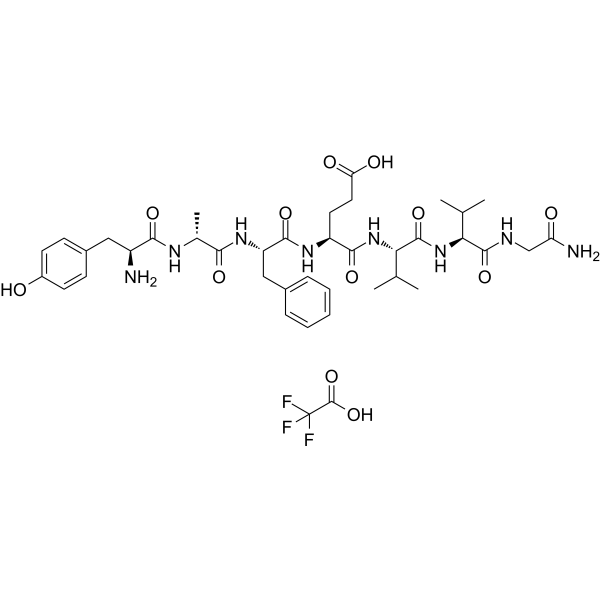
Deltorphin 2 TFA is a selective peptide agonist for the δ opioid receptor .
loading...
    loading...
2
2 Cited Publications
Cat. No.: HY-P1333
CAS No.: 80448-90-4
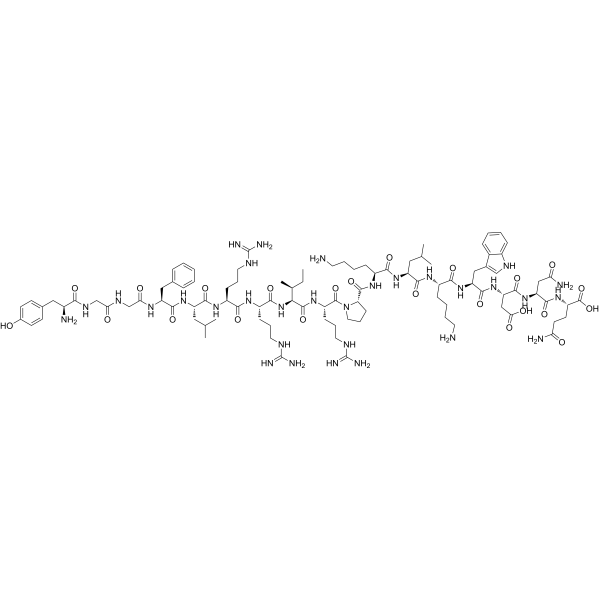
Dynorphin A is an endogenous opioid peptide involved in inhibitory neurotransmission in the central nervous system (CNS). Dynorphin A is a highy potent kappa opioid receptor (KOR) agonist, and is also an agonist for other opioid receptors, such as mu (MOR) and delta (DOR). Dynorphin A can induce neuronal death, and can be used in the research of neurological disease .
loading...
    loading...
2
2 Cited Publications
Cat. No.: HY-13243
CAS No.: 156053-89-3
Purity:  98.66%
Synonyms: ADL 8-2698; LY 246736
Target:  

Opioid Receptor

Research Areas:  

Neurological Disease

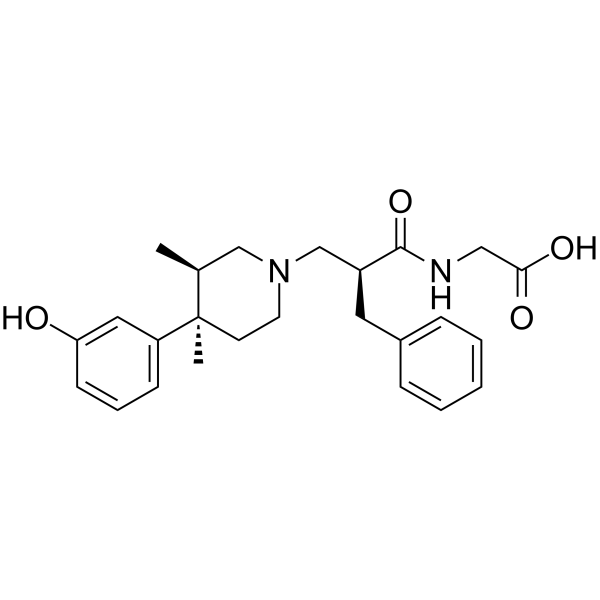
Alvimopan (ADL 8-2698) is a potent, selective, orally active and reversible μ-opioid receptor antagonist, with an IC50 of 1.7 nM. Alvimopan has selectivity for μ-opioid receptor (Ki=0.47 nM) over κ- and δ-opioid receptors (Kis=100, 12 nM, respectively). Alvimopan can be used for the research of postoperative ileus .
loading...
    loading...
2
2 Cited Publications
Cat. No.: HY-P1335
CAS No.: 103429-32-9
Target:  

Opioid Receptor

Research Areas:  

Neurological Disease

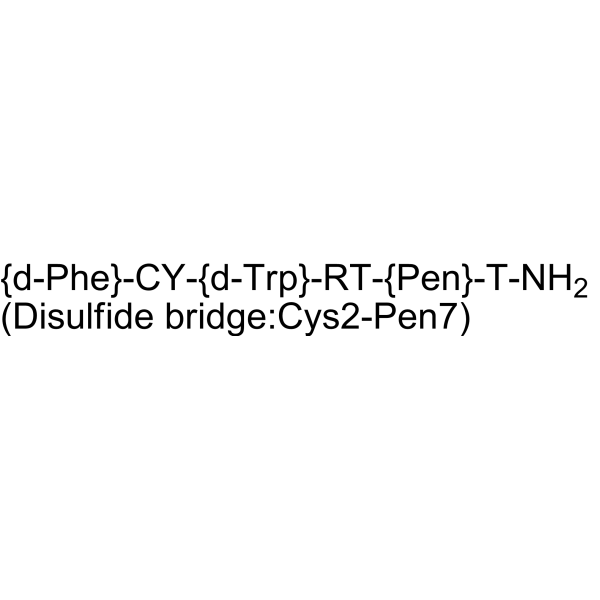
CTAP is a potent, highly selective, and BBB penetrant μ opioid receptor antagonist, with an IC50 of 3.5 nM. CTAP displays over 1200-fold selectivity over δ opioid (IC50=4500 nM) and somatostatin receptors. CTAP can be used for the study of L-DOPA-induced dyskinesia (LID) and opiate overdose or addiction .
loading...
    loading...
2
2 Cited Publications
Cat. No.: HY-P1335A
Target:  

Opioid Receptor

Research Areas:  

Neurological Disease

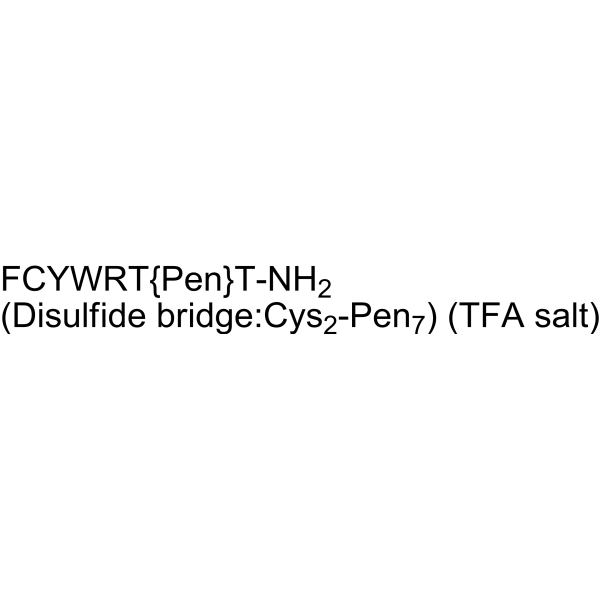
CTAP TFA is a potent, highly selective, and BBB penetrant μ opioid receptor antagonist, with an IC50 of 3.5 nM. CTAP TFA displays over 1200-fold selectivity over δ opioid (IC50=4500 nM) and somatostatin receptors. CTAP TFA can be used for the study of L-DOPA-induced dyskinesia (LID) and opiate overdose or addiction .
loading...
    loading...
2
2 Cited Publications
Cat. No.: HY-76657A
CAS No.: 170098-38-1
Synonyms: ADL 8-2698 dihydrate; LY 246736 dihydrate
Target:  

Opioid Receptor

Research Areas:  

Neurological Disease Cancer

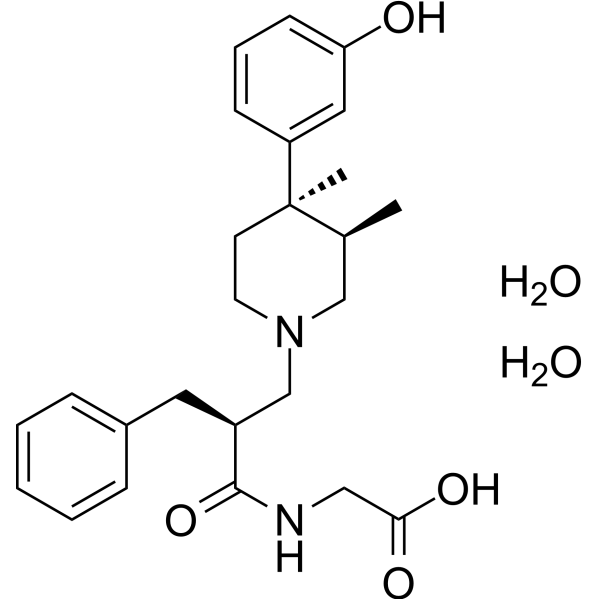
Alvimopan dihydrate (ADL 8-2698 dihydrate) is a potent, selective, orally active and reversible μ-opioid receptor antagonist, with an IC50 of 1.7 nM. Alvimopan dihydrate has selectivity for μ-opioid receptor (Ki=0.47 nM) over κ- and δ-opioid receptors (Kis=100, 12 nM, respectively). Alvimopan dihydrate can be used for the research of postoperative ileus .
loading...
    loading...
2
2 Cited Publications
Cat. No.: HY-19627A
CAS No.: 1345728-04-2
Synonyms: S-297995 tosylate
Target:  

Opioid Receptor

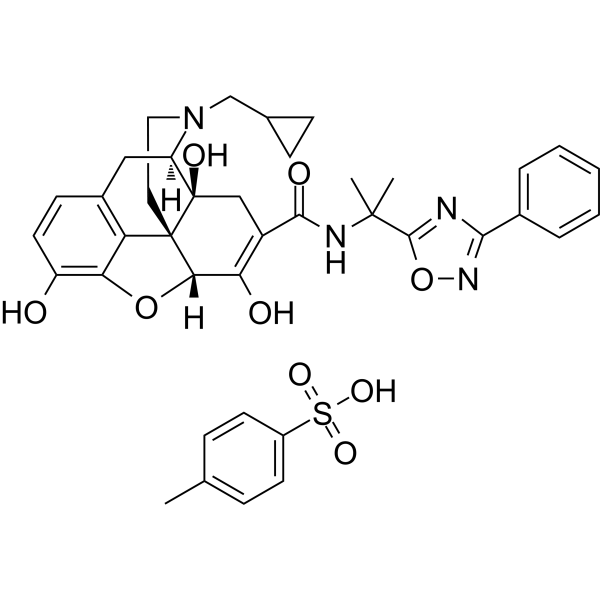
Naldemedine (S-297995) tosylate is an orally active μ-opioid receptor antagonist (PAMORA) . Naldemedine tosylate shows potent binding affinities (Ki=0.34, 0.43, 0.94 nM, respectively) and antagonist activities (IC50=25.57, 7.09, 16.1 nM, respectively) for recombinant human μ-, δ-, and κ- opioid receptors . Naldemedine can be used in opioid-induced constipation (OIC) research . Naldemedine tosylate is predicted to bind to 3CL pro encoded by SARS-CoV2 genome .
loading...
    loading...
1
1 Cited Publications
Cat. No.: HY-76711
CAS No.: 16590-41-3
Naltrexone is an orally active, long-acting opioid receptor (opioid receptor) antagonist. Naltrexone blocks the euphoric effects of exogenous opioids and reduces alcohol craving by blocking opioid receptors (μ, κ, and δ) as well as opioid growth factor receptors. Low doses of Naltrexone are used to relieve chronic pain, treat inflammatory diseases and inhibit tumor growth, while high doses or continuous administration exert pro-inflammatory or pro-proliferative effects. Naltrexone relieves intractable pruritus caused by psoriasis, atopic dermatitis and other conditions, and its combination with Bupropion (HY-B0403) inhibits food craving, thereby reducing body weight .
loading...
    loading...
1
1 Cited Publications
Cat. No.: HY-P1502
CAS No.: 61214-51-5
Target:  

Opioid Receptor

Research Areas:  

Neurological Disease

β-Endorphin, human, a prominent endogenous peptide, existing in the hypophysis cerebri and hypothalamus, is an agonist of opioid receptor, with preferred affinity for μ-opioid receptor and δ-opioid receptor; β-Endorphin, human exhibits antinociception activity.
loading...
    loading...
1
1 Cited Publications
Cat. No.: HY-104006
CAS No.: 1069498-96-9
Purity:  99.12%
Target:  

Opioid Receptor

Research Areas:  

Neurological Disease

CYM51010 is a biased ligand of μ-opioid receptorδ-opioid receptor heterodimers with an EC50 of 403 nM. CYM51010 exhibits anti-nociceptive activity similar to morphine but with a decreased levels of tolerance development and withdrawal symptoms .
loading...
    loading...
1
1 Cited Publications
Cat. No.: HY-137279
CAS No.: 93302-47-7
Purity:  99.7%
Target:  

Opioid Receptor

Research Areas:  

Inflammation/Immunology

Naloxone methiodide is a peripherally restricted, nonselective, and competitive opioid receptor antagonist. Naloxone methiodide does not penetrate the blood-brain barrier .
loading...
    loading...
1
1 Cited Publications
Cat. No.: HY-P1866A
β-Endorphin, equine TFA is an endogenous opioid peptide, which binds at high affinity to both μ/δ opioid receptors. β-Endorphin, equine TFA has analgesic properties .
loading...
    loading...
1
1 Cited Publications
Cat. No.: HY-145404
CAS No.: 2035457-43-1
Target:  

Opioid Receptor

Research Areas:  

Metabolic Disease

Mitragynine pseudoindoxyl is a potent orally active agonist of the μ-opioid receptor (MOR-1, Ki=0.8 nM) and an antagonist of the δ-opioid receptor (DOR-1, Ki=3.0 nM). Mitragynine pseudoindoxyl has moderate affinity for the κ-opioid receptor (KOR-1, Ki=24 nM) and does not recruit β-arrestin-2, acting through G protein-mediated signaling pathways without β-arrestin-2-related activation. Mitragynine pseudoindoxyl produces potent analgesic activity through a mixed μ-agonist/δ-antagonist mechanism, with low side effects such as physical dependence, respiratory depression, and constipation, and no rewarding or aversive behaviors. Mitragynine pseudoindoxyl reduces hyperactivity, inhibits GI transit, and enhances characteristics, making it a potential analgesic .
loading...
    loading...
1
1 Cited Publications
Cat. No.: HY-101317
CAS No.: 1217628-73-3
Purity:  99.20%
Synonyms: SB-205607 dihydrobromide
Target:  

Opioid Receptor

Research Areas:  

Neurological Disease

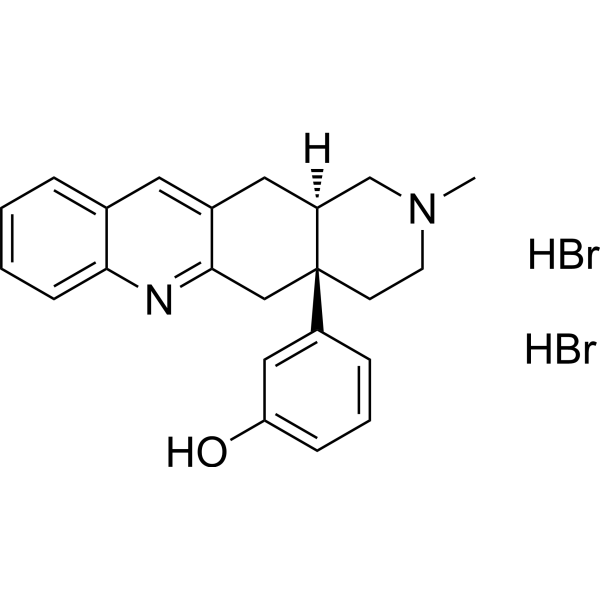
TAN-67 (SB-205607) dihydrobromide is a potent and selective nonpeptidic δ-opioid receptor agonist with a Ki value of 0.647 nM. TAN-67 dihydrobromide has neuroprotective effect. TAN-67 dihydrobromide can be used in research of ischemic stroke .
loading...
    loading...
1
1 Cited Publications
Cat. No.: HY-120511
CAS No.: 1256921-89-7
Purity:  99.60%
Target:  

Opioid Receptor

Research Areas:  

Neurological Disease

KNT-127 is a selective and BBB-penetrant δ-opioid receptor (DOR) agonist (Ki = 0.16 nM). KNT-127 is highly selective to the δ receptor, with Ki values of 0.16, 21.3 and 153 nM for δ, μ and κ receptors, respectively. KNT-127 acts as a biased ligand that mainly activates cyclic adenosine monophosphate (cAMP) signaling with lower beta-arrestin signaling activation. KNT-127 increases the release of dopamine and L-glutamate in the striatum, nucleus accumbens, and prefrontal cortex. KNT-127 exhibits antidepressant- and anxiolytic-like effects. KNT-127 can be studied in research on neurological diseases .
loading...
    loading...
1
1 Cited Publications
Cat. No.: HY-13044
CAS No.: 850173-95-4
Purity:  99.72%
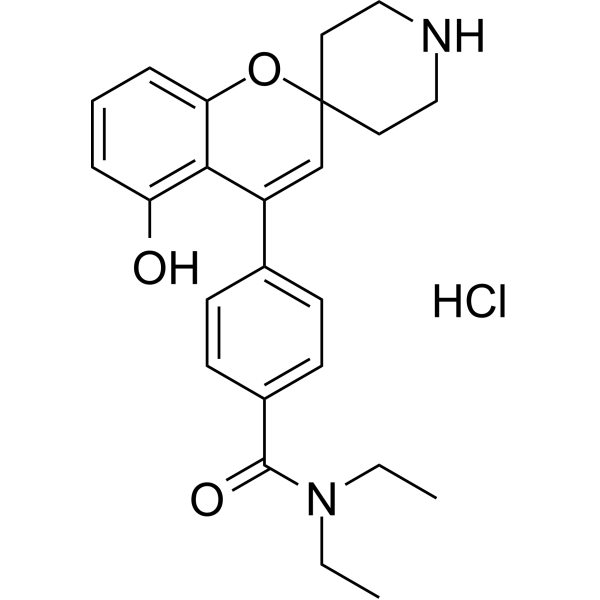
ADL-5859 hydrochloride (compound 20) is a selective and orally active δ opioid receptor (DOR) agonist with an Ki and an EC50 value of 0.84 and 20 nM, respectively. ADL-5859 hydrochloride also shows inhibitory activity to hERG channel with an IC50 value of 78 μM. ADL-5859 hydrochloride can be used for the research of pain .
loading...
    loading...

