

18 Results for "

Dravet

" in MedChemExpress (MCE) Product Catalog:
Products (18)

18 Results for "Dravet" in MCE Product Catalog:

1
1 Cited Publications
Cat. No.: HY-30234A
CAS No.: 1163-36-6
Target:  

TRP Channel Apoptosis

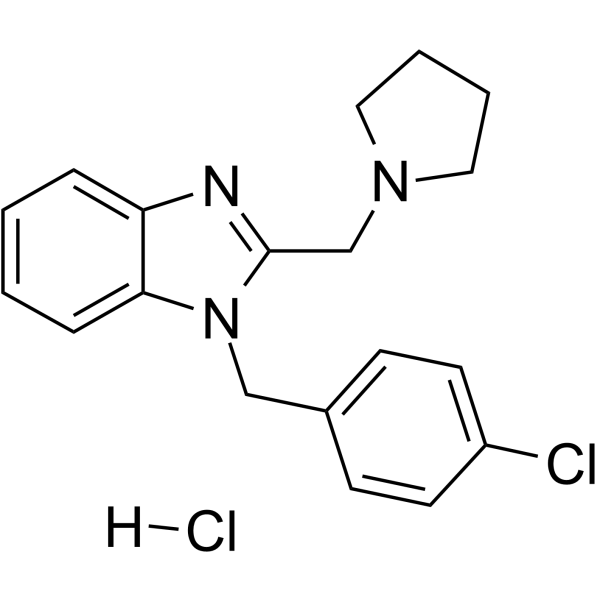
Clemizole hydrochloride is an orally active, blood-brain barrier permeable TRPC5 inhibitor, with an IC50 value of 1.05-1.34 μM against mouse TRPC5. Clemizole hydrochloride blocks TRPC1:TRPC5, TRPC3, TRPC4, TRPC6, TRPC7, hERG, hKCNQ1/hKCNE1 and hKv1.5 channels, and activates TRPA1; it modulates 5HT-2B and HTR2A receptors; it inhibits HCV RNA replication, CrtN enzymatic activity, oxidative stress, neuroinflammation, cell apoptosis and bacterial virulence; it maintains blood-brain barrier (BBB) integrity; it enhances DNA repair capacity; it improves cell viability; and it alters cardiac electrophysiological properties. Clemizole hydrochloride can be used in the research of Dravet syndrome, hepatitis C virus infection, Staphylococcus aureus skin infection, Cisplatin (HY-17394)-induced nephrotoxicity, STXBP1-related diseases, traumatic brain injury and xeroderma pigmentosum type C .
loading...
    loading...
1
1 Cited Publications
Cat. No.: HY-30234
CAS No.: 442-52-4
Target:  

TRP Channel Apoptosis

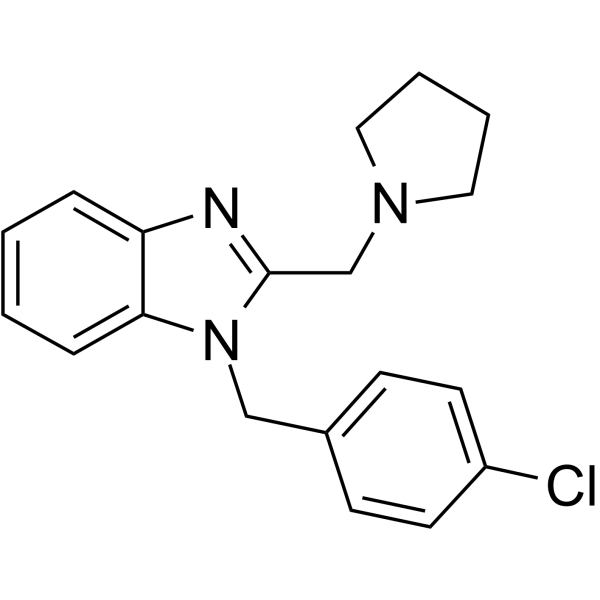
Clemizole is an orally active, blood-brain barrier permeable TRPC5 inhibitor, with an IC50 value of 1.05-1.34 μM against mouse TRPC5. Clemizole blocks TRPC1:TRPC5, TRPC3, TRPC4, TRPC6, TRPC7, hERG, hKCNQ1/hKCNE1 and hKv1.5 channels, and activates TRPA1; it modulates 5HT-2B and HTR2A receptors; it inhibits HCV RNA replication, CrtN enzymatic activity, oxidative stress, neuroinflammation, cell apoptosis and bacterial virulence; it maintains blood-brain barrier (BBB) integrity; it enhances DNA repair capacity; it improves cell viability; and it alters cardiac electrophysiological properties. Clemizole can be used in the research of Dravet syndrome, hepatitis C virus infection, Staphylococcus aureus skin infection, Cisplatin (HY-17394)-induced nephrotoxicity, STXBP1-related diseases, traumatic brain injury and xeroderma pigmentosum type C .
loading...
    loading...
Cat. No.: HY-111052
CAS No.: 942437-37-8
Purity:  99.71%
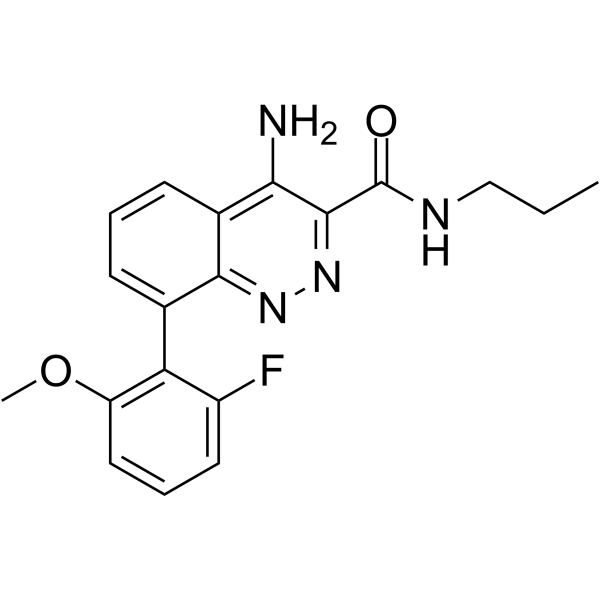
AZD7325 is a potent and orally active partial selective PAM of GABAAα2 and Aα3 receptor (Ki=0.3 and 1.3 nM, respectively), and has less antagonistic efficacy at the Aα1 and Aα5 receptor subtypes . AZD7325 is a moderate CYP1A2 and a potent CYP3A4 inducer in vitro . AZD7325 has the potential for the investigation of anxiety and dravet syndrome . PAM: positive allosteric modulator.
loading...
    loading...
Cat. No.: HY-W090292
CAS No.: 491-72-5
Target:  

Drug Intermediate

Research Areas:  

Neurological Disease

Olivetolic acid is a biosynthetic precursor of cannabinol acid (CBGA). Olivetolic acid exhibits a modest anticonvulsant effect in a mouse model of Dravet syndrome. Olivetolic acid can be used for the study of convulsion .
loading...
    loading...
Cat. No.: HY-172318
CAS No.: 2497525-96-7
Target:  

NKCC

Research Areas:  

Neurological Disease

IAMA-6 is a selective NKCC1 inhibitor with neuroprotective effects. IAMA-6 can be used for the study of brain conditions, including drug-resistant epilepsy (e.g. temporal lobe epilepsy (TLE) and Dravet syndrome (DrS)), autism spectrum disorders (ASD) and Down syndrome (DoS) .
loading...
    loading...
Cat. No.: HY-148410A
CAS No.: 2415330-05-9
Purity:  98.25%
Synonyms: STK-001 sodium
Target:  

Sodium Channel

Research Areas:  

Neurological Disease

Zorevunersen sodium is an antisense oligonucleotide targeting the Scn1a gene based on TANGO technology. Zorevunersen sodium increases Scn1a mRNA transcripts and elevates the expression level of NaV1.1 protein. Zorevunersen sodium restores the excitability of PV interneurons, thereby reducing seizures and prolonging survival in mice. Zorevunersen sodium can be used for research on Dravet syndrome .
loading...
    loading...
Cat. No.: HY-101248
CAS No.: 185259-85-2
Purity:  99.86%
Target:  

5-HT Receptor

Research Areas:  

Cancer

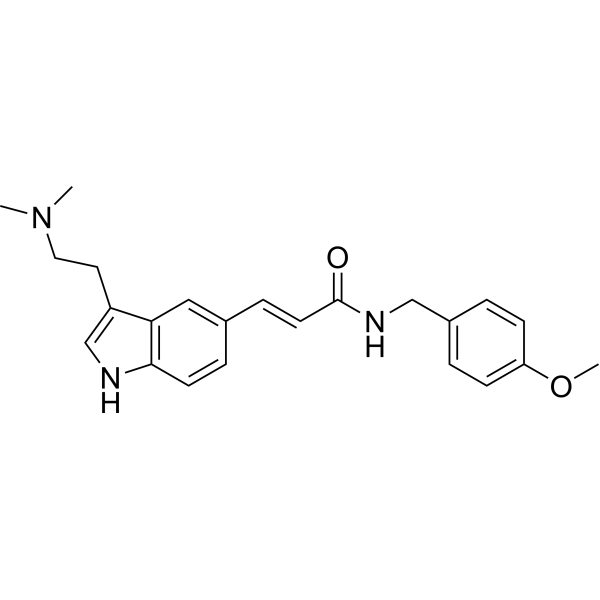
GR-46611 is a 5-HT1D receptor agonist. GR-46611 can be used in the research of bladder hyperactivity, leukemia .
loading...
    loading...
Cat. No.: HY-148410
CAS No.: 2415330-04-8
Synonyms: STK-001
Target:  

Sodium Channel

Research Areas:  

Neurological Disease

Zorevunersen is an antisense oligonucleotide targeting the Scn1a gene based on TANGO technology. Zorevunersen increases Scn1a mRNA transcripts and elevates the expression level of NaV1.1 protein. Zorevunersen restores the excitability of PV interneurons, thereby reducing seizures and prolonging survival in mice. Zorevunersen can be used for research on Dravet syndrome .
loading...
    loading...
Cat. No.: HY-126429
CAS No.: 2332897-85-3
Purity:  99.89%
Target:  

Sodium Channel

Research Areas:  

Neurological Disease

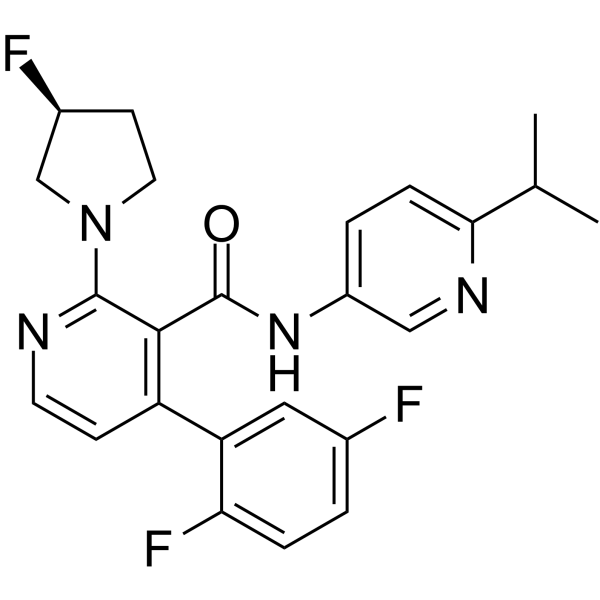
Nav1.1 activator 1 (compound 4), a highly potent Nav1.1 activator with BBB penetration, increases decay time constant τ of Nav1.1 currents at 0.03 μM along with significant selectivity against Nav1.2, Nav1.5, and Nav1.6 .
loading...
    loading...
Cat. No.: HY-148410C
Purity:  99.28%
Synonyms: STK-001 negative control
Target:  

Sodium Channel

Research Areas:  

Neurological Disease

Zorevunensen (STK-001) negative control is the negative control form of Zorevunensen (HY-148410). Zorevunensen is an antisense oligonucleotide that is intended to increase the level of productive SCN1A mRNA and consequently increase the expression of the sodium channel Nav1.1 protein. Zorevunersen is used for the study of Dravet syndrome .
loading...
    loading...
Cat. No.: HY-P5183
Target:  

Sodium Channel

Research Areas:  

Neurological Disease

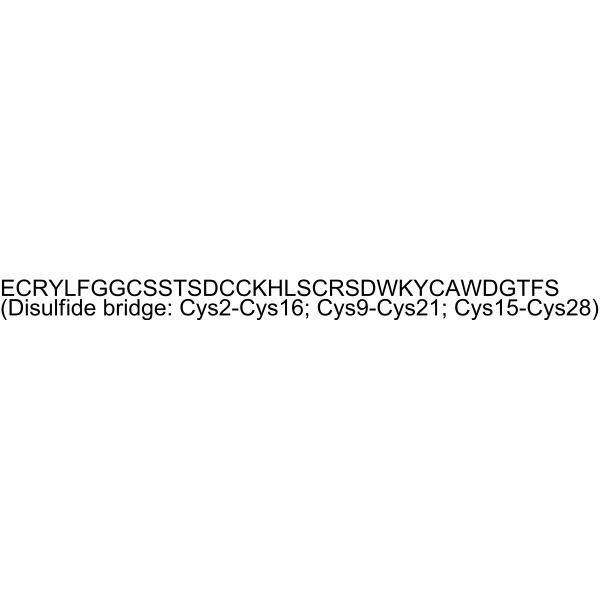
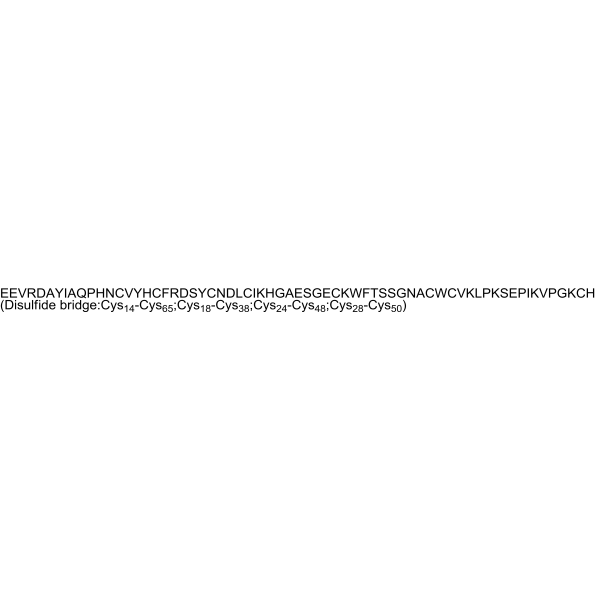
Hm1a is a venom peptide and a selective hNaV1.1 activator with an EC50 of 7.5 nM. Hm1a enhances hNaV1.1 and hNaV1.3 channel currents via delayed inactivation. Hm1a restores action potential firing in Dravet syndrome GABAergic inhibitory interneurons, reduces interictal epileptiform discharges and whole-brain hyperexcitability, lowers seizure frequency, and rescues premature death in Dravet syndrome mice. Hm1a can be used for the research of neurological disease, such as Dravet syndrome .
loading...
    loading...
Cat. No.: HY-155238
CAS No.: 1520073-91-9
Target:  

GABA Receptor

Research Areas:  

Neurological Disease

E2730 is a noncompetitive but selective inhibitor of gamma-aminobutyric acid (GABA) transporter 1 (GAT1) with orally available and antiepileptic activity. E2730-mediated GAT1 inhibition is positively correlated with environmental GABA levels and selectively inhibits GAT1-mediated GABA uptake. E2730 (5-50 mg/kg; po) in rat amygdala ignition model, and in mouse cornea ignition (5-50 mg/kg), drug resistance 6Hz-44mA has demonstrated in vivo efficacy in models of psychomotor epilepsy (5-50 mg/kg), fragile X syndrome (2.5-300 mg/kg), and Dravet syndrome (10 mg/kg, 20 mg/kg) .
loading...
    loading...
Cat. No.: HY-P5783
Target:  

Sodium Channel

Research Areas:  

Neurological Disease

δ-Buthitoxin-Hj2a, a scorpion-venom peptide, is a potent NaV1.1 agonist with an EC50 of 32 nM. δ-Buthitoxin-Hj2a can be used for the Dravet syndrome (DS) research .
loading...
    loading...
Cat. No.: HY-P5784
Target:  

Sodium Channel

Research Areas:  

Neurological Disease

δ-Buthitoxin-Hj1a, a scorpion-venom peptide, is a potent NaV1.1 agonist with an EC50 of 17nM. δ-Buthitoxin-Hj1a can be used for the Dravet syndrome (DS) research .
loading...
    loading...
Cat. No.: HY-111052R
CAS No.: 942437-37-8
AZD7325 (Standard) is the analytical standard of AZD7325. This product is intended for research and analytical applications. AZD7325 is a potent and orally active partial selective PAM of GABAAα2 and Aα3 receptor (Ki=0.3 and 1.3 nM, respectively), and has less antagonistic efficacy at the Aα1 and Aα5 receptor subtypes . AZD7325 is a moderate CYP1A2 and a potent CYP3A4 inducer in vitro . AZD7325 has the potential for the investigation of anxiety and dravet syndrome . PAM: positive allosteric modulator.
loading...
    loading...
Cat. No.: HY-30234S
CAS No.: 1251554-64-9
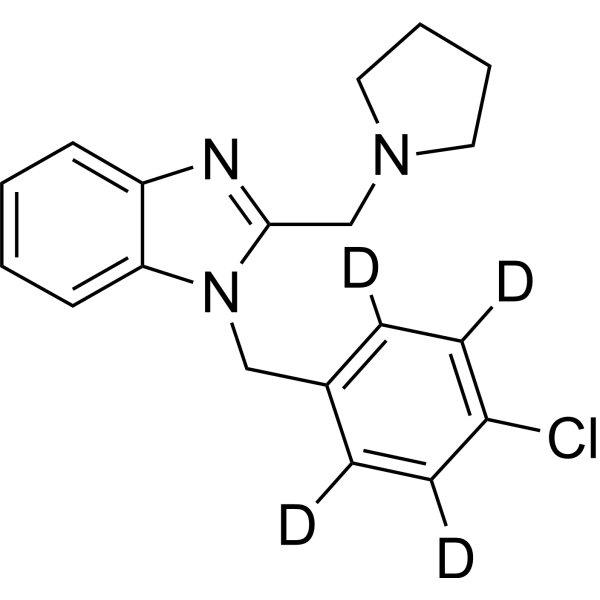
Clemizole-d4 is the deuterated-labeled Clemizole (HY-30234). Clemizole is an orally active, blood-brain barrier permeable TRPC5 inhibitor, with an IC50 value of 1.05-1.34 μM against mouse TRPC5. Clemizole blocks TRPC1:TRPC5, TRPC3, TRPC4, TRPC6, TRPC7, hERG, hKCNQ1/hKCNE1 and hKv1.5 channels, and activates TRPA1; it modulates 5HT-2B and HTR2A receptors; it inhibits HCV RNA replication, CrtN enzymatic activity, oxidative stress, neuroinflammation, cell apoptosis and bacterial virulence; it maintains blood-brain barrier (BBB) integrity; it enhances DNA repair capacity; it improves cell viability; and it alters cardiac electrophysiological properties. Clemizole can be used in the research of Dravet syndrome, hepatitis C virus infection, Staphylococcus aureus skin infection, Cisplatin (HY-17394)-induced nephrotoxicity, STXBP1-related diseases, traumatic brain injury and xeroderma pigmentosum type C .
loading...
    loading...
Cat. No.: HY-181575
Research Areas:  

Neurological Disease

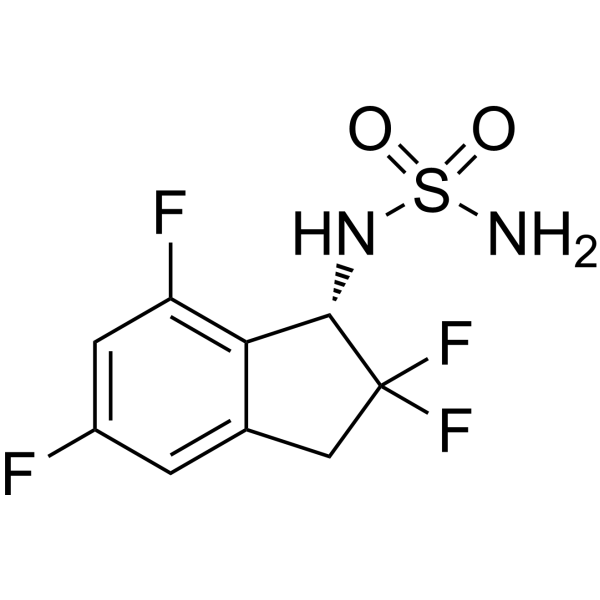
TPH2 agonist-1 (compound 20e) is an orally active, blood-brain barrier permeable, 1,3,4-oxadiazol-2 (3H)-one-derived TPH2 agonist. TPH2 agonist-1 upregulates TPH2 expression, elevates 5-HT and GABA levels, and exhibits antiepileptic activity in SCN1A-deficient models. TPH2 agonist-1 stabilizes the electrophysiological activity of neuronal networks and inhibits abnormal spike and burst activities. TPH2 agonist-1 shows no significant hERG inhibition or cytotoxicity, and it can be used in studies related to severe myoclonic epilepsy of infancy (Dravet syndrome) .
loading...
    loading...
Cat. No.: HY-30234B
CAS No.: 17162-20-8
Clemizole sulfate is an orally active, blood-brain barrier permeable TRPC5 inhibitor, with an IC50 value of 1.05-1.34 μM against mouse TRPC5. Clemizole sulfate blocks TRPC1:TRPC5, TRPC3, TRPC4, TRPC6, TRPC7, hERG, hKCNQ1/hKCNE1 and hKv1.5 channels, and activates TRPA1; it modulates 5HT-2B and HTR2A receptors; it inhibits HCV RNA replication, CrtN enzymatic activity, oxidative stress, neuroinflammation, cell apoptosis and bacterial virulence; it maintains blood-brain barrier (BBB) integrity; it enhances DNA repair capacity; it improves cell viability; and it alters cardiac electrophysiological properties. Clemizole sulfate can be used in the research of Dravet syndrome, hepatitis C virus infection, Staphylococcus aureus skin infection, Cisplatin (HY-17394)-induced nephrotoxicity, STXBP1-related diseases, traumatic brain injury and xeroderma pigmentosum type C .
loading...
    loading...
  • 1

