1. Search Result
Search Result
Results for "

Electron microscopy

" in MedChemExpress (MCE) Product Catalog:

14

Inhibitors & Agonists

4

Fluorescent Dye

1

Biochemical Assay Reagents

2

Peptides

1

Click Chemistry

Cat. No. Product Name Target Research Areas Chemical Structure
  • HY-103311
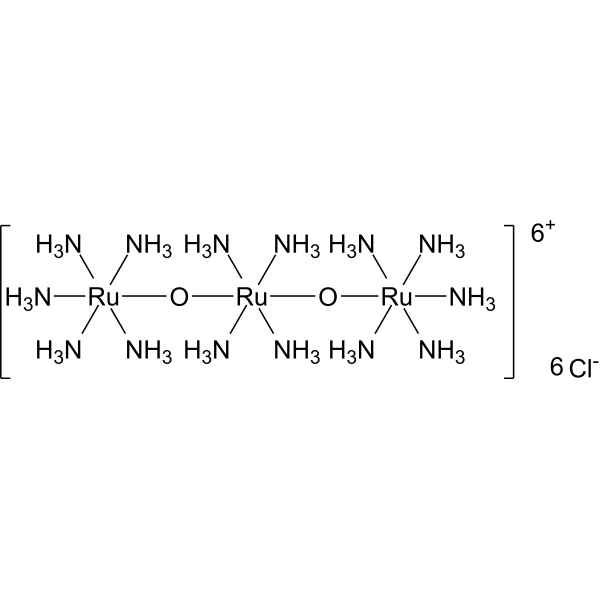
    Ruthenium red
    10+ Cited Publications

    Ammoniated ruthenium oxychloride

    Calcium Channel Cardiovascular Disease
    Ruthenium red (Ammoniated ruthenium oxychloride) is a polycationic dye widely used for electron microscopy (EM) of cells, tissues and vegetative bacteria. Ruthenium red strongly reacts with phospholipids and fatty acids and binds to acidic mucopolysaccharides. Ruthenium red is a L-type calcium current (ICa) blocker .
    Ruthenium red
  • HY-DY3001

    Biochemical Assay Reagents Others
    Glutaraldehyde Fixative (2.5%, For Electron Microscopy) is composed of glutaraldehyde, phosphate, deionized water, etc., with a pH range of 7.2-7.4. This fixative is effective in fixing fine structures of cell nuclei and cytoplasm and is commonly used for fixing electron microscopy specimens.
    Glutaraldehyde Fixative (2.5%, For Electron Microscopy)
  • HY-D1668

    DNA Stain Reverse Transcriptase Infection Neurological Disease Cancer
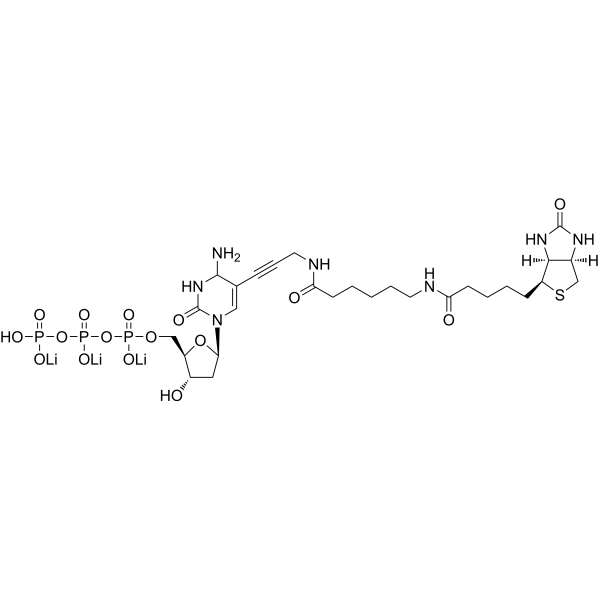
    Biotin-11-dCTP is a biotinylated deoxynucleoside triphosphate and an important DNA labeling reagent. In random primer DNA labeling reactions, Biotin-11-dCTP incorporates into newly synthesized DNA strands to generate labeled DNA probes suitable for hybridization applications. In addition, Biotin-11-dCTP can serve as a substrate for terminal deoxynucleotidyl transferase to end-label oligonucleotides for telomere sequence detection, or to label the cut ends of linearized DNA molecules, thereby supporting streptavidin-based electron microscopy analysis. For example, Biotin-11-dCTP can label the cut ends of linearized DNA molecules under the action of dGTP and avian myeloblastosis virus reverse transcriptase .
    Biotin-11-dCTP
  • HY-DY3002

    Biochemical Assay Reagents Others
    Glutaraldehyde Fixative (4%, For Electron Microscopy) is composed of glutaraldehyde, phosphate, deionized water, etc., with a pH range of 7.2-7.4. This fixative is effective in fixing fine structures of cell nuclei and cytoplasm and is commonly used for fixing electron microscopy specimens.
    Glutaraldehyde Fixative (4%, For Electron Microscopy)
  • HY-149764

    Amyloid-β Neurological Disease
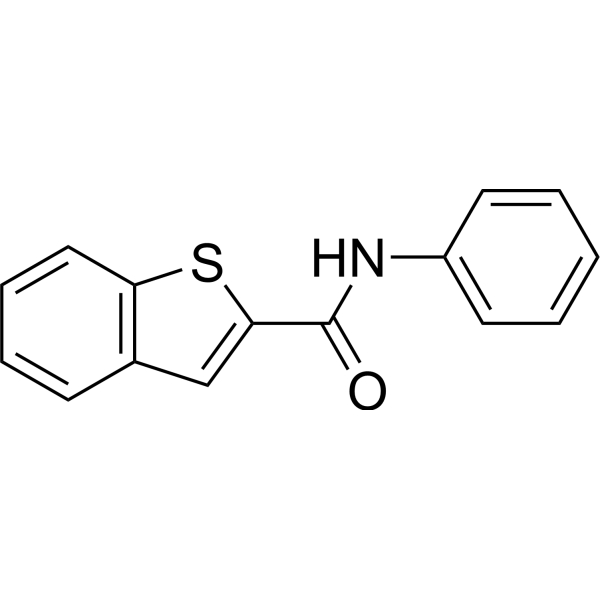
    Aβ42 agonist-2 (compound 7b) is a small molecule compound that can promote Aβ42 aggregation. Aβ42 agonist-2 can interact with Aβ42 oligomers and pentamers to promote nontoxic aggregate self-assembly and rapid fibril formation. Aβ42 agonist-2 prevents Aβ42-induced cytotoxicity in HT22 hippocampal neuronal cells .
    Aβ42 agonist-2
  • HY-P11102

    Bacterial Fungal HIV Parasite Infection Cancer
    Temporin-Sha is an antibacterial peptide with extensive biological activity. Temporin-Sha exhibits broad-spectrum antibacterial activity (e.g., against L. ivanovii, MIC = 6.25 μM), and is effective against Gram-negative bacteria (such as Escherichia coli, MIC = 10 μM), including drug-resistant strains (such as Methicillin (HY-121544)-resistant Staphylococcus aureus). Temporin-Sha also has inhibitory effects on Candida albicans (MIC = 25 μM), Saccharomyces cerevisiae (MIC = 12 μM), the pre-flagellated and non-flagellated forms of Leishmania infantum (IC50 = 5-20 μM), and Trypanosoma cruzi (IC50 = 17 μM). Temporin-Sha exhibits antiviral activity against HSV-1 and has anti-cancer effects (cytotoxicity against breast cancer cells MCF-7 and lung cancer cells H460, etc.) .
    Temporin-SHa
  • HY-W129441

    N-Ac-4-S-CAP

    DNA/RNA Synthesis Tyrosinase Thymidylate Synthase Others
    N-Acetyl-4-S-mercaptoaminophenol (N-Ac-4-S-CAP) is a compound that is selectively cytotoxic to melanocytes of black mouse hair follicles. It can cause 98% depigmentation of black mouse hair follicles. N-Ac-4-S-CAP can produce visible changes in hair follicle melanocytes 4 hours after intraperitoneal injection, including aggregation of melanin granules and nuclear condensation. Electron microscopy observations showed that it caused progressive destruction of melanocytes, including swelling of membranous organelles, nuclear condensation, and cytoplasmic vacuolation, ultimately leading to complete cell necrosis. N-Ac-4-S-CAP has a specific cytotoxic effect on melanocytes that actively produce eumelanin, but may not affect precursor or dormant melanocytes. These properties suggest that N-Ac-4-S-CAP may have potential application value in the treatment of melanoma or skin whitening.
    N-Acetyl-4-S-cysteaminylphenol
  • HY-169197

    Tau Protein Amyloid-β Neurological Disease
    D-688 is an inhibitor of Tau and . D-688 can reverse Aβ1–42-induced toxicity in SH-SH5Y cells and has significant neuroprotective properties. D-688 can improve the survival rate of Drosophila melanogaster expressing the human tau protein isoform (2N4R) .
    D-688
  • HY-111137

    XC-302 free base

    Akt Cancer
    Puquitinib (XC-302 free base) is a multi-target inhibitor with the activity of inducing autophagy in nasopharyngeal carcinoma cells by inhibiting the PI3K/AKT/mTOR signaling pathway. Puquitinib was able to inhibit the proliferation of CNE-2 cells, showing a dose-dependent antiproliferative effect. Puquitinib induced the formation of autophagosomes and autolysosomes in CNE-2 cells, which were observed by fluorescence microscopy and electron microscopy. Puquitinib promoted the formation of LC3-II and increased the expression of beclin 1, while reducing the level of p62. Puquitinib inhibited the PI3K/AKT/mTOR pathway by reducing the expression of p-AKT and p-mTOR. Puquitinib also induced apoptosis in CNE-2 cells, and when autophagy was inhibited, the apoptosis rate was reduced, which means that autophagy may interact with apoptosis to induce cell death .
    Puquitinib
  • HY-W250179

    Polyoxyethylene (6) cetyl ether

    Biochemical Assay Reagents Others
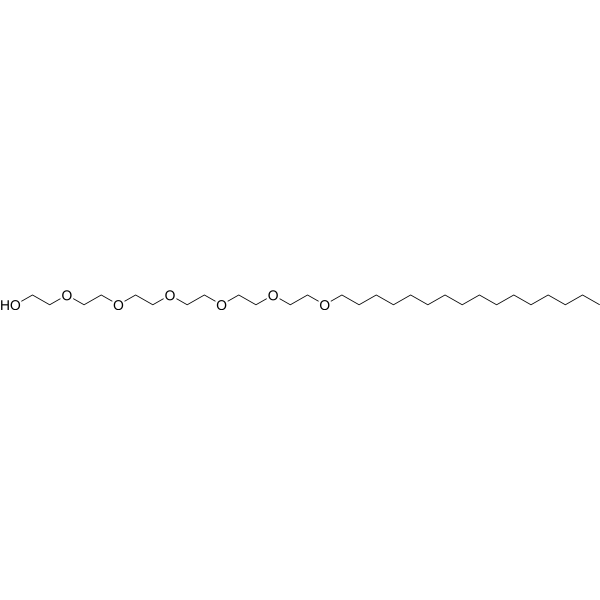
    Hexaethylene glycol monohexadecyl ether, is a nonionic surfactant belonging to the polyethylene glycol (PEG) ether family. It has a hydrophilic head and a lipophilic tail, which makes it suitable for a wide range of applications. Specifically, Hexaethylene glycol monohexadecyl ether is commonly used in membrane protein research, for solubilization and stabilization of proteins, and for structural analysis techniques such as X-ray crystallography and electron microscopy. Additionally, Hexaethylene glycol monohexadecyl ether is used in a variety of other industrial and research applications, including drug delivery systems, nanotechnology, and diagnostic analysis. Its unique properties make it ideal for facilitating interactions between molecules with different physicochemical properties.
    Hexaethylene glycol monohexadecyl ether
  • HY-173283

    Fungal Infection
    Antifungal agent 129 (Compound 4g) is an inhibitor targeting Rhizoctonia solani, with an EC50 value of 4.27 mg/L. It has a good control effect against rice sheath blight in in vitro and in vivo experiments. Preliminary exploration through scanning electron microscopy, molecular docking, enzyme activity determination, and cytotoxicity experiments has revealed that Antifungal agent 129 may exert its inhibitory activity by affecting the cell structure or physiological processes of Rhizoctonia solani. Antifungal agent 129 can be used in the research of plant diseases in the agricultural field, such as rice sheath blight, which are caused by Rhizoctonia solani .
    Antifungal agent 129
  • HY-149763

    Amyloid-β Neurological Disease
    Aβ42 agonist-1 is a compound that can promote Aβ42 aggregation. Aβ42 agonist-1 can interact with Aβ42 oligomers and pentamers to promote nontoxic aggregate self-assembly and rapid fibril formation. Aβ42 agonist-1 prevents Aβ42-induced cytotoxicity in HT22 hippocampal neuronal cells .
    Aβ42 agonist-1
  • HY-19227

    PPAR Cardiovascular Disease
    BM 170249 is a peroxisome proliferator, particularly in the perivenous region of the central acini in the liver. BM 170249 significantly reduces serum triglyceride and cholesterol levels in rats. BM 170249 strongly induces the activity of key enzymes in the peroxisome fatty acid β-oxidation system (such as acyl-CoA oxidase AOX, multifunctional enzyme PH, and thiolase PT), but leads to decreased activity of catalase and uricase in peroxisome components. BM 170249 could be used in lipid-lowering studies .
    BM 170249
  • HY-182341

    Drug Derivative Infection
    APD-209 is a sialic acid conjugate with a PEG4 polar linker and a PDA non-polar tail. APD-209 aggregates adenovirus type 37 particles, blocks the binding of viral particles to human corneal epithelial cells, and inhibits cellular entry of adenovirus type 37. APD-209 can be used for the research of epidemic keratoconjunctivitis .
    APD-209

Inquiry Online

Your information is safe with us. * Required Fields.

Salutation


Country or Region *

Applicant Name *


Organization Name *

Department *


Email Address *


Product Name *

Cat. No.


Requested quantity *

Phone Number *


Remarks

Inquiry Online

Inquiry Information

Product Name:
Cat. No.:
Quantity:
MCE Japan Authorized Agent:

