22 Results for "

FLIP

" in MedChemExpress (MCE) Product Catalog:
Products (22)

22 Results for "FLIP" in MCE Product Catalog:

7
7 Publications Verification
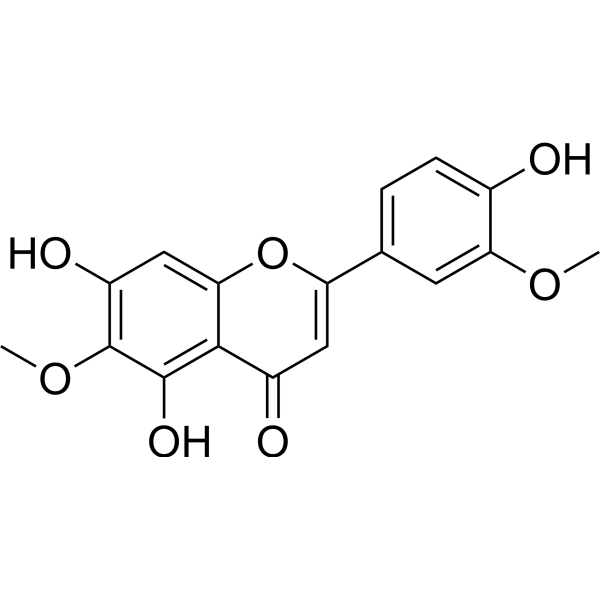
Cat. No.: HY-N0831
CAS No.: 18085-97-7
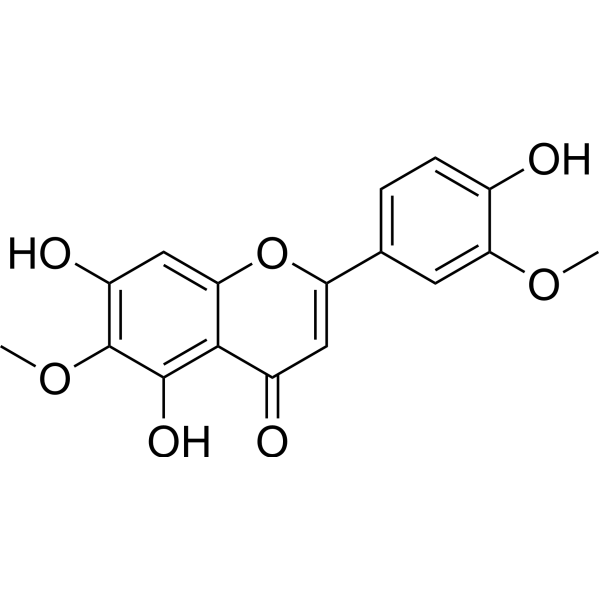
Jaceosidin is a flavonoid isolated from Artemisia vestita, induces apoptosis in cancer cells, activates Bax and down-regulates Mcl-1 and c-FLIP expression . Jaceosidin exhibits anti-cancer , anti-inflammatory activities, decreases leves of inflammatory markers, and suppresses COX-2 expression and NF-κB activation .
1
1 Cited Publications
Cat. No.: HY-W040129
CAS No.: 7059-24-7
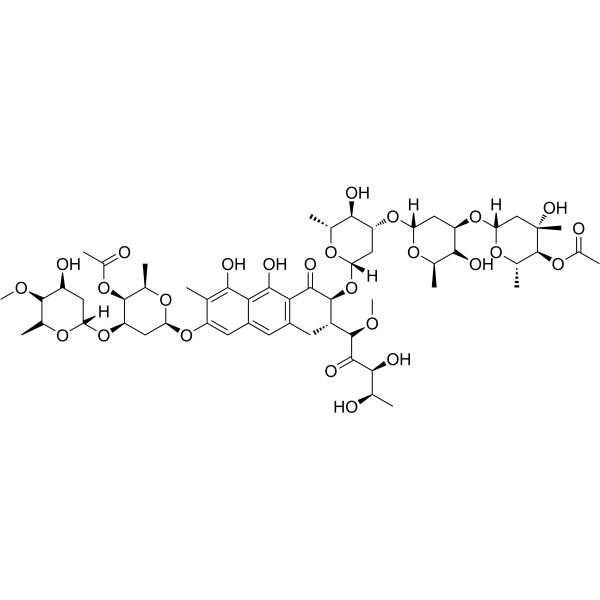
Chromomycin A3 is an inhibitor that selectively binds to GC-rich DNA sequences. Chromomycin A3 targets the DNA minor groove after forming a dimer with Mg 2+. Chromomycin A3 inhibits DNA replication and transcription, blocks the binding of Sp1 transcription factor to target gene promoters, downregulates the expression of anti-apoptotic proteins such as FLIP, Mcl-1, and XIAP, and induces S-phase cycle arrest and caspase-dependent apoptosis in tumor cells. Chromomycin A3 can antagonize oxidative stress induced by glutathione depletion and neuronal apoptosis induced by Camptothecin (HY-15660). Chromomycin A3 can be used in basic research on malignant tumors such as cholangiocarcinoma, and is a potential chemosensitizer and GC-rich region probe .
1
1 Cited Publications
Cat. No.: HY-110077
CAS No.: 36707-00-3
Purity:  99.62%
Target:  

Akt Apoptosis Caspase PARP

Research Areas:  

Cancer

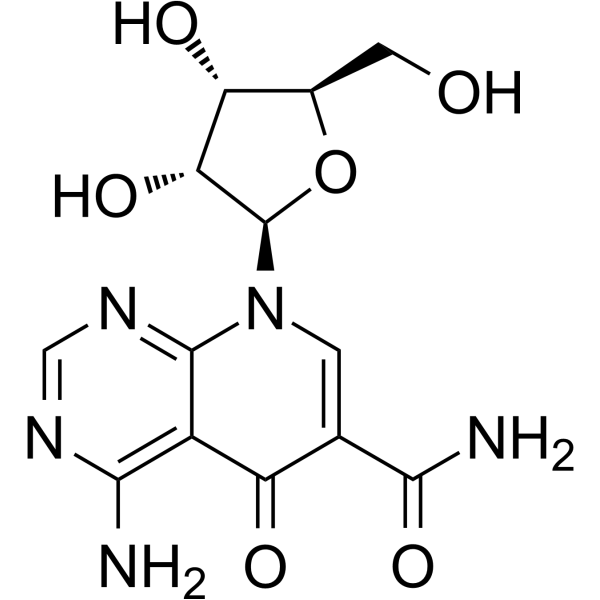
API-1 is a potent selective Akt/PKB inhibitor that reduces the level of phosphorylated Akt (IC50 = 0.8 μM). API-1 binds to the PH domain and inhibits Akt membrane translocation. API-1 induces c-FLIP degradation. API-1 reduces cell proliferation and induces apoptosis. API-1 decreases tumor growth in mouse xenograft model .
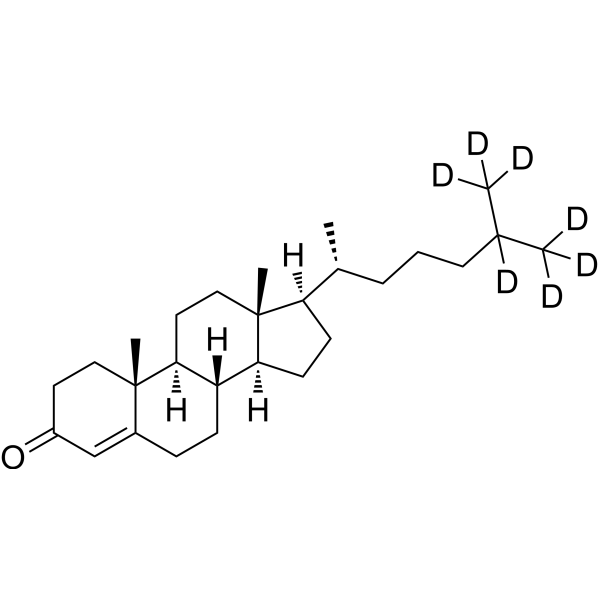
Cat. No.: HY-113365S
CAS No.: 72560-60-2
Purity:  ≥99.0%
Synonyms: 4-Cholesten-3-one-d5
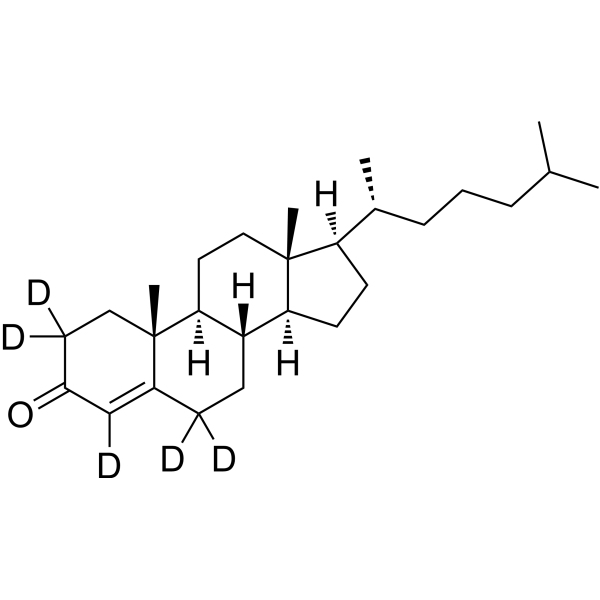
Cholestenone-d5 is the deuterium labeled Cholestenone. Cholestenone (4-Cholesten-3-one), the intermediate oxidation product of cholesterol, is metabolized primarily in the liver. Cholestenone is highly mobile in membranes and influences cholesterol flip-flop and efflux. Cholestenone may cause long-term functional defects in cells .
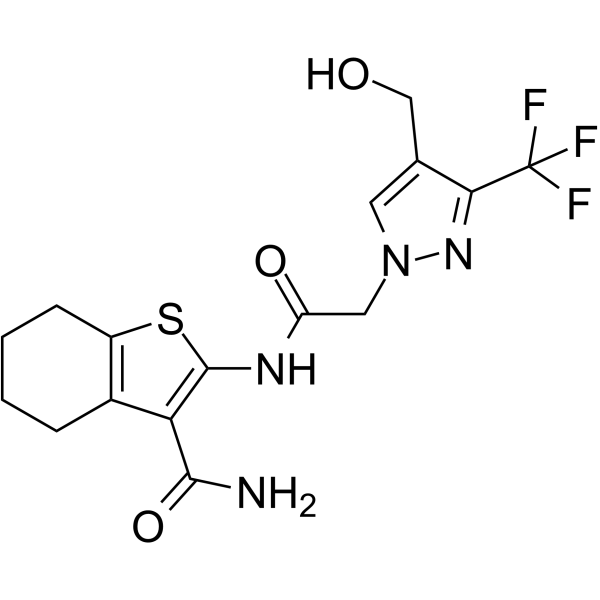
Cat. No.: HY-159120
CAS No.: 2962103-40-6
Purity:  98.08%
Research Areas:  

Metabolic Disease

ZG-2291 is a selective inhibitor targeting FIH (Factor Inhibiting HIF) with oral activity. By binding to FIH, ZG-2291 promotes a conformational flip of a catalytically important tyrosine, enabling selective inhibition of FIH without affecting other 2OG oxygenases in the JmjC subfamily. ZG-2291k enhances thermogenesis in ob/ob mice and improves obesity-related symptoms and metabolic dysfunctions. ZG-2291 holds promise for research in the field of obesity-related diseases .
Cat. No.: HY-125953
CAS No.: 477243-06-4
Synonyms: Ceramide (Egg, Chicken)
Ceramide (Egg) (Ceramide (Egg, Chicken)) is a ceramide from chicken. Ceramide (Egg) is a sphingomyelin signaling pathway second messenger. Ceramide (Egg) activates PP2A, JNK, p38 MAPK, CAPK, ceramide-activated protein phosphatase, Vav, PKCζ, and SAPK/JNK cascade. Ceramide (Egg) downregulates or inhibits AKT, survivin, CDK2, mTOR, and FLIP. Ceramide (Egg) mediates apoptosis, autophagy, cell cycle arrest, mitochondrial dysfunction, redox state shifts, and ROS generation. Ceramide (Egg) can be used for the research of cancer and neurological disease .
Cat. No.: HY-113365S2
CAS No.: 82938-09-8
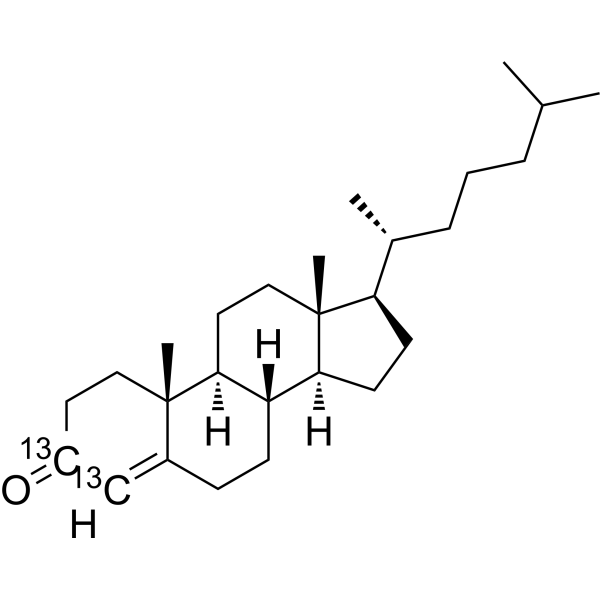
Synonyms: 4-Cholesten-3-one-13C2
Cholestenone- 13C2 is the 13C labeled Cholestenone. Cholestenone (4-Cholesten-3-one), the intermediate oxidation product of cholesterol, is metabolized primarily in the liver. Cholestenone is highly mobile in membranes and influences cholesterol flip-flop and efflux. Cholestenone may cause long-term functional defects in cells .
Cat. No.: HY-116497
CAS No.: 1627843-95-1
Target:  

FAK

Research Areas:  

Cancer

PH11 is a novel focal adhesion kinase (FAK) inhibitor that rapidly induces apoptosis in TRAIL-resistant PANC-1 cells when combined with TRAIL, but has no effect on normal human fibroblasts. The study found that PH11 downregulates c-FLIP through inhibition of FAK and phosphatidylinositol-3-kinase (PI3K)/AKT pathways, thereby restoring the TRAIL apoptotic pathway, suggesting that this combination therapy may provide an attractive therapeutic strategy for the safe and effective treatment of pancreatic cancer. PH11 selectively inhibits c-FLIP expression by modulating upstream signaling pathways and may represent an innovative therapeutic strategy. Although further work is needed to fully elucidate the mechanism of PH11-induced TRAIL sensitization, we believe that our results will provide a new approach to target c-FLIP without the risk of interfering with caspase-8 processing, which could potentially lead to TRAIL resistance. This study also suggests a role for the FAK/AKT signaling pathway in regulating c-FLIP expression in TRAIL-induced apoptosis, and this understanding will provide important clues to control the resistance mechanism to optimize the potential of TRAIL-based pancreatic cancer treatment.
Cat. No.: HY-113365S1
CAS No.: 68165-57-1
Purity:  ≥99.0%
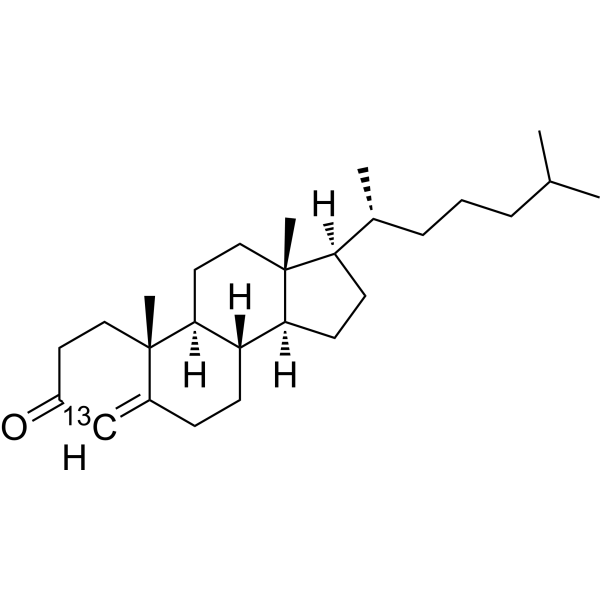
Synonyms: 4-Cholesten-3-one-13C
Cholestenone- 13C is the 13C labeled Cholestenone. Cholestenone (4-Cholesten-3-one), the intermediate oxidation product of cholesterol, is metabolized primarily in the liver. Cholestenone is highly mobile in membranes and influences cholesterol flip-flop and efflux. Cholestenone may cause long-term functional defects in cells .
Cat. No.: HY-148828
CAS No.: 1235945-37-5
Target:  

iGluR

Research Areas:  

Neurological Disease

LSP-GR3 is a novel chemically-modified RNA oligonucleotides, called splice modulating oligomers (SMOs), which potently and specifically modulate GluR alternative splicing to GluR3-flip expression throughout the CNS.
Cat. No.: HY-148828A
Target:  

iGluR

Research Areas:  

Neurological Disease

LSP-GR3 sodium is a novel chemically-modified RNA oligonucleotides, called splice modulating oligomers (SMOs), which potently and specifically modulate GluR alternative splicing to GluR3-flip expression throughout the CNS.
Cat. No.: HY-124906
CAS No.: 1001019-46-0
Target:  

iGluR

Research Areas:  

Neurological Disease

JAMI1001A is a positive allosteric modulator of AMPA receptor. JAMI1001A efficaciously modulates AMPA receptor deactivation and desensitization of both flip and flop receptor isoforms .
Cat. No.: HY-RS01710
Research Areas:  

Others

C1orf112 Human Pre-designed siRNA Set A contains three designed siRNAs for C1orf112 gene (Human), as well as a negative control, a positive control, and a FAM-labeled negative control.

Cat. No.: HY-113365S3
CAS No.: 2389048-48-8
Synonyms: 4-Cholesten-3-one-d7
Cholestenone-d7 is deuterium labeled Cholestenone. Cholestenone (4-Cholesten-3-one), the intermediate oxidation product of cholesterol, is metabolized primarily in the liver. Cholestenone is highly mobile in membranes and influences cholesterol flip-flop
Cat. No.: HY-149017
CAS No.: 2252278-57-0
Target:  

Apoptosis

Research Areas:  

Cancer

Apoptosis inducer 7 (Compound 5I) induces apoptosis in cancer cells. Apoptosis inducer 7 inducrs cleavage of PARP, caspases, down-regulation of anti-apoptotic protein c-Flip and up regulation of pro-apoptotic protein Noxa. Apoptosis inducer 7 exhibits antitumor activity .
Cat. No.: HY-N0831R
CAS No.: 18085-97-7
Jaceosidin (Standard) is the analytical standard of Jaceosidin. This product is intended for research and analytical applications. Jaceosidin is a flavonoid isolated from Artemisia vestita, induces apoptosis in cancer cells, activates Bax and down-regulates Mcl-1 and c-FLIP expression . Jaceosidin exhibits anti-cancer , anti-inflammatory activities, decreases leves of inflammatory markers, and suppresses COX-2 expression and NF-κB activation .
Cat. No.: HY-RS21525
Research Areas:  

Others

Cflar Mouse Pre-designed siRNA Set A contains three designed siRNAs for Cflar gene (Mouse), as well as a negative control, a positive control, and a FAM-labeled negative control.

Cat. No.: HY-RS02570
Research Areas:  

Others

CFLAR Human Pre-designed siRNA Set A contains three designed siRNAs for CFLAR gene (Human), as well as a negative control, a positive control, and a FAM-labeled negative control.

Cat. No.: HY-W040129R
CAS No.: 7059-24-7
Chromomycin A3 (Standard) is the analytical standard of Chromomycin A3 (HY-W040129). This product is intended for research and analytical applications. Chromomycin A3 is an inhibitor that selectively binds to GC-rich DNA sequences. Chromomycin A3 targets the DNA minor groove after forming a dimer with Mg 2+. Chromomycin A3 inhibits DNA replication and transcription, blocks the binding of Sp1 transcription factor to target gene promoters, downregulates the expression of anti-apoptotic proteins such as FLIP, Mcl-1, and XIAP, and induces S-phase cycle arrest and caspase-dependent apoptosis in tumor cells. Chromomycin A3 can antagonize oxidative stress induced by glutathione depletion and neuronal apoptosis induced by Camptothecin (HY-15660). Chromomycin A3 can be used in basic research on malignant tumors such as cholangiocarcinoma, and is a potential chemosensitizer and GC-rich region probe .
Cat. No.: HY-P83834A
Synonyms: CASH; FLIP; MRIT; CLARP; FLAME; Casper; FLAME1; c-FLIP; FLAME-1; I-FLICE; c-FLIPL; c-FLIPR; c-FLIPS; CASP8AP1

Host:  

Mouse

Application:  

WB, IHC-P, FC, ELISA

Reactivity:  

Human, Mouse

