24 Results for "

Fluorochrome

" in MedChemExpress (MCE) Product Catalog:
Products (24)

24 Results for "Fluorochrome" in MCE Product Catalog:

25
25 Publications Verification
Cat. No.: HY-P0028
CAS No.: 17466-45-4
Target:  

Fluorescent Dye

Research Areas:  

Others

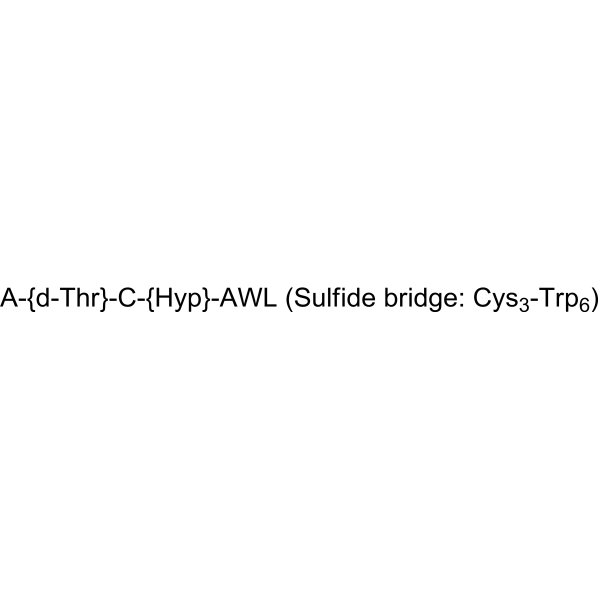
Phalloidin is a mushroom-derived toxin which can be used to label F-actin of the cytoskeleton with fluorochrome .
loading...
    loading...
5
5 Cited Publications
Cat. No.: HY-D0093
CAS No.: 61926-22-5
Synonyms: EthD-1
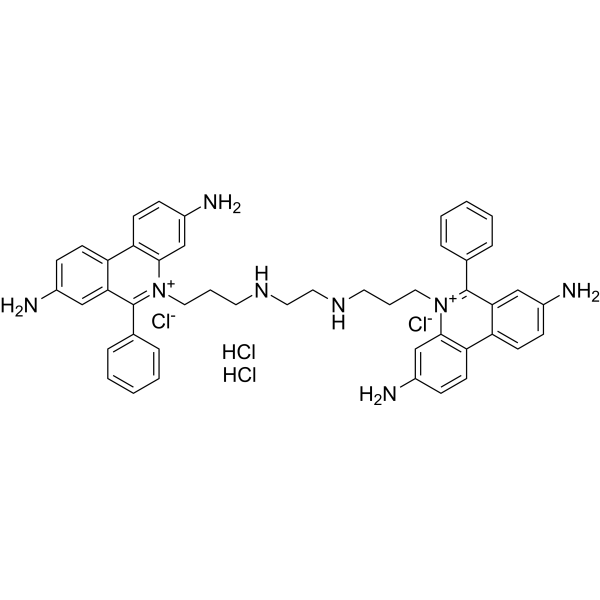
Ethidium homodimer (EthD-1) is a high-affinity fluorescent nucleic acid dye commonly used to stain mammals, bacteria, yeast, and fungi. Ethidium homodimer binds to DNA or RNA, enhancing fluorescence more than 30 times. The Ethidium homodimer has a strong positive charge, so it cannot cross cell membranes and stain living cells; But the Ethidium homodimer can cross the disordered region of the dead cell membrane to reach the nucleus and embed the DNA double strand to produce red fluorescence. Therefore, Ethidium homodimer is a relatively sensitive nucleic acid stain that can accurately detect nucleic acids in solution or in decomposing cells. Ethidium homodimer binds DNA, Ex/Em=528/617 nm .
loading...
    loading...
3
3 Cited Publications
Cat. No.: HY-D1627
CAS No.: 180854-97-1
Synonyms: CM-DiI
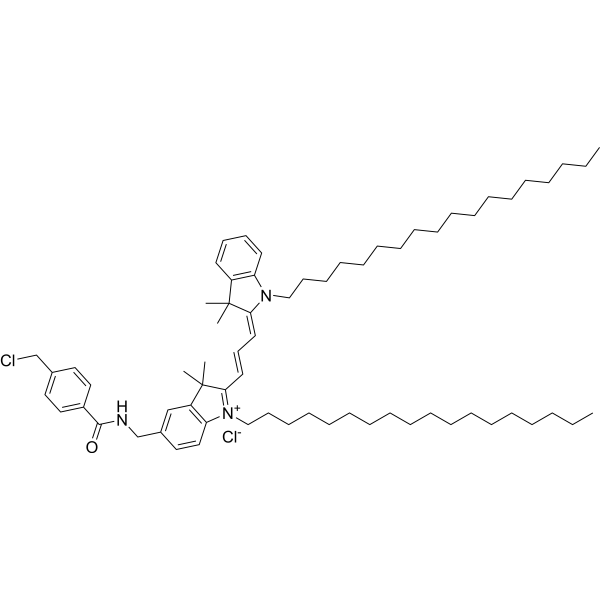
CellTracker CM-DiI (CM-DiI) is a lipophilic fluorochrome that can be used for tracking the migration of lymphocytes. CellTracker CM-DiI is feasible to detect labeled cells in histological sections (excitation 553 nm; emission 570 nm) .
loading...
    loading...
2
2 Cited Publications
Cat. No.: HY-W127705
CAS No.: 4213-45-0
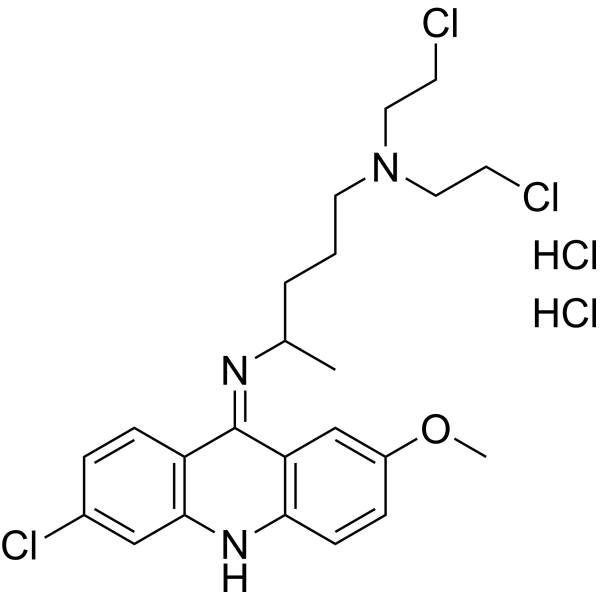
Quinacrine mustard dihydrochloride is a fluorochrome. Quinacrine mustard dihydrochloride as a polycyclic aromatic agent can be used as mutagenic agent induces the mutants of bacteria. Quinacrine mustard dihydrochloride induces cell cycle arrest at G2/M-phase. Quinacrine mustard dihydrochloride has the potential for the research of plant, animal, or human chromosomes .
loading...
    loading...
Cat. No.: HY-D0917
CAS No.: 157199-59-2
NIR-Red Dead Cell-1 Dye is a DNA-binding fluorescent dye for non-living cells (Ex/Em=515 nm/531 nm). NIR-Red Dead Cell-1 Dye can intercalate into base pairs of double-stranded DNA and produce stronger fluorescence. NIR-Red Dead Cell-1 Dye is suitable for necrotic cells or late apoptotic cells with damaged cell membranes, showing green fluorescence under fluorescence microscopy or flow cytometry. NIR-Red Dead Cell-1 Dye can be used to distinguish live cells from dead cells and distinguish cell membrane integrity. NIR-Red Dead Cell-1 Dye can be attached to the surface of Feraheme (FH) nanoparticles (NPs) to obtain fluorescent dye-functionalized NPs for drug delivery studies .
loading...
    loading...
Cat. No.: HY-D0918
CAS No.: 152068-09-2
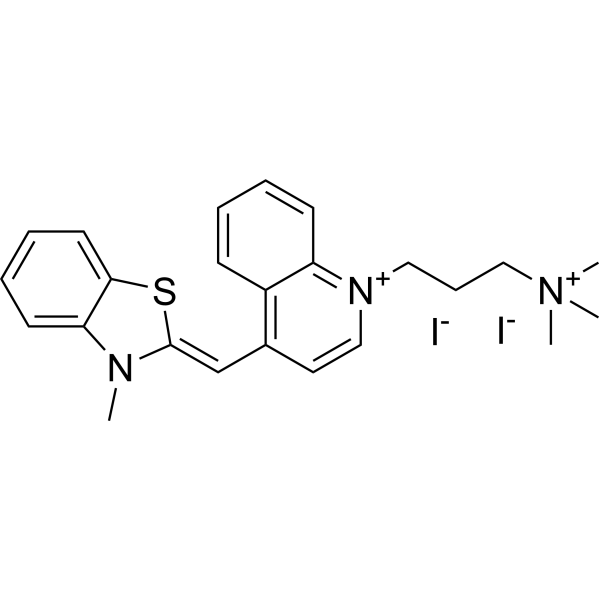
YO-PRO-1 is a non-cell-membrane-penetrating green fluorescent dye. YO-PRO-1 cannot penetrate normal cell membranes but can penetrate the membranes of apoptotic and necrotic cells. YO-PRO-1 has a high affinity for DNA. When it is not bound to DNA, it emits almost no fluorescence, and when it binds to DNA, it can emit green fluorescence (Ex/Em: 488/530±30 nM). YO-PRO-1 is often used together with Propidium Iodide (HY-D0815) to analyze and identify apoptotic and necrotic cells .
loading...
    loading...
Cat. No.: HY-130433
CAS No.: 1449370-25-5
Purity:  ≥99.0%
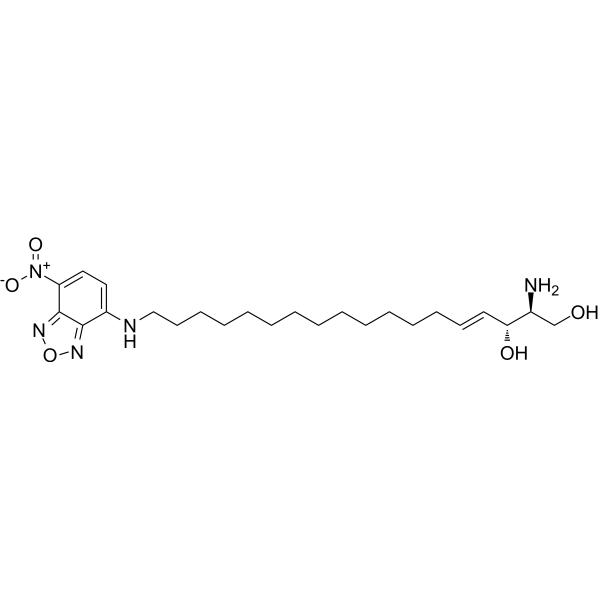
NBD Sphingosine (NBD-Sph), a fluorochrome, is a fluorescence-labeled sphingosine. NBD Sphingosine can be uesd for fluorescence assay for sphingosine kinases .
loading...
    loading...
Cat. No.: HY-136936
CAS No.: 2068027-79-0
Purity:  98.27%
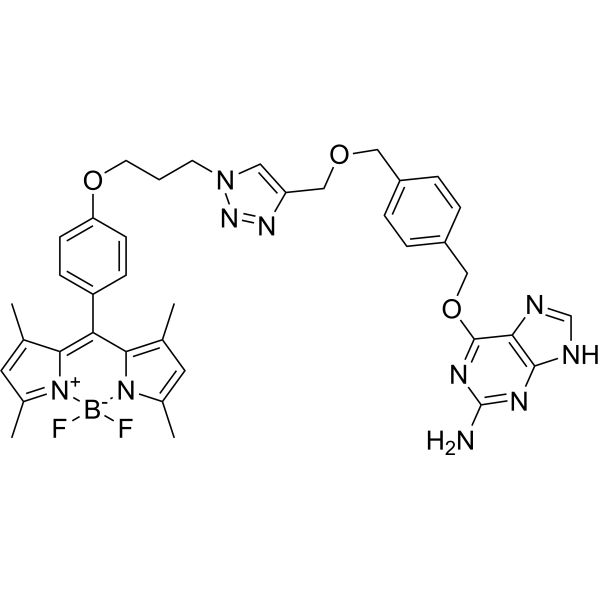
PYBG-BODIPY is a dye and has a role as a fluorochrome. PYBG-BODIPY specifically and efficiently labels the target genetically encoded SNAP-tags in live cells .
loading...
    loading...
Cat. No.: HY-D1072
CAS No.: 53213-81-3
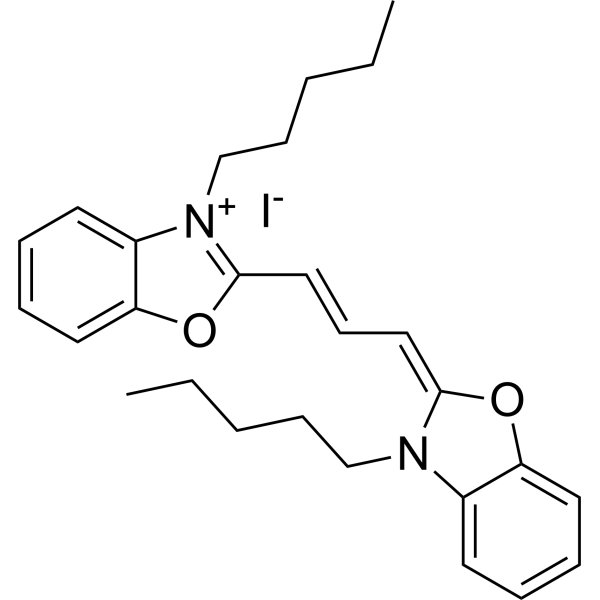
Synonyms: 3,3′-Dipentyloxacarbocyanine iodide
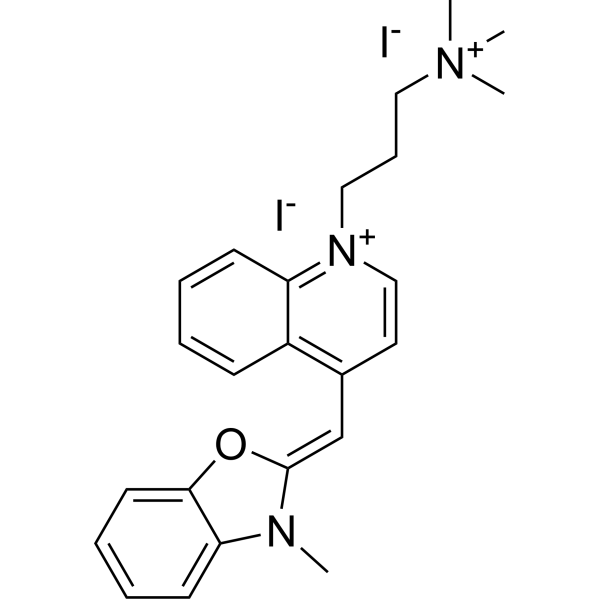
DiOC5(3) is the membrane potential (MP)-modifying fluorochrome. DiOC5(3) is an anti-LSC compound available for diagnostic imaging. DiOC5(3) has the advantage of being a single fluorescent chemical .
loading...
    loading...
Cat. No.: HY-D1560
CAS No.: 438476-80-3
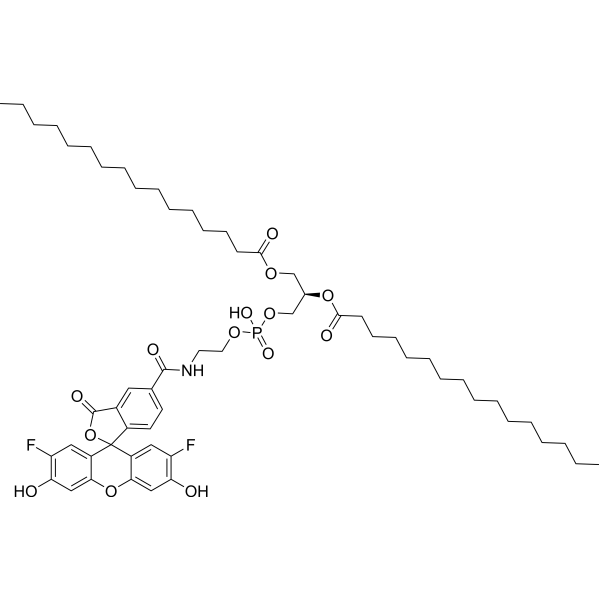
FG 488 DHPE is a lipid-coupled fluorochrome, has be used as a fluorophore Oregon Green 488. FG 488 DHPE monitors acidification of lipid vesicles with λex/λem=508/534 nm.FG 488 DHPE is also used for Hv1-induced proton translocation quantificatio with λex/λem=508/534 nm as well .
loading...
    loading...
Cat. No.: HY-P5372A
Research Areas:  

Cancer

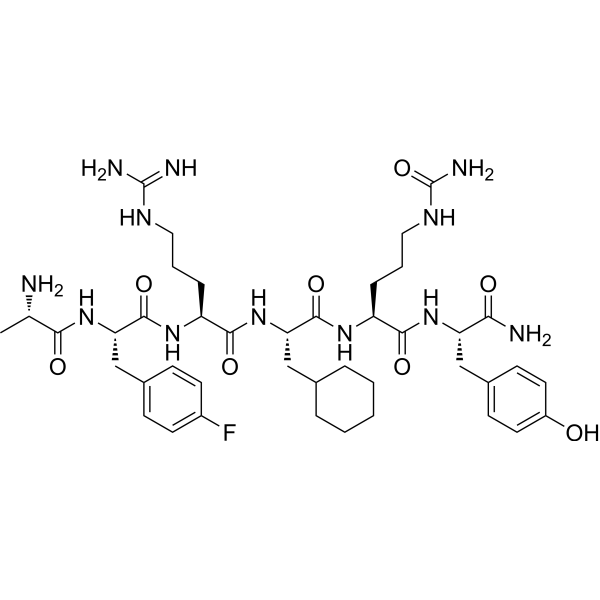
Ala-parafluoroPhe-Arg-Cha-Cit-Tyr-NH2 TFA, a bioactive peptide, is a selective Protease activating receptor 1 (PAR-1) agonist over PAR-2. PAR-1 belongs to a subfamily of G-protein coupled receptors and is known to mediate the cellular effects of thrombin. In addition to its varied cellular effects of thrombin, PAR-1 has also been shown to coordinate with PAR-4 and regulate thrombin-induced hepatocellular carcinoma harboring thrombin formation within the tumor environment classified as 'coagulation type' .
loading...
    loading...
Cat. No.: HY-D1589
CAS No.: 1870842-52-6
Target:  

Fluorescent Dye

Research Areas:  

Others

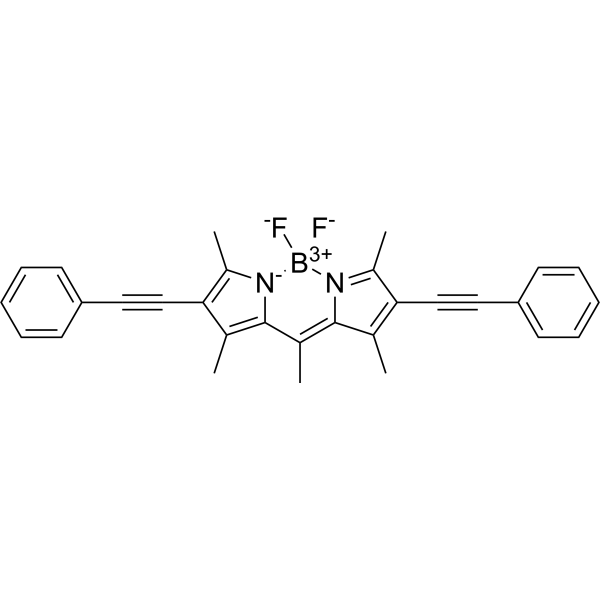
8-Methyl-2,6-diphenylethynyl-BODIPY 505/515 is a fluorochrome .
loading...
    loading...
Cat. No.: HY-136937
CAS No.: 2067339-51-7
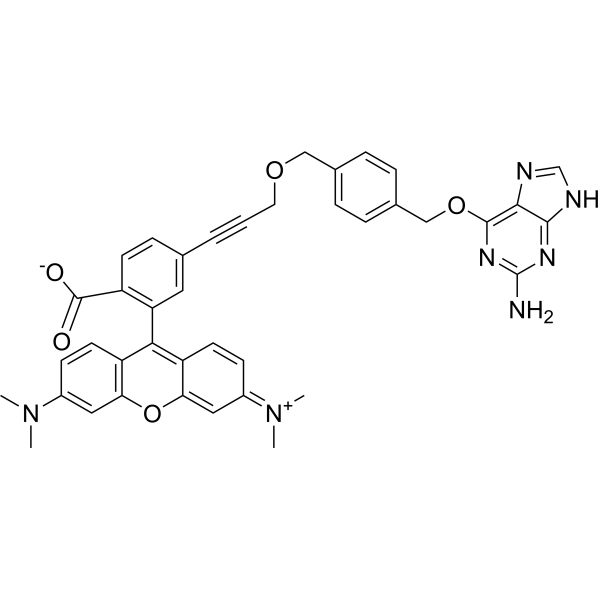
PYBG-TMR is a dye and has a role as a fluorochrome. PYBG-TMR specifically and efficiently labels the target genetically encoded SNAP-tags in live cells . PYBG-TMR is a click chemistry reagent, it contains an Alkyne group and can undergo copper-catalyzed azide-alkyne cycloaddition (CuAAc) with molecules containing Azide groups.
loading...
    loading...
Cat. No.: HY-D2766
CAS No.: 1340586-78-8
BP Light 550 NHS ester is a vibrant orange-to-red fluorochrome with better performance than other rhodamine derivatives, including BP Fluor 555, TRITC, and Cy3 dye for fluorescent applications. The high water solubility of BP Light 550 means that a high dye-to-protein ratio can be attained without causing precipitation of the conjugates.
loading...
    loading...
Cat. No.: HY-P5373
CAS No.: 237409-87-9
Target:  

Peptides

Research Areas:  

Others

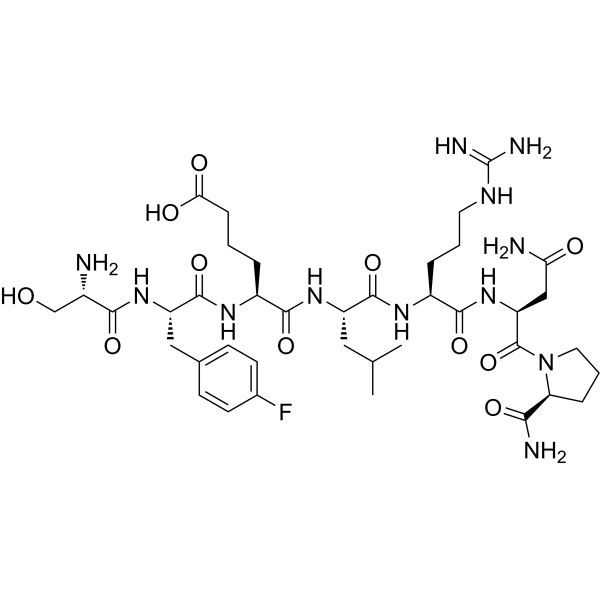
Ser-parafluoroPhe-Aad-Leu-Arg-Asn-Pro-NH2 is a biological active peptide. (Structure-activity studies of thrombin receptor-tethered ligand SFLLRNP have revealed the importance of the Phe-2-phenyl group in receptor recognition and the replacement of the Phe-2 by para-fluorophenylalanine [(p-F)Phe] was found to enhance its activity)
loading...
    loading...
Cat. No.: HY-P5372
CAS No.: 211190-38-4
Research Areas:  

Cancer

Ala-parafluoroPhe-Arg-Cha-Cit-Tyr-NH2, a bioactive peptide, is a selective Protease activating receptor 1 (PAR-1) agonist over PAR-2. PAR-1 belongs to a subfamily of G-protein coupled receptors and is known to mediate the cellular effects of thrombin. In addition to its varied cellular effects of thrombin, PAR-1 has also been shown to coordinate with PAR-4 and regulate thrombin-induced hepatocellular carcinoma harboring thrombin formation within the tumor environment classified as 'coagulation type' .
loading...
    loading...
Cat. No.: HY-159841A
CAS No.: 2140857-96-9
Target:  

Fluorescent Dye

Research Areas:  

Others

Filricianine sodium is an hydrophilic fluorochrome. It can be conjugated to antibody with higher D/P ratio and widely used applications including western blotting, microscopy, flow cytometry, and cell based assays.
loading...
    loading...
Cat. No.: HY-D1525
CAS No.: 73413-78-2
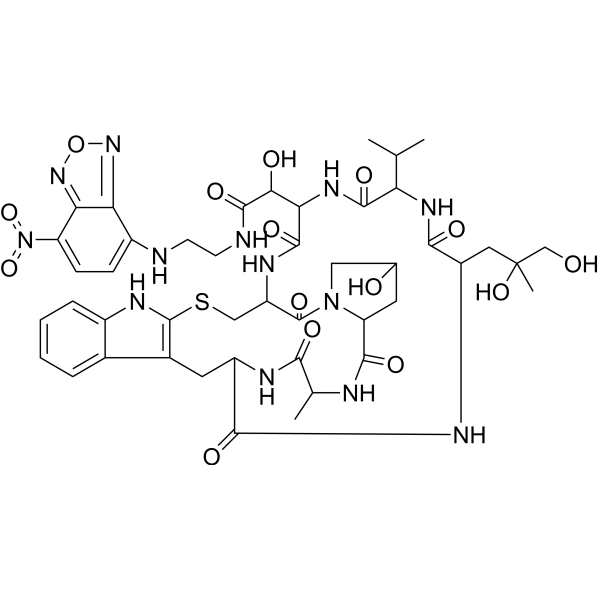
N-(7-Nitrobenzofurazan-4-yl)phallacidin is a fluorochrome. N-(7-Nitrobenzofurazan-4-yl)phallacidin can be used visualizing probe for actin .
loading...
    loading...
Cat. No.: HY-D2736
CAS No.: 2131095-32-2
BP Light 800 NHS ester is an amine reactive hydrophilic fluorochrome . It can be conjugated to antibody with higher D/P ratio and widely used applications including western blotting, microscopy, flow cytometry, and cell based assays.
loading...
    loading...
Cat. No.: HY-D2754
CAS No.: 1638197-36-0
BP Light 550 acid is a vibrant orange-to-red fluorochrome with better performance t han other rhodamine derivatives, including BP Fluor 555, TRITC, and Cy3 dye for fluorescent applications. The high water solubility of BP Light Fluors means that a high dye-to-protein ratio can be attained without causing precipitation of the conjugates.
loading...
    loading...

