



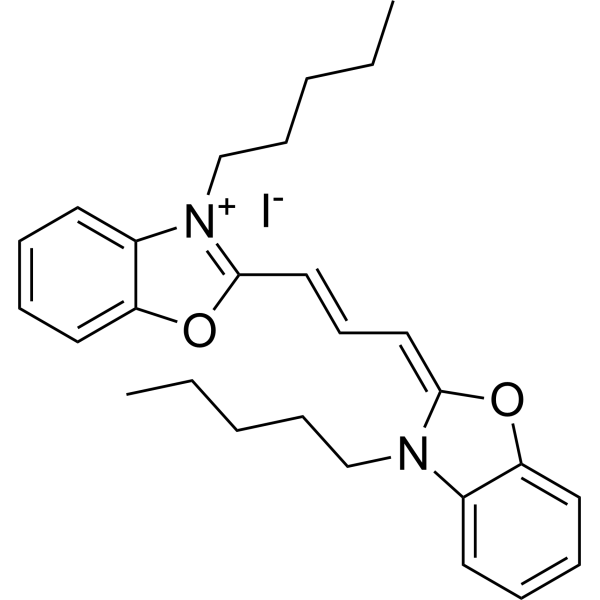
DiOC5(3)

Based on 1 Customer Validation
DiOC5(3) (3,3′-Dipentyloxacarbocyanine iodide) is a mitochondrial Fluorescent dye that alters membrane potential, and it also acts as an inhibitor of NADH-ubiquinone reductase (respiratory complex I). DiOC5(3) increases the NADH/NAD ratio and induces excessive production of ROS. DiOC5(3) induces Apoptosis. DiOC5(3) accumulates in the mitochondria of leukemia stem-like cells via organic anion-transporting polypeptides, specifically labels these cells, and inhibits their proliferation. DiOC5(3) enhances the cellular uptake of Hoechst 33342 (HY-15559), reduces Hoechst 33342-associated cytotoxicity, and improves the resolution of DNA content analysis by flow cytometry. DiOC5(3) shows no detectable fluorescence signal when excited in the 400-500 nm ultraviolet light range. DiOC5(3) is applicable to leukemia-related research.
For research use only. We do not sell to patients.
- Purity : 99.64%
- CAS No.: 53213-81-3
- Formula: C27H33IN2O2
- Molecular Weight:544.47
-
Storage:
-20°C, sealed storage, away from moisture and light
* In solvent : -80°C, 6 months; -20°C, 1 month (sealed storage, away from moisture and light)

To place orders, for customer services and technical support, please contact: MedChemExpress USA
Tel: 609-228-6898 E-mail: [email protected] [email protected]


-
 Biological Activity
-
Chemical Information
-
Solvent & Solubility
- Protocols
- Purity & Documentation
- References
-
 Help & FAQs




Biological Activity
Description
In Vitro
DiOC5(3) (300 nM; 48 h) selectively stains and inhibits the proliferation of K562 ALDH+ leukemia stem-like cells with an IC50 of 0.29 μM. It exhibits lower potency against K562 ALDH- cells (IC50 0.68 μM) and exerts minimal toxicity to normal HUCB CD34+ progenitor cells, cells derived from zebrafish embryos, adult zebrafish blood cells, and developing zebrafish embryos[1].
DiOC5(3) (200 nM; 24 h) increases the NADH/NAD+ ratio in the mitochondria of K562 cells, elevates intracellular ROS levels, preferentially induces apoptosis in K562 ALDH+ leukemic stem-like cells, and simultaneously regulates the expression of CML-related genes, stem cell-associated genes, and anticancer genes[1].
DiOC5(3) (200 nM; 24 h) preferentially alters the expression of genes associated with key cellular processes in K562 ALDH+ leukemia stem-like cells, and exerts a subpopulation-specific effect on the NF-κB pathway[1].
MedChemExpress (MCE) has not independently confirmed the accuracy of these methods. They are for reference only. Further protocols information, click here.
-
Cell Line:human chronic myelogenic leukemia K562 ALDH+, K562 ALDH-, human umbilical cord blood (HUCB) CD34+ progenitor cells, zebrafish embryo-derived cells, adult zebrafish blood cells (ZBCs)
-
Concentration:300 nM
-
Incubation Time:48 h (300 nM treatment; zebrafish embryo treatment)
-
Result:Accumulated in K562 ALDH+ cells at a significantly higher rate than in K562 ALDH- and HUCB CD34+ cells (P < 0.01).
Suppressed K562 ALDH+ cell proliferation to a significantly greater degree than K562 ALDH- and HUCB CD34+ cells (P < 0.01), with a lower IC50 for ALDH+ cells than ALDH- cells (P < 0.05).
Exhibited higher cytotoxicity thresholds for non-cancer cells (ZBCs and HUCB CD34+ cells) compared to K562 cells.
Caused no death or phenotypic changes in zebrafish embryos treated from 48 hpf for 48 h, except for whole-body green-fluorescent staining.
-
Cell Line:K562 ALDH+, K562 ALDH-, isolated K562 cell mitochondria
-
Concentration:200 nM
-
Incubation Time:24 h
-
Result:Significantly increased the NADH/NAD+ ratio in isolated K562 mitochondria (P < 0.05), indicating inhibition of NADH-ubiquinone reductase activity.
Increased ROS levels in both K562 ALDH+ and ALDH- subpopulations (P < 0.01), with a higher increase ratio in ALDH+ cells.
Increased apoptotic cells in both subpopulations (P < 0.01), with ALDH+ cells showing greater sensitivity (P < 0.01 vs.
ALDH- cells).
Downregulated expression of BCR-ABL, SIRT1, CD44, and CD133 (P < 0.01 or P < 0.05) and upregulated expression of TP53 and CDKN1A (P < 0.01) in both ALDH+ and ALDH- cells.
In Vivo
Exposure of normally developing zebrafish embryos to DiOC5(3) (1 μM) for 48 h does not show any developmental toxicity or lethality[1].
MedChemExpress (MCE) has not independently confirmed the accuracy of these methods. They are for reference only.
-
Animal Model:nacre/rose/fli1:egfp (48-hpf, xenotransplanted with human chronic myelogenic leukemia K562 ALDH+ putative leukemia stem-like cells into yolk sac)[1]
-
Dosage:0.5 μM (proliferation inhibition); 10 μM (selective staining and proliferation inhibition)
-
Administration:continuous exposure in E3 medium; 48 hours (0.5 μM); yolk sac injection; single dose (10 μM)
-
Result:Significantly inhibited proliferation of ALDH+ leukemia stem-like cells (P < 0.01 vs. control) with selective activity relative to ALDH- leukemia cells (P < 0.05).
Selectively stained ALDH+ cells 1 hour post-injection (DiOC5(3)/KOr fluorescence ratio was significantly higher in ALDH+ vs.
ALDH- xenografts, P < 0.01).
Caused a greater reduction in ALDH+ cell proliferation over 48 hours (P < 0.05 vs.
ALDH- cells).
Induced significant decreases in ALDH+ cell fluorescence observed at 12, 24, 36, and 48 hours post-injection (P < 0.05 or P < 0.01 vs. 1 hour post-injection).


Chemical Information
-
CAS No. 53213-81-3
-
Appearance Solid
-
Molecular Weight 544.47
-
Formula C27H33IN2O2
-
Color Orange to red
-
SMILES
CCCCCN1/C(OC2=CC=CC=C12)=C\C=C\C3=[N+](CCCCC)C4=CC=CC=C4O3.[I-]
-
Synonyms
3,3′-Dipentyloxacarbocyanine iodide
-
Shipping
Room temperature in continental US; may vary elsewhere.
-
Storage
-20°C, sealed storage, away from moisture and light
* In solvent : -80°C, 6 months; -20°C, 1 month (sealed storage, away from moisture and light)


Solvent & Solubility
In Vitro:
DMSO : 50 mg/mL (91.83 mM; Need ultrasonic; Hygroscopic DMSO has a significant impact on the solubility of product, please use newly opened DMSO)
Please refer to the solubility information to select the appropriate solvent. Once prepared, please aliquot and store the solution to prevent product inactivation from repeated freeze-thaw cycles.
Storage method and period of stock solution: -80°C, 6 months; -20°C, 1 month (sealed storage, away from moisture and light). When stored at -80°C, please use it within 6 months. When stored at -20°C, please use it within 1 month.
Please refer to the solubility information to select the appropriate solvent. Once prepared, please aliquot and store the solution to prevent product inactivation from repeated freeze-thaw cycles.
Storage method and period of stock solution: -80°C, 6 months; -20°C, 1 month (sealed storage, away from moisture and light). When stored at -80°C, please use it within 6 months. When stored at -20°C, please use it within 1 month.
Concentration (start) × Volume (start) = Concentration (final) × Volume (final)

Protocols
-
Mammalian live/dead viability and cytotoxicity staining
Live/dead viability and cytotoxicity staining assays are based on the simultaneous detection of intracellular esterase activity in metabolically active (viable) cells and membrane integrity loss in non-viable cells. In commonly used dual-staining approaches, membrane-permeant fluorogenic substrates are converted by intracellular esterases into fluorescent products in live cells, while impermeant DNA-binding dyes selectively enter cells with compromised plasma membranes and label nucleic acids in dead or dying cells, enabling discrimination between viable and non-viable populations by fluorescence microscopy or flow cytometry.
-
Flow Cytometry
Flow cytometry (FC) is a technique for high-speed, step-by-step quantitative analysis and sorting of single cells or other biological particles in a suspension by detecting labeled fluorescent signals.
-
Annexin V plus membrane-impermeant dye apoptosis staining
Annexin V-based apoptosis assays rely on the detection of phosphatidylserine (PS) externalization from the inner leaflet of the plasma membrane to the outer leaflet, an early biochemical hallmark of apoptosis. Fluorescently labeled Annexin V binds PS in a calcium-dependent manner, enabling identification of early apoptotic cells by flow cytometry or fluorescence microscopy. When combined with a membrane-impermeant DNA-binding dye (e. g. , propidium iodide), this approach allows discrimination between viable (Annexin V−/dye−), early apoptotic (Annexin V+/dye−), and late apoptotic or necrotic (Annexin V+/dye+) cell populations by assessing membrane integrity and PS exposure.
-
ROS/oxidative-stress fluorescent staining
ROS/oxidative-stress fluorescent staining uses cell-permeant fluorogenic probes that become fluorescent after oxidation inside cells or tissues; commonly used examples include DCFH-DA/DCFDA for broad cellular oxidant detection, DHE for superoxide-related signal detection, MitoSOX for mitochondrial superoxide-related signal detection, and CellROX probes for oxidative-stress-associated fluorescence readouts. The assay detects probe oxidation rather than a single ROS species unless the probe and analysis method have been chemically validated for that species. DCFH-DA enters cells, is deacetylated by intracellular esterases to DCFH, and produces fluorescent DCF after oxidation, so the readout is used as an operational measure of total cellular oxidative stress rather than a species-specific ROS measurement. DHE and MitoSOX can report superoxide-related oxidation, but red fluorescence alone can include non-specific ethidium-like oxidation products; HPLC or optimized spectral approaches are
-
Protocol for Phospho-flow cytometry
Phospho-flow cytometry detects intracellular phosphorylated signaling proteins in single cells using phospho-specific antibodies after rapid fixation and permeabilization; the fluorescence intensity reflects phosphorylation state and therefore kinase-pathway activation, inhibition, or drug response in defined cell subsets. Unlike Western blot, phospho-flow preserves single-cell resolution and can measure signaling heterogeneity in cancer cells, primary immune cells, dissociated mouse tumors, macrophages, organoid-derived cells, and drug-screening samples when validated antibodies and fixation/permeabilization conditions are used.
-
Cell Viability Determination by MTT Colorimetric Assay
The following protocol uses the MTT colorimetric assay as a classic literature-established method for assessing cell viability/metabolic activity in cultured mammalian cells. MTT[3-(4,5-dimethylthiazol-2-yl)-2,5-diphenyltetrazolium bromide] is reduced by metabolically active cells to a colored formazan product; the amount of formazan is quantified spectrophotometrically and provides an indirect measure of metabolically active viable cells. Importantly, MTT reduction reflects cellular oxidoreductase/metabolic activity rather than an absolute direct count of living cells, so changes in cellular metabolism can alter the signal independently of cell number.
-
Apoptosis
Apoptosis, also called programmed cell death, is generally characterized by distinct morphological characteristics.
-
TUNEL staining for apoptotic DNA fragmentation
TUNEL staining detects DNA strand breaks by using terminal deoxynucleotidyl transferase to add labeled nucleotides to exposed 3′-OH DNA termini, generating either microscopic staining in fixed cells or tissue sections, or fluorescence/cytometric signal in cell suspensions. TUNEL positivity reflects DNA fragmentation but should not be interpreted alone as definitive apoptosis, because TUNEL can also label necrotic, autolytic, mechanically damaged, or DNA-repair-associated DNA breaks.
-
Cell Cytotoxicity Assay
Cytotoxicity assays are usually based on the assessment of cell membrane damage, which can also be indirectly detected by measuring cell viability. Detection methods include MTT assay, CKK-8 assay, LDH assay and ATP assay, etc.
-
Flow cytometric DNA-content cell-cycle staining
Flow cytometric DNA-content cell-cycle staining measures the fluorescence intensity of DNA-bound fluorochromes in single cells or nuclei to estimate DNA content distributions, allowing assignment of populations to G0/G1, S, and G2/M phases by DNA histogram deconvolution. Propidium iodide (PI) intercalates into DNA, and PI fluorescence is proportional to cellular DNA content when staining is performed under conditions that make DNA accessible and minimize non-DNA signal. Cells with G2/M DNA content are expected to show approximately twice the fluorescence intensity of G0/G1 cells, while S-phase cells occupy intermediate fluorescence values. PI-based DNA-content analysis can also detect cells with fractional DNA content, often reported as sub-G1, when DNA fragmentation and extraction during staining reduce retained DNA signal in apoptotic cells. DAPI is an alternative DNA fluorochrome for univariate DNA-content analysis, while bivariate approaches combining DNA content with proliferation
-
Nuclear DNA counterstaining and nuclear morphology staining
Nuclear DNA counterstaining uses DNA-binding fluorescent dyes to visualize nuclei and chromatin so that nuclei can be located, counted, segmented, and evaluated for morphology; Hoechst 33342, DAPI, propidium iodide, and DRAQ5 are commonly reported nuclear stains, while live-cell DNA labeling is better supported for Hoechst dyes and DRAQ5 than for propidium iodide in intact viable cells. Nuclear morphology staining can detect apoptosis-associated nuclear changes, including chromatin condensation, nuclear shrinkage, nuclear fragmentation, reduced nuclear area/perimeter/axis length, and increased nuclear fluorescence intensity; these morphology readouts have been compared with apoptosis markers such as TUNEL and caspase-3 immunofluorescence.
-
Fluorescent plasma-membrane potential dye assay
Fluorescent plasma-membrane potential dye assays measure changes in cell membrane potential using voltage-sensitive dyes whose fluorescence changes when cells depolarize or hyperpolarize. Anionic bis-oxonol dyes such as DiBAC4(3) enter depolarized cells more readily and show increased fluorescence after intracellular binding, while hyperpolarization reduces dye accumulation and fluorescence. FMP/FLIPR membrane-potential dyes are used for faster, homogeneous microplate assays of ion-channel or receptor-mediated membrane-potential changes.
-
Apoptosis Solutions
Apoptosis is a regulated, generally non-lytic cell-death pathway that removes unwanted, damaged, infected, or abnormal cells through coordinated morphological changes, caspase activation, DNA fragmentation, and membrane remodeling. The intrinsic apoptosis pathway is controlled mainly by mitochondrial outer membrane permeabilization, BCL-2 family proteins, cytochrome c release, apoptosome formation, caspase-9 activation, and downstream executioner caspase-3/7 activation. The extrinsic apoptosis pathway is initiated by death receptors such as Fas, TNFR, and TRAIL receptors, which recruit adaptor proteins and activate caspase-8 before engaging executioner caspases or mitochondrial amplification through BID cleavage. Apoptosis is linked to many phenotypes, including cancer cell killing, tissue homeostasis, immune regulation, neurodegeneration, infection response, and treatment-induced cytotoxicity; unresolved questions include how apoptosis interacts with necroptosis, pyroptosis, ferroptos


Purity & Documentation
-
Data Sheet (296 KB)
-
SDS (558 KB)
- English - EN (558 KB)
- Français - FR (558 KB)
- Deutsch - DE (558 KB)
- Norwegian - NO (558 KB)
- Español - ES (558 KB)
- Swedish - SV (558 KB)
- Italian - IT (558 KB)
- Korean - KR (558 KB)
- Portuguese - PT (558 KB)
-
Handling Instructions (2659 KB)
References
[1]. Zhang B, et al. In vivo selective imaging and inhibition of leukemia stem-like cells using the fluorescent carbocyanine derivative, DiOC5(3). Biomaterials. 2015 Jun;52:14-25. [Content Brief]
[2]. Crissman HA, et al. Supravital cell staining with Hoechst 33342 and DiOC5(3). Methods Cell Biol. 1990;33:89-95. . [Content Brief]


Complete Stock Solution Preparation Table
Please refer to the solubility information to select the appropriate solvent. Once prepared, please aliquot and store the solution to prevent product inactivation from repeated freeze-thaw cycles.
Storage method and period of stock solution: -80°C, 6 months; -20°C, 1 month (sealed storage, away from moisture and light). When stored at -80°C, please use it within 6 months. When stored at -20°C, please use it within 1 month.
| Optional Solvent | Concentration Solvent Mass | 1 mg | 5 mg | 10 mg | 25 mg |
|---|---|---|---|---|---|
| DMSO | 1 mM | 1.8366 mL | 9.1832 mL | 18.3665 mL | 45.9162 mL |
| 5 mM | 0.3673 mL | 1.8366 mL | 3.6733 mL | 9.1832 mL | |
| 10 mM | 0.1837 mL | 0.9183 mL | 1.8366 mL | 4.5916 mL | |
| 15 mM | 0.1224 mL | 0.6122 mL | 1.2244 mL | 3.0611 mL | |
| 20 mM | 0.0918 mL | 0.4592 mL | 0.9183 mL | 2.2958 mL | |
| 25 mM | 0.0735 mL | 0.3673 mL | 0.7347 mL | 1.8366 mL | |
| 30 mM | 0.0612 mL | 0.3061 mL | 0.6122 mL | 1.5305 mL | |
| 40 mM | 0.0459 mL | 0.2296 mL | 0.4592 mL | 1.1479 mL | |
| 50 mM | 0.0367 mL | 0.1837 mL | 0.3673 mL | 0.9183 mL | |
| 60 mM | 0.0306 mL | 0.1531 mL | 0.3061 mL | 0.7653 mL | |
| 80 mM | 0.0230 mL | 0.1148 mL | 0.2296 mL | 0.5740 mL |


DiOC5(3) Related Classifications
HY-D1072 Related Classifications
 Powered by Bioz
Keywords
- DiOC5(3)
- 53213-81-3
- 3,3′-Dipentyloxacarbocyanine
- Fluorescent Dye
- Reactive Oxygen Species (ROS)
- Mitochondrial Metabolism
- Apoptosis
- leukemia stem-like cells
- K562 ALDH+ leukemia stem-like cells
- SLCO4C1
- SLCO4A1
- respiratory complex I
- NADH-ubiquinone reductase
- NF-κB
- human umbilical cord blood CD34 progenitor cells
- zebrafish
- reactive oxygen species
- Inhibitor
- inhibitor
- inhibit