1. Search Result
Search Result
Results for "

Genomic instability

" in MedChemExpress (MCE) Product Catalog:

15

Inhibitors & Agonists

1

Screening Libraries

1

Peptides

1

Inhibitory Antibodies

1

Natural
Products

1

Oligonucleotides

Cat. No. Product Name Target Research Areas Chemical Structure
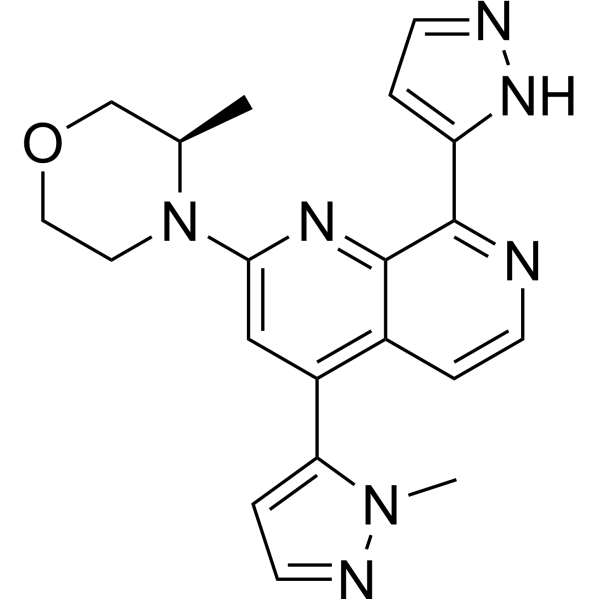
  • HY-101566
    Elimusertib
    10+ Cited Publications

    BAY 1895344

    ATM/ATR Cancer
    Elimusertib (BAY-1895344) is a potent, orally active and selective ATR inhibitor with an IC50 of 7 nM. Elimusertib has anti-tumor activity . Elimusertib can be used for the research of solid tumors and lymphomas .
    Elimusertib
  • HY-170430

    Molecular Glues E1/E2/E3 Enzyme Cancer
    HGC652 is a molecular glue degrader targeting TRIM21 with a TRIM21-dependent nuclear membrane disruption effect. HGC652 binds to the PRY-SPRY domain of TRIM21 with high affinity (Ka=0.061 μM), mediates the interaction between TRIM21 and NUP98, and redirects E3 ligase activity. By triggering the polyubiquitination and proteasomal degradation of nucleoporins (such as NUP155 and GLE1), HGC652 disrupts nuclear membrane integrity, alters nuclear morphology, induces genomic instability, and thereby induces cancer cell death .
    HGC652
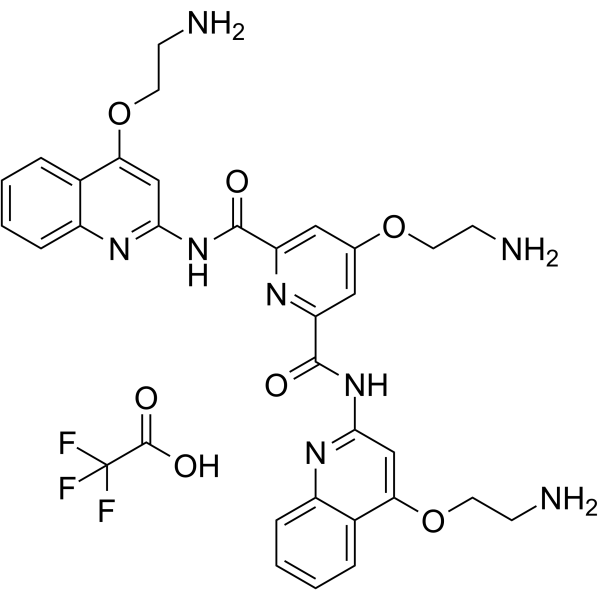
  • HY-15176B
    Pyridostatin TFA
    Maximum Cited Publications
    34 Publications Verification

    RR82 TFA

    DNA/RNA Synthesis G-quadruplex Flavivirus Src Virus Protease Cancer
    Pyridostatin (RR82) TFA is a G-quadruplex (G4) inducer/stabilizer with a Kd of 490 nM. Pyridostatin TFA also acts as an inhibitor of Zika virus (ZIKV) NS2B-NS3 protease, with an IC50 of 11.0 μM. Pyridostatin TFA interacts with G-quadruplex structures, regulates the expression of SRC and SUB1, and induces replication- and transcription-dependent DNA damage, growth arrest, and genomic instability. Pyridostatin TFA exhibits antiproliferative and antiviral activities. Pyridostatin TFA can be used in studies related to breast cancer, cervical cancer, and Zika virus infection .
    Pyridostatin TFA
  • HY-168555

    PROTACs CDK Apoptosis Akt mTOR Cancer
    YJ1206 is an orally active selective CDK12/CDK13 PROTAC degrader. YJ1206 induces DNA damage and genomic instability, activates the AKT pathway, and triggers apoptosis. YJ1206 reduces tumor cell viability, inhibits tumor growth, and attenuates tumor cell dissemination. YJ1206 is applicable to research related to prostate cancer and high-grade serous tubo-ovarian cancer .
    YJ1206
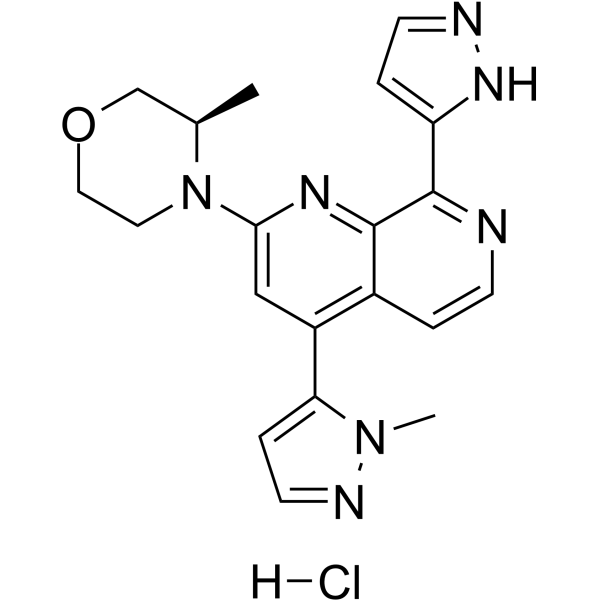
  • HY-101566A
    Elimusertib hydrochloride
    10+ Cited Publications

    BAY 1895344 hydrochloride

    ATM/ATR Cancer
    Elimusertib (BAY 1895344) hydrochloride is a potent, orally active and selective ATR inhibitor with an IC50 of 7 nM. Elimusertib hydrochloride has anti-tumor activity . Elimusertib hydrochloride can be used for the research of solid tumors and lymphomas .
    Elimusertib hydrochloride
  • HY-15176C
    Pyridostatin trihydrochloride
    Maximum Cited Publications
    34 Publications Verification

    RR82 trihydrochloride

    DNA/RNA Synthesis G-quadruplex Flavivirus Src Virus Protease Cancer
    Pyridostatin (RR82) trihydrochloride is a G-quadruplex (G4) inducer/stabilizer with a Kd of 490 nM. Pyridostatin trihydrochloride also acts as an inhibitor of Zika virus (ZIKV) NS2B-NS3 protease, with an IC50 of 11.0 μM. Pyridostatin trihydrochloride interacts with G-quadruplex structures, regulates the expression of SRC and SUB1, and induces replication- and transcription-dependent DNA damage, growth arrest, and genomic instability. Pyridostatin trihydrochloride exhibits antiproliferative and antiviral activities. Pyridostatin trihydrochloride can be used in studies related to breast cancer, cervical cancer, and Zika virus infection .
    Pyridostatin trihydrochloride
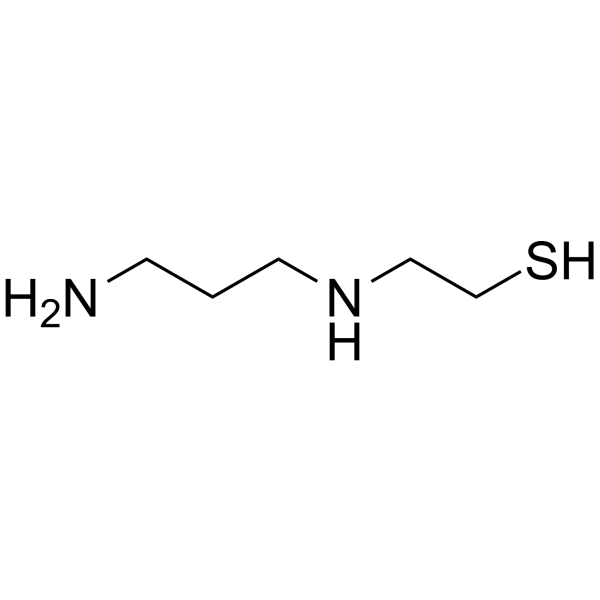
  • HY-137864
    Amifostine thiol
    1 Publications Verification

    WR-1065

    MDM-2/p53 Cancer
    Amifostine thiol (WR-1065) is an active metabolite of the cytoprotector Amifostine (HY-B0639). Amifostine thiol is a cytoprotective agent with radioprotective abilities. Amifostine thiol activates p53 through a JNK-dependent signaling pathway .
    Amifostine thiol
  • HY-112817

    8-Oxo-Deoxyguanosine triphosphate

    Apoptosis Cardiovascular Disease Neurological Disease Cancer
    8-Oxo-dGTP (8-Oxo-Deoxyguanosine triphosphate) is an oxidized guanine nucleotide formed by ROS-mediated oxidative modification of dGTP, and it also serves as a key substrate for 8-oxo-dGTP pyrophosphohydrolases (such as hMTH1 and E. coli MutT). 8-Oxo-dGTP acts as a DNA mutagen, inserts into nascent DNA and pairs with adenine and cytosine, inducing A:T to C:G transversion mutations. Furthermore, 8-Oxo-dGTP causes oxidative DNA base modification, strand breakage and S-phase arrest, and ultimately triggers AIF-mediated apoptosis and promotes spontaneous carcinogenesis in mth1-deficient mice. Accumulation of 8-Oxo-dGTP in cells induces genomic instability, but it exhibits a tumor-suppressive effect that reduces tumor incidence in mouse models instead. 8-Oxo-dGTP is widely used in studies related to spontaneous carcinogenesis, Parkinson's disease, Alzheimer's disease, heart failure and tumor mechanisms .
    8-Oxo-dGTP
  • HY-P991517

    Transmembrane Glycoprotein Reactive Oxygen Species (ROS) Cardiovascular Disease Cancer
    BI-836858 is a fully human anti-CD33 monoclonal antibody. BI-836858 reduces CD33+ cells via antibody-dependent cellular cytotoxicity (ADCC), blocks downstream signaling of S100A9/CD33, decreases the secretion of immunosuppressive cytokines and reactive oxygen species-induced genomic instability, and restores bone marrow hematopoietic function. BI-836858 is applicable to the research of myelodysplastic syndrome (MDS) and AML .
    BI-836858
  • HY-P11334

    Aminopeptidase Phosphatase Angiotensin-converting Enzyme (ACE) DNA/RNA Synthesis Cancer
    Cyanostatin B, a cyanobacterial lipopeptide, is a leucine aminopeptidase M (LAP) inhibitor (IC50 = 12 ng/mL). Cyanostatin B is a weak inhibitor of protein phosphatase (PP2A) and also exhibits weak inhibitory activity against angiotensin-converting enzyme (ACE), with an IC50 value of 130 μg/mL. Cyanostatin B demonstrates both cytotoxic and genotoxic effects on human hepatocytes, although non-toxic to Artemia salina. Cyanostatin B inhibits the proliferation of HepG2 cells, induces DNA single-strand breaks, and causes genomic instability. .
    Cyanostatin B
  • HY-178944

    Phosphatase Apoptosis Caspase Cancer
    CDC25-IN-1 (Compound D11b) is a potent inhibitor of cell division cycle 25 (CDC25) phosphatase. CDC25-IN-1 exerts strong inhibitory effects on leukemia and colorectal cancer cells. CDC25-IN-1 blocks CDC25 mediated CDK1 Tyr15 dephosphorylation, delays G2/M progression, and induces caspase-dependent apoptosis with DNA damage. CDC25-IN-1 can be used for researches of leukemia and colorectal cancer .
    CDC25-IN-1
  • HY-101566R

    BAY 1895344 (Standard)

    ATM/ATR Reference Standards Cancer
    Elimusertib (Standard) is the analytical standard of Elimusertib (HY-101566). This product is intended for research and analytical applications. Elimusertib (BAY-1895344) is a potent, orally active and selective ATR inhibitor with an IC50 of 7 nM. Elimusertib has anti-tumor activity . Elimusertib can be used for the research of solid tumors and lymphomas .
    Elimusertib (Standard)
  • HY-181840

    Endonuclease Cancer
    MU262 is a MUS81 inhibitor with an IC50 value of 0.87 μM. MU262 directly inhibits the catalytic activity of MUS81 without interfering with DNA binding, induces genomic instability in tumor cells, and specifically inhibits the HR/BIR repair pathway. The combination of MU262 with Cisplatin (HY-17394) significantly enhances the chemotherapeutic killing effect. MU262 serves as a chemical biology tool for studying MUS81 function, and also acts as a lead compound for the development of anticancer therapies that exploit DNA repair defects in cancer cells .
    MU262
  • HY-182037

    DNA/RNA Synthesis Pyruvate Kinase Cancer
    Multi-target kinase-IN-9 is a multi-target enzyme inhibitor with antiproliferative and antiangiogenic activities, and exhibits remarkable selectivity against hepatocellular carcinoma cells. By broadly binding to the active sites or ATP-binding regions of multiple key enzymes including DNA polymerase β, Pyruvate Kinase M2 (PKM2), Multi-target kinase-IN-9 comprehensively disrupts DNA repair and replication, glycolysis, chromatin dynamics and transcriptional programs, and blocks the self-renewal of cancer stem cells. Multi-target kinase-IN-9 induces genomic instability, lysosomal dysfunction and autophagic flux impairment, thereby triggering tumor cell death, effectively inhibiting tumor proliferation, invasion, metastasis and angiogenesis, and significantly reducing tumor volume in xenograft models. Multi-target kinase-IN-9 is applicable to hepatocellular carcinoma-related research .
    Multi-target kinase-IN-9
  • HY-112817A

    8-Oxo-Deoxyguanosine triphosphate trisodium

    Apoptosis Others
    8-Oxo-dGTP (8-Oxo-Deoxyguanosine triphosphate) trisodium solution (100mM) is an oxidized guanine nucleotide formed by ROS-mediated oxidative modification of dGTP, and it also serves as a key substrate for 8-oxo-dGTP pyrophosphohydrolases (such as hMTH1 and E. coli MutT). 8-Oxo-dGTP trisodium solution (100mM) acts as a DNA mutagen, inserts into nascent DNA and pairs with adenine and cytosine, inducing A:T to C:G transversion mutations. Furthermore, 8-Oxo-dGTP trisodium solution (100mM) causes oxidative DNA base modification, strand breakage and S-phase arrest, and ultimately triggers AIF-mediated apoptosis and promotes spontaneous carcinogenesis in mth1-deficient mice. Accumulation of 8-Oxo-dGTP trisodium solution (100mM) in cells induces genomic instability, but it exhibits a tumor-suppressive effect that reduces tumor incidence in mouse models instead. 8-Oxo-dGTP trisodium solution (100mM) is widely used in studies related to spontaneous carcinogenesis, Parkinson's disease, Alzheimer's disease, heart failure and tumor mechanisms .
    8-Oxo-dGTP trisodium solution (100 mM)

Inquiry Online

Your information is safe with us. * Required Fields.

Salutation


Country or Region *

Applicant Name *


Organization Name *

Department *


Email Address *


Product Name *

Cat. No.


Requested quantity *

Phone Number *


Remarks

Inquiry Online

Inquiry Information

Product Name:
Cat. No.:
Quantity:
MCE Japan Authorized Agent:

