42 Results for "

Heterocycle

" in MedChemExpress (MCE) Product Catalog:
Products (42)

42 Results for "Heterocycle" in MCE Product Catalog:

3
3 Cited Publications
Cat. No.: HY-128799
CAS No.: 1026249-18-2
Purity:  99.90%
CL097, a potent TLR7 and TLR8 agonist, induces pro-inflammatory cytokines in macrophages . CL097 induces NADPH oxidase priming, resulting in an increase of the fMLF-stimulated ROS production .
loading...
    loading...
3
3 Cited Publications
Cat. No.: HY-128799A
CAS No.: 2990770-48-2
CL097, a potent TLR7 and TLR8 agonist, induces pro-inflammatory cytokines in macrophages . CL097 induces NADPH oxidase priming, resulting in an increase of the fMLF-stimulated ROS production .
loading...
    loading...
1
1 Cited Publications
Cat. No.: HY-Y0032
CAS No.: 79-19-6
Target:  

Orthopoxvirus

Research Areas:  

Infection Others Cancer

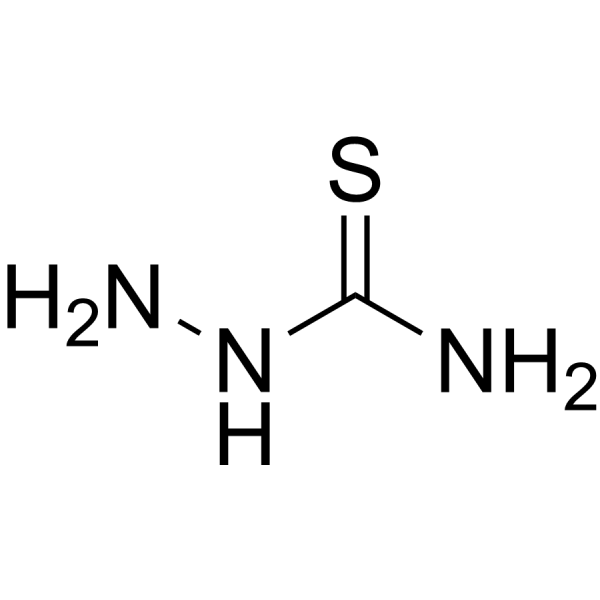
Thiosemicarbazide is a vitamin B6 antagonist with anti-acne activity. Thiosemicarbazide is also a well-known source in the synthesis of heterocycles, and its derivatives have potential anticancer activity. Thiosemicarbazide (TSC: HL1) reacts with metal salts, urea (U), to prepare Co(II) and Cu(I) metal complexes. Thiosemicarbazide is also used in the fields of media communications and optical storage, and in the spectrophotometric detection of metals .
loading...
    loading...
1
1 Cited Publications
Cat. No.: HY-103387
CAS No.: 88149-94-4
Purity:  99.67%
Target:  

COX Apoptosis

Research Areas:  

Inflammation/Immunology Cancer

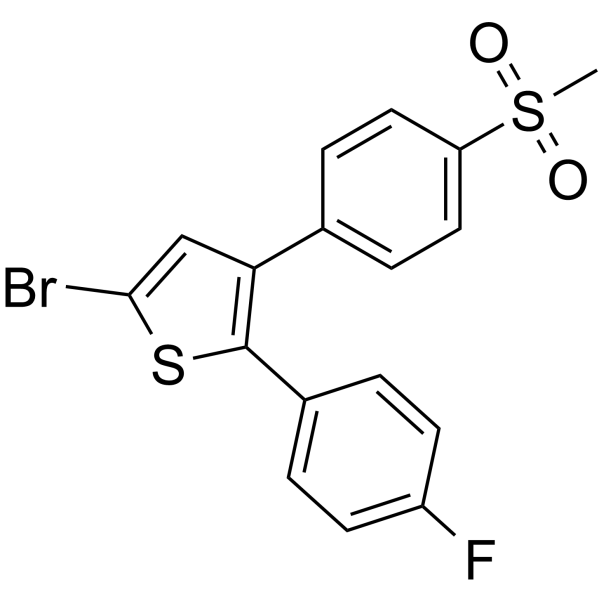
DuP-697 is a member of the vicinal diaryl heterocycles and a potent, irreversible, selective and orally active COX-2 inhibitor (IC50 of 10 nM and 800 nM for human COX-2 and COX-1, respectively). DuP-697 exerts antiproliferative (IC50 of 42.8 nM), antiangiogenic and apoptotic effects on HT29 colorectal cancer cells. DuP-697 inhibits prostaglandin synthesis and has anti-inflammatory, anticancer and antipyretic effects .
loading...
    loading...
Cat. No.: HY-59261
CAS No.: 59489-71-3
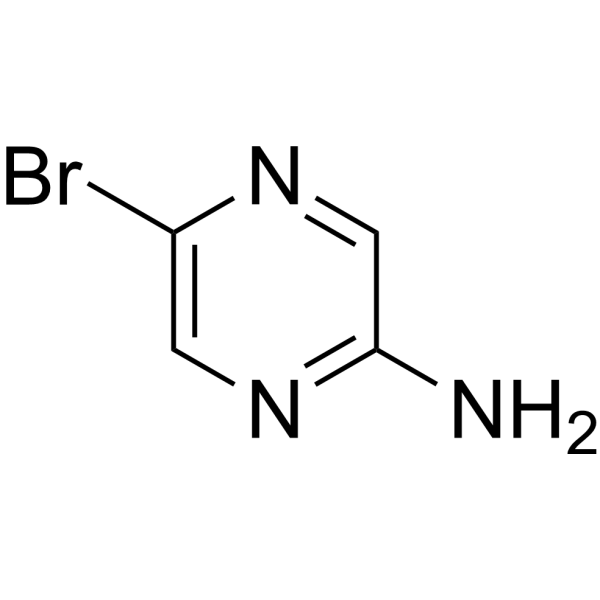
2-Amino-5-bromopyrazine is a monobrominated 2-aminopyrazine derivative and functionalized intermediate for the synthesis of nitrogen heterocycles .
loading...
    loading...
Cat. No.: HY-N2048
CAS No.: 1081-34-1
Synonyms: α-​Terthiophene; α-Terthienyl; Trithiophene
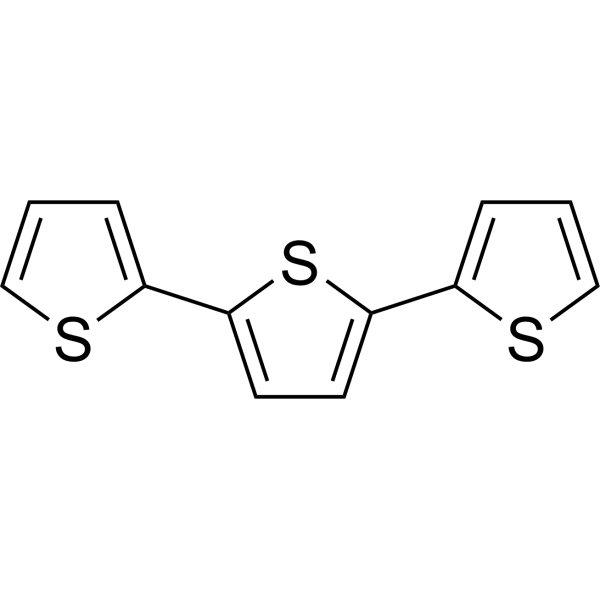
2,2':5',2''-Terthiophene (α-Terthiophene) is an oligomer of the heterocycle thiophene. 2,2':5',2''-Terthiophene has been employed as building block for the organic semi-conductor polythiophene.
loading...
    loading...
Cat. No.: HY-21179
CAS No.: 27607-77-8
Research Areas:  

Others

Trimethylsilyl trifluoromethylsulfonate is a metal-free catalyst. Trimethylsilyl trifluoromethylsulfonate can be used for the synthesis of biologically active fluorinated heterocyclic compounds .
loading...
    loading...
Cat. No.: HY-W010649
CAS No.: 288-14-2
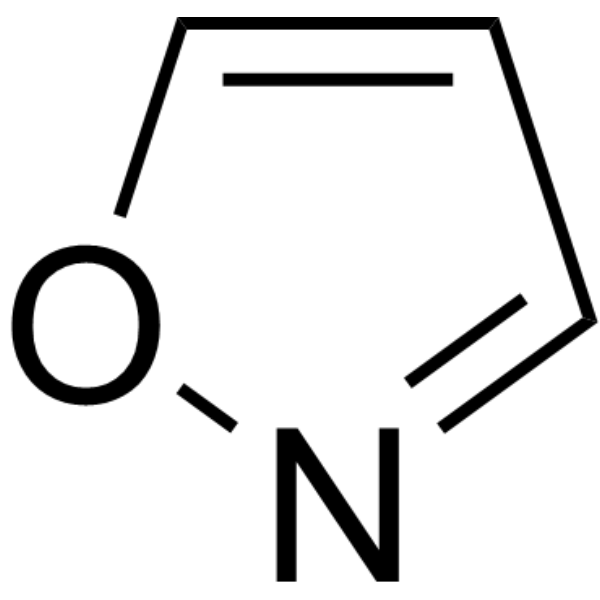
Isoxazole is a member of the five-membered heterocycle drug scaffold. Isoxazole has been used as a BET bromodomain inhibitor and can improve β-cell function in a diabetic mouse model. Isoxazole and its derivatives exhibit broad biological activities (such as antimicrobial, antibacterial, antifungal, antiviral, anticancer, anti-inflammatory, immunomodulatory, analgesic, anti-tuberculosis, and anti-diabetic effects). For example, the bicyclic Isoxazole can act as an HSP90 inhibitor, and the tricyclic Isoxazole is promising as a selective multidrug resistance protein (MRP1) inhibitor​ .
loading...
    loading...
Cat. No.: HY-B1211
CAS No.: 520-45-6
Synonyms: Biocide 470F
Research Areas:  

Infection

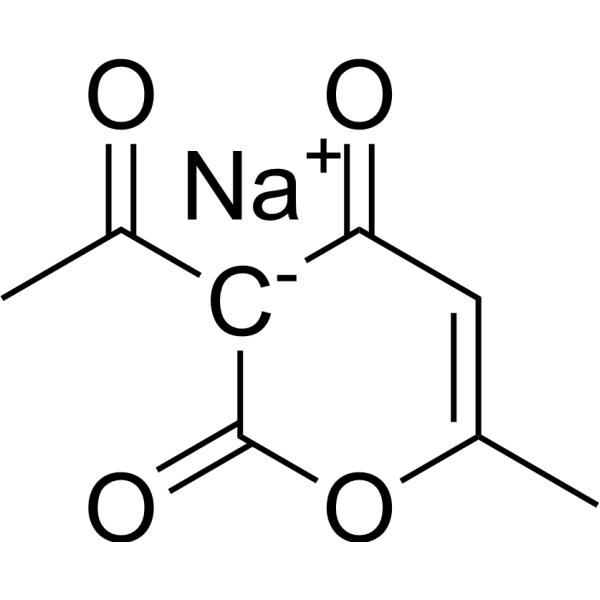
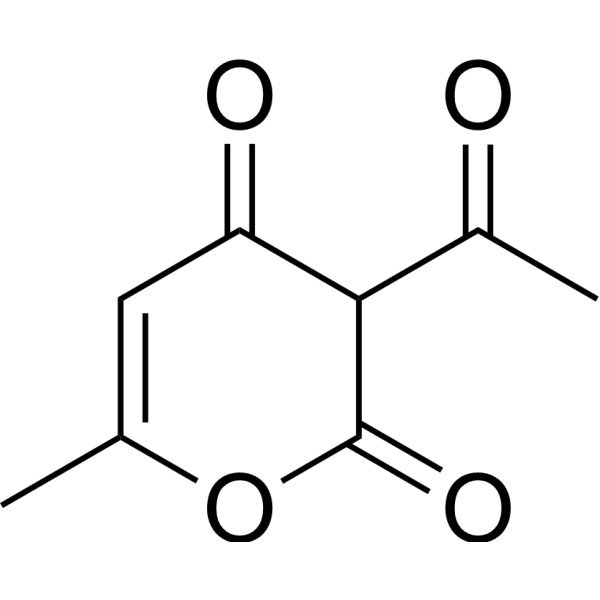
Dehydroacetic acid (Biocide 470F) is a pyrone derivative. Dehydroacetic acid has antibacterial, antifungal and phytotoxic activities. Dehydroacetic acid can be added to cosmetics, food and beverages for preservation and other purposes. Dehydroacetic acid can also be used to synthesize various heterocycles and cycloaddition products .
loading...
    loading...
Cat. No.: HY-179253
CAS No.: 3079342-05-2
KRAS-IN-47 is a KRAS inhibitor with IC50 < 50 nM against KRAS G12V. KRAS-IN-47 can be used for the study of cancers .
loading...
    loading...
Cat. No.: HY-160496
CAS No.: 2591440-75-2
Target:  

STAT

Research Areas:  

Cancer

STAT3-IN-25 (Compound 2p) is a potent STAT3 inhibitor with a p-trifluoroethoxy benzyl substituent. STAT3-IN-25 shows STAT3 luciferase inhibition activity using HEK293T cells with an IC50 of 22.3 nM and ATP production inhibition activity using BxPC-3 cells with an IC50 of 32.5 nM. STAT3-IN-25 has the potential for pancreatic cancer research .
loading...
    loading...
Cat. No.: HY-W002179
CAS No.: 15164-44-0
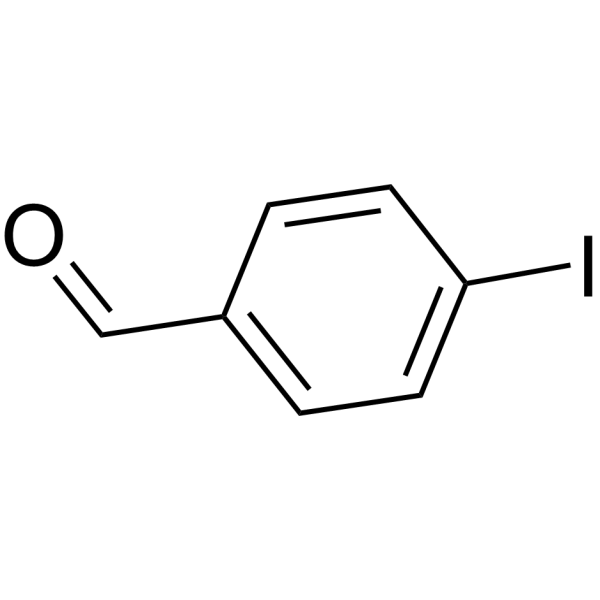
4-Iodobenzaldehyde is an aromatic halobenzaldehyde derivative and synthetic intermediate. 4-Iodobenzaldehyde is used for the synthesis of various bioactive molecules such as chalcones, heterocycles, receptor antagonists and channel blockers .
loading...
    loading...
Cat. No.: HY-161337
CAS No.: 3078059-66-9
Target:  

Pyruvate Kinase

Research Areas:  

Metabolic Disease

PKL-IN-1 is a potent inhibitor of pyruvate kinase (PKL) with an IC50 of 0.07 μM. PKL-IN-1 can be used in the study of non-alcoholic fatty liver disease .
loading...
    loading...
Cat. No.: HY-59162
CAS No.: 626-05-1
2,6-Dibromopyridine is a drug intermediate that can be used for the synthesis of IRK-4 inhibitors.
loading...
    loading...
Cat. No.: HY-D1274C
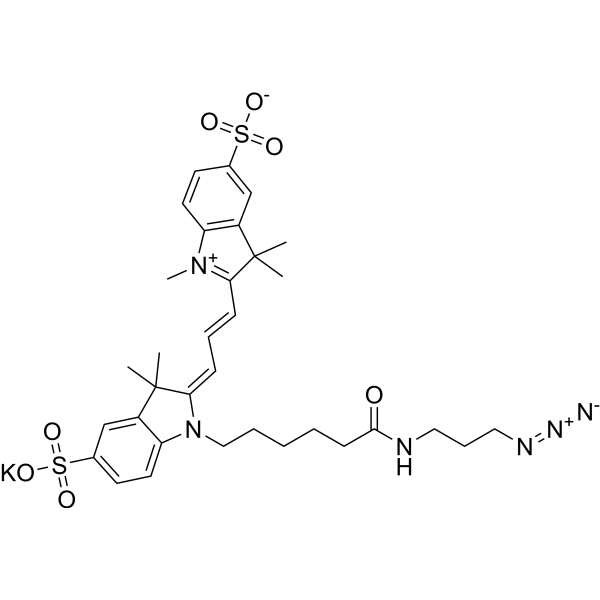
Sulfo-cyanine3 azide potassium is an azide cyanine dye and fluorescent probe (Ex/Em=548/563 nm). Sulfo-cyanine3 azide potassium can be used for synthesis of fused tricyclic heterocycles, producing immunostimulatory agents . It contains an azide group and can undergo copper-catalyzed azide-alkyne cycloaddition (CuAAc) with molecules containing alkyne groups. It can also undergo ring strain-promoted alkyne-azide cycloaddition (SPAAC) with molecules containing DBCO or BCN groups.
loading...
    loading...
Cat. No.: HY-W339545A
α-Ketoglutaric acid disodium hydrate, an important dicarboxylic acid, is an intermediate in the tricarboxylic acid cycle (TCC) and amino acid metabolism. α-Ketoglutaric acid disodium hydrate can be used as building block chemical for the chemical synthesis of heterocycles, dietary supplement, component of infusion solutions and wound healing compounds, or as main component of new elastomers with a wide range of interesting mechanical and chemical properties .
loading...
    loading...
Cat. No.: HY-W802699
CAS No.: 1282616-74-3
α-Ketoglutaric acid disodium dihydrate, an important dicarboxylic acid, is an intermediate in the tricarboxylic acid cycle (TCC) and amino acid metabolism. α-Ketoglutaric acid disodium dihydrate can be used as building block chemical for the chemical synthesis of heterocycles, dietary supplement, component of infusion solutions and wound healing compounds, or as main component of new elastomers with a wide range of interesting mechanical and chemical properties .
loading...
    loading...
Cat. No.: HY-142048
CAS No.: 2538293-52-4
Research Areas:  

Cancer

BI-9466 (Compound 2) is a nuclear receptor-binding SET domain 3 (NSD3)-PWWP1 domain antagonist with a Kd of 144 µM. BI-9466 is a negative control compound of BI-9321 (HY-114208). BI-9466 has no inhibitory activity against NSD3-PWWP1 domain by introduction of a much basic nitrogen heterocycle at the 5-position of BI-9321 .
loading...
    loading...
Cat. No.: HY-D1274
CAS No.: 1658416-54-6
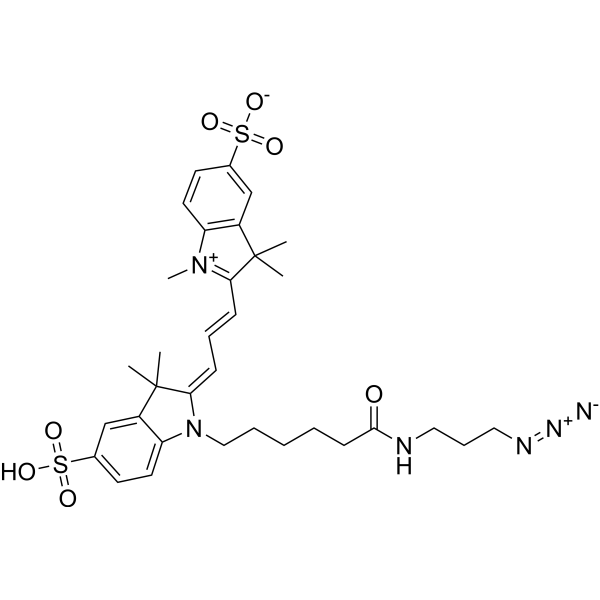
Sulfo-cyanine3 azide is an azide cyanine dye and fluorescent probe (Ex/Em=548/563 nm). Sulfo-cyanine3 azide can be involved in synthesis of fused tricyclic heterocycles, produces immunostimulatory agents . It contains an azide group and can undergo copper-catalyzed azide-alkyne cycloaddition (CuAAc) with molecules containing alkyne groups. It can also undergo ring strain-promoted alkyne-azide cycloaddition (SPAAC) with molecules containing DBCO or BCN groups.
loading...
    loading...
Cat. No.: HY-D1274A
CAS No.: 2055138-89-9
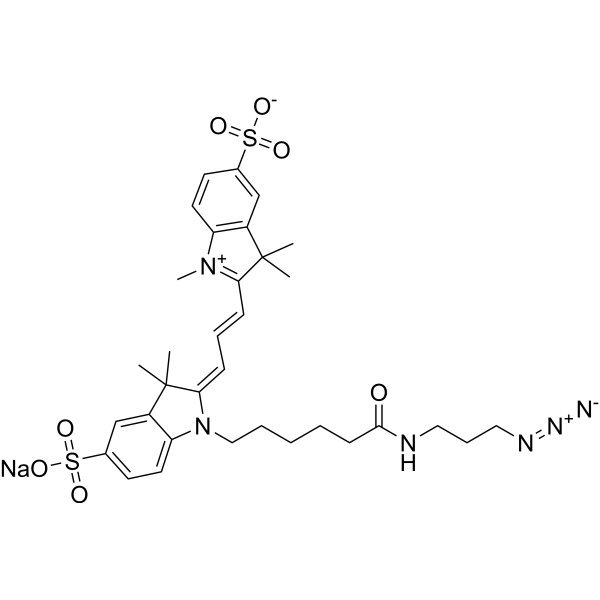
Sulfo-cyanine3 azide sodium a water-soluble azide cyanine dye and fluorescent probe (Ex/Em=548/563 nm). Sulfo-cyanine3 azide sodium can be involved in synthesis of fused tricyclic heterocycles, produces immunostimulatory agents . It contains an azide group and can undergo copper-catalyzed azide-alkyne cycloaddition (CuAAc) with molecules containing alkyne groups. It can also undergo ring strain-promoted alkyne-azide cycloaddition (SPAAC) with molecules containing DBCO or BCN groups.
loading...
    loading...

