



Sulfo-cyanine3 azide sodium
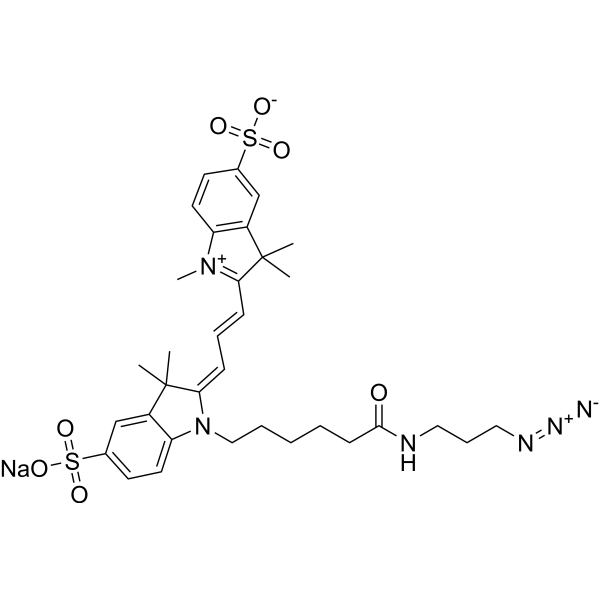
Sulfo-cyanine3 azide sodium a water-soluble azide cyanine dye and fluorescent probe (Ex/Em=548/563 nm). Sulfo-cyanine3 azide sodium can be involved in synthesis of fused tricyclic heterocycles, produces immunostimulatory agents. It contains an azide group and can undergo copper-catalyzed azide-alkyne cycloaddition (CuAAc) with molecules containing alkyne groups. It can also undergo ring strain-promoted alkyne-azide cycloaddition (SPAAC) with molecules containing DBCO or BCN groups.
For research use only. We do not sell to patients.
- CAS No.: 2055138-89-9
- Formula: C33H41N6NaO7S2
- Molecular Weight:720.83
-
Storage:
Please store the product under the recommended conditions in the Certificate of Analysis.

To place orders, for customer services and technical support, please contact: MedChemExpress USA
Tel: 609-228-6898 E-mail: [email protected] [email protected]


-
 Biological Activity
-
Chemical Information
- Purity & Documentation
- References
-
 Help & FAQs


-
HY-D1320
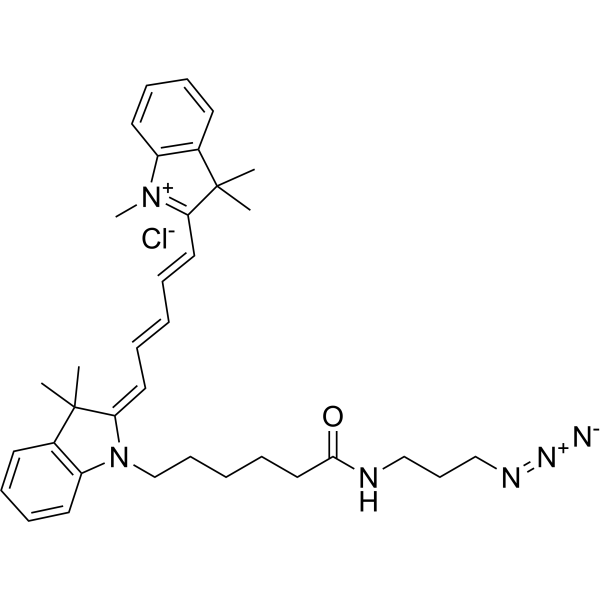
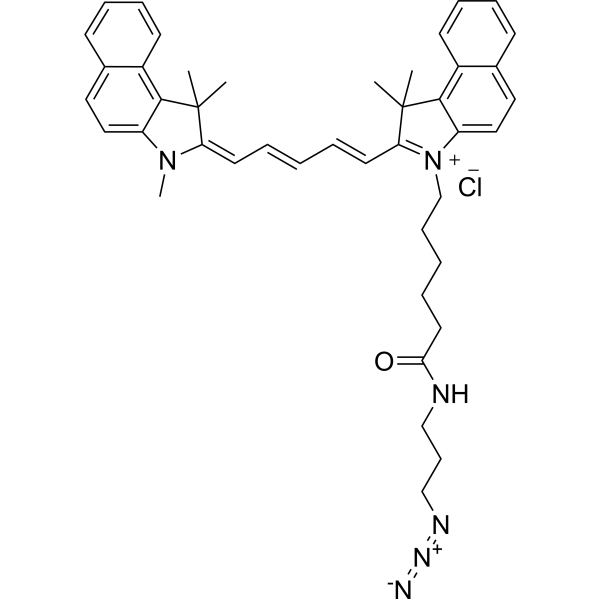
Cyanine5 azide chlorideBacterial Protein Labeling Probe, Intracellular Organelle Dynamics Tracking Dye, Single-Molecule Imaging Dye -
HY-D1327
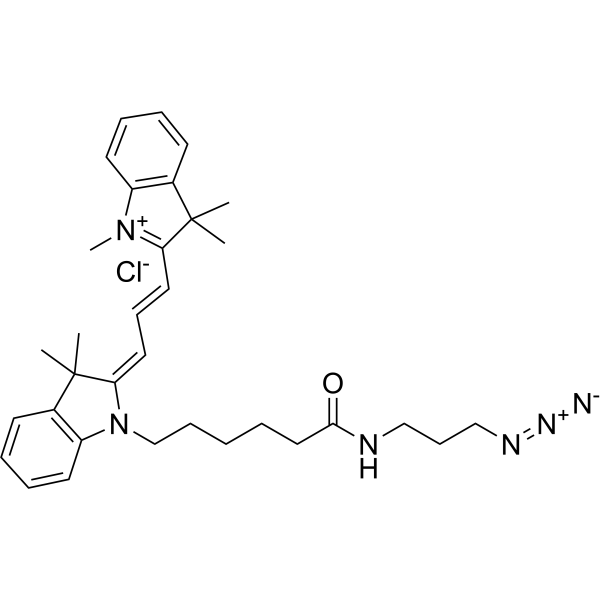
Cyanine3 azide chlorideFluorescent Dye -
HY-137098
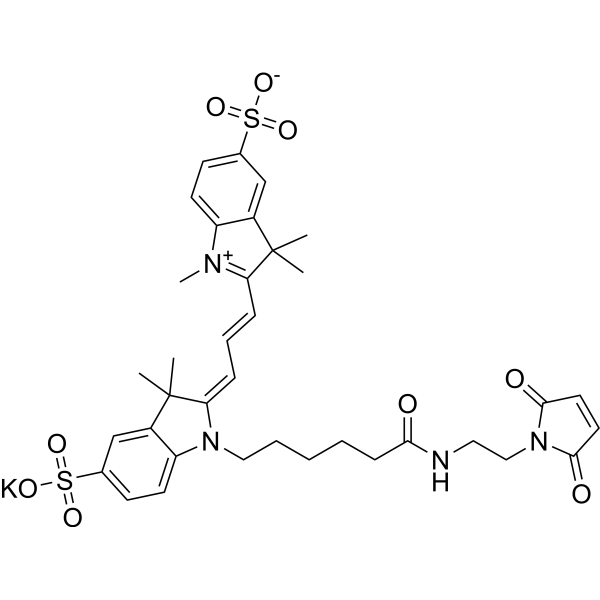
Sulfo-Cy3 maleimide potassiumFluorescent Dye -
HY-D1539
Cyanine 5.5 azideDNA Fluorescent Dye -
HY-D1069
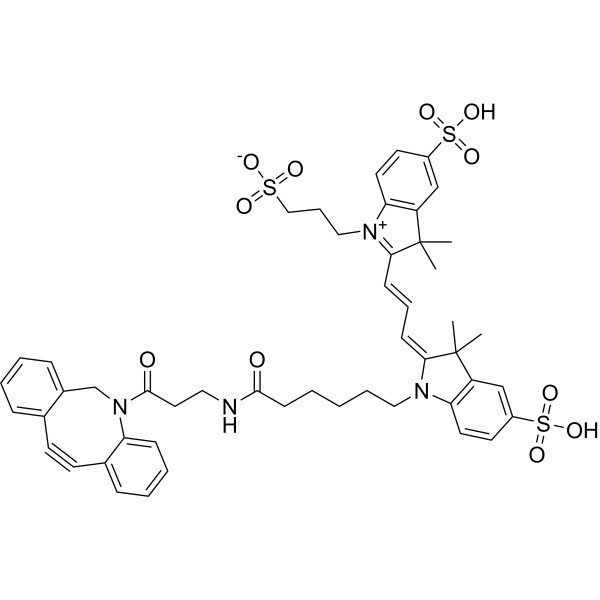
DBCO-Cy3Orange Fluorescent Dye -
HY-151710
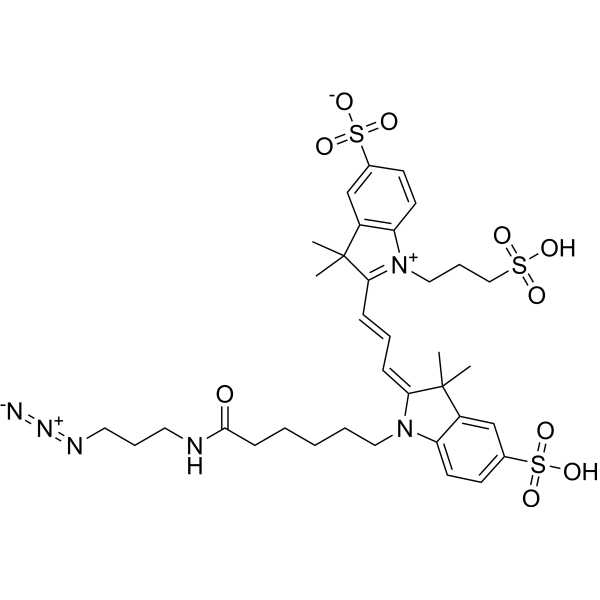
Sulfo-Cy3 AzideFluorogenic Azide Dye -
HY-151857
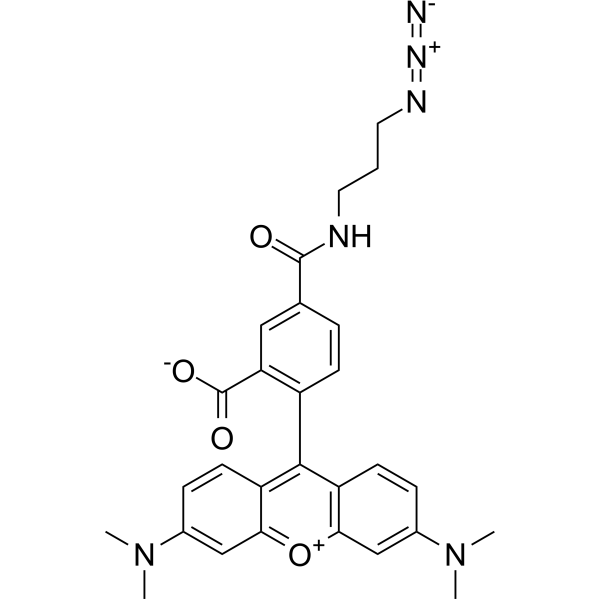
TAMRA azide, 5-isomerAzide Compound -
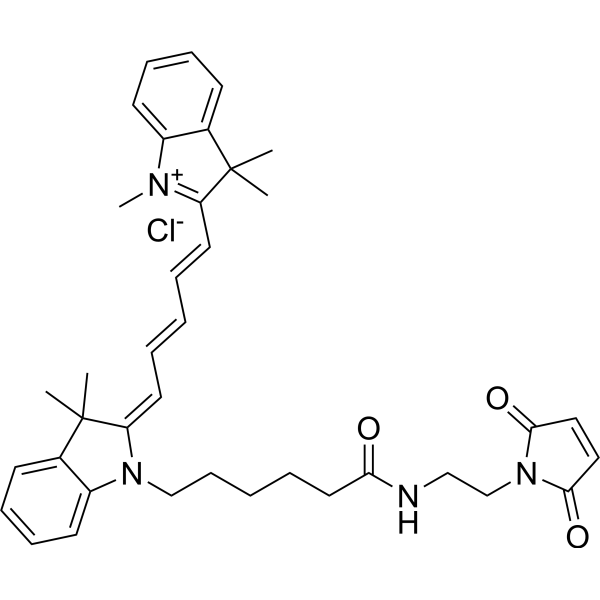
HY-138200
Cy5 maleimideFluorescence Dye -
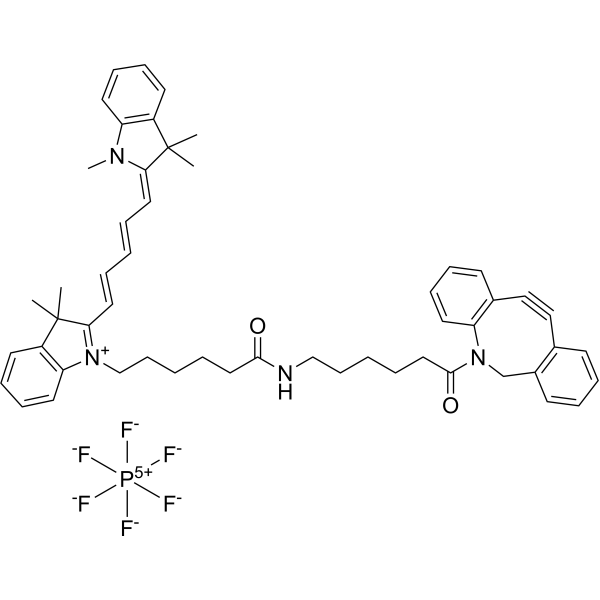
HY-D1583
Cyanine5 DBCO hexafluorophosphateAzide Reaction Probe -
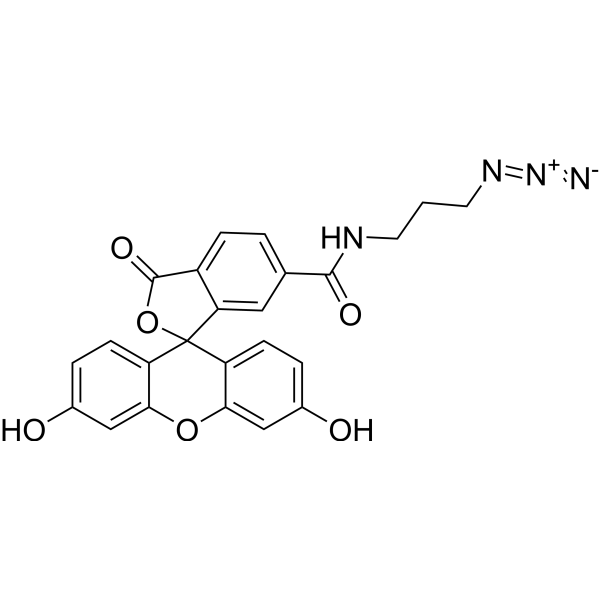
HY-D1314
FAM azide, 6-isomerFluorescent Dye -
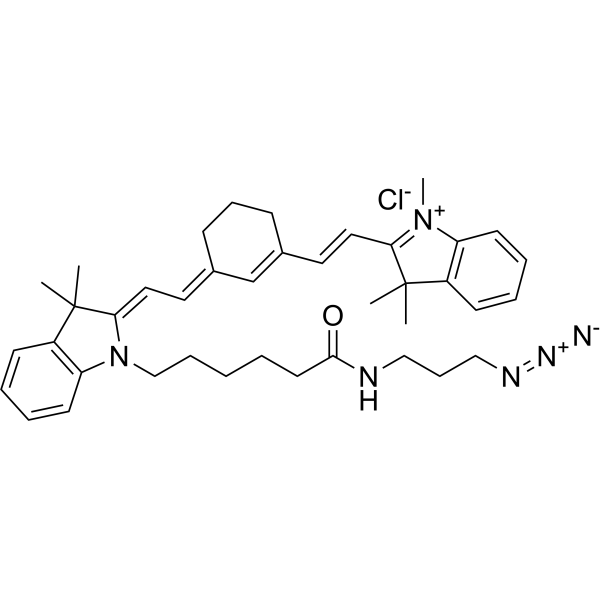
HY-D1316
Cyanine7 azide chloride -

HY-W878943
FAM azide, 5-isomerFluorescent Dye


Biological Activity
Description
In Vitro
Guide (The following is our recommended protocol. This protocol is for guidance only and should be modified according to your specific needs).
Reconstitution: Prepare a 10 mM stock solution by dissolving in water or DMSO.
1. CuAAC Protocol (Copper-Catalyzed Click)
Use this method for terminal alkyne-tagged molecules.
(1) Reaction Mixture: Mix the azide-modified molecule and Sulfo-Cy3 alkyne (1.5-2 eq) in a buffer (e.g., PBS, Tris).
(2) Catalyst: Add 100 mM CuSO? and a copper-chelating ligand (e.g., THPTA or BTTAA) to protect biomolecules, especially in live cells.
(3) Reducing Agent: Add freshly prepared Sodium Ascorbate (100 mM) to reduce Cu(II) to Cu(I).
(4) Incubation: Incubate at room temperature for 30 min to 2 hours, protected from light.
2. SPAAC Protocol (Copper-Free Click)
Use this method for DBCO-tagged molecules (ideal for live cells).
(1) Reaction Mixture: Mix the azide-tagged molecule and Sulfo-Cy3 DBCO (1-5 eq) in a buffer.
(2) Incubation: Incubate at room temperature for 1-4 hours. Copper-free reactions often proceed more efficiently with higher concentrations.
MedChemExpress (MCE) has not independently confirmed the accuracy of these methods. They are for reference only. .
Emission (Em)
570
Excitation (Ex)
550


Chemical Information
-
CAS No. 2055138-89-9
-
Molecular Weight 720.83
-
Formula C33H41N6NaO7S2
-
SMILES
[N-]=[N+]=NCCCNC(CCCCCN1C2=CC=C(S(=O)(O[Na])=O)C=C2C(C)(C)/C1=C\C=C\C3=[N+](C)C4=C(C3(C)C)C=C(S(=O)([O-])=O)C=C4)=O
-
Shipping
Room temperature in continental US; may vary elsewhere.
-
Storage
Please store the product under the recommended conditions in the Certificate of Analysis.


Purity & Documentation
References

Calculators
Concentration (start) × Volume (start) = Concentration (final) × Volume (final)


Sulfo-cyanine3 azide sodium Related Classifications
HY-D1274A Related Classifications
 Powered by Bioz