10 Results for "

Lily

" in MedChemExpress (MCE) Product Catalog:
Products (10)

10 Results for "Lily" in MCE Product Catalog:

1
1 Cited Publications
Cat. No.: HY-B1838
CAS No.: 3337-71-1
Target:  

Herbicide

Research Areas:  

Others

Asulam is a herbicide with control activity against wild oats. Asulam can be used for bulb production in spinach, tulips, daffodils and lilies. Maximum residue limits (MRLs) for Asulam were evaluated in spinach. The review of Asulam took into account its endocrine disrupting properties .
loading...
    loading...
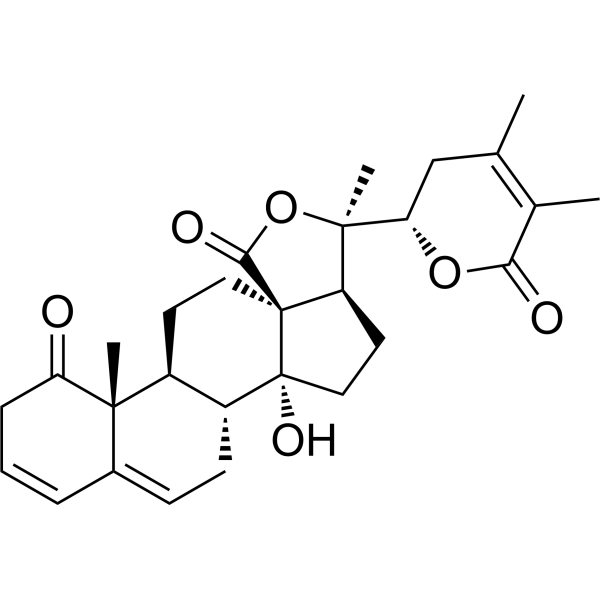
Cat. No.: HY-N11061
CAS No.: 91599-21-2
Withaphysalin D is a selective antagonist against the N-methyl-D-aspartate receptor (NMDAR) containing GluN2B. Withaphysalin D can be isolated from water lilies and has neuroprotective properties. Withaphysalin D is able to cross the blood-brain barrier .
loading...
    loading...
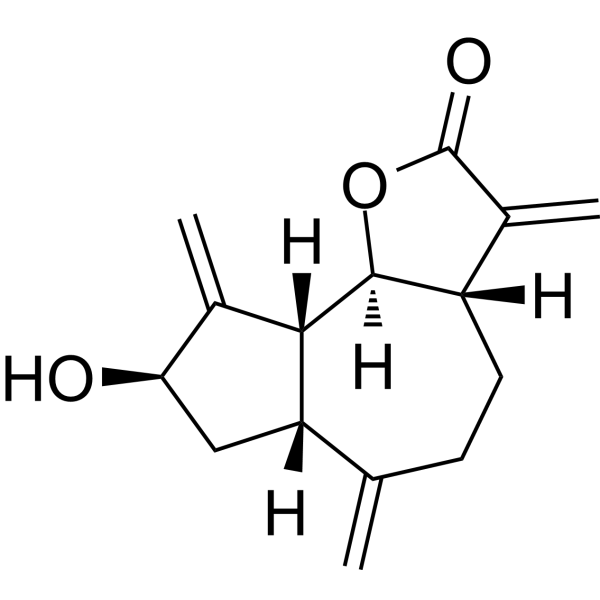
Cat. No.: HY-N7741
CAS No.: 67667-64-5
Synonyms: Dehydrozaluzanin C-derivative
Isozaluzanin C (Dehydrozaluzanin c-derivative) is an anti-inflammatory agent that can be isolated from Saussurea lappa and has immunomodulatory effects. Isozaluzanin C improves tissue damage (lung, kidney, and liver) and excessive inflammation in mice induced by LPS (HY-D1056) or CRKP infection. Isozaluzanin C can be used in the study of bacterial infections and sepsi .
loading...
    loading...
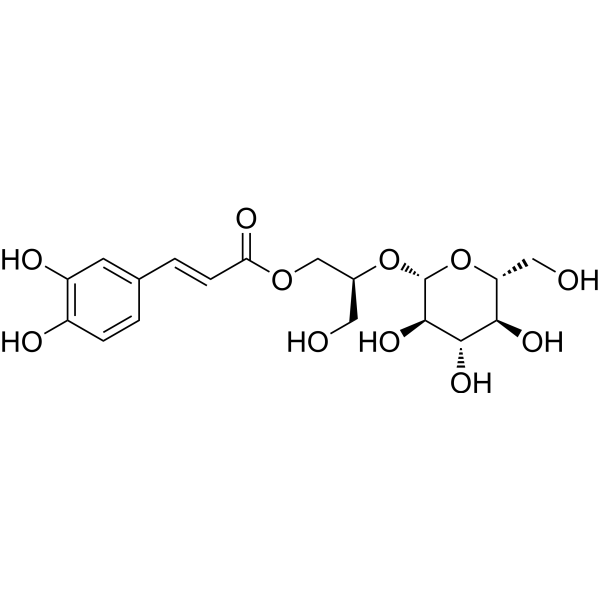
Cat. No.: HY-N11489
CAS No.: 138772-00-6
Regaloside K (Compd 1) is a natural compound that can be isolated from Easter Lily (Lilium longiflorum Thunb.) .
loading...
    loading...
Cat. No.: HY-B1838A
CAS No.: 14089-43-1
Target:  

Fungal

Research Areas:  

Infection

Asulam (potassium salt) is a chitin synthase inhibitor against plant pathogenic fungi. Asulam (potassium salt) interferes with the biosynthesis of chitin in the fungal cell wall to destroy the integrity and normal growth and reproduction of fungal cells, thereby exerting bacteriostatic activity. Asulam (potassium salt) is promising for research of fungal diseases such as downy mildew and gray mold in spinach, tulips, daffodils and lilies .
loading...
    loading...
Cat. No.: HY-W708304
Asulam-d3 is the deuterium labeled Asulam (HY-B1838). Asulam is a herbicide with control activity against wild oats. Asulam can be used for bulb production in spinach, tulips, daffodils and lilies. Maximum residue limits (MRLs) for Asulam were evaluated in spinach. The review of Asulam took into account its endocrine disrupting properties .
loading...
    loading...
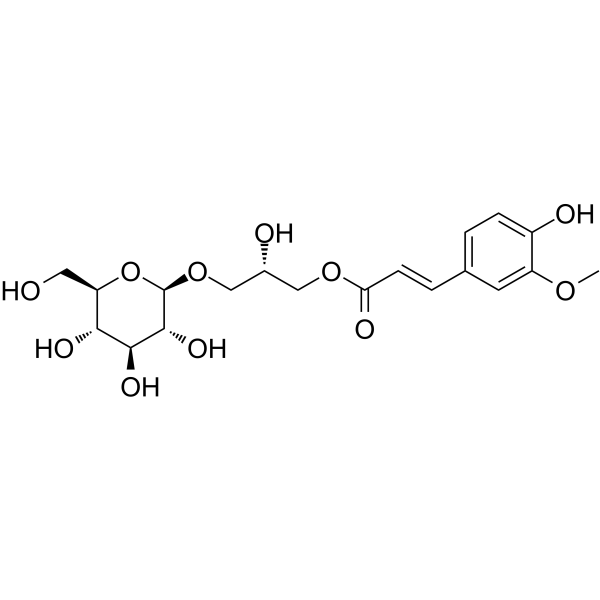
Cat. No.: HY-N8155
CAS No.: 120601-65-2
Regaloside F is a phenolic glycerol glucoside that can be found in Lily bulbs .
loading...
    loading...
Cat. No.: HY-206937
CAS No.: 6658-48-6
Target:  

Drug Derivative

Research Areas:  

Others

Cyclamen homoaldehyde is a synthetic fragrance compound that can be used in perfumery to create rich floral, lily-of-the-valley, and fresh green and aldehyde scents.
loading...
    loading...
Cat. No.: HY-N17989
CAS No.: 1585019-84-6
Acetylregaloside C is a natural compound that can be extracted from Madonna Lily (Lilium candidum L.). Acetylregaloside C exhibits antioxidant properties and has the effect of promoting the production of α-amylase .
loading...
    loading...
Cat. No.: HY-L191
1,148 compounds

Tibetan medicine, as one of the treasures of traditional Chinese medicine, carries the profound cultural heritage of the Tibetan people and their unique understanding of health. Tibet is the birthplace of Tibetan medicine, and its plateau climate and unique ecological environment have nurtured its rich medicinal resources. Among them, cordyceps, saffron and snow lily are favored by people for their excellent medicinal value and unique growth characteristics. Tibetan medicine, with its profound heritage, plays a crucial role in the management of diseases that are unique to high-altitude regions, such as altitude stress. It facilitates a swifter adaptation to high-altitude conditions and mitigates the symptoms of altitude sickness by meticulously recalibrating the internal environment within the human body. For rheumatic diseases, cardiovascular diseases, etc., Tibetan medicine has also shown its remarkable effect.

MCE included 1,148 natural products from Tibetan medicine, including animal, plant and mineral sources.

