1. Search Result
Search Result
Results for "

Locomotor sensitization

" in MedChemExpress (MCE) Product Catalog:

14

Inhibitors & Agonists

2

Peptides

Cat. No. Product Name Target Research Areas Chemical Structure
  • HY-10895
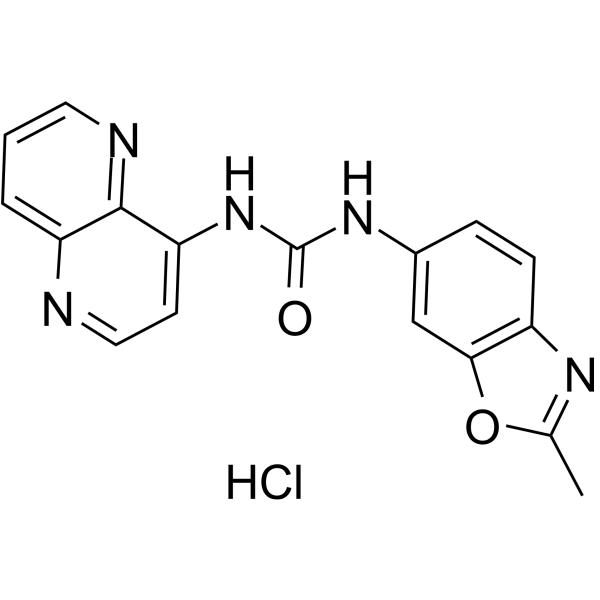
    SB-334867
    Maximum Cited Publications
    10 Publications Verification

    SB 334867A

    Orexin Receptor (OX Receptor) Neurological Disease Endocrinology
    SB-334867 (SB 334867A) is an excellent,selective and blood-brain barrier permeable orexin-1 (OX1) receptor antagonist, shows selectivity over OX2 (pKb=7.4), 100-fold over 5-HT2B, 5-HT2C with pKi values of 5.4 and 5.3, respectively . SB-334867 reduces ethanol consumption and inhibits the acquisition of morphine-induced sensitization to locomotor activity in vivo .
    SB-334867
  • HY-10895A
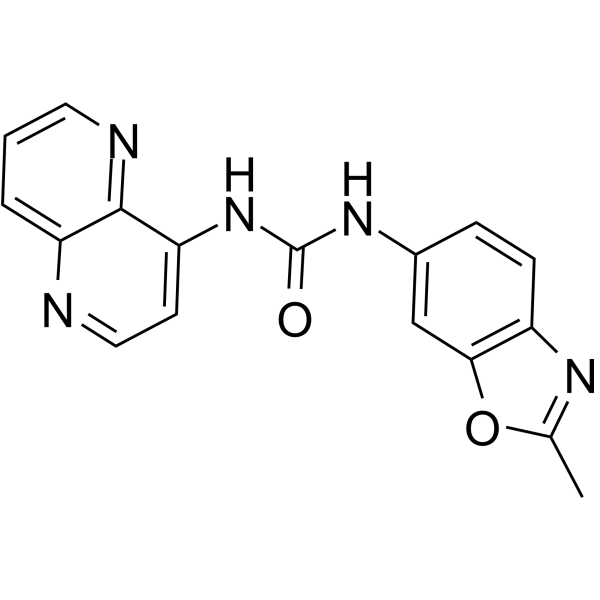
    SB-334867 free base
    Maximum Cited Publications
    10 Publications Verification

    SB334867A free base

    Orexin Receptor (OX Receptor) Neurological Disease Endocrinology
    SB-334867 free base (SB334867A free base) is an excellent, selective and blood–brain barrier permeable orexin-1 (OX1) receptor antagonist, shows selectivity over OX2 (pKb=7.4), 100-fold over 5-HT2B, 5-HT2C with pKi values of 5.4 and 5.3, respectively . SB-334867 reduces ethanol consumption and inhibits the acquisition of morphine-induced sensitization to locomotor activity in vivo .
    SB-334867 free base
  • HY-103565
    AMN082
    1 Publications Verification

    mGluR Neurological Disease
    AMN082, a selective, orally active, and brain penetrant mGluR7 agonist, directly activates receptor signaling via an allosteric site in the transmembrane domain. AMN082 potently inhibits cAMP accumulation and stimulates GTPγS binding (EC50 values, 64-290 nM) at transfected mammalian cells expressing mGluR7. AMN082 shows selectivity over other mGluR subtypes and selected ionotropic glutamate receptors. Antidepressant effects .
    AMN082
  • HY-139178

    Phosphodiesterase (PDE) Neurological Disease
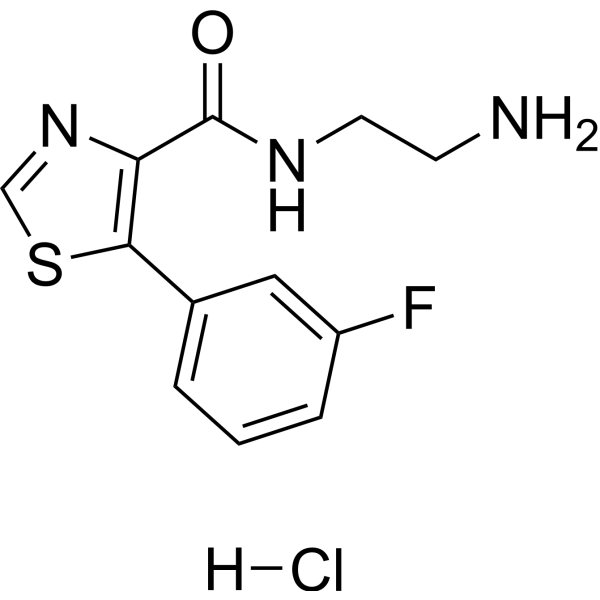
    KVA-D-88 is a blood-brain barrier-permeable PDE4 inhibitor with IC50 values of 140 and 880 nM for PDE4B and PDE4D, respectively. KVA-D-88 induces cAMP accumulation and inhibits neuroactive substance-mediated hyperlocomotion, locomotor sensitization. KVA-D-88 can be used for the research of drug addiction .
    KVA-D-88
  • HY-108510

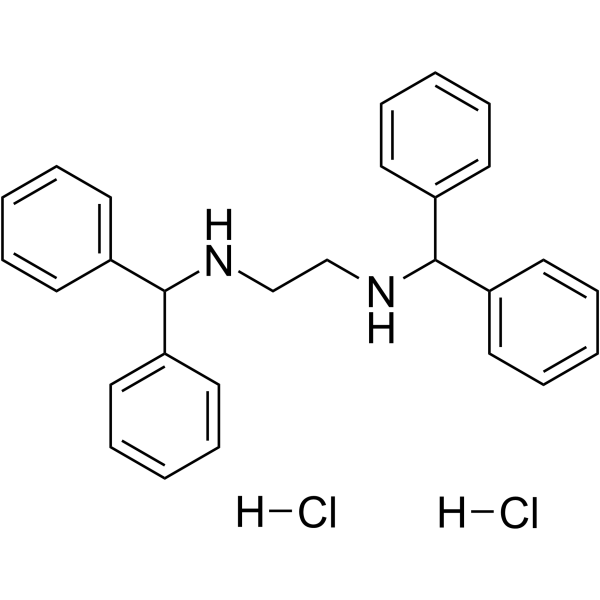
    BW 234U dihydrochloride

    Sigma Receptor Dopamine Receptor Neurological Disease Cancer
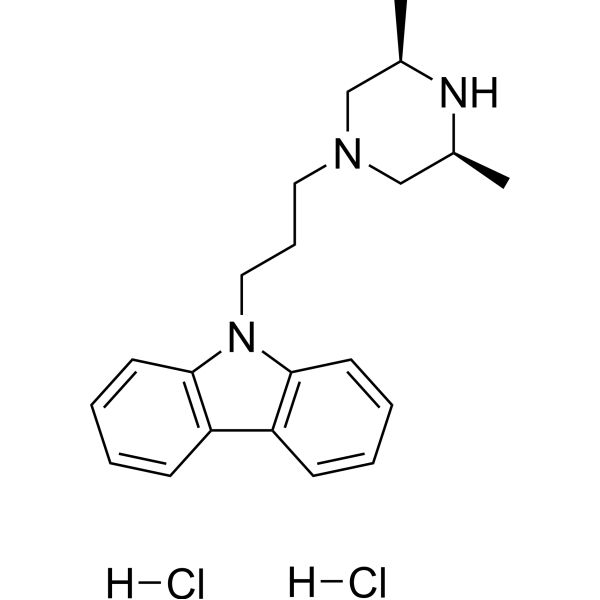
    Rimcazole (BW 234U) dihydrochloride is a carbazole derivative that acts in part as a sigma (σ) receptor antagonist. Rimcazole dihydrochloride also binds with moderate affinity to the dopamine transporter and inhibit dopamine uptake. Rimcazole dihydrochloride can reduce locomotor activity and sensitization. Rimcazole dihydrochloride also can be used for the research of cancer .
    Rimcazole dihydrochloride
  • HY-172587

    Cannabinoid Receptor Neurological Disease
    CB1R Allosteric modulator 5 (compound 3) is a selective, and blood-brain barrier (BBB) permeable Cannabinoid receptor type 1 allosteric modulator with a pIC50 of 6.89. CB1R Allosteric modulator 5 attenuates both cocaine-seeking behavior specific to cue-induced reinstatement and cocaine-induced behavioral sensitization without altering locomotor activity .
    CB1R Allosteric modulator 5
  • HY-P10405A

    Dopamine Receptor Neurological Disease
    TAT-D1 peptide acetate is a dopamine D1-D2 receptor heterodimer inhibitor. TAT-D1 peptide acetate disrupts the function of dopamine D1-D2 receptor heteromers, enhances subchronic amphetamine-induced locomotor activity, and exacerbates the expression of amphetamine-induced locomotor sensitization. TAT-D1 peptide acetate produces rapid anxiolytic and antidepressant-like effects in rat models of depression and anxiety, and inhibits c-fos expression in the nucleus accumbens of rats. TAT-D1 peptide acetate can be used in the research of psychostimulant addiction, depression and anxiety disorders .
    TAT-D1 peptide acetate
  • HY-123889

    Dopamine Receptor Neurological Disease
    VK4-116 (Compound 19) is a selective Dopamine D3 receptor (D3R) antagonist with a Ki of 6.84 nM.VK4-116 significantly inhibits Oxycodone-induced hyperlocomotion and locomotor sensitization in mouse models. VK4-116 with pretreatment also inhibits the acquisition of Oxycodone-induced conditioned place preference (CPP) in rat models .
    VK4-116
  • HY-103565A
    AMN082 free base
    1 Publications Verification

    mGluR Neurological Disease
    AMN082 free base, a selective, orally active, and brain penetrant mGluR7 agonist, directly activates receptor signaling via an allosteric site in the transmembrane domain. AMN082 free base potently inhibits cAMP accumulation and stimulates GTPγS binding (EC50 values, 64-290 nM) at transfected mammalian cells expressing mGluR7. AMN082 free base shows selectivity over other mGluR subtypes and selected ionotropic glutamate receptors. Antidepressant effects .
    AMN082 free base
  • HY-P10405

    Dopamine Receptor Neurological Disease
    TAT-D1 peptide is a dopamine D1-D2 receptor heterodimer inhibitor. TAT-D1 peptide disrupts the function of dopamine D1-D2 receptor heteromers, enhances subchronic amphetamine-induced locomotor activity, and exacerbates the expression of amphetamine-induced locomotor sensitization. TAT-D1 peptide produces rapid anxiolytic and antidepressant-like effects in rat models of depression and anxiety, and inhibits c-fos expression in the nucleus accumbens of rats. TAT-D1 peptide can be used in the research of psychostimulant addiction, depression and anxiety disorders .
    TAT-D1 peptide
  • HY-103565AR

    Reference Standards mGluR Neurological Disease
    AMN082 (free base) (Standard) is the analytical standard of AMN082 (free base). This product is intended for research and analytical applications. AMN082 free base, a selective, orally active, and brain penetrant mGluR7 agonist, directly activates receptor signaling via an allosteric site in the transmembrane domain. AMN082 free base potently inhibits cAMP accumulation and stimulates GTPγS binding (EC50 values, 64-290 nM) at transfected mammalian cells expressing mGluR7. AMN082 free base shows selectivity over other mGluR subtypes and selected ionotropic glutamate receptors. Antidepressant effects .
    AMN082 free base (Standard)
  • HY-103565R

    Reference Standards mGluR Neurological Disease
    AMN082 (Standard) is the analytical standard of AMN082. This product is intended for research and analytical applications. AMN082, a selective, orally active, and brain penetrant mGluR7 agonist, directly activates receptor signaling via an allosteric site in the transmembrane domain. AMN082 potently inhibits cAMP accumulation and stimulates GTPγS binding (EC50 values, 64-290 nM) at transfected mammalian cells expressing mGluR7. AMN082 shows selectivity over other mGluR subtypes and selected ionotropic glutamate receptors. Antidepressant effects .
    AMN082 (Standard)
  • HY-10895R

    SB 334867A (Standard)

    Orexin Receptor (OX Receptor) Reference Standards Neurological Disease Endocrinology
    SB-334867 (Standard) is the analytical standard of SB-334867. This product is intended for research and analytical applications. SB-334867 (SB 334867A) is an excellent,selective and blood-brain barrier permeable orexin-1 (OX1) receptor antagonist, shows selectivity over OX2 (pKb=7.4), 100-fold over 5-HT2B, 5-HT2C with pKi values of 5.4 and 5.3, respectively . SB-334867 reduces ethanol consumption and inhibits the acquisition of morphine-induced sensitization to locomotor activity in vivo .
    SB-334867 (Standard)
  • HY-108510R

    BW 234U dihydrochloride (Standard)

    Reference Standards Sigma Receptor Dopamine Receptor Neurological Disease Cancer
    Rimcazole dihydrochloride (Standard) is the analytical standard of Rimcazole (dihydrochloride) (HY-108510). This product is intended for research and analytical applications. Rimcazole (BW 234U) dihydrochloride is a carbazole derivative that acts in part as a sigma (σ) receptor antagonist. Rimcazole dihydrochloride also binds with moderate affinity to the dopamine transporter and inhibit dopamine uptake. Rimcazole dihydrochloride can reduce locomotor activity and sensitization. Rimcazole dihydrochloride also can be used for the research of cancer .
    Rimcazole dihydrochloride (Standard)

Inquiry Online

Your information is safe with us. * Required Fields.

Salutation


Country or Region *

Applicant Name *


Organization Name *

Department *


Email Address *


Product Name *

Cat. No.


Requested quantity *

Phone Number *


Remarks

Inquiry Online

Inquiry Information

Product Name:
Cat. No.:
Quantity:
MCE Japan Authorized Agent:

