16 Results for "

Medaka

" in MedChemExpress (MCE) Product Catalog:
Products (16)

16 Results for "Medaka" in MCE Product Catalog:

6
6 Publications Verification
Cat. No.: HY-B0507
CAS No.: 72-14-0
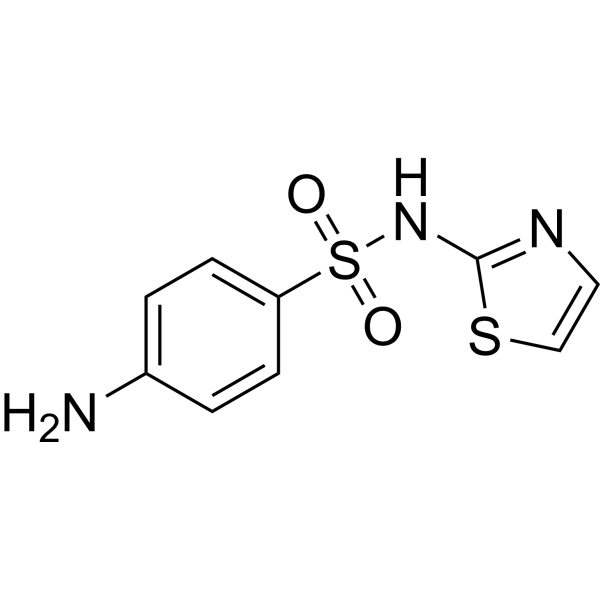
Sulfathiazole is an orally active, endocrine disruptor targeting the steroidogenic pathway, specifically enhancing the activity of CYP19 in human adrenal cancer cells (H295R) and upregulating the mRN expression of CYP17, CYP19, and 3β-HSD. Sulfathiazole increases the production of 17-estradiol (E2) and has endocrine disrupting effects on aquatic organisms such as the Japanese medaka fish .
loading...
    loading...
6
6 Publications Verification
Cat. No.: HY-B0507A
CAS No.: 144-74-1
Target:  

Antibiotic Bacterial

Research Areas:  

Endocrinology Cancer

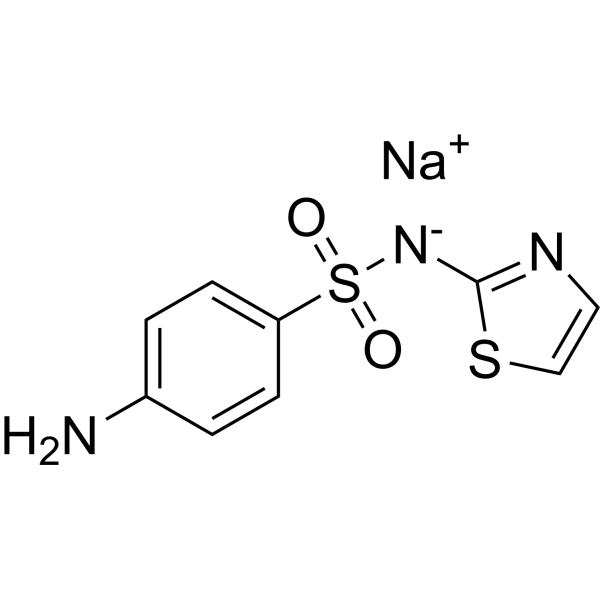
Sulfathiazole sodium is an orally active, endocrine disruptor targeting the steroidogenic pathway, specifically enhancing the activity of CYP19 in human adrenal cancer cells (H295R) and upregulating the mRN expression of CYP17, CYP19, and 3β-HSD. Sulfathiazole sodium increases the production of 17-estradiol (E2) and has endocrine disrupting effects on aquatic organisms such as the Japanese medaka fish. Sulfathiazole sodium is also a cathodic corrosion inhibitor. It inhibits the corrosion of copper by chloride ions through chemical and physical adsorption on the copper surface, reduces the corrosion current density and shifts the corrosion potential negatively .
loading...
    loading...
1
1 Cited Publications
Cat. No.: HY-B0887
CAS No.: 52645-53-1
Synonyms: NRDC-143
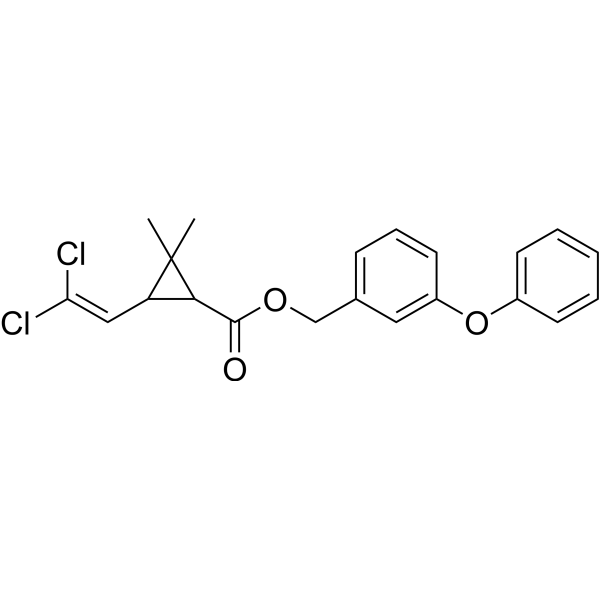
Permethrin (NRDC-143) is an insecticide, acaricide and a high selectively inhibitor of the Mitochondrial complex I, found in sediment and water samples. Permethrin shows estrogenic in vivo and anti-estrogenic activity in vitro. Permethrin also acts as a neurotoxin affecting neuron membranes by prolonging Sodium channel activation. Permethrin decreases resistance to bacterial infections in medaka (Oryzias latipes) .
loading...
    loading...
Cat. No.: HY-B1234
CAS No.: 5466-77-3
Synonyms: Octyl methoxycinnamate
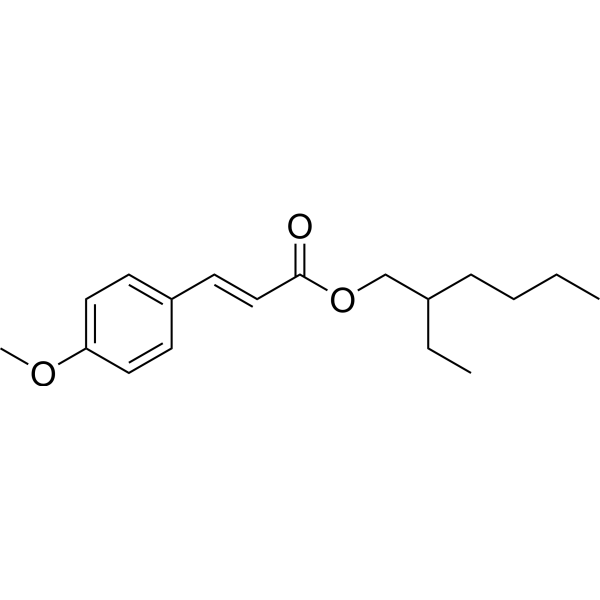
Octinoxate (Octyl methoxycinnamate) is a thyroid hormone receptor agonist, reducing the levels of triiodothyronine (T3) and thyroxine (T4) and transcription levels of genes related to type II deiodinase (deio2) in Japanese Medaka. Octinoxate is commonly used as a safe ultraviolet (UV) filter used in the aquatic environment. Octinoxate inhibits CYP1A1 and CYP1B1 to regulate hyaluronan (HA) (HY-B0633A) metabolism in a PI3K pathway-dependent manner in human keratinocytes. Octinoxate also exhibits an anti-estrogenic and anti-androgenic effect in vitro and in vivo .
loading...
    loading...
Cat. No.: HY-B0507S
CAS No.: 1020719-89-4
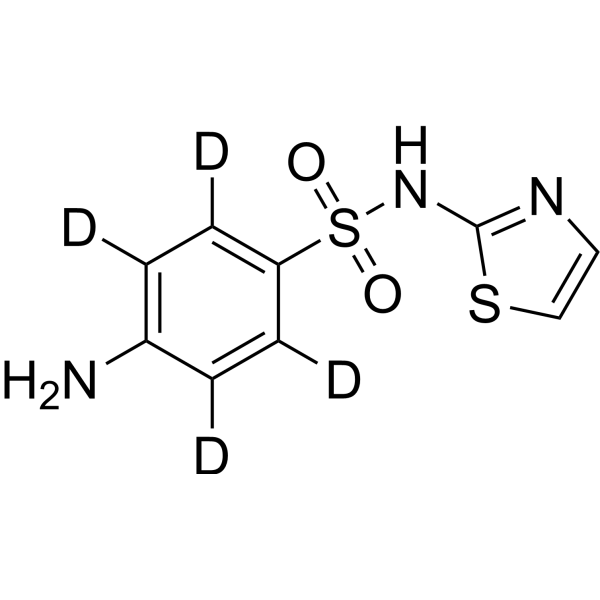
Sulfathiazole-d4 is a deuterium labeled Sulfathiazole. Sulfathiazole is an orally active, endocrine disruptor targeting the steroidogenic pathway, specifically enhancing the activity of CYP19 in human adrenal cancer cells (H295R) and upregulating the mRN expression of CYP17, CYP19, and 3β-HSD. Sulfathiazole increases the production of 17-estradiol (E2) and has endocrine disrupting effects on aquatic organisms such as the Japanese medaka fish .
loading...
    loading...
Cat. No.: HY-121779
CAS No.: 3424-82-6
Synonyms: 2,4'-DDE; 2,4-Dichlorodiphenyldichloroethylene; 2,4'-DDE; o,p'-Dichlorodiphenyldichloroethylene
Target:  

Insecticide

Research Areas:  

Endocrinology

o,p'-DDE (2,4-Dichlorodiphenyldichloroethylene) is a metabolite and degradation product of the organochlorine pesticide DDT. It accumulates in smallmouth buffalo, channel catfish, and largemouth bass, and in sediments from DDT manufacturing plants around the Huntsville Spring Branch-Indian Creek tributary system, where it is considered a persistent organic pollutant (POP). o,p'-DDE inhibits estrogen binding to the rainbow trout estrogen receptor (rtER) with an IC50 value of 3.2 μM. It induces concentration-dependent estradiol secretion in co-cultures of granulosa and theca cells isolated from porcine follicles. In ovo exposure to o,p'-DDE increases follicular degeneration and reduces testis size in Japanese medaka (O. latipes).
loading...
    loading...
Cat. No.: HY-B0507B
CAS No.: 72-14-0
Target:  

Antibiotic Bacterial

Research Areas:  

Endocrinology Cancer

Sulfathiazole (100 μg/mL in acetonitrile) is an orally active, endocrine disruptor targeting the steroidogenic pathway, specifically enhancing the activity of CYP19 in human adrenal cancer cells (H295R) and upregulating the mRN expression of CYP17, CYP19, and 3β-HSD. Sulfathiazole (100 μg/mL in acetonitrile) increases the production of 17-estradiol (E2) and has endocrine disrupting effects on aquatic organisms such as the Japanese medaka fish. Sulfathiazole (100 μg/mL in acetonitrile) is also a cathodic corrosion inhibitor. Sulfathiazole (100 μg/mL in acetonitrile) inhibits the corrosion of copper by chloride ions through chemical and physical adsorption on the copper surface, reduces the corrosion current density and shifts the corrosion potential negatively .
loading...
    loading...
Cat. No.: HY-107408
CAS No.: 329196-48-7
Purity:  99.41%
Target:  

Hedgehog Gli

Research Areas:  

Metabolic Disease Cancer

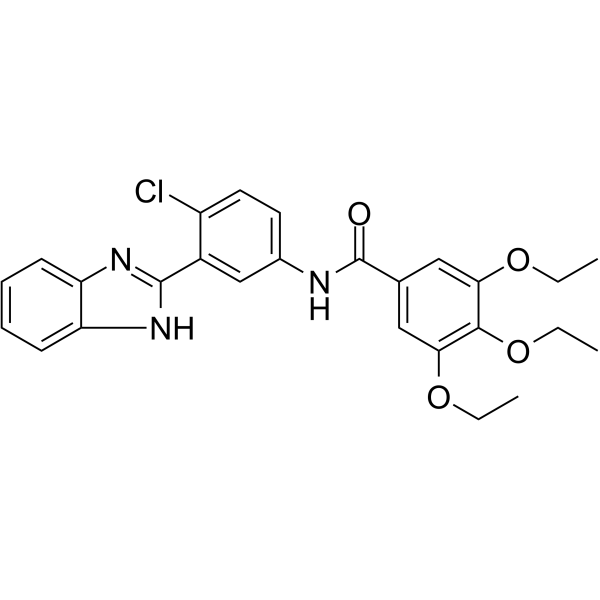
SANT 2 is a potent Hh-signaling pathway antagonist. SANT 2 interferes with the expression of Gli1. SANT 2 causes developmental delay in medaka embryos. SANT 2 has the potential for the research of several malignancies including Gorlin syndrome (a disorder predisposing to basal cell carcinoma, medulloblastoma and rhabdomyosarcoma), prostate, pancreatic and breast cancers .
loading...
    loading...
Cat. No.: HY-B1234S
Octinoxate-13C,d3 is the deuterium labeled Octinoxate (HY-W245806). Octinoxate (Octyl methoxycinnamate) is a thyroid hormone receptor agonist, reducing the levels of triiodothyronine (T3) and thyroxine (T4) and transcription levels of genes related to type II deiodinase (deio2) in Japanese Medaka. Octinoxate is commonly used as a safe ultraviolet (UV) filter used in the aquatic environment. Octinoxate inhibits CYP1A1 and CYP1B1 to regulate hyaluronan (HA) (HY-B0633A) metabolism in a PI3K pathway-dependent manner in human keratinocytes. Octinoxate also exhibits an anti-estrogenic and anti-androgenic effect in vitro and in vivo .
loading...
    loading...
Cat. No.: HY-P10411
CAS No.: 2396407-35-3
Target:  

Bacterial

Research Areas:  

Infection

BING is an antimicrobial peptide that can be isolated from Japanese medaka fish. BING shows a broad-spectrum toxicity against pathogenic bacteria including drug-resistant strains. BING induces a deregulation of periplasmic peptidyl-prolyl isomerases in gram-negative bacteria, and reduces the RNA level of cpxR, which plays a crucial role in the development of antimicrobial resistance .
loading...
    loading...
Cat. No.: HY-W774926
CAS No.: 82523-59-9
Synonyms: NRDC-143-d6
Permethrin-d6 (NRDC-143-d6) is deuterium labeled Permethrin. Permethrin (NRDC-143) is an insecticide, acaricide and a high selectively inhibitor of the Mitochondrial complex I, found in sediment and water samples. Permethrin shows estrogenic in vivo and anti-estrogenic activity in vitro. Permethrin also acts as a neurotoxin affecting neuron membranes by prolonging Sodium channel activation. Permethrin decreases resistance to bacterial infections in medaka (Oryzias latipes) .
loading...
    loading...
Cat. No.: HY-B0507R
CAS No.: 72-14-0
Research Areas:  

Endocrinology Cancer

Sulfathiazole (Standard) is the analytical standard of Sulfathiazole (HY-B0507). This product is intended for research and analytical applications. Sulfathiazole is an orally active, endocrine disruptor targeting the steroidogenic pathway, specifically enhancing the activity of CYP19 in human adrenal cancer cells (H295R) and upregulating the mRN expression of CYP17, CYP19, and 3β-HSD. Sulfathiazole increases the production of 17-estradiol (E2) and has endocrine disrupting effects on aquatic organisms such as the Japanese medaka fish .
loading...
    loading...
Cat. No.: HY-B0507AR
CAS No.: 144-74-1
Research Areas:  

Endocrinology Cancer

Sulfathiazole sodium (Standard) is the analytical standard of Berberine sodium (HY-B0507A). This product is intended for research and analytical applications. Sulfathiazole sodium is an orally active, endocrine disruptor targeting the steroidogenic pathway, specifically enhancing the activity of CYP19 in human adrenal cancer cells (H295R) and upregulating the mRN expression of CYP17, CYP19, and 3β-HSD. Sulfathiazole sodium increases the production of 17-estradiol (E2) and has endocrine disrupting effects on aquatic organisms such as the Japanese medaka fish. Sulfathiazole sodium is also a cathodic corrosion inhibitor. Sulfathiazole sodium inhibits the corrosion of copper by chloride ions through chemical and physical adsorption on the copper surface, reduces the corrosion current density and shifts the corrosion potential negatively .
loading...
    loading...
Cat. No.: HY-W713284
CAS No.: 2734919-82-3
2-Ethylhexyl (E)-3-(4-(methoxy-d3)phenyl)acrylate is the deuterium labeled Octinoxate (HY-B1234). Octinoxate (Octyl methoxycinnamate) is a thyroid hormone receptor agonist, reducing the levels of triiodothyronine (T3) and thyroxine (T4) and transcription levels of genes related to type II deiodinase (deio2) in Japanese Medaka. Octinoxate is commonly used as a safe ultraviolet (UV) filter used in the aquatic environment. Octinoxate inhibits CYP1A1 and CYP1B1 to regulate hyaluronan (HA) (HY-B0633A) metabolism in a PI3K pathway-dependent manner in human keratinocytes. Octinoxate also exhibits an anti-estrogenic and anti-androgenic effect in vitro and in vivo .
loading...
    loading...
Cat. No.: HY-W009690
CAS No.: 10543-57-4
Synonyms: Tetraacetylethylenediamine; TAED
Research Areas:  

Others

N,N,N',N'-Tetraacetylethylenediamine (Tetraacetylethylenediamine; TAED) is a disinfectant and bleach activator. N,N,N',N'-Tetraacetylethylenediamine is a common bleach activator in phosphorus-free laundry detergent formulations, which acts to activate sodium perborate and improve bleaching efficiency at low temperatures. N,N,N',N'-Tetraacetylethylenediamine reacts with sodium percarbonate in water to produce peracetic acid with strong oxidative bactericidal activity. This reaction is environmentally friendly, and the final degradation products are sodium carbonate, acetic acid, ammonia, carbon dioxide, oxygen and water .
loading...
    loading...
Cat. No.: HY-N21838
CAS No.: 641-85-0
Category:  

Microorganisms Steroids

Target:  

Drug Derivative

Allopregnane is a C21-type 5α-stane steroid derivative, a potent inhibitor of estrogen-induced chicken oviduct growth, and is present in the starfish Asterias amurensis .
loading...
    loading...
  • 1

