



Sulfathiazole (100 µg/mL in acetonitrile)
Based on 5 publication(s) in Google Scholar
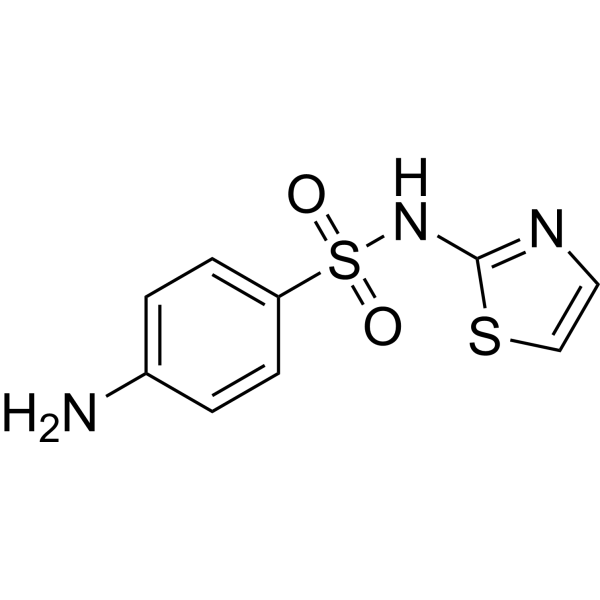
Sulfathiazole (100 μg/mL in acetonitrile) is an orally active, endocrine disruptor targeting the steroidogenic pathway, specifically enhancing the activity of CYP19 in human adrenal cancer cells (H295R) and upregulating the mRN expression of CYP17, CYP19, and 3β-HSD. Sulfathiazole (100 μg/mL in acetonitrile) increases the production of 17-estradiol (E2) and has endocrine disrupting effects on aquatic organisms such as the Japanese medaka fish. Sulfathiazole (100 μg/mL in acetonitrile) is also a cathodic corrosion inhibitor. Sulfathiazole (100 μg/mL in acetonitrile) inhibits the corrosion of copper by chloride ions through chemical and physical adsorption on the copper surface, reduces the corrosion current density and shifts the corrosion potential negatively.
For research use only. We do not sell to patients.
- CAS No.: 72-14-0
- Formula: C9H9N3O2S2
- Molecular Weight:255.32
-
Storage:
Please store the product under the recommended conditions in the Certificate of Analysis.


To place orders, for customer services and technical support, please contact: MedChemExpress USA
Tel: 609-228-6898 E-mail: [email protected] [email protected]


-
 Biological Activity
-
Chemical Information
- Protocols
- Purity & Documentation
- References
-
 Help & FAQs


-
HY-B0507
SulfathiazoleAntibiotics -
HY-B0322
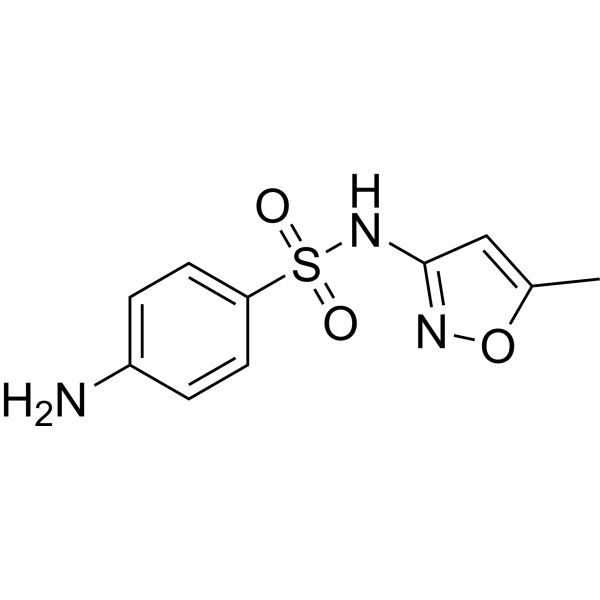
SulfamethoxazoleSulfonamide Antibiotic -

HY-B0322R
Sulfamethoxazole (Standard)Standard of Sulfamethoxazole -

HY-B0507R
Sulfathiazole (Standard)Antibiotics -

HY-B0322B
Sulfamethoxazole 1000 µg/mL in methanolSulfonamide Antibiotic -
HY-B0273
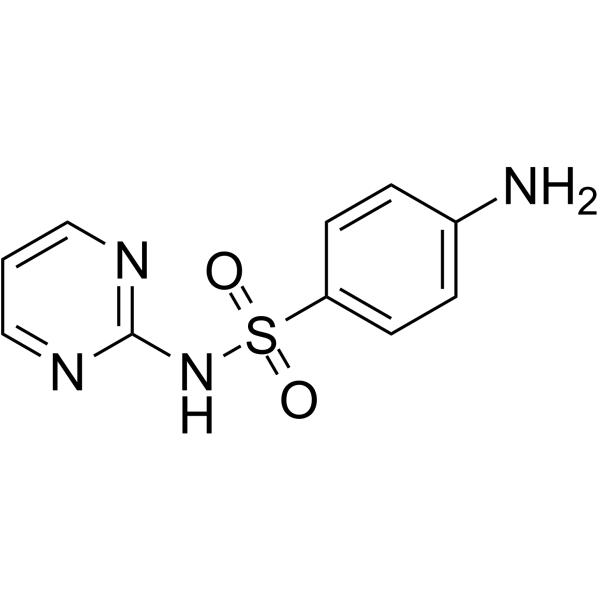
SulfadiazineSulfonamide Antibiotic -
HY-B0212
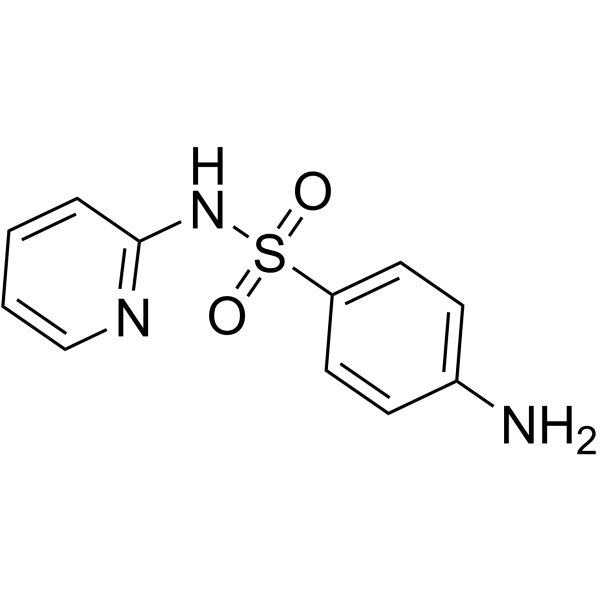
SulfapyridineAntibiotic Agent -
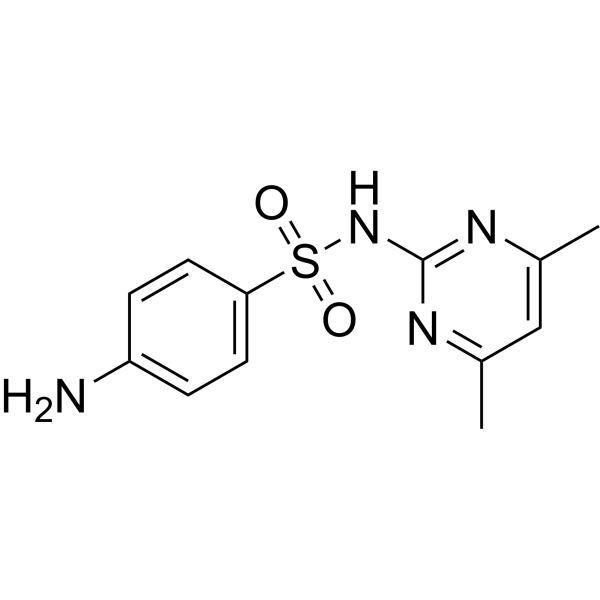
HY-B0035
SulfamethazineSulfonamide Antibiotic -
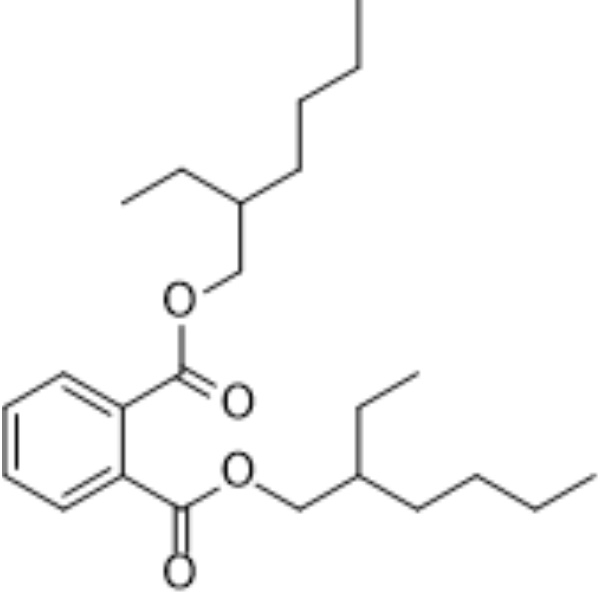
HY-B1945
DEHPEndogenous Metabolite -
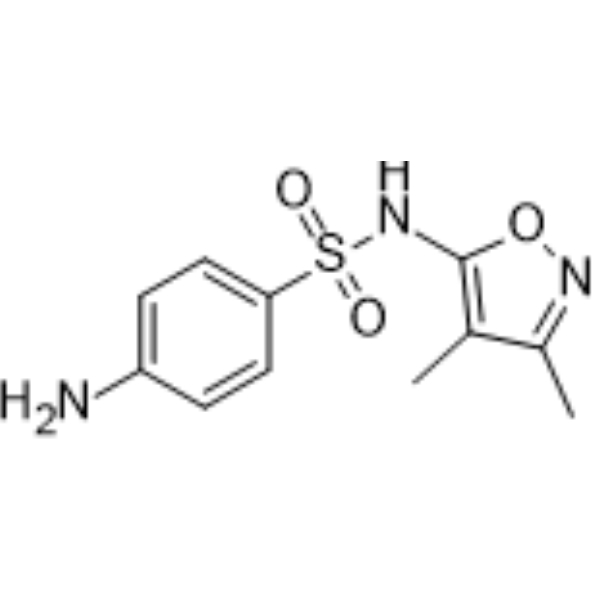
HY-B0323
SulfisoxazoleEndothelin Receptor Antagonist -
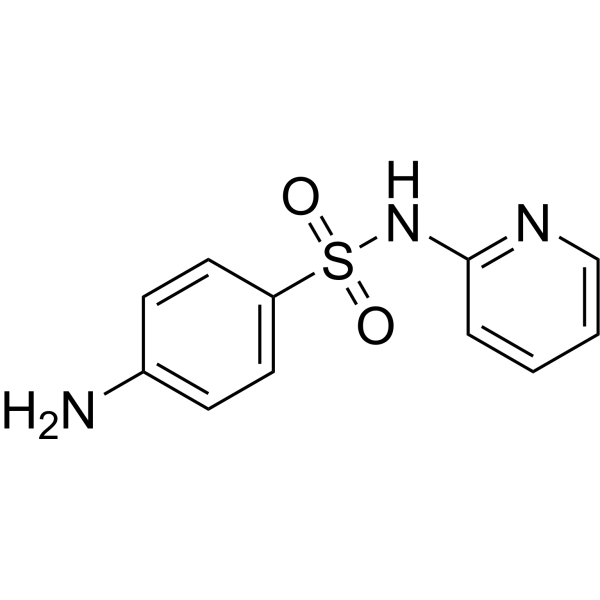
HY-B0212R
Sulfapyridine (Standard)Antibiotic Agent -
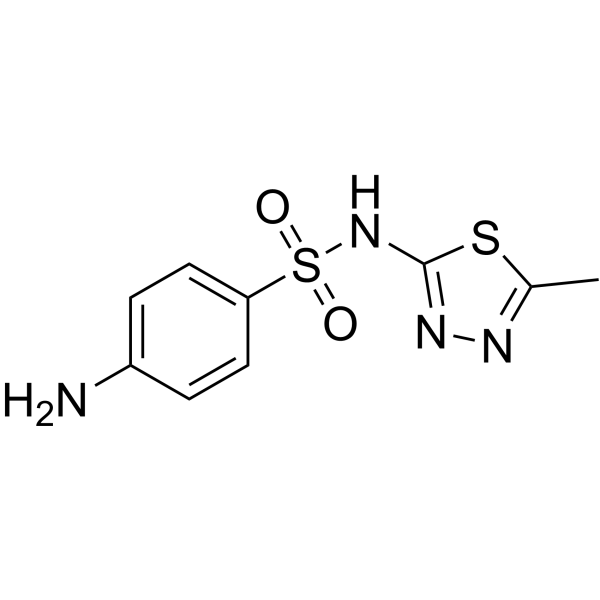
HY-B0333
SulfamethizoleSulfathiazole Antibiotic
Publications Citing Use of MedChemExpress (MCE) Sulfathiazole (100 µg/mL in acetonitrile)
MoreAll Antibiotic Isoforms
More

Biological Activity
Description
Cellular Effect
|
Cell Line

|
Type | Value | Description | References |
|---|---|---|---|---|
| HepG2 | IC50 |
4161 μM
Compound: 3a
|
Cytotoxicity against human HepG2 cells after 24 hrs by MTS assay
Cytotoxicity against human HepG2 cells after 24 hrs by MTS assay
|
[PMID: 22365879] |
| Sf9 | IC50 |
430 μM
Compound: 19
|
Inhibition of N-terminal hexa-His tagged human PRMT6 expressed in Sf9 cells using 24 residues of biotin labelled histone4 substrate and tritiated 3H-S-adenosylmethionine by scintillation proximity assay
Inhibition of N-terminal hexa-His tagged human PRMT6 expressed in Sf9 cells using 24 residues of biotin labelled histone4 substrate and tritiated 3H-S-adenosylmethionine by scintillation proximity assay
|
[PMID: 26824386] |
In Vitro
Sulfathiazole (0.02-20 mg/L; 48 h) can significantly increase the production of 17-estradiol (E2), aromatase (CYP19) activity, and mRNA expression of steroidogenesis-related genes such as CYP17, CYP19, and 3βHSD in human adrenal cancer cell (H295R) experiments[1].
Sulfathiazole can effectively inhibit the corrosion of copper in 0.1 M NaCl solution, and the inhibition efficiency can reach more than 80% with increasing concentration[3].
MedChemExpress (MCE) has not independently confirmed the accuracy of these methods. They are for reference only. Further protocols information, click here.
-
Cell Line:H295R cells
-
Concentration:0.2 mg/L, 2 mg/L
-
Incubation Time:48 h
-
Result:Exposure to 0.2 mg/L and 2 mg/L Sulfathiazole sodium for 48 h upregulated the mRNA expression of CYP17, CYP19, and 3βHSD2, which are key genes involved in the steroidogenic pathway.
In Vivo
Sulfathiazole (1%; mixed in purified feed; daily intake) causes a decrease in polymorphonuclear neutrophils, band cells, and metamyelocytes in the bone marrow, necrosis and calcification of skeletal muscle, calcification or hyalinization of pulmonary/coronary/renal arteries, hydropic degeneration and focal hyaline necrosis of hepatocytes, hyaline necrosis of adrenal cortical cells, thyroid hyperplasia, and hemorrhage in subcutaneous tissues, body cavities, and organs in Wistar and Osborne-Mendel albino rat models during and shortly after weaning[2].
MedChemExpress (MCE) has not independently confirmed the accuracy of these methods. They are for reference only.
-
Animal Model:Male Japanese medaka (Oryzias latipes), 3-4 months old[1]
-
Dosage:50 mg/L, 500 mg/L (water)
-
Administration:Waterborne exposure with ad libitum feeding of Artemia nauplii twice daily, renewed exposure medium at least three times per week for 14 d
-
Result:After 14-d exposure, plasma E2 concentrations in male medaka were significantly increased to 1.56 ng/mL (50 mg/L) and 2.06 ng/mL (500 mg/L), which were 1.32-fold and 1.75-fold higher than the control (1.18 ng/mL), respectively.


Chemical Information
-
CAS No. 72-14-0
-
Molecular Weight 255.32
-
Formula C9H9N3O2S2
-
SMILES
O=S(NC1=NC=CS1)(C2=CC=C(C=C2)N)=O
-
Shipping
Room temperature in continental US; may vary elsewhere.
-
Storage
Please store the product under the recommended conditions in the Certificate of Analysis.


Publications (5)
-
Journal Impact Factor
-
Most Recent
-
Theranostics
Antibiotic Azithromycin inhibits brown/beige fat functionality and promotes obesity in human and rodents. [Abstract]2022 Jan 1;12(3):1187-1203. PMID: 35154482 -
ACS Environ Au
Machine Learning-Assisted Recognition of Environmental Sulfur-Containing Chemicals in Nontargeted Mass Spectrometry Analysis of Inadequate Mass Resolution. [Abstract]2025 Aug 5;5(6):573-582. PMID: 41277996 -
Anal Chem
Exposome-Scale Investigation of Cl-/Br-Containing Chemicals Using High-Resolution Mass Spectrometry, Multistage Machine Learning, and Cloud Computing. [Abstract]2025 Jun 3;97(21):11099-11109. PMID: 40401576 -
-
Chemosphere
Mass-balance-model-based evaluation of sewage treatment plant contribution to residual pharmaceuticals in environmental waters. [Abstract]2019 Jun:225:378-387. PMID: 30884299

Protocols
-
RNA extraction experimental
By lysing cells, releasing RNA, and removing impurities such as proteins and DNA, high-purity RNA products are finally obtained. The commonly used traditional method is the guanidine isothiocyanate/phenol/chloroform method (Trizol), which is suitable for a variety of animal materials including animal tissues, microorganisms, cultured cells, etc., and most plant materials.
-
Protocol for Fluorescence In Situ Hybridization (FISH)
Fluorescence in situ hybridization detects specific DNA or RNA sequences inside fixed cells or tissue sections by hybridizing fluorescently labeled nucleic-acid probes to complementary target sequences, allowing the target’s copy number, chromosomal position, spatial distribution, or transcript abundance to be visualized microscopically. DNA-FISH detects genomic loci, chromosomal gains/losses, amplifications, deletions, and rearrangements, while RNA-FISH detects RNA molecules or transcript localization; in cancer cells, mouse tumors, neurons, organoids, macrophages, or drug-screening samples, the readout is fluorescent puncta, fusion/split signals, or localized RNA signal interpreted relative to validated controls.


Purity & Documentation
References
[1]. Ji K, Choi K, Lee S, Park S, Khim JS, Jo EH, Choi K, Zhang X, Giesy JP. Effects of sulfathiazole, oxytetracycline and chlortetracycline on steroidogenesis in the human adrenocarcinoma (H295R) cell line and freshwater fish Oryzias latipes. J Hazard Mater. 2010 Oct 15;182(1-3):494-502. [Content Brief]

Calculators
Concentration (start) × Volume (start) = Concentration (final) × Volume (final)


Sulfathiazole (100 µg/mL in acetonitrile) Related Classifications
HY-B0507B Related Classifications
 Powered by Bioz