14 Results for "

Meloidogyne

" in MedChemExpress (MCE) Product Catalog:
Products (14)

14 Results for "Meloidogyne" in MCE Product Catalog:

1
1 Cited Publications
Cat. No.: HY-119459
CAS No.: 658066-35-4
Purity:  99.30%
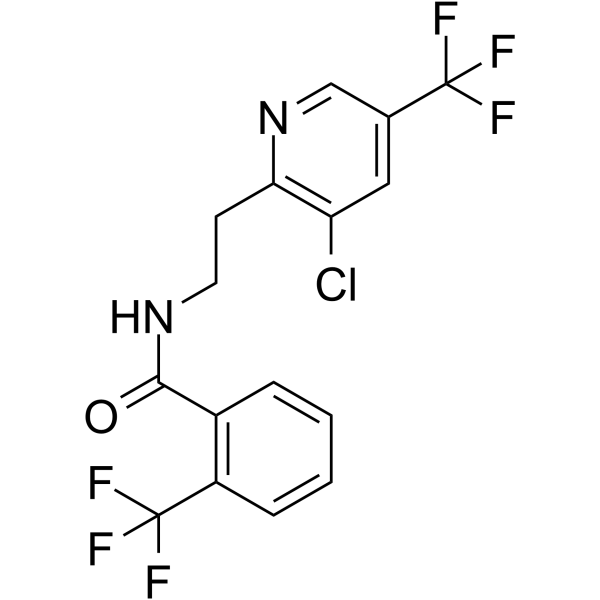
Fluopyram is an orally active succinate dehydrogenase inhibitor, antifungal and nematicide. Fluopyram inhibits succinate dehydrogenase activity, activates CAR/PXR nuclear receptors, and increases caspase-3, TNF-α and NF-κB. Fluopyram inhibits the growth of F. virguliforme, Botrytis cinerea and Alternaria solani with EC50 values of 3.35, 5.389 and 0.244 µg/mL, respectively. Fluopyram induces liver and thyroid tumor formation. Fluopyram is nephrotoxic and embryotoxic .
loading...
    loading...
1
1 Cited Publications
Cat. No.: HY-121325
CAS No.: 483-57-8
Purity:  99.13%
Target:  

Parasite

Research Areas:  

Infection

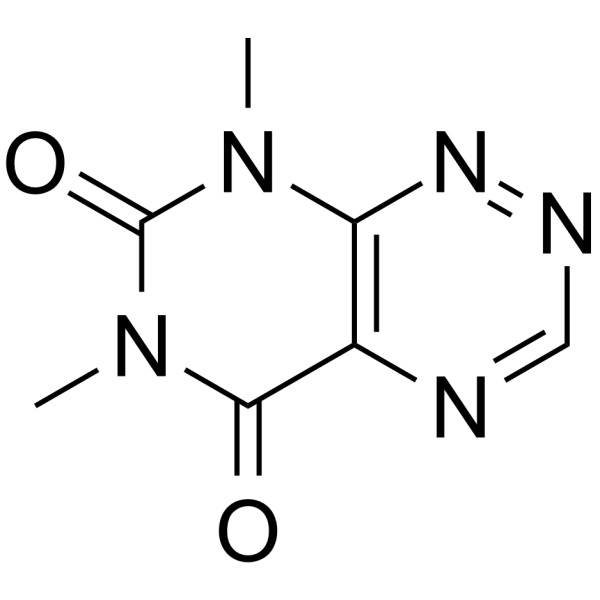
Fervenulin has nematicidal activity and inhibits egg hatch and J2 mortality of M. incognita with MICs of 30 μg/mL and 120 μg/mL, respectively .
loading...
    loading...
Cat. No.: HY-N9599
CAS No.: 14729-29-4
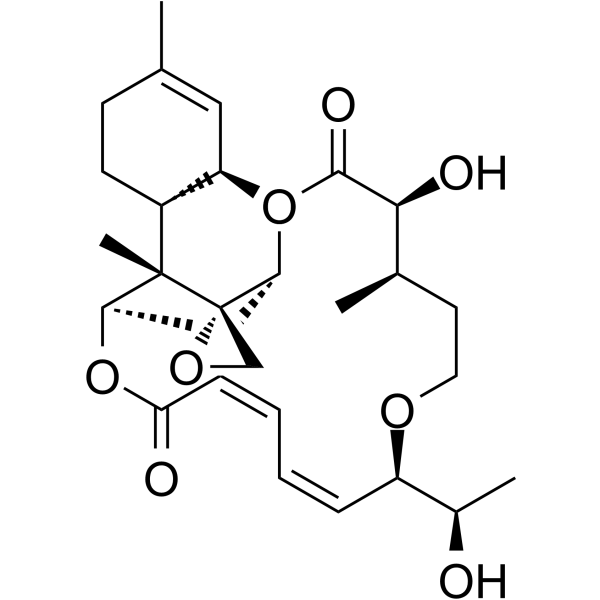
Roridin A acts as an inhibitor of pollen development in Arabidopsis thaliana and nematicide. Roridin A is isolated from the fungus Cylindrocarpon sp. Roridin A delays the flowering time of Arabidopsis thaliana, inhibits pollen development and stem elongation, and blocks plant growth. Roridin A induces larval death of the southern root-knot nematode (Meloidogyne incognita) .
loading...
    loading...
Cat. No.: HY-N6744
CAS No.: 50335-03-0
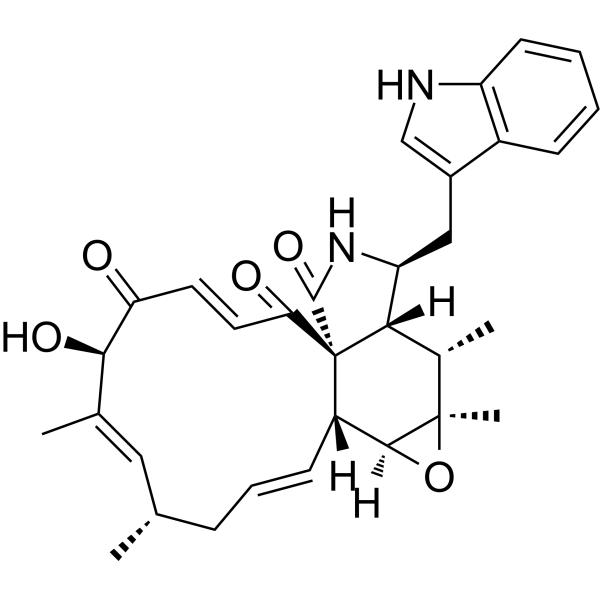
Chaetoglobosin A is a secondary metabolite and nematicide. Chaetoglobosin A is produced by Penicillium aquamarinium. Chaetoglobosin A targets Filamentous actin in cells, thereby inducing cell cycle arrest, and inhibiting membrane ruffle formation and cell migration. Chaetoglobosin A preferentially induces Apoptosis in chronic lymphocytic leukemia cells. Chaetoglobosin A induces dose- and time-dependent death in J2 larvae of the southern root-knot nematode (Meloidogyne incognita). Chaetoglobosin A can be used in studies related to root-knot nematode disease and chronic lymphocytic leukemia .
loading...
    loading...
Cat. No.: HY-P5957
CAS No.: 186511-50-2
Target:  

Parasite

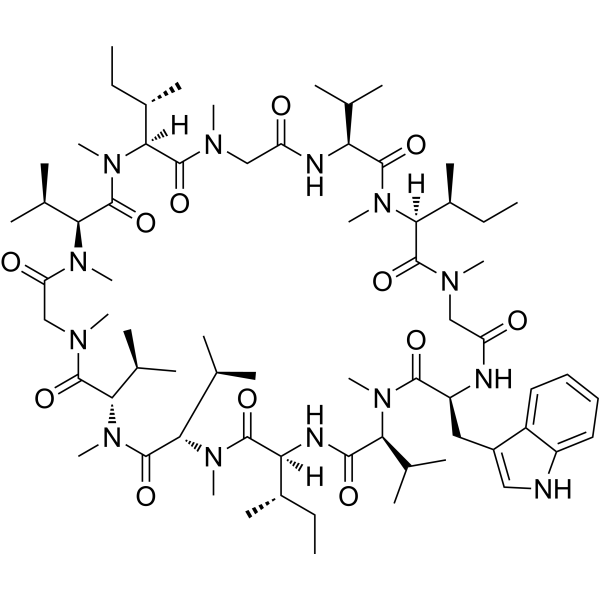
Omphalotin A is a cyclic peptide, and shows nematicidal activity .
loading...
    loading...
Cat. No.: HY-N8392
CAS No.: 1186217-42-4
Target:  

Parasite

Research Areas:  

Infection

Ascr#9 is a small-molecule pheromone belonging to the ascaroside family, and it is widely present in nematodes. Ascr#9 promotes dispersal or elicits avoidance behavior in various nematode species (such as Caenorhabditis elegans and entomopathogenic nematodes), suggesting that individuals evacuate from adverse environments. Ascr#9 exhibits repellent potential in Meloidogyne incognita .
loading...
    loading...
Cat. No.: HY-114373
CAS No.: 17334-55-3
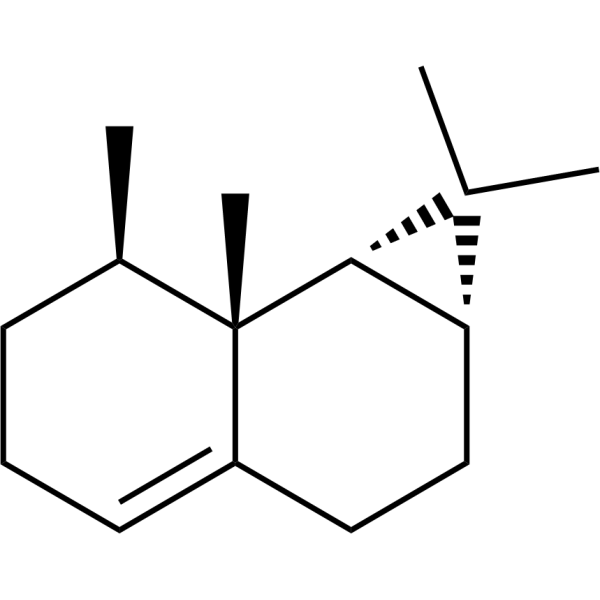
Calarene is an insecticide that can be obtained from the stem of Kadsura heteroclite. Calarene is toxic to Meloidogyne incognita, Sitophilus zeamais, and mosquitoes. Calarene can be used in the research of plant pests and mosquito control .
loading...
    loading...
Cat. No.: HY-163780
Target:  

Parasite

Research Areas:  

Infection

Nematicidal agent 1 is a potent nematicidal agent. Nematicidal agent 1 binds to the pocket of acetylcholine esterase (AChE) .
loading...
    loading...
Cat. No.: HY-N15498
CAS No.: 146446-08-4
Gibepyrone D is an α-pyrone compound found in Gibberella fujikuroi and the endophytic fungus Fusarium oxysporum 162. Gibepyrone D exhibits significant lethal activity against nematodes with an LC50 value of 134 μg/mL (72 h) against the J2 larvae of Meloidogyne incognita. Gibepyrone D is promising for research of nematicides .
loading...
    loading...
Cat. No.: HY-W727209
CAS No.: 1254304-22-7
Target:  

Parasite

Research Areas:  

Infection

Fluazaindolizine is a fluorinated nematicide. Fluazaindolizine induces mortality in second-stage juveniles (J2) of Meloidogyne incognita and Tylenchulus semipenetrans in vitro. Fluazaindolizine impacts plant-parasitic nematode parasitism. Fluazaindolizine can be used for the research of plant-parasitic nematode infestation .
loading...
    loading...
Cat. No.: HY-W102349
CAS No.: 1534-08-3
S-Methyl thioacetate is a toxicant with fumigant activity, can be found in emissions from Bacillus oshimensis, Burkholderia gladioli, Burkholderia cepacia, and Pseudomonas oryzihabitans. S-Methyl thioacetate exerts fumigant toxicity against Caenorhabditis elegans and root-knot nematode Meloidogyne incognita. S-Methyl thioacetate functions as a bacterial volatile organic compound. S-Methyl thioacetate can be used for the research of plant-parasitic nematode infection .
loading...
    loading...
Cat. No.: HY-N18080
CAS No.: 508-59-8
Parthenin is a pseudoguaianolide-type sesquiterpene lactone present in Parthenium hysterophorus L. Parthenin induces chromosomal aberrations, mainly chromatid breaks, in human peripheral blood lymphocytes. Parthenin exhibits toxicity against Salmonella typhimurium and Escherichia coli strains, with reduced toxicity in the presence of a metabolic activation system (S9). Parthenin acts as an antifeedant against the 6th instar larvae of the tobacco cutworm (Spodoptera litura). Parthenin shows insecticidal activity against adult cowpea weevils (Callosobruchus maculatus). Parthenin inhibits seed germination and seedling growth of sicklepod (Cassia tora). Parthenin possesses nematicidal activity against the 2nd instar larvae of the southern root-knot nematode (Meloidogyne incognita). Parthenin serves as a research agent for studies related to cancer, malaria, amoebiasis, inflammatory diseases, and bacterial infections .
loading...
    loading...
Cat. No.: HY-183949
Insecticidal agent 33 is an AChE inhibitor with nematicidal activity. Insecticidal agent 33 impairs locomotor activity of Caenorhabditis elegans, and induces oxidative damage in Caenorhabditis elegans, including elevated reactive oxygen species (ROS) levels, lipofuscin accumulation, lipid deposition, and disrupted cellular homeostasis. Insecticidal agent 33 can be used for the research of plant-parasitic nematode infection .
loading...
    loading...
Cat. No.: HY-151234
CAS No.: 93-83-4
Synonyms: OADA
Research Areas:  

Infection

Oleic acid diethanolamide (OADA) is a non-ionic, biodegradable surfactant. Oleic acid diethanolamide reduces the surface tension of water, emulsifies free water in diesel fuel to form a stable emulsion, and can be loaded onto sulfonated polystyrene nanoparticles to enhance oil recovery. Oleic acid diethanolamide is one of the nematicidal secondary metabolites produced by Aspergillus flavus. Oleic acid diethanolamide can be used in studies related to biological control of root-knot nematodes, enhanced oil recovery, and diesel fuel emulsion stabilization .
loading...
    loading...
  • 1

