
Search Result
Results for "
Methane
" in MedChemExpress (MCE) Product Catalog:
2
Biochemical Assay Reagents
8
Isotope-Labeled Compounds
| Cat. No. |
Product Name |
Target |
Research Areas |
Chemical Structure |
-
- HY-B0324A
-
|
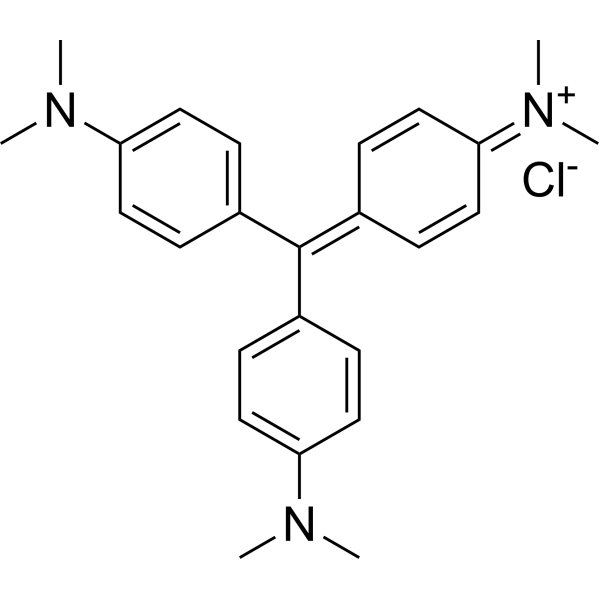
Basic Violet 3; Gentian Violet; Methyl Violet 10B
|
Environmental Pollutants
Fluorescent Dye
Influenza Virus
Bacterial
|
Infection
|
|
Crystal Violet, also known as Gentian violet, methyl violet 10B, is a triphenyl-methane, an alkaline dye that binds to DNA in the nucleus of a cell, staining it a deep purple. It is often used for Gram staining to classify bacteria, or for cell or histological staining[1].
|
-
-
- HY-21577
-
|
|
ADC Linker
PROTAC Linkers
|
Cancer
|
|
Tris[[2-(tert-butoxycarbonyl)ethoxy]methyl]methylamine is a cleavable PEG ADC linker used in the synthesis of antibody-drug conjugates (ADCs). Amino-Tri-(t-butoxycarbonylethoxymethyl)-methane is also a PEG/Alkyl/ether-based PROTAC linker that can be used in the synthesis of PROTACs .
|
-
-
- HY-Y1314
-
|
|
Bacterial
|
Metabolic Disease
|
|
Dimethyl sulfone (Methyl Sulfonyl Methane) is a metabolic product of endogenous methanethiol metabolism and intestinal bacterial metabolism. Dimethyl sulfone inhibits choriocapillary endothelial (CCE) cell proliferation, also has many biological effects, including antiinflammatory, antioxidant, and local anesthetic effects that could be neuroprotective .
|
-
-
- HY-117519
-
|
|
ADC Linker
PROTAC Linkers
|
Cancer
|
|
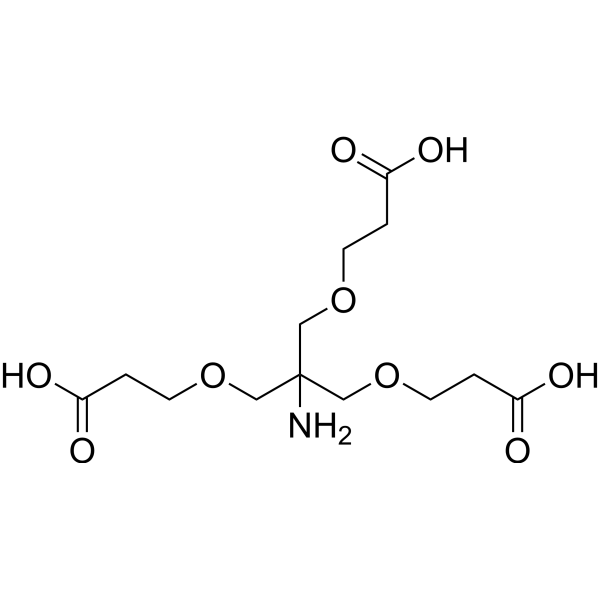
Amino-Tri-(carboxyethoxymethyl)-methane is a cleavable PEG ADC linker used in the synthesis of antibody-drug conjugates (ADCs) . Amino-Tri-(carboxyethoxymethyl)-methan is also a PEG-based PROTAC linker that can be used in the synthesis of PROTACs .
|
-
-
- HY-DY2001
-
|
|
Fluorescent Dye
Influenza Virus
Bacterial
|
Infection
|
Crystal Violet (solution) , also known as Gentian violet, methyl violet 10B, is a triphenyl-methane, an alkaline dye that binds to DNA in the nucleus of a cell, staining it a deep purple. It is often used for Gram staining to classify bacteria, or for cell or histological staining . Solvent and Concentration: Sterile water: 5 mg/mL (0.5%)
|
-
-
- HY-100705
-
|
6-Nitroveratraldehyde
|
Drug Intermediate
|
Neurological Disease
|
|
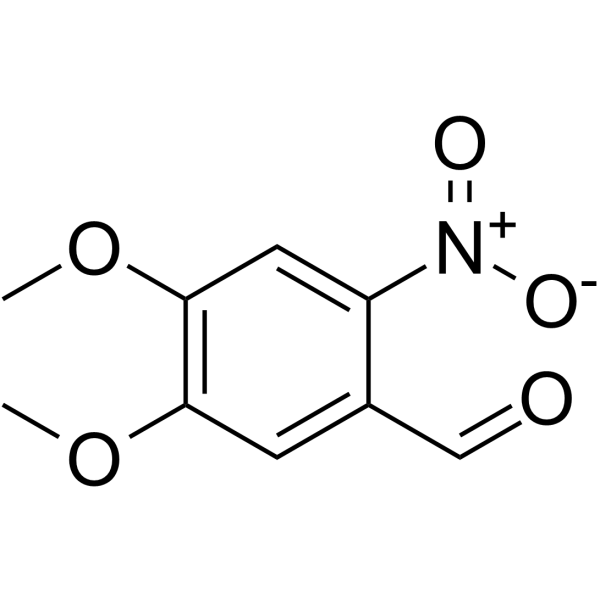
DMNB (6-Nitroveratraldehyde) is a photolabile proton donor that releases acidic substances when excited at a wavelength of 405 nM. DMNB can be used for the synthesis of no-carrier-added 6-[18F]fluoro-L-DOPA (6-FDOPA). DMNB is also applicable to the preparation of o-nitroaryl-bis (5-methylfur-2-yl) methanes and the synthesis of alpha-asarone (HY-N0700). DMNB is an enzyme involved in the non-homologous end joining (NHEJ) pathway responsible for DNA double-strand break (DSB) repair. DMNB can be used in PET studies of the dopaminergic system .
|
-
-
- HY-D0306
-
|
Leucopararosaniline
|
DNA/RNA Synthesis
HCV
|
Infection
|
|
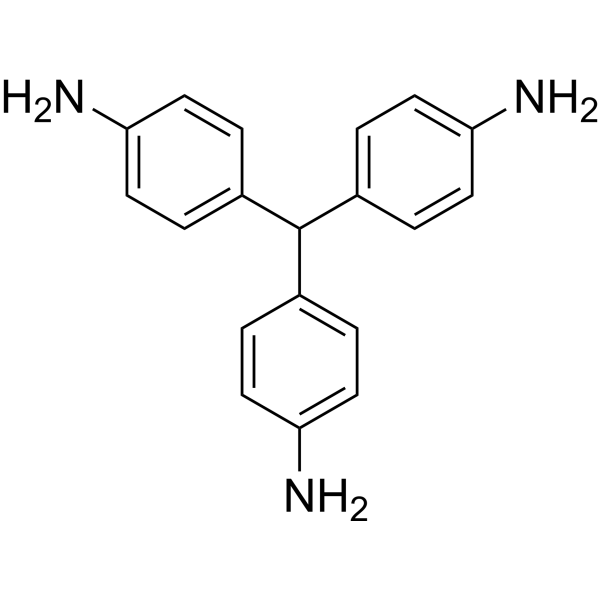
Tris(4-aminophenyl)methane is a triphenylmethane dye. Tris(4-aminophenyl)methane is a weak HCV helicase inhibitor.
|
-
-
- HY-N9542
-
|
|
Others
|
Others
|
|
Dimethylurea/citric acid is a highly efficient deep eutectic solvent (DES). Dimethylurea/citric acid can be used as a catalyst and a green reaction medium for the synthesis of bis(indolyl)methanes, quinolines and aryl-4, 5-diphenyl-1H-imidazoles.
|
-
-
- HY-140059
-
|
|
PROTAC Linkers
|
Cancer
|
|
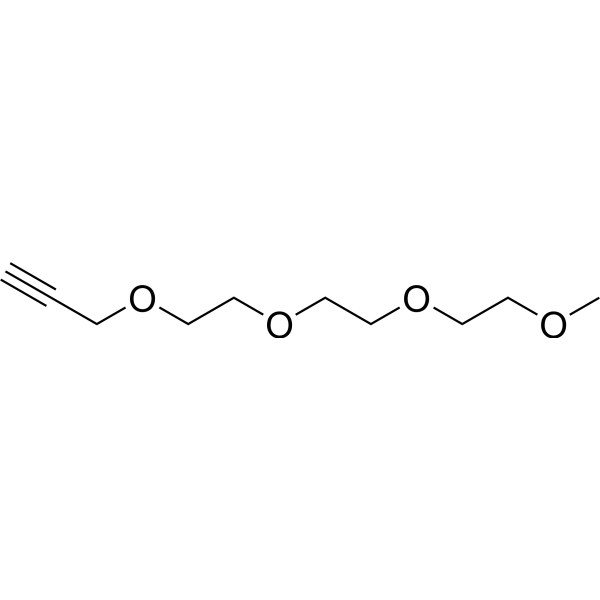
Propargyl-PEG3-methane is a PEG-based PROTAC linker that can be used in the synthesis of PROTACs . Propargyl-PEG3-methane is a click chemistry reagent, it contains an Alkyne group and can undergo copper-catalyzed azide-alkyne cycloaddition (CuAAc) with molecules containing Azide groups.
|
-
-
- HY-140062
-
|
|
PROTAC Linkers
|
Cancer
|
|
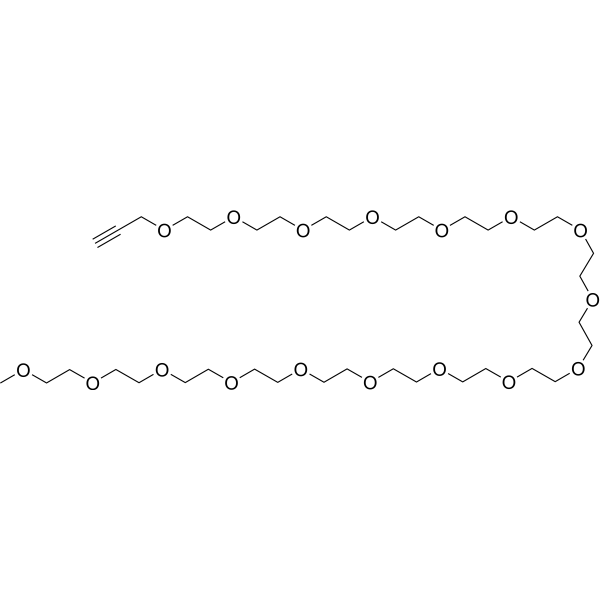
Propargyl-PEG17-methane is a PEG-based PROTAC linker that can be used in the synthesis of PROTACs . Propargyl-PEG17-methane is a click chemistry reagent, it contains an Alkyne group and can undergo copper-catalyzed azide-alkyne cycloaddition (CuAAc) with molecules containing Azide groups.
|
-
-
- HY-140437
-
|
|
PROTAC Linkers
|
Cancer
|
|
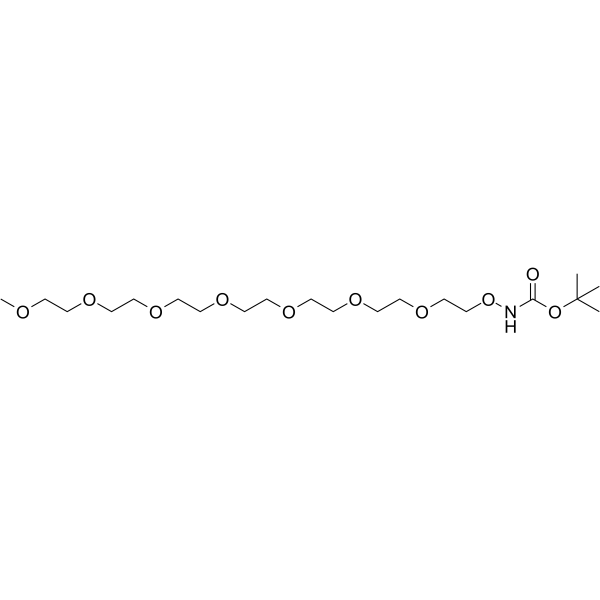
t-Boc-Aminooxy-PEG7-methane is a PEG-based PROTAC linker that can be used in the synthesis of PROTACs .
|
-
-
- HY-W855075A
-
|
|
Biochemical Assay Reagents
|
Others
|
|
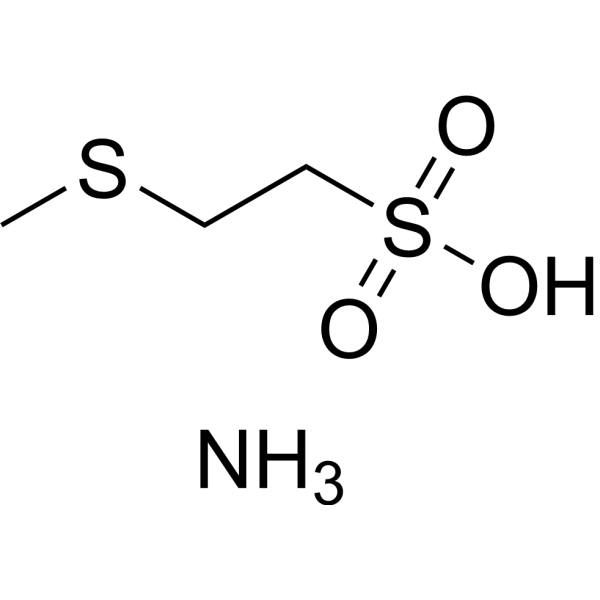
Methyl-coenzyme M can reversibly synthesize methane in methanogenic, ANME-1 and ANME-2 archaea under the catalysis of methyl-coenzyme M Reductase .
|
-
-
- HY-112034S
-
-
-
- HY-149039
-
|
|
Biochemical Assay Reagents
|
Others
|
|
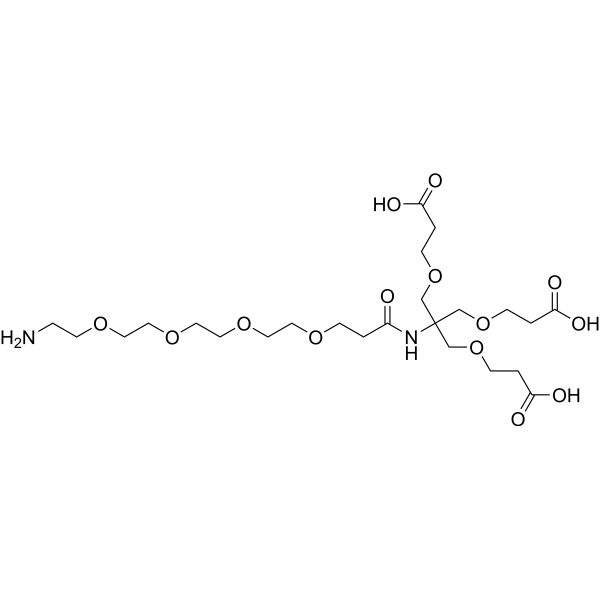
Amine-PEG4-amido-tri-(carboxyethoxymethyl)-methane is a organic compounds, acts as a linker used to synthesize multifunctional molecules.
|
-
-
- HY-W017510
-
|
DipyrrolylMethane
|
MOFs
|
Others
|
|
Di(1H-pyrrol-2-yl)methane (Dipyrrolylmethane) is a metal-organic framework (MOF).
|
-
-
- HY-W102973
-
|
N,N-DiimidazoylMethane
|
MOFs
|
Others
|
|
Di(1H-imidazol-1-yl)methane (N,N-Diimidazoylmethane) is a metal-organic framework (MOF).
|
-
-
- HY-W088065S
-
|
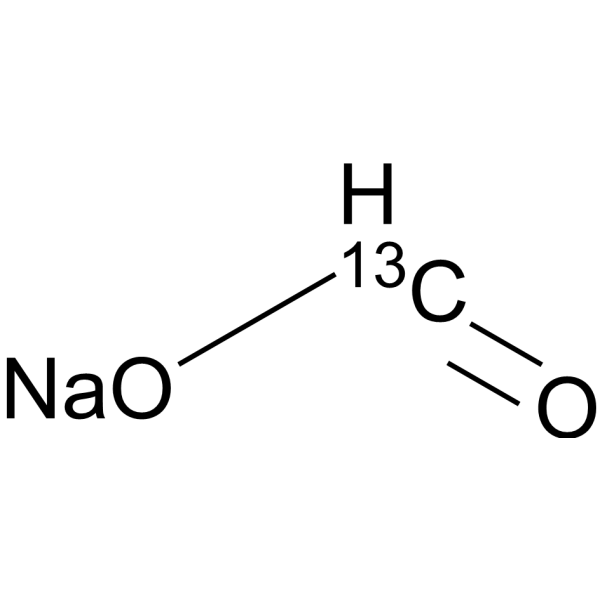
Sodium [13C]formate; Sodium formate-13C
|
Isotope-Labeled Compounds
|
Others
|
|
Formate- 13C (sodium) is the 13C labeled Sodium formate.Sodium formate is a biochemical assay reagent. Sodium formate can react with zinc sources (such as ZnCl2) on the surface of alpha alumina support to form a zinc oxide layer. Sodium formate acts as a deprotonating agent, promoting the deprotonation of ligands (such as 2-methylimidazole) at high temperatures. Sodium formate provides the required reducing force in the catalytic oxidation of methane to methanol by methane monooxygenase (sMMO) and inhibits further oxidation of methanol .
|
-
-
- HY-W088065S1
-
|
|
Isotope-Labeled Compounds
|
Others
|
|
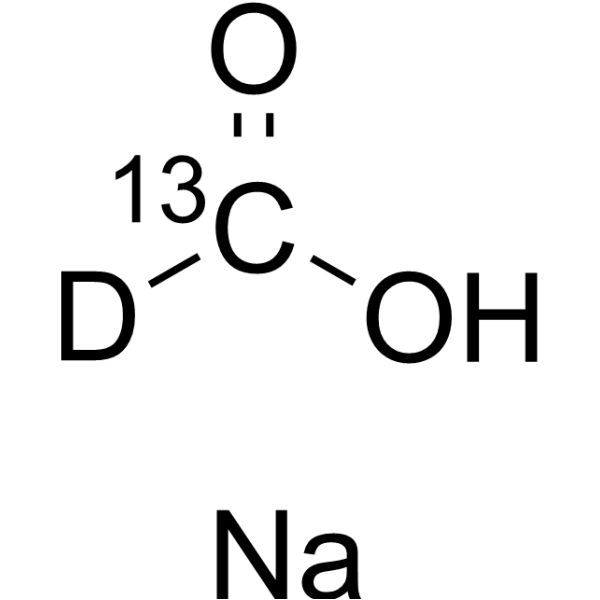
Sodium formate- 13C,d1 is the deuterium and 13C labeled Sodium formate.Sodium formate is a biochemical assay reagent. Sodium formate can react with zinc sources (such as ZnCl2) on the surface of alpha alumina support to form a zinc oxide layer. Sodium formate acts as a deprotonating agent, promoting the deprotonation of ligands (such as 2-methylimidazole) at high temperatures. Sodium formate provides the required reducing force in the catalytic oxidation of methane to methanol by methane monooxygenase (sMMO) and inhibits further oxidation of methanol .
|
-
-
- HY-B0324AS
-
|
Basic Violet 3-d6; Gentian Violet-d6; Methyl Violet 10B-d6
|
Isotope-Labeled Compounds
|
Others
|
|
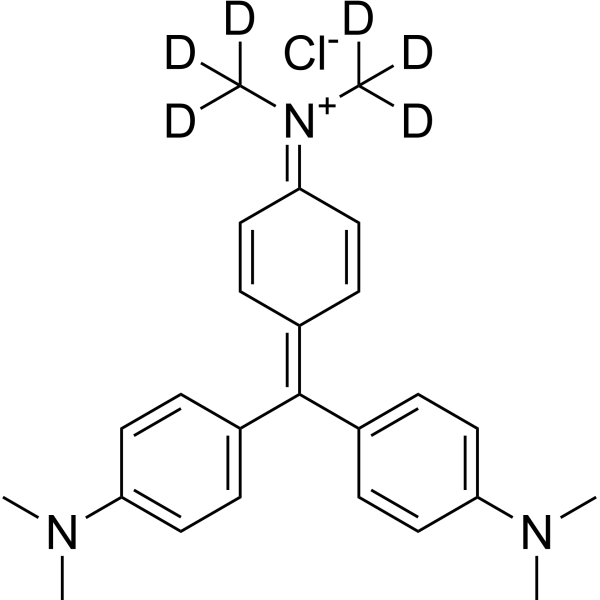
Crystal Violet-d6 is the deuterium labeled Crystal Violet (HY-B0324A). Crystal Violet, also known as Gentian violet, methyl violet 10B, is a triphenyl-methane, an alkaline dye that binds to DNA in the nucleus of a cell, staining it a deep purple. It is often used for Gram staining to classify bacteria, or for cell or histological staining .
|
-
-
- HY-W001950
-
|
Methylenebis[diphenylphosphine]
|
Biochemical Assay Reagents
|
Others
|
|
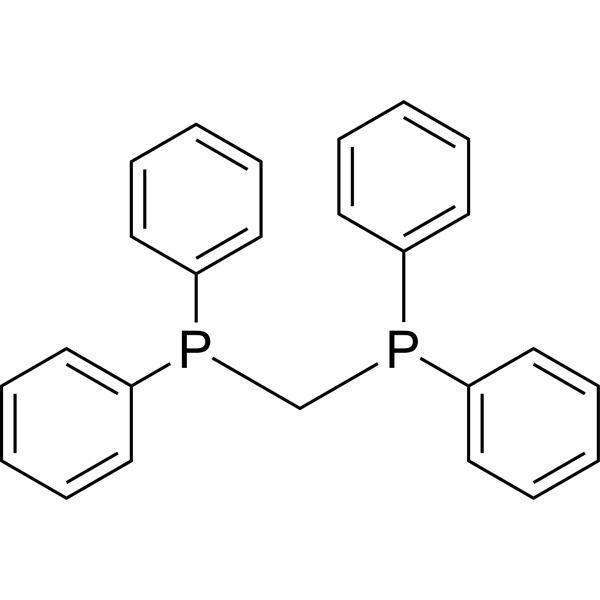
Bis(diphenylphosphino)methane is a biochemical reagent that can be used as a biological material or organic compound for life science related research.
|
-
-
- HY-169366
-
-
-
- HY-W744923
-
|
DD-70
|
Constitutive Androstane Receptor
|
Metabolic Disease
|
|
Bis[2-(4-hydroxyphenylthio) ethoxy]methane (DD-70) is a Bisphenol A (BPA) replacement compound. Bis[2-(4-hydroxyphenylthio) ethoxy]methane is cytotoxic and changes the expression of genes related to xenobiotic metabolism, bile acid, and cholesterol regulation.
|
-
-
- HY-140523
-
|
|
PROTAC Linkers
|
Cancer
|
|
Azido-PEG4-amido-tri-(carboxyethoxymethyl)-methane is a PEG-based PROTAC linker that can be used in the synthesis of PROTACs . Azido-PEG4-amido-tri-(carboxyethoxymethyl)-methane is a click chemistry reagent, it contains an Azide group and can undergo copper-catalyzed azide-alkyne cycloaddition reaction (CuAAc) with molecules containing Alkyne groups. It can also undergo strain-promoted alkyne-azide cycloaddition (SPAAC) reactions with molecules containing DBCO or BCN groups.
|
-
-
- HY-B0922
-
-
-
- HY-W749927
-
|
C17:1(9Z); Margaroleic acid
|
Endogenous Metabolite
|
Metabolic Disease
|
|
cis-9-Heptadecenoic acid is a monounsaturated fatty acid that is a major constituent of ruminant fat and milk. The levels of cis-9-heptadecenoic acid in milk are negatively correlated with methane production in cows fed a high-lipid diet.
|
-
-
- HY-140060
-
|
|
PROTAC Linkers
|
Cancer
|
|
Propargyl-PEG7-methane is a PEG-based PROTAC linker that can be used in the synthesis of PROTACs . Propargyl-PEG7-methane is a click chemistry reagent, it contains an Alkyne group and can undergo copper-catalyzed azide-alkyne cycloaddition (CuAAc) with molecules containing Azide groups.
|
-
-
- HY-130894
-
|
|
PROTAC Linkers
|
Cancer
|
|
Propargyl-PEG12-methane is a PEG-based PROTAC linker that can be used in the synthesis of PROTACs . Propargyl-PEG12-methane is a click chemistry reagent, it contains an Alkyne group and can undergo copper-catalyzed azide-alkyne cycloaddition (CuAAc) with molecules containing Azide groups.
|
-
-
- HY-140061
-
|
|
PROTAC Linkers
|
Cancer
|
|
Propargyl-PEG11-methane is a PEG-based PROTAC linker that can be used in the synthesis of PROTACs . Propargyl-PEG11-methane is a click chemistry reagent, it contains an Alkyne group and can undergo copper-catalyzed azide-alkyne cycloaddition (CuAAc) with molecules containing Azide groups.
|
-
-
- HY-140399
-
|
|
PROTAC Linkers
|
Cancer
|
|
Aminooxy-PEG7-methane is a PEG-based PROTAC linker that can be used in the synthesis of PROTACs .
|
-
-
- HY-140400
-
|
|
PROTAC Linkers
|
Cancer
|
|
Aminooxy-PEG8-methane is a PEG-based PROTAC linker that can be used in the synthesis of PROTACs .
|
-
-
- HY-166312
-
-
-
- HY-166304
-
-
-
- HY-166280
-
-
-
- HY-166116
-
-
-
- HY-165809
-
-
-
- HY-166311
-
-
-
- HY-166275
-
-
-
- HY-W982688
-
-
-
- HY-165863
-
-
-
- HY-166319
-
-
-
- HY-166063
-
-
-
- HY-166273
-
-
-
- HY-166034
-
-
-
- HY-165802
-
-
-
- HY-166148
-
-
-
- HY-142987
-
-
-
- HY-165847
-
-
-
- HY-124531
-
|
|
PROTAC Linkers
|
Cancer
|
|
Tetra(cyanoethoxymethyl) methane is an alkyl chain-based PROTAC linker that can be used in the synthesis of PROTACs .
|
-
-
- HY-165910
-
-
-
- HY-W742901
-
-
- HY-166042
-
-
- HY-165834
-
-
- HY-165735
-
-
- HY-164598
-
-
- HY-117519A
-
|
|
ADC Linker
PROTAC Linkers
|
Cancer
|
|
Amino-Tri-(carboxyethoxymethyl)-methane hydrochloride is a cleavable PEG ADC linker used in the synthesis of antibody-drug conjugates (ADCs). Amino-Tri-(carboxyethoxymethyl)-methan hydrochloride is also a PEG-based PROTAC linker that can be used in the synthesis of PROTACs .
|
-
- HY-140262
-
|
|
PROTAC Linkers
|
Cancer
|
|
Amino-Tri-(m-PEG4-ethoxymethyl)-methane is a PEG-based PROTAC linker that can be used in the synthesis of PROTACs .
|
-
- HY-165736
-
-
- HY-140874
-
|
|
PROTAC Linkers
|
Cancer
|
|
Azido-PEG4-Amido-tri-(t-butoxycarbonylethoxymethyl)-methane is a PEG-based PROTAC linker that can be used in the synthesis of PROTACs . Azido-PEG4-Amido-tri-(t-butoxycarbonylethoxymethyl)-methane is a click chemistry reagent, it contains an Azide group and can undergo copper-catalyzed azide-alkyne cycloaddition reaction (CuAAc) with molecules containing Alkyne groups. It can also undergo strain-promoted alkyne-azide cycloaddition (SPAAC) reactions with molecules containing DBCO or BCN groups.
|
-
- HY-165824
-
-
- HY-W190958
-
|
|
Biochemical Assay Reagents
|
Others
|
|
Boc-NH-Tri-(carbonylethoxymethyl)-methane is a branched PEG linker with a Boc-protected amino and three terminal carboxilic acid groups. The Boc group can be deprotected under mild acidic conditions to form the free amine. The terminal carboxylic acid groups can react with primary amine groups in the presence of activators (e.g. EDC, or HATU) to form a stable amide bond.
|
-
- HY-W800846
-
|
|
Biochemical Assay Reagents
|
Others
|
|
Fmoc-Amido-Tri-(carboxyethoxymethyl)-methane is a multifunctional reagent containing three carboxylic acids and a primary amine that is Fmoc-protected. The carboxylic acids can react with primary amine groups to form stable amide bonds. The Fmoc protecting group can be removed using piperidine, freeing up the amine for a variety of uses such as coupling with carboxylic acids to form amide bonds.
|
-
- HY-W800687
-
|
|
Biochemical Assay Reagents
|
Others
|
|
Tetra(3-methoxy-n-(prop-2-ynyl)propanamide) methane is a 4-branched molecule with propargyl groups that can be linked to azide-containing biomolecules via Click Chemistry.
|
-
- HY-W088065S2
-
|
|
Isotope-Labeled Compounds
|
Others
|
|
Sodium formate-d is the deuterium labeled Sodium formate.Sodium formate is a biochemical assay reagent. Sodium formate can react with zinc sources (such as ZnCl2) on the surface of alpha alumina support to form a zinc oxide layer. Sodium formate acts as a deprotonating agent, promoting the deprotonation of ligands (such as 2-methylimidazole) at high temperatures. Sodium formate provides the required reducing force in the catalytic oxidation of methane to methanol by methane monooxygenase (sMMO) and inhibits further oxidation of methanol .
|
-
- HY-Y1314R
-
|
|
Drug Metabolite
Reference Standards
Endogenous Metabolite
|
Metabolic Disease
|
|
Dimethyl sulfone (Standard) is the analytical standard of Dimethyl sulfone. This product is intended for research and analytical applications. Dimethyl sulfone (Methyl Sulfonyl Methane) is a metabolic product of endogenous methanethiol metabolism and intestinal bacterial metabolism. Dimethyl sulfone inhibits choriocapillary endothelial (CCE) cell proliferation, also has many biological effects, including antiinflammatory, antioxidant, and local anesthetic effects that could be neuroprotective .
|
-
- HY-179894
-
-
- HY-166242
-
-
- HY-166234
-
-
- HY-165790
-
-
- HY-166295
-
-
- HY-166255
-
-
- HY-W075556
-
|
Tetrakis[4-(4-phenylphenyl)pyridine]Methane
|
MOFs
|
Others
|
|
Tetrakis(4-(pyridin-4-yl)phenyl)methane (Tetrakis[4-(4-phenylphenyl)pyridine]methane) is a metal-organic framework (MOF).
|
-
- HY-165848
-
-
- HY-150845S
-
-
- HY-W549233S
-
-
- HY-166083
-
-
- HY-165921
-
-
- HY-W035062
-
|
|
MOFs
|
Others
|
|
Tris(pyrazol-1-yl)methane is a metal-organic framework (MOF).
|
-
- HY-W856308
-
|
|
MOFs
|
Others
|
|
Difluorodi(pyridin-2-yl)methane is a metal-organic framework (MOF).
|
-
- HY-W456475
-
|
Tetrakis(4-(2H-tetrazol-5-yl)phenyl)Methane
|
MOFs
|
Others
|
|
Tetrakis(4-(1H-tetrazol-5-yl)phenyl)methane (Tetrakis(4-(2H-tetrazol-5-yl)phenyl)methane) is a metal-organic framework (MOF).
|
-
- HY-W175598
-
|
N,N'-Methylene-bis-morpholine
|
Environmental Pollutants
Fungal
|
Infection
|
|
Bis(4-morpholinyl)methane (N,N'-Methylene-bis-morpholine) is a broad-spectrum, slow-release formaldehyde-based fungicide. Bis(4-morpholinyl)methane inhibits the growth and reproduction of microorganisms, and prevents spoilage and odor generation in humid environments. Bis(4-morpholinyl)methane serves as a preservative for natural rubber latex .
|
-
- HY-114660
-
|
9,11-Epoxymethano PGH1; 9,11-Methane-epoxy PGF1α
|
Drug Derivative
|
Cardiovascular Disease
|
|
9,11-methane-epoxy Prostaglandin F1α (9,11-Epoxymethano PGH1; 9,11-methane-epoxy PGF1α) is a derivative of prostaglandin H1. 9,11-methane-epoxy Prostaglandin F1α induces aggregation of isolated rabbit platelets (EC50=0.88 µM) and contraction of rabbit aortic strips (EC50=0.11 µM). 9,11-methane-epoxy Prostaglandin F1α induces contraction of isolated guinea pig tracheas (EC50 = 3.4 µM) .
|
-
- HY-W814368
-
|
|
MOFs
|
Others
|
|
Tetrakis(4-((4-bromophenyl)ethynyl)phenyl)methane is a metal-organic framework (MOF).
|
-
- HY-166217
-
-
- HY-W716077
-
|
|
MOFs
|
Others
|
|
Di(1H-pyrazol-4-yl)methane is a metal-organic framework (MOF).
|
-
- HY-W103260
-
|
Tri(1H-benzo[d][1,2,3]triazol-1-yl)Methane
|
MOFs
|
Others
|
|
Tris(1H-benzo[d][1,2,3]triazol-1-yl)methane (Tri(1H-benzo[d][1,2,3]triazol-1-yl)Methane) is a metal-organic framework (MOF).
|
-
- HY-W800706
-
|
|
Biochemical Assay Reagents
|
Others
|
|
Azidobutanamide-tri-(carboxyethoxymethyl)-methane is a aqueous soluble PEG linker with an azide group with three terminal carboxylic acids. The azide group can react with alkyne, BCN, DBCO via Click Chemistry to yield a stable triazole linkage. The terminal carboxylic acids can react with primary amine groups in the presence of activators (e.g. EDC, or HATU) to form a stable amide bond.
|
-
- HY-P5834A
-
|
|
Caspase
Apoptosis
|
Inflammation/Immunology
|
|
Boc-AEVD-CHO TFA is a Caspase 8 inhibitor. Boc-AEVD-CHO TFA significantly increases the frequencies of Nocodazole (HY-13520) or methyl methane sulfonate (MMS) induced micronuclei (MN) and micronucleated binucleates (MNCB) in PBMC by inhibiting cell apoptosis. Boc-AEVD-CHO TFA can be used for immune and inflammatory diseases research .
|
-
- HY-W800715
-
|
|
Biochemical Assay Reagents
|
Others
|
|
(Acid-PEG10)-Tri-(Azide-PEG10-ethoxymethyl)-methane can undergo Click Chemistry with Propargyl, BCN or DBCO reagents. Carboxylic acid (CO2H) group is reactive with primary amino groups in the presence of EDCor HATU.
|
-
- HY-W800721
-
|
|
Biochemical Assay Reagents
|
Others
|
|
Methyltetrazine-amido-bis-(carboxyethoxymethyl)-methane is a click chemistry PEG reagent which contains three carboxylic acid groups and a methyltetrazine group. This reagent can react with TCO-containing compounds to form a stable covalent bond without the catalysis of Cu or elevated temperatures. The inverse-electron demand Diels-Alder cycloaddition reaction of TCO with tetrazines is the fastest bioorthogonal reaction with exceptional selectivity. The terminal carboxylic acid can react with primary amine groups in the presence of activators (e.g. EDC, or HATU) to form a stable amide bond.
|
-
- HY-W800688
-
|
|
Biochemical Assay Reagents
|
Others
|
|
Acid-PEG5-Amide-Tri(3-methoxypropanamide-PEG4-Azide) Methane is a branched PEG linker with a terminal carboxylic acid group and three terminal azides. The azide groups enables PEGylation via Click Chemistry.
|
-
- HY-W017668
-
|
2,2'-[Methylenebis(4,1-phenylenemethylene)]dioxirane
|
MOFs
|
Others
|
|
Bis(4-(oxiran-2-ylmethyl)phenyl)methane (2,2'-[Methylenebis(4,1-phenylenemethylene)]dioxirane) is a metal-organic framework (MOF).
|
-
- HY-W075364
-
|
Tetra (4-carboxybiphenyl) Methane
|
MOFs
|
Others
|
|
4',4''',4''''',4'''''''-Methanetetrayltetrakis(([1,1'-biphenyl]-4-carboxylic acid))(Tetra (4-carboxybiphenyl) methane) is a metal-organic framework (MOF).
|
-
- HY-W800718
-
|
|
Biochemical Assay Reagents
|
Others
|
|
Methyltetrazine-amido-Tri-(acid-PEG1-ethoxymethyl)-methane is a click chemistry PEG reagent which contains three carboxylic acid groups and a methyltetrazine group. This reagent can react with TCO-containing compounds to form a stable covalent bond without the catalysis of Cu or elevated temperatures. The inverse-electron demand Diels-Alder cycloaddition reaction of TCO with tetrazines is the fastest bioorthogonal reaction with exceptional selectivity. The terminal carboxylic acid can react with primary amine groups in the presence of activators (e.g. EDC, or HATU) to form a stable amide bond.
|
-
- HY-W075670
-
|
4,4'-((2,2-Bis((4-carboxyphenoxy)methyl)propane-1,3-diyl)bis(oxy))dibenzoic acid
|
MOFs
|
Others
|
|
Tetrakis(4-carboxyphenoxymethyl)methane (4,4'-((2,2-Bis((4-carboxyphenoxy)methyl)propane-1,3-diyl)bis(oxy))dibenzoic acid) is a metal-organic framework (MOF).
|
-
- HY-W075554
-
|
1,1',1'',1'''-(Methanetetrayltetra-4,1-phenylene)tetrakis(1H-imidazole)
|
MOFs
|
Others
|
|
Tetrakis(4-(1H-imidazol-1-yl)phenyl)methane(1,1',1'',1'''-(Methanetetrayltetra-4,1-phenylene)tetrakis(1H-imidazole)) is a metal-organic framework (MOF).
|
-
- HY-W075493
-
|
1-(1,2,4-Triazol-1-ylmethyl)-1,2,4-triazole
|
MOFs
|
Others
|
|
Di(1H-1,2,4-triazol-1-yl)methane (1-(1,2,4-Triazol-1-ylmethyl)-1,2,4-triazole) is a metal-organic framework (MOF).
|
-
- HY-W112715
-
|
Tetrakis(imidazol-1-ylmethyl)Methane
|
MOFs
|
Others
|
|
1,1'-(2,2-Bis((1H-imidazol-1-yl)methyl)propane-1,3-diyl)bis(1H-imidazole) (Tetrakis(imidazol-1-ylmethyl)methane) is a metal-organic framework (MOF).
|
-
- HY-W002006
-
|
|
Biochemical Assay Reagents
|
Others
|
|
6-Amino-1,3-dimethyluracil is a 6-aminouracil derivative and also functions as an organic thermal stabilizer for polyvinyl chloride (PVC). Its compatibility with PVC is lower than that of Ca 2+/Zn 2+ stabilizers and alkyl-substituted bis(6-amino-1,3-dimethyluracil-5-yl)methane derivatives. 6-Amino-1,3-dimethyluracil can be used to prepare PVC films, which exhibit lower transparency compared to PVC films stabilized by its derived bis-uracil compounds .
|
-
| Cat. No. |
Product Name |
Type |
-
- HY-B0324A
-
|
Basic Violet 3; Gentian Violet; Methyl Violet 10B
|
Fluorescent Dye
|
|
Crystal Violet, also known as Gentian violet, methyl violet 10B, is a triphenyl-methane, an alkaline dye that binds to DNA in the nucleus of a cell, staining it a deep purple. It is often used for Gram staining to classify bacteria, or for cell or histological staining[1].
|
-
- HY-DY2001
-
|
|
Fluorescent Dye
|
Crystal Violet (solution) , also known as Gentian violet, methyl violet 10B, is a triphenyl-methane, an alkaline dye that binds to DNA in the nucleus of a cell, staining it a deep purple. It is often used for Gram staining to classify bacteria, or for cell or histological staining . Solvent and Concentration: Sterile water: 5 mg/mL (0.5%)
|
-
- HY-D0306
-
|
Leucopararosaniline
|
Fluorescent Dye
|
|
Tris(4-aminophenyl)methane is a triphenylmethane dye. Tris(4-aminophenyl)methane is a weak HCV helicase inhibitor.
|
| Cat. No. |
Product Name |
Type |
-
- HY-W001950
-
|
Methylenebis[diphenylphosphine]
|
Biochemical Assay Reagents
|
|
Bis(diphenylphosphino)methane is a biochemical reagent that can be used as a biological material or organic compound for life science related research.
|
-
- HY-142987
-
| Cat. No. |
Product Name |
Target |
Research Area |
-
- HY-P5834A
-
|
|
Caspase
Apoptosis
|
Inflammation/Immunology
|
|
Boc-AEVD-CHO TFA is a Caspase 8 inhibitor. Boc-AEVD-CHO TFA significantly increases the frequencies of Nocodazole (HY-13520) or methyl methane sulfonate (MMS) induced micronuclei (MN) and micronucleated binucleates (MNCB) in PBMC by inhibiting cell apoptosis. Boc-AEVD-CHO TFA can be used for immune and inflammatory diseases research .
|
| Cat. No. |
Product Name |
Category |
Target |
Chemical Structure |
| Cat. No. |
Product Name |
Chemical Structure |
-
- HY-112034S
-
|
|
|
2,2'-Bis(hydroxyphenyl)methane-d10 is the deuterium labeled 2,2’-Bis(hydroxyphenyl)methane (HY-112034).
|
-
-
- HY-W088065S
-
|
|
|
Formate- 13C (sodium) is the 13C labeled Sodium formate.Sodium formate is a biochemical assay reagent. Sodium formate can react with zinc sources (such as ZnCl2) on the surface of alpha alumina support to form a zinc oxide layer. Sodium formate acts as a deprotonating agent, promoting the deprotonation of ligands (such as 2-methylimidazole) at high temperatures. Sodium formate provides the required reducing force in the catalytic oxidation of methane to methanol by methane monooxygenase (sMMO) and inhibits further oxidation of methanol .
|
-
-
- HY-W088065S1
-
|
|
|
Sodium formate- 13C,d1 is the deuterium and 13C labeled Sodium formate.Sodium formate is a biochemical assay reagent. Sodium formate can react with zinc sources (such as ZnCl2) on the surface of alpha alumina support to form a zinc oxide layer. Sodium formate acts as a deprotonating agent, promoting the deprotonation of ligands (such as 2-methylimidazole) at high temperatures. Sodium formate provides the required reducing force in the catalytic oxidation of methane to methanol by methane monooxygenase (sMMO) and inhibits further oxidation of methanol .
|
-
-
- HY-B0324AS
-
|
|
|
Crystal Violet-d6 is the deuterium labeled Crystal Violet (HY-B0324A). Crystal Violet, also known as Gentian violet, methyl violet 10B, is a triphenyl-methane, an alkaline dye that binds to DNA in the nucleus of a cell, staining it a deep purple. It is often used for Gram staining to classify bacteria, or for cell or histological staining .
|
-
-
- HY-W742901
-
|
|
|
2,2'-Bis(hydroxyphenyl)methane-d4 is the deuterium labeled 2,2’-Bis(hydroxyphenyl)methane (HY-112034).
|
-
-
- HY-W088065S2
-
|
|
|
Sodium formate-d is the deuterium labeled Sodium formate.Sodium formate is a biochemical assay reagent. Sodium formate can react with zinc sources (such as ZnCl2) on the surface of alpha alumina support to form a zinc oxide layer. Sodium formate acts as a deprotonating agent, promoting the deprotonation of ligands (such as 2-methylimidazole) at high temperatures. Sodium formate provides the required reducing force in the catalytic oxidation of methane to methanol by methane monooxygenase (sMMO) and inhibits further oxidation of methanol .
|
-
-
- HY-150845S
-
|
|
|
Bis(2-chloroethoxy)-methane-d8 is the deuterium labeled Bis(2-chloroethoxy)-methane .
|
-
-
- HY-W549233S
-
|
|
|
Tris(4-chlorophenyl)methane- 13C19 is 13C labeled Tris(4-chlorophenyl)methane .
|
-
| Cat. No. |
Product Name |
|
Classification |
-
- HY-140059
-
|
|
|
Alkynes
PROTAC Synthesis
|
|
Propargyl-PEG3-methane is a PEG-based PROTAC linker that can be used in the synthesis of PROTACs . Propargyl-PEG3-methane is a click chemistry reagent, it contains an Alkyne group and can undergo copper-catalyzed azide-alkyne cycloaddition (CuAAc) with molecules containing Azide groups.
|
-
- HY-140062
-
|
|
|
PROTAC Synthesis
Alkynes
|
|
Propargyl-PEG17-methane is a PEG-based PROTAC linker that can be used in the synthesis of PROTACs . Propargyl-PEG17-methane is a click chemistry reagent, it contains an Alkyne group and can undergo copper-catalyzed azide-alkyne cycloaddition (CuAAc) with molecules containing Azide groups.
|
-
- HY-140523
-
|
|
|
PROTAC Synthesis
Azide
|
|
Azido-PEG4-amido-tri-(carboxyethoxymethyl)-methane is a PEG-based PROTAC linker that can be used in the synthesis of PROTACs . Azido-PEG4-amido-tri-(carboxyethoxymethyl)-methane is a click chemistry reagent, it contains an Azide group and can undergo copper-catalyzed azide-alkyne cycloaddition reaction (CuAAc) with molecules containing Alkyne groups. It can also undergo strain-promoted alkyne-azide cycloaddition (SPAAC) reactions with molecules containing DBCO or BCN groups.
|
-
- HY-140060
-
|
|
|
PROTAC Synthesis
Alkynes
|
|
Propargyl-PEG7-methane is a PEG-based PROTAC linker that can be used in the synthesis of PROTACs . Propargyl-PEG7-methane is a click chemistry reagent, it contains an Alkyne group and can undergo copper-catalyzed azide-alkyne cycloaddition (CuAAc) with molecules containing Azide groups.
|
-
- HY-130894
-
|
|
|
PROTAC Synthesis
Alkynes
|
|
Propargyl-PEG12-methane is a PEG-based PROTAC linker that can be used in the synthesis of PROTACs . Propargyl-PEG12-methane is a click chemistry reagent, it contains an Alkyne group and can undergo copper-catalyzed azide-alkyne cycloaddition (CuAAc) with molecules containing Azide groups.
|
-
- HY-140061
-
|
|
|
Alkynes
PROTAC Synthesis
|
|
Propargyl-PEG11-methane is a PEG-based PROTAC linker that can be used in the synthesis of PROTACs . Propargyl-PEG11-methane is a click chemistry reagent, it contains an Alkyne group and can undergo copper-catalyzed azide-alkyne cycloaddition (CuAAc) with molecules containing Azide groups.
|
-
- HY-140874
-
|
|
|
Azide
PROTAC Synthesis
|
|
Azido-PEG4-Amido-tri-(t-butoxycarbonylethoxymethyl)-methane is a PEG-based PROTAC linker that can be used in the synthesis of PROTACs . Azido-PEG4-Amido-tri-(t-butoxycarbonylethoxymethyl)-methane is a click chemistry reagent, it contains an Azide group and can undergo copper-catalyzed azide-alkyne cycloaddition reaction (CuAAc) with molecules containing Alkyne groups. It can also undergo strain-promoted alkyne-azide cycloaddition (SPAAC) reactions with molecules containing DBCO or BCN groups.
|
Your information is safe with us. * Required Fields.
Inquiry Information
- Product Name:
- Cat. No.:
- Quantity:
- MCE Japan Authorized Agent: