
1. Search Result
Search Result
Results for "

NOD mice

" in MedChemExpress (MCE) Product Catalog:

25

Inhibitors & Agonists

8

Peptides

3

Inhibitory Antibodies

1

Natural
Products

Targets Recommended:
Cat. No. Product Name Target Research Areas Chemical Structure
  • HY-P5523A

    NOD-like Receptor (NLR) NF-κB Interleukin Related Metabolic Disease
    iE-DAP dihydrochloride is a Nod1 agonist. iE-DAP dihydrochloride activates NOD1, which in turn activates the NF-κB signaling pathway and MLCK signaling pathway, inducing cellular inflammatory responses and tight junction disruption. iE-DAP dihydrochloride downregulates the expression of ZO-1 and Occludin genes. iE-DAP dihydrochloride increases the secretion of IL-6, GRO-α, MCP-1, IL-8 and MIP-1β in term human trophoblast cell cultures. iE-DAP dihydrochloride triggers preterm birth in pregnant mice, reduces fetal body weight, and induces fetal inflammation. iE-DAP dihydrochloride can be used in studies related to mastitis and preterm birth .
    iE-DAP dihydrochloride
  • HY-P99148

    TNF Receptor Metabolic Disease Inflammation/Immunology
    Anti-Mouse TNF alpha Antibody (TN3-19.12) is an anti-mouse TNF alpha IgG antibody inhibitor derived from host Armenian Hamster. Anti-Mouse TNF alpha Antibody (TN3-19.12) neutralizes cytotoxic activity in supernatants obtained from LNC-8 cells. Anti-Mouse TNF alpha Antibody (TN3-19.12) reduces the symptoms and severity of EAE (experimental allergic encephalomyelitis) in LNC-8 cells xenograft mice models. Anti-Mouse TNF alpha Antibody (TN3-19.12) prevents diabetes in NOD mice. Anti-Mouse TNF alpha Antibody (TN3-19.12) shows apparent radiosensitizing effect in CD2F1 mice .
    Anti-Mouse/Rat/Rabbit TNF alpha Antibody (TN3-19.12)
  • HY-W142432

    Biochemical Assay Reagents β-catenin Wnt Arginase TGF-beta/Smad mTOR Akt ERK Atg8/LC3 p62 Autophagy Metabolic Disease Inflammation/Immunology Cancer
    Perfluoroundecanoic acid is a perfluoroalkyl substance (PFAS). Perfluoroundecanoic acid is an orally active oxidative stress inducer. Perfluoroundecanoic acid promotes macrophage M2 polarization, activates Wnt/β-catenin signaling and enhances β-catenin nuclear accumulation. Perfluoroundecanoic acid -induced M2 phenotype macrophage accelerates tumor progression in vitro and in vivo. Perfluoroundecanoic acid induces DNA damage, reproductive and pathophysiological dysfunctions via oxidative stress in male Swiss mice. Perfluoroundecanoic acid inhibits Leydig cell development in pubertal male rats via inducing oxidative stress and autophagy. Perfluoroundecanoic acid accelerates insulitis development in a mouse model of type 1 diabetes. Perfluoroundecanoic acid can be used for the study of ovarian cancer, type 1 diabetes and inflammation .
    Perfluoroundecanoic acid
  • HY-177760

    Carboxypeptidase Apoptosis Akt Cancer
    PrCP-7414 is a prolyl carboxypeptidase (PRCP) inhibitor. PrCP-7414 blocks PRCP-mediated activation of the IGF1R/HER3 signaling pathway and subsequent AKT activation. PrCP-7414 exhibits pro-apoptotic, anti-tumor and synergistic cytotoxic activities, and inhibits the proliferation and survival of triple-negative breast cancer cells. PrCP-7414 can be used for the research of breast cancer .
    PrCP-7414
  • HY-P5489

    IFNAR Metabolic Disease Inflammation/Immunology
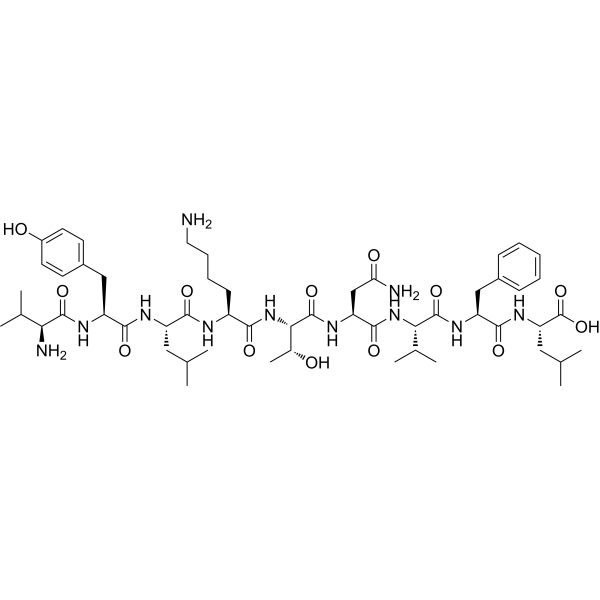
    IGRP(206-214) is a biological active peptide. IGRP(206-214) corresponds to residues 206-214 of murine islet-specific glucose-6-phosphatase catalytic subunit-related protein (IGRP). IGRP(206-214) is T cells specific for proinsulin and IGRP induces diabetes in non-obese diabetic (NOD) mice .
    IGRP(206-214)
  • HY-149428
    AD4
    1 Publications Verification

    PROTACs Cancer
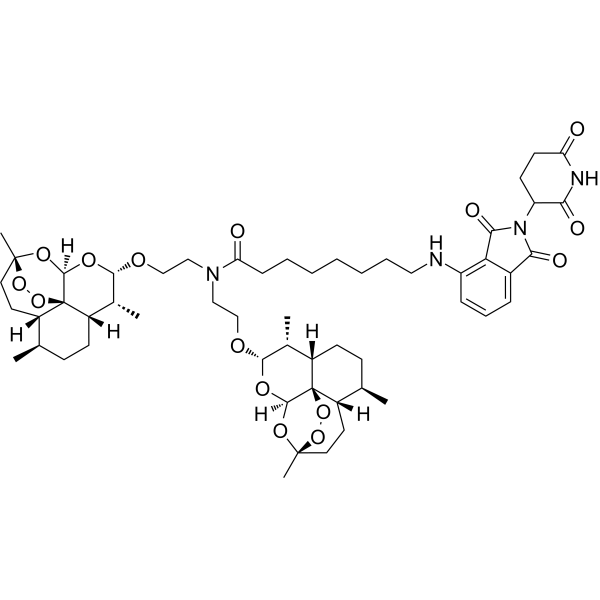
    AD4 is an artemisinin derivative that is a proteolytic targeting chimera (PROTAC) targeting PCLAF. AD4 can effectively degrade PCLAF in RS4;11 cells (IC50: 0.6 nM), thereby activating the p21/Rb axis and exerting anti-tumor activity. AD4 also prolonged survival of RS4;11-transplanted NOD/SCID mice, with in vivo efficacy .
    AD4
  • HY-128866

    Bacterial Infection
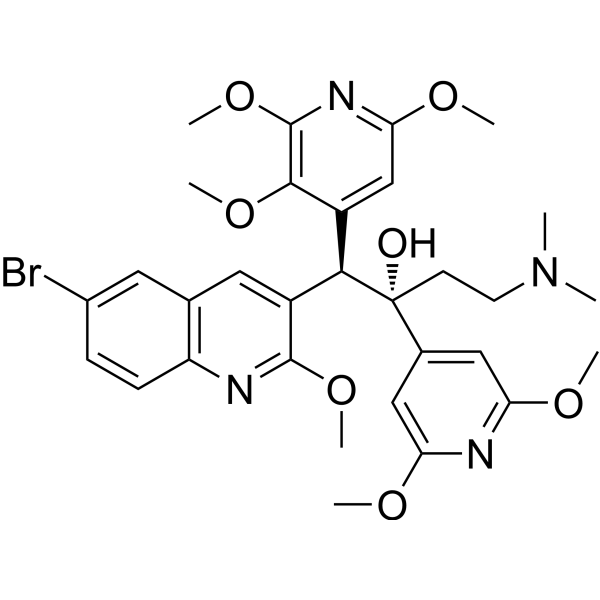
    TBAJ-876 is an orally active diarylquinoline anti-Mycobacterium agent. TBAJ-876 regulates energy metabolism by targeting the c and ε subunits of Mycobacterium tuberculosis F-ATP synthase, exerts bactericidal activity against replicating Mycobacterium tuberculosis, and retains activity against strains carrying the Rv0678 mutation. TBAJ-876 undergoes N-demethylation in vivo to form its major active metabolite TBAJ-876-M3, which has lower lipophilicity and hERG potassium channel binding affinity. TBAJ-876 is well tolerated in BALB/c mice and significantly reduces the colony-forming units of Mycobacterium tuberculosis in the lungs. In addition, TBAJ-876 exhibits inhibitory activity against Mycobacterium abscessus, reduces bacterial loads in the lungs and spleens of infected mice, and shows no antagonistic effect when used in combination with common antibiotics. TBAJ-876 can be used in studies related to tuberculosis and Mycobacterium abscessus pulmonary diseases .
    TBAJ-876
  • HY-105063

    HSP Metabolic Disease Inflammation/Immunology
    DiaPep277 is a 24 amino acid peptide derived from positions 437-460 in HSP60. DiaPep277 arrests the progression of β-cell destruction in NOD mice. DiaPep277 has an immune modulatory effect on diabetogenic T cells in animal models of diabetes .
    DiaPep277
  • HY-P5522A
    TriDAP dihydrochloride
    1 Publications Verification

    L-Ala-γ-D-Glu-meso-diaminopimelic acid dihydrochloride

    NOD-like Receptor (NLR) NF-κB MAP3K MEK ERK p38 MAPK Interleukin Related SARS-CoV Infection Inflammation/Immunology
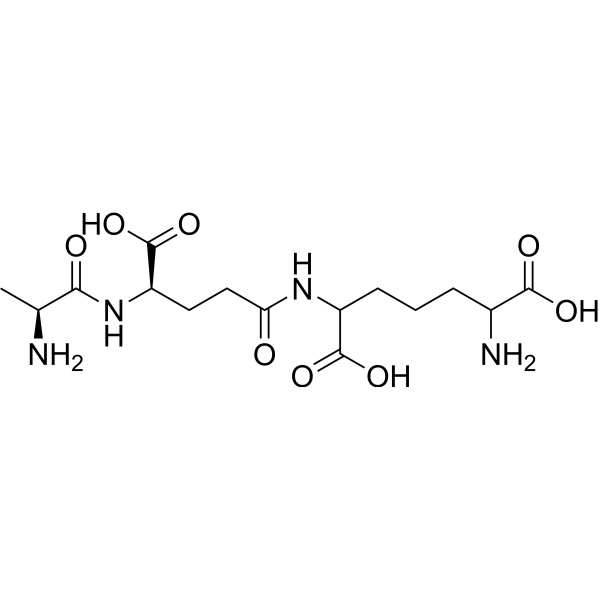
    TriDAP dihydrochloride (L-Ala-γ-D-Glu-meso-diaminopimelic acid dihydrochloride) is a NOD1 agonist with a Kd value of 34.5 μM. TriDAP dihydrochloride enhances the binding of NOD1-RICK, promotes RICK phosphorylation, and activates the NF-κB, TAK1, MEK/ERK, p38 and interferon response pathways. TriDAP dihydrochloride downregulates Runx2 via increasing ubiquitination and reduces trabecular bone parameters. TriDAP dihydrochloride decreases IκBα levels and increases p65 levels. TriDAP dihydrochloride induces the secretion of proinflammatory mediators IL-8 and prostaglandins, triggers tissue inflammation and innate immune activation, and inhibits SARS-CoV-2 replication in lung epithelial cells. TriDAP dihydrochloride increases the RANKL/OPG ratio in mice, reduces bone mass and enhances osteoclast activity, and inhibits new bone formation by decreasing the mineralization deposition rate in mice. TriDAP dihydrochloride can be used in research related to pulpitis, chronic ulcerative colitis, Crohn's disease and SARS-CoV-2 infection .
    TriDAP dihydrochloride
  • HY-P5396A

    Amino Acid Decarboxylase Others
    GAD65 (524-543) acetate is a biological active peptide with amino acids 524 to 543 fragment of glutamic acid decarboxylase 65 (GAD65). GAD65 (524-543) acetate is one of the first fragments of the islet antigen to induce proliferative T cell responses in the non-obese diabetic (NOD) mouse model of spontaneous autoimmune diabetes. GAD65 (524-543) acetate is a specific, possibly low affinity, stimulus for the spontaneously arising diabetogenic T cell clone BDC2.5. Immunization with GAD65 (524-543) acetate increases the susceptibility of the NOD mice to type 1 diabetes induced by the adoptive transfer of BDC2.5 T cells .
    GAD65 (524-543) acetate
  • HY-P5523

    NOD-like Receptor (NLR) NF-κB Interleukin Related Metabolic Disease
    iE-DAP is a Nod1 agonist. iE-DAP activates NOD1, which in turn activates the NF-κB signaling pathway and MLCK signaling pathway, inducing cellular inflammatory responses and tight junction disruption. iE-DAP downregulates the expression of ZO-1 and Occludin genes. iE-DAP increases the secretion of IL-6, GRO-α, MCP-1, IL-8 and MIP-1β in term human trophoblast cell cultures. iE-DAP triggers preterm birth in pregnant mice, reduces fetal body weight, and induces fetal inflammation. iE-DAP is applicable to research related to mastitis and preterm birth .
    iE-DAP
  • HY-175455

    PROTACs Androgen Receptor Akt Cancer
    LYA914 is an orally active AR/AR-V7 PROTAC degrader. LYA914 targets the proteolytic degradation of the conserved DNA binding domain (DBD) of the androgen receptor (AR). LYA914 exhibits potent antiproliferative effects in Enzalutamide (HY-70002)-insensitive/resistant cells. LYA914 inhibits tumor growth in VCaP/LNCaP tumor mouse models. LYA914 can be used to study castration-resistant prostate cancer (CRPC). (Pink: AR-DBD ligand-1: HY-175456, Blue: Thalidomide: HY-14658, Pink + Black: AR-DBD ligand-Linker Conjugate 1: HY-175457, Black: Boc-piperidine-oxopiperidin: HY-175458) .
    LYA914
  • HY-175541

    PROTACs Btk Cancer
    TQ-3959 is an orally active BTK PROTAC degrader, with a DC50 of 14.6 nM. TQ-3959 exerts antiproliferative activity against both wild-type BTK and C481S mutant BTK cell lines. TQ-3959 exhibits tumor growth inhibition in female NOD-SCID mice bearing TMD-8 xenografts. TQ-3959 can be used in the research on B-cell malignancies such as lymphoma.(Pink: BTK ligand (HY-150885), Blue: CRBN Ligand (HY-W733888), Black: Linker (HY-W061884), E3 ligase ligand-linker conjugate (HY-175545)) .
    TQ-3959
  • HY-P5522

    L-Ala-γ-D-Glu-meso-diaminopimelic acid

    NOD-like Receptor (NLR) NF-κB MAP3K MEK ERK p38 MAPK Interleukin Related SARS-CoV Infection Inflammation/Immunology
    TriDAP (L-Ala-γ-D-Glu-meso-diaminopimelic acid) is a NOD1 agonist with a Kd value of 34.5 μM. TriDAP enhances the binding of NOD1-RICK, promotes RICK phosphorylation, and activates the NF-κB, TAK1, MEK/ERK, p38 and interferon response pathways. TriDAP downregulates Runx2 via increasing ubiquitination and reduces trabecular bone parameters. TriDAP decreases IκBα levels and increases p65 levels. TriDAP induces the secretion of proinflammatory mediators IL-8 and prostaglandins, triggers tissue inflammation and innate immune activation, and inhibits SARS-CoV-2 replication in lung epithelial cells. TriDAP increases the RANKL/OPG ratio in mice, reduces bone mass and enhances osteoclast activity, and inhibits new bone formation by decreasing the mineralization deposition rate in mice. TriDAP can be used in research related to pulpitis, chronic ulcerative colitis, Crohn's disease and SARS-CoV-2 infection .
    TriDAP
  • HY-176561

    Casein Kinase HDAC Cancer
    IOR-160 is a dual inhibitor of casein kinase 2 (CK2) and HDACs. IOR-160 exhibits high selectivity for CK2 (IC50 = 1.7 nM) and broad inhibitory activity against HDAC (HDAC 1, 2, 3, and 6 with IC50s of 3.3 nM, 24.0 nM, 3.9 nM, and 13.0 nM, respectively, with low activity for HDAC8). IOR-160 modulates key cellular signaling pathways by inhibiting AKT phosphorylation and increasing acetylated α-tubulin. IOR-160 inhibits tumor growth and reduces tumor burden through dual CK2/HDAC inhibition. IOR-160 is indicated for use in triple-negative breast cancer research .
    IOR-160
  • HY-129577

    Necroptosis Inflammation/Immunology Cancer
    Aplysin is a brominated sesquiterpene with an isoprene backbone that exhibits hepatoprotective, immunomodulatory, and antitumor activities. Aplysin effectively prevents spontaneous pancreatic necrosis and inflammatory responses in NOD mice .
    Aplysin
  • HY-174437

    FLT3 Apoptosis Cancer
    FLT3-IN-32 is a potent and orally active FLT3 inhibitor. FLT3-IN-32 shows high selectivity for FLT3 and efficiently inhibits FLT3-activating mutations and induces apoptosis. FLT3-IN-32 shows good tolerability in non-tumor bearing mice. FLT3-IN-32 demonstrates outstanding anti-tumor efficacy in MV4-11 bearing NOD/SCID mice, prolonging the survival noticeably. FLT3-IN-32 can be used for the research of acute myeloid leukemia .
    FLT3-IN-32
  • HY-175610

    PROTACs FLT3 JAK Epigenetic Reader Domain Cancer
    PROTAC FLT3/JAK2/BRD4 Degrader-1 is a PROTAC degrader that target FLT3, JAK2, and BRD4 with DC50 values of 5.23, 0.678, and 1.17 nM, respectively. PROTAC FLT3/JAK2/BRD4 Degrader-1 exhibits potent antiproliferative activity against MV4;11 cells (IC50 = 0.79 nM) and FLT3 mutant-transformed Ba/F3 cells. PROTAC FLT3/JAK2/BRD4 Degrader-1 induces apoptosis in MV4;11 cells. PROTAC FLT3/JAK2/BRD4 Degrader-1 demonstrates significant anti-tumor efficacy in the MV4;11 xenograft model established in NOD SCID mice. PROTAC FLT3/JAK2/BRD4 Degrader-1 can be used for the study of acute myeloid leukemia (AML). (Pink: FLT3/JAK2/BRD4 ligand (HY-175611), Blue: CRBN Ligand (HY-W087383), Black: Linker, E3 ligase ligand-linker conjugate (HY-W897939)) .
    PROTAC FLT3/JAK2/BRD4 Degrader-1
  • HY-P5396

    Amino Acid Decarboxylase Others
    GAD65 (524-543) is a biological active peptide with amino acids 524 to 543 fragment of glutamic acid decarboxylase 65 (GAD65). GAD65 (524-543) is one of the first fragments of islet antigen to induce proliferative T cell responses in the non-obese diabetic (NOD) mouse model of spontaneous autoimmune diabetes. GAD65 (524-543) is a specific, possibly low affinity, stimulus for the spontaneously arising diabetogenic T cell clone BDC2.5. Immunization with GAD65 (524-543) increases the susceptibility of the NOD mice to type 1 diabetes induced by the adoptive transfer of BDC2.5 T cells .
    GAD65 (524-543)
  • HY-164039

    Ras Cancer
    Talorasib (compound 1-2) has antitumor activity .
    Talorasib
  • HY-172954

    Androgen Receptor Ligands for Target Protein for PROTAC Cancer
    Androgen receptor ligand 1 is an androgen receptor (AR) ligand. Androgen receptor ligand 1 binds to CRBN E3 ligase via a linker to form an AR PROTAC degrader. Androgen receptor ligand 1 can be used in the study of prostate cancer .
    Androgen receptor ligand 1
  • HY-172617

    BMI1 Microtubule/Tubulin Apoptosis Cancer
    APD-94 is a dual inhibitor targeting tubulin and Bmi-1. APD-94 interfers tubulin normal polymerization. APD-94 suppresses the expression of Bmi-1. APD-94 causes cell cycle arrest at the G2/M phase in cancer cells and induces apoptosis, thus inhibiting cancer cell proliferation. APD-94 represses the growth of HT29 cell xenografts in NOD/SCID mice. APD-94 can be used for colorectal cancer study .
    APD-94
  • HY-178899

    NOD-like Receptor (NLR) Caspase Apoptosis Metabolic Disease
    C14-Tri-LAN-Gly is a highly selective and potent NOD1 agonist. C14-Tri-LAN-Gly activates NOD1. C14-Tri-LAN-Gly inhibits the expression of cleaved-caspase3. C14-Tri-LAN-Gly upregulates A20 expression. C14-Tri-LAN-Gly protects mice from lethal hepatitis by inhibiting hepatocyte Apoptosis. C14-Tri-LAN-Gly inhibits osteoblastogenesis and promots osteoclastogenesis .
    C14-Tri-LAN-Gly
  • HY-P992159

    SLC39 (Zinc Transporter) Metabolic Disease Inflammation/Immunology
    Anti-ZnT8 Antibody (mAb43) is a monoclonal antibody targeting the zinc transporter ZnT8, with islet-specific biodistribution characteristics. Anti-ZnT8 Antibody (mAb43) binds to extracellular ZnT8 on the surface of pancreatic β-cells and masks its insulin-co-localizing sites to block autoimmune recognition. Anti-ZnT8 Antibody (mAb43) also promotes an increase in the proportion of regulatory T cells and inhibits B cell antigen presentation, thereby effectively blocking the T cell-mediated cascade of β-cell destruction. Anti-ZnT8 Antibody (mAb43) eliminates insulitis, preserves β-cell mass and induces seroconversion of autoantibodies, without directly altering the insulin secretion function or content of β-cells. Anti-ZnT8 Antibody (mAb43) can be used for research related to type 1 diabetes .
    Anti-ZnT8 Antibody (mAb43)
  • HY-P991888

    STAT Cardiovascular Disease Cancer
    INCA033989 is a fully human IgG1 monoclonal antibody targeting mutCALR (KD = 1.75 nM for mutCALR del52; KD = 6.78 nM for mutCALR ins5). INCA033989 antagonizes mutCALR-driven signaling and proliferation. INCA033989 selectively inhibits pSTAT3/pSTAT5. INCA033989 prevents thrombocytosis and reduces the expansion of mutCALR-positive cells. INCA033989 is useful for research on myeloproliferative neoplasms .
    INCA033989

Inquiry Online

Your information is safe with us. * Required Fields.

Salutation


Country or Region *

Applicant Name *


Organization Name *

Department *


Email Address *


Product Name *

Cat. No.


Requested quantity *

Phone Number *


Remarks

Inquiry Online

Inquiry Information

Product Name:
Cat. No.:
Quantity:
MCE Japan Authorized Agent:

