1. Search Result
Search Result
Results for "

Neuroleptics

" in MedChemExpress (MCE) Product Catalog:

57

Inhibitors & Agonists

1

Natural
Products

3

Isotope-Labeled Compounds

Cat. No. Product Name Target Research Areas Chemical Structure
  • HY-12542
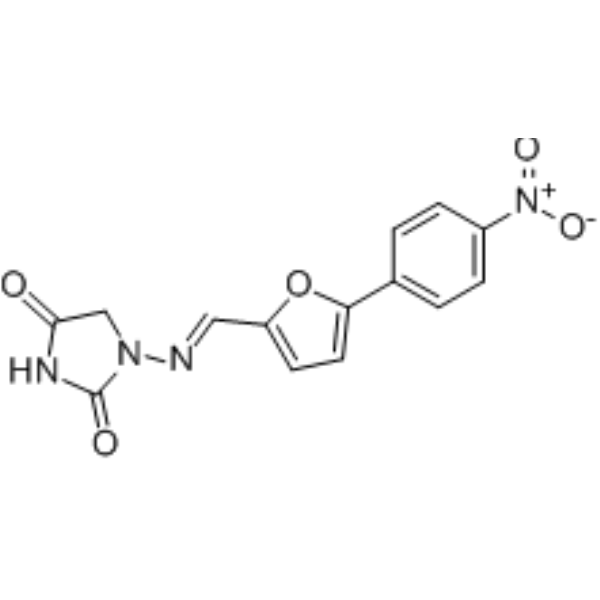
    Dantrolene
    Maximum Cited Publications
    15 Publications Verification

    F 368

    Calcium Channel Reactive Oxygen Species (ROS) Apoptosis Cardiovascular Disease Neurological Disease Inflammation/Immunology
    Dantrolene is an orally active, non-competitive glutathione reductase inhibitor with a Ki of 111.6 μM and an IC50 of 52.3 μM. Dantrolene is also a calcium channel protein inhibitor. Dantrolene inhibits the release of Ca 2+ from RyR1 and RyR3, which can be beneficial in a variety of pathologies caused by disruptions in calcium homeostasis (e.g., stroke, ischemia/reperfusion injury, and neurodegenerative diseases). Dantrolene offers relief of muscle spasms, malignant hyperthermia, and antitoxic, antipyretic, and anti-inflammatory properties .
    Dantrolene
  • HY-B1371
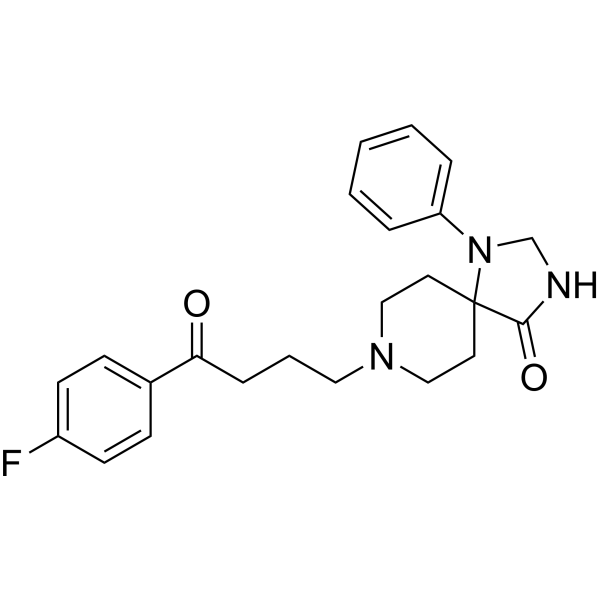
    Spiperone
    2 Publications Verification

    Spiroperidol

    Dopamine Receptor 5-HT Receptor Wnt Neurological Disease
    Spiperone (Spiroperidol) is a potent dopamine D2, serotonin 5-HT1A, and serotonin 5-HT2A antagonist. Spiperone is also a labelled ligand for neuroleptic receptors. Spiperone enhances intracellular calcium level and inhibits the Wnt signaling pathway. Spiperone has the potential for the research of neurology diseases .
    Spiperone
  • HY-12542A
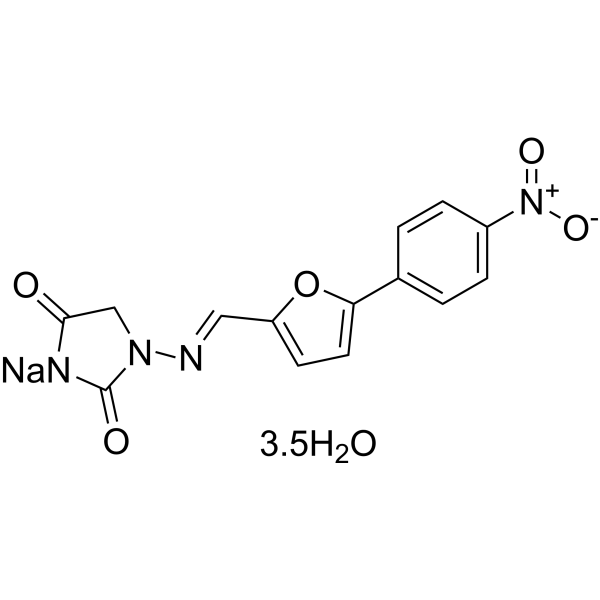
    Dantrolene sodium hemiheptahydrate
    Maximum Cited Publications
    15 Publications Verification

    Dantrolene sodium hydrate

    Calcium Channel Reactive Oxygen Species (ROS) Apoptosis Cardiovascular Disease Neurological Disease Metabolic Disease
    Dantrolene sodium hemiheptahydrate is an orally active, non-competitive glutathione reductase inhibitor with a Ki of 111.6 μM and an IC50 of 52.3 μM. Dantrolene sodium hemiheptahydrate is also a calcium channel protein inhibitor. Dantrolene sodium hemiheptahydrate inhibits the release of Ca 2+ from RyR1 and RyR3, which can be beneficial in a variety of pathologies caused by disruptions in calcium homeostasis (e.g., stroke, ischemia/reperfusion injury, and neurodegenerative diseases). Dantrolene sodium hemiheptahydrate offers relief of muscle spasms, malignant hyperthermia, and antitoxic, antipyretic, and anti-inflammatory properties .
    Dantrolene sodium hemiheptahydrate
  • HY-14264

    5-HT Receptor Neurological Disease
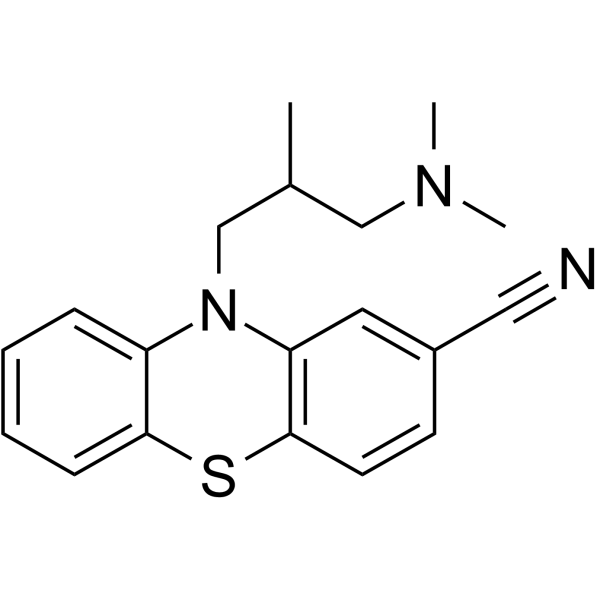
    Cyamemazine is a neuroleptic agent that contains the phenothiazine chromophore. Cyamemazine is often used as an anxiolytic. Cyamemazine is a potent 5-HT3 (Ki of 12 nM), 5-HT2A (Ki = 1.5 nM) and 5-HT2C (Ki of 75 nM) receptors antagonist with antipsychotic activity .
    Cyamemazine
  • HY-B1904

    Dopamine Receptor Neurological Disease
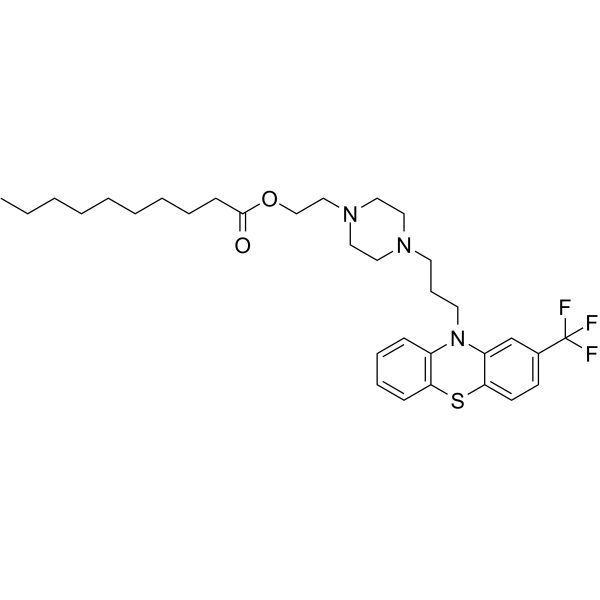
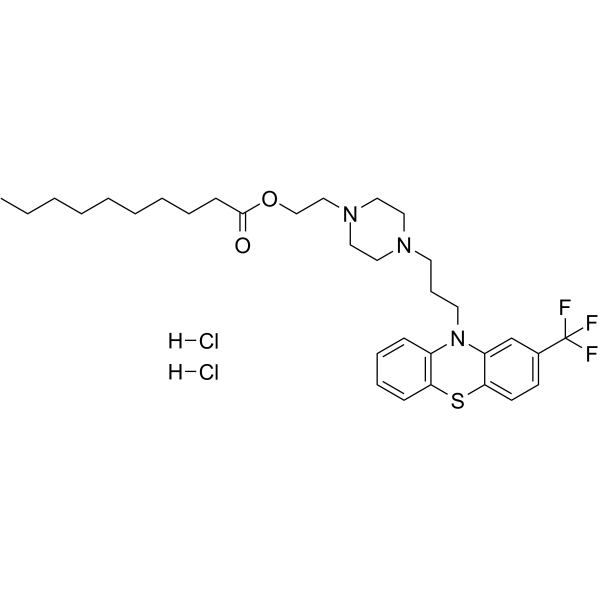
    Fluphenazine decanoate is a CNS-penetrant dopamine D2 receptor inhibitor, is a long-acting phenothiazine neuroleptic. Fluphenazine can be used for schizophrenia research .
    Fluphenazine decanoate
  • HY-B1196

    Dopamine Receptor Neurological Disease
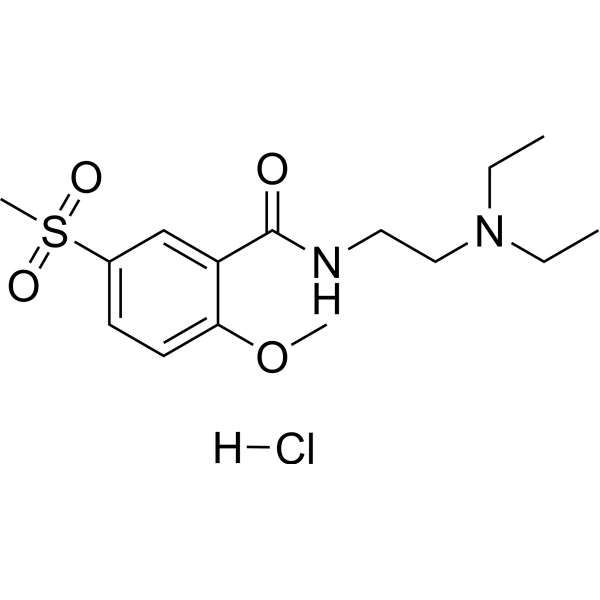
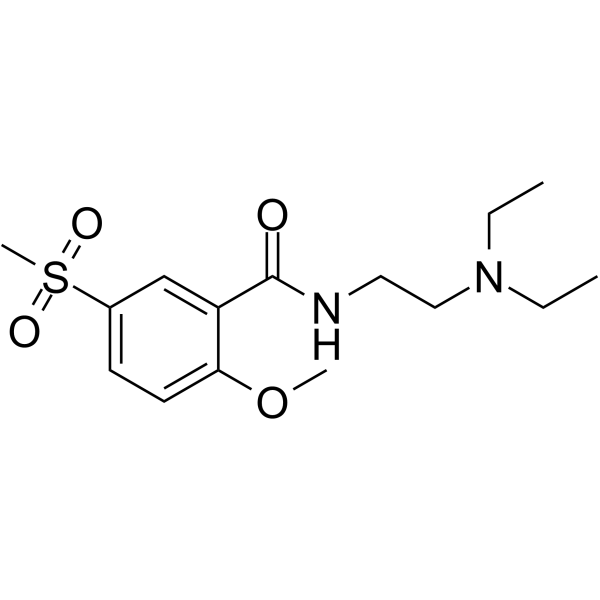
    Tiapride hydrochloride is a selective and orally active D2 and D3 dopamine receptors antagonist with IC50 values of 110-320 nM and 180 nM, respectively. Tiapride hydrochloride shows anti-dyskinetic activity and anxiolytic activity. Tiapride hydrochloride is a neuroleptic agent .
    Tiapride hydrochloride
  • HY-105710

    Cholinesterase (ChE) Neurological Disease
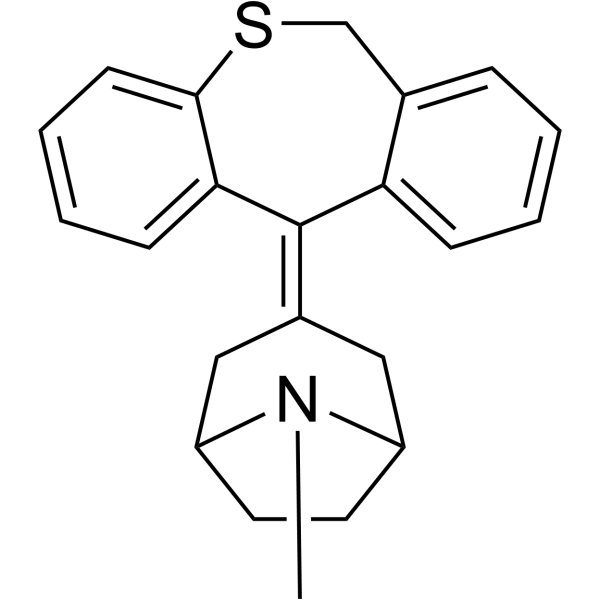
    Tropatepine is an orally active anticholinergic agent and can be used in the research of neurological diseases such as Parkinson's disease and extrapyramidal syndromes .
    Tropatepine
  • HY-121276
    Benperidol
    1 Publications Verification

    Dopamine Receptor Neurological Disease
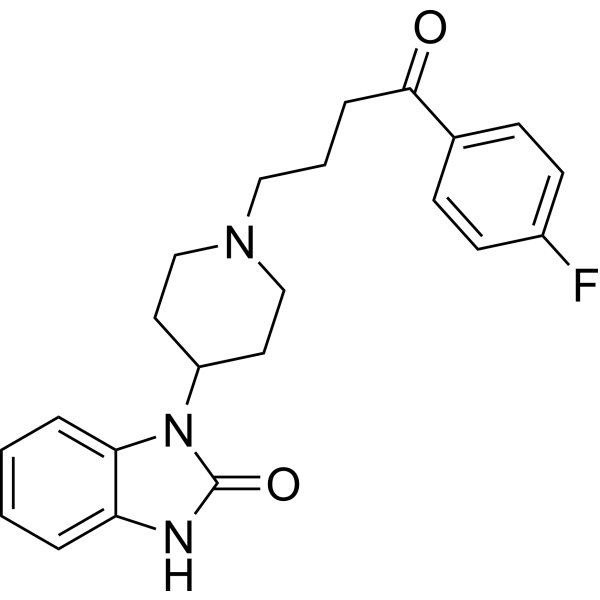
    Benperidol is a relatively old antipsychotic agent. Benperidol is a butyrophenone antipsychotic, with the highest neuroleptic potency in terms of D2 receptor blockade .
    Benperidol
  • HY-103415

    YM-09151-2; Emonapride

    Dopamine Receptor 5-HT Receptor Neurological Disease
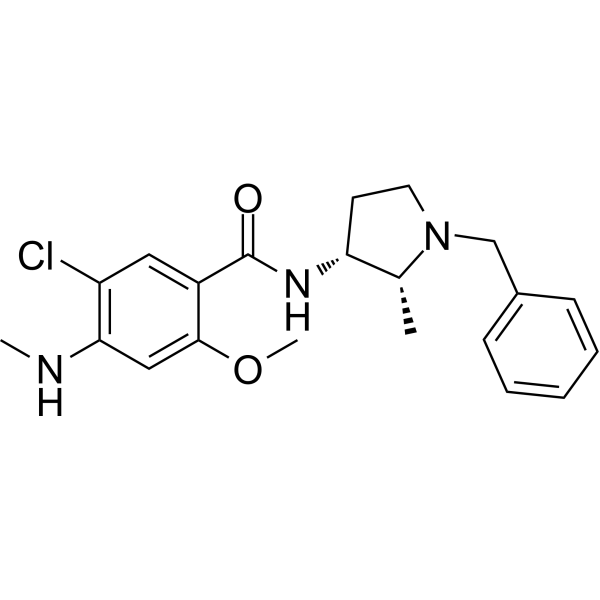
    Nemonapride is a highly potent dopamine D2 receptor antagonist with a Ki of 0.06 nM. Nemonapride also activates 5-HT1A receptor with an IC50 of 34 nM. Nemonapride is an antipsychotic that readily passes through the blood brain barrier and exhibits potent neuroleptic effects in animals .
    Nemonapride
  • HY-19489

    (±)-Methotrimeprazine; dl-Methotrimeprazine

    Drug Isomer Neurological Disease
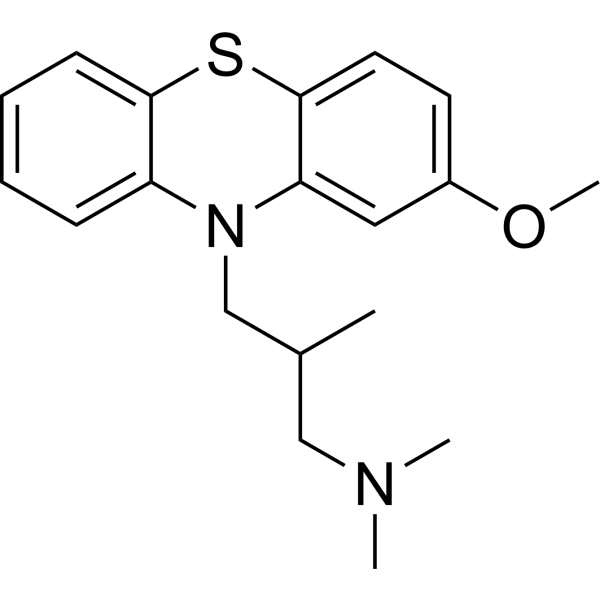
    (±)-Levomepromazine ((±)-Methotrimeprazine) is the racemate of Levomepromazine (HY-B1693) .
    (±)-Levomepromazine
  • HY-B1482A

    TPS-23

    Potassium Channel Neurological Disease
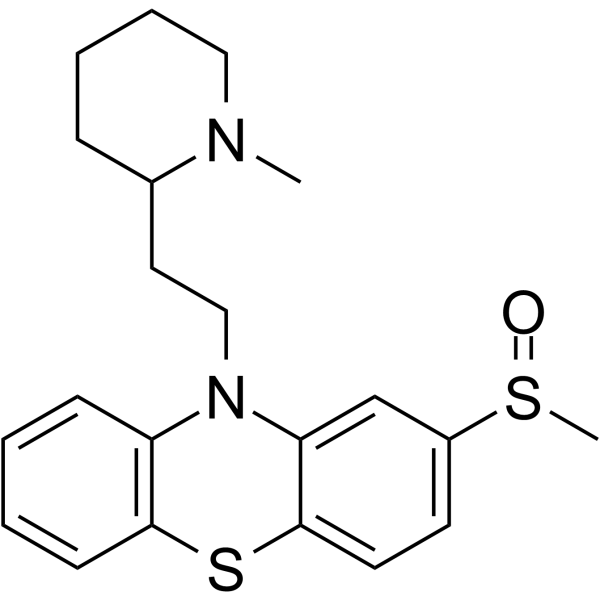
    Mesoridazine (TPS-23) , a metabolite of Thioridazine (HY-B0965A), acts as an orally active phenothiazine antipsychotic agent. Mesoridazine is a potent and rapid open-channel blocker of human ether-a-go-go related gene (hERG) channels and blocks hERG currents with an IC50 of 550 nM (at 0 mV) in human embryonic kidney 293 cells .Mesoridazine can be used for the research of schizophrenia, as well as certain other psychiatric disorders .
    Mesoridazine
  • HY-14325
    L-745870
    3 Publications Verification

    Dopamine Receptor Neurological Disease
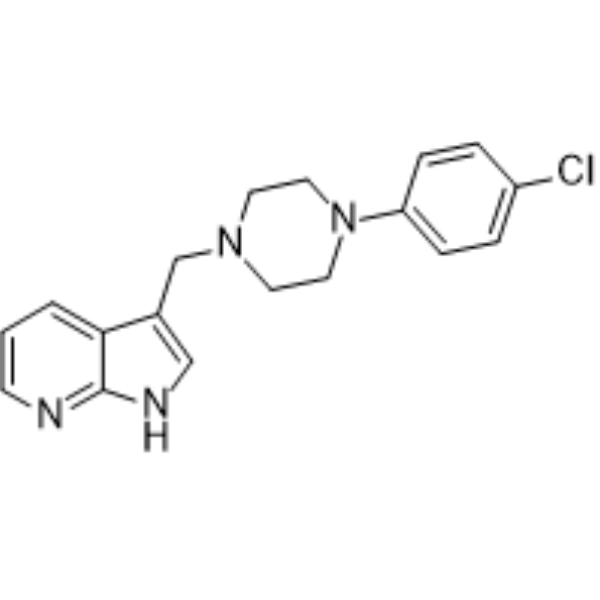
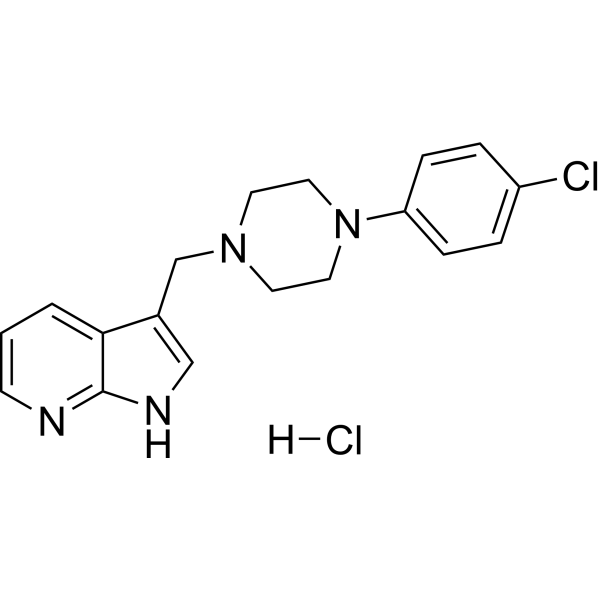
    L-745870 is a potent, selective, brain-penetrant and orally active dopamine D4 receptor antagonist with a Ki of 0.43 nM. L-745870 shows weaker affinity for D2 (Ki of 960 nM) and D3 (Ki of 2300 nM) receptors, and exhibits moderate affinity for 5-HT2 receptors, sigma sites and α-adrenoceptors .
    L-745870
  • HY-14325B
    L-745870 hydrochloride
    3 Publications Verification

    Dopamine Receptor Neurological Disease
    L-745870 hydrochloride is a potent, selective, brain-penetrant and orally active dopamine D4 receptor antagonist with a Ki of 0.43 nM. L-745870 hydrochloride shows weaker affinity for D2 (Ki of 960 nM) and D3 (Ki of 2300 nM) receptors, and exhibits moderate affinity for 5-HT2 receptors, sigma sites and α-adrenoceptors .
    L-745870 hydrochloride
  • HY-136280

    EMD 57445

    Sigma Receptor Neurological Disease
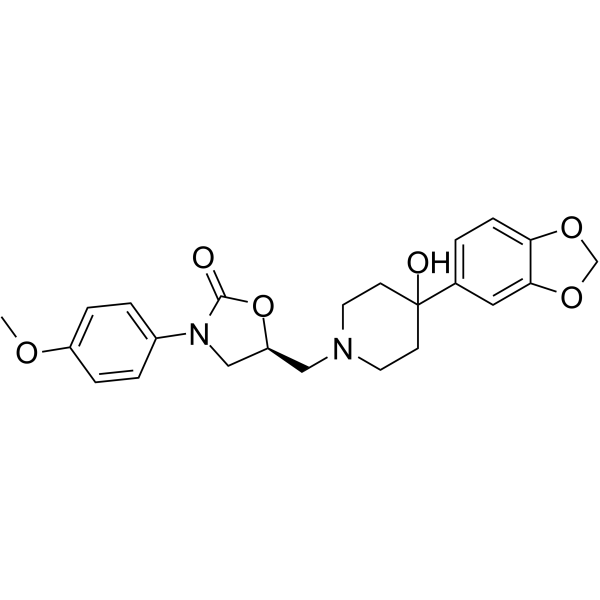
    Panamesine (EMD 57445) is a sigma receptor ligand, which has a high affinity (IC50 6 nM) and selectivity for sigma binding sites. Panamesine is a potential atypical neuroleptic agent .
    Panamesine
  • HY-106587A

    Clorotepine maleate salt

    Drug Derivative 5-HT Receptor Neurological Disease
    Octoclothepine (Clorotepine) maleate salt, an analog of Clozapine (HY-14539), is a neuroleptic and antipsychotic agent. Octoclothepine maleate salt exists in enantiomeric forms, where the (+)-form acts as an atypical antipsychotic, while the (-)-functions as a typical antipsychotic. (+)-Octoclothepine maleate salt exhibits extremely high binding affinity for 5-HT₆ and 5-HT₇ receptors, with Ki values of 0.41 and 0.38 nM; the Ki values of (-)-Octoclothepine maleate salt are 17.7 and 1.3 nM, respectively. Octoclothepine maleate salt can be used in research related to schizophrenia .
    Octoclothepin maleate salt
  • HY-116780A

    Cytochrome P450 Neurological Disease
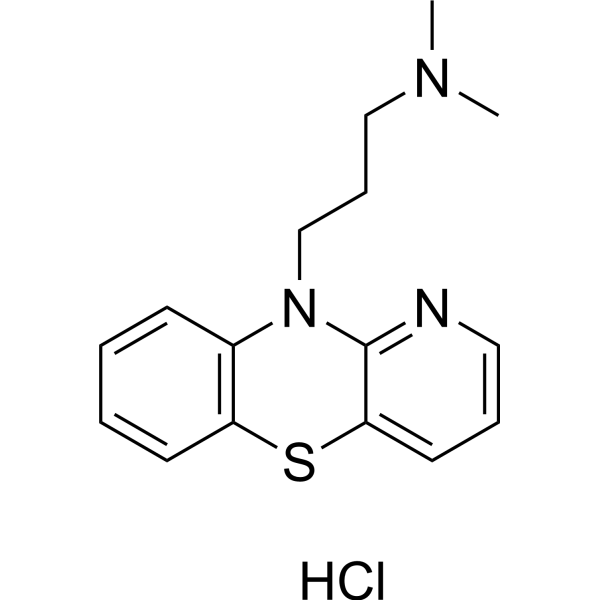
    Prothipendyl hydrochloride is a tricyclic azaphenothiazine neuroleptic agent. Prothipendyl hydrochloride is a substrate of the CYP isozymes CYP1A2, CYP2D6, CYP2C19 and CYP3A4. Prothipendyl hydrochloride has sedating and psychomotorically damping effects. Prothipendyl hydrochloride can be used for psychomotoric agitation, sleep disorder and anxiety research .
    Prothipendyl hydrochloride
  • HY-W103105

    GABA Receptor Neurological Disease
    R 29676 is a neuroleptic agent and inhibits sodium-dependent GABA binding (GABA uptake) .
    R 29676
  • HY-A0163D

    (E)-Clopenthixol

    Antibiotic Bacterial Parasite Infection
    trans-Clopenthixol ((E)-Clopenthixol) is an antibiotic, without neuroleptic effect. trans-Clopenthixol can be used to inhibit Pseudomonas aeruginosa and Plasmodium falciparum in vitro .
    trans-Clopenthixol
  • HY-W436270

    Dopamine Receptor Neurological Disease Inflammation/Immunology
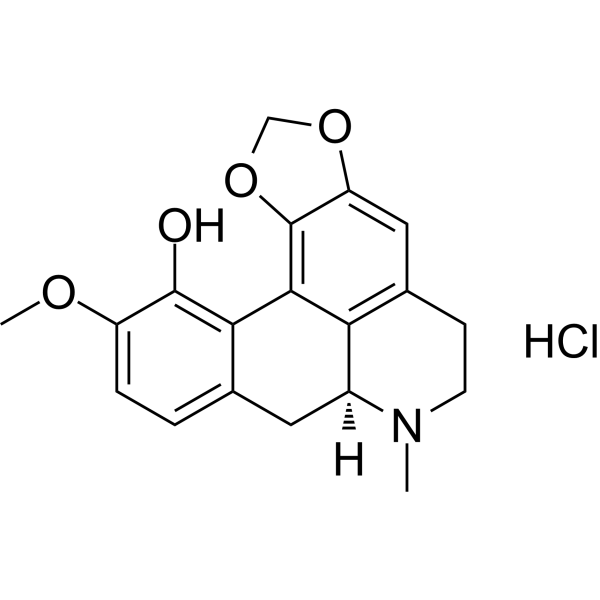
    Bulbocapnine hydrochloride, an aporphine alkaloid, is a dopamine receptor inhibitor. Bulbocapnine hydrochloride inhibits dopamine synthesis. Bulbocapnine hydrochloride also has neuroleptic-like, anticonvulsant and antinociceptive effects .
    Bulbocapnine hydrochloride
  • HY-B1196A

    Dopamine Receptor Neurological Disease
    Tiapride is a selective and orally active D2 and D3 dopamine receptors antagonist with IC50 values of 110-320 nM and 180 nM, respectively. Tiapride shows anti-dyskinetic activity and anxiolytic activity. Tiapride is a neuroleptic agent .
    Tiapride
  • HY-B1904A

    Dopamine Receptor Neurological Disease
    Fluphenazine decanoate dihydrochloride is a CNS-penetrant dopamine D2 receptor inhibitor, is a long-acting phenothiazine neuroleptic. Fluphenazine can be used for schizophrenia research .
    Fluphenazine decanoate dihydrochloride
  • HY-136281

    Sigma Receptor Neurological Disease
    DuP 734 is a sigma receptor antagonist. DuP 734 is a selective and potent sigma and 5-HT2 receptor ligand with weak affinity for D2 receptors. DuP 734 may have antipsychotic activity without the liability of motor side effects typical of neuroleptics .
    DuP 734
  • HY-U00006

    Biochemical Assay Reagents Neurological Disease
    Duoperone is a neuroleptic agent and also a antiemetic agent in animal models.
    Duoperone
  • HY-B1755

    Propyl 4-aminobenzoate

    Biochemical Assay Reagents Neurological Disease
    Risocaine, also known as Propyl 4-aminobenzoate, with potential neuroleptic properties .
    Risocaine
  • HY-A0163C

    (E)-Clopenthixol dihydrochloride

    Antibiotic Bacterial Parasite Infection
    trans-Clopenthixol ((E)-Clopenthixol) dihydrochloride is an antibiotic agent, without neuroleptic effect. trans-Clopenthixol dihydrochloride can be used to inhibit Pseudomonas aeruginosa and Plasmodium falciparum in vitro .
    trans-Clopenthixol dihydrochloride
  • HY-B1693A

    Methotrimeprazine hydrochloride

    5-HT Receptor Dopamine Receptor Histamine Receptor Autophagy Enterovirus Calcium Channel Infection Neurological Disease Inflammation/Immunology
    Levomepromazine (Methotrimeprazine) hydrochloride is an orally active antipsychotic compound and Ca 2+ release inducer. Levomepromazine inhibits SERCA pump and induces an increase in cytoplasmic Ca 2+ levels. Levomepromazine hydrochloride has antagonistic effects on a variety of neurotransmitter receptors, including dopamine, cholinergic, serotonin, and histamine receptors. Levomepromazine hydrochloride can induce adaptive ER stress and autophagy. In addition, Levomepromazine hydrochloride has antiviral, anti-inflammatory, neuroprotective and analgesic, sedative and anti-injurious activities. Levomepromazine hydrochloride can be used in the study psychiatric disorders and relieving nausea and vomiting .
    Levomepromazine hydrochloride
  • HY-B1693R

    Methotrimeprazine (Standard)

    Reference Standards 5-HT Receptor Dopamine Receptor Autophagy Histamine Receptor Enterovirus Calcium Channel Infection Neurological Disease Inflammation/Immunology
    Levomepromazine (Standard) is the analytical standard of Levomepromazine. This product is intended for research and analytical applications. Levomepromazine (Methotrimeprazine) is an orally active antipsychotic compound and Ca 2+ release inducer. Levomepromazine inhibits SERCA pump and induces an increase in cytoplasmic Ca 2+ levels. Levomepromazine has antagonistic effects on a variety of neurotransmitter receptors, including dopamine, cholinergic, serotonin, and histamine receptors. Levomepromazine can induce adaptive ER stress and autophagy. In addition, Levomepromazine has antiviral, anti-inflammatory, neuroprotective and analgesic, sedative and anti-injurious activities. Levomepromazine can be used in the study psychiatric disorders and relieving nausea and vomiting .
    Levomepromazine (Standard)
  • HY-14325R

    Dopamine Receptor Neurological Disease
    L-745870 (Standard) is the analytical standard of L-745870. This product is intended for research and analytical applications. L-745870 is a potent, selective, brain-penetrant and orally active dopamine D4 receptor antagonist with a Ki of 0.43 nM. L-745870 shows weaker affinity for D2 (Ki of 960 nM) and D3 (Ki of 2300 nM) receptors, and exhibits moderate affinity for 5-HT2 receptors, sigma sites and α-adrenoceptors .
    L-745870 (Standard)
  • HY-B1482

    TPS-23 benzenesulfonate

    Potassium Channel Neurological Disease
    Mesoridazine (TPS-23) benzenesulfonate, a metabolite of Thioridazine (HY-B0965A), acts as an orally active phenothiazine antipsychotic agent. Mesoridazine benzenesulfonate is a potent and rapid open-channel blocker of human ether-a-go-go related gene (hERG) channels and blocks hERG currents with an IC50 of 550 nM (at 0 mV) in human embryonic kidney 293 cells .Mesoridazine benzenesulfonate can be used for the research of schizophrenia, as well as certain other psychiatric disorders .
    Mesoridazine benzenesulfonate
  • HY-122979

    Dopamine Receptor Neurological Disease
    (+)-Butaclamol hydrochloride is a neuroleptic agent with dopamine receptor-blocking activity. (+)-Butaclamol hydrochloride is (+)- enantiomer of butaclamol .
    (+)-Butaclamol hydrochloride
  • HY-101220

    Dopamine Receptor Neurological Disease
    RMI-61140 is an orally active neuroleptics. RMI-61140 decreases spontaneous motility and muscle tone in mice. RMI-61140 increases barbit urate-induced sleep and causes eyelid ptosis. RMI-61140 can be used for schizophrenia research .
    RMI-61140
  • HY-14264R

    5-HT Receptor Neurological Disease
    Cyamemazine (Standard) is the analytical standard of Cyamemazine. This product is intended for research and analytical applications. Cyamemazine is a neuroleptic agent that contains the phenothiazine chromophore. Cyamemazine is often used as an anxiolytic. Cyamemazine is a potent 5-HT3 (Ki of 12 nM), 5-HT2A (Ki = 1.5 nM) and 5-HT2C (Ki of 75 nM) receptors antagonist with antipsychotic activity .
    Cyamemazine (Standard)
  • HY-116780

    Cytochrome P450 Neurological Disease
    Prothipendyl is a tricyclic azaphenothiazine neuroleptic agent. Prothipendyl is a substrate of the CYP isozymes CYP1A2, CYP2D6, CYP2C19 and CYP3A4. Prothipendyl has sedating and psychomotorically damping effects. Prothipendyl can be used for psychomotoric agitation, sleep disorder and anxiety research .
    Prothipendyl
  • HY-B1904R

    Reference Standards Dopamine Receptor Neurological Disease
    Fluphenazine decanoate (Standard) is the analytical standard of Fluphenazine decanoate. This product is intended for research and analytical applications. Fluphenazine decanoate is a dopamine D2 receptor inhibitor, is a long-acting phenothiazine neuroleptic. Fluphenazine can be used for schizophrenia research .
    Fluphenazine decanoate (Standard)
  • HY-105545C

    (+)-Benzetimide hydrochloride; (S)-(+)-Dexetimide hydrochloride; Dexbenzetimide hydrochloride

    mAChR Neurological Disease
    Dexetimide hydrochloride ((+)-Benzetimide hydrochloride) is an antimuscarinic drug with the activity of suppressing neuroleptic-induced Parkinson's syndrome. Dexetimide hydrochloride is used to improve the symptoms of movement disorders caused by the use of neuroleptics. Dexetimide hydrochloride, as the (-)-enantiomer of (-)-Benzetimide, shows the ability to selectively inhibit cholinergic receptors .
    Dexetimide hydrochloride
  • HY-12542R

    F 368 (Standard)

    Reference Standards Calcium Channel Autophagy Neurological Disease Inflammation/Immunology
    Dantrolene (Standard) is the analytical standard of Dantrolene. This product is intended for research and analytical applications. Dantrolene is an orally active, non-competitive glutathione reductase inhibitor with a Ki of 111.6 μM and an IC50 of 52.3 μM. Dantrolene is a ryanodine receptor (RyR) antagonist and Ca2+ signaling stabilizer. Dantrolene is a direct-acting skeletal muscle relaxant. Dantrolene can be used for the research of muscle spasticity, malignant hyperthermia, Huntington's disease and other neuroleptic malignant syndrome .
    Dantrolene (Standard)
  • HY-12542AR

    Dantrolene sodium hydrate (Standard)

    Reference Standards Calcium Channel Autophagy Others
    Dantrolene (sodium hemiheptahydrate) (Standard) is the analytical standard of Dantrolene (sodium hemiheptahydrate). This product is intended for research and analytical applications. Dantrolene sodium hemiheptahydrate is an orally active, non-competitive glutathione reductase inhibitor with a Ki of 111.6 μM and an IC50 of 52.3 μM. Dantrolene sodium hemiheptahydrate is a ryanodine receptor (RyR) antagonist and Ca2+ signaling stabilizer. Dantrolene sodium hemiheptahydrate is a direct-acting skeletal muscle relaxant. Dantrolene sodium hemiheptahydrate can be used for the research of muscle spasticity, malignant hyperthermia, Huntington's disease and other neuroleptic malignant syndrome .
    Dantrolene sodium hemiheptahydrate (Standard)
  • HY-160997

    GRI 1665

    Dopamine Receptor Neurological Disease
    Prosulpride (GRI 1665), a neuroleptics, can block selectively dopaminergic receptor .
    Prosulpride
  • HY-W103105R

    Reference Standards GABA Receptor Neurological Disease
    R 29676 is a neuroleptic agent and inhibits sodium-dependent GABA binding (GABA uptake) .
    R 29676 (Standard)
  • HY-14543S

    Isotope-Labeled Compounds 5-HT Receptor Dopamine Receptor Adrenergic Receptor Autophagy Neurological Disease Cancer
    Sertindole-d4 is the deuterium labeled Sertindole. Sertindole, a neuroleptic, is one of the newer antipsychotic medications available .
    Sertindole-d4
  • HY-119595

    R3201

    Others Neurological Disease
    Haloperidide (R3201) is a neuroleptic compound. Haloperidide is a potent and selective anti-emetic agent. Haloperidide antagonizes Apomorphine (HY-12723)-induced emesis in dogs .
    Haloperidide
  • HY-121276R

    Dopamine Receptor Reference Standards Neurological Disease
    Benperidol (Standard) is the analytical standard of Benperidol. This product is intended for research and analytical applications. Benperidol is a relatively old antipsychotic agent. Benperidol is a butyrophenone antipsychotic, with the highest neuroleptic potency in terms of D2 receptor blockade .
    Benperidol (Standard)
  • HY-101349A

    Dopamine Receptor Apoptosis Autophagy PDGFR ERK mTOR Neurological Disease Cancer
    L 741742 hydrochloride is a highly selective and brain-penetrant D4 dopamine receptor antagonist, with Ki values of 3.5 nM, 770 nM and >1700 nM for human D4, D3 and D2 receptors, respectively. L 741742 hydrochloride suppresses PDGFRβ, ERK1/2, and mTOR signaling pathways, and impairs autophagic flux while disrupting lysosomal function.L 741742 hydrochloride induces G0/G1 cell-cycle arrest and apoptosis, promotes neuronal differentiation of normal human neural stem cells, selectively inhibits growth and clonogenic potential of glioblastoma neural stem cells and primary glioblastoma tumor cells, exerts synergistic effects with Temozolomide (TMZ) (HY-17364) against glioblastoma neural stem cells in vitro, and inhibits glioblastoma neural stem cell xenograft growth in immunocompromised mice. L 741742 hydrochloride can be used for the research of schizophrenia and glioblastoma .
    L 741742 hydrochloride
  • HY-A0163CR

    (E)-Clopenthixol dihydrochloride (Standard)

    Antibiotic Bacterial Parasite Reference Standards Infection
    trans-Clopenthixol (dihydrochloride) (Standard) is the analytical standard of trans-Clopenthixol (dihydrochloride). This product is intended for research and analytical applications. trans-Clopenthixol ((E)-Clopenthixol) dihydrochloride is an antibiotic agent, without neuroleptic effect. trans-Clopenthixol can be used to inhibit Pseudomonas aeruginosa and Plasmodium falciparum in vitro[1][2].
    trans-Clopenthixol dihydrochloride (Standard)
  • HY-100930

    Sigma Receptor Neurological Disease
    L-693403 maleate is a high affinity and selective σ ligand. L-693403 maleate has the potential for physiological disease research .
    L-693403 maleate
  • HY-B1196R

    Reference Standards Dopamine Receptor Neurological Disease
    Tiapride (hydrochloride) (Standard) is the analytical standard of Tiapride (hydrochloride). This product is intended for research and analytical applications. Tiapride hydrochloride is a selective and orally active D2 and D3 dopamine receptors antagonist with IC50 values of 110-320 nM and 180 nM, respectively. Tiapride hydrochloride shows anti-dyskinetic activity and anxiolytic activity. Tiapride hydrochloride is a neuroleptic agent .
    Tiapride hydrochloride (Standard)
  • HY-115895

    CI-686 free base

    Dopamine Receptor Adrenergic Receptor Neurological Disease
    Trebenzomine (CI-686 free base) is a centrally acting psychotropic compound. Trebenzomine has both neuroleptic and stimulant activity. Trebenzomine potentiates Methamphetamine-induced self-stimulation. Trebenzomine reduces septal hyperirritability, suppression of conditioned avoidance behavior, blocks Apomorphine (HY-12723)-induced emesis in dogs .
    Trebenzomine
  • HY-19489R

    (±)-Methotrimeprazine (Standard); dl-Methotrimeprazine (Standard)

    Reference Standards Drug Isomer Neurological Disease
    (±)-Levomepromazine ((±)-Methotrimeprazine) Standard is the analytical standard of (±)-Levomepromazine (HY-19489). This product is intended for research and analytical applications. (±)-Levomepromazine ((±)-Methotrimeprazine) is the racemate of Levomepromazine (HY-B1693) .
    (±)-Levomepromazine (Standard)
  • HY-14264S

    Isotope-Labeled Compounds 5-HT Receptor Neurological Disease
    Cyamemazine-d6 is the deuterium labeled Cyamemazine. Cyamemazine is a neuroleptic agent that contains the phenothiazine chromophore. Cyamemazine is often used as an anxiolytic. Cyamemazine is a potent 5-HT3 (Ki of 12 nM), 5-HT2A (Ki = 1.5 nM) and 5-HT2C (Ki of 75 nM) receptors antagonist with antipsychotic activity .
    Cyamemazine-d6
  • HY-14325BR

    Dopamine Receptor Neurological Disease
    L-745870 (hydrochloride) (Standard) is the analytical standard of L-745870 (hydrochloride). This product is intended for research and analytical applications. L-745870 hydrochloride is a potent, selective, brain-penetrant and orally active dopamine D4 receptor antagonist with a Ki of 0.43 nM. L-745870 hydrochloride shows weaker affinity for D2 (Ki of 960 nM) and D3 (Ki of 2300 nM) receptors, and exhibits moderate affinity for 5-HT2 receptors, sigma sites and α-adrenoceptors .
    L-745870 hydrochloride (Standard)

Inquiry Online

Your information is safe with us. * Required Fields.

Salutation


Country or Region *

Applicant Name *


Organization Name *

Department *


Email Address *


Product Name *

Cat. No.


Requested quantity *

Phone Number *


Remarks

Inquiry Online

Inquiry Information

Product Name:
Cat. No.:
Quantity:
MCE Japan Authorized Agent:

