1. Search Result
Search Result
Results for "

PA-1

" in MedChemExpress (MCE) Product Catalog:

25

Inhibitors & Agonists

2

Biochemical Assay Reagents

2

Peptides

1

Inhibitory Antibodies

4

Natural
Products

3

Recombinant Proteins

3

Isotope-Labeled Compounds

3

Oligonucleotides

Cat. No. Product Name Target Research Areas Chemical Structure
  • HY-P10352A

    Bacterial Infection
    Pediocin PA-1 TFA is a class IIa bacteriocin that specifically binds to membrane proteins of susceptible Gram-positive bacteria (such as Listeria monocytogenes) to form voltage-independent hydrophilic pores, leading to dissipation of proton motive force, ATP depletion and cell death. Pediocin PA-1 TFA shows no significant activity against intact Gram-negative bacteria, strains carrying immunity genes and obligate anaerobic commensal gut microbiota, and its bactericidal function depends on the integrity of disulfide bonds, with activity lost upon reduction. Pediocin PA-1 TFA can be used not only as a food biopreservative but also for research on listeriosis [1] .
    Pediocin PA 1 TFA
  • HY-P10352

    Bacterial Infection
    Pediocin PA 1 is a class IIa bacteriocin that specifically binds to membrane proteins of susceptible Gram-positive bacteria (such as Listeria monocytogenes) to form voltage-independent hydrophilic pores, leading to dissipation of proton motive force, ATP depletion and cell death. Pediocin PA 1 shows no significant activity against intact Gram-negative bacteria, strains carrying immunity genes and obligate anaerobic commensal gut microbiota, and its bactericidal function depends on the integrity of disulfide bonds, with activity lost upon reduction. Pediocin PA 1 can be used not only as a food biopreservative but also for research on listeriosis [1] .
    Pediocin PA 1
  • HY-134174A

    16:0-18:1 PA

    Biochemical Assay Reagents
    1-Palmitoyl-2-oleoyl-sn-glycero-3-phosphate sodium (16:0-18:1 PA) is a phospholipid with activities in regulating biological membrane fluidity and participating in cell signal transduction. 1-Palmitoyl-2-oleoyl-sn-glycero-3-phosphate sodium can be used to study the effects on the activity of chloroplast envelope monogalactosyldiacylglycerol (MGDG) synthase. 1-Palmitoyl-2-oleoyl-sn-glycero-3-phosphate sodium plays an important role in cell membrane integrity and function.
    1-Palmitoyl-2-oleoyl-sn-glycero-3-phosphate sodium
  • HY-W725309

    1-Stearoyl-2-oleoyl-sn-glycero-3-phosphate sodium

    Biochemical Assay Reagents Others
    18:0-18:1 PA (1-Stearoyl-2-oleoyl-sn-glycero-3-phosphate) sodium is an anionic lipid [1].
    18:0-18:1 PA sodium
  • HY-128850S1

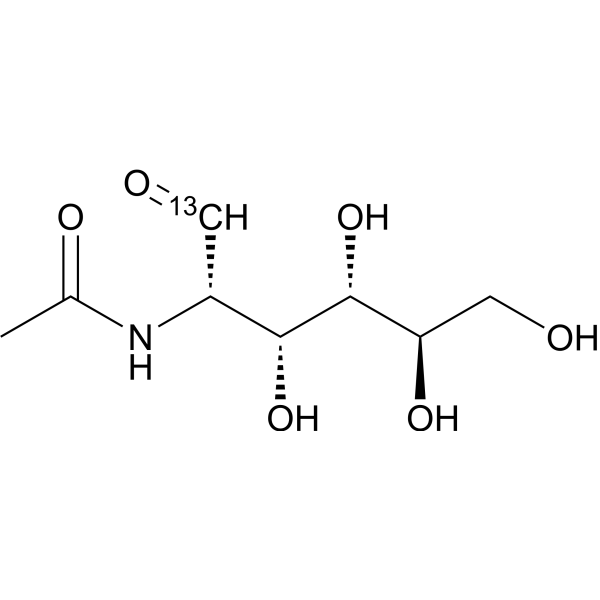
    N-Acetylmannosamine-13C; ManNAc-13C

    Bacterial Neurological Disease
    N-Acetyl-D-mannosamine- 13C is the 13C labeled N-Acetyl-D-mannosamine. N-Acetyl-D-mannosamine (ManNAc) is an essential precursor of N-acetylneuraminic acid (NeuAc), the specific monomer of bacterial capsular polysialic acid (PA)
    N-Acetyl-D-mannosamine-13C
  • HY-125667

    Photoamiloride-1

    Sodium Channel Metabolic Disease
    PA1 is a photoswitchable epithelial sodium channel (ENaC) blocker. PA1 can switch to cis-PA1 at 400nm and trans-PA1 at 500nm. PA1 inhibits δ/αENaC, αβγENaC, and δβγENaC, with IC50 values of 4.3nM, 90 nM, and 390 nM, respectively [1].
    PA1
  • HY-145486

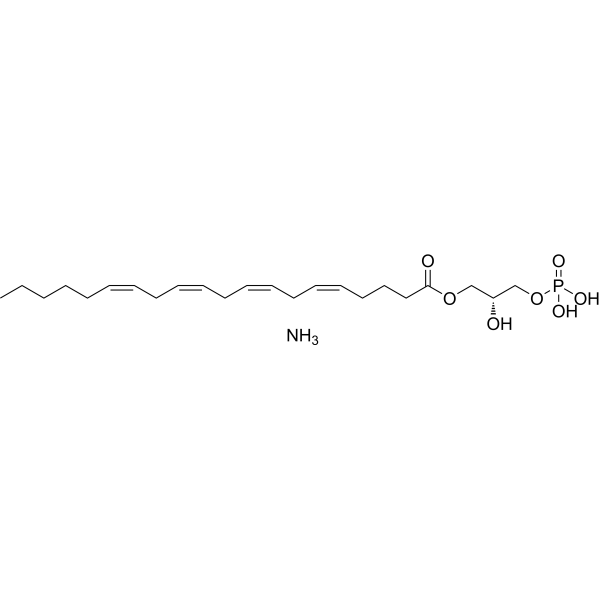
    20:4 Lyso PA

    Liposome Neurological Disease
    1-Arachidonoyl-sn-glycerol 3-phosphate ammonium (20:4 Lyso PA) is a phospholipid and an LPA derived from arachidonic acid. The concentration of 1-Arachidonoyl-sn-glycerol 3-phosphate ammonium in plasma is significantly correlated with the age of onset of cocaine use and the duration of abstinence. 1-Arachidonoyl-sn-glycerol 3-phosphate ammonium can be used in the research of biomarkers for cocaine use disorder (CUD) [1].
    1-Arachidonoyl-sn-glycerol 3-phosphate ammonium
  • HY-N9130

    Others Others
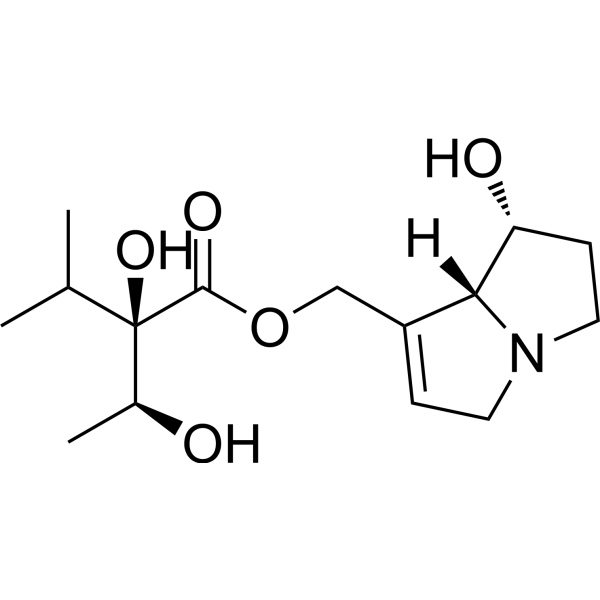
    Indicine (Compound 3) is an alkaloid. Indicine can reduce pyrrolizine alkaloids (PA) .
    Indicine
  • HY-143407

    FAK Cancer
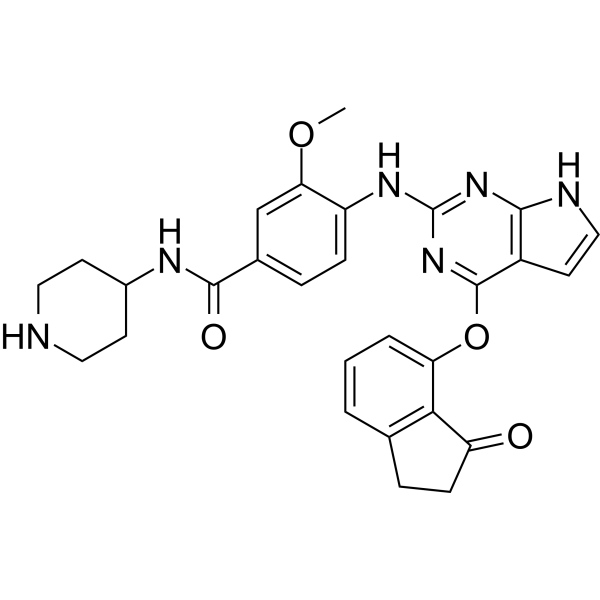
    FAK-IN-3 (Compound 36) is a potent inhibitor of focal adhesion kinase (FAK). FAK-IN-3 not only decreases migration and invasion of PA-1 cells, but also reduces expression of MMP-2 and MMP-9. FAK-IN-3 inhibits tumor growth and metastasis, and no obvious adverse effects. FAK-IN-3 has the potential for the research of ovarian cancer [1].
    FAK-IN-3
  • HY-P991311

    LPL Receptor Wnt Cancer
    GSK3178022 is a human IgG1 monoclonal antibody (mAb) targeting LRP6. GSK3178022 inhibits the expression of WNT target genes SP5 and AXIN2. GSK3178022 has antitumor activity in the RSPO fusion model of colorectal cancer. Recommended isotype control: Human IgG1 kappa, Isotype Control (HY-P99001) [1].
    GSK3178022
  • HY-177782

    Molecular Glues MicroRNA Cancer
    SB1349 is a molecular glucose degrading agent that targets the Lin28 protein. SB1349 can effectively induce proteasome dependent degradation of Lin28A and Lin28B. SB1349 can increase the level of mature let-7 miRNA, downregulate the oncogenes targeted by let-7, and effectively induce the differentiation of neuroblastoma cells. SB1349 can be used for cancer research [1].
    SB1349
  • HY-177497

    Histone Methyltransferase Apoptosis Cancer
    SKLB-03220 is a selective and orally active EZH2 covalent inhibitor with an IC50 of 1.72 nM for EZH2 MUT. SKLB-03220 exhibits weak activities against other tested histone methyltransferases (HMTs) and kinases. SKLB-03220 displays noteworthy potency against ovarian cancer cell lines and induces cell apoptosis. SKLB-03220 significantly inhibits tumor growth in PA-1 xenograft model. SKLB-03220 can be used for the study of ovarian cancer [1].
    SKLB-03220
  • HY-175459

    PROTACs FAK Inflammation/Immunology Cancer
    PROTAC FAK degrader 3 is a selective FAK PROTAC degrader (DC50 = 1.08 nM). PROTAC FAK degrader 3 induces FAK degradation dependent on the ubiquitin-proteasome system and its binding to FAK and CRBN. PROTAC FAK degrader 3 upregulates MHC-I gene transcription and tumor cell surface expression by inhibiting the non-catalytic activity of FAK, leading to increased antigen presentation and activation of cytotoxic CD8 T cells. PROTAC FAK degrader 3 enhances in vivo anti-tumor activity by promoting MHC-I expression and enhancing T cell activation. PROTAC FAK degrader 3 can be used in cancer research targeting FAK degradation in ovarian cancer, hepatocellular carcinoma, and other cancers. (Pink: FAK-IN-3:HY-143407, Blue: Thalidomide-4-OH:HY-103596, Blue + Black: FAK ligand-3: HY-W939883, Black: Linker) [1].
    PROTAC FAK degrader 3
  • HY-128850S5

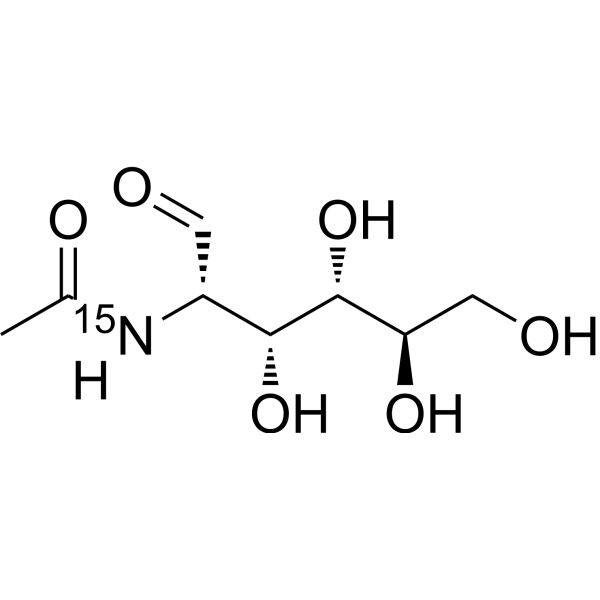
    N-Acetylmannosamine-15N; ManNAc-15N

    Isotope-Labeled Compounds Bacterial Neurological Disease
    N-Acetyl-D-mannosamine- 15N is the 15N labeled N-Acetyl-D-mannosamine. N-Acetyl-D-mannosamine (ManNAc) is an essential precursor of N-acetylneuraminic acid (NeuAc), the specific monomer of bacterial capsular polysialic acid (PA)
    N-Acetyl-D-mannosamine-15N
  • HY-W747907

    β-Pyracin

    Endogenous Metabolite Others
    4-Pyridoxolactone (β-Pyracin) is a critical substrate in vitamin B6 degradation pathway I, primarily involved in the vitamin B6 metabolic process mediated by soil microorganisms. 4-Pyridoxolactone serves as the specific substrate for 4-pyridoxolactonase, undergoing a zinc-dependent lactone-ring hydrolysis reaction catalyzed by this enzyme to generate 4-pyridoxic acid (4PA) .
    4-Pyridoxolactone
  • HY-N15109

    Others Cardiovascular Disease
    Phoenistatin is a substance that increases the expression of genes. 3 nM-1000 μM of Phoenistatin causes more than 3 times the gene expression of the PA1-1 promoter [1].
    Phoenistatin
  • HY-RS09978

    Small Interfering RNA (siRNA) Others

    PAGR1 Human Pre-designed siRNA Set A contains three designed siRNAs for PAGR1 gene (Human), as well as a negative control, a positive control, and a FAM-labeled negative control.

    PAGR1 Human Pre-designed siRNA Set A
    PAGR1 Human Pre-designed siRNA Set A
  • HY-169246

    CDK Apoptosis Cancer
    CDK2-IN-32 (Compound 5g) is a selective CDK2 inhibitor with an IC50 of 0.21 μM. CDK2-IN-32 shows cytotoxicity against Vero cells with an IC50 of 28.52 μM [1].
    CDK2-IN-32
  • HY-131574

    mAChR Neurological Disease
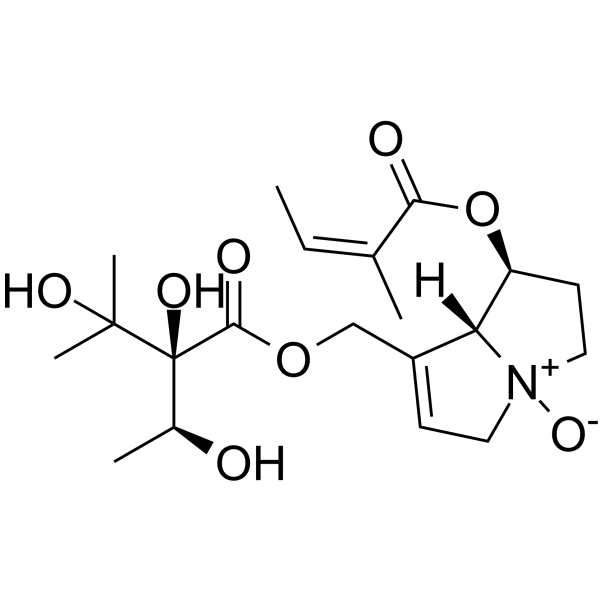
    Heliosupine N-oxide, Heliosupin metabolite, inhibits muscarinic acetylcholine receptor (mAChR) with the IC50 of 350 μM. Heliosupine N-oxide is a pyrrolizidine alkaloid (PA) .
    Heliosupine N-oxide
  • HY-176488

    Porcupine Wnt β-catenin c-Myc Cancer
    Y-99 is a PORCN inhibitor with an IC50 of 155.4 nM against the Wnt/β-catenin signaling pathway. Y-99 inhibits the expression of p-LRP6, β-catenin, and c-Myc [1].
    Y-99
  • HY-146327

    Bacterial Antibiotic Infection
    PqsR/LasR-IN-1 (compound 2a) is a potent PqsR and LasR systems inhibitor. PqsR/LasR-IN-1 has anti-virulence activity against Pseudomonas aeruginosa. PqsR/LasR-IN-1 can reduce production of biofilm, pyocyanin, and rhamnolipids in PA .
    PqsR/LasR-IN-1
  • HY-128850S2

    N-Acetylmannosamine-13C-1; ManNAc-13C-1

    Isotope-Labeled Compounds Bacterial Neurological Disease
    N-Acetyl-D-mannosamine- 13C-1 is the 13C labeled N-Acetyl-D-mannosamine. N-Acetyl-D-mannosamine (ManNAc) is an essential precursor of N-acetylneuraminic acid (NeuAc), the specific monomer of bacterial capsular polysialic acid (PA)
    N-Acetyl-D-mannosamine-13C-1
  • HY-172566

    1-Myristyl LPA

    Drug Derivative Calcium Channel Others
    1-Myristyl-2-hydroxy-sn-glycero-3-PA (1-Myristyl LPA) is a lysophosphatidic acid derivative. 1-Myristyl-2-hydroxy-sn-glycero-3-PA can increase intracellular calcium concentration in HEL cells [1].
    1-Myristyl-2-hydroxy-sn-glycero-3-PA
  • HY-183031

    Drug-Linker Conjugates for ADC Cancer
    BrAA-glycine-BG-PAB-Exatecan (Compound LD-11) is an Drug-Linker Conjugates for ADC, consisting of Exatecan (HY-13631) and a linker. BrAA-glycine-BG-PAB-Exatecan can be conjugated with anti-ROR1 antibodies to form an ADC [1].
    BrAA-glycine-BG-PAB-Exatecan
  • HY-114178

    CDK STAT Wnt 5-HT Receptor PASK/STK37 Cancer
    CDK8-IN-2 is an orally active CDK8 inhibitor of an IC50 values of 0.010 μM. CDK8-IN-2 shows a CDK19 IC50 value of 0.026 μM. CDK8-IN-2 inhibits phospho-STAT1, a pharmacodynamic biomarker of CDK8. CDK8-IN-2 inhibits WNT pathway activity. CDK8-IN-2 can be used for the research of colorectal carcinoma [1].
    CDK8-IN-2

Inquiry Online

Your information is safe with us. * Required Fields.

Salutation


Country or Region *

Applicant Name *


Organization Name *

Department *


Email Address *


Product Name *

Cat. No.


Requested quantity *

Phone Number *


Remarks

Inquiry Online

Inquiry Information

Product Name:
Cat. No.:
Quantity:
MCE Japan Authorized Agent:

