From 11:00 pm to 12:00 pm EST ( 8:00 pm to 9:00 pm PST ) on January 6th, the website will be under maintenance. We are sorry for the inconvenience. Please arrange your schedule properly.
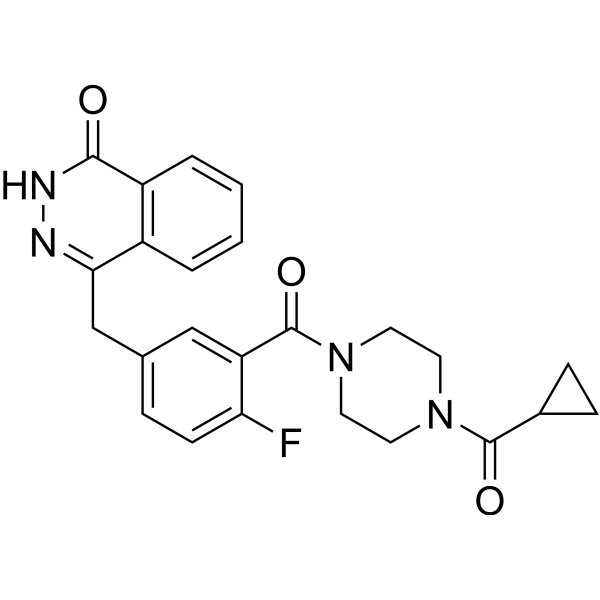
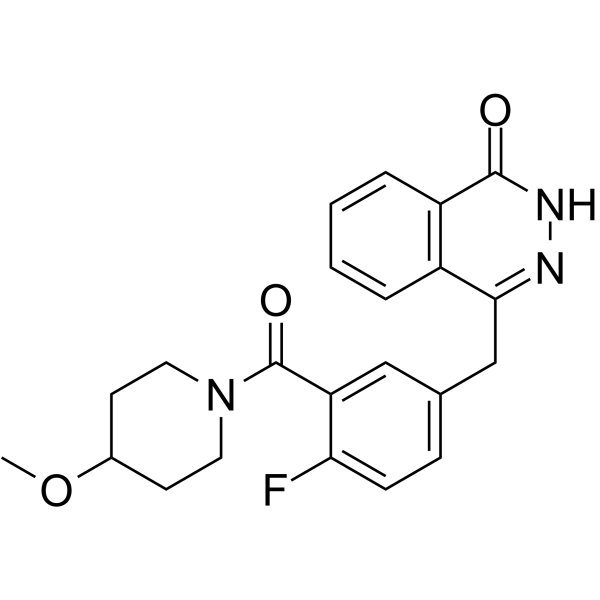
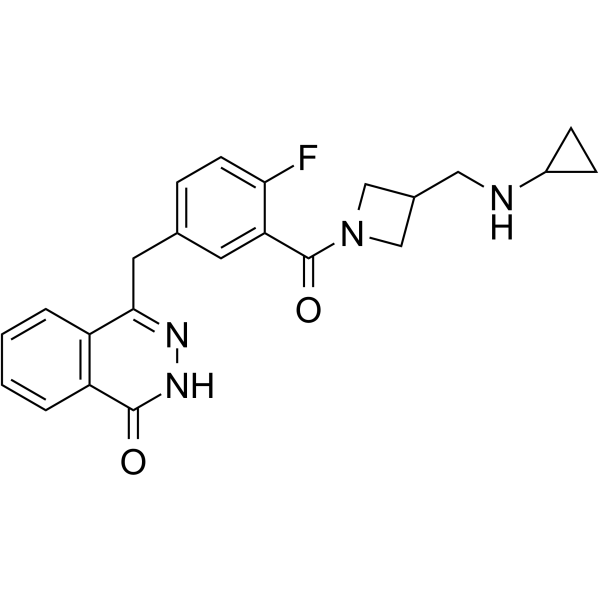
Olaparib (AZD2281; KU0059436) is a potent and orally active PARP inhibitor with IC50s of 5 and 1 nM for PARP1 and PARP2, respectively. Olaparib is an autophagy and mitophagy activator. Olaparib cannot cross the intact blood-brain barrier (BBB) [2] .
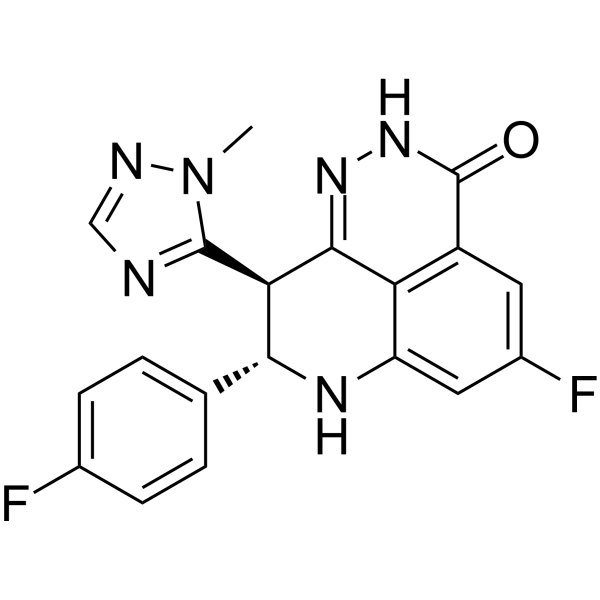
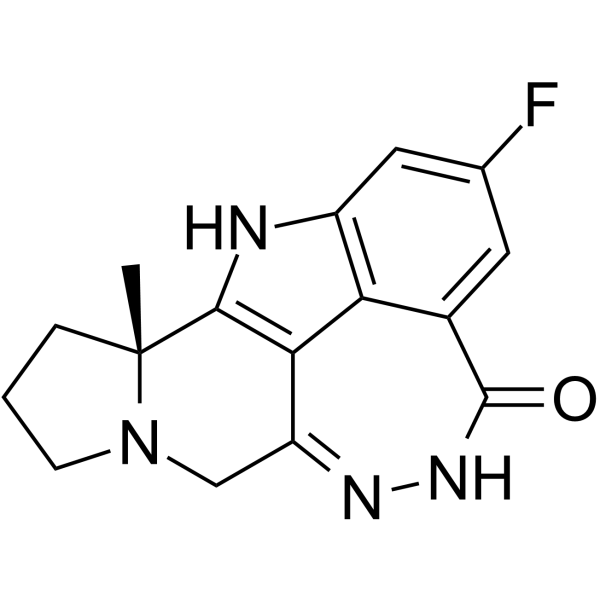
Talazoparib (BMN-673) is a highly potent, orally active PARP1/2 inhibitor.Talazoparib inhibits PARP1 and PARP2 enzyme activity with Kis of 1.2 nM and 0.87 nM, respectively. Talazoparib has antitumor activity .
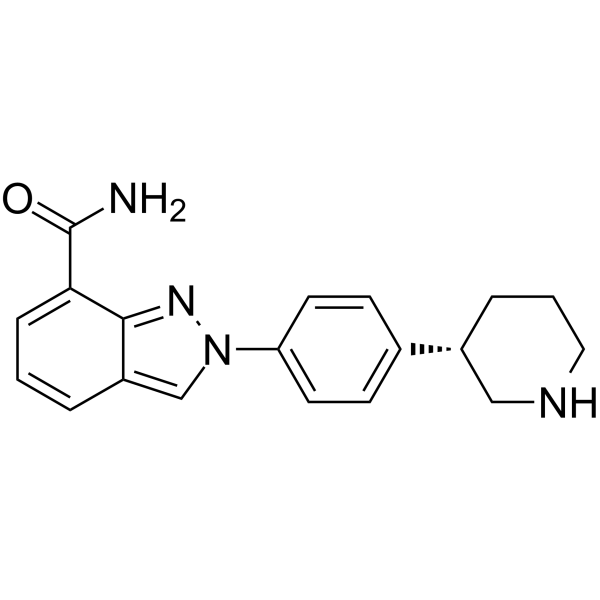
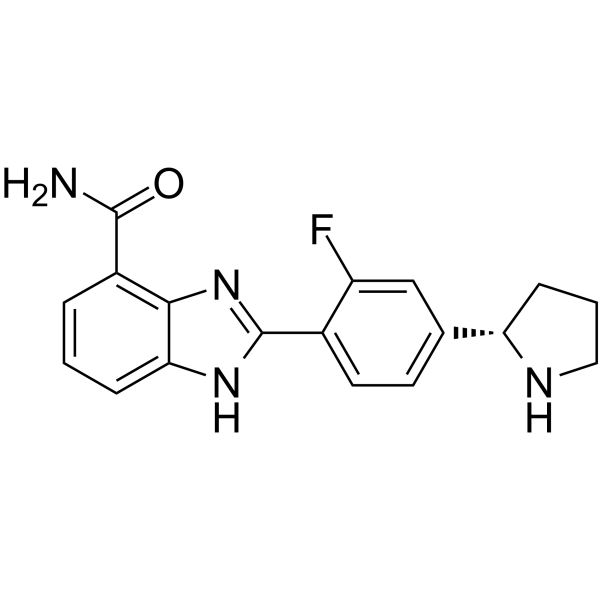
Niraparib (MK-4827) is a highly potent and orally bioavailable PARP1 and PARP2 inhibitor with IC50s of 3.8 and 2.1 nM, respectively. Niraparib leads to inhibition of repair of DNA damage, activates apoptosis and shows anti-tumor activity [2] .
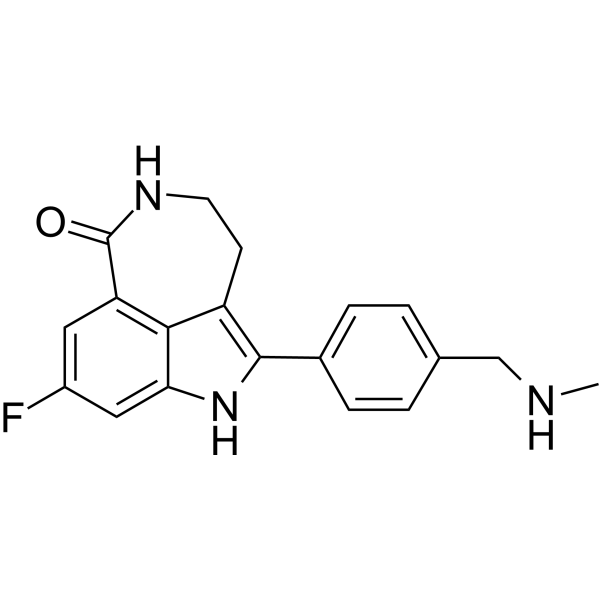
Rucaparib (AG014699) is an orally active, potent inhibitor of PARP proteins (PARP-1, PARP-2 and PARP-3) with a Ki of 1.4 nM for PARP1. Rucaparib is a modest hexose-6-phosphate dehydrogenase (H6PD) inhibitor. Rucaparib has the potential for castration-resistant prostate cancer (CRPC) research [2] .
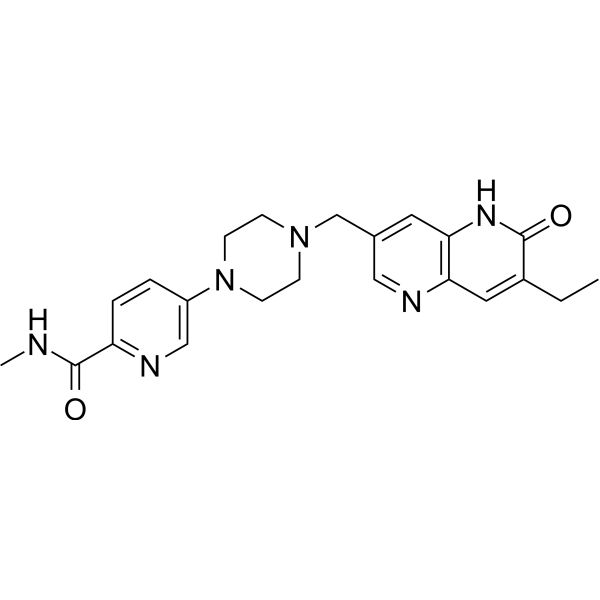
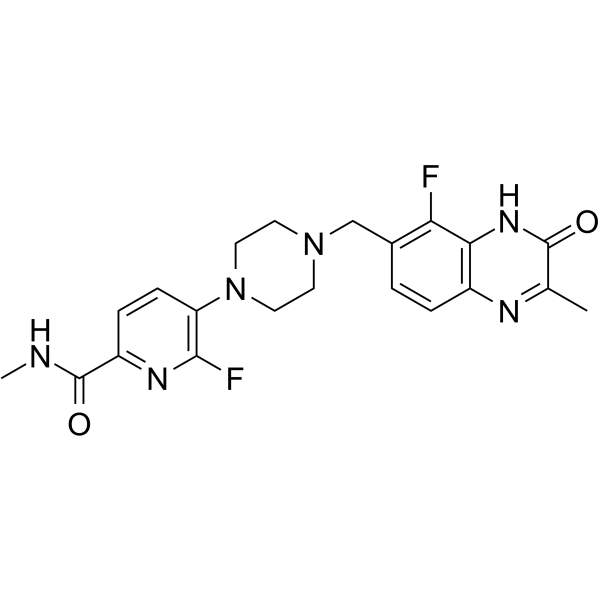
Saruparib (AZD5305) is a potent, orally active and selective PARP inhibitor and trapper with IC50 values of 3 nM and 1400 nM for PARP1 and PARP2, respectively. Saruparib has anti-proliferative activity and inhibits growth in cells with deficiencies in DNA repair [2].
AZD-9574 is a potent and brain penetrant PARP1 inhibitor and shows >8000-fold selectivity for PARP1 compared to PARP2/3/5a/6. AZD-9574 acts by selectively inhibiting and trapping PARP1 at the sites of SSBs. AZD-9574 is an anti-cancer agent and can be used for HRD +?breast cancer and advanced solid malignancies research .
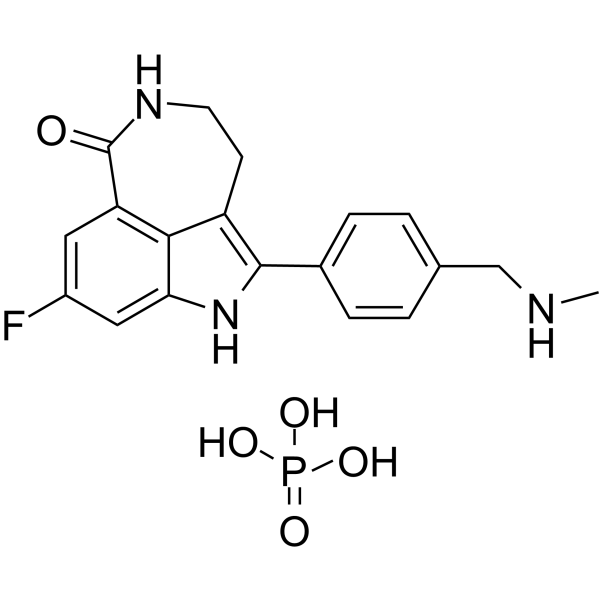
Rucaparib (AG014699) phosphate is an orally active, potent inhibitor of PARP proteins (PARP-1, PARP-2 and PARP-3) with a Ki of 1.4 nM for PARP1. Rucaparib phosphate is a modest hexose-6-phosphate dehydrogenase (H6PD) inhibitor. Rucaparib phosphate has the potential for castration-resistant prostate cancer (CRPC) research [2] .
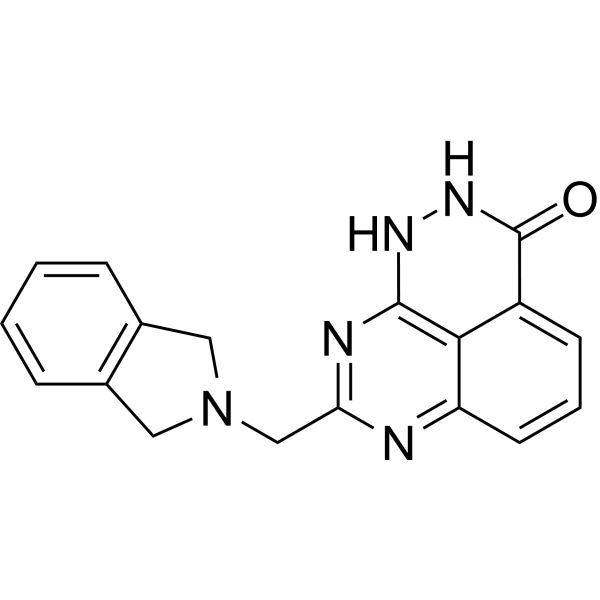
Stenoparib (E7449) is a potent PARP1 and PARP2 inhibitor and also inhibits TNKS1 and TNKS2, with IC50s of 2.0, 1.0, ~50 and ~50 nM for PARP1, PARP2, TNKS1 and TNKS2, respectively, using 32P-NAD + as substrate.
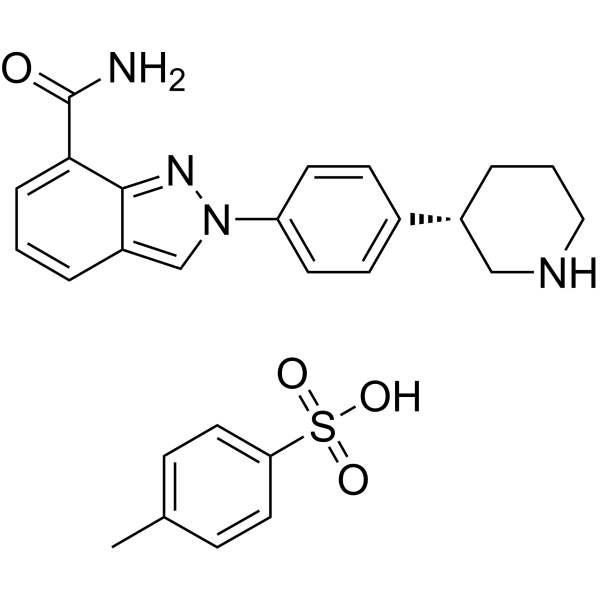
Niraparib tosylate (MK-4827 tosylate) is a highly potent and orally bioavailable PARP1 and PARP2 inhibitor with an IC50 of 3.8 and 2.1 nM, respectively. Niraparib tosylate leads to inhibition of repair of DNA damage, activates apoptosis and shows anti-tumor activity [2] .
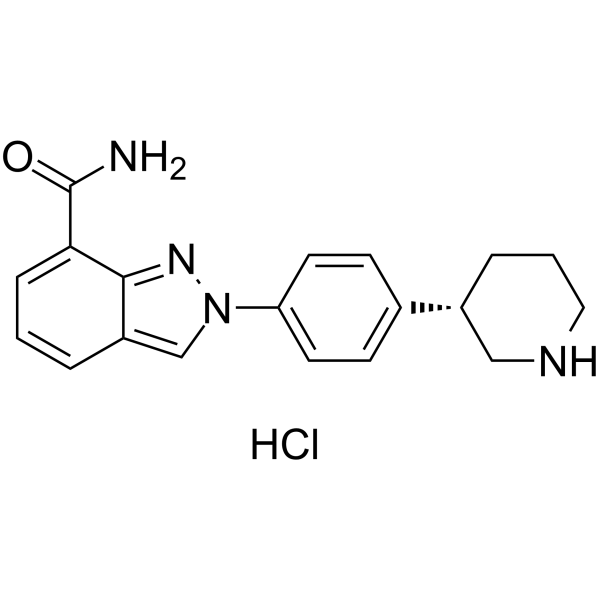
Niraparib hydrochloride (MK-4827 hydrochloride) is a highly potent and orally bioavailable PARP1 and PARP2 inhibitor with IC50s of 3.8 and 2.1 nM, respectively. Niraparib hydrochloride leads to inhibition of repair of DNA damage, activates apoptosis and shows anti-tumor activity [2] .
Olaparib (Standard) is the analytical standard of Olaparib. This product is intended for research and analytical applications. Olaparib (AZD2281; KU0059436) is a potent and orally active PARP inhibitor with IC50s of 5 and 1 nM for PARP1 and PARP2, respectively. Olaparib is an autophagy and mitophagy activator [2] .
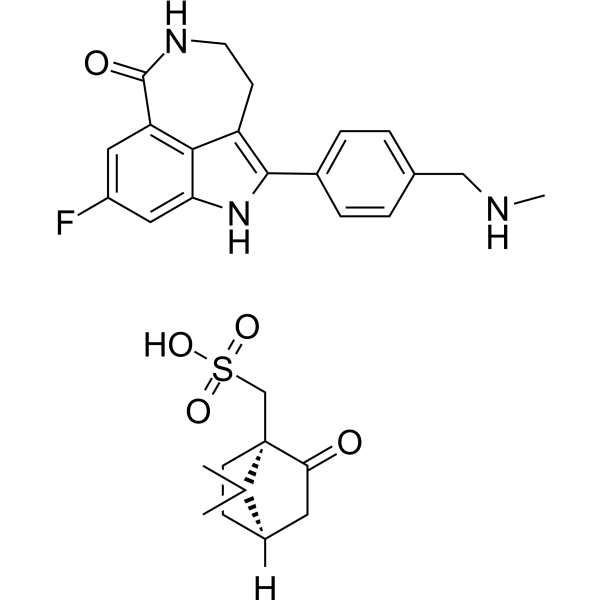
Rucaparib (AG014699) monocamsylate is an orally active, potent inhibitor of PARP proteins (PARP-1, PARP-2 and PARP-3) with a Ki of 1.4 nM for PARP1. Rucaparib monocamsylate is a modest hexose-6-phosphate dehydrogenase (H6PD) inhibitor. Rucaparib monocamsylate has the potential for castration-resistant prostate cancer (CRPC) research [2] .
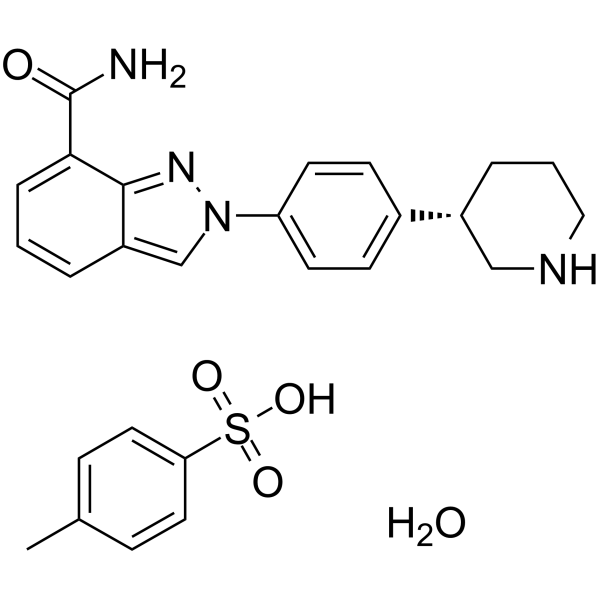
Niraparib (MK-4827) tosylate hydrate is a highly potent and orally bioavailable PARP1 and PARP2 inhibitor with IC50s of 3.8 and 2.1 nM, respectively. Niraparib tosylate hydrate leads to inhibition of repair of DNA damage, activates apoptosis and shows anti-tumor activity [2] .
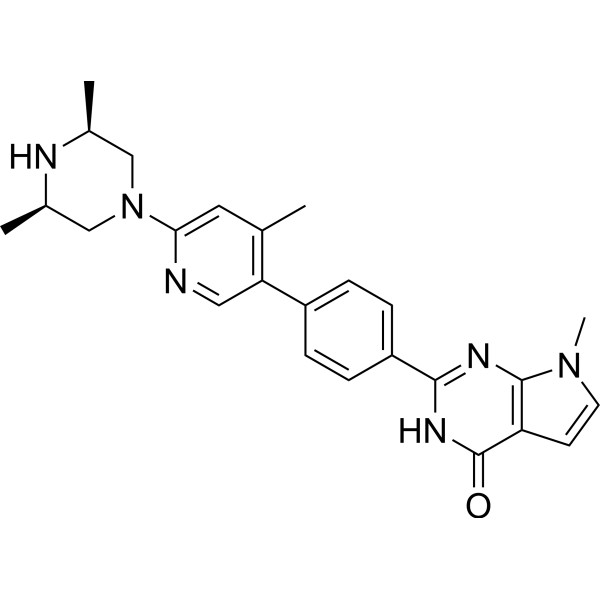
Pamiparib (BGB-290) is an orally active, potent, highly selective PARP inhibitor, with IC50 values of 0.9 nM and 0.5 nM for PARP1 and PARP2, respectively. Pamiparib has potent PARP trapping, and capability to penetrate the brain, and can be used for the research of various cancers including the solid tumor [2].
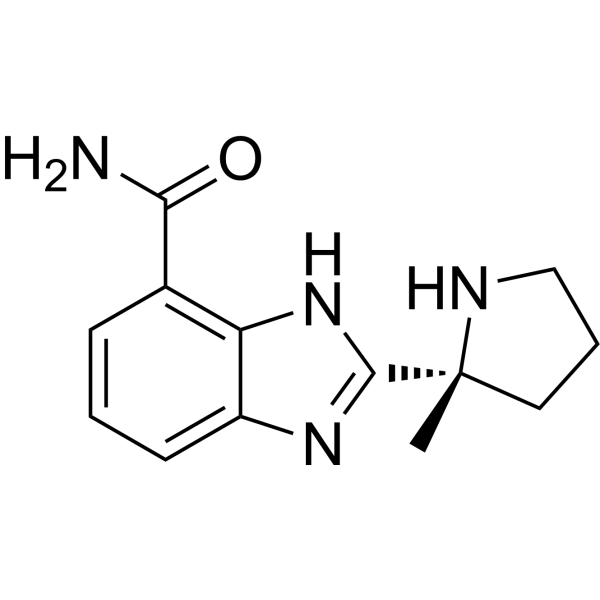
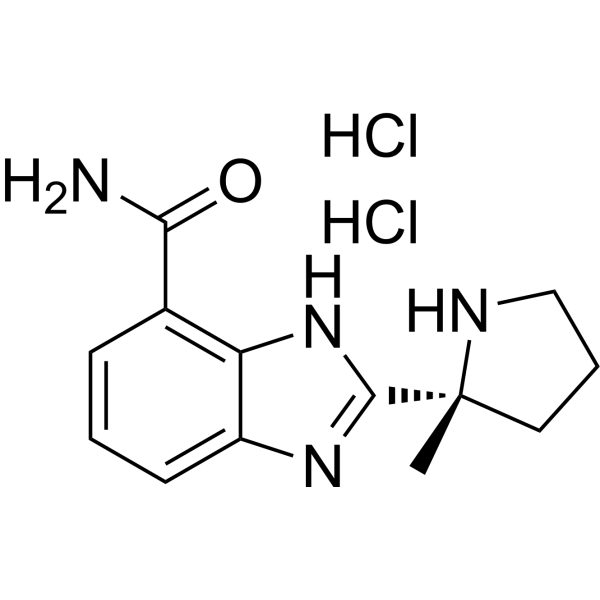
Venadaparib (IDX-1197) is a potent, selective and orally active PARP inhibitor with IC50s of 1.4 nM and 1.0 nM for PARP1 and PARP2, respectively. Venadaparib does not sensitive to PARP-5. Venadaparib prevents the repair of DNA single-strand breaks (SSB) and can be used for solid tumors research [2].
AZ6102 is a potent dual TNKS1 and TNKS2 inhibitor, with IC50s of 3 nM and 1 nM, respectively, and alao has 100-fold selectivity against other PARP family enzymes, with IC50s of 2.0 μM, 0.5 μM, and >3 μM, for PARP1, PARP2, and PARP6, respectively.
PARP10-IN-2 is a potent mono‐ADP‐ribosyltransferase PARP10 inhibitor with an IC50 of 3.64 μM for human PARP10. PARP10-IN-2 reveals potent inhibition on PARP2 and PARP15 with IC50s of 27 μM and 11 μM for human PARP2 and human PARP15, respectively .
BYK204165 is a potent and selective PARP1 inhibitor. BYK204165 inhibits cell-free recombinant human PARP-1 (hPARP-1) with a pIC50 of 7.35 (pKi=7.05), and murine PARP-2(mPARP-2) with a pIC50 of 5.38, respectively. BYK204165 displays 100-fold selectivity for PARP-1 .
Olaparib-d5 (AZD2281-d5) is the deuterium labeled Olaparib (HY-10162). Olaparib is a potent and orally active PARP inhibitor with IC50s of 5 and 1 nM for PARP1 and PARP2, respectively. Olaparib is an autophagy and mitophagy activator [2] .
PARP10-IN-3 is a selective mono‐ADP‐ribosyltransferase PARP10 inhibitor with an IC50 of 480 nM for human PARP10. PARP10-IN-3 reveals potent inhibition on PARP2 and PARP15 with IC50s of 1.7 μM for human PARP2 and human PARP15, respectively .
Olaparib-d8 (AZD2281-d8) is the deuterium labeled Olaparib (HY-10162). Olaparib is a potent and orally active PARP inhibitor with IC50s of 5 and 1 nM for PARP1 and PARP2, respectively. Olaparib is an autophagy and mitophagy activator [2] .
PARPYnD is a PARP enzyme photoaffinity probe (AfBP) based on the triple PARP1/2/6 inhibitor AZ9482 (HY-119653), which induces breast cancer Formation of multipolar spindles (MPS) in cells. PARPYnD inhibits PAPR wih IC50 of 38 nM (PARP1), 6 nM (PARP2), 230 nM (PARP6), respectively. PARPYnD enriches recombinant PARP6 incorporated into cell lysates and inhibits PARP6 in cell-free assays, but it does not label PARP6 in intact cells .
PARP2 Human Pre-designed siRNA Set A contains three designed siRNAs for PARP2 gene (Human), as well as a negative control, a positive control, and a FAM-labeled negative control.
Simmiparib is a highly potent and orally active PARP1 and PARP2 inhibitor with IC50 values of 1.75 nM and 0.22 nM, respectively. Simmiparib has more potent PARP1/2 inhibition than its parent Olaparib (HY-10162). Simmiparib induces DNA double-strand breaks (DSB) accumulation and G2/M arrest in homologous recombination repair (HR)-deficient cells, thereby inducing apoptosis. Simmiparib exhibits remarkable anticancer activities in cells and nude mice bearing xenografts .
PARP1-IN-11 (compound 49) is a potent PARP1 inhibitor with IC50 value of 0.082 µM. PARP1-IN-11 shows complete inhibition of PARP2 and substantially inhibits PARP3, TNKS1 and TNKS2 .
Talazoparib- 13C,d4 is 13C and deuterated labeled Talazoparib (HY-16106). Talazoparib is an orally active PARP 1/2 inhibitor with Ki values of 1.2 nM and 0.87 nM for inhibiting PARP1 and PARP2 enzymatic activities, respectively. Has anti-tumor activity.
PARP-2/1-IN-2 (Compound 4a), the enantiomer of Veliparib (HY-10129), is a potent PARP inhibitor with Kis of 2 and 5 nM against PARP-2 and PARP-1, respectively. PARP-2/1-IN-2 has an EC50 of 3 nM in a cell based assay of PARP activity .
CEP-9722, the proagent of CEP-8983, is a selective and orally active PARP-1 and PARP-2 inhibitor with IC50s of 20 nM and 6 nM, respectively. CEP-9722 has anticancer effects [2].
PARP1/2/TNKS1/2-IN-1 (Compound I-9) is a dual PARP-1, PARP-2, TNKS1 and TNKS2 inhibitor with IC50 values of 0.25 nM, 1.2 nM, 13.5 nM and 4.15 nM against PARP-1, PARP-2, TNKS1 and TNKS2, respectively. PARP1/2/TNKS1/2-IN-1 exhibits favorable synergistic antitumor efficacy and induces apoptosis .
DR2313 is a potent, selective, competitive and brain-penetrant inhibitor of poly(ADP-ribose) polymerase (PARP), with IC50s of 0.20 μM and 0.24 μM for PARP-1 and PARP-2, respectively. DR2313 exhibits neuroprotective effects on ischemic injuries in vitro and in vivo [2].
Rucaparib (AG014699) camsylate is an orally active, potent inhibitor of PARP proteins (PARP-1, PARP-2 and PARP-3) with a Ki of 1.4 nM for PARP1. Rucaparib camsylate is a modest hexose-6-phosphate dehydrogenase (H6PD) inhibitor. Rucaparib camsylate has the potential for castration-resistant prostate cancer (CRPC) research [2] .
Parp2 Mouse Pre-designed siRNA Set A contains three designed siRNAs for Parp2 gene (Mouse), as well as a negative control, a positive control, and a FAM-labeled negative control.
Olaparib-d4-1 (AZD2281-d4-1) is the deuterium labeled Olaparib (HY-10162). Olaparib is a potent and orally active PARP inhibitor with IC50s of 5 and 1 nM for PARP1 and PARP2, respectively. Olaparib is an autophagy and mitophagy activator [2] .
Talazoparib-d4 (BMN-673-d4) is deuterium labeled Talazoparib. Talazoparib (BMN-673) is a highly potent, orally active PARP1/2 inhibitor.Talazoparib inhibits PARP1 and PARP2 enzyme activity with Kis of 1.2 nM and 0.87 nM, respectively. Talazoparib has antitumor activity .
PARP/PI3K-IN-1 (compound 15) is a potent PARP/PI3K inhibitor with pIC50 values of 8.22, 8.44, 8.25, 6.54, 8.13, 6.08 for PARP-1, PARP-2, PI3Kα, PI3Kβ, PI3Kδ, and PI3Kγ, respectively. PARP/PI3K-IN-1 is a highly effective anticancer compound targeted against a wide range of oncologic diseases .
PARP1-IN-49 is a selective PARP1 inhibitor with an IC50 of 23.56 nM and a Kd of 17.78 nM. PARP1-IN-49 shows a selectivity for PARP1 over PARP2. PARP1-IN-49 leads to the induction of DNA damage, cell cycle arrest, and apoptosis. PARP1-IN-49 also increases intracellular ROS levels and inhibits cell migration. PARP1-IN-49 can be used for the research of breast cancer and ovarian cancer .
PARP-2-IN-3 (Compound 12) is a potent PARP-2 inhibitor with an IC50 of 0.07 μM. PARP-2-IN-3 induces apoptosis and necrosis in cancer cells. PARP-2-IN-3 shows appropriate predicted pharmacokinetic parameters and oral bioavailability .
Parp2 Rat Pre-designed siRNA Set A contains three designed siRNAs for Parp2 gene (Rat), as well as a negative control, a positive control, and a FAM-labeled negative control.
Rucaparib (AG014699) hydrochloride is an orally active, potent inhibitor of PARP proteins (PARP-1, PARP-2 and PARP-3) with a Ki of 1.4 nM for PARP1. Rucaparib hydrochloride is a modest hexose-6-phosphate dehydrogenase (H6PD) inhibitor. Rucaparib hydrochloride has the potential for castration-resistant prostate cancer (CRPC) research [2] .
Rucaparib (AG014699) tartrate is an orally active, potent inhibitor of PARP proteins (PARP-1, PARP-2 and PARP-3) with a Ki of 1.4 nM for PARP1. Rucaparib tartrate is a modest hexose-6-phosphate dehydrogenase (H6PD) inhibitor. Rucaparib tartrate has the potential for castration-resistant prostate cancer (CRPC) research [2] .
UPF-1035 is a selective PARP-2 inhibitor with an IC50 value of 0.15 μM. UPF-1035 increases CA1 pyramidal cell loss in hippocampal and has neuroprotective activity .
OUL245 is a 7-Hydroxy derivative, and a selectively PARP2 inhibitor (IC50=44 nM). OUL245 also inhibits other PARP and TNKS enzymes with IC50s of 2.9-8.8 μM .
PARP/HDAC-IN-1 (compound B102) is a potent dual inhibitor of PARP and HDAC. PARP/HDAC-IN-1 inhibits PARP1, PARP2 and HDAC1 with IC50s of 19.01, 2.13, 1690 nM, respectively .
PARP1-IN-48 (Compound 61) is a highly selective PARP1 (PARP1 IC50 = 3 nM, PARP2IC50 = 170 nM) inhibitor. PARP1-IN-48 can be used for research on cancer, viral infections, and metabolic conditions .
Rucaparib (Standard) is the analytical standard of Rucaparib. This product is intended for research and analytical applications. Rucaparib (AG014699) is an orally active, potent inhibitor of PARP proteins (PARP-1, PARP-2 and PARP-3) with a Ki of 1.4 nM for PARP1. Rucaparib is a modest hexose-6-phosphate dehydrogenase (H6PD) inhibitor. Rucaparib has the potential for castration-resistant prostate cancer (CRPC) research [2] .
Niraparib (Standard) is the analytical standard of Niraparib. This product is intended for research and analytical applications. Niraparib (MK-4827) is a highly potent and orally bioavailable PARP1 and PARP2 inhibitor with IC50s of 3.8 and 2.1 nM, respectively. Niraparib leads to inhibition of repair of DNA damage, activates apoptosis and shows anti-tumor activity [2] .
NVP-TNKS656 (GMP) is NVP-TNKS656 (HY-13990) produced by using GMP guidelines. GMP small molecules works appropriately as an auxiliary reagent for cell therapy manufacture. NVP-TNKS656 is a highly potent, selective, and orally active TNKS2 inhibitor with IC50 of 6 nM, and is > 300 fold selectivity against PARP1 and PARP2.
Pamiparib (Standard) is the analytical standard of Pamiparib. This product is intended for research and analytical applications. Pamiparib (BGB-290) is an orally active, potent, highly selective PARP inhibitor, with IC50 values of 0.9 nM and 0.5 nM for PARP1 and PARP2, respectively. Pamiparib has potent PARP trapping, and capability to penetrate the brain, and can be used for the research of various cancers including the solid tumor [2].
Tubulin/PARP-IN-1 (compound 14) is a dual PARP-tubulin inhibitor with activity against endometrial cancer. Tubulin/PARP-IN-1 inhibits PARP and tubulin with IC50s of 74 nM (PARP1), 109 nM (PARP2), and 1.4 μM (Microtubule/Tubulin), respectively. Tubulin/PARP-IN-1 can induce apoptosis and autophagy and cause cell cycle arrest in the G2/M phase .
AZ0108 is an inhibitor for poly ADP-ribose polymerase (PARP), which inhibits PARP1, PARP2, PARP3, PARP6, TNKS1, TNKS2, with IC50s of <0.03, <0.03, 2.8, 0.083, 3.2, >3 μM, respectively. AZ0108 prevents centrosome clustering with an EC50 of 0.053 μM, and exhibits cytotoxicity in cell OCI-LY-19 with GI50 of 0.017 μM. AZ0108 exhibits good in vivo pharmacokinetic characters in rat/mouse models .
PARP1/EZH2-IN-1 is a selective PARP1 and EZH2 dual inhibitor. PARP1/EZH2-IN-1 has IC50s of 28 nM, 414 nM and 74 nM for PARP1, PARP2 and EZH2, respectively. PARP1/EZH2-IN-1 inhibits the proliferation and migration of TNBC cells (triple-negative breast Cancer cells). PARP1/EZH2-IN-1 induces PANoptosis (Apoptosis, Pyroptosis and Necroptosis), increases the level of reactive oxygen species (ROS), and activates related inflammatory pathways. PARP1/EZH2-IN-1 can be used in triple-negative breast cancer research .
PROTAC PARP2 degrader-1 is an orally active PARP2PROTAC degrader with a DC50 of 2 μM. PROTAC PARP2 degrader-1 potently inhibits the enzymatic activities of PARP1 (IC50 = 2.74 nM) and PARP2 (IC50 = 0.32 nM), with approximately 10-fold higher selectivity for PARP2. PROTAC PARP2 degrader-1 induces cell cycle arrest and apoptosis, and exhibits significant anti-tumor efficacy in mouse models. PROTAC PARP2 degrader-1 can be used for the research of triple-negative breast cancer .
PARP1-IN-44, an Olaparib (HY-10162) derivative, is an orally active PARP1 inhibitor (IC50 = 0.6 nM), and also inhibits PARP2 (IC50 = 1.0 nM) and PARP7 (IC50 = 7.5 nM). PARP1-IN-44 has selective antiproliferative activity against BRCA-deficient cancer cells with minimal toxicity to normal cells. PARP1-IN-44 induces G2/M phase arrest, promotes apoptosis, elevates ROS levels, disrupts mitochondrial membrane potential. PARP1-IN-44 suppresses PARylation while increasing γH2AX accumulation. PARP1-IN-44 activates the cGAS-STING pathway, upregulating IFN-β and CXCL10 expression. PARP1-IN-44 enhancing CD8+ T cell infiltration in a CT26 tumor mouse model, demonstrating robust in vivo antitumor efficacy .
Rucaparib (AG014699) acetate is an orally active, potent inhibitor of PARP proteins (PARP-1, PARP-2 and PARP-3) with a Ki of 1.4 nM for PARP1. Rucaparib acetate is a modest hexose-6-phosphate dehydrogenase (H6PD) inhibitor. Rucaparib acetate has the potential for castration-resistant prostate cancer (CRPC) research [2] .
PARP-2-IN-2 (compound 27) is a PARP 2 inhibitor with an IC50 value of 0.057 μM. PARP-2-IN-2 induces cell cycle arrest and apoptosis of MCF-7 breast cancer cells. PARP-2-IN-2 can be used for the research of cancer .
PARP1-IN-17 is a PARP-1 inhibitor (IC50 = 19.24 nM for PARP-1 and = 32.58 nM for PARP-2) and induce apoptosis. PARP1-IN-17 shows excellent anti-proliferative activity .
CEP-8983 is a PARP-1 and PARP-2 inhibitor (IC50: 20 and 6 nM). CEP-8983 is an effective chemosensitizing agent, and can sensitize chemotherapy-resistant cell lines and subcutaneous xenografts to Temozolomide (HY-17364) and Camptothecin (HY-16560) .
Veliparib (Standard) is the analytical standard of Veliparib. This product is intended for research and analytical applications. Veliparib (ABT-888) is a potent PARP inhibitor, inhibiting PARP1 and PARP2 with Kis of 5.2 and 2.9 nM, respectively .
PARP-1-IN-3, a benzamide derivative, is a potent PARP-1 inhibitor with IC50 values of 0.25 nM and 2.34 nM for PARP-1 and PARP-2, respectively. PARP-1-IN-3 induces apoptosis and arrest cell cycle at G2/M phase. PARP-1-IN-3 can be used in research of cancer .
Rucaparib (phosphate) (Standard) is the analytical standard of Rucaparib (phosphate). This product is intended for research and analytical applications. Rucaparib (AG014699) phosphate is an orally active, potent inhibitor of PARP proteins (PARP-1, PARP-2 and PARP-3) with a Ki of 1.4 nM for PARP1. Rucaparib phosphate is a modest hexose-6-phosphate dehydrogenase (H6PD) inhibitor. Rucaparib phosphate has the potential for castration-resistant prostate cancer (CRPC) research [2] .
TOPOI/PARP-1-IN-2 (compound 6c) is a dual PARP-1 and topoisomerase 1 (TOPO-1) inhibitor with IC50s of 32.2 nM and 46.2 nM, respectively. TOPOI/PARP-1-IN-2 shows a selectivity for PARP-1 over PARP-2. TOPOI/PARP-1-IN-2 disrupts the cell cycle at the S phase and induces apoptosis in NCI-60 cancer cell lines .
Rucaparib-d8 (AG014699-d8 ) is deuterium labeled Rucaparib. Rucaparib (AG014699) is an orally active, potent inhibitor of PARP proteins (PARP-1, PARP-2 and PARP-3) with a Ki of 1.4 nM for PARP1. Rucaparib is a modest hexose-6-phosphate dehydrogenase (H6PD) inhibitor. Rucaparib has the potential for castration-resistant prostate cancer (CRPC) research [2] .
PARP1-IN-34 (compound 30) is a selective PARP1 inhibitor with an IC50 of 0.32 nM. PARP1-IN-34 is a subnanomolar PARP1 inhibitor with >1000-fold selectivity against PARP2 with an IC50 of 326 nM. PARP1-IN-34 shows antitumor efficacy[1].
PARP1-IN-35 (compound T26) is a selective, orally active, cross -the blood-brain barrierPARP1 inhibitor with IC50 values of 0.2, 122 nM for PARP1, PARP2, respectively. PARP1-IN-35 shows antiproliferative activity and anticancer activity. PARP1-IN-35 has the potential for the research of breast cancer .
Tubulin/PARP-IN-2 (compound 14) is a dual PARP-Tubulin inhibitor. Tubulin/PARP-IN-2 inhibits PARP1, PARP2, and tubulin activity with IC50 values of 74 nM, 109 nM, and 1.4 µM, respectively. Tubulin/PARP-IN-2 induces apoptosis as well as autophagy. Tubulin/PARP-IN-2 causes cell cycle arrest at the G2/M phase .
Niraparib-d5 (MK-4827-d5) is the deuterium labeled Niraparib (HY-10619). Niraparib (MK-4827) is a highly potent and orally bioavailable PARP1 and PARP2 inhibitor with IC50s of 3.8 and 2.1 nM, respectively. Niraparib leads to inhibition of repair of DNA damage, activates apoptosis and shows anti-tumor activity [2] .
KWZY-11 (Compound 11) is a potent PARP/CDK6 dual inhibitor with IC50 values of 156.8, 197.3, and 13.3 nM for PARP1, PARP2, and CDK6, respectively. KWZY-11 inhibits tumor cell proliferation by regulating the Wnt/β-catenin signaling pathway. KWZY-11 induces excessive DNA damage and apoptosis in MDA-MB-231 breast cancer cells .
PARP1-IN-40 is a highly selectively and orally active PARP1 inhibitor (IC50: 0.19 nM for PARP1, 26 nM for PARP2). PARP1-IN-40 kills tumor cells by inhibiting PARP1, leading to accumulation of DNA damage. PARP1-IN-40 has high antitumor activity against BRCA mutant MDA-MB-436 cells. PARP1-IN-40 can be used in combination with chemotherapy for cancer-related research .
PARP1-IN-27 (Compound 9B) is the inhibitor for PARP1 and PARP2, with IC50 of 2.53 nM and 6.45 nM in cell SUM149PT. PARP1-IN-27 inhibits the proliferation of BRCA-mutated cancer cells SUM149PT, HCC1937 and Capan-1, with IC50 of 0.62, 1.91 and 4.26 μM respectively. PARP1-IN-27 aggravates DNA double-strand breaks, increases ROS generation, arrests cell cycle at G2/M phase, and induces apoptosis in SUM149PT .
PARP/VEGFR3-IN-1 (Compound 18) is a dual PARP-VEGFR3 target inhibitor. Its IC50 values for PARP1, PARP2, and VEGFR3 are 0.0763, 0.0366, and 4.25 nM respectively. PARP/VEGFR3-IN-1 has no inhibitory effect on VEGFR1/2 and shows subtype selectivity. PARP/VEGFR3-IN-1 exhibits significant anti-proliferative activity in various cancer cells (leukemia, lung cancer, and triple-negative breast cancer). PARP/VEGFR3-IN-1 induces DNA damage and cell cycle arrest. PARP/VEGFR3-IN-1 triggers various forms of cell death by inducing apoptosis and autophagy. PARP/VEGFR3-IN-1 can be formulated into nanodelivery systems, significantly enhancing tumor targeting and therapeutic window .
PARP1/2-IN-3 (Compound 29) is an orally active inhibitor for PARP 1 and PARP 2 with IC50 of 0.2235 nM and <0.001 nM. PARP1/2-IN-3 inhibits the proliferation of Capan-1 wildtype, AZD2281 or BMN673 resistant cells with IC50 of 1.82-9.98 nM. PARP1/2-IN-3 exhibits antitumor efficacy in mice .
PARP1-IN-53 (Compound 328) is a quinazolinone derivative and PARP1 inhibitor with a PARP1IC50 of 0.1 nM and selectivity over PARP2, which has a PARP2IC50 of 23 nM.PARP1-IN-53 can be used for the research of cancer .
PARP-1/2-IN-5 (Compound 12) is a PARP-1/2 inhibitor, with the IC50 values for PARP-1 and PARP-2 being 118 and 11 nM respectively. PARP-1/2-IN-5 can be used for the study of inflammatory diseases and neurodegenerative disorders .
PCIP-1 is a PARP2 inhibitor. PCIP-1 recruits BET proteins to PARP2 to inhibit DNA repair, acts via event-driven pharmacology, and does not inhibit PARP-catalyzed PARylation. PCIP-1 inhibits DNA repair, thereby inducing synthetic lethality in homologous recombination-deficient cancer cells and increasing the sensitivity of PARP1-knockout cells. PCIP-1 can be used in the research of homologous recombination-deficient cancers, T-cell acute lymphoblastic leukemia, and BRCA-mutant cancers .
iVeliparib-AP6 is a proteolysis-targeting chimera (PROTAC) molecule designed based on Veliparib (HY-10129), which targets PARP1/2. The DC50s of iVeliparib-AP6 for inducing the degradation of PARP1 and PARP2 are 36 nM and 63 nM, respectively, and its IC50s are 69 nM and 21 nM, respectively. iVeliparib-AP6 contains a Veliparib-based PARP inhibitor warhead linked to a CRBN E3 ligase binder; it uses Thalidomide (HY-14658) as a ligand to recruit CRBN E3 ubiquitin ligase and exerts the PARP2 degradation mechanism [2].
N-Descyclopropanecarbaldehyde olaparib-CO-C9-NHBoc (Compound 6h) is a target protein ligand-linker conjugate that can be used for the synthesis of PROTACs, such as PROTAC PARP2 degrader-1 (HY-183013) .
PARP1/c-Met-IN-3 (Compound L19) is a selective c-Met and PARP1 inhibitor, with an IC50 of 5.4 nM against c-Met and an IC50 of 3.7 nM against PARP1. PARP1/c-Met-IN-3 inhibits PARP2 enzymatic activity with an IC50 of 4.52 nM, and shows no specificity for PARP1 and PARP2. PARP1/c-Met-IN-3 induces cell cycle arrest and apoptosis. PARP1/c-Met-IN-3 exhibits anti-tumor activity against triple-negative breast cancer .
Veliparib (dihydrochloride) (Standard) is the analytical standard of Veliparib (dihydrochloride) (HY-10130). This product is intended for research and analytical applications. Veliparib (dihydrochloride) is a potent inhibitor of PARP1 and PARP2 with Kis of 5.2 nM and 2.9 nM in cell-free assays, respectively.
Rucaparib monocamsylate (Standard) is the analytical standard of Rucaparib monocamsylate (HY-102003). This product is intended for research and analytical applications. Rucaparib (AG014699) monocamsylate is an orally active, potent inhibitor of PARP proteins (PARP-1, PARP-2 and PARP-3) with a Ki of 1.4 nM for PARP1. Rucaparib monocamsylate is a modest hexose-6-phosphate dehydrogenase (H6PD) inhibitor. Rucaparib monocamsylate has the potential for castration-resistant prostate cancer (CRPC) research [2] .
BYK204165 (Standard) is the analytical standard of BYK204165 (HY-108632). This product is intended for research and analytical applications. BYK204165 is a potent and selective PARP1 inhibitor. BYK204165 inhibits cell-free recombinant human PARP-1 (hPARP-1) with a pIC50 of 7.35 (pKi=7.05), and murine PARP-2 (mPARP-2) with a pIC50 of 5.38, respectively. BYK204165 displays 100-fold selectivity for PARP-1 .
Niraparib hydrochloride (Standard) is the analytical standard of Niraparib hydrochloride (HY-10619A). This product is intended for research and analytical applications. Niraparib hydrochloride (MK-4827 hydrochloride) is a highly potent and orally bioavailable PARP1 and PARP2 inhibitor with IC50s of 3.8 and 2.1 nM, respectively. Niraparib hydrochloride leads to inhibition of repair of DNA damage, activates apoptosis and shows anti-tumor activity [2] .
Niraparib Tosylate (Standard) is the analytical standard of Niraparib Tosylate (HY-10619B). This product is intended for research and analytical applications. Niraparib tosylate (MK-4827 tosylate) is a highly potent and orally bioavailable PARP1 and PARP2 inhibitor with an IC50 of 3.8 and 2.1 nM, respectively. Niraparib tosylate leads to inhibition of repair of DNA damage, activates apoptosis and shows anti-tumor activity [2] .
Niraparib tosylate hydrate (Standard) is the analytical standard of Niraparib tosylate hydrate (HY-10619E). This product is intended for research and analytical applications. Niraparib (MK-4827) tosylate hydrate is a highly potent and orally bioavailable PARP1 and PARP2 inhibitor with IC50s of 3.8 and 2.1 nM, respectively. Niraparib tosylate hydrate leads to inhibition of repair of DNA damage, activates apoptosis and shows anti-tumor activity [2] .
PARP1 degrader-2 (Compound 11e) is a potent, selective PARP1HYT degrader (DC50: 2.16 μM). PARP1 degrader-2 selectively binds to and degrades PARP1 but not PARP2. PARP1 degrader-2 mediates the degradation of PARP1 via the ubiquitin-proteasome system (UPS). PARP1 degrader-2 exhibits anticancer activity against triple-negative breast cancer and colon cancer (hydrophobic tag: (HY-W022007); PARP1 ligand: (HY-75706); Linker: (HY-W015300)) .
MC2050 is a selective PARP-1 inhibitor with an IC50 of 119 nM. MC2050 functionally inhibits PARP-1 activity, including hyperactivation induced by oxidative stress, and reduces the poly (ADP-ribosyl) ation level of histone H1. MC2050 protects neuroblastoma cells from oxidative stress-mediated cell death induced by hydrogen peroxide. MC2050 is applicable to research related to neuroblastoma and Burkitt lymphoma .
NVP-TNKS656 (GMP) is NVP-TNKS656 (HY-13990) produced by using GMP guidelines. GMP small molecules works appropriately as an auxiliary reagent for cell therapy manufacture. NVP-TNKS656 is a highly potent, selective, and orally active TNKS2 inhibitor with IC50 of 6 nM, and is > 300 fold selectivity against PARP1 and PARP2.
Olaparib-d5 (AZD2281-d5) is the deuterium labeled Olaparib (HY-10162). Olaparib is a potent and orally active PARP inhibitor with IC50s of 5 and 1 nM for PARP1 and PARP2, respectively. Olaparib is an autophagy and mitophagy activator [2] .
Olaparib-d8 (AZD2281-d8) is the deuterium labeled Olaparib (HY-10162). Olaparib is a potent and orally active PARP inhibitor with IC50s of 5 and 1 nM for PARP1 and PARP2, respectively. Olaparib is an autophagy and mitophagy activator [2] .
Talazoparib- 13C,d4 is 13C and deuterated labeled Talazoparib (HY-16106). Talazoparib is an orally active PARP 1/2 inhibitor with Ki values of 1.2 nM and 0.87 nM for inhibiting PARP1 and PARP2 enzymatic activities, respectively. Has anti-tumor activity.
Olaparib-d4-1 (AZD2281-d4-1) is the deuterium labeled Olaparib (HY-10162). Olaparib is a potent and orally active PARP inhibitor with IC50s of 5 and 1 nM for PARP1 and PARP2, respectively. Olaparib is an autophagy and mitophagy activator [2] .
Talazoparib-d4 (BMN-673-d4) is deuterium labeled Talazoparib. Talazoparib (BMN-673) is a highly potent, orally active PARP1/2 inhibitor.Talazoparib inhibits PARP1 and PARP2 enzyme activity with Kis of 1.2 nM and 0.87 nM, respectively. Talazoparib has antitumor activity .
Rucaparib-d8 (AG014699-d8 ) is deuterium labeled Rucaparib. Rucaparib (AG014699) is an orally active, potent inhibitor of PARP proteins (PARP-1, PARP-2 and PARP-3) with a Ki of 1.4 nM for PARP1. Rucaparib is a modest hexose-6-phosphate dehydrogenase (H6PD) inhibitor. Rucaparib has the potential for castration-resistant prostate cancer (CRPC) research [2] .
Niraparib-d5 (MK-4827-d5) is the deuterium labeled Niraparib (HY-10619). Niraparib (MK-4827) is a highly potent and orally bioavailable PARP1 and PARP2 inhibitor with IC50s of 3.8 and 2.1 nM, respectively. Niraparib leads to inhibition of repair of DNA damage, activates apoptosis and shows anti-tumor activity [2] .
PARPYnD is a PARP enzyme photoaffinity probe (AfBP) based on the triple PARP1/2/6 inhibitor AZ9482 (HY-119653), which induces breast cancer Formation of multipolar spindles (MPS) in cells. PARPYnD inhibits PAPR wih IC50 of 38 nM (PARP1), 6 nM (PARP2), 230 nM (PARP6), respectively. PARPYnD enriches recombinant PARP6 incorporated into cell lysates and inhibits PARP6 in cell-free assays, but it does not label PARP6 in intact cells .
PARP2 Human Pre-designed siRNA Set A contains three designed siRNAs for PARP2 gene (Human), as well as a negative control, a positive control, and a FAM-labeled negative control.
Parp2 Mouse Pre-designed siRNA Set A contains three designed siRNAs for Parp2 gene (Mouse), as well as a negative control, a positive control, and a FAM-labeled negative control.
Parp2 Rat Pre-designed siRNA Set A contains three designed siRNAs for Parp2 gene (Rat), as well as a negative control, a positive control, and a FAM-labeled negative control.
NVP-TNKS656 (GMP) is NVP-TNKS656 (HY-13990) produced by using GMP guidelines. GMP small molecules works appropriately as an auxiliary reagent for cell therapy manufacture. NVP-TNKS656 is a highly potent, selective, and orally active TNKS2 inhibitor with IC50 of 6 nM, and is > 300 fold selectivity against PARP1 and PARP2.
Inquiry Online
Your information is safe with us. * Required Fields.
Western blot analysis of extracts from THP-1(lane 2(20μg), Jurkat (lane 3(20μg) and NIH3T3(lane 4(20μg) using FOXO1A (HY-P80132) Rabbit mAb. Proteins were transferred
to a PVDF membrane and blocked with 5% non-fat milk in TBST for 2 hour at room temperature. The primary antibody (1/1000) and Loading control antibody (Beta Actin, HY-P80438, 1/10000) was
used in 5% non-fat milk in TBST at 4°C overnight. Goat Anti-Mouse/Rabbit IgG-HRP Secondary Antibody (1/10000) was used for 1 hour at room temperature.
Western blot analysis of extracts from THP-1(lane 2(20μg), Jurkat (lane 3(20μg) and NIH3T3(lane 4(20μg) using FOXO1A (HY-P80132) Rabbit mAb. Proteins were transferred
to a PVDF membrane and blocked with 5% non-fat milk in TBST for 2 hour at room temperature. The primary antibody (1/1000) and Loading control antibody (Beta Actin, HY-P80438, 1/10000) was
used in 5% non-fat milk in TBST at 4°C overnight. Goat Anti-Mouse/Rabbit IgG-HRP Secondary Antibody (1/10000) was used for 1 hour at room temperature.
Western blot analysis of extracts from THP-1(lane 2(20μg), Jurkat (lane 3(20μg) and NIH3T3(lane 4(20μg) using FOXO1A (HY-P80132) Rabbit mAb. Proteins were transferred
to a PVDF membrane and blocked with 5% non-fat milk in TBST for 2 hour at room temperature. The primary antibody (1/1000) and Loading control antibody (Beta Actin, HY-P80438, 1/10000) was
used in 5% non-fat milk in TBST at 4°C overnight. Goat Anti-Mouse/Rabbit IgG-HRP Secondary Antibody (1/10000) was used for 1 hour at room temperature.
Western blot analysis of extracts from THP-1(lane 2(20μg), Jurkat (lane 3(20μg) and NIH3T3(lane 4(20μg) using FOXO1A (HY-P80132) Rabbit mAb. Proteins were transferred
to a PVDF membrane and blocked with 5% non-fat milk in TBST for 2 hour at room temperature. The primary antibody (1/1000) and Loading control antibody (Beta Actin, HY-P80438, 1/10000) was
MedchemExpress Validation 03
Western blot analysis of extracts from THP-1(lane 2(20μg), Jurkat (lane 3(20μg) and NIH3T3(lane 4(20μg) using FOXO1A (HY-P80132) Rabbit mAb. Proteins were transferred
MedchemExpress Validation 04
Western blot analysis of extracts from THP-1(lane 2(20μg), Jurkat (lane 3(20μg) and NIH3T3(lane 4(20μg) using FOXO1A (HY-P80132) Rabbit mAb. Proteins were transferred
to a PVDF membrane and blocked with 5% non-fat milk in TBST for 2 hour at room temperature. The primary antibody (1/1000) and Loading control antibody (Beta Actin, HY-P80438, 1/10000) was
used in 5% non-fat milk in TBST at 4°C overnight. Goat Anti-Mouse/Rabbit IgG-HRP Secondary Antibody (1/10000) was used for 1 hour at room temperature.
MedchemExpress Validation
Western blot analysis of extracts from THP-1(lane 2(20μg), Jurkat (lane 3(20μg) and NIH3T3(lane 4(20μg) using FOXO1A (HY-P80132) Rabbit mAb. Proteins were transferred
to a PVDF membrane and blocked with 5% non-fat milk in TBST for 2 hour at room temperature. The primary antibody (1/1000) and Loading control antibody (Beta Actin, HY-P80438, 1/10000) was
used in 5% non-fat milk in TBST at 4°C overnight. Goat Anti-Mouse/Rabbit IgG-HRP Secondary Antibody (1/10000) was used for 1 hour at room temperature.
Western blot analysis of extracts from THP-1(lane 2(20μg), Jurkat (lane 3(20μg) and NIH3T3(lane 4(20μg) using FOXO1A (HY-P80132) Rabbit mAb. Proteins were transferred
to a PVDF membrane and blocked with 5% non-fat milk in TBST for 2 hour at room temperature. The primary antibody (1/1000) and Loading control antibody (Beta Actin, HY-P80438, 1/10000) was
used in 5% non-fat milk in TBST at 4°C overnight. Goat Anti-Mouse/Rabbit IgG-HRP Secondary Antibody (1/10000) was used for 1 hour at room temperature.
MedchemExpress Validation
Western blot analysis of extracts from THP-1(lane 2(20μg), Jurkat (lane 3(20μg) and NIH3T3(lane 4(20μg) using FOXO1A (HY-P80132) Rabbit mAb. Proteins were transferred
to a PVDF membrane and blocked with 5% non-fat milk in TBST for 2 hour at room temperature. The primary antibody (1/1000) and Loading control antibody (Beta Actin, HY-P80438, 1/10000) was
used in 5% non-fat milk in TBST at 4°C overnight. Goat Anti-Mouse/Rabbit IgG-HRP Secondary Antibody (1/10000) was used for 1 hour at room temperature.
MedchemExpress Validation
Western blot analysis of extracts from THP-1(lane 2(20μg), Jurkat (lane 3(20μg) and NIH3T3(lane 4(20μg) using FOXO1A (HY-P80132) Rabbit mAb. Proteins were transferred
to a PVDF membrane and blocked with 5% non-fat milk in TBST for 2 hour at room temperature. The primary antibody (1/1000) and Loading control antibody (Beta Actin, HY-P80438, 1/10000) was
used in 5% non-fat milk in TBST at 4°C overnight. Goat Anti-Mouse/Rabbit IgG-HRP Secondary Antibody (1/10000) was used for 1 hour at room temperature.
MedchemExpress Validation
Western blot analysis of extracts from THP-1(lane 2(20μg), Jurkat (lane 3(20μg) and NIH3T3(lane 4(20μg) using FOXO1A (HY-P80132) Rabbit mAb. Proteins were transferred
to a PVDF membrane and blocked with 5% non-fat milk in TBST for 2 hour at room temperature. The primary antibody (1/1000) and Loading control antibody (Beta Actin, HY-P80438, 1/10000) was
used in 5% non-fat milk in TBST at 4°C overnight. Goat Anti-Mouse/Rabbit IgG-HRP Secondary Antibody (1/10000) was used for 1 hour at room temperature.
MedchemExpress Validation
Western blot analysis of extracts from THP-1(lane 2(20μg), Jurkat (lane 3(20μg) and NIH3T3(lane 4(20μg) using FOXO1A (HY-P80132) Rabbit mAb. Proteins were transferred
to a PVDF membrane and blocked with 5% non-fat milk in TBST for 2 hour at room temperature. The primary antibody (1/1000) and Loading control antibody (Beta Actin, HY-P80438, 1/10000) was
used in 5% non-fat milk in TBST at 4°C overnight. Goat Anti-Mouse/Rabbit IgG-HRP Secondary Antibody (1/10000) was used for 1 hour at room temperature.
MedchemExpress Validation
Western blot analysis of extracts from THP-1(lane 2(20μg), Jurkat (lane 3(20μg) and NIH3T3(lane 4(20μg) using FOXO1A (HY-P80132) Rabbit mAb. Proteins were transferred
to a PVDF membrane and blocked with 5% non-fat milk in TBST for 2 hour at room temperature. The primary antibody (1/1000) and Loading control antibody (Beta Actin, HY-P80438, 1/10000) was
used in 5% non-fat milk in TBST at 4°C overnight. Goat Anti-Mouse/Rabbit IgG-HRP Secondary Antibody (1/10000) was used for 1 hour at room temperature.
MedchemExpress Validation
Western blot analysis of extracts from THP-1(lane 2(20μg), Jurkat (lane 3(20μg) and NIH3T3(lane 4(20μg) using FOXO1A (HY-P80132) Rabbit mAb. Proteins were transferred
to a PVDF membrane and blocked with 5% non-fat milk in TBST for 2 hour at room temperature. The primary antibody (1/1000) and Loading control antibody (Beta Actin, HY-P80438, 1/10000) was
used in 5% non-fat milk in TBST at 4°C overnight. Goat Anti-Mouse/Rabbit IgG-HRP Secondary Antibody (1/10000) was used for 1 hour at room temperature.
MedChemExpress values your privacy and your trust is important to us. We use cookies to enhance your website experience. Some cookies are necessary to run the website.
Privacy and Cookie Policy

