1. Search Result
Search Result
Results for "

PYR

" in MedChemExpress (MCE) Product Catalog:

40

Inhibitors & Agonists

2

Biochemical Assay Reagents

26

Peptides

2

Natural
Products

3

Isotope-Labeled Compounds

Cat. No. Product Name Target Research Areas Chemical Structure
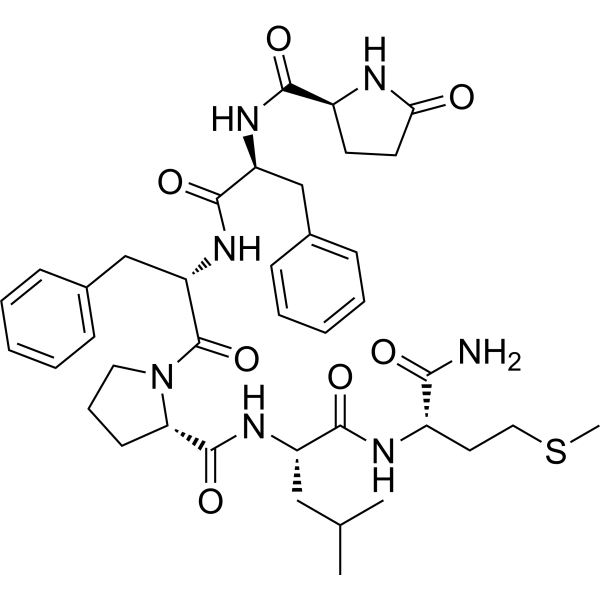
  • HY-P1033
    [Pyr1]-Apelin-13
    4 Publications Verification

    [pGlu1]-Apelin-13

    Apelin Receptor (APJ) Cardiovascular Disease
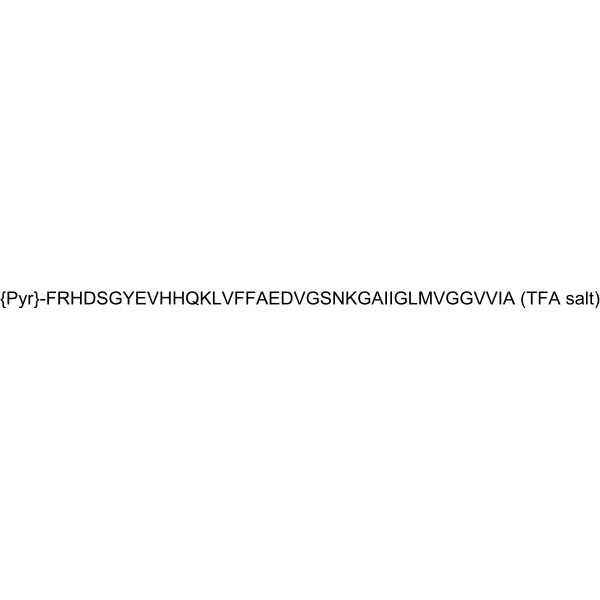
    [Pyr1]-Apelin-13 is a highly potent, selective endogenous apelin receptor (APJ) agonist.
    [Pyr1]-Apelin-13
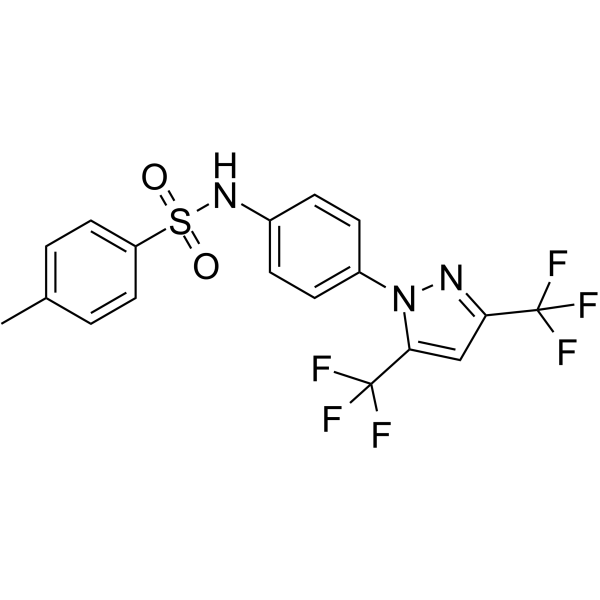
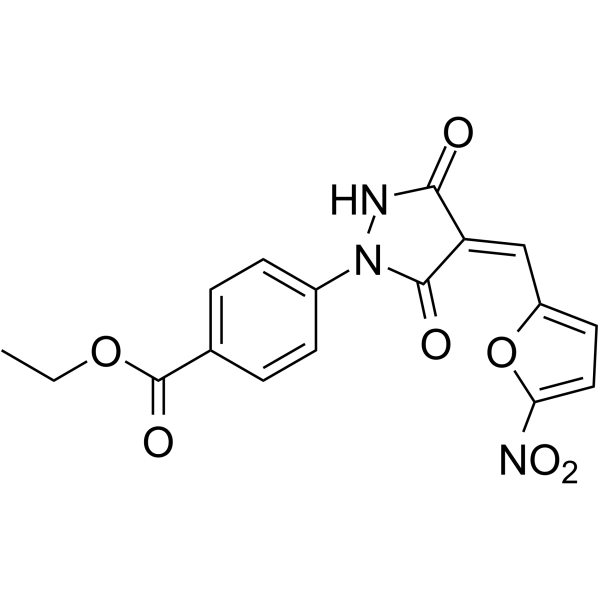
  • HY-13296
    PYR-41
    Maximum Cited Publications
    25 Publications Verification

    E1/E2/E3 Enzyme Apoptosis Cancer
    PYR-41 is a selective and cell permeable inhibitor of ubiquitin-activating enzyme E1 with an IC50 of < 10 μM, with little activity at E2 and E3.
    PYR-41
  • HY-19735
    KJ Pyr 9
    5+ Cited Publications

    c-Myc Autophagy Cancer
    KJ Pyr 9 is an inhibitor of MYC with a Kd of 6.5 nM in in vitro assay.
    KJ Pyr 9
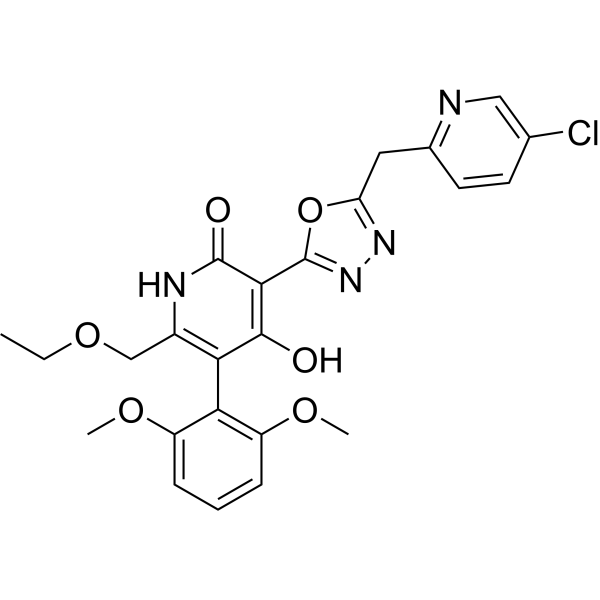
  • HY-139485

    Apelin Receptor (APJ) Cardiovascular Disease
    BMS-986224 is a potent, selective and orally active APJ receptor agonist (Kd = 0.3 nM). BMS-986224 exhibits similar receptor binding and signaling profile to (Pyr 1) apelin-13. BMS-986224 has the potential for the research of heart failure .
    BMS-986224
  • HY-108465
    Pyr3
    5+ Cited Publications

    TRP Channel Others
    Pyr3 is a selective inhibitor of transient receptor potential canonical channel 3 (TRPC3), with an IC50 of 700 nM for TRPC3-mediated Ca 2+ influx.
    Pyr3
  • HY-P10925A

    (Z)-FOG-001; I-67

    β-catenin Cancer
    (Z)-Zolucatetide (I-67) is a β-catenin inhibitor with IC50 ≤50 nM. (Z)-Zolucatetide's sequence is Ac-PL3-Asp-Npg-B5-Asp-3COOHF-Aib-Ala-Phe-Lys3-PyrS2-3Thi-BztA-GlnR3-Ala-NH2. (Z)-Zolucatetide can be used for cancer research .
    (Z)-Zolucatetide
  • HY-153225

    HIV Reverse Transcriptase Infection
    PYR01 is a non-nucleoside reverse transcriptase inhibitor and a killing activator targeting HIV infected cells. PYR01 has cytokilling and antiviral properties of HIV-1 infection with the IC50 values of 27.5nM and 39.7nM, respectively. PYR01 leads to selective cytotoxicity by promoting HIV-1 Gag-Pol dimerization and HIV-1 protease intracellular activation. PYR01 can be used in the study of HIV .
    PYR01
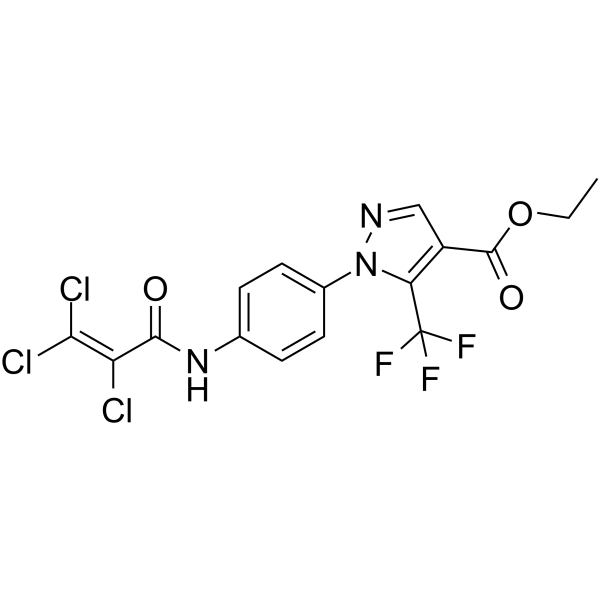
  • HY-19408
    Pyr10
    3 Publications Verification

    TRP Channel Others
    Pyr10 is a pyrazole derivative and a selective TRP cation 3 (TRPC3) inhibitor. Pyr10 inhibits Ca 2+ influx in carbachol-stimulated TRPC3-transfected HEK293 cells with an IC50 of 0.72 μM (IC50 of 13.08 μM for store operated Ca 2+ entry in BRL-2H3 cells). Pyr10 has the ability to distinguish between receptor-operated TRPC3 and native stromal interaction molecule 1 (STIM1)/Orai1 channels .
    Pyr10
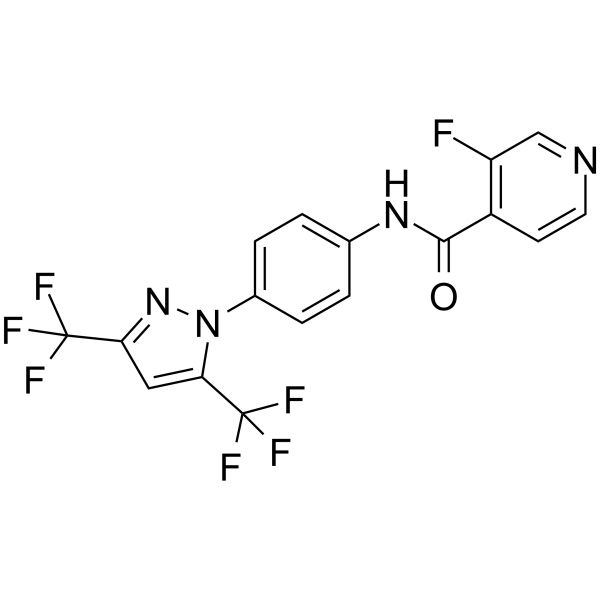
  • HY-12504
    Pyr6
    1 Publications Verification

    N-[4-[3,5-Bis(trifluoromethyl)-1H-PYRazol-1-yl]phenyl]-3-fluoro-4-PYRidinecarboxamide

    CRAC Channel Others
    Pyr6 is a selective store operated calcium entry (SOCE) inhibitor with an IC50 of 0.49 μM. Pyr6 displays 37-fold higher potency for RBL SOCE than for TRPC3 ROCE .
    Pyr6
  • HY-W010929

    Biochemical Assay Reagents Others
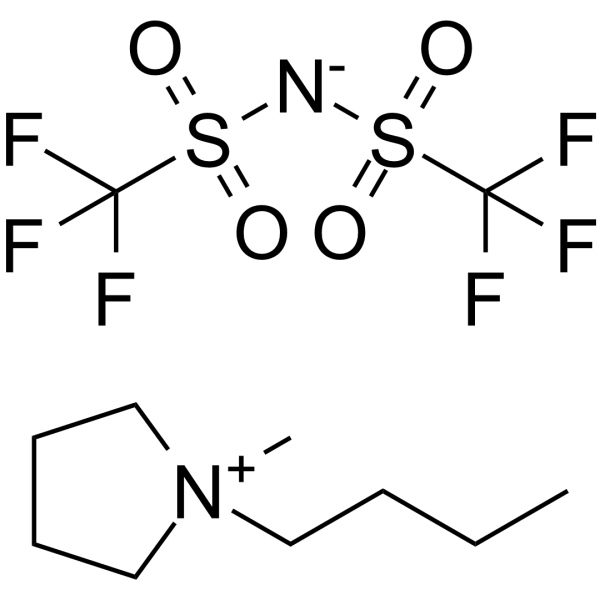
    PYR14-TFSI is a room temperature ionic liquid (RTIL) with a wide electrochemical window (5.5V) and a high viscosity, making it a useful candidate for electrochemical energy applications .
    PYR14-TFSI
  • HY-P4463

    GnRH Receptor Others
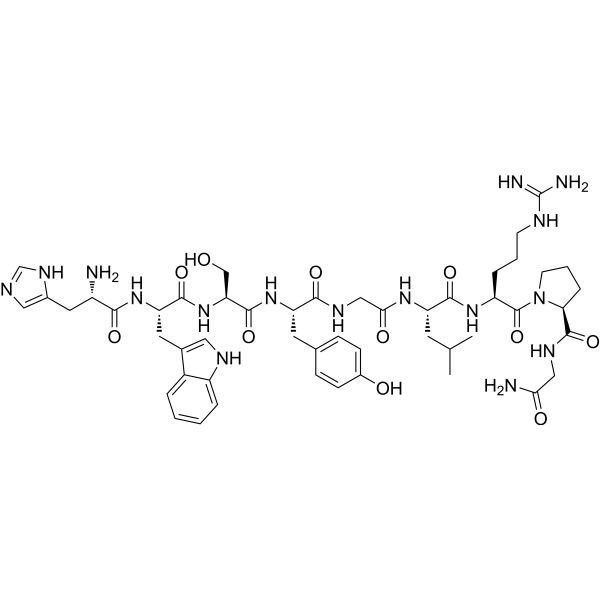
    (Des-Pyr1)-LHRH is a Polypeptide Internal Standard, identical to (Des-Pyr1)-GnRH, which can be identified through peptide screening. Peptide screening is a research tool that mainly collects active polypeptides via immunoassays. It can be applied to protein interaction, functional analysis, epitope screening, especially in the field of active molecule research and development. (Des-Pyr1)-LHRH can serve as an internal standard (ISTD) for mass spectrometry analysis .
    (Des-Pyr1)-LHRH
  • HY-P4882A

    Amyloid-β Neurological Disease
    (Pyr3)-Amyloid β-Protein (3-42) TFA is the predominant amyloid β-peptide structure deposited in human brain of Alzheimer's disease and Down's syndrome patients. (Pyr3)-Amyloid β-Protein (3-42) TFA is suggested to accumulate in the brain and to trigger the formation of insoluble amyloid β-peptide deposits .
    (Pyr3)-Amyloid β-Protein (3-42) TFA
  • HY-P4349A

    Biochemical Assay Reagents Thrombin Others
    Pyr-Arg-Thr-Lys-Arg-AMC TFA is a AMC peptide, and a fluorescent substrate. Pyr-Arg-Thr-Lys-Arg-AMC TFA can be used to detect the activity of specific proteases, such as Furin, Trypsin, and Thrombin .
    Pyr-Arg-Thr-Lys-Arg-AMC TFA
  • HY-W011750

    Cbz-L-PYRoglutamic acid

    Biochemical Assay Reagents Others
    Z-Pyr-OH (Cbz-L-pyroglutamic acid) can be used as a biochemical assay reagent .
    Z-Pyr-OH
  • HY-122142A

    S-2366 (hydrochloride)

    APC Factor XI Biochemical Assay Reagents Others
    Pyr-​Pro-​Arg-​pNA (S-2366) hydrochloride is a chromogenic peptidyl substrate, and a noncompetitive inhibitor that occupies the active sites of FXIa and FXIa-LC to block factor IX activation. Pyr-​Pro-​Arg-​pNA hydrochloride functions as a hydrolyzable substrate for FXIa’s catalytic domain, human APC, murine APC, and purified plasma kallikrein .
    Pyr-​Pro-​Arg-​pNA (hydrochloride)
  • HY-P2000

    (PYR6,Pro9)-Substance P

    Neurokinin Receptor Neurological Disease
    Septide ((Pyr6,Pro9)-Substance P) is a potent NK1 receptor agonist with a Kd value of 0.55 nM .
    Septide
  • HY-P1033S1

    Isotope-Labeled Compounds Cardiovascular Disease
    [Pyr1]-Apelin-13, Pro( 13C5, 15N) (TFA) is the 13C and 15N labeled isotope of [Pyr1]-Apelin-13(HY-P1033).[Pyr1]-Apelin-13 is a potent and selective endogenous apelin receptor agonist .
    [Pyr1]-Apelin-13, Pro(13C5,15N) TFA
  • HY-P4882

    Amyloid-β Neurological Disease
    (Pyr3)-Amyloid β-Protein (3-42) is the predominant amyloid β-peptide structure deposited in human brain of Alzheimer's disease and Down's syndrome patients. (Pyr3)-Amyloid β-Protein (3-42) is suggested to accumulate in the brain and to trigger the formation of insoluble amyloid β-peptide deposits .
    (Pyr3)-Amyloid β-Protein (3-42)
  • HY-P4886A

    Amyloid-β Neurological Disease
    Amyloid β-Protein (3-42) TFA is a precursor of Pyr peptide. Pyroglutamic acid-modified Aβ (pEAβ) (3-42) is the core of the amyloid plaque in Alzheimer's disease. pEAβ (3-42) accelerates the aggregation of Aβ(1-42), while Aβ(1-42) significantly slows down the primary and secondary nucleation of pEAβ(3-42).
    Amyloid β-Protein (3-42) TFA
  • HY-B0439S1

    Sulphadoxine d3

    Parasite Antibiotic Infection
    Sulfadoxine-d3 is a deuterium labeled Sulfadoxine (HY-B0439). Sulfadoxine is a sulfonamide that is used, usually in combination with Pyrimethamine(HY-18062), for multidrug-resistant Plasmodium falciparum and P. vivax inhibition. Unlike PYR, Sulfadoxine has no impact on HIV replication or MT-2 cell cycle progression. But also Sulfadoxine exhibits suppression on respiratory, and urinary tract infections .
    Sulfadoxine D3
  • HY-W009673

    N-Boc-L-PYRoglutamic acid

    Amino Acid Derivatives Biochemical Assay Reagents Others
    Boc-Pyr-OH is a Boc-protected pyroglutamic acid derivative. Boc-Pyr-OH stabilizes the amino group of pyroglutamic acid through the Boc protecting group, preventing unwanted reactions during peptide synthesis. Boc-Pyr-OH can be used in the research of thyrotropin-releasing hormone (TRH) synthesis .
    Boc-Pyr-OH
  • HY-P4349

    Biochemical Assay Reagents Thrombin Others
    Pyr-Arg-Thr-Lys-Arg-AMC is a AMC peptide, and a fluorescent substrate. Pyr-Arg-Thr-Lys-Arg-AMC can be used to detect the activity of specific proteases, such as Furin, Trypsin, and Thrombin .
    Pyr-Arg-Thr-Lys-Arg-AMC
  • HY-W009472

    PYR

    Fluorescent Dye Amino Acid Derivatives Others
    L-Pyroglutamic acid β-naphthylamide (PYR) is aglutamic acid derivatives.
    L-Pyroglutamic acid β-naphthylamide
  • HY-41631

    (S)-Ethyl-N-Boc-PYRoglutamate

    Amino Acid Derivatives Drug Intermediate Others
    Boc-Pyr-Oet ((S)-Ethyl-N-Boc-pyroglutamate) is a derivative of L-Pyroglutamic acid (HY-76082). Boc-Pyr-Oet can be used for the synthesis of agents or other compounds.
    Boc-Pyr-Oet
  • HY-122142

    S-2366

    Biochemical Assay Reagents APC Factor XI Inflammation/Immunology
    Pyr-​Pro-​Arg-​pNA (S-2366) is a chromogenic peptidyl substrate, and a noncompetitive inhibitor that occupies the active sites of FXIa and FXIa-LC to block factor IX activation. Pyr-​Pro-​Arg-​pNA functions as a hydrolyzable substrate for FXIa’s catalytic domain, human APC, murine APC, and purified plasma kallikrein .
    Pyr-​Pro-​Arg-​pNA
  • HY-W003605

    N-Boc-D-PYRoglutamic acid ethyl ester

    Biochemical Assay Reagents Others
    Boc-D-Pyr-Oet (N-Boc-D-pyroglutamic acid ethyl ester) is used as a biochemical assay reagent .
    Boc-D-Pyr-Oet
  • HY-P4467

    (Des-PYR1)-Leuprolide

    GnRH Receptor Others
    (Des-Pyr1,Des-Gly10,D-Leu6,Pro-NHEt9)-LHRH is a polypeptide that can be found by peptide screening. Peptide screening is a research tool that pools active peptides primarily by immunoassay. Peptide screening can be used for protein interaction, functional analysis, epitope screening, especially in the field of agent research and development .
    (Des-Pyr1,Des-Gly10,D-Leu6,Pro-NHEt9)-LHRH
  • HY-P4886

    Amyloid-β Neurological Disease
    Amyloid β-Protein (3-42) is the precursor of Pyr peptide. Pyroglutamate-modified Aβ (pEAβ) (3-42) is the core of the amyloid template block in Alzheimer's disease. pEAβ(3-42) accelerated the aggregation of Aβ(1-42), while Aβ(1-42) significantly slowed the primary and secondary nucleation of pEAβ(3-42) .
    Amyloid β-Protein (3-42)
  • HY-Y1771

    Phthalaldehydic acid

    Drug Metabolite Bacterial Infection
    2-Carboxybenzaldehyde is a key intermediate metabolite in the biodegradation of polycyclic aromatic hydrocarbons (PAHs) such as fluoranthene and phenanthrene. 2-Carboxybenzaldehyde can be produced by the degradation of fluoranthene by Pasteurella sp. IFA and Mycobacterium sp. PYR-1. 2-Carboxybenzaldehyde can also be produced by the degradation of phenanthrene by Pseudomonas sp. PPD .
    2-Carboxybenzaldehyde
  • HY-118115

    Proton Pump Others
    Pyrabactin is a seed-selective abscisic acid (ABA) agonist that acts through Pyrabactin Resistance 1 (PYR1) and PYL1. Pyrabactin is used as a synthetic plant growth inhibitor .
    Pyrabactin
  • HY-107680

    3-PYR-Cyt

    nAChR Neurological Disease
    3-Pyr-Cytisine (3-Pyr-Cyt) is a cytisine derivative. 3-Pyr-Cytisine is a very weak α4β2 nAChR partial agonist that has been studied as an antidepressant .
    3-Pyr-Cytisine
  • HY-P1033S

    Apelin Receptor (APJ) Cardiovascular Disease
    Pyr1]-Apelin-13, Gly(15N) TFA is a Gly 15N labeled [Pyr1]-Apelin-13. [Pyr1]-Apelin-13 is a highly potent, selective endogenous apelin receptor agonist .
    [Pyr1]-Apelin-13, Gly(15N) TFA
  • HY-P4579

    Biochemical Assay Reagents Others
    Pyr-Phe-OH is an effective pyrene-based hydrogel. Pyr Phe OH can self-assemble into hydrogels in the range of pH=7.5-14.0, and also shows a very low gel concentration (0.037% (w/v)) in phosphate buffer .
    Pyr-Phe-OH
  • HY-W728110

    5-Methoxy PYRrolidinyltryptamine

    5-HT Receptor Neurological Disease
    5-MeO-pyr-T (5-Methoxy pyrrolidinyltryptamine) is a 5-HT1AR agonist, with Kis of 0.577 and 373 μM for 5-HT1AR and 5-HT2AR respectively. 5-MeO-pyr-T inhibits 5-HT uptake and elicits 5-HT release. 5-MeO-pyr-T induces hypolocomotion .
    5-MeO-pyr-T
  • HY-169489

    PROTAC Linkers Cancer
    2F-PYR-Pip-spiro[3.3]heptane-acid is a PROTAC linker. 2F-PYR-Pip-spiro[3.3]heptane-acid can be used in the synthesis of PROTACs (e.g. HY-169272) .
    2F-PYR-Pip-spiro[3.3]heptane-acid
  • HY-169490

    Target Protein Ligand-Linker Conjugates Cancer
    SMARCA2 ligand-13 PYR-Pip-spiro[3.3]heptane-acid is a conjugate generated by linking a target protein ligand (HY-44824) to a linker (HY-169489). SMARCA2 ligand-13 PYR-Pip-spiro[3.3]heptane-acid can be used in the synthesis of PROTACs (e.g. PROTAC SMARCA2 degrader-21 (HY-169272)) .
    SMARCA2 ligand-13 PYR-Pip-spiro[3.3]heptane-acid
  • HY-P4447

    GnRH Receptor Others
    (Des-Gly10,D-Pyr1,D-Leu6,Pro-NHEt9)-LHRH is a polypeptide that can be found by peptide screening. Peptide screening is a research tool that pools active peptides primarily by immunoassay. Peptide screening can be used for protein interaction, functional analysis, epitope screening, especially in the field of agent research and development .
    (Des-Gly10,D-Pyr1,D-Leu6,Pro-NHEt9)-LHRH
  • HY-161063

    Dihydrofolate reductase (DHFR) Cancer
    DHFR-IN-14 (compound 32) is a pyrimethamine (Pyr)-type, dihydrofolate reductase (DHFR) inhibitor with potential anticancer activity .
    DHFR-IN-14
  • HY-Y1771R

    Phthalaldehydic acid (Standard)

    Reference Standards Drug Metabolite Bacterial Infection
    2-Carboxybenzaldehyde (Standard) is the analytical standard of 2-Carboxybenzaldehyde (HY-Y1771). This product is intended for research and analytical applications. 2-Carboxybenzaldehyde is a key intermediate metabolite in the biodegradation of polycyclic aromatic hydrocarbons (PAHs) such as fluoranthene and phenanthrene. 2-Carboxybenzaldehyde can be produced by the degradation of fluoranthene by Pasteurella sp. IFA and Mycobacterium sp. PYR-1. 2-Carboxybenzaldehyde can also be produced by the degradation of phenanthrene by Pseudomonas sp. PPD .
    2-Carboxybenzaldehyde (Standard)
  • HY-108465R

    Reference Standards TRP Channel Others
    Pyr3 (Standard) is the analytical standard of Pyr3 (HY-108465). This product is intended for research and analytical applications. Pyr3 is a selective inhibitor of transient receptor potential canonical channel 3 (TRPC3), with an IC50 of 700 nM for TRPC3-mediated Ca2+ influx.
    Pyr3 (Standard)

Inquiry Online

Your information is safe with us. * Required Fields.

Salutation


Country or Region *

Applicant Name *


Organization Name *

Department *


Email Address *


Product Name *

Cat. No.


Requested quantity *

Phone Number *


Remarks

Inquiry Online

Inquiry Information

Product Name:
Cat. No.:
Quantity:
MCE Japan Authorized Agent: