Search Result
Results for "
Perfumes
" in MedChemExpress (MCE) Product Catalog:
32
Biochemical Assay Reagents
17
Isotope-Labeled Compounds
| Cat. No. |
Product Name |
Target |
Research Areas |
Chemical Structure |
-
- HY-N0098
-
|
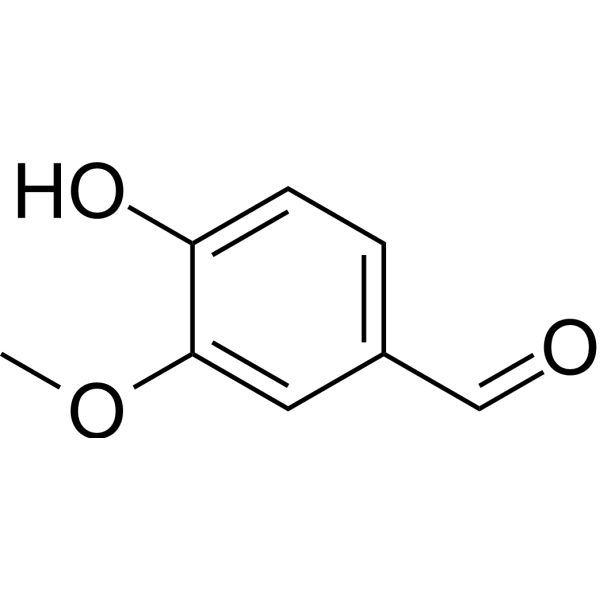
p-Vanillin; m-Methoxy-p-hydroxybenzaldehyde; p-Hydroxy-m-methoxybenzaldehyde
|
Environmental Pollutants
Endogenous Metabolite
|
Others
|
|
Vanillin (p-Vanillin) is a single molecule extracted from vanilla beans and also a popular odor used widely in perfume, food and medicine.
|
-
-
- HY-W007355
-
Skatole
Maximum Cited Publications
6 Publications Verification
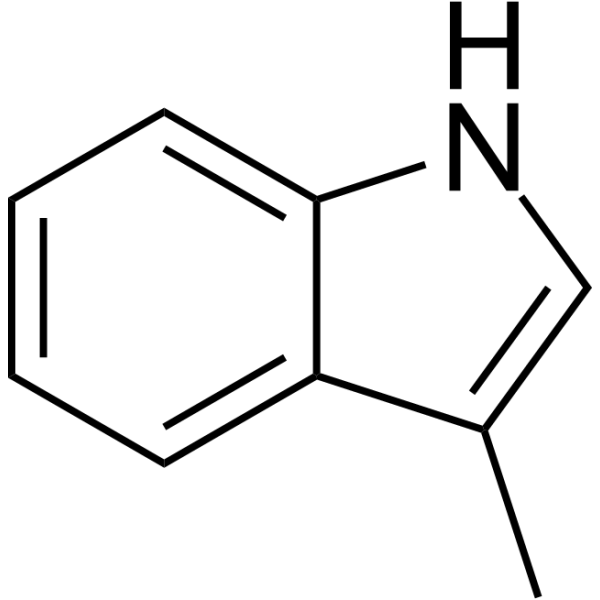
3-Methylindole; 3-Methyl-1H-indole
|
Environmental Pollutants
Apoptosis
Endogenous Metabolite
p38 MAPK
Aryl Hydrocarbon Receptor
|
Others
|
|
Skatole (3-methylindole) is a heterocyclic compound naturally found in the feces of vertebrates and can be found in certain plants. Skatole can be produced by intestinal bacteria, inducing apoptosis of intestinal epithelial cells through activating aryl hydrocarbon receptors (AhR) and p38. Skatole has been used in specific products of the perfume industry or as a flavor additive in ice cream .
|
-
-
- HY-108943
-
|
|
Others
|
Others
|
|
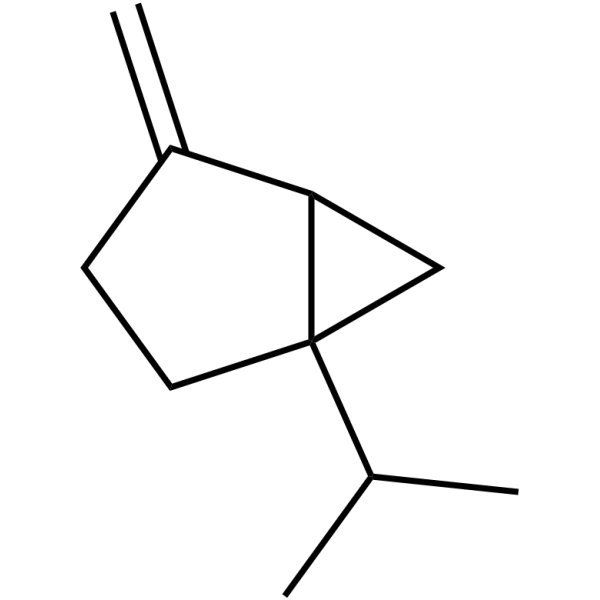
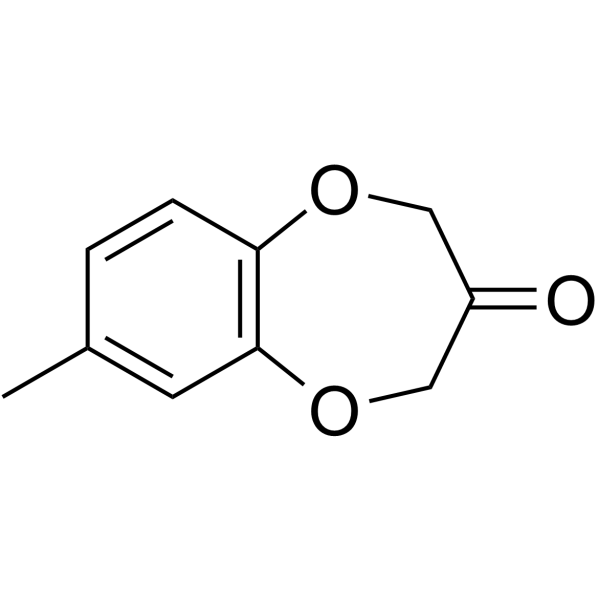
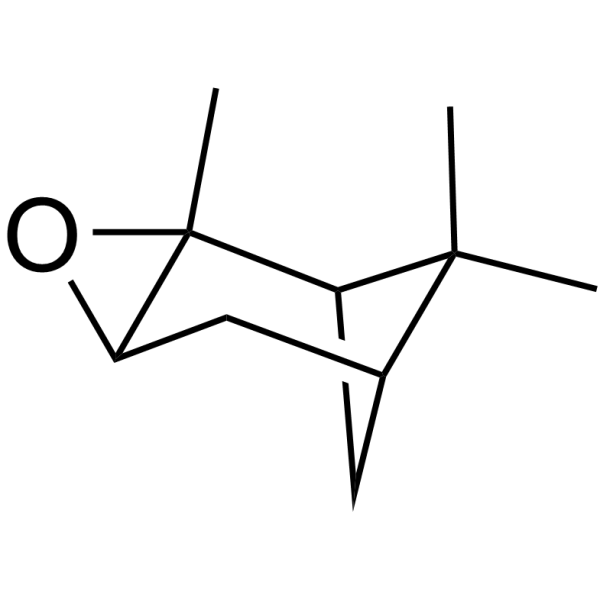
Sabinene is an naturally occurring bicyclic monoterpene which can be used as flavorings, perfume additives, fine chemicals, and advanced biofuels. Sabinene is also an orally active compound to attenuates skeletal muscle atrophy and regulates ROS-mediated MAPK/MuRF-1 pathways .
|
-
-
- HY-W012995
-
|
|
Biochemical Assay Reagents
|
Others
|
|
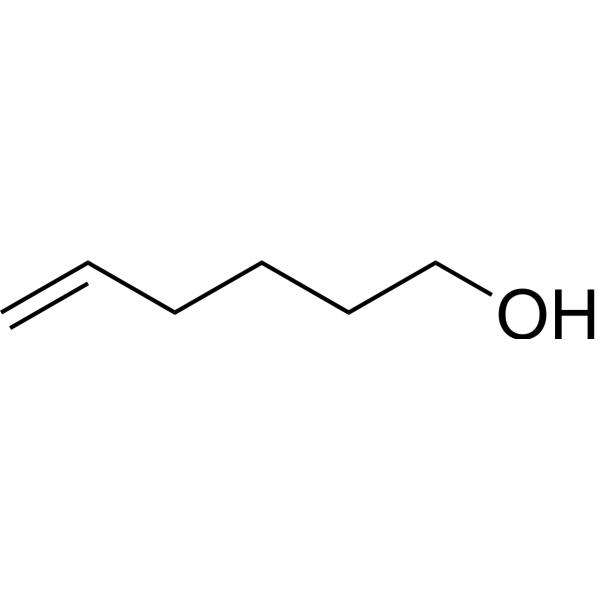
5-Hexen-1-ol, is an aromatic substance with aromas similar to substances such as herbs, tea and citrus. Therefore, it is usually used in the food, fragrance and perfume industries, and is widely used in the preparation of various food flavors, fragrances, taste flavoring agents, essential oils and cosmetics and other products.
|
-
-
- HY-W010639
-
|
Pent-4-en-1-ol
|
Biochemical Assay Reagents
|
Others
|
|
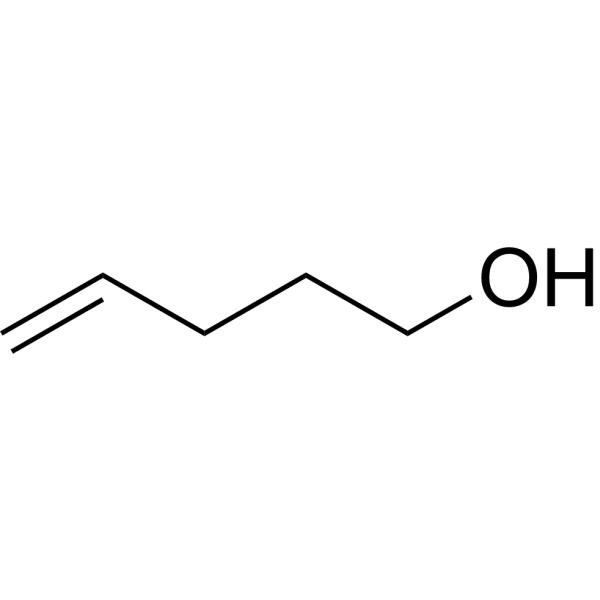
4-Penten-1-ol is commonly used as a flavor ingredient in various products, including food, beverages, and perfumes, and can also be used as a starting material for the synthesis of various organic compounds, including pharmaceuticals and agrochemicals. In addition, 4-Penten -1-ol has been investigated for its potential use as a biobased solvent due to its low toxicity and biodegradability, and its antimicrobial properties against certain bacteria and fungi, which may make it useful for developing new Antibacterial agents.
|
-
-
- HY-W007692
-
|
2-Acetylpyrazine
|
Drug Intermediate
|
Others
|
|
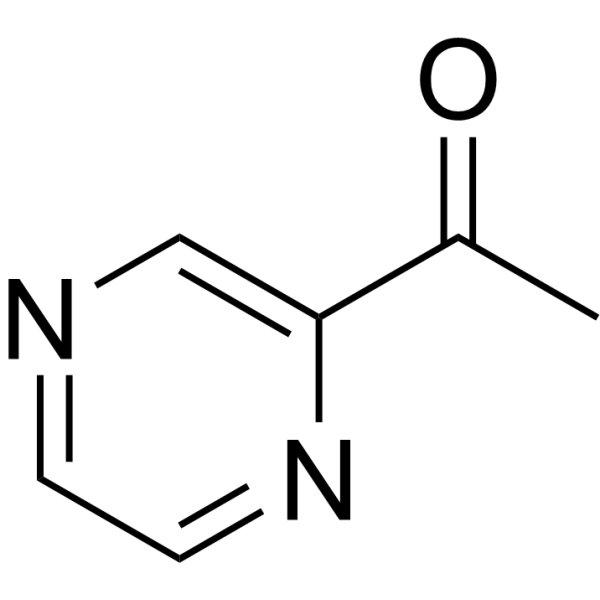
Acetylpyrazine (2-Acetylpyrazine) is used to form many polycyclic compounds, as useful structures in pharmaceuticals and perfumes. Acetylpyrazine is a component of the folates (vitamin B compounds) .
|
-
-
- HY-B0935
-
-
-
- HY-128387
-
|
|
Endogenous Metabolite
|
Cardiovascular Disease
|
|
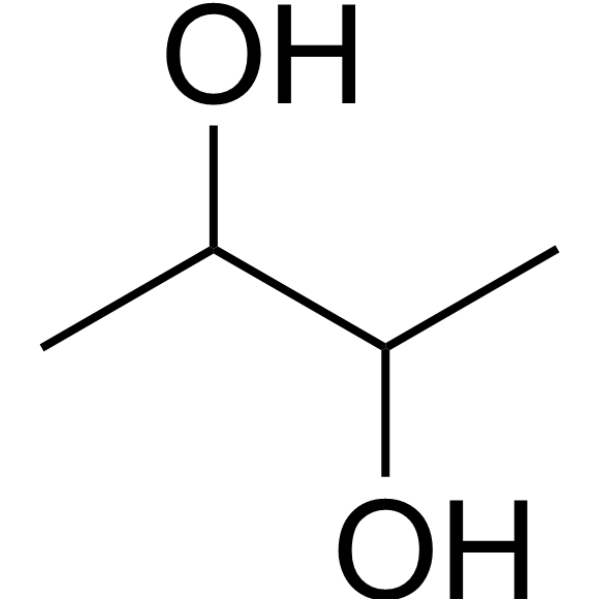
2,3-Butanediol is microbially derived compound that is a discriminating urinary biomarker of Fmo5 -/- mice. 2,3-Butanediol prevents age-related increases in the plasma concentration of cholesterol. 2,3-Butanediol has potential applications in the manufacture of printing inks, perfumes, fumigants, moistening and softening agents, plasticizers, and as a carrier for pharmaceuticals .
|
-
-
- HY-N10013
-
|
|
Environmental Pollutants
Insecticide
|
Others
|
|
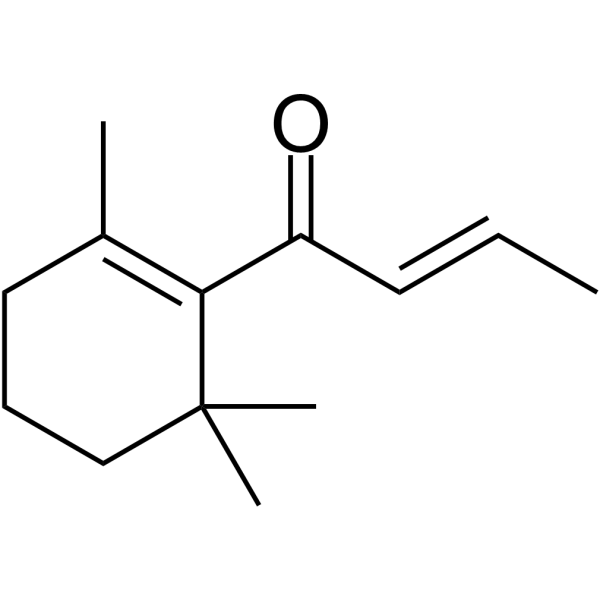
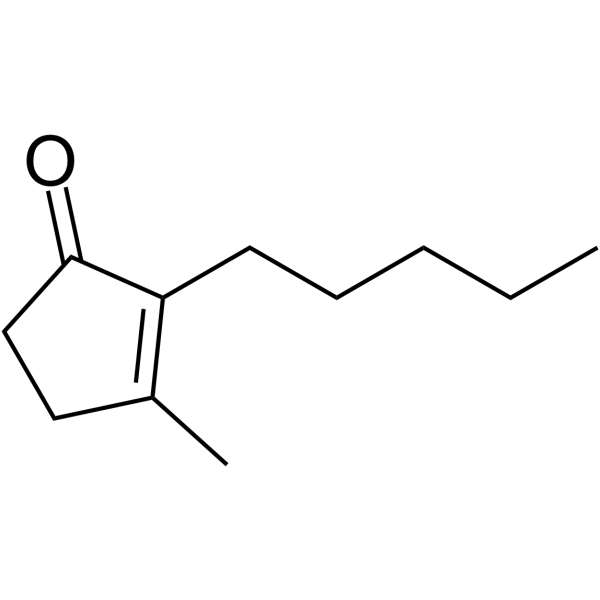
β-Damascone is an aroma active rice volatile and is widely used in perfume compositions. β-Damascone has also received certain attention as a potential cancer chemopreventive and a mosquito and muscoid insecticide .
|
-
-
- HY-N1384
-
|
|
Environmental Pollutants
|
Others
|
|
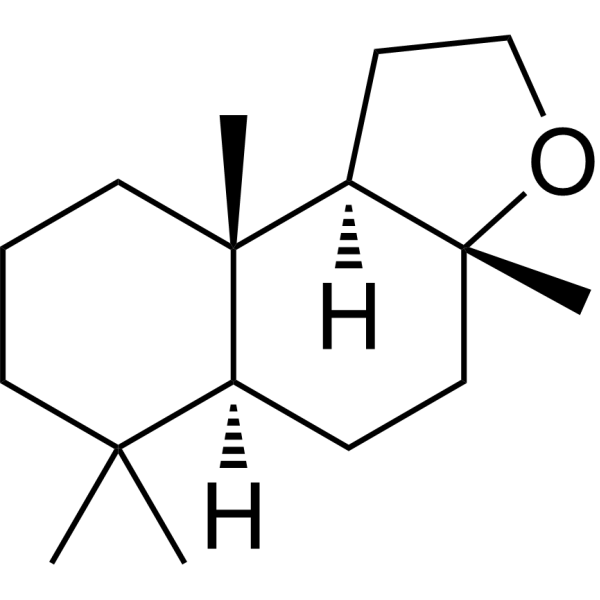
Ambroxide is a naturally occurring terpenoid. Ambroxide is one of the key constituents of ambergris. Ambroxide is used in the manufacture of high-end perfumes to improve the aroma quality and fragrance lasting time of perfumes .
|
-
-
- HY-N7124
-
|
|
Environmental Pollutants
|
Others
|
|
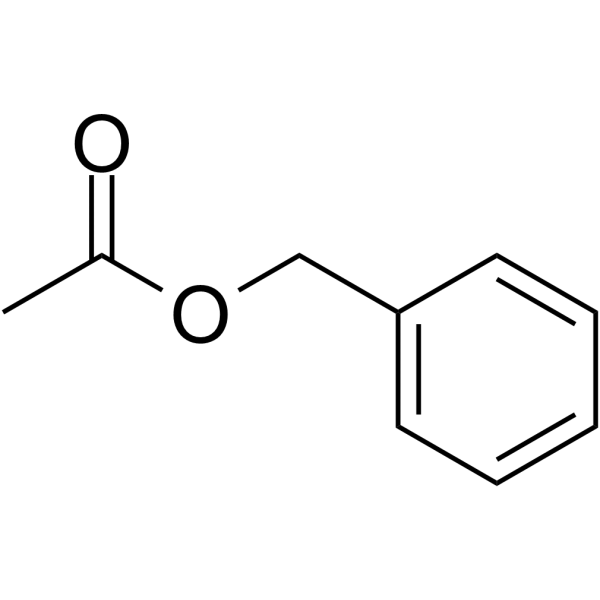
Benzyl acetate is an aromatic ester with a jasmine scent. Benzyl acetate found in plants and is commonly used as a base fragrance ingredient in perfumes, cosmetics, and soap fragrances. Benzyl acetate is also one of the largest varieties in the synthetic fragrance industry .
|
-
-
- HY-W013809
-
|
Stearic acid ethyl ester
|
Biochemical Assay Reagents
|
Others
|
|
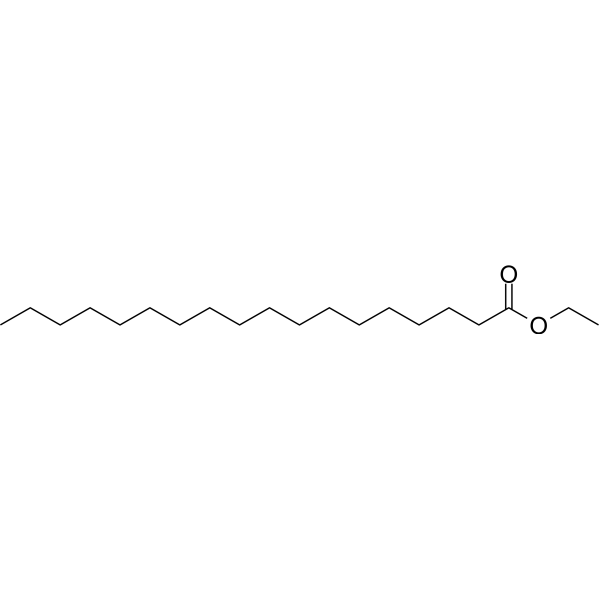
Ethyl stearate is an ester compound produced by the reaction of ethanol and stearic acid. It is commonly used as a flavoring agent in various foods such as baked goods, beverages and desserts. Ethyl stearate is also used as a fragrance ingredient in the manufacture of perfume, cologne and personal care products. Additionally, it has applications in industrial settings such as the production of lubricants and plasticizers.
|
-
-
- HY-W127507
-
|
|
Environmental Pollutants
Biochemical Assay Reagents
|
Others
|
|
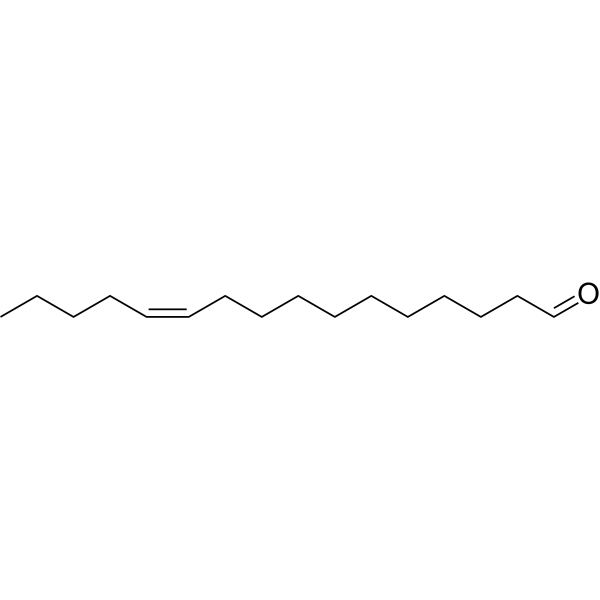
cis-11-Hexadecenal has a fatty, waxy odor and is commonly used as a flavoring agent in the food and beverage industry. In addition, it can be used as an intermediate in the synthesis of various organic compounds, including fragrances, pharmaceuticals, and agrochemicals. Its unique chemical properties make it an important ingredient in a variety of industrial processes, notably in the production of perfumes and air fresheners.
|
-
-
- HY-W016599
-
|
n-Butyl Benzoate
|
Environmental Pollutants
|
Others
|
|
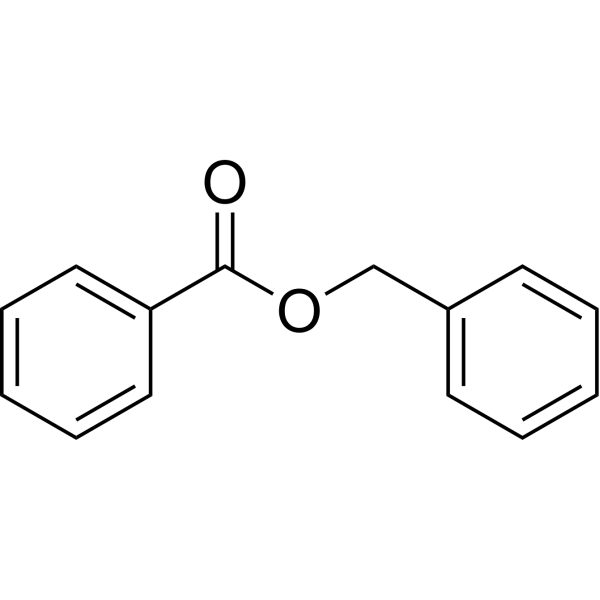
Butyl benzoate (n-Butyl Benzoate) is an ester of an aromatic acid that can be used as a perfume ingredient .
|
-
-
- HY-N0098S2
-
|
p-Vanillin-13C6; m-Methoxy-p-hydroxybenzaldehyde-13C6; p-Hydroxy-m-methoxybenzaldehyde-13C6
|
Endogenous Metabolite
|
Others
|
|
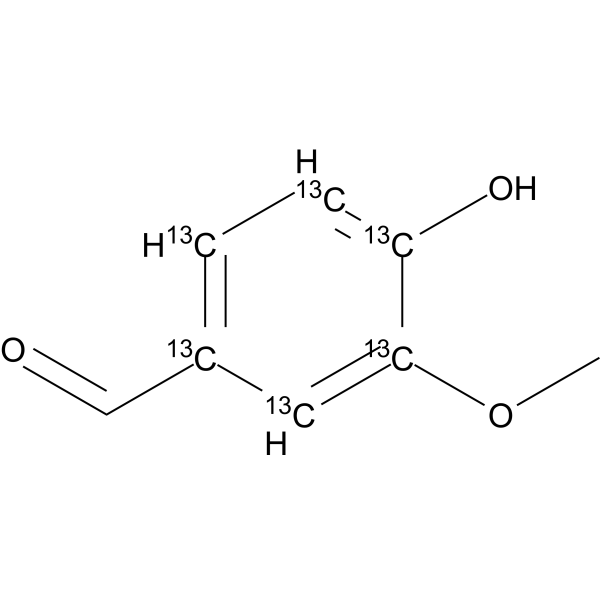
Vanillin- 13C6 is the 13C labeled Vanillin . Vanillin (p-Vanillin) is a single molecule extracted from vanilla beans and also a popular odor used widely in perfume, food and medicine .
|
-
-
- HY-W111375
-
|
|
Biochemical Assay Reagents
|
Others
|
|
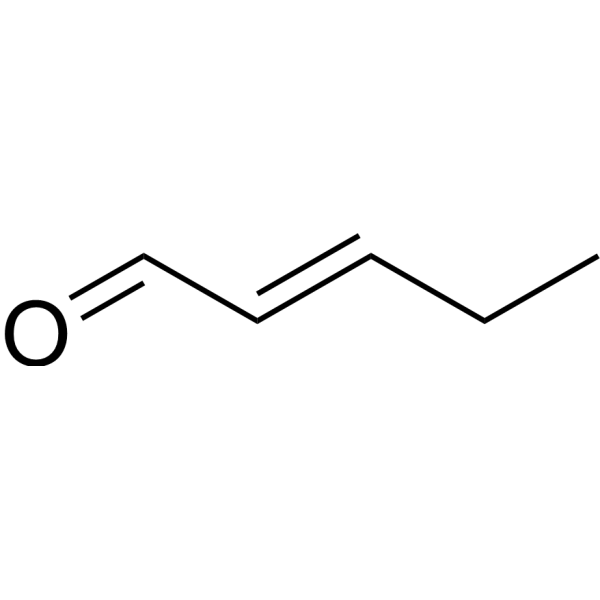
(E)-Pent-2-enal has a pungent fruity odor. This compound is commonly used in the flavor and fragrance industry because of its strong aroma, often described as fresh and green. Furthermore, (E)-Pent-2-enal can be used as an intermediate in the synthesis of various organic compounds, including pharmaceuticals and agrochemicals. Its unique chemical properties make it an important ingredient in many commercial products, including perfumes, air fresheners and cleaners.
|
-
-
- HY-N7098
-
-
-
- HY-W016622
-
-
-
- HY-N2583
-
|
|
Environmental Pollutants
|
Others
|
|
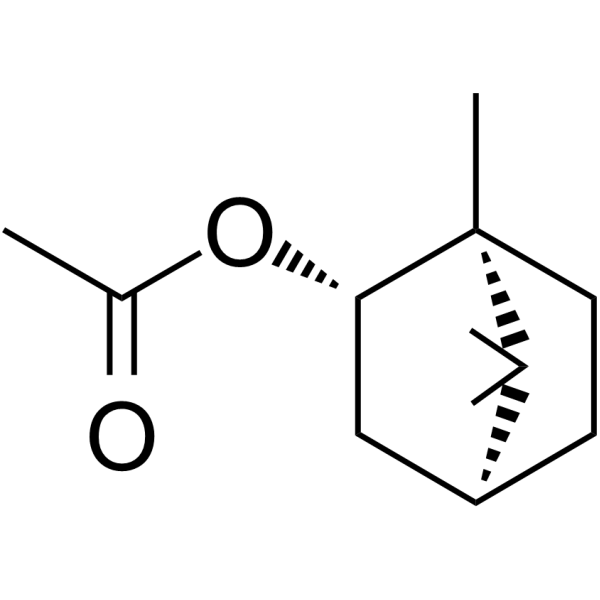
Isobornyl acetate is a compound with an aroma. Isobornyl acetate can be used as a food additive for food flavoring. Isobornyl acetate can also be used as a fragrance in products such as perfumes, cosmetics, and detergents .
|
-
-
- HY-N0098R
-
|
p-Vanillin (Standard); m-Methoxy-p-hydroxybenzaldehyde (Standard); p-Hydroxy-m-methoxybenzaldehyde (Standard)
|
Reference Standards
Endogenous Metabolite
|
Others
|
|
Vanillin (Standard) is the analytical standard of Vanillin. This product is intended for research and analytical applications. Vanillin (p-Vanillin) is a single molecule extracted from vanilla beans and also a popular odor used widely in perfume, food and medicine.
|
-
-
- HY-N8446
-
|
6,10-Dimethylundeca-5,9-dien-2-one; Dihydropseudoionone
|
Environmental Pollutants
Biochemical Assay Reagents
|
Others
|
|
(E/Z)-Geranylacetone is an organic compound commonly used as an ingredient in fragrances and fragrances. It can be used in some products such as perfumes, soaps and cosmetics, and can bring a fresh aromatic smell. In addition, the compound is used in some foods and pharmaceuticals, for example in candy, chewing gum and herbal remedies.
|
-
-
- HY-W127338
-
|
|
Biochemical Assay Reagents
|
Others
|
|
Butyl Palmitate is an ester compound commonly used as a conditioning, emollient or fragrance in a variety of cosmetic and personal care products. In addition, it can be used as a solvent or lubricant in various industrial applications. Its unique chemical properties make it an important ingredient in a variety of commercial products, including perfumes, lotions and hair care products.
|
-
-
- HY-W127745
-
|
Isovegetable alcohol
|
Environmental Pollutants
Biochemical Assay Reagents
|
Others
|
|
Isophytol is a diterpene alcohol commonly found in various plant species, especially in chloroplasts, where it plays a role in photosynthesis. Isophytols have unique chemical properties that make them important ingredients in a variety of industrial processes, including the production of perfumes, essences and cosmetics. It also has potential medicinal properties, including antioxidant and anti-inflammatory effects.
|
-
-
- HY-W127475
-
|
|
Biochemical Assay Reagents
|
Others
|
|
6-Hepten-1-ol has a floral and green odor and is commonly used as a flavoring agent in the food and beverage industry. In addition, it can be used as an intermediate in the synthesis of various organic compounds, including fragrances, pharmaceuticals, and agrochemicals. Its unique chemical properties make it an important ingredient in a variety of industrial processes, notably in the production of perfumes, air fresheners and cleaning agents.
|
-
-
- HY-W099644
-
|
Ethyl erucate
|
Biochemical Assay Reagents
|
Others
|
|
Ethyl docos-13-enoate is a colorless or pale yellow liquid with a sweet floral aroma, used as a flavoring agent in the food industry and as a flavor enhancer in perfumes and colognes. It is also found in some vegetable oils and is used as a surfactant and emulsifier in personal care products. Ethyl docos-13-enoate is a versatile compound used in various industries due to its pleasant odor and ability to mix ingredients together.
|
-
-
- HY-W127515
-
|
Violet leaf aldehyde
|
Environmental Pollutants
Biochemical Assay Reagents
|
Others
|
|
Trans-2, cis-6-NonadienalIt is an organic compound belonging to aldehydes. It has a strong, pungent smell and is commonly found in a variety of foods, including fruits and vegetables. Trans-2, cis-6-NonadienalIt has a variety of applications in the flavor and fragrance industry, especially as a fragrance agent in products such as perfume, cologne and air fresheners. In addition, it can also be used as an intermediate in the synthesis of various chemicals and drugs.
|
-
-
- HY-W007355R
-
|
3-Methylindole (Standard); 3-Methyl-1H-indole (Standard)
|
Reference Standards
Aryl Hydrocarbon Receptor
p38 MAPK
Endogenous Metabolite
Apoptosis
|
Others
|
|
Skatole (Standard) is the analytical standard of Skatole. This product is intended for research and analytical applications. Skatole (3-methylindole) is a heterocyclic compound naturally found in the feces of vertebrates and can be found in certain plants. Skatole can be produced by intestinal bacteria, inducing apoptosis of intestinal epithelial cells through activating aryl hydrocarbon receptors (AhR) and p38. Skatole has been used in specific products of the perfume industry or as a flavor additive in ice cream .
|
-
-
- HY-W013521
-
|
|
Environmental Pollutants
|
Others
|
|
Hexyl Salicylate is a commonly used fragrance component, widely applied in cosmetics, perfumes, cleaning products, etc. Hexyl Salicylate has low acute toxicity, no irritation to human skin, no phototoxicity and no photosensitization .
|
-
-
- HY-N7851
-
|
|
Others
|
Infection
Others
Inflammation/Immunology
|
|
Terpineol is a monoterpenoid alcohol compound that is widely found in plants, especially in the peels of citrus fruits. Terpineol has antioxidant, anti-inflammatory and antibacterial activities and is commonly used in the fragrance industry as an additive in food, beverages, cosmetics and perfumes .
|
-
-
- HY-W039379
-
|
trans-2-Octenoic acid methyl ester
|
Biochemical Assay Reagents
|
Others
|
|
Methyl (E)-oct-2-enoate is commonly used as an ingredient in perfume, cologne, and food flavor in the perfume and fragrance industry. Its pleasant fragrance and low volatility make it a good choice for adding fruit to various products. A popular choice for incense, in addition to its application in the fragrance and fragrance industry, Methyl (E)-oct-2-enoate is also used as a raw material for the synthesis of other organic compounds, it can be oxidized to form methyl 3-oxobutyrate, Used in the production of pharmaceuticals and agrochemicals. Overall, Methyl (E)-oct-2-enoate is a versatile compound that is used in various industries for its pleasant aroma and reactivity, its fruity and floral notes in fragrances and essences Industry is highly sought after, and its ability to serve as a starting material for other compounds makes it useful in organic synthesis.
|
-
-
- HY-W015308
-
|
Pelargonic acid methyl ester
|
Biochemical Assay Reagents
Endogenous Metabolite
|
Others
|
|
Methyl nonanoate is an ester compound obtained by the reaction of methanol and nonanoic acid. It has a fruity aroma and is commonly used as a flavoring agent in a variety of foods such as baked goods, confectionary and beverages. Methyl nonanoate is also used as a fragrance ingredient in the manufacture of perfume, cologne and personal care products. Furthermore, it has applications in industrial settings, for example in the production of solvents, resins and plasticizers.
|
-
-
- HY-113146
-
|
Oct-2-enal
|
Biochemical Assay Reagents
|
Others
|
|
2-Octenal is an unsaturated aldehyde commonly found in essential oils of various plants, especially citrus fruits. 2-Octenal has unique chemical properties that make it an important ingredient in many applications where a strong, sweet and fruity aroma is desired. It is commonly used as a flavoring agent in food and beverages, and as a fragrance in perfumes, soaps, and cosmetics.
|
-
-
- HY-N7090
-
|
|
Environmental Pollutants
|
Others
|
|
Benzyl cinnamate, occurs in Balsam of Peru and Tolu balsam, in Sumatra and Penang benzoin, and as the main constituent of copaiba balsam, is used in heavy oriental perfumes and as a fixative. Benzyl cinnamate has antibacterial activity against S. aureus and S. epidermidis (MIC = 537.81 μM). Benzyl cinnamate can induce acute toxixity, depression, and skin irritation in vivo .
|
-
-
- HY-W127366
-
|
|
Biochemical Assay Reagents
|
Others
|
|
7-Octen-1-ol is an organic compound belonging to the group of alcohols. It has a strong mushroom-like smell and is commonly found in a variety of foods, such as mushrooms, soybeans, and peanuts. 7-Octen-1-ol has various applications in the flavor and fragrance industry, especially as a fragrance agent in products such as perfumes, colognes and air fresheners. In addition, it has potential utility in inhibiting inflammation-related diseases and cancer.
|
-
-
- HY-128387R
-
|
|
Reference Standards
Endogenous Metabolite
|
Cardiovascular Disease
|
|
2,3-Butanediol (Standard) is the analytical standard of 2,3-Butanediol (HY-128387). This product is intended for research and analytical applications. 2,3-Butanediol is microbially derived compound that is a discriminating urinary biomarker of Fmo5 -/- mice. 2,3-Butanediol prevents age-related increases in the plasma concentration of cholesterol. 2,3-Butanediol has potential applications in the manufacture of printing inks, perfumes, fumigants, moistening and softening agents, plasticizers, and as a carrier for pharmaceuticals.
|
-
-
- HY-128387S1
-
|
|
Isotope-Labeled Compounds
Endogenous Metabolite
|
Cardiovascular Disease
|
|
2,3-Butanediol-d8 is the deuterium labeled 2,3-Butanediol (HY-128387) . 2,3-Butanediol is microbially derived compound that is a discriminating urinary biomarker of Fmo5 -/- mice. 2,3-Butanediol prevents age-related increases in the plasma concentration of cholesterol. 2,3-Butanediol has potential applications in the manufacture of printing inks, perfumes, fumigants, moistening and softening agents, plasticizers, and as a carrier for pharmaceuticals .
|
-
-
- HY-W010202
-
|
3,7-Dimethyloct-6-en-3-ol
|
Environmental Pollutants
|
Others
|
|
Dihydrolinalool, Dihydrolinalool is commonly used as a flavor ingredient in various products, including food, beverages, and perfumes, and it can also be used as a base material for the synthesis of various organic compounds, including pharmaceuticals and agrochemicals. In addition, due to Dihydrolinalool's low toxicity and Biodegradability, which has been studied for its potential use as a bio-based solvent, has also been studied for its potential antioxidant and anti-inflammatory properties, which may make it useful in the study of various diseases, including cancer and Alzheimer's disease. Alzheimer's disease.
|
-
-
- HY-W013809R
-
|
Stearic acid ethyl ester (Standard)
|
Biochemical Assay Reagents
Reference Standards
|
Others
|
|
Ethyl stearate (Standard) is the analytical standard of Ethyl stearate. This product is intended for research and analytical applications. Ethyl stearate is an ester compound produced by the reaction of ethanol and stearic acid. It is commonly used as a flavoring agent in various foods such as baked goods, beverages and desserts. Ethyl stearate is also used as a fragrance ingredient in the manufacture of perfume, cologne and personal care products. Additionally, it has applications in industrial settings such as the production of lubricants and plasticizers.
|
-
-
- HY-N0098S3
-
|
|
Endogenous Metabolite
|
Others
|
|
Vanillin- 13C is the 13C labeled Vanillin . Vanillin (p-Vanillin) is a single molecule extracted from vanilla beans and also a popular odor used widely in perfume, food and medicine .
|
-
-
- HY-W127535
-
|
|
Biochemical Assay Reagents
|
Others
|
|
Propyl n-octanoate is an ester compound with a fruity odor commonly used as a flavoring agent in the food and beverage industry. Furthermore, it can also be used as a solvent or intermediate in various industrial applications. Its unique chemical properties make it an important ingredient in a variety of commercial products, including perfumes, lotions and hair care products.
|
-
-
- HY-W013466
-
|
Sebacic acid dimethyl ester
|
Biochemical Assay Reagents
|
Others
|
|
Dimethyl decanedioate belongs to the class of diesters and consists of a sebacic acid backbone (also known as sebacic acid) esterified with two methyl groups. This compound has a fruity smell and is commonly used as a flavor and fragrance ingredient in a variety of products, including perfumes, soaps and cosmetics. It can also be used as a plasticizer in the production of polymers and as a neutralizer in the synthesis of certain drugs.
|
-
-
- HY-W127573
-
|
|
Biochemical Assay Reagents
|
Others
|
|
Ethyl trans-2-decenoate has a fruity and floral aroma and is commonly used as a flavoring agent in the food and beverage industry. In addition, it can be used as an intermediate in the synthesis of various organic compounds, including fragrances and pharmaceuticals. Its unique chemical properties make it an important ingredient in a variety of industrial processes, notably in the production of perfumes and air fresheners.
|
-
-
- HY-W127583
-
|
|
Biochemical Assay Reagents
|
Others
|
|
Ethyl trans-4-decenoateIt is an organic compound belonging to esters. It consists of ethanol and trans-4-Decenoic acid reacts to form. Ethyl trans-4-decenoateIt has a variety of applications in the flavor and fragrance industry, especially as a fragrance agent in products such as perfume, cologne and air fresheners. In addition, it can also be used as a flavoring agent in food.
|
-
-
- HY-W127491
-
|
Elaidyl alcohol
|
Biochemical Assay Reagents
|
Others
|
|
Trans-9-Octadecenol is an organic compound belonging to the group of alcohols. It has a mild fatty smell and is commonly found in a variety of foods, such as meat and dairy products. Trans-9-Octadecenol has several applications in the flavor and fragrance industry, especially as a fragrance agent in products such as perfumes, colognes and air fresheners. In addition, it has potential utility in inhibiting inflammation-related diseases and cancer.
|
-
-
- HY-B0935R
-
-
-
- HY-W015487
-
|
Ethyl 3-oxohexanoate
|
Biochemical Assay Reagents
|
Others
|
|
Ethyl butyrylacetate is an organic compound belonging to the class of esters. Synthesized by the reaction of ethyl acetate, butyric acid and acetic anhydride. Ethyl butyrylacetate has a fruity aroma and is commonly used as a flavoring agent in various food and beverages such as candies, ice cream and soft drinks. It is also used as a fragrance ingredient in perfumes and personal care products. In addition to its use in the food and fragrance industries, Ethyl butyrylacetate is also used in industrial settings, such as in the production of solvents.
|
-
-
- HY-W101301
-
|
|
Environmental Pollutants
Biochemical Assay Reagents
|
Others
|
|
cis-5-Octen-1-ol is an organic compound belonging to alcohols. It has a strong earthy smell and is commonly found in a variety of foods such as fruits, vegetables and spices. cis-5-Octen-1-ol has various applications in the flavor and fragrance industry, especially as a flavoring and aroma enhancer in products such as perfume, cologne and baked goods. In addition, it has potential utility in inhibiting inflammation-related diseases and cancer.
|
-
-
- HY-N10013R
-
|
|
Insecticide
Reference Standards
|
Others
|
|
β-Damascone (Standard) is the analytical standard of β-Damascone. This product is intended for research and analytical applications. β-Damascone is an aroma active rice volatile and is widely used in perfume compositions. β-Damascone has also received certain attention as a potential cancer chemopreventive and a mosquito and muscoid insecticide .
|
-
-
- HY-N7090S
-
|
|
Isotope-Labeled Compounds
|
Others
|
|
Benzyl cinnamate-d5 is the deuterium labeled Benzyl cinnamate . Benzyl cinnamate, occurs in Balsam of Peru and Tolu balsam, in Sumatra and Penang benzoin, and as the main constituent of copaiba balsam, is used in heavy oriental perfumes and as a fixative .
|
-
-
- HY-W007692S
-
|
2-Acetylpyrazine-d3
|
Isotope-Labeled Compounds
|
Others
|
|
Acetylpyrazine-d3 is deuterated labeled Acetylpyrazine (HY-W007692). Acetylpyrazine (2-Acetylpyrazine) is used to form many polycyclic compounds, as useful structures in pharmaceuticals and perfumes. Acetylpyrazine is a component of the folates (vitamin B compounds) .
|
-
- HY-N0098S
-
|
p-Vanillin-13C,d3; m-Methoxy-p-hydroxybenzaldehyde-13C,d3; p-Hydroxy-m-methoxybenzaldehyde-13C,d3
|
Endogenous Metabolite
|
Others
|
|
Vanillin- 13C,d3 is the 13C and deuterium labeled Vanillin . Vanillin (p-Vanillin) is a single molecule extracted from vanilla beans and also a popular odor used widely in perfume, food and medicine .
|
-
- HY-N0098S1
-
|
|
Endogenous Metabolite
|
Others
|
|
4- Hydroxy-3-methoxy benzaldehyde-d3 is the deuterium labeled Vanillin . Vanillin (p-Vanillin) is a single molecule extracted from vanilla beans and also a popular odor used widely in perfume, food and medicine .
|
-
- HY-N2583R
-
|
|
Reference Standards
Others
|
Others
|
|
Isobornyl acetate (Standard) is the analytical standard of Isobornyl acetate (HY-N2583). This product is intended for research and analytical applications. Isobornyl acetate is a compound with an aroma. Isobornyl acetate can be used as a food additive for food flavoring. Isobornyl acetate can also be used as a fragrance in products such as perfumes, cosmetics, and detergents .
|
-
- HY-W127540
-
|
Hexadecyl acetate
|
Environmental Pollutants
Biochemical Assay Reagents
|
Others
|
|
Palmityl acetate is an ester compound with a waxy odor commonly used as a lubricant or emollient in various cosmetic and personal care products. In addition, it can be used as a plasticizer or stabilizer in the production of plastics and resins. Its unique chemical properties make it an important ingredient in a variety of commercial products, including perfumes, lotions and hair care products.
|
-
- HY-W702290
-
|
|
Endogenous Metabolite
|
Others
|
|
2-Methyldecanenitrile is a compound with biological activity for fragrance applications. 2-Methyldecanenitrile exhibits a rich peach aroma with frankincense undertones in perfume compositions. 2-Methyldecanenitrile is stable across the entire pH range, enabling it to create a stable fruity effect at low concentrations in any application .
|
-
- HY-N7124R
-
|
|
Reference Standards
Others
|
Others
|
|
Benzyl acetate (Standard) is the analytical standard of Benzyl acetate (HY-N7124). This product is intended for research and analytical applications. Benzyl acetate is an aromatic ester with a jasmine scent. Benzyl acetate found in plants and is commonly used as a base fragrance ingredient in perfumes, cosmetics, and soap fragrances. Benzyl acetate is also one of the largest varieties in the synthetic fragrance industry.
|
-
- HY-N7124S
-
|
|
Isotope-Labeled Compounds
|
Others
|
Benzyl acetate-d5 is the deuterium labeled Benzyl acetate (HY-N7124) . Benzyl acetate is an aromatic ester with a jasmine scent. Benzyl acetate found in plants and is commonly used as a base fragrance ingredient in perfumes, cosmetics, and soap fragrances. Benzyl acetate is also one of the largest varieties in the synthetic fragrance industry .
|
-
- HY-W128313
-
|
2,2,2-Trichloro-1-phenylethyl acetate
|
Biochemical Assay Reagents
|
Others
|
|
Alpha-(trichloromethyl)benzyl acetate (2,2,2-Trichloro-1-phenylethyl acetate) can be used as a fixative in soap fragrances, especially suitable for soap and cosmetic perfume formulations, acting as a harmonizer in formulations. Alpha-(trichloromethyl)benzyl acetate is a kind of biological materials or organic compounds that are widely used in life science research .
|
-
- HY-W127428
-
|
Pentyl 3-methylbutanoate
|
Biochemical Assay Reagents
|
Others
|
|
Pentyl isovalerateIt is an organic compound belonging to esters. Formed from the reaction of amyl alcohol and isovaleric acid, it has a fruity and slightly floral aroma. Pentyl isovalerateIt has a variety of applications in the flavor and fragrance industry, especially as a fragrance agent in products such as perfume, cologne and air fresheners. In addition, it is used as a food flavoring agent and as a solvent and plasticizer in industrial settings.
|
-
- HY-W127443
-
|
|
Biochemical Assay Reagents
|
Others
|
|
3-Heptenoic acidIt is an organic compound belonging to the class of unsaturated fatty acids. It has a strong, unpleasant smell and is commonly found in a variety of foods, such as beer and dairy products. 3-Heptenoic acidIt has various applications in the fragrance and fragrance industry, especially as a fragrance and flavoring agent in products such as perfume, cologne and food additives. In addition, it can also be used as an intermediate in the synthesis of various chemicals and drugs.
|
-
- HY-W015308R
-
|
Pelargonic acid methyl ester (Standard)
|
Biochemical Assay Reagents
Reference Standards
Endogenous Metabolite
|
Others
|
|
Methyl nonanoate (Standard) is the analytical standard of Methyl nonanoate. This product is intended for research and analytical applications. Methyl nonanoate is an ester compound obtained by the reaction of methanol and nonanoic acid. It has a fruity aroma and is commonly used as a flavoring agent in a variety of foods such as baked goods, confectionary and beverages. Methyl nonanoate is also used as a fragrance ingredient in the manufacture of perfume, cologne and personal care products. Furthermore, it has applications in industrial settings, for example in the production of solvents, resins and plasticizers.
|
-
- HY-N7090R
-
|
|
Others
Reference Standards
|
Others
|
|
Benzyl cinnamate (Standard) is the analytical standard of Benzyl cinnamate. This product is intended for research and analytical applications. Benzyl cinnamate, occurs in Balsam of Peru and Tolu balsam, in Sumatra and Penang benzoin, and as the main constituent of copaiba balsam, is used in heavy oriental perfumes and as a fixative. Benzyl cinnamate has antibacterial activity against S. aureus and S. epidermidis (MIC = 537.81 μM). Benzyl cinnamate can induce acute toxixity, depression, and skin irritation in vivo .
|
-
- HY-128387S
-
|
|
Isotope-Labeled Compounds
Endogenous Metabolite
|
Infection
|
|
2,3-Butanediol-d6 is the deuterium labeled 2,3-Butanediol (HY-128387) . 2,3-Butanediol is microbially derived compound that is a discriminating urinary biomarker of Fmo5 -/- mice. 2,3-Butanediol prevents age-related increases in the plasma concentration of cholesterol. 2,3-Butanediol has potential applications in the manufacture of printing inks, perfumes, fumigants, moistening and softening agents, plasticizers, and as a carrier for pharmaceuticals .
|
-
- HY-W127505S
-
|
|
Biochemical Assay Reagents
Isotope-Labeled Compounds
|
Others
|
|
trans-2-Undecenal-d5 is deuterated labeled trans-2-Undecenal (HY-W127505). Trans-2-UndecenalIt is an organic compound belonging to aldehydes. It has a strong, pungent smell and is commonly found in a variety of foods, including fruits and vegetables. Trans-2-UndecenalIt has a variety of applications in the flavor and fragrance industry, especially as a fragrance agent in products such as perfume, cologne and air fresheners. In addition, it can also be used as an intermediate in the synthesis of various chemicals and drugs.
|
-
- HY-W715850
-
|
Ethyl 3-oxohexanoate-d5
|
Isotope-Labeled Compounds
Biochemical Assay Reagents
|
Others
|
|
Ethyl butyrylacetate-d5 (Ethyl 3-oxohexanoate-d5) is the deuterium labeled Ethyl butyrylacetate (HY-W015487). Ethyl butyrylacetate is an organic compound belonging to the class of esters. Synthesized by the reaction of ethyl acetate, butyric acid and acetic anhydride. Ethyl butyrylacetate has a fruity aroma and is commonly used as a flavoring agent in various food and beverages such as candies, ice cream and soft drinks. It is also used as a fragrance ingredient in perfumes and personal care products. In addition to its use in the food and fragrance industries, Ethyl butyrylacetate is also used in industrial settings, such as in the production of solvents.
|
-
- HY-W127515S
-
|
Violet leaf aldehyde-13C2
|
Biochemical Assay Reagents
Isotope-Labeled Compounds
|
Others
|
|
trans-2,cis-6-Nonadienal- 13C2 is 13C labeled trans-2,cis-6-Nonadienal (HY-W127515). Trans-2, cis-6-NonadienalIt is an organic compound belonging to aldehydes. It has a strong, pungent smell and is commonly found in a variety of foods, including fruits and vegetables. Trans-2, cis-6-NonadienalIt has a variety of applications in the flavor and fragrance industry, especially as a fragrance agent in products such as perfume, cologne and air fresheners. In addition, it can also be used as an intermediate in the synthesis of various chemicals and drugs.
|
-
- HY-W012952R
-
|
trans,trans-2,4-Heptadienall (Standard)
|
Biochemical Assay Reagents
Reference Standards
|
Others
|
|
(2E,4E)-Hepta-2,4-dienal (Standard) is the analytical standard of (2E,4E)-Hepta-2,4-dienal. This product is intended for research and analytical applications. (2E,4E)-Hepta-2,4-dienal is a naturally occurring organic compound that belongs to the group of aldehydes. It is an unsaturated aldehyde with two conjugated double bonds, giving it unique chemical and physical properties. (2E,4E)-Hepta-2,4-dienal is commonly found in various plant sources, especially in spices such as parsley and coriander. It is used as a flavoring agent and food additive in the formulation of various foods such as baked goods, snacks and beverages. It is also used in the fragrance industry, especially in the production of perfume and cologne.
|
-
- HY-N7098R
-
-
- HY-N1384B
-
|
|
Biochemical Assay Reagents
|
Others
|
|
(rel)-Ambroxide is the racemic form of Ambroxide (HY-N1384). Ambroxide is a naturally occurring terpenoid. Ambroxide is one of the key constituents of ambergris. Ambroxide is used in the manufacture of high-end perfumes to improve the aroma quality and fragrance lasting time of perfumes .
|
-
- HY-N1384A
-
|
|
Biochemical Assay Reagents
|
Others
|
|
(rac)-Ambroxide is a racemic mixture of Ambroxide (HY-N1384). Ambroxide is a naturally occurring terpenoid. Ambroxide is one of the key constituents of ambergris. Ambroxide is used in the manufacture of high-end perfumes to improve the aroma quality and fragrance lasting time of perfumes .
|
-
- HY-W133973
-
|
Jasmine oil Jasminum grandiflorum L
|
Others
|
Others
|
|
Jasmine absolute is an aromatic substance extracted from jasmine and is widely used in perfumes, skincare products, and aromatherapy.
|
-
- HY-N18817
-
-
- HY-N18809
-
|
|
Others
|
Infection
|
|
Rose oil is widely used as a flavoring agent in beauty, body care, food, tobacco, perfumes, and cosmetics. Rose oil also has benefits in preventing infectious diseases and regulating the endocrine system.
|
-
- HY-W016599R
-
|
n-Butyl Benzoate (Standard)
|
Others
Reference Standards
|
Others
|
|
Butyl benzoate (Standard) is the analytical standard of Butyl benzoate (HY-W016599). This product is intended for research and analytical applications. Butyl benzoate (n-Butyl Benzoate) is an ester of an aromatic acid that can be used as a perfume ingredient .
|
-
- HY-W099995
-
|
|
Environmental Pollutants
Biochemical Assay Reagents
|
Others
|
|
2-Phenylethyl propionate is an aromatic compound with sweet, fruity and floral notes, which acts as an insect attractant. 2-Phenylethyl propionate is widely used in cosmetics such as perfumes, shampoos and soaps, as well as non-cosmetic products including detergents and household cleaners. 2-Phenylethyl propionate has been granted GRAS (Generally Recognized As Safe) certification by the U.S. Food and Drug Administration .
|
-
- HY-W007355S2
-
|
3-Methylindole-13C6; 3-Methyl-1H-indole-13C6
|
Isotope-Labeled Compounds
Aryl Hydrocarbon Receptor
p38 MAPK
Endogenous Metabolite
Apoptosis
|
Others
|
|
Skatole- 13C6 is the 13C-labeled Skatole (HY-W007355). Skatole (3-methylindole) is a heterocyclic compound naturally found in the feces of vertebrates and can be found in certain plants. Skatole can be produced by intestinal bacteria, inducing apoptosis of intestinal epithelial cells through activating aryl hydrocarbon receptors (AhR) and p38. Skatole has been used in specific products of the perfume industry or as a flavor additive in ice cream.
|
-
- HY-178399S
-
|
Pelargonic acid methyl ester-d17
|
Isotope-Labeled Compounds
Endogenous Metabolite
Biochemical Assay Reagents
|
Others
|
|
Methyl nonanoate-d17 (Pelargonic acid methyl ester-d17) is the deuterium labeled Methyl nonanoate (HY-W015308). Methyl nonanoate is an ester compound obtained by the reaction of methanol and nonanoic acid. It has a fruity aroma and is commonly used as a flavoring agent in a variety of foods such as baked goods, confectionary and beverages. Methyl nonanoate is also used as a fragrance ingredient in the manufacture of perfume, cologne and personal care products. Furthermore, it has applications in industrial settings, for example in the production of solvents, resins and plasticizers.
|
-
- HY-W004303S
-
|
Tetradecyl Aldehyde-d27
|
Isotope-Labeled Compounds
|
Others
|
|
Tetradecanal-d27 (Tetradecyl Aldehyde-d27) is the deuterium labeled Tetradecanal. Tetradecanal is a compound belonging to the class of fatty aldehydes. It is an aldehyde with a 14-carbon chain that occurs naturally in certain plant and animal sources, such as coconut oil and butter. Due to its unique properties, Tetradecanal has several uses in industry, such as a flavoring agent in certain foods and as a precursor for the production of perfumes and other cosmetics. It is also used as an insecticide and insecticide due to its ability to repel certain types of insects.
|
-
- HY-N8446R
-
|
6,10-Dimethylundeca-5,9-dien-2-one (Standard); Dihydropseudoionone (Standard)
|
Biochemical Assay Reagents
Reference Standards
|
Others
|
|
(E/Z)-Geranylacetone (Standard) (6,10-Dimethylundeca-5,9-dien-2-one (Standard)) is the analytical standard of (E/Z)-Geranylacetone (HY-N8446). This product is intended for research and analytical applications. (E/Z)-Geranylacetone is an organic compound commonly used as an ingredient in fragrances and fragrances. It can be used in some products such as perfumes, soaps and cosmetics, and can bring a fresh aromatic smell. In addition, the compound is used in some foods and pharmaceuticals, for example in candy, chewing gum and herbal remedies.
|
-
- HY-W127515R
-
|
Violet leaf aldehyde (Standard)
|
Biochemical Assay Reagents
Reference Standards
|
Others
|
|
trans-2,cis-6-Nonadienal (Standard) is the analytical standard of trans-2,cis-6-Nonadienal. This product is intended for research and analytical applications. Trans-2, cis-6-NonadienalIt is an organic compound belonging to aldehydes. It has a strong, pungent smell and is commonly found in a variety of foods, including fruits and vegetables. Trans-2, cis-6-NonadienalIt has a variety of applications in the flavor and fragrance industry, especially as a fragrance agent in products such as perfume, cologne and air fresheners. In addition, it can also be used as an intermediate in the synthesis of various chemicals and drugs.
|
-
- HY-W769547
-
|
|
Isotope-Labeled Compounds
Biochemical Assay Reagents
|
Others
|
|
trans-2,cis-6-Nonadienal-d5 is the deuterium labeled Trans-2,cis-6-Nonadienal (HY-W127515). Trans-2, cis-6-NonadienalIt is an organic compound belonging to aldehydes. It has a strong, pungent smell and is commonly found in a variety of foods, including fruits and vegetables. Trans-2, cis-6-NonadienalIt has a variety of applications in the flavor and fragrance industry, especially as a fragrance agent in products such as perfume, cologne and air fresheners. In addition, it can also be used as an intermediate in the synthesis of various chemicals and drugs.
|
-
- HY-W010639S
-
|
Pent-4-en-1-ol-d9
|
Isotope-Labeled Compounds
Biochemical Assay Reagents
|
Others
|
|
4-Penten-ol-d9 (Pent-4-en-1-ol-d9) is the deuterium labeled 4-Penten-1-ol (HY-W010639). 4-Penten-1-ol is commonly used as a flavor ingredient in various products, including food, beverages, and perfumes, and can also be used as a starting material for the synthesis of various organic compounds, including pharmaceuticals and agrochemicals. In addition, 4-Penten -1-ol has been investigated for its potential use as a biobased solvent due to its low toxicity and biodegradability, and its antimicrobial properties against certain bacteria and fungi, which may make it useful for developing new Antibacterial agents.
|
-
| Cat. No. |
Product Name |
Type |
-
- HY-W012995
-
|
|
Biochemical Assay Reagents
|
|
5-Hexen-1-ol, is an aromatic substance with aromas similar to substances such as herbs, tea and citrus. Therefore, it is usually used in the food, fragrance and perfume industries, and is widely used in the preparation of various food flavors, fragrances, taste flavoring agents, essential oils and cosmetics and other products.
|
-
- HY-W010639
-
|
Pent-4-en-1-ol
|
Biochemical Assay Reagents
|
|
4-Penten-1-ol is commonly used as a flavor ingredient in various products, including food, beverages, and perfumes, and can also be used as a starting material for the synthesis of various organic compounds, including pharmaceuticals and agrochemicals. In addition, 4-Penten -1-ol has been investigated for its potential use as a biobased solvent due to its low toxicity and biodegradability, and its antimicrobial properties against certain bacteria and fungi, which may make it useful for developing new Antibacterial agents.
|
-
- HY-W013809
-
|
Stearic acid ethyl ester
|
Biochemical Assay Reagents
|
|
Ethyl stearate is an ester compound produced by the reaction of ethanol and stearic acid. It is commonly used as a flavoring agent in various foods such as baked goods, beverages and desserts. Ethyl stearate is also used as a fragrance ingredient in the manufacture of perfume, cologne and personal care products. Additionally, it has applications in industrial settings such as the production of lubricants and plasticizers.
|
-
- HY-W127507
-
|
|
Biochemical Assay Reagents
|
|
cis-11-Hexadecenal has a fatty, waxy odor and is commonly used as a flavoring agent in the food and beverage industry. In addition, it can be used as an intermediate in the synthesis of various organic compounds, including fragrances, pharmaceuticals, and agrochemicals. Its unique chemical properties make it an important ingredient in a variety of industrial processes, notably in the production of perfumes and air fresheners.
|
-
- HY-W111375
-
|
|
Biochemical Assay Reagents
|
|
(E)-Pent-2-enal has a pungent fruity odor. This compound is commonly used in the flavor and fragrance industry because of its strong aroma, often described as fresh and green. Furthermore, (E)-Pent-2-enal can be used as an intermediate in the synthesis of various organic compounds, including pharmaceuticals and agrochemicals. Its unique chemical properties make it an important ingredient in many commercial products, including perfumes, air fresheners and cleaners.
|
-
- HY-N8446
-
|
6,10-Dimethylundeca-5,9-dien-2-one; Dihydropseudoionone
|
Biochemical Assay Reagents
|
|
(E/Z)-Geranylacetone is an organic compound commonly used as an ingredient in fragrances and fragrances. It can be used in some products such as perfumes, soaps and cosmetics, and can bring a fresh aromatic smell. In addition, the compound is used in some foods and pharmaceuticals, for example in candy, chewing gum and herbal remedies.
|
-
- HY-W127338
-
|
|
Biochemical Assay Reagents
|
|
Butyl Palmitate is an ester compound commonly used as a conditioning, emollient or fragrance in a variety of cosmetic and personal care products. In addition, it can be used as a solvent or lubricant in various industrial applications. Its unique chemical properties make it an important ingredient in a variety of commercial products, including perfumes, lotions and hair care products.
|
-
- HY-W127745
-
|
Isovegetable alcohol
|
Biochemical Assay Reagents
|
|
Isophytol is a diterpene alcohol commonly found in various plant species, especially in chloroplasts, where it plays a role in photosynthesis. Isophytols have unique chemical properties that make them important ingredients in a variety of industrial processes, including the production of perfumes, essences and cosmetics. It also has potential medicinal properties, including antioxidant and anti-inflammatory effects.
|
-
- HY-W127475
-
|
|
Biochemical Assay Reagents
|
|
6-Hepten-1-ol has a floral and green odor and is commonly used as a flavoring agent in the food and beverage industry. In addition, it can be used as an intermediate in the synthesis of various organic compounds, including fragrances, pharmaceuticals, and agrochemicals. Its unique chemical properties make it an important ingredient in a variety of industrial processes, notably in the production of perfumes, air fresheners and cleaning agents.
|
-
- HY-W099644
-
|
Ethyl erucate
|
Biochemical Assay Reagents
|
|
Ethyl docos-13-enoate is a colorless or pale yellow liquid with a sweet floral aroma, used as a flavoring agent in the food industry and as a flavor enhancer in perfumes and colognes. It is also found in some vegetable oils and is used as a surfactant and emulsifier in personal care products. Ethyl docos-13-enoate is a versatile compound used in various industries due to its pleasant odor and ability to mix ingredients together.
|
-
- HY-W127515
-
|
Violet leaf aldehyde
|
Biochemical Assay Reagents
|
|
Trans-2, cis-6-NonadienalIt is an organic compound belonging to aldehydes. It has a strong, pungent smell and is commonly found in a variety of foods, including fruits and vegetables. Trans-2, cis-6-NonadienalIt has a variety of applications in the flavor and fragrance industry, especially as a fragrance agent in products such as perfume, cologne and air fresheners. In addition, it can also be used as an intermediate in the synthesis of various chemicals and drugs.
|
-
- HY-W039379
-
|
trans-2-Octenoic acid methyl ester
|
Biochemical Assay Reagents
|
|
Methyl (E)-oct-2-enoate is commonly used as an ingredient in perfume, cologne, and food flavor in the perfume and fragrance industry. Its pleasant fragrance and low volatility make it a good choice for adding fruit to various products. A popular choice for incense, in addition to its application in the fragrance and fragrance industry, Methyl (E)-oct-2-enoate is also used as a raw material for the synthesis of other organic compounds, it can be oxidized to form methyl 3-oxobutyrate, Used in the production of pharmaceuticals and agrochemicals. Overall, Methyl (E)-oct-2-enoate is a versatile compound that is used in various industries for its pleasant aroma and reactivity, its fruity and floral notes in fragrances and essences Industry is highly sought after, and its ability to serve as a starting material for other compounds makes it useful in organic synthesis.
|
-
- HY-W015308
-
|
Pelargonic acid methyl ester
|
Biochemical Assay Reagents
|
|
Methyl nonanoate is an ester compound obtained by the reaction of methanol and nonanoic acid. It has a fruity aroma and is commonly used as a flavoring agent in a variety of foods such as baked goods, confectionary and beverages. Methyl nonanoate is also used as a fragrance ingredient in the manufacture of perfume, cologne and personal care products. Furthermore, it has applications in industrial settings, for example in the production of solvents, resins and plasticizers.
|
-
- HY-113146
-
|
Oct-2-enal
|
Biochemical Assay Reagents
|
|
2-Octenal is an unsaturated aldehyde commonly found in essential oils of various plants, especially citrus fruits. 2-Octenal has unique chemical properties that make it an important ingredient in many applications where a strong, sweet and fruity aroma is desired. It is commonly used as a flavoring agent in food and beverages, and as a fragrance in perfumes, soaps, and cosmetics.
|
-
- HY-W127366
-
|
|
Biochemical Assay Reagents
|
|
7-Octen-1-ol is an organic compound belonging to the group of alcohols. It has a strong mushroom-like smell and is commonly found in a variety of foods, such as mushrooms, soybeans, and peanuts. 7-Octen-1-ol has various applications in the flavor and fragrance industry, especially as a fragrance agent in products such as perfumes, colognes and air fresheners. In addition, it has potential utility in inhibiting inflammation-related diseases and cancer.
|
-
- HY-W010202
-
|
3,7-Dimethyloct-6-en-3-ol
|
Biochemical Assay Reagents
|
|
Dihydrolinalool, Dihydrolinalool is commonly used as a flavor ingredient in various products, including food, beverages, and perfumes, and it can also be used as a base material for the synthesis of various organic compounds, including pharmaceuticals and agrochemicals. In addition, due to Dihydrolinalool's low toxicity and Biodegradability, which has been studied for its potential use as a bio-based solvent, has also been studied for its potential antioxidant and anti-inflammatory properties, which may make it useful in the study of various diseases, including cancer and Alzheimer's disease. Alzheimer's disease.
|
-
- HY-W013809R
-
|
Stearic acid ethyl ester (Standard)
|
Biochemical Assay Reagents
|
|
Ethyl stearate (Standard) is the analytical standard of Ethyl stearate. This product is intended for research and analytical applications. Ethyl stearate is an ester compound produced by the reaction of ethanol and stearic acid. It is commonly used as a flavoring agent in various foods such as baked goods, beverages and desserts. Ethyl stearate is also used as a fragrance ingredient in the manufacture of perfume, cologne and personal care products. Additionally, it has applications in industrial settings such as the production of lubricants and plasticizers.
|
-
- HY-W127535
-
|
|
Biochemical Assay Reagents
|
|
Propyl n-octanoate is an ester compound with a fruity odor commonly used as a flavoring agent in the food and beverage industry. Furthermore, it can also be used as a solvent or intermediate in various industrial applications. Its unique chemical properties make it an important ingredient in a variety of commercial products, including perfumes, lotions and hair care products.
|
-
- HY-W013466
-
|
Sebacic acid dimethyl ester
|
Biochemical Assay Reagents
|
|
Dimethyl decanedioate belongs to the class of diesters and consists of a sebacic acid backbone (also known as sebacic acid) esterified with two methyl groups. This compound has a fruity smell and is commonly used as a flavor and fragrance ingredient in a variety of products, including perfumes, soaps and cosmetics. It can also be used as a plasticizer in the production of polymers and as a neutralizer in the synthesis of certain drugs.
|
-
- HY-W127573
-
|
|
Biochemical Assay Reagents
|
|
Ethyl trans-2-decenoate has a fruity and floral aroma and is commonly used as a flavoring agent in the food and beverage industry. In addition, it can be used as an intermediate in the synthesis of various organic compounds, including fragrances and pharmaceuticals. Its unique chemical properties make it an important ingredient in a variety of industrial processes, notably in the production of perfumes and air fresheners.
|
-
- HY-W127583
-
|
|
Biochemical Assay Reagents
|
|
Ethyl trans-4-decenoateIt is an organic compound belonging to esters. It consists of ethanol and trans-4-Decenoic acid reacts to form. Ethyl trans-4-decenoateIt has a variety of applications in the flavor and fragrance industry, especially as a fragrance agent in products such as perfume, cologne and air fresheners. In addition, it can also be used as a flavoring agent in food.
|
-
- HY-W127491
-
|
Elaidyl alcohol
|
Biochemical Assay Reagents
|
|
Trans-9-Octadecenol is an organic compound belonging to the group of alcohols. It has a mild fatty smell and is commonly found in a variety of foods, such as meat and dairy products. Trans-9-Octadecenol has several applications in the flavor and fragrance industry, especially as a fragrance agent in products such as perfumes, colognes and air fresheners. In addition, it has potential utility in inhibiting inflammation-related diseases and cancer.
|
-
- HY-W015487
-
|
Ethyl 3-oxohexanoate
|
Biochemical Assay Reagents
|
|
Ethyl butyrylacetate is an organic compound belonging to the class of esters. Synthesized by the reaction of ethyl acetate, butyric acid and acetic anhydride. Ethyl butyrylacetate has a fruity aroma and is commonly used as a flavoring agent in various food and beverages such as candies, ice cream and soft drinks. It is also used as a fragrance ingredient in perfumes and personal care products. In addition to its use in the food and fragrance industries, Ethyl butyrylacetate is also used in industrial settings, such as in the production of solvents.
|
-
- HY-W101301
-
|
|
Biochemical Assay Reagents
|
|
cis-5-Octen-1-ol is an organic compound belonging to alcohols. It has a strong earthy smell and is commonly found in a variety of foods such as fruits, vegetables and spices. cis-5-Octen-1-ol has various applications in the flavor and fragrance industry, especially as a flavoring and aroma enhancer in products such as perfume, cologne and baked goods. In addition, it has potential utility in inhibiting inflammation-related diseases and cancer.
|
-
- HY-W127540
-
|
Hexadecyl acetate
|
Biochemical Assay Reagents
|
|
Palmityl acetate is an ester compound with a waxy odor commonly used as a lubricant or emollient in various cosmetic and personal care products. In addition, it can be used as a plasticizer or stabilizer in the production of plastics and resins. Its unique chemical properties make it an important ingredient in a variety of commercial products, including perfumes, lotions and hair care products.
|
-
- HY-W128313
-
|
2,2,2-Trichloro-1-phenylethyl acetate
|
Biochemical Assay Reagents
|
|
Alpha-(trichloromethyl)benzyl acetate (2,2,2-Trichloro-1-phenylethyl acetate) can be used as a fixative in soap fragrances, especially suitable for soap and cosmetic perfume formulations, acting as a harmonizer in formulations. Alpha-(trichloromethyl)benzyl acetate is a kind of biological materials or organic compounds that are widely used in life science research .
|
-
- HY-W127428
-
|
Pentyl 3-methylbutanoate
|
Biochemical Assay Reagents
|
|
Pentyl isovalerateIt is an organic compound belonging to esters. Formed from the reaction of amyl alcohol and isovaleric acid, it has a fruity and slightly floral aroma. Pentyl isovalerateIt has a variety of applications in the flavor and fragrance industry, especially as a fragrance agent in products such as perfume, cologne and air fresheners. In addition, it is used as a food flavoring agent and as a solvent and plasticizer in industrial settings.
|
-
- HY-W127443
-
|
|
Biochemical Assay Reagents
|
|
3-Heptenoic acidIt is an organic compound belonging to the class of unsaturated fatty acids. It has a strong, unpleasant smell and is commonly found in a variety of foods, such as beer and dairy products. 3-Heptenoic acidIt has various applications in the fragrance and fragrance industry, especially as a fragrance and flavoring agent in products such as perfume, cologne and food additives. In addition, it can also be used as an intermediate in the synthesis of various chemicals and drugs.
|
-
- HY-W015308R
-
|
Pelargonic acid methyl ester (Standard)
|
Biochemical Assay Reagents
|
|
Methyl nonanoate (Standard) is the analytical standard of Methyl nonanoate. This product is intended for research and analytical applications. Methyl nonanoate is an ester compound obtained by the reaction of methanol and nonanoic acid. It has a fruity aroma and is commonly used as a flavoring agent in a variety of foods such as baked goods, confectionary and beverages. Methyl nonanoate is also used as a fragrance ingredient in the manufacture of perfume, cologne and personal care products. Furthermore, it has applications in industrial settings, for example in the production of solvents, resins and plasticizers.
|
-
- HY-W012952R
-
|
trans,trans-2,4-Heptadienall (Standard)
|
Biochemical Assay Reagents
|
|
(2E,4E)-Hepta-2,4-dienal (Standard) is the analytical standard of (2E,4E)-Hepta-2,4-dienal. This product is intended for research and analytical applications. (2E,4E)-Hepta-2,4-dienal is a naturally occurring organic compound that belongs to the group of aldehydes. It is an unsaturated aldehyde with two conjugated double bonds, giving it unique chemical and physical properties. (2E,4E)-Hepta-2,4-dienal is commonly found in various plant sources, especially in spices such as parsley and coriander. It is used as a flavoring agent and food additive in the formulation of various foods such as baked goods, snacks and beverages. It is also used in the fragrance industry, especially in the production of perfume and cologne.
|
-
- HY-N8446R
-
|
6,10-Dimethylundeca-5,9-dien-2-one (Standard); Dihydropseudoionone (Standard)
|
Biochemical Assay Reagents
|
|
(E/Z)-Geranylacetone (Standard) (6,10-Dimethylundeca-5,9-dien-2-one (Standard)) is the analytical standard of (E/Z)-Geranylacetone (HY-N8446). This product is intended for research and analytical applications. (E/Z)-Geranylacetone is an organic compound commonly used as an ingredient in fragrances and fragrances. It can be used in some products such as perfumes, soaps and cosmetics, and can bring a fresh aromatic smell. In addition, the compound is used in some foods and pharmaceuticals, for example in candy, chewing gum and herbal remedies.
|
-
- HY-W127515R
-
|
Violet leaf aldehyde (Standard)
|
Biochemical Assay Reagents
|
|
trans-2,cis-6-Nonadienal (Standard) is the analytical standard of trans-2,cis-6-Nonadienal. This product is intended for research and analytical applications. Trans-2, cis-6-NonadienalIt is an organic compound belonging to aldehydes. It has a strong, pungent smell and is commonly found in a variety of foods, including fruits and vegetables. Trans-2, cis-6-NonadienalIt has a variety of applications in the flavor and fragrance industry, especially as a fragrance agent in products such as perfume, cologne and air fresheners. In addition, it can also be used as an intermediate in the synthesis of various chemicals and drugs.
|
| Cat. No. |
Product Name |
Category |
Target |
Chemical Structure |
-
- HY-N0098
-
-
-
- HY-W007355
-
-
-
- HY-108943
-
-
-
- HY-B0935
-
-
-
- HY-128387
-
-
-
- HY-N10013
-
-
-
- HY-N1384
-
-
-
- HY-N7124
-
-
-
- HY-W016599
-
-
-
- HY-N7098
-
-
-
- HY-N2583
-
-
-
- HY-N0098R
-
-
-
- HY-N8446
-
-
-
- HY-W007355R
-
-
-
- HY-W013521
-
-
-
- HY-N7851
-
|
|
Other Monoterpenes
Terpenoids
Endogenous metabolite
Source Classification
|
Others
|
|
Terpineol is a monoterpenoid alcohol compound that is widely found in plants, especially in the peels of citrus fruits. Terpineol has antioxidant, anti-inflammatory and antibacterial activities and is commonly used in the fragrance industry as an additive in food, beverages, cosmetics and perfumes .
|
-
-
- HY-W015308
-
-
-
- HY-N7090
-
-
-
- HY-128387R
-
|
|
Structural Classification
Natural Products
Human Gut Microbiota Metabolites
Microorganisms
Endogenous metabolite
Source Classification
|
Reference Standards
Endogenous Metabolite
|
|
2,3-Butanediol (Standard) is the analytical standard of 2,3-Butanediol (HY-128387). This product is intended for research and analytical applications. 2,3-Butanediol is microbially derived compound that is a discriminating urinary biomarker of Fmo5 -/- mice. 2,3-Butanediol prevents age-related increases in the plasma concentration of cholesterol. 2,3-Butanediol has potential applications in the manufacture of printing inks, perfumes, fumigants, moistening and softening agents, plasticizers, and as a carrier for pharmaceuticals.
|
-
-
- HY-W010202
-
|
3,7-Dimethyloct-6-en-3-ol
|
Amomum subulatum Roxb.
Structural Classification
Natural Products
Plants
Source Classification
Zingiberaceae
|
Environmental Pollutants
|
|
Dihydrolinalool, Dihydrolinalool is commonly used as a flavor ingredient in various products, including food, beverages, and perfumes, and it can also be used as a base material for the synthesis of various organic compounds, including pharmaceuticals and agrochemicals. In addition, due to Dihydrolinalool's low toxicity and Biodegradability, which has been studied for its potential use as a bio-based solvent, has also been studied for its potential antioxidant and anti-inflammatory properties, which may make it useful in the study of various diseases, including cancer and Alzheimer's disease. Alzheimer's disease.
|
-
-
- HY-B0935R
-
-
-
- HY-N10013R
-
-
-
- HY-N2583R
-
-
-
- HY-N7124R
-
-
-
- HY-W015308R
-
|
Pelargonic acid methyl ester (Standard)
|
Natural Products
Endogenous metabolite
Source Classification
|
Biochemical Assay Reagents
Reference Standards
Endogenous Metabolite
|
|
Methyl nonanoate (Standard) is the analytical standard of Methyl nonanoate. This product is intended for research and analytical applications. Methyl nonanoate is an ester compound obtained by the reaction of methanol and nonanoic acid. It has a fruity aroma and is commonly used as a flavoring agent in a variety of foods such as baked goods, confectionary and beverages. Methyl nonanoate is also used as a fragrance ingredient in the manufacture of perfume, cologne and personal care products. Furthermore, it has applications in industrial settings, for example in the production of solvents, resins and plasticizers.
|
-
-
- HY-N7090R
-
-
-
- HY-W012952R
-
|
trans,trans-2,4-Heptadienall (Standard)
|
Natural Products
Vaccinium macrocarpon Aiton
Ericaceae
Plants
Source Classification
|
Biochemical Assay Reagents
Reference Standards
|
|
(2E,4E)-Hepta-2,4-dienal (Standard) is the analytical standard of (2E,4E)-Hepta-2,4-dienal. This product is intended for research and analytical applications. (2E,4E)-Hepta-2,4-dienal is a naturally occurring organic compound that belongs to the group of aldehydes. It is an unsaturated aldehyde with two conjugated double bonds, giving it unique chemical and physical properties. (2E,4E)-Hepta-2,4-dienal is commonly found in various plant sources, especially in spices such as parsley and coriander. It is used as a flavoring agent and food additive in the formulation of various foods such as baked goods, snacks and beverages. It is also used in the fragrance industry, especially in the production of perfume and cologne.
|
-
-
- HY-N7098R
-
-
-
- HY-N1384B
-
-
-
- HY-W133973
-
-
-
- HY-N18817
-
-
-
- HY-N18809
-
|
|
Structural Classification
Extract
|
Others
|
|
Rose oil is widely used as a flavoring agent in beauty, body care, food, tobacco, perfumes, and cosmetics. Rose oil also has benefits in preventing infectious diseases and regulating the endocrine system.
|
-
-
- HY-W016599R
-
-
-
- HY-N8446R
-
|
6,10-Dimethylundeca-5,9-dien-2-one (Standard); Dihydropseudoionone (Standard)
|
Structural Classification
Natural Products
Nicotiana tabacum L.
Solanaceae
Plants
Source Classification
|
Biochemical Assay Reagents
Reference Standards
|
|
(E/Z)-Geranylacetone (Standard) (6,10-Dimethylundeca-5,9-dien-2-one (Standard)) is the analytical standard of (E/Z)-Geranylacetone (HY-N8446). This product is intended for research and analytical applications. (E/Z)-Geranylacetone is an organic compound commonly used as an ingredient in fragrances and fragrances. It can be used in some products such as perfumes, soaps and cosmetics, and can bring a fresh aromatic smell. In addition, the compound is used in some foods and pharmaceuticals, for example in candy, chewing gum and herbal remedies.
|
-
| Cat. No. |
Product Name |
Chemical Structure |
-
- HY-N0098S2
-
|
|
|
Vanillin- 13C6 is the 13C labeled Vanillin . Vanillin (p-Vanillin) is a single molecule extracted from vanilla beans and also a popular odor used widely in perfume, food and medicine .
|
-
-
- HY-128387S1
-
|
|
|
2,3-Butanediol-d8 is the deuterium labeled 2,3-Butanediol (HY-128387) . 2,3-Butanediol is microbially derived compound that is a discriminating urinary biomarker of Fmo5 -/- mice. 2,3-Butanediol prevents age-related increases in the plasma concentration of cholesterol. 2,3-Butanediol has potential applications in the manufacture of printing inks, perfumes, fumigants, moistening and softening agents, plasticizers, and as a carrier for pharmaceuticals .
|
-
-
- HY-N0098S3
-
|
|
|
Vanillin- 13C is the 13C labeled Vanillin . Vanillin (p-Vanillin) is a single molecule extracted from vanilla beans and also a popular odor used widely in perfume, food and medicine .
|
-
-
- HY-N7090S
-
|
|
|
Benzyl cinnamate-d5 is the deuterium labeled Benzyl cinnamate . Benzyl cinnamate, occurs in Balsam of Peru and Tolu balsam, in Sumatra and Penang benzoin, and as the main constituent of copaiba balsam, is used in heavy oriental perfumes and as a fixative .
|
-
-
- HY-W007692S
-
|
|
|
Acetylpyrazine-d3 is deuterated labeled Acetylpyrazine (HY-W007692). Acetylpyrazine (2-Acetylpyrazine) is used to form many polycyclic compounds, as useful structures in pharmaceuticals and perfumes. Acetylpyrazine is a component of the folates (vitamin B compounds) .
|
-
-
- HY-N0098S
-
|
|
|
Vanillin- 13C,d3 is the 13C and deuterium labeled Vanillin . Vanillin (p-Vanillin) is a single molecule extracted from vanilla beans and also a popular odor used widely in perfume, food and medicine .
|
-
-
- HY-N0098S1
-
|
|
|
4- Hydroxy-3-methoxy benzaldehyde-d3 is the deuterium labeled Vanillin . Vanillin (p-Vanillin) is a single molecule extracted from vanilla beans and also a popular odor used widely in perfume, food and medicine .
|
-
-
- HY-N7124S
-
|
|
Benzyl acetate-d5 is the deuterium labeled Benzyl acetate (HY-N7124) . Benzyl acetate is an aromatic ester with a jasmine scent. Benzyl acetate found in plants and is commonly used as a base fragrance ingredient in perfumes, cosmetics, and soap fragrances. Benzyl acetate is also one of the largest varieties in the synthetic fragrance industry .
|
-
-
- HY-128387S
-
|
|
|
2,3-Butanediol-d6 is the deuterium labeled 2,3-Butanediol (HY-128387) . 2,3-Butanediol is microbially derived compound that is a discriminating urinary biomarker of Fmo5 -/- mice. 2,3-Butanediol prevents age-related increases in the plasma concentration of cholesterol. 2,3-Butanediol has potential applications in the manufacture of printing inks, perfumes, fumigants, moistening and softening agents, plasticizers, and as a carrier for pharmaceuticals .
|
-
-
- HY-W127505S
-
|
|
|
trans-2-Undecenal-d5 is deuterated labeled trans-2-Undecenal (HY-W127505). Trans-2-UndecenalIt is an organic compound belonging to aldehydes. It has a strong, pungent smell and is commonly found in a variety of foods, including fruits and vegetables. Trans-2-UndecenalIt has a variety of applications in the flavor and fragrance industry, especially as a fragrance agent in products such as perfume, cologne and air fresheners. In addition, it can also be used as an intermediate in the synthesis of various chemicals and drugs.
|
-
-
- HY-W715850
-
|
|
|
Ethyl butyrylacetate-d5 (Ethyl 3-oxohexanoate-d5) is the deuterium labeled Ethyl butyrylacetate (HY-W015487). Ethyl butyrylacetate is an organic compound belonging to the class of esters. Synthesized by the reaction of ethyl acetate, butyric acid and acetic anhydride. Ethyl butyrylacetate has a fruity aroma and is commonly used as a flavoring agent in various food and beverages such as candies, ice cream and soft drinks. It is also used as a fragrance ingredient in perfumes and personal care products. In addition to its use in the food and fragrance industries, Ethyl butyrylacetate is also used in industrial settings, such as in the production of solvents.
|
-
-
- HY-W127515S
-
|
|
|
trans-2,cis-6-Nonadienal- 13C2 is 13C labeled trans-2,cis-6-Nonadienal (HY-W127515). Trans-2, cis-6-NonadienalIt is an organic compound belonging to aldehydes. It has a strong, pungent smell and is commonly found in a variety of foods, including fruits and vegetables. Trans-2, cis-6-NonadienalIt has a variety of applications in the flavor and fragrance industry, especially as a fragrance agent in products such as perfume, cologne and air fresheners. In addition, it can also be used as an intermediate in the synthesis of various chemicals and drugs.
|
-
-
- HY-W007355S2
-
|
|
|
Skatole- 13C6 is the 13C-labeled Skatole (HY-W007355). Skatole (3-methylindole) is a heterocyclic compound naturally found in the feces of vertebrates and can be found in certain plants. Skatole can be produced by intestinal bacteria, inducing apoptosis of intestinal epithelial cells through activating aryl hydrocarbon receptors (AhR) and p38. Skatole has been used in specific products of the perfume industry or as a flavor additive in ice cream.
|
-
-
- HY-178399S
-
|
|
|
Methyl nonanoate-d17 (Pelargonic acid methyl ester-d17) is the deuterium labeled Methyl nonanoate (HY-W015308). Methyl nonanoate is an ester compound obtained by the reaction of methanol and nonanoic acid. It has a fruity aroma and is commonly used as a flavoring agent in a variety of foods such as baked goods, confectionary and beverages. Methyl nonanoate is also used as a fragrance ingredient in the manufacture of perfume, cologne and personal care products. Furthermore, it has applications in industrial settings, for example in the production of solvents, resins and plasticizers.
|
-
-
- HY-W004303S
-
|
|
|
Tetradecanal-d27 (Tetradecyl Aldehyde-d27) is the deuterium labeled Tetradecanal. Tetradecanal is a compound belonging to the class of fatty aldehydes. It is an aldehyde with a 14-carbon chain that occurs naturally in certain plant and animal sources, such as coconut oil and butter. Due to its unique properties, Tetradecanal has several uses in industry, such as a flavoring agent in certain foods and as a precursor for the production of perfumes and other cosmetics. It is also used as an insecticide and insecticide due to its ability to repel certain types of insects.
|
-
-
- HY-W769547
-
|
|
|
trans-2,cis-6-Nonadienal-d5 is the deuterium labeled Trans-2,cis-6-Nonadienal (HY-W127515). Trans-2, cis-6-NonadienalIt is an organic compound belonging to aldehydes. It has a strong, pungent smell and is commonly found in a variety of foods, including fruits and vegetables. Trans-2, cis-6-NonadienalIt has a variety of applications in the flavor and fragrance industry, especially as a fragrance agent in products such as perfume, cologne and air fresheners. In addition, it can also be used as an intermediate in the synthesis of various chemicals and drugs.
|
-
-
- HY-W010639S
-
|
|
|
4-Penten-ol-d9 (Pent-4-en-1-ol-d9) is the deuterium labeled 4-Penten-1-ol (HY-W010639). 4-Penten-1-ol is commonly used as a flavor ingredient in various products, including food, beverages, and perfumes, and can also be used as a starting material for the synthesis of various organic compounds, including pharmaceuticals and agrochemicals. In addition, 4-Penten -1-ol has been investigated for its potential use as a biobased solvent due to its low toxicity and biodegradability, and its antimicrobial properties against certain bacteria and fungi, which may make it useful for developing new Antibacterial agents.
|
-
| Cat. No. |
Product Name |
|
Classification |
-
- HY-N0098
-
|
p-Vanillin; m-Methoxy-p-hydroxybenzaldehyde; p-Hydroxy-m-methoxybenzaldehyde
|
|
Flavoring Agents
|
|
Vanillin (p-Vanillin) is a single molecule extracted from vanilla beans and also a popular odor used widely in perfume, food and medicine.
|
Your information is safe with us. * Required Fields.
Inquiry Information
- Product Name:
- Cat. No.:
- Quantity:
- MCE Japan Authorized Agent:

