
1. Search Result
Search Result
Results for "

Polymerization Reaction

" in MedChemExpress (MCE) Product Catalog:

54

Inhibitors & Agonists

3

Fluorescent Dyes

33

Biochemical Assay Reagents

2

Natural
Products

1

Isotope-Labeled Compounds

1

Click Chemistry

7

Oligonucleotides

Cat. No. Product Name Target Research Areas Chemical Structure
  • HY-116282
    Dextran sulfate sodium salt (MW 5000)
    5 Publications Verification

    DSS (MW 5000); DXS (MW 5000)

    HIV Complement System Apoptosis Infection Inflammation/Immunology
    Dextran sulfate sodium salt (DSS) (MW 5000) is a polymer of dehydrated glucose with a molecular weight of approximately 5000. Dextran sulfate sodium salt (DSS) with different molecular weights exhibits different biological activities. Dextran sulfate sodium salt (MW 5000) is an inhibitor of complement and coagulation pathways, and belongs to the glycosaminoglycans (GAG) family. Dextran sulfate sodium salt (MW 5000) acts as an anticoagulant, antiviral, and anti-lipemic agent. Dextran sulfate sodium salt (DSS) stops HIV-1 virus adsorption to host cells. Dextran sulfate sodium salt (MW 5000) prevents NK cell-mediated cytotoxicity. Dextran sulfate sodium salt (MW 5000) inhibits instant blood-mediated inflammatory reaction (IBMIR) .
    Dextran sulfate sodium salt (MW 5000)
  • HY-116282A

    DSS (MW 4500-5500); DXS (MW 4500-5500)

    HIV Apoptosis Complement System Infection Inflammation/Immunology
    Dextran sulfate sodium salt (DSS) (MW 4500-5500) is a polymer of dehydrated glucose with a molecular weight of approximately 4500-5500. Dextran sulfate sodium salt with different molecular weights exhibits different biological activities. Dextran sulfate sodium salt (MW 4500-5500) is an inhibitor of complement and coagulation pathways, and belongs to the glycosaminoglycans (GAG) family. Dextran sulfate sodium salt (MW 4500-5500) acts as an anticoagulant, antiviral, and anti-lipemic agent. Dextran sulfate sodium salt (MW 4500-5500) stops HIV-1 virus adsorption to host cells. Dextran sulfate sodium salt (MW 4500-5500) prevents NK cell-mediated cytotoxicity. Dextran sulfate sodium salt (MW 4500-5500) inhibits instant blood-mediated inflammatory reaction (IBMIR) .
    Dextran sulfate sodium salt (MW 4500-5500)
  • HY-W068119A

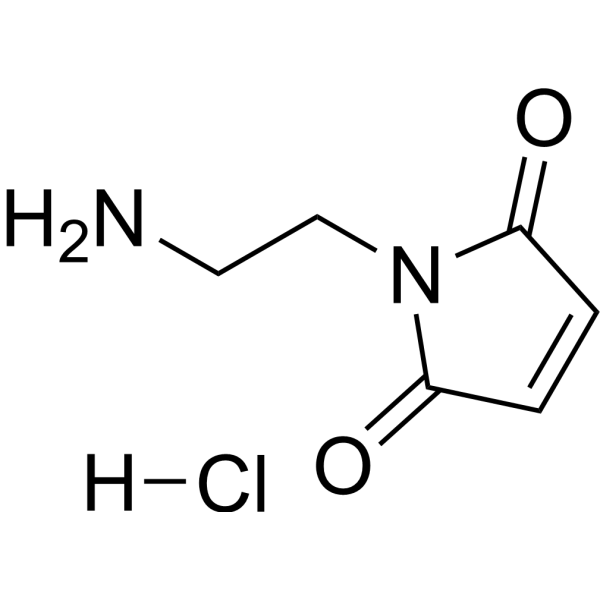
    2-Maleimidoethylamine hydrochloride

    Biochemical Assay Reagents Cancer
    N-(2-Aminoethyl)maleimide (2-Maleimidoethylamine) hydrochloride is a selective covalent binding agent for thiol groups (RSGs), covalently binding to thiols via an irreversible thioether bond to prepare MMP-2-sensitive nanosystems. Under near-neutral conditions, the maleimide group in N-(2-Aminoethyl)maleimide hydrochloride binds to thiol groups via a nucleophilic addition reaction, and can be used to modify polymers or biological interfaces, enhancing mucosal adhesion and regulating the surface charge of biological interfaces. N-(2-Aminoethyl)maleimide hydrochloride can optimize the adhesion performance of drug delivery carriers and cell interactions with biological interfaces, and is applied in transmucosal drug delivery systems (such as drug carriers for oral and bladder sites) and biomaterial surface engineering research, providing support for tissue implantation, regeneration, and related drug delivery .
    N-(2-Aminoethyl)maleimide hydrochloride
  • HY-59156

    Drug Intermediate Others
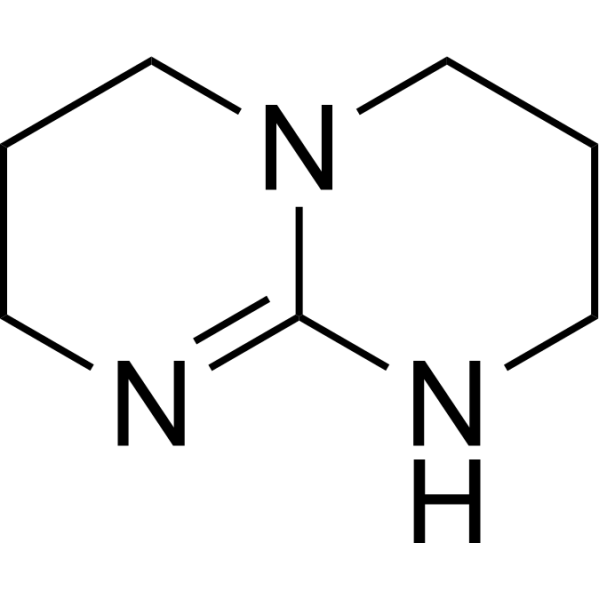
    Triazabicyclodecene is a bicyclic guanidine compound that can serve as a pharmaceutical intermediate for the formation of amides or esters .
    Triazabicyclodecene
  • HY-113404

    Tyrosinase Dopamine Receptor Neurological Disease
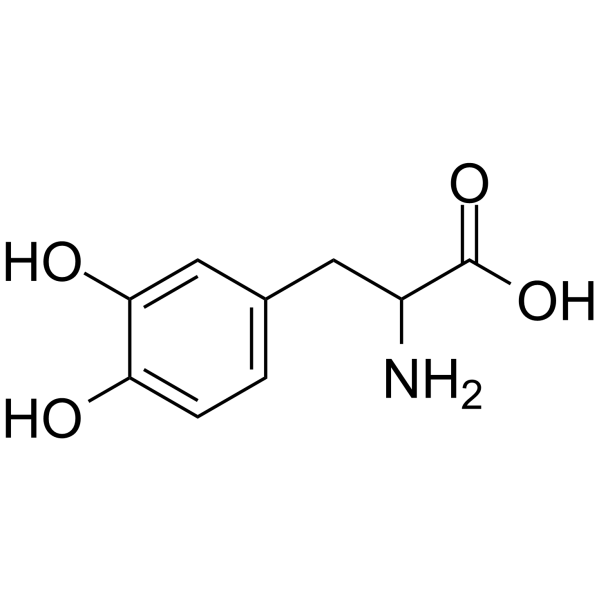
    DL-Dopa is a dopamine precursor. It serves as a substrate for Mushroom Tyrosinase, which oxidizes it to dopaquinone, an intermediate in the DOPA-melanin polymerization process, and this reaction can be detected at 475 nm. DL-Dopa also forms synergistic hydrophobic and π-π stacking interactions with cationic surfactants. Its binding to cetylpyridinium chloride (HY-B1464) is stronger and exhibits better thermodynamic stability than its binding to benzalkonium chloride (HY-B2232). DL-Dopa can compensate for dopamine depletion in the brain and is applicable to research related to Parkinson's disease .
    DL-Dopa
  • HY-15929
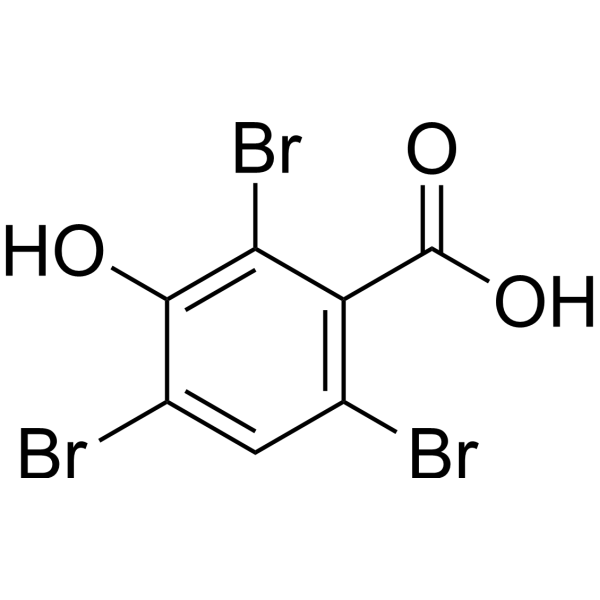
    TBHBA
    1 Publications Verification

    2,4,6-Tribromo-3-hydroxybenzoic acid

    Biochemical Assay Reagents Others
    TBHBA (2,4,6-Tribromo-3-hydroxybenzoic acid) is a chemical colorimetric agent and nanomaterial surface modifier. TBHBA can react with some oxidants (such as H2O2) to generate high-absorbance quinoneimine dyes, which enhance the sensitivity of HDL cholesterol enzymatic determination. TBHBA can be used as a bromine-containing coupling agent to modify the surface of silica nanoparticles through esterification reaction. Thereby, organic flame retardant groups are introduced to improve the thermal stability and flame retardant properties of nanocomposites. TBHBA can be used in clinical biochemical testing (such as serum lipoprotein analysis) and the preparation of flame-retardant polymer nanocomposites .
    TBHBA
  • HY-W018574

    Biochemical Assay Reagents Others
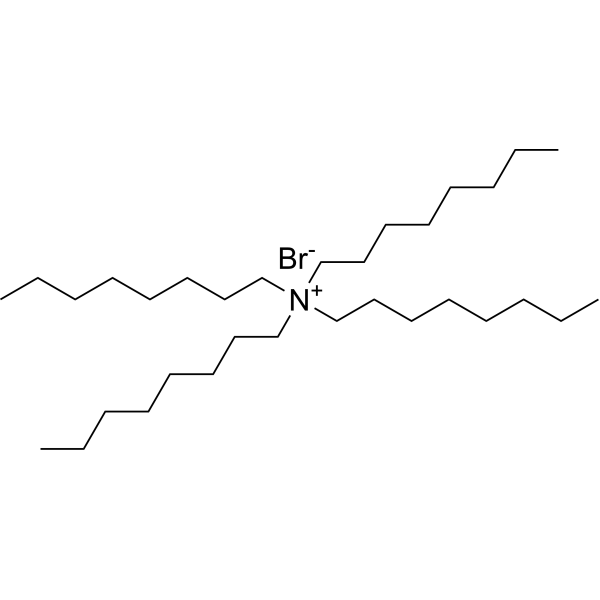
    Tetraoctylammonium bromide (TOAB) is a quaternary ammonium salt consisting of a positively charged tetraoctylammonium cation and a negatively charged bromide anion. This compound is commonly used as a phase transfer catalyst in organic chemical reactions, facilitating the transfer of reactants between immiscible phases. It is also used as a surfactant and dispersant in various industrial applications, for example in the production of coatings, adhesives and polymers. Additionally, Tetraoctylammonium bromide has been investigated for potential applications in energy storage devices and as an antimicrobial agent.
    Tetraoctylammonium bromide
  • HY-W087905

    Biochemical Assay Reagents Others
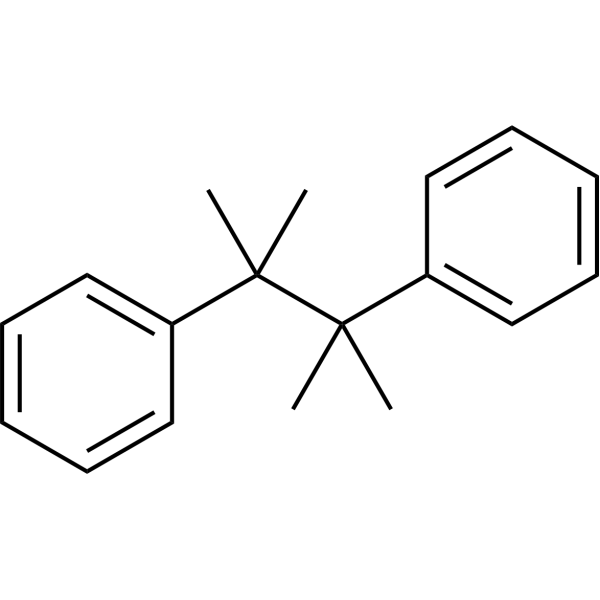
    2,3-Dimethyl-2,3-diphenylbutane is a minor product formed during the thermal decomposition of dicumyl peroxide (DCP) in cumene, generated through radical coupling reactions. As an initiator capable of producing free radicals, 2,3-dimethyl-2,3-diphenylbutane promotes cross-linking or decomposition processes via initiating free radical reactions in fields such as polymer polymerization (e.g., modification of polyphenylene oxide processing), organic synthesis (e.g., DCP decomposition reactions), and coal processing (e.g., oxidation stabilization of coal tar pitch), thereby enhancing material properties or reaction efficiency .
    2,3-Dimethyl-2,3-diphenylbutane
  • HY-174968B

    4-Arm-PEG10000-Acrylate

    Biochemical Assay Reagents Others
    4-Arm-PEG10000-AC (4-Arm-PEG10000-Acrylate) is a polymer consisting of a four-arm PEG core structure with acrylate groups attached to the ends of each PEG chain by chemical reaction, which can be used for drug delivery .
    4-Arm-PEG10000-AC
  • HY-139446A

    ETPTA (MW 912); TMPETA (MW 912)

    Biochemical Assay Reagents Others
    Trimethylolpropane ethoxylate triacrylate (MW 912) (ETPTA (MW 912); TMPETA (MW 912)) is a trifunctional acrylate monomer with multiple acrylate functional groups, which can be used in polymerization and crosslinking reactions. Trimethylolpropane ethoxylate triacrylate (MW 912) is widely used in the preparation of cured resins for 3D printing, optical coatings for display devices, and dental composite restorative materials .
    Trimethylolpropane ethoxylate triacrylate (MW 912)
  • HY-W013715B

    dTTP trisodium,100 mM Solution,PCR Grade

    DNA/RNA Synthesis Nucleoside Antimetabolite/Analog Endogenous Metabolite Others
    Deoxythymidine-5'-triphosphate (dTTP) trisodium, 100 mM Solution, PCR Grade is one of the raw materials used by DNA polymerase to synthesize long DNA strands during DNA replication. Deoxythymidine-5'-triphosphate trisodium, 100 mM Solution, PCR Grade is used in polymerase chain reaction (PCR) for DNA amplification. This product is supplied as an aqueous solution.
    Deoxythymidine-5'-triphosphate trisodium,100 mM Solution,PCR Grade
  • HY-W012412

    Biochemical Assay Reagents Others
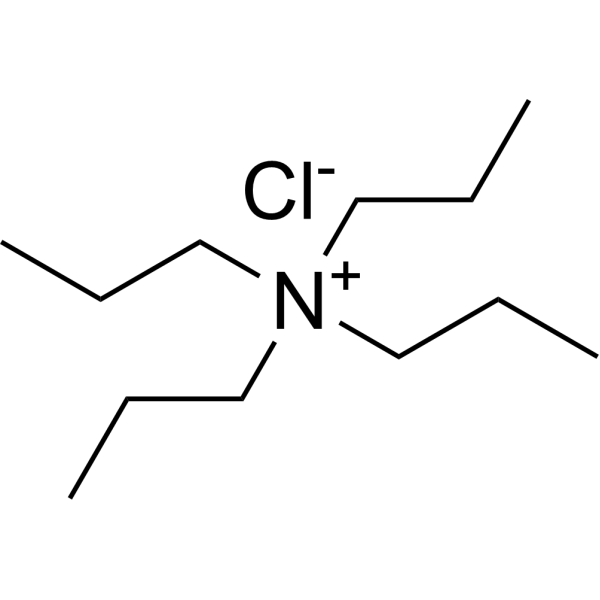
    Tetrapropylammonium chloride is a compound belonging to the class of quaternary ammonium compounds. It is a salt with cationic properties and is used in various industrial and biomedical applications. Tetrapropylammonium chloride is commonly used as a phase transfer catalyst to facilitate the movement of reactants between immiscible phases in organic synthesis reactions. It is also used as a surfactant in the formulation of personal care products, detergents, textiles and pharmaceuticals. Additionally, it is used in the production of certain types of polymers and resins.
    Tetrapropylammonium chloride
  • HY-P2881

    Nucleoside 5′-diphosphate kinase

    Biochemical Assay Reagents Cancer
    Nucleoside diphosphate kinase (Nucleoside 5′-diphosphate kinase) belongs to the family of structurally and functionally conserved NDPK (Nucleotide diphosphate kinase) enzymes. Nucleoside diphosphate kinase catalyzes the reversible transfer of γ-phosphates between nucleoside di-(NDP) and triphosphates (NTP) through ping-pong bi-bi reaction kinetics. Nucleoside diphosphate kinase is the essential housekeeping proteins that produces CTP (cytidine triphosphate) for lipid syntheses, UTP (Uridine triphosphate) for polysaccharide syntheses, and GTP (guanosine triphosphate) for protein syntheses, signal transduction, and microtubules polymerization .
    Nucleoside diphosphate kinase
  • HY-W034801

    Cupric Acetylacetonate

    Biochemical Assay Reagents Others
    Copper(II) acetylacetonate (Cupric Acetylacetonate) is the homoleptic acetylacetonate complex of copper(II). Copper(II) acetylacetonate is used as a catalyst in various organic reactions, including oxidation, cross-coupling, and polymerization reactions. Copper(II) acetylacetonate is also a precursor for making metal-organic frameworks (MOF) and nanomaterials .
    Copper(II) acetylacetonate
  • HY-W009400

    Drug Intermediate Others
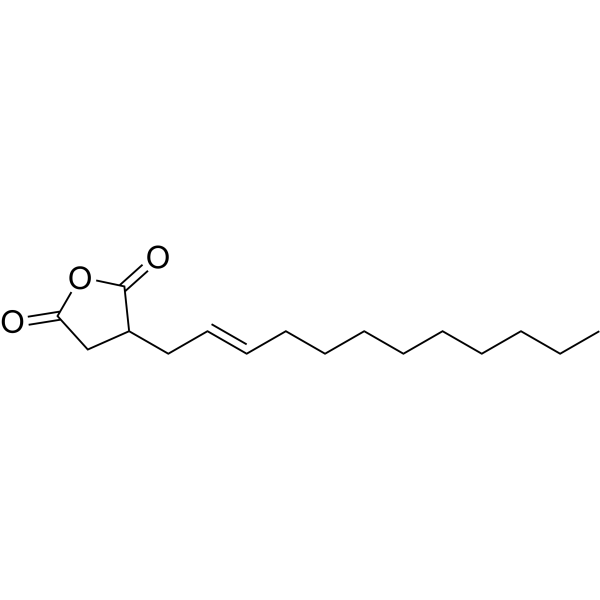
    (2-Dodecen-1-yl)succinic anhydride is an organic compound commonly used in certain polymerization reactions. It is used in the manufacture of products such as plastics and resins, and is widely used in certain industrial fields, such as coatings, inks and textile manufacturing. In addition, the compound is also used as a raw material for pharmaceutical intermediates and surfactants.
    (2-Dodecen-1-yl)succinic anhydride
  • HY-W095635

    Biochemical Assay Reagents Others
    Tetramethylammonium fluoride tetrahydrate (TMAF) is a quaternary ammonium salt. TMAF is commonly used as a weak base and a source of fluoride ions in various organic reactions, including nucleophilic substitution, functional group deprotection, and ring-opening polymerization. Unlike other fluoride sources, TMAF is compatible with many functional groups, making it a versatile tool in synthetic chemistry. Functional reagents, In addition, TMAF has been used as a fluorinating agent in medicinal chemistry, for the preparation of radiotracers and protein modification in biochemistry, and the tetrahydrate form of TMAF is more stable and easier to handle than the anhydrous form.
    Tetramethylammonium fluoride tetrahydrate
  • HY-119392

    Biochemical Assay Reagents Others
    16-Hexadecanolide is a lactone that is commonly used in ring-opening polymerization reactions and can be catalyzed by enzymes to form polymers at a relatively high polymerization rate .
    16-Hexadecanolide
  • HY-W087964

    Biochemical Assay Reagents Others
    Dodecanedioyl dichloride, Dodecanedioyl dichloride is commonly used in organic synthesis as a general building block for the preparation of various polymers and plastics, including nylon 12 and polyester resins, it can be used to introduce acid chloride groups into other organic molecules, which can then be further reaction to form more complex compounds, moreover, it has been used in medicinal chemistry as a starting material for the synthesis of various drugs and drug candidates.
    Dodecanedioyl dichloride
  • HY-151744

    ADC Linker Others
    N3-TFBA-O2Oc is a click chemistry reagent containing an azide group and an aryl group. Aryl azides are well-known precursors of nitrenes and have been introduced by Fleet et al. as versatile photoaffinity labeling agents to probe biological receptors. This type of compounds has been used as photo-cross linker (λmax=258 nm) in estrogen receptor studies and for direct surface coating of carbon and organic based polymers . N3-TFBA-O2Oc is a click chemistry reagent, it contains an Azide group and can undergo copper-catalyzed azide-alkyne cycloaddition reaction (CuAAc) with molecules containing Alkyne groups. It can also undergo strain-promoted alkyne-azide cycloaddition (SPAAC) reactions with molecules containing DBCO or BCN groups.
    N3-TFBA-O2Oc
  • HY-W088188

    Cobalt(II) acetylacetonate

    Biochemical Assay Reagents Others
    Co (acac)2 is an organometallic compound with catalytic activity, in which the central cobalt ion is chelated with acetylacetonate ligands. Co (acac)2 can serve as a precursor for thin films and nanomaterials, and is applicable to researches in organic synthesis, materials science, industrial applications, and other fields .
    Co(acac)2
  • HY-119987

    SOG

    Fluorescent Dye Others
    Sudan orange G is an azo dye. Sudan orange G, after enzymatic oxidation, generates oligomers and even polymers through free radical coupling reactions .
    Sudan orange G
  • HY-119987R

    SOG (Standard)

    Fluorescent Dye Reference Standards Others
    Sudan orange G (Standard) is the analytical standard of Sudan orange G. This product is intended for research and analytical applications. Sudan orange G is an azo dye. Sudan orange G, after enzymatic oxidation, generates oligomers and even polymers through free radical coupling reactions .
    Sudan orange G (Standard)
  • HY-W190743

    Biochemical Assay Reagents Others
    Br-PEG8-OH is a PEG derivative that consists of a bromine atom (Br), eight PEG units, and a hydroxyl group (-OH). The bromine group is a common functional group in chemical reactions and can be used for alkylation reactions, coupling reactions, or the introduction of other functional groups. Br-PEG8-OH can be used as a polymer-based material or as a modifier for biomolecules .
    Br-PEG8-OH
  • HY-W440952

    Biochemical Assay Reagents Others
    Stearic acid-PEG5000-Mal enables surface modification of various substrate through reaction between hydroxyl and ethoxyl silane. The polymer can be used for click chemistry with alkyne containing molecule.
    Stearic acid-PEG5000-Mal
  • HY-W440950

    Liposome Others
    Stearic acid-PEG2000-Mal enables surface modification of various substrate through reaction between hydroxyl and ethoxyl silane. The polymer can be used for click chemistry with alkyne containing molecule.
    Stearic acid-PEG2000-Mal
  • HY-174954D

    Biochemical Assay Reagents Others
    6-Arm-PEG3400-DA is a polymer consisting of a four-arm PEG core structure with acrylate groups attached to the ends of each PEG chain by chemical reaction, which can be used for drug delivery .
    6-Arm-PEG3400-DA
  • HY-174954E

    Biochemical Assay Reagents Others
    6-Arm-PEG5000-DA is a polymer consisting of a four-arm PEG core structure with acrylate groups attached to the ends of each PEG chain by chemical reaction, which can be used for drug delivery .
    6-Arm-PEG5000-DA
  • HY-156403

    Topoisomerase Cancer
    AuM1Phe, an N-Heterocyclic carbene (NHC) metal complexe, blocks the human topoisomerase I activity and actin polymerization reaction. AuM1Phe affects the growth of MDA-MB-231 breast cancer cells, with an IC50 value of 1.2 μM .
    AuM1Phe
  • HY-174968A

    4-Arm-PEG5000-Acrylate

    Biochemical Assay Reagents Others
    4-Arm-PEG5000-AC (4-Arm-PEG5000-Acrylate) is a polymer consisting of a four-arm PEG core structure with acrylate groups attached to the ends of each PEG chain by chemical reaction, which can be used for drug delivery .
    4-Arm-PEG5000-AC
  • HY-W127447

    Maleic acid sodium

    Biochemical Assay Reagents Others
    Maleate trihydrate sodiumIt is an organic compound belonging to the salt class. It is formed from the neutralization reaction between maleic acid and sodium hydroxide and has a slightly bitter taste. Maleate trihydrate sodiumIt has a variety of applications in industrial settings, especially as an intermediate in the synthesis of various chemicals and polymers. Additionally, it is used in the food and beverage industry as a buffer, flavor enhancer and preservative.
    Maleate trihydrate sodium
  • HY-W440907

    Biochemical Assay Reagents Others
    DSPE-PEG5000-Vinylsulfone is a viniyl sulfone PEG lipid which can be used for bioconjugation with cysteine or other thiol molecule through thiol-ene reaction. The polymer is a self-assembling reagetn which forms lipid bilayer in water and can be used as drug carrier to delivery therapeutic agents, such as mRNA or DNA vaccine.
    DSPE-PEG5000-Vinylsulfone
  • HY-W440905

    Biochemical Assay Reagents Others
    DSPE-PEG2000-Vinylsulfone is a viniyl sulfone PEG lipid which can be used for bioconjugation with cysteine or other thiol molecule through thiol-ene reaction. The polymer is a self-assembling reagetn which forms lipid bilayer in water and can be used as drug carrier to delivery therapeutic agents, such as mRNA or DNA vaccine.
    DSPE-PEG2000-Vinylsulfone
  • HY-W440904

    Biochemical Assay Reagents Others
    DSPE-PEG1000-Vinylsulfone is a viniyl sulfone PEG lipid which can be used for bioconjugation with cysteine or other thiol molecule through thiol-ene reaction. The polymer is a self-assembling reagetn which forms lipid bilayer in water and can be used as drug carrier to delivery therapeutic agents, such as mRNA or DNA vaccine.
    DSPE-PEG1000-Vinylsulfone
  • HY-154871

    Drug Derivative Biochemical Assay Reagents Others
    α-D-Glucosamine 1-phosphate is a glycosyl donor analog of Glc-1-P. α-D-Glucosamine 1-phosphate acts as a glycosyl donor to produce α(1→4)-linked glucosamine chains in the enzyme-catalyzed polymerization reaction mediated by thermostable α-glucan phosphorylase. α-D-Glucosamine 1-phosphate serves as a glycosyl donor analog to generate a pentasaccharide with a glucosamine residue at the non-reducing end in the maltotetraose glucosamination reaction catalyzed by potato α-glucan phosphorylase. α-D-Glucosamine 1-phosphate is used for the synthesis of amphiphilic block polysaccharides with pH-responsive assembly/disassembly properties .
    α-D-Glucosamine 1-phosphate
  • HY-13325

    Drug Derivative Amyloid-β Neurological Disease
    Aβ aggregation modulator-1 is a stimulator of amyloid-β () fibrillogenesis. Aβ aggregation modulator-1 binds hydrophobic residues in peptides and stabilizes β-sheet-rich protofibrils and fibrils. Aβ aggregation modulator-1 accelerates polymerization and reduces concentrations of small, toxic oligomers in heterogeneous aggregation reactions. Aβ aggregation modulator-1 suppresses long-term potentiation (LTP) inhibition by oligomers in hippocampal brain slices. Aβ aggregation modulator-1 can be used for the study of Alzheimer's disease (AD) .
    Aβ aggregation modulator-1
  • HY-E71146

    Biochemical Assay Reagents Others
    1,2-β-Oligomannan phosphorylase (EC 2.4.1.340) catalyses a reversible reaction. In the synthetic direction it produces oligosaccharides with a degree of polymerization (DP) of 3, 4 and 5. The phosphorolysis reaction proceeds to completion, although activity is highest when the substrate has at least three residues.
    1,2-β-Oligomannan phosphorylase
  • HY-W440949

    Biochemical Assay Reagents Others
    Stearic acid-PEG1000-Mal enables surface modification of various substrate through reaction between hydroxyl and ethoxyl silane. The polymer can be used for click chemistry with alkyne containing molecule.
    Stearic acid-PEG1000-Mal
  • HY-W440951

    Biochemical Assay Reagents Others
    Stearic acid-PEG3400-Mal enables surface modification of various substrate through reaction between hydroxyl and ethoxyl silane. The polymer can be used for click chemistry with alkyne containing molecule.
    Stearic acid-PEG3400-Mal
  • HY-174954B

    Biochemical Assay Reagents Others
    6-Arm-PEG1000-DA is a polymer consisting of a four-arm PEG core structure with acrylate groups attached to the ends of each PEG chain by chemical reaction, which can be used for drug delivery .
    6-Arm-PEG1000-DA
  • HY-174954C

    Biochemical Assay Reagents Others
    6-Arm-PEG2000-DA is a polymer consisting of a four-arm PEG core structure with acrylate groups attached to the ends of each PEG chain by chemical reaction, which can be used for drug delivery .
    6-Arm-PEG2000-DA
  • HY-174954

    Biochemical Assay Reagents Others
    6-Arm-PEG400-DA is a polymer consisting of a four-arm PEG core structure with acrylate groups attached to the ends of each PEG chain by chemical reaction, which can be used for drug delivery .
    6-Arm-PEG400-DA
  • HY-174954A

    Biochemical Assay Reagents Others
    6-Arm-PEG600-DA is a polymer consisting of a four-arm PEG core structure with acrylate groups attached to the ends of each PEG chain by chemical reaction, which can be used for drug delivery .
    6-Arm-PEG600-DA
  • HY-174954H

    Biochemical Assay Reagents Others
    6-Arm-PEG10000-DA is a polymer consisting of a four-arm PEG core structure with acrylate groups attached to the ends of each PEG chain by chemical reaction, which can be used for drug delivery .
    6-Arm-PEG10000-DA
  • HY-E70426A

    Biochemical Assay Reagents Metabolic Disease
    Polyphosphate Kinase, Propionibacterium shermanii (EC 2.7.4.1) catalyzes the reversible transfer of phosphate between polyphosphate and ATP. The phosphorylation of ADP to ATP by polyphosphate kinase is by a processive mechanism; the phosphorylation occurs without release of the polymer from the enzyme prior to termination of the reaction.
    Polyphosphate Kinase, Propionibacterium shermanii
  • HY-174968

    4-Arm-PEG2000-Acrylate

    Biochemical Assay Reagents Others
    4-Arm-PEG2000-AC (4-Arm-PEG2000-Acrylate) is a polymer consisting of a four-arm PEG core structure with acrylate groups attached to the ends of each PEG chain by chemical reaction, which can be used for drug delivery .
    4-Arm-PEG2000-AC
  • HY-174968C

    4-Arm-PEG20000-Acrylate

    Biochemical Assay Reagents Others
    4-Arm-PEG20000-AC (4-Arm-PEG20000-Acrylate) is a polymer consisting of a four-arm PEG core structure with acrylate groups attached to the ends of each PEG chain by chemical reaction, which can be used for drug delivery .
    4-Arm-PEG20000-AC
  • HY-W700460

    Biochemical Assay Reagents
    9-β-D-Arabinofuranosyl-2-fluorohypoxanthine is a nucleoside analog with activity as an inhibitor of certain enzymes. 9-β-D-Arabinofuranosyl-2-fluorohypoxanthine is useful in synthesis and, due to its structural changes, is able to cause base mispairing, thereby stopping chain polymerization reactions.
    9-β-D-Arabinofuranosyl-2-fluorohypoxanthine
  • HY-W440906

    Biochemical Assay Reagents Others
    DSPE-PEG3400-Vinylsulfone is a viniyl sulfone PEG lipid which can be used for bioconjugation with cysteine or other thiol molecule through thiol-ene reaction. The polymer is a self-assembling reagetn which forms lipid bilayer in water and can be used as drug carrier to delivery therapeutic agents, such as mRNA or DNA vaccine.
    DSPE-PEG3400-Vinylsulfone
  • HY-116655A

    Biochemical Assay Reagents Others
    Hydroxy-PEG1-acid sodium is a PEG linker containing a hydroxyl group with a terminal carboxylic acid (as sodium salt form). The free acid form is not stable due to the reaction of OH with PEG-COOH group to form polymer. The sodium salt form is stable for storage and shipping. The hydrophilic PEG spacer increases solubility in aqueous media. The hydroxyl group enables further derivatization or replacement with other reactive functional groups.
    Hydroxy-PEG1-acid sodium salt
  • HY-W800833

    Biochemical Assay Reagents Others
    Benzyl N-[2-(prop-2-enamido)ethyl]carbamate is a short aliphatic linker featuring a Cbz-protected amine and an acrylamide. Acrylamide is a Michael acceptor which is a good Michael acceptor which can be used in thiol-based bioconjugation or polymerization. Meanwhile, the Cbz protecting group can be removed using Pd-C hydrogenation to reveal a free amine that can participate in a wide variety of reactions such as couplings or reductive amination.
    Benzyl N-[2-(prop-2-enamido)ethyl]carbamate

Inquiry Online

Your information is safe with us. * Required Fields.

Salutation


Country or Region *

Applicant Name *


Organization Name *

Department *


Email Address *


Product Name *

Cat. No.


Requested quantity *

Phone Number *


Remarks

Inquiry Online

Inquiry Information

Product Name:
Cat. No.:
Quantity:
MCE Japan Authorized Agent:

