1. Search Result
Search Result
Results for "

Pressor response

" in MedChemExpress (MCE) Product Catalog:

32

Inhibitors & Agonists

1

Peptides

2

Isotope-Labeled Compounds

Cat. No. Nombre del producto Target Áreas de investigación Chemical Structure
  • HY-108652
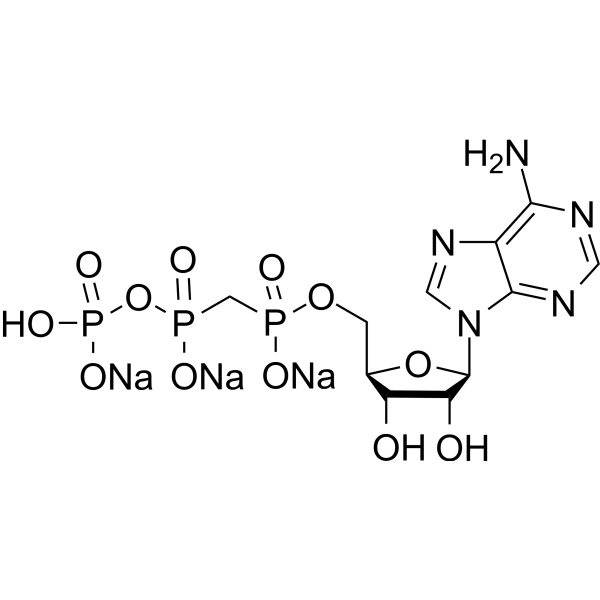
    α,β-Methylene-ATP trisodium
    1 Publications Verification

    P2X Receptor Inflammation/Immunology
    α,β-Methylene-ATP trisodium is an agonist of P2X1 and P2X3 receptors and can cross the blood-brain barrier. α,β-Methylene-ATP trisodium can trigger a reflex pressor response by activating P2X receptors in peripheral muscles and the central locus coeruleus (LC); this effect can be blocked by the P2X antagonist PPADS (HY-108960). α,β-Methylene-ATP trisodium also activates noradrenergic neurons in the central locus coeruleus, mediating antinociceptive effects; this effect can be attenuated by the locus coeruleus damaging agent DSP-4 (HY-103210/HY-121602). α,β-Methylene-ATP trisodium can be used to study the pathological mechanisms of neuropathic pain, cardiovascular reflex regulation, and antinociceptive effects of the central nervous system .
    α,β-Methylene-ATP trisodium
  • HY-B1277
    Trihexyphenidyl hydrochloride
    3 Publications Verification

    mAChR Cholinesterase (ChE) Neurological Disease
    Trihexyphenidyl hydrochloride is a selective and orally active M1 muscarinic receptor antagonist with an IC50 of 3.7 nM for rat cerebral cortex M1 muscarinic receptors. Trihexyphenidyl hydrochloride modulates cholinergic activity, countering acetylcholine supersensitivity in neural pathways. Trihexyphenidyl hydrochloride improves movement disorder, inhibits McN-A-343 (HY-107648)-induced pressor responses, vagally-induced bradycardia and vasodilatation. Trihexyphenidyl hydrochloride can be used for the research of Parkinson's disease. .
    Trihexyphenidyl hydrochloride
  • HY-12765

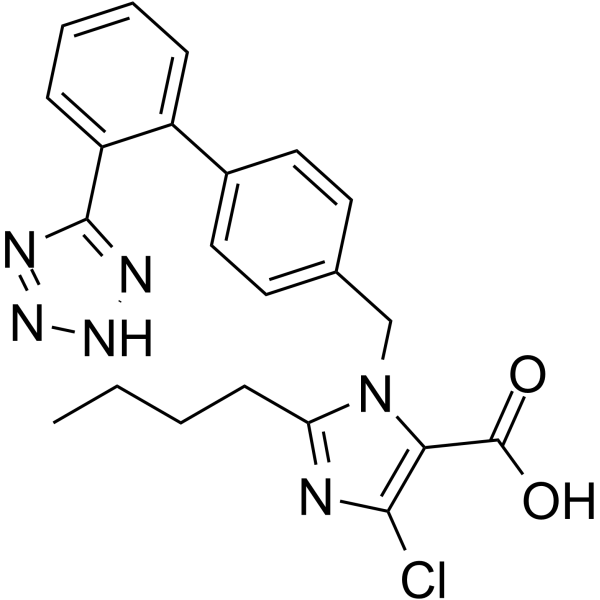
    E-3174; EXP-3174

    Drug Metabolite Angiotensin Receptor Cardiovascular Disease
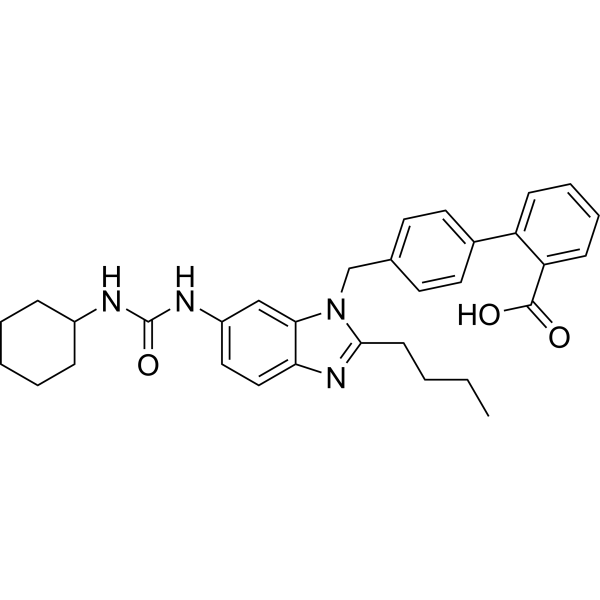
    Losartan Carboxylic Acid (E-3174), an active carboxylic acid metabolite of Losartan, is an angiotensin II receptor type 1 (AT1) antagonist. The Ki values are 0.97, 0.57, 0.67 nM for rat AT1B/AT1A and human AT1, respectively. Losartan Carboxylic Acid blocks the angiotensin II-induced responses in vascular smoothmuscle cells (VSMC). Losartan Carboxylic Acid elevates plasma renin activities and reduces mean arterial pressure .
    Losartan Carboxylic Acid
  • HY-134440A

    P2X Receptor Inflammation/Immunology
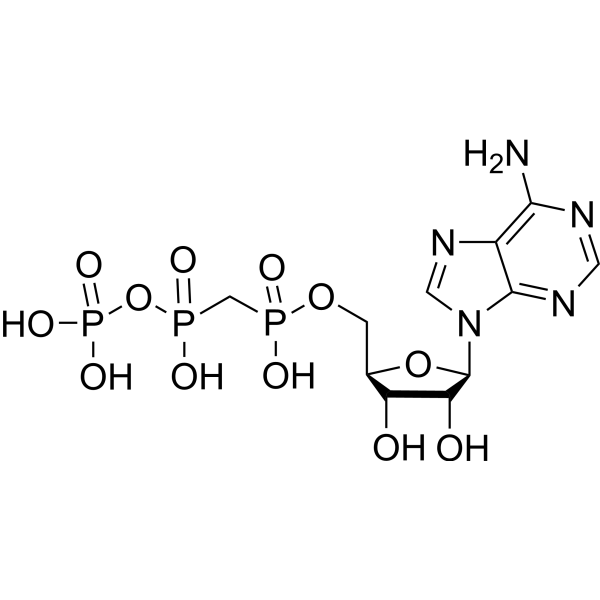
    α,β-Methylene-ATP is an agonist of P2X1 and P2X3 receptors and can cross the blood-brain barrier. α,β-Methylene-ATP can trigger a reflex pressor response by activating P2X receptors in peripheral muscles and the central locus coeruleus (LC); this effect can be blocked by the P2X antagonist PPADS (HY-108960). α,β-Methylene-ATP also activates noradrenergic neurons in the central locus coeruleus, mediating antinociceptive effects; this effect can be attenuated by the locus coeruleus damaging agent DSP-4 (HY-103210/HY-121602). α,β-Methylene-ATP can be used to study the pathological mechanisms of neuropathic pain, cardiovascular reflex regulation, and antinociceptive effects of the central nervous system .
    α,β-Methylene-ATP
  • HY-B1277A

    mAChR Cholinesterase (ChE) Cardiovascular Disease Neurological Disease
    Trihexyphenidyl is a selective and orally active M1 muscarinic receptor antagonist with an IC50 of 3.7 nM for rat cerebral cortex M1 muscarinic receptors. Trihexyphenidyl modulates cholinergic activity, countering acetylcholine supersensitivity in neural pathways. Trihexyphenidyl improves movement disorder, inhibits McN-A-343 (HY-107648)-induced pressor responses, vagally-induced bradycardia and vasodilatation. Trihexyphenidyl can be used for the research of Parkinson's disease. .
    Trihexyphenidyl
  • HY-124234

    Endothelin Receptor Cardiovascular Disease
    TA-0201 is a novel orally active, competitive, non-peptide endothelin receptor antagonist. TA-0201 antagonizes the specific binding of [ 125I]ET-1 to cloned human receptors of ETA and ETB with Ki values of 15 pM and 41 nM, respectively. TA-0201 inhibits the pressor response to the exogenous big ET-1 .
    TA-0201
  • HY-15402

    BMS 207940

    Endothelin Receptor Cardiovascular Disease
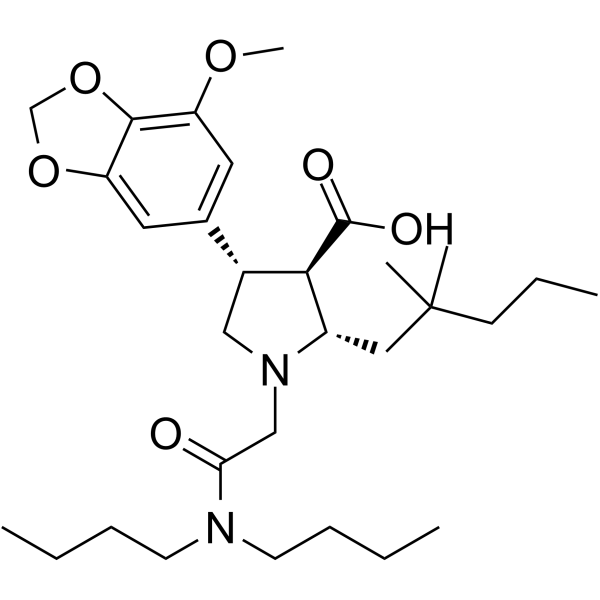
    Edonentan (BMS 207940) is an antagonist for endothelin receptor (ETA receptor), with a Ki of 10 pM. Edonentan is metabolic stable, exhibits good pharmakokinetic characters in rats. Edonentan regulates the endothelin system, blocks the big Endothelin-induced pressor response in rats model .
    Edonentan
  • HY-125386

    Cathepsin Cardiovascular Disease
    SQ 32056 is a cathepsin E inhibitor. SQ 32056 can block the pressor response to endothelin .
    SQ 32056
  • HY-129206

    RU-24476

    Angiotensin Receptor Cardiovascular Disease
    Locicortolone (RU-24476) is a synthetic steroid compound. Locicortolone inhibits Angiotensin I (AI) induced pressor response. Locicortolone can be used in antihypertensive studies .
    Locicortolone
  • HY-135004

    Adrenergic Receptor Endocrinology
    Su-4029 is an agent that interacts with alpha receptors. It negates the blockade of norepinephrine by the reversible adrenergic blocker phentolamine but not by the irreversible blocker Dibenamine, suggesting Su-4029 acts at the same site as these blockers. Su-4029 pretreatment results in three categories of responses to pressor phenylalkylamines: irreversible blockade of amines with no or only p-hydroxylation, reversible blockade of amines with beta-carbon hydroxylation, and no blockade or augmentation of amines with m and p-hydroxylation or m or p plus beta-hydroxylation. Su-4029 may deform the alpha receptor site affected by adrenergic blocking agents .
    SU-4029 dihydrochloride
  • HY-117814

    Endothelin Receptor Cardiovascular Disease
    BMS-187308 is an orally active endothelin-A (ETA) antagonist, with Kis of 4.7 nM for ETA and 1.7 μM for ETB. BMS-187308 inhibits the pressor response to ET-1 (ED25: 1.2 µmol/kg; iv). BMS-187308 is a suitable tool for investigating the role of endothelin .
    BMS-187308
  • HY-134440

    P2X Receptor Inflammation/Immunology
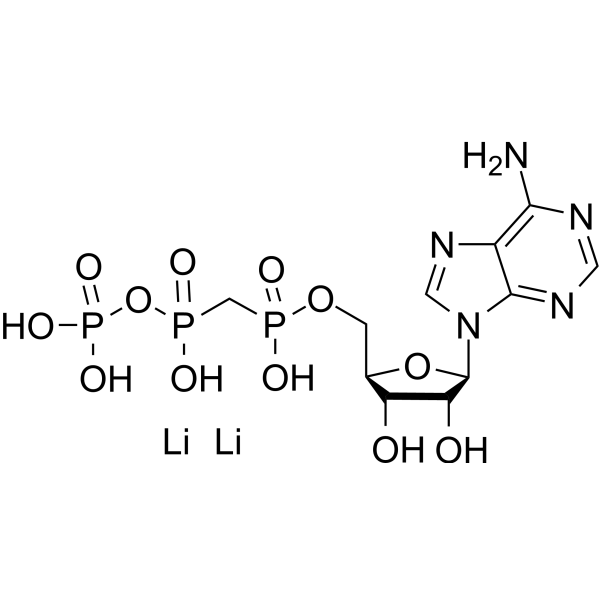
    α,β-Methylene-ATP dilithium is an agonist of P2X1 and P2X3 receptors and can cross the blood-brain barrier. α,β-Methylene-ATP dilithium can trigger a reflex pressor response by activating P2X receptors in peripheral muscles and the central locus coeruleus (LC); this effect can be blocked by the P2X antagonist PPADS (HY-108960). α,β-Methylene-ATP dilithium also activates noradrenergic neurons in the central locus coeruleus, mediating antinociceptive effects; this effect can be attenuated by the locus coeruleus damaging agent DSP-4 (HY-103210/HY-121602). α,β-Methylene-ATP dilithium can be used to study the pathological mechanisms of neuropathic pain, cardiovascular reflex regulation, and antinociceptive effects of the central nervous system .
    α,β-Methylene-ATP dilithium
  • HY-114283

    Angiotensin Receptor Cardiovascular Disease
    L-163017 is a potent, orally active and nonpeptide angiotensin II receptor (AT) antagonist. L-163017 can inhibit prevent the pressor response to angiotensin II and reduce blood pressure. L-163017 can be used for the research of cardiovascular disease, such as hypertension .
    L-163017
  • HY-113695

    Angiotensin-converting Enzyme (ACE) Adrenergic Receptor Cardiovascular Disease
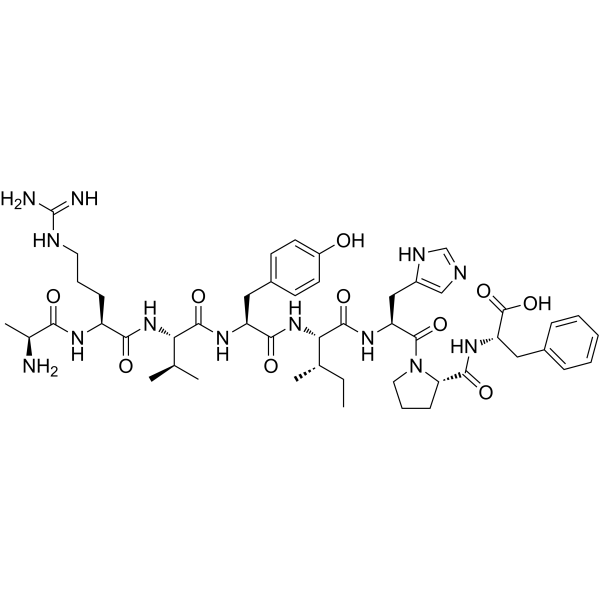
    BW A575C is a dual inhibitor against angiotensin converting enzyme (ACE) and β-adrenoceptor. BW A575C produces a competitive blockade of Isoprenaline (HY-108353)-induced tachycardia in a guinea-pig right atrial. BW A575C also inhibits Angiotensin I (HY-P1032)-induced pressor responses in rats. BW A575C is promising for research of hypertensive diseases .
    BW A575C
  • HY-126826

    Antibiotic Angiotensin-converting Enzyme (ACE) Cardiovascular Disease
    Antibiotic K 4 is an inhibitor of angiotensin I converting enzyme (ACE) (Ki: 0.18 μM). Antibiotic K 4 inhibits pressor response to angiotensin I in rats .
    Antibiotic K 4
  • HY-139801

    CI-907

    Angiotensin-converting Enzyme (ACE) Cardiovascular Disease Metabolic Disease
    Indolapril hydrochloride (CI-907) is an orally active nonsulfhydryl angiotensin converting enzyme (ACE) inhibitor. Indolapril hydrochloride is highly specific in suppressing the contractile or pressor responses to Angiotensin I. Indolapril hydrochloride is a potent antihypertensive agent .
    Indolapril hydrochloride
  • HY-114536

    NSC 104800

    Angiotensin Receptor Others
    Mitolactol (NSC 104800) is an angiotensin converting enzyme (ACE) inhibitor with the activity of inhibiting ACE (IC50 of 1.4×10 M) and inhibiting the pressor response of angiotensin I when administered intravenously at 0.3 mg/kg in rats.
    Mitolactol
  • HY-167886

    Angiotensin Receptor Cardiovascular Disease
    GA 0113 is a potent and orally active angiotensin II (Ang II) AT1-receptor antagonist. GA 0113 inhibits the Ang II (HY-13948)-induced pressor response with ID50 of 0.032 mg/kg and dose-dependently increases plasma renin activity for 48 h .
    GA 0113
  • HY-121550

    Angiotensin-converting Enzyme (ACE) Cardiovascular Disease
    ME3221 is an angiotensin AT1 receptor antagonist that effectively antagonizes the pressor response to angiotensin II in rats and marmosets without affecting the hypotensive response to bradykinin. It demonstrates potent antihypertensive effects in renal hypertensive rats and spontaneously hypertensive rats (SHR). ME3221's repeated administration in SHR results in sustained and stable hypotensive effects without affecting heart rate, indicating its potential for studying both renal and essential hypertension .
    ME3221
  • HY-103459

    PD156707

    Endothelin Receptor Cardiovascular Disease
    CI-1020 (PD156707) is an orally active and selective antagonist targeting endothelin (ETA) with an IC50 value of 0.3 nM. CI-1020 blocks intimal hyperplasia in human saphenous veins completely in organ culture. CI 1020 inhibits hypoxic pulmonary hypertension and blocks ET-1-induced pressor responses following oral administration .
    CI-1020
  • HY-19454

    GHSR Cardiovascular Disease
    CP-464709 is a Ghrelin receptor agonist that can penetrate the blood-brain barrier. CP-464709 causes an increase in blood pressure by activating pre sympathetic neurons in the spinal cord. CP-464709 causes biphasic blood pressure response when administered intravenously, while intrathecal administration only causes pressor. CP-464709 can be used for research on cardiovascular conditions .
    CP-464709
  • HY-18211

    Angiotensin-converting Enzyme (ACE) Cardiovascular Disease
    CGS 35601 is the inhibitor for endothelin-converting enzyme-1 (ECE-1), neutral endopeptidase 24.11 (NEP), and angiotensin-converting enzyme (ACE), with IC50s of 55, 2, and 22 nM, respectively. CGS 35601 suppresses the big endothelin-1 (big ET-1)- and angiotensin I-induced pressor response, and enhances circulation of atrial natriuretic peptide (ANP), regulates the cardiovascular function in SD rats .
    CGS 35601
  • HY-12765R

    E-3174 (Standard); EXP-3174 (Standard)

    Drug Metabolite Reference Standards Angiotensin Receptor Cardiovascular Disease
    Losartan Carboxylic Acid (Standard) is the analytical standard of Losartan Carboxylic Acid. This product is intended for research and analytical applications. Losartan Carboxylic Acid (E-3174), an active carboxylic acid metabolite of Losartan, is an angiotensin II receptor type 1 (AT1) antagonist. The Ki values are 0.97, 0.57, 0.67 nM for rat AT1B/AT1A and human AT1, respectively. Losartan Carboxylic Acid blocks the angiotensin II-induced responses in vascular smoothmuscle cells (VSMC). Losartan Carboxylic Acid elevates plasma renin activities and reduces mean arterial pressure [4].
    Losartan Carboxylic Acid (Standard)
  • HY-119379

    HOE-720 free acid

    Angiotensin Receptor Cardiovascular Disease
    Fonsartan (HOE-720) free acid is an orally active angiotensin II receptor (AT1R) antagonist with an IC50 value of 0.48 nM, exhibiting potent antihypertensive activity. Fonsartan free acid dose-dependently inhibits angiotensin II-induced pressor response in rats (ID50 = 0.11 mg/kg) and shows significant long-lasting blood pressure-lowering effects in high-renin animal models. Fonsartan free acid is primarily used in research on hypertension and cardiovascular diseases .
    Fonsartan free acid
  • HY-121670

    Others Neurological Disease
    Ambenoxan is a central nervous system-acting skeletal muscle relaxant that is effective in mice, rats, rabbits, dogs, and monkeys without loss of the righting reflex. It has no peripheral neuromuscular blocking effects and significantly reduces or eliminates decerebrate rigidity in rabbits, but does not antagonize the effects of strychnine, leptazol, or tremorine. Like other central nervous system depressants, ambenoxan prolongs sleep duration with hexobarbitone, but it has no local anesthetic effects. In anesthetized cats, the agent lowers blood pressure and reduces the pressor response to epinephrine, but has no effect on norepinephrine.
    Ambenoxan
  • HY-121670A

    Adrenergic Receptor Neurological Disease
    Ambenoxan hydrochloride is a central nervous system-acting skeletal muscle relaxant that is effective in mice, rats, rabbits, dogs, and monkeys without loss of the righting reflex. It has no peripheral neuromuscular blocking effects and significantly reduces or eliminates decerebrate rigidity in rabbits, but does not antagonize the effects of strychnine, leptazol, or tremorine. Like other central nervous system depressants, ambenoxan prolongs sleep duration with hexobarbitone, but it has no local anesthetic effects. In anesthetized cats, the agent lowers blood pressure and reduces the pressor response to epinephrine, but has no effect on norepinephrine.
    Ambenoxan hydrochloride
  • HY-B1277AS

    Isotope-Labeled Compounds mAChR Cholinesterase (ChE) Neurological Disease
    Trihexyphenidyl-d5 is deuterium labeled Trihexyphenidyl (HY-B1277A). Trihexyphenidyl is a selective and orally active M1 muscarinic receptor antagonist with an IC50 of 3.7 nM for rat cerebral cortex M1 muscarinic receptors. Trihexyphenidyl modulates cholinergic activity, countering acetylcholine supersensitivity in neural pathways. Trihexyphenidyl improves movement disorder, inhibits McN-A-343 (HY-107648)-induced pressor responses, vagally-induced bradycardia and vasodilatation. Trihexyphenidyl can be used for the research of Parkinson's disease. .
    Trihexyphenidyl-d5
  • HY-B1277S

    Isotope-Labeled Compounds mAChR Cholinesterase (ChE) Neurological Disease
    Trihexyphenidyl-d5 hydrochloride is deuterium labeled Trihexyphenidyl hydrochloride (HY-B1277). Trihexyphenidyl hydrochloride is a selective and orally active M1 muscarinic receptor antagonist with an IC50 of 3.7 nM for rat cerebral cortex M1 muscarinic receptors. Trihexyphenidyl hydrochloride modulates cholinergic activity, countering acetylcholine supersensitivity in neural pathways. Trihexyphenidyl hydrochloride improves movement disorder, inhibits McN-A-343 (HY-107648)-induced pressor responses, vagally-induced bradycardia and vasodilatation. Trihexyphenidyl hydrochloride can be used for the research of Parkinson's disease. .
    Trihexyphenidyl-d5 hydrochloride
  • HY-B1277R

    Reference Standards mAChR Cholinesterase (ChE) Neurological Disease
    Trihexyphenidyl hydrochloride (Standard) is the analytical standard of Trihexyphenidyl hydrochloride (HY-B1277). This product is intended for research and analytical applications. Trihexyphenidyl is a selective and orally active M1 muscarinic receptor antagonist with an IC50 of 3.7 nM for rat cerebral cortex M1 muscarinic receptors. Trihexyphenidyl modulates cholinergic activity, countering acetylcholine supersensitivity in neural pathways. Trihexyphenidyl improves movement disorder, inhibits McN-A-343 (HY-107648)-induced pressor responses, vagally-induced bradycardia and vasodilatation. Trihexyphenidyl can be used for the research of Parkinson's disease. .
    Trihexyphenidyl hydrochloride (Standard)
  • HY-182445

    Angiotensin-converting Enzyme (ACE) Cardiovascular Disease
    FPL 66564 is a short-acting angiotensin-converting enzyme (ACE) inhibitor with an IC50 of 5.7 nM against rabbit ACE. FPL 66564 inhibits ACE activity at the functional level and is hydrolyzed in human blood into inactive hydrophilic metabolites. FPL 66564 modulates angiotensin I-induced pressor responses in anesthetized rats, and its effects rapidly return to baseline after cessation of intravenous infusion. FPL 66564 can be used for research on cardiovascular regulation related to critical illness .
    FPL 66564
  • HY-182407

    Angiotensin-converting Enzyme (ACE) Cardiovascular Disease
    CV 5975 is an orally active angiotensin converting enzyme (ACE) competitive inhibitor with a rabbit lung ACE IC50 of 3.1 nM and Ki values of 2.6 nM. CV 5975 inhibits ACE in plasma, aorta, kidney, and brain, intensifying inhibition with repeated administration. CV 5975 inhibits Angiotensin I (HY-P1032)-induced pressor responses and ileum contraction, and augments bradykinin-induced ileum contraction and depressor responses. CV 5975 reduces blood pressure via ACE-independent mechanisms, with sustained action across multiple hypertensive and normotensive animal models, intensified by repeated dosing or Hydrochlorothiazide (HY-B0252) co-administration. CV 5975 can be used for the research of hypertension .
    CV 5975
  • HY-108652R

    Reference Standards P2X Receptor Inflammation/Immunology
    α,β-Methylene-ATP trisodium (Standard) is the analytical standard of α,β-Methylene-ATP (trisodium) (HY-108652). This product is intended for research and analytical applications. α,β-Methylene-ATP trisodium is an agonist of P2X1 and P2X3 receptors and can cross the blood-brain barrier. α,β-Methylene-ATP trisodium can trigger a reflex pressor response by activating P2X receptors in peripheral muscles and the central locus coeruleus (LC); this effect can be blocked by the P2X antagonist PPADS (HY-108960). α,β-Methylene-ATP trisodium also activates noradrenergic neurons in the central locus coeruleus, mediating antinociceptive effects; this effect can be attenuated by the locus coeruleus damaging agent DSP-4 (HY-103210/HY-121602). α,β-Methylene-ATP trisodium can be used to study the pathological mechanisms of neuropathic pain, cardiovascular reflex regulation, and antinociceptive effects of the central nervous system .
    α,β-Methylene-ATP trisodium (Standard)

Consulta en línea

Your information is safe with us. * Required Fields.

Saludo


Country or Region *

Nombre del solicitante *


Nombre de la Organizaciòn *

Department *


Direcciòn del E-mail *


Nombre del producto *

Cat. No.


Requested quantity *

Número de teléfono *


Observaciones

Consulta en línea

Inquiry Information

Nombre del producto:
Cat. No.:
Cantidad:
MCE Japan Authorized Agent:

