1. Search Result
Search Result
Results for "

Quinpirole

" in MedChemExpress (MCE) Product Catalog:
Cat. No. Product Name Target Research Areas Chemical Structure
  • HY-B1752A
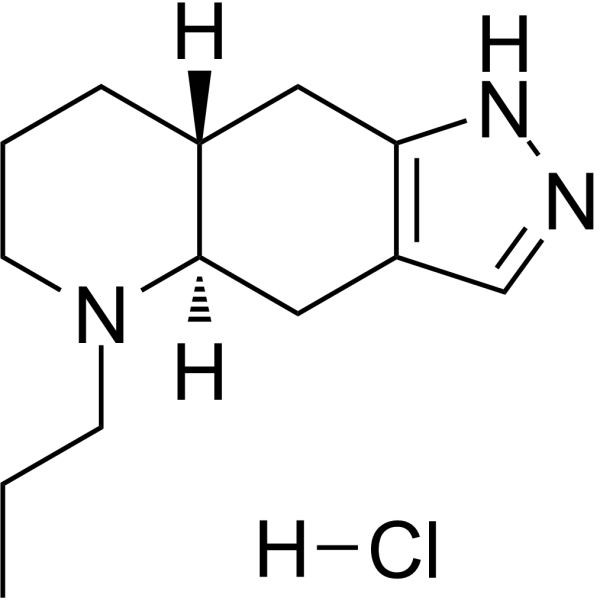
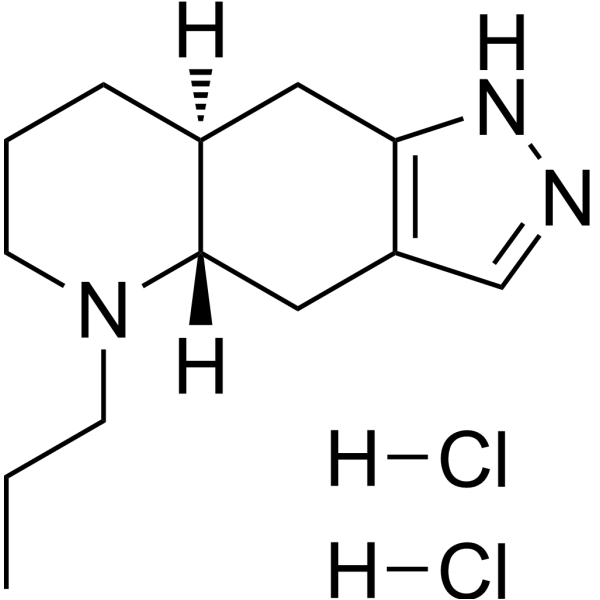
    Quinpirole hydrochloride
    4 Publications Verification

    LY 171555 hydrochloride; (-)-LY 141865 hydrochloride

    Dopamine Receptor Neurological Disease
    Quinpirole hydrochloride (LY 171555 hydrochloride) is a high-affinity agonist of dopamine D2/D3 receptor.
    Quinpirole hydrochloride
  • HY-B1752
    Quinpirole
    4 Publications Verification

    LY 171555; (-)-LY 141865

    Dopamine Receptor Calcium Channel Bcl-2 Family iGluR Apoptosis Neurological Disease
    Quinpirole (LY 171555; (-)-LY 141865) is a D2/D3 dopamine receptor agonist and a CaV1.3 calcium channel modulator. Quinpirole normalizes dendritic spine density in dopamine-depleted striatum, upregulates the protein expression of BCL2 and GluR2, downregulates the protein expression of BAX, and delays the onset of seizures. Quinpirole enhances learning and memory, inhibits neuronal apoptosis (apoptosis), and induces anxiety-like, stereotyped, and compulsive behaviors. Quinpirole disrupts prepulse inhibition in rhesus monkeys, enhances the activity of paraventricular thalamic neurons to promote recovery from Isoflurane anesthesia, and alters the composition of the gut microbiota in rats. Quinpirole can be used in research related to dyskinesia, pain, epilepsy, and neurological disorders including anxiety disorder, obsessive-compulsive disorder, and schizophrenia .
    Quinpirole
  • HY-12697

    Dopamine Receptor Neurological Disease
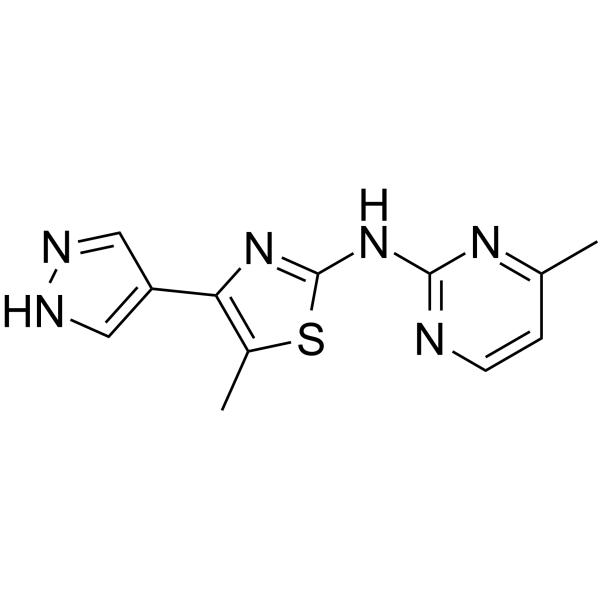
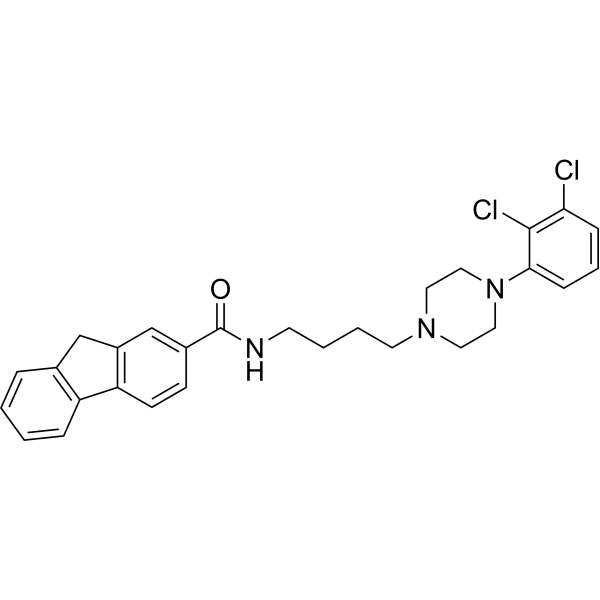
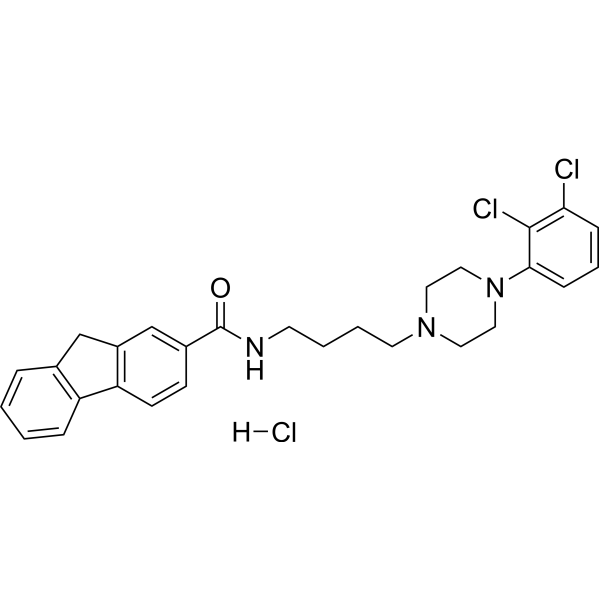
    NGB 2904 is a potent, selective, orally active and brain-penetrated antagonist of dopamine D3 receptor, with a Ki of 1.4 nM. NGB 2904 shows selectivity for D3 over D2, 5-HT2, α1, D4, D1 and D5 receptors (Kis=217, 223, 642, >5000, >10000 and >10000 nM, respectively). NGB 2904 antagonizes Quinpirole-stimulated mitogenesis .
    NGB 2904
  • HY-122495

    rel-LY 171555 dihydrochloride; rel-LY 141865 dihydrochloride

    Dopamine Receptor Neurological Disease
    rel-Quinpirole (rel-LY 171555) dihydrochloride, an ergot compound, is a selective dopamine (DA) D2 receptor agonist. rel-Quinpirole dihydrochloride can be used for research on neurological diseases .
    rel-Quinpirole dihydrochloride
  • HY-111006

    UH 232

    Dopamine Receptor Neurological Disease
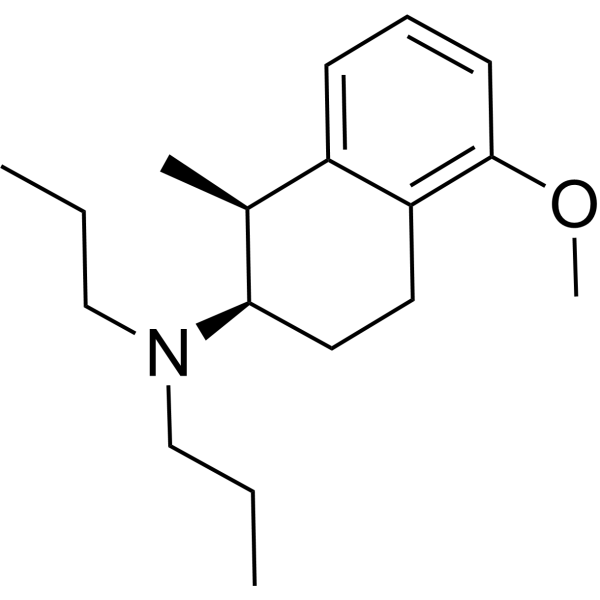
    (+)-UH 232 is a partially selective agonist of the D3 receptor with an intrinsic activity of 0.2-0.4. (+)-UH 232 antagonized quinpirole-induced mitogenesis with a Ki value of 9.4 nM .
    (+)-UH 232
  • HY-12697A

    Dopamine Receptor Neurological Disease
    NGB 2904 hydrochloride is a potent, selective, orally active and brain-penetrated antagonist of dopamine D3 receptor, with a Ki of 1.4 nM. NGB 2904 hydrochloride shows selectivity for D3 over D2, 5-HT2, α1, D4, D1 and D5 receptors (Kis=217, 223, 642, >5000, >10000 and >10000 nM, respectively). NGB 2904 hydrochloride antagonizes Quinpirole-stimulated mitogenesis .
    NGB 2904 hydrochloride
  • HY-118997

    Dopamine Receptor Neurological Disease
    PD-89211 is a selective dopamine D4 receptor antagonist with a Ki value of 3.7 nM. PD-89211 reverses Quinpirole (HY-B1752A)-induced [3H]thymidine uptake in CHOpro5 cells (IC50 = 2.1 nM). PD-89211 regulates dopamine/norepinephrine metabolism in the hippocampus and can be used for research on central nervous system disorders such as schizophrenia .
    PD-89211
  • HY-111241

    Dopamine Receptor Neurological Disease
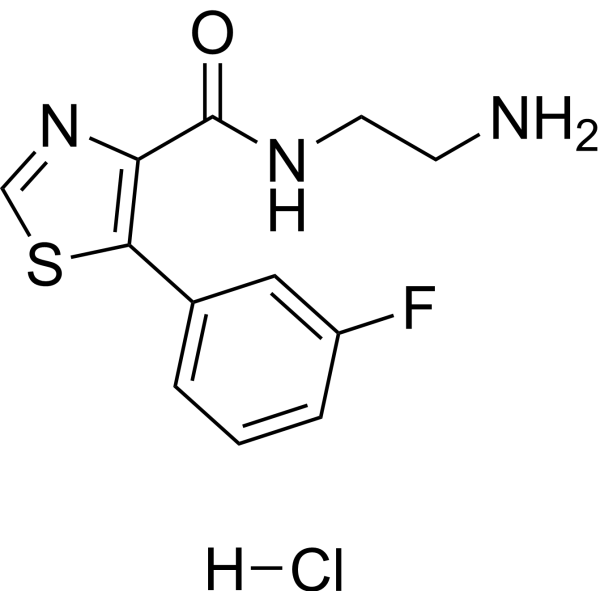
    SV 293 is a selective antagonist with neutral antagonist activity. SV 293 binds to human D2 receptors with 100-fold higher affinity and has lower affinity for human D3 and D4 dopamine receptor subtypes. SV 293 was found to block the effects of the full agonist quinpirole in forskolin-dependent adenylate acylase inhibition assays and electrophysiological assays. SV 293 can be used as a useful pharmacological tool to study the role of dopamine D2-like receptor subtypes in dopamine pathways associated with neurological, neuropsychiatric and movement disorders .
    SV 293
  • HY-18654A

    mGluR Neurological Disease
    ADX88178 TFA is an orally active, blood-brain barrier-penetrant, selective positive allosteric modulator of mGluR4, with an EC50 of 3.5 nM against hmGluR4. ADX88178 TFA modulates mGlu4 activity, enhances glutamate-mediated receptor activation, and increases the apparent affinity of glutamate for the receptor. ADX88178 TFA reverses haloperidol-induced catalepsy, potentiates the effects of levodopa (L-DOPA) and quinpirole, but fails to alleviate established abnormal involuntary movements, does not exacerbate L-DOPA-induced dyskinesia, and does not affect forelimb akinesia when administered alone. ADX88178 TFA can be used in research related to L-DOPA-induced dyskinesia and Parkinson's disease .
    ADX88178 TFA

Inquiry Online

Your information is safe with us. * Required Fields.

Salutation


Country or Region *

Applicant Name *


Organization Name *

Department *


Email Address *


Product Name *

Cat. No.


Requested quantity *

Phone Number *


Remarks

Inquiry Online

Inquiry Information

Product Name:
Cat. No.:
Quantity:
MCE Japan Authorized Agent:

