1. Search Result
Search Result
Results for "

RET

" in MedChemExpress (MCE) Product Catalog:

193

Inhibitors & Agonists

1

Fluorescent Dye

2

Biochemical Assay Reagents

4

Peptides

1

Inhibitory Antibodies

1

Natural
Products

17

Recombinant Proteins

11

Isotope-Labeled Compounds

9

Antibodies

3

Oligonucleotides

Targets Recommended:
Cat. No. Product Name Target Research Areas Chemical Structure
  • HY-114370
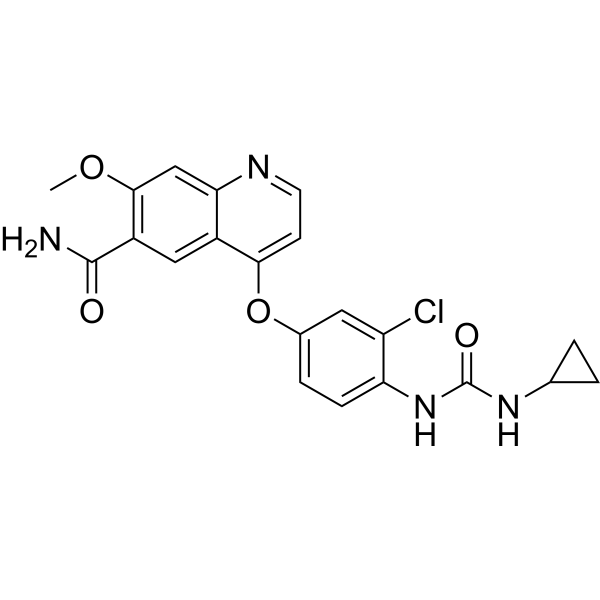
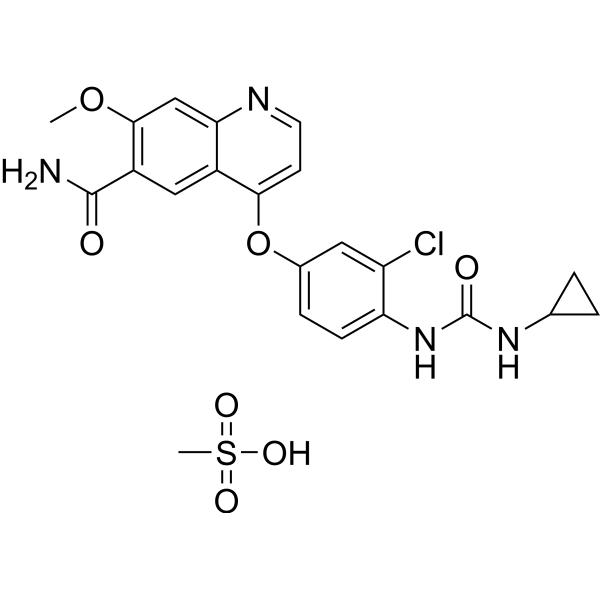
    Selpercatinib
    10+ Cited Publications

    LOXO-292

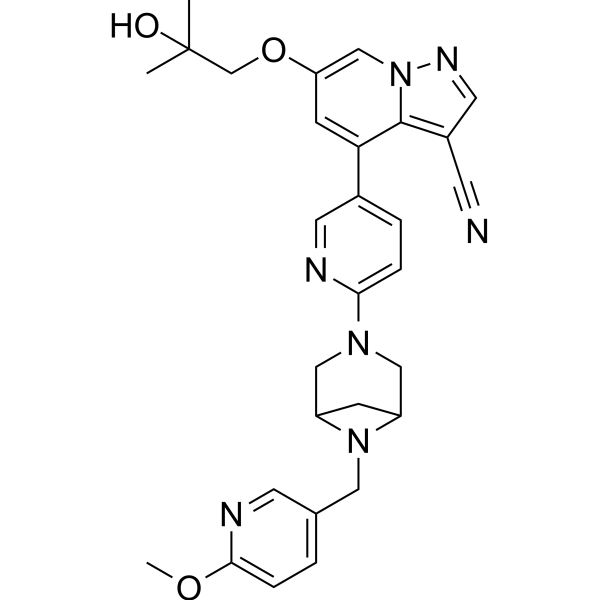
    RET Cancer
    Selpercatinib (LOXO-292) is a potent, selective RET kinase inhibitor with IC50 values of 14.0 nM, 24.1 nM, and 530.7 nM for RET (WT), RET (V804M), and RET (G810R), respectively. Selpercatinib has anticancer activity .
    Selpercatinib
  • HY-112301
    Pralsetinib
    15+ Cited Publications

    BLU-667

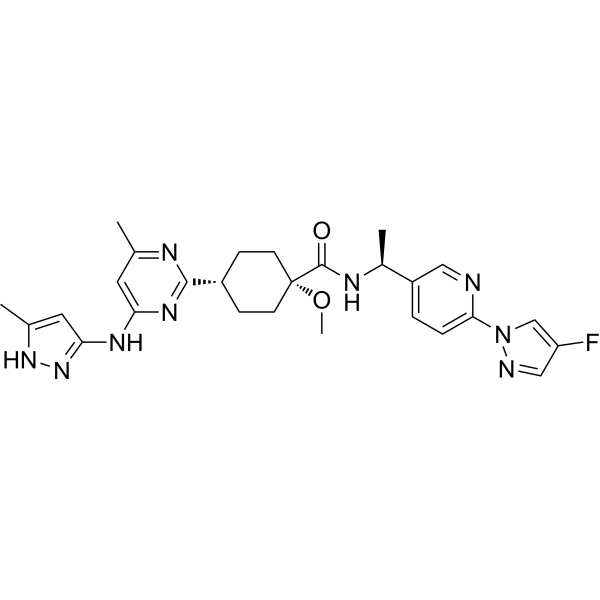
    RET Cancer
    Pralsetinib (BLU-667) is a highly potent, selective RET inhibitor. Pralsetinib (BLU-667) inhibits WT RET, RET mutants V804L, V804M, M918T and CCDC6-RET fusion with IC50s of 0.4, 0.3, 0.4, 0.4, and 0.4 nM, respectively .
    Pralsetinib
  • HY-D1080
    EDANS
    3 Publications Verification

    1,5-EDANS

    Fluorescent Dye Others
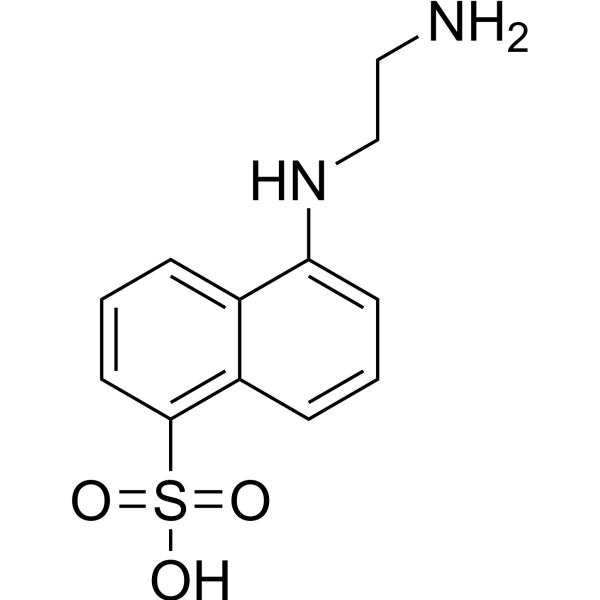
    EDANS (1,5-EDANS) is a novel and quenched fluorogenic substrate for assaying retroviral protease by resonance energy transfer (RET) .
    EDANS
  • HY-112301A

    trans-BLU-667

    RET Cancer
    trans-Pralsetinib (trans-BLU-667) is a rearranged during transfection (RET) inhibitor extracted from patent US20170121312A1, Compound Example 129 .
    trans-Pralsetinib
  • HY-156135

    MDM-2/p53 RET DNA/RNA Synthesis Apoptosis Caspase Endocrinology Cancer
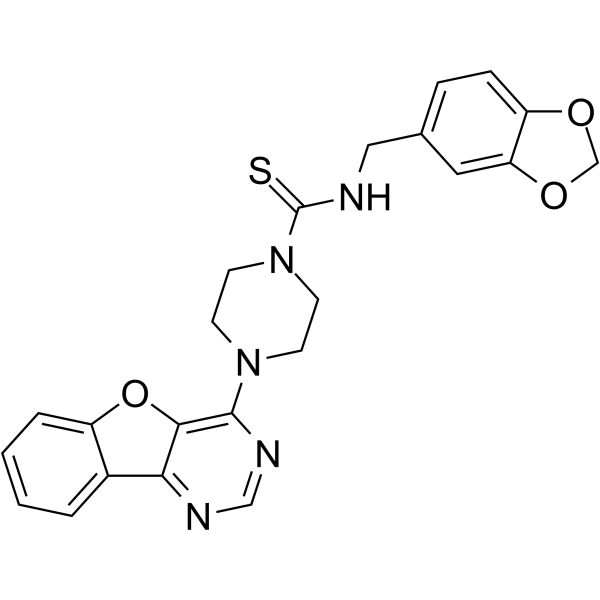
    NSC194598 is a p53 DNA-binding inhibitor with an IC50 value of 180 nM. NSC194598 inhibits p53 DNA binding and induction of target genesn when p53 is stabilized and activated by irradiation or chemotherapy. NSC194598 can interfere with transcriptional activation of mutated rearranged during transfection (RET) gene, induce apoptosis and G0/G1 phase arrest. NSC194598 can be used for the researches of acute radiation toxicity and medullary thyroid carcinoma .
    NSC194598
  • HY-108610

    (R)-ET-18-OCH3

    HIV Infection Cancer
    (R)-Edelfosine ((R)-ET-18-OCH3) is a ether lipid analog with anti-HIV and antineoplastic activity .
    (R)-Edelfosine
  • HY-136534

    RET Cancer
    RET V804M-IN-1 (compound 5) is a wt-RET -selective inhibitors of RETV804M kinase, with an IC50 of 20 nM .
    RET V804M-IN-1
  • HY-15814

    Bcr-Abl PDGFR c-Kit Src JAK Apoptosis Cancer
    HG-7-85-01 is a type II ATP competitive inhibitor of wild-type and gatekeeper mutations forms of Bcr-Abl, PDGFRα, Kit, and Src kinases. HG-7-85-01 inhibits T315I mutant Bcr-Abl kinase, KDR and RET with IC50s of 3 nM, 20 nM and 30 nM, and is only weak or no inhibition of other kinases (IC50>2 μM). HG-7-85-01 inhibits the cell proliferation, which is mediated by the induction of apoptosis, and inhibition of cell-cycle progression .
    HG-7-85-01
  • HY-139590

    BOS-172738; DS-5010

    RET PDGFR Cancer
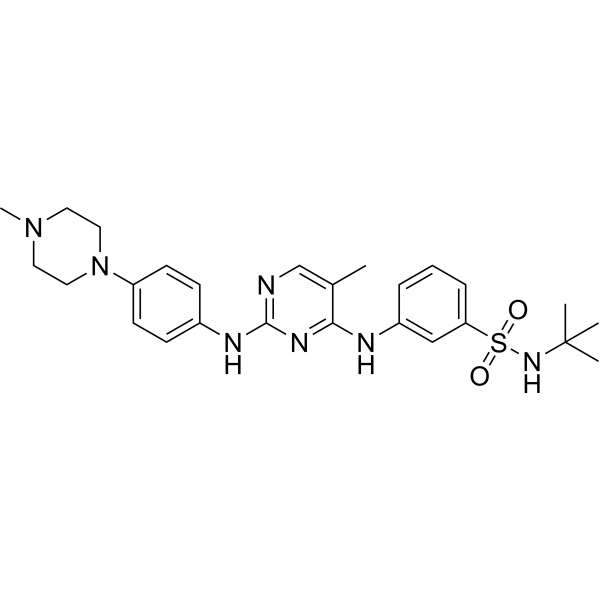
    Zeteletinib (BOS-172738; DS-5010) is an orally active, selective RET kinase inhibitor with nanomolar potency against RET and >300-fold selectivity against VEGFR2. Zeteletinib shows exquisite potency for the wild type RET, RET V804M/L gatekeeper mutants, and the most common oncogenic RET mutation M918T. Zeteletinib has potent antitumor activity .
    Zeteletinib
  • HY-101246

    RET Cancer
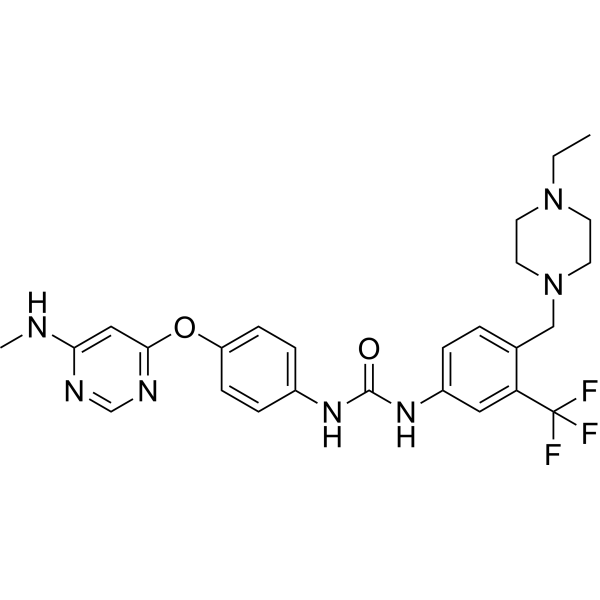
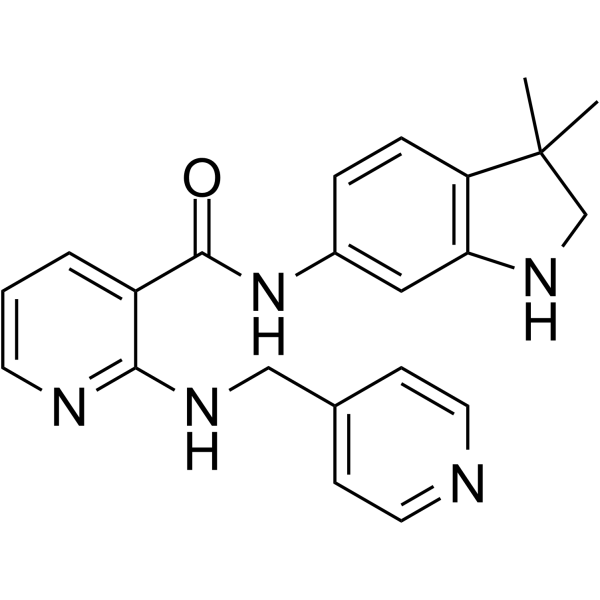
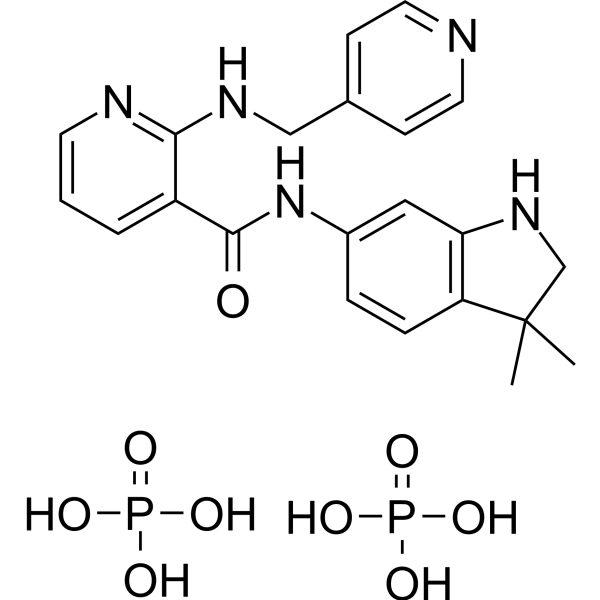
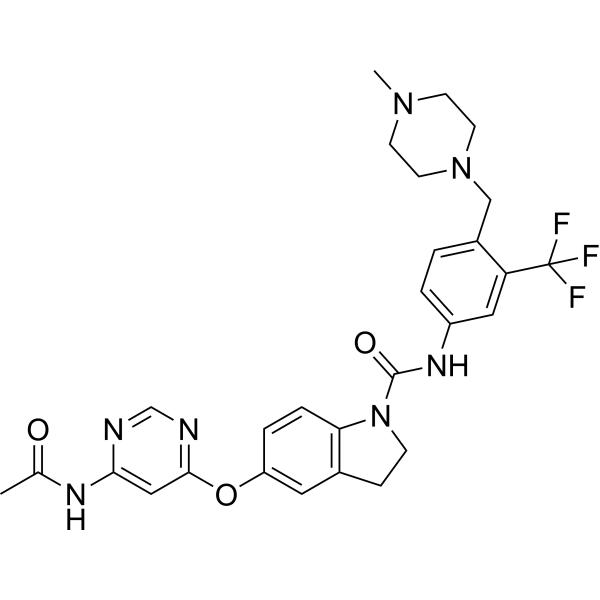
    RPI-1 is a specific, orally available 2-indolinone Ret tyrosine kinase inhibitor. RPI-1 inhibits proliferation, Ret tyrosine phosphorylation, Ret protein expression, and the activation of PLCgamma, ERKs and AKT in human medullary thyroid carcinoma TT cells. Antitumor activity .
    RPI-1
  • HY-145565
    Enbezotinib
    1 Publications Verification

    TPX-0046

    RET Cancer
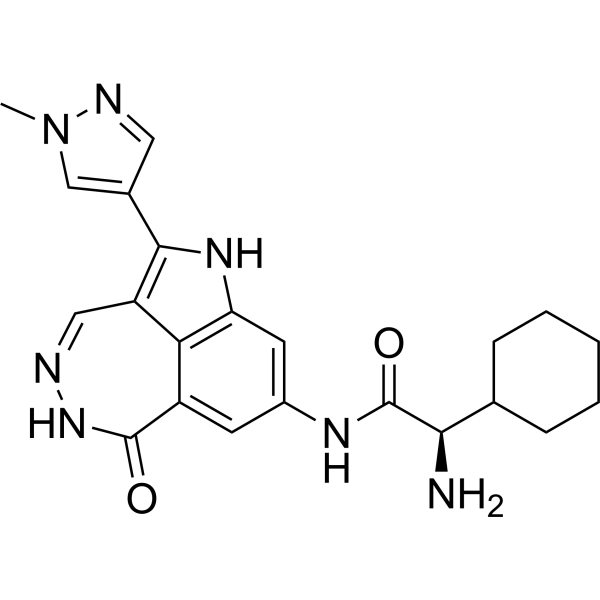
    Enbezotinib, an inhibitor of RET, can inhibit the RET autophosphorylation. Enbezotinib can be used for the research of cancer .
    Enbezotinib
  • HY-P10044

    RET Others
    IGF1Rtide can be used as a RET kinase substrate for RET kinase assays .
    IGF1Rtide
  • HY-148015

    TPX-0046 (enantiomer)

    RET Cancer
    Enbezotinib (enantiomer) (Compound 44) is the enantiomer form of Enbezotinib (HY-145565). Enbezotinib is an inhibitor of RET .
    Enbezotinib (enantiomer)
  • HY-18317

    VEGFR RET c-Kit Cancer
    JNJ-38158471 is a well tolerated, orally available, highly selective VEGFR-2 inhibitor, with an IC50 of 40 nM. JNJ-38158471 also inhibits Ret and Kit with IC50s of 180 and 500 nM, respectively .
    JNJ-38158471
  • HY-146710

    RET Cancer
    RET-IN-16 is a potent and selective RET inhibitor with IC50s of 3.98 nM, 8.42 nM, 15.05 nM, 7.86 nM, 5.43 nM and 8.86 nM for RET(WT), RET(M918T), RET(V804L), RET(V804M), RET-CCDC6 and RET-KIF5B, respectively. RET-IN-16 has anticancer effects .
    RET-IN-16
  • HY-151377

    RET EGFR Aurora Kinase c-Fms MAP4K Cancer
    RET-IN-19 (compound 59) is a potent RET inhibitor, with IC50 values of 6.8 and 13.51 nM against RET-wt and RET V804M, respectively. RET-IN-19 shows anticancer activity. RET-IN-19 can be used for non-small cell lung cancer (NSCLC) research .
    RET-IN-19
  • HY-148742

    RET Cancer
    RET-IN-21 (compound 5) is a selective RET V804M inhibitor with the IC50 of 0.02 μM. RET-IN-21 does not inhibit the wild type isoforms of RET or KDR. RET-IN-21 has antitumor activity .
    RET-IN-21
  • HY-178061

    ERK RET Cancer
    APS03118 is an orally active, potent and selective rearranged during transfection (RET) inhibitor. APS03118 broadly inhibits RET fusions and mutations (including G810, V804, L730, and Y806 variants), with IC50 values predominantly below 1 nM (0.095 nM for WT; ranging from 0.00438 to 5.72 nM for mutants), and demonstrates marked superiority against RET G810 mutations. APS03118 inhibits the entire RET signaling pathway (including RET, Shc, and ERK1/2), with >20-fold selectivity over most off-target kinases (except FLT3 and YES). APS03118 induces complete tumor regression in KIF5B-RET and CCDC6-RET V804 M patient derived xenografts (PDXs) and significantly prolongs survival in an intracranial CCDC6-RET metastasis mice model. APS03118 can be used for selective RET inhibitor (SRI)-resistant, RET-driven cancer research .
    APS03118
  • HY-178964

    PROTACs RET Cancer
    PROTAC RET Degrader 1 (Compound 20) is an orally active and blood-brain barrier-crossing RET PROTAC degrader with DC50 values for RET (WT), RET (G810S), RET (G810C), and RET (G810R) of 1.7, 3, 12, and 21 nM, respectively. PROTAC RET Degrader 1 exhibits potent anti-proliferative activity in cancer cell lines carrying oncogenic RET fusions (such as KIF5B-RET, CCDC6-RET) or mutations (such as RET (C634W)). PROTAC RET Degrader 1 shows significant anti-tumor activity in human tumor xenograft (PDX) mouse models. PROTAC RET Degrader 1 can be used for the study of RET-positive cancers Pink: RET ligand (HY-179308); Blue: CRBN ligand (HY-179307); Black: Linker) .
    PROTAC RET Degrader 1
  • HY-153676

    RET Cancer
    RET-IN-23 (compound 17) is a potent and orally active RET inhibitor with IC50 values of 1.32, 2.50, 6.54, 1.03, 1.47 nM for RET-WT, RET-CCDC6, RET-V804L, RET-V804M, RET-M918T, respectively. RET-IN-23 shows anti-tumor activity .
    RET-IN-23
  • HY-179308

    Ligands for Target Protein for PROTAC RET Cancer
    RET ligand-5 is a PROTAC target protein ligand that can be used for synthesis of PROTACs, such as PROTAC RET Degrader 1 (HY-178964). PROTAC RET Degrader 1 is a potent RET PROTAC degrader with anti-tumor activity .
    RET ligand-5
  • HY-174245

    RET Cancer
    RET-IN-30 (Compound 28) is a RET inhibitor that exhibits inhibitory activity against both wild-type RET and some of its mutants. RET-IN-30 can inhibit the proliferation of A549 cells and has anti-tumor activity .
    RET-IN-30
  • HY-144422

    RET Cancer
    RET-IN-15 is a rearranged during transfection (RET) kinase inhibitor extracted from patent WO2021115457A1 compound 51. RET-IN-15 can be used for the research of cancer .
    RET-IN-15
  • HY-114370R

    LOXO-292 (Standard)

    Reference Standards RET Cancer
    Selpercatinib (Standard) is the analytical standard of Selpercatinib. This product is intended for research and analytical applications. Selpercatinib (LOXO-292) is a potent, selective RET kinase inhibitor with IC50 values of 14.0 nM, 24.1 nM, and 530.7 nM for RET (WT), RET (V804M), and RET (G810R), respectively. Selpercatinib has anticancer activity .
    Selpercatinib (Standard)
  • HY-149413

    RET Others Cancer
    FHND5071 is a potent and selective RET kinase inhibitor, FHND5071 can exert antitumor effects by inhibiting RET autophosphorylation. FHND5071 can be used for tumor diseases research .
    FHND5071
  • HY-176885

    STK33 RET Others
    CDD-2211 is a STK33 inhibitor, with a Kd of 0.018 nM and an IC50 of 5 nM. CDD-2211 has relatively weak inhibitory effects on off-target kinases, with IC50 values of 115 nM for CLK1, 48 nM for CLK2, 187 nM for CLK4, and 78 nM for RET. CDD-2211 can be used for the study of contraception .
    CDD-2211
  • HY-176885A

    STK33 RET Others
    CDD-2212 is a STK33 inhibitor, with a Kd of 1.9 nM and an IC50 of 999 nM. CDD-2212 has relatively weak inhibitory effects on off-target kinases, with IC50 values of 3223 nM for CLK1, 1555 nM for CLK2, 5884 nM for CLK4, and 1093 nM for RET. CDD-2212 can be used for the study of contraception .
    CDD-2212
  • HY-W010174

    Drug Intermediate Others
    2-Chloro-4-nitropyridine is a drug intermediate in synthesizing other organic compounds, such as 2-chloro-4-ethoxypyridine and various RET kinase inhibitors .
    2-Chloro-4-nitropyridine
  • HY-117873

    c-Kit RET PDGFR Infection
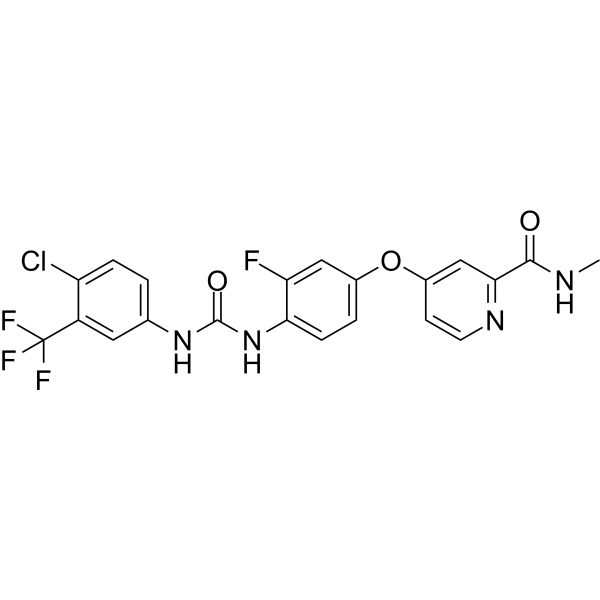
    KBP-7018 is a tyrosine kinase-selective inhibitor. KBP-7018 has potent inhibitory effects on c-KIT, PDGFR, and RET with IC50 values of 10 nM, 7.6 nM and 25 nM, respectively. KBP-7018 can be used for the research of idiopathic pulmonary fibrosis .
    KBP-7018
  • HY-117873A

    c-Kit RET PDGFR Infection
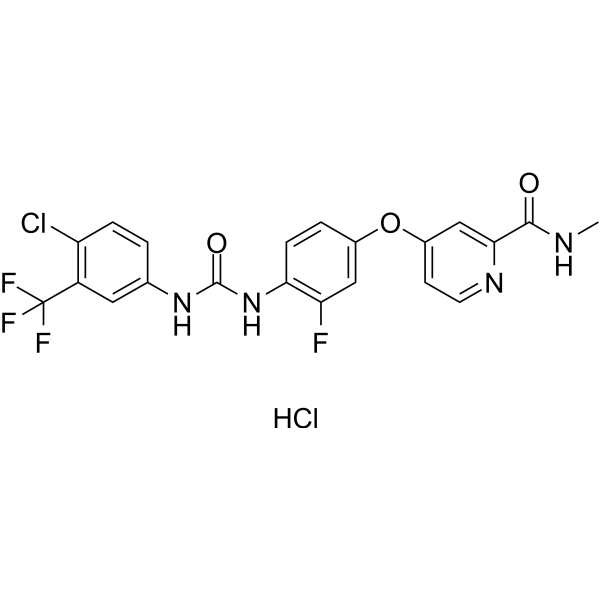
    KBP-7018 hydrochloride is a tyrosine kinase-selective inhibitor. KBP-7018 hydrochloride has potent inhibitory effects on c-KIT, PDGFR, and RET with IC50 values of 10 nM, 7.6 nM and 25 nM, respectively. KBP-7018 hydrochloride can be used for the research of idiopathic pulmonary fibrosis .
    KBP-7018 hydrochloride
  • HY-170809

    RET Cancer
    RET-IN-29 (Compound 8W) is a selective RET kinase inhibitor. RET-IN-29 exhibits inhibitory potency against the BaF3 cells harboring CCDC6-RET V804M mutation with an IC50 value of 0.715 μM. RET-IN-29 is promising for research of non-small cell lung cancer (NSCLC) .
    RET-IN-29
  • HY-139590A

    BOS-172738 hemiadipate; DS-5010 hemiadipate

    RET PDGFR Cancer
    Zeteletinib (BOS-172738; DS-5010) hemiadipate is an orally active, selective RET kinase inhibitor with nanomolar potency against RET and >300-fold selectivity against VEGFR2. Zeteletinib hemiadipate shows exquisite potency for the wild type RET, RET V804M/L gatekeeper mutants, and the most common oncogenic RET mutation M918T. Zeteletinib hemiadipate has potent antitumor activity .
    Zeteletinib hemiadipate
  • HY-112301R

    BLU-667 (Standard)

    Reference Standards RET Cancer
    Pralsetinib (Standard) is the analytical standard of Pralsetinib. This product is intended for research and analytical applications. Pralsetinib (BLU-667) is a highly potent, selective RET inhibitor. Pralsetinib (BLU-667) inhibits WT RET, RET mutants V804L, V804M, M918T and CCDC6-RET fusion with IC50s of 0.4, 0.3, 0.4, 0.4, and 0.4 nM, respectively .
    Pralsetinib (Standard)
  • HY-132193

    RET Cancer
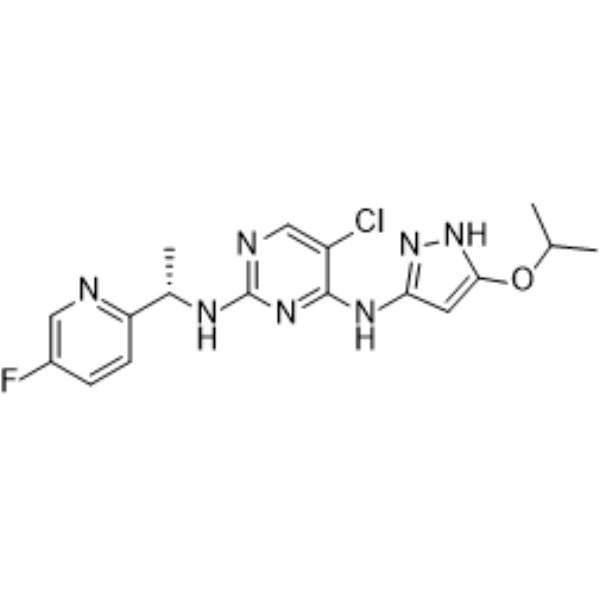
    RET-IN-4 is a potent, selective and orally active RET inhibitor with IC50s of 1.29 nM, 1.97 nM, and 0.99 nM for RET (WT), RET (V804M), and RET (M918T), respectively. RET-IN-4 exhibits better kinases selectivity against JAK2 (IC50 of 4.4 nM) and FLT3 (IC50 of 30.8 nM). RET-IN-4 has anticancer effects .
    RET-IN-4
  • HY-143615

    RET Cancer
    RET-IN-10 is a potent inhibitor of RET. RET loss of function mutations leads to Hirschsprung's disease, while its gain of function mutations is associated with a variety of human tumors. RET-IN-10 has the potential for the research of cancer diseases (extracted from patent WO2021135938A1, compound 18) .
    RET-IN-10
  • HY-151987

    RET Apoptosis Cancer
    RET-IN-20 is a potent RET inhibitor with an IC50 value of 13.7 nM. RET-IN-20 decreases the expression of p-Ret, p-Shc protein. RET-IN-20 induces apoptosis. RET-IN-20 shows antiproliferative and anti-tumor activity .
    RET-IN-20
  • HY-149099

    RET Cancer
    RET-IN-22 (compound 17b) is a potent, selective and orally active RET inhibitor with an IC50 of 20.9 nM and 18.3 nM for wild-type RET and RET-V804M, respectively. RET-IN-22 shows highly selective profile to most kinases, especially to EGFR and VEGFR2. RET-IN-22 has anticancer effects .
    RET-IN-22
  • HY-147563

    RET Cancer
    RET-IN-17 is a potent inhibitor of RET. RET-IN-17 has the potential for the research of pain associated with IBS and other gastrointestinal disorders and for the research of cancers with constitutive RET kinase activity (extracted from patent WO2016038552A1, compound 1) .
    RET-IN-17
  • HY-156471

    RET Cancer
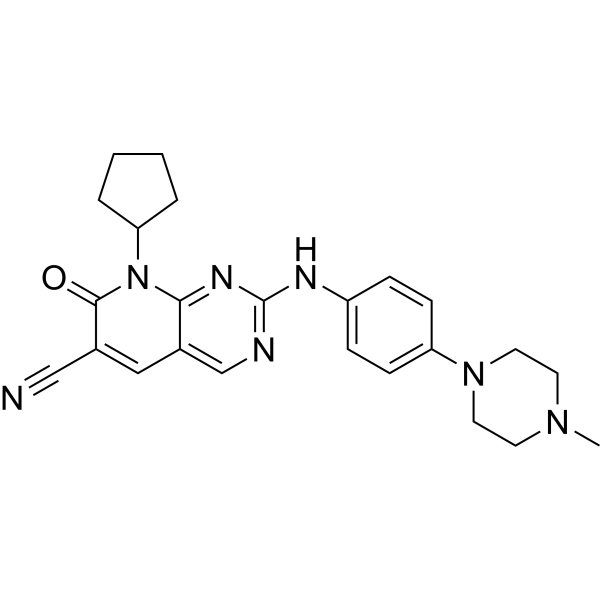
    RET-IN-26 (compound D5) is RET kinase inhibitor, with the IC50 of 0.33 μM .
    RET-IN-26
  • HY-147564

    RET Neurological Disease Cancer
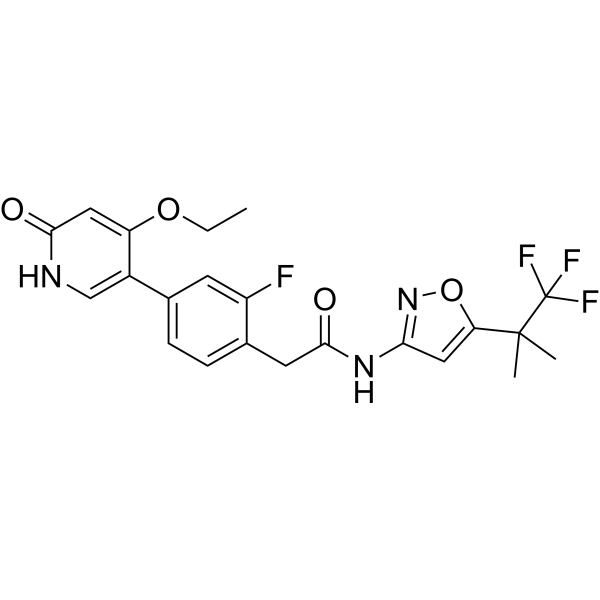
    RET-IN-18 is a pyridone compound. is a potent inhibitor of RET. RET-IN-18 is a potent inhibitor of RET. RET-IN-18 has the potential for the research of diseases related to irritable bowel syndrome (IBS) and other gastrointestinal disorders, as well as cancers, and neurodegenerative diseases (extracted from patent WO2022017524A1, compound 1) .
    RET-IN-18
  • HY-143546

    RET Cancer
    RET-IN-9 is a potent inhibitor of RET. RET kinase is a single-pass transmembrane receptor tyrosine kinase that plays an important role in the development of the kidney and enteric nervous system, and the maintenance of homeostasis in the nervous, endocrine, hematopoietic, and male reproductive systems. RET-IN-9 has the potential for the research of RET-related disease including non-small cell lung cancer and medullary thyroid cancer (extracted from patent WO2021115457A1, compound 29) .
    RET-IN-9
  • HY-168105

    RET Cancer
    RET-IN-27 (compound 20p) is a potent inhibitor of RET, with IC50s of 3.6 nM, 0.1 nM, 2.1 nM, 0.3 nM for RET WT, RET V804L, RET V804M, RET M918T, respectively. RET-IN-27 plays an important role in cancer research .
    RET-IN-27
  • HY-144131

    Apoptosis RET Cancer
    RET-IN-11 is a potent and selective RET inhibitor with IC50s of 6.20 nM, 18.68 nM for RET and RET V804M, respectively. RET-IN-11 shows anti-proliferation and migration activity in CCDC6-RET-driven LC-2/ad cells. RET-IN-11 induces cell apoptosis .
    RET-IN-11
  • HY-144029

    RET Cancer
    RET-IN-13 (compound 1), a quinoline compound, is a potent RET inhibitor with IC50s of 0.5 nM, 0.9 nM for RET (WT) and RET (V804M), respectively. RET-IN-13 has the potential for tumors or intestinal diseases related to abnormal activation of RET research .
    RET-IN-13
  • HY-170019

    RET Cancer
    RET-IN-28 (Compound 16) is a RET (transmembrane receptor tyrosine protein kinase) inhibitor. RET-IN-28 inhibits the activity of the mutant RET enzyme (RET-V804M), and can be applied to cancer research .
    RET-IN-28
  • HY-144030

    RET Others
    RET-IN-12 (compound 2) is a RET inhibitor, with IC50 values of 0.3 nM and 1 nM for RET(WT) and RET(V804M), respectively .
    RET-IN-12
  • HY-112950

    RET Cancer
    RET-IN-1 is a RET kinase inhibitor extracted from patent WO2018071447A1, Compound Example 552, has IC50s of 1 nM, 7 nM, and 101 nM for RET (WT), RET (V804M) , and RET (G810R), respectively .
    RET-IN-1
  • HY-144170

    RET Btk Cancer
    RET-IN-14 (compound 49) is a potent RET inhibitor with IC50s of <0.51 nM, 9.3 nM, 1.3 nM, 9.2 nM, 15 nM for RET (WT), RET (G810R), RET (V804M), BTK and BTK (C481S), respectively. RET-IN-14 has the potential for tumors research
    RET-IN-14
  • HY-168868

    RET Ligands for Target Protein for PROTAC Cancer
    RET ligand-2 is a selective RET inhibitor. RET ligand-2 can serve as a ligand for target protein (Ligands for Target Protein for PROTAC) for the development of PROTAC RET degraders with antitumor activity. RET ligand-2 can be used for the synthesis of RD-23 (HY-168867) .
    RET ligand-2
  • HY-141896

    RET Cancer
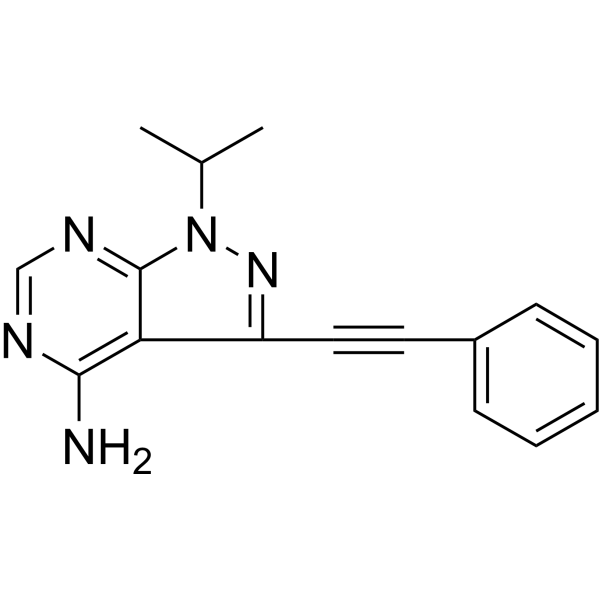
    RET-IN-7 demonstrates potent in vitro RET kinase inhibition and robust in vivo efficacy in RET-driven tumor xenografts upon multiday dosing in mice.
    RET-IN-7

Inquiry Online

Your information is safe with us. * Required Fields.

Salutation


Country or Region *

Applicant Name *


Organization Name *

Department *


Email Address *


Product Name *

Cat. No.


Requested quantity *

Phone Number *


Remarks

Inquiry Online

Inquiry Information

Product Name:
Cat. No.:
Quantity:
MCE Japan Authorized Agent:

