1. Search Result
Search Result
Results for "

Radiotracer

" in MedChemExpress (MCE) Product Catalog:

62

Inhibitors & Agonists

3

Fluorescent Dyes

4

Biochemical Assay Reagents

13

Peptides

1

Inhibitory Antibodies

Cat. No. Product Name Target Research Areas Chemical Structure
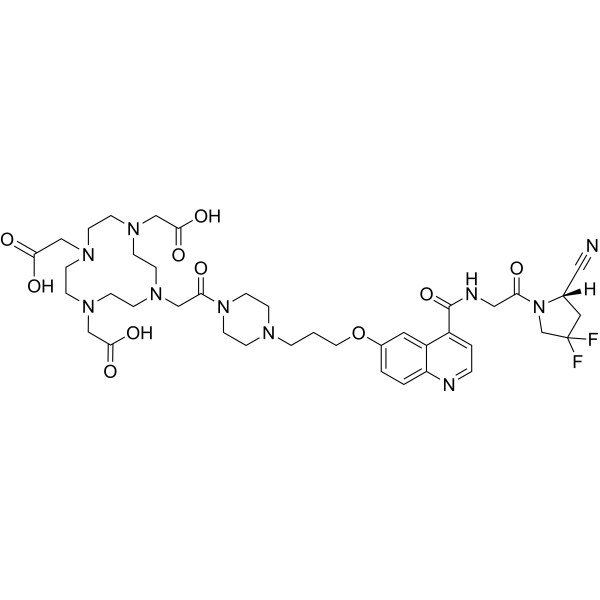
  • HY-128643
    FAPI-4
    Maximum Cited Publications
    31 Publications Verification

    FAP Cancer
    FAPI-4 is a potent fibroblast activation protein (FAP) inhibitor for the targeting FAP. FAPI-4 can be used in cancer research. 68Ga-FAPI-4 PET/CT is a promising new diagnostic method for imaging various kinds of cancer, with good tumor-to-background contrast ratios .
    FAPI-4
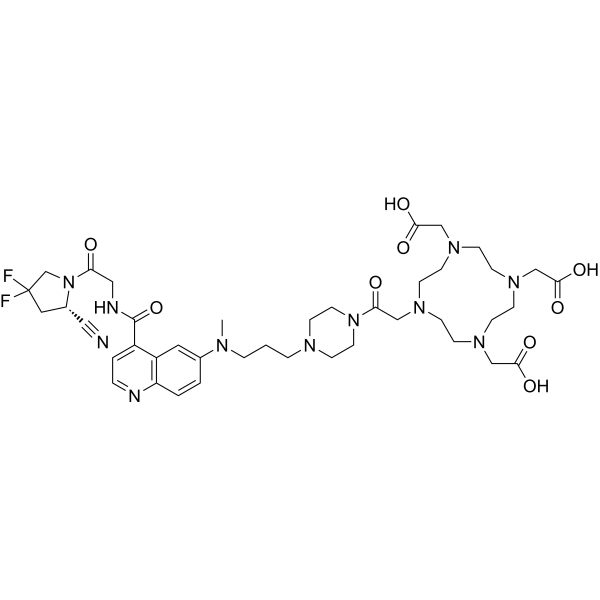
  • HY-137331
    FAPI-46
    2 Publications Verification

    FAP Cancer
    FAPI-46 is a quinoline-based fibroblast activation protein (FAP)-targeted tracer. Use radioactivity FAPI-46 labeled with 68Ga or 177Lu can be used for tumor imaging in a variety of cancers and has higher tumor uptake rates and longer tumor accumulation .
    FAPI-46
  • HY-164316

    FAP Others
    FT-FAPI-12_9 is a FAP ligand that can be used to synthesize FAPI-46, a radiotracer targeting FAP .
    FT-FAPI-12_9
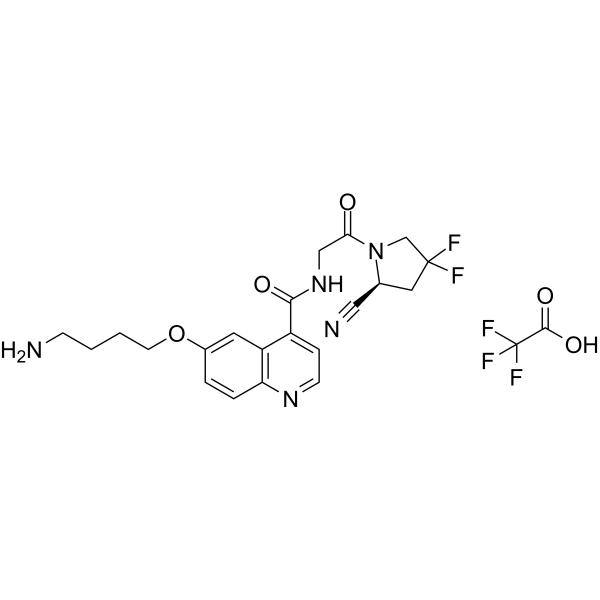
  • HY-153552A

    FAP Cancer
    NH2-UAMC1110 TFA is an aminobutoxy derivative of the fibroblast activation protein (FAP) inhibitor UAMC1110 (HY-100684), and is a precursor compound for the synthesis of FAP inhibitor probes, not directly used in bioactivity experiments. For example, NH2-UAMC1110 TFA is involved in the synthesis of the radiotracer FAPI-QS, which exhibits high tumor selectivity and high dose effect, and has been used in tumor diagnosis. NH2-UAMC1110 TFA structurally incorporates an active amino group, allowing it to form covalent bonds with various molecules (such as DOTA, DATA5m, radionuclide chelators, etc.) to synthesize molecular imaging probes or targeted compounds with the ability to target FAP. NH2-UAMC1110 TFA specifically binds to the FAP active site, inhibiting its proline-selective serine protease activity (including dipeptidyl peptidase and endopeptidase activity), blocking FAP-mediated tissue remodeling-related processes. Its key activity is high targeting and high affinity, and its core function is to act as a targeting module coupled with bifunctional chelators (such as DOTA, DATA5m). NH2-UAMC1110 TFA can be applied to diagnostic imaging studies of tumors expressing FAP (such as colorectal cancer, pancreatic cancer, etc.), and also provides molecular tools for targeted research of FAP-related diseases with high FAP expression, such as fibrosis and arthritis .
    NH2-UAMC1110 TFA
  • HY-107531

    GSK-3 Neurological Disease Cancer
    A 1070722 is a potent and selective glycogen synthase kinase 3 (GSK-3) inhibitor, with a Ki of 0.6 nM for both GSK-3α and GSK-3β. A 1070722 can penetrate the blood-brain barrier (BBB) and accumulates in brain regions, thus potential for PET radiotracer for the quantification of GSK-3 in brain. A 1070722 decreases spontaneous locomotion .
    A 1070722
  • HY-D2363

    Radionuclide-Drug Conjugates (RDCs) FAP Prolyl Endopeptidase (PREP) Cancer
    DOTA.SA.FAPi TFA is a selective FAP inhibitor with an IC50 value of 0.9 nM against FAP. DOTA.SA.FAPi TFA forms stable complexes with 68Ga and serves as a PET radiotracer for preclinical imaging of FAP-expressing tumors. DOTA.SA.FAPi TFA can be used in the research of colorectal adenocarcinoma and various other cancers .
    DOTA.SA.FAPi TFA
  • HY-153248

    Biochemical Assay Reagents Neurological Disease Inflammation/Immunology
    PBR28 is a translocator protein (TSPO) binding positron emission tomography (PET) radiotracer with blood-brain barrier permeability . PBR28 binds to TSPO, a marker of microglial activation and neuroinflammation, and is used for neuroinflammation imaging in brain diseases and HIV-infected individuals .
    PBR28
  • HY-135714

    EKZ-001

    HDAC Microtubule/Tubulin Neurological Disease Cancer
    Bavarostat (EKZ-001) is a blood-brain barrier-permeable, potent HDAC6 inhibitor and PET radiotracer, with an IC50 as low as 17 nM against human HDAC6. Bavarostat can be labeled with 18F and used as a probe to map HDAC6 distribution and measure target occupancy in the brains of non-human primates. Bavarostat also selectively modulates tubulin acetylation, but not histone acetylation. Bavarostat is applicable for research on Alzheimer's disease, other neurodegenerative disorders, and cancers .
    Bavarostat
  • HY-153552

    FAP Cancer
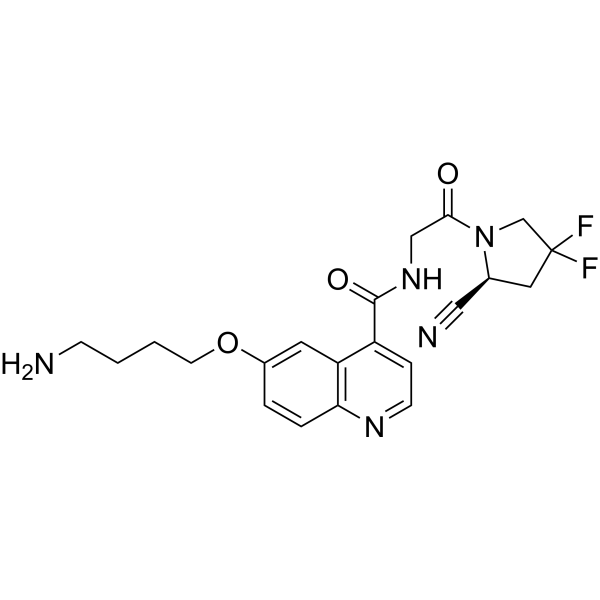
    NH2-UAMC1110 is an aminobutoxy derivative of the fibroblast activation protein (FAP) inhibitor UAMC1110 (HY-100684), and is a precursor compound for the synthesis of FAP inhibitor probes, not directly used in bioactivity experiments. For example, NH2-UAMC1110 is involved in the synthesis of the radiotracer FAPI-QS, which exhibits high tumor selectivity and high dose-response, and has been used for tumor diagnosis. NH2-UAMC1110 introduces an active amino group into its structure, enabling it to form covalent bonds with various molecules (such as DOTA, DATA5m, radionuclide chelators, etc.), thereby synthesizing molecular imaging probes or targeted compounds with the ability to target FAP. NH2-UAMC1110 specifically binds to the FAP active site, inhibiting its proline-selective serine protease activity (including dipeptidyl peptidase and endopeptidase activity), blocking FAP-mediated tissue remodeling processes. Its key activity is high targeting and high affinity, and its core function is to be coupled with bifunctional chelators (such as DOTA, DATA5m) as a targeting module. NH2-UAMC1110 can be applied to diagnostic imaging studies of tumors expressing FAP (such as colorectal cancer, pancreatic cancer, etc.), and also provides molecular tools for targeted research of FAP-related diseases with high FAP expression, such as fibrosis and arthritis .
    NH2-UAMC1110
  • HY-156991

    NODA-GA-NHS ester

    EGFR Radionuclide-Drug Conjugates (RDCs) Cancer
    NODAGA-NHS (NODA-GA-NHS ester) is the activated ester form of the NODAGA chelator. NODAGA-NHS conjugates with Trastuzumab (HY-P9907) to form NODAGA-Trastuzumab, a conjugate that can chelate 64Cu for the preparation of radiotracers. NODAGA-NHS covalently binds to the amino group of lactosamine derivatives to form radiotracer precursors. [ 64Cu]NODAGA-trastuzumab enables PET imaging of tumors expressing HER2. NODAGA-NHS is used in studies of HER2-positive breast cancer and ovarian adenocarcinoma .
    NODAGA-NHS
  • HY-P3440

    Radionuclide-Drug Conjugates (RDCs) PD-1/PD-L1 Cancer
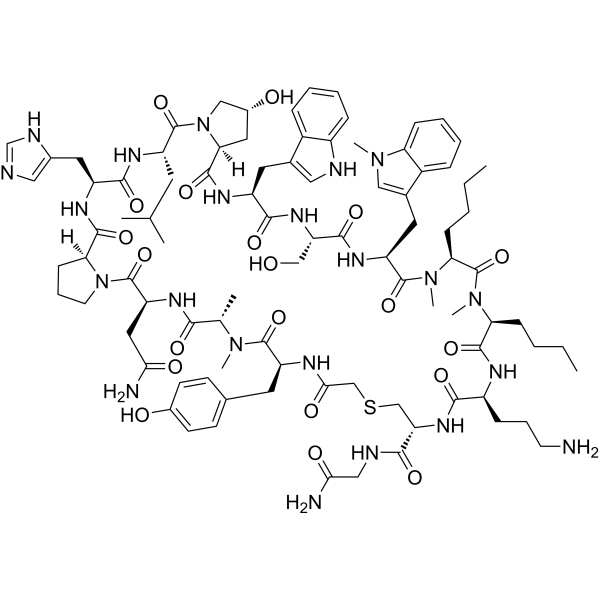
    WL12 is a specifically targeting programmed death ligand 1 (PD-L1) binding peptide. WL12 can be radiolabeled by different radionuclides, generating radiotracers, which can assess the tumor PD-L1 expression .
    WL12
  • HY-100133A

    Integrin Cancer
    DOTA-ADIBO TFA is a DOTA-derived bifunctional chelator (BFC) that allows drug conjugation via an uncatalyzed, copper-free cycloaddition reaction. DOTA-ADIBO TFA enables the construction of fusion chelator systems that can be further used to synthesize radiotracers after Cu[64] modification. Positron emission tomography imaging of tumors expressing integrin αvβ6 .
    DOTA-ADIBO TFA
  • HY-101183

    Tau Protein Neurological Disease
    THK5351 can be radiolabeled and used as a radiotracer for in vivo imaging of tau pathology in the brain.
    THK5351
  • HY-135497

    Dopamine Receptor Neurological Disease
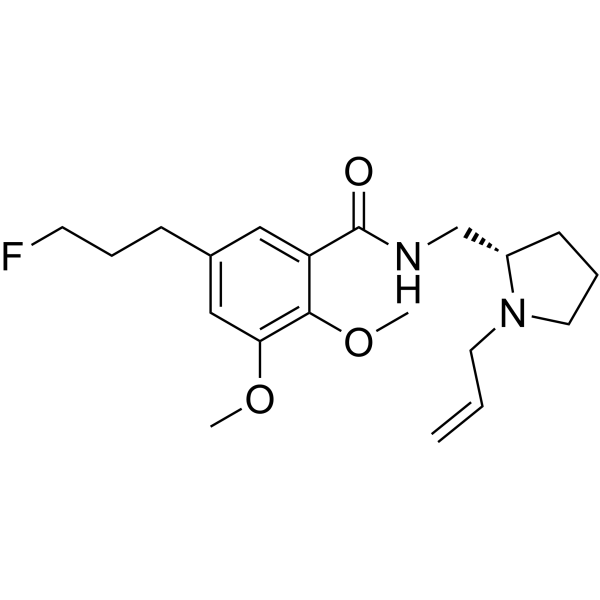
    Fallypride is a potent antagonist of dopamine D2/D3 receptor. Fallypride, in the form of fallypride ( 18F), can be used as a positron emission tomography (PET) radiotracer .
    Fallypride
  • HY-128890B
    DOTA-​NHS-ester TFA
    1 Publications Verification

    ADC Linker Biochemical Assay Reagents Cancer
    DOTA-​NHS-ester (TFA) is used as a linker for affibody molecules, and it can be employed in small animal positron emission tomography (PET), single photon emission computed tomography (SPECT), and CT scanning. DOTA-​NHS-ester can be used to label radiotracers or imaging probes for tumor detection .
    DOTA-​NHS-ester TFA
  • HY-159108

    c-Fms Cardiovascular Disease
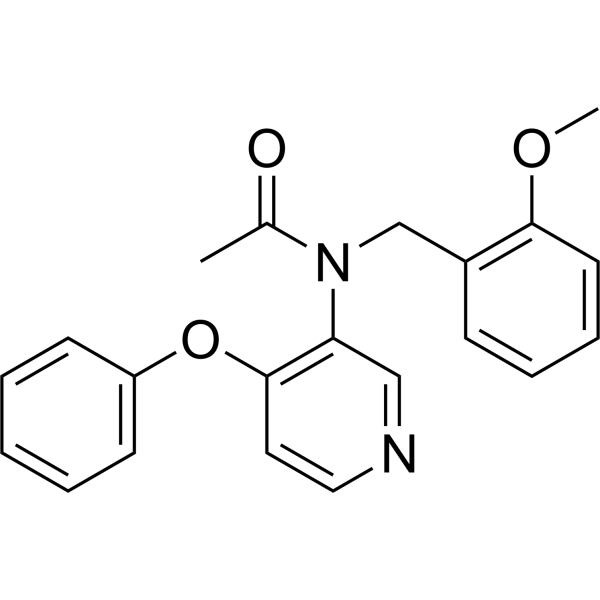
    AZ683 is a potent and selective 3-amido-4-anilinoquinoline CSF1R inhibitor. AZ683 has high affinity for CSF1R (Ki=8 nM; IC50=6 nM). AZ683 has good oral bioavailability. [ 11C]AZ683 can be used as a positron emission tomography (PET) radiotracer for colony stimulating factor 1 receptor (CSF1R) .
    AZ683
  • HY-106450

    MRE-0470; WRC 0470

    Adenosine Receptor Cardiovascular Disease
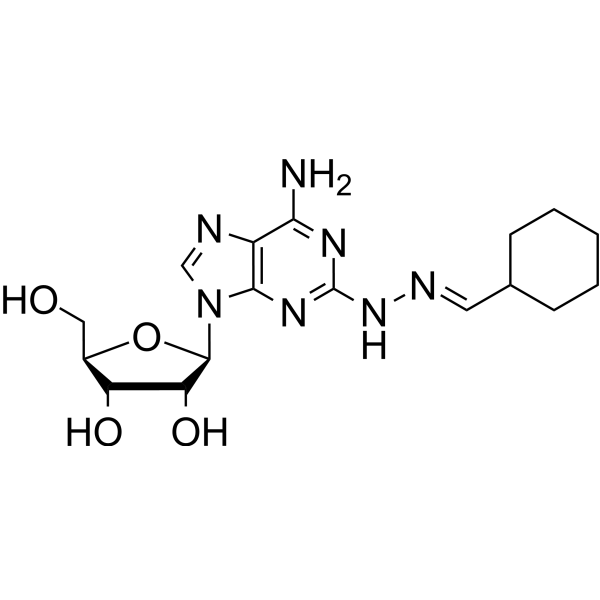
    Binodenoson (MRE-0470) is a potent and selective A2A adenosine receptor agonist (KD=270 nM). Binodenoson is being developed as a short-acting coronary vasodilator as an adjunct to radiotracers for use in myocardial stress imaging .
    Binodenoson
  • HY-100723

    Amyloid-β Neurological Disease
    THK-523 has demonstrated its high affinity and selectivity for tau pathology both in vitro and in vivo. 18F-THK523 is a potent tau imaging radiotracer. 18F-THK523 is a potent in vivo tau imaging ligand for Alzheimer's disease .
    THK-523
  • HY-P11026

    DOTA-PEG4-TMVP1446

    VEGFR Cancer
    DOTA-TMVP1446 is a VEGFR-3 targeting peptide. DOTA-TMVP1446 labeled with 68Ga accurately detectes the status of lymph node metastasis, even in micrometastatic tumors, in the B16-F10 tumor mice model. DOTA-TMVP1446 can be used as a radiotracer for cancer-metastatic sentinel lymph nodes (m-SLN) imaging .
    DOTA-TMVP1446
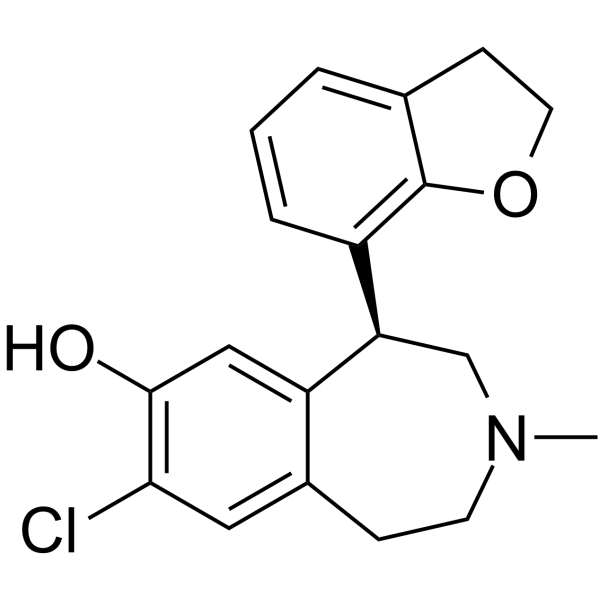
  • HY-129059
    Odapipam
    2 Publications Verification

    NNC 756

    Dopamine Receptor Neurological Disease
    Odapipam (NNC 756) is a selective, high affinity and benzazepine dopamine D1 receptor antagonist with a Kd of 0.18 nM. Odapipam is also a superior positron emission tomography (PET) radiotracer .
    Odapipam
  • HY-175685

    FAP Cancer
    FAP-IN-7 (Compound 5b) is a FAPradiotracer for PET imaging and radionuclide therapy of cancers research .
    FAP-IN-7
  • HY-149860

    FAP Cancer
    FAP-IN-1 is a fibroblast activation protein (FAP) inhibitor with an IC50 value of 3.3 nM. FAP-IN-1 can be used for the research of cancer .
    FAP-IN-1
  • HY-D2281

    FAP Cancer
    FAP Ligand 2, a FAPI-46 derivative, is a specific fibroblast activation protein (FAP)-targeted tracer. FAP Ligand 2 exhibits good tumor uptake and acts as a promising molecular tracer for FAP tumor imaging .
    FAP Ligand 2
  • HY-W095635

    Biochemical Assay Reagents Others
    Tetramethylammonium fluoride tetrahydrate (TMAF) is a quaternary ammonium salt. TMAF is commonly used as a weak base and a source of fluoride ions in various organic reactions, including nucleophilic substitution, functional group deprotection, and ring-opening polymerization. Unlike other fluoride sources, TMAF is compatible with many functional groups, making it a versatile tool in synthetic chemistry. Functional reagents, In addition, TMAF has been used as a fluorinating agent in medicinal chemistry, for the preparation of radiotracers and protein modification in biochemistry, and the tetrahydrate form of TMAF is more stable and easier to handle than the anhydrous form.
    Tetramethylammonium fluoride tetrahydrate
  • HY-P10978

    PD-1/PD-L1 Cancer
    NK224 is a peptide-based radiotracer targeting human PD-L1, with dual-radionuclide ( 68Ga and 18F) labeling compatibility enabled by the NOTA chelator. NK224 exhibits high binding affinity to PD-L1, with an IC50 value of 2.45 nM. NK224 visualizes intrapatient tumor heterogeneity and dynamically monitors PD-L1 target occupancy during immunotherapy. NK224 can be used for the study of non-small cell lung cancer (NSCLC) .
    NK224
  • HY-171236

    Opioid Receptor
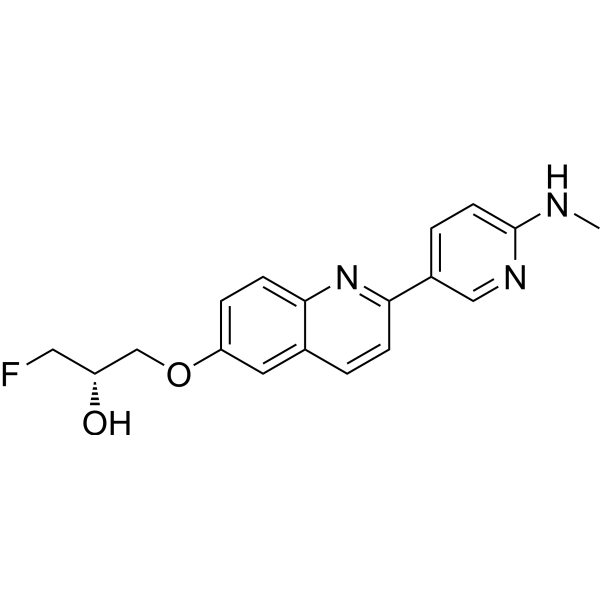
    FEKAP is a brain-penetrant and selective kappa opioid receptor (KOR) agonist (Ki = 0.43 nM) which isotope labeled form exhibits excellent imaging properties. 11C-FEKAP can be utilized as a radiotracer for imaging KOR .
    FEKAP
  • HY-P11025

    VEGFR Cancer
    TMVP1446 is a VEGFR-3 targeting peptide. TMVP1446 labeled with cyanine 7 can be used as a radiotracer for cancer-metastatic sentinel lymph nodes (m-SLN) imaging .
    TMVP1446
  • HY-175014

    PD-1/PD-L1 Biochemical Assay Reagents Cancer
    LGT-1 is a PD-L1 ligand. LGT-1 labeled with 18F has an excellent specific uptake in B16-F10 tumor cells, and shows a high tumor uptake but a low liver uptake with good stability in B16-F10 tumor-bearing mice model. LGT-1 can be used as a radiotracer for PET imaging of PD-L1 expression in tumors .
    LGT-1
  • HY-164316A

    FAP Cancer
    FT-FAPI-12_9 TFA is a FAP ligand that can be used to synthesize FAPI-46, a radiotracer targeting FAP .
    FT-FAPI-12_9 TFA
  • HY-145128

    Opioid Receptor Neurological Disease
    GR103545 is a potent and selective agonist of the κ-opioid receptor (κ-OR). 11GR103545 is a radiotracer for imaging κ-OR in vivo [1]
    GR103545 fumarate
  • HY-159934

    FAP Cancer
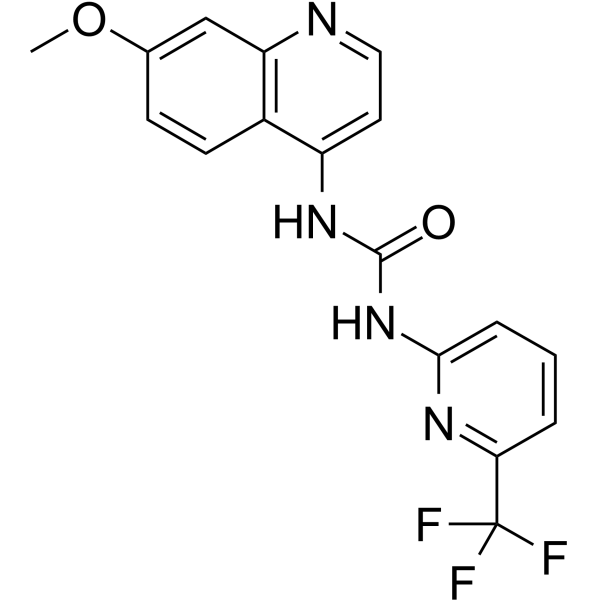
    QI-18 is a fibroblast activation protein (FAP) inhibitor with the IC50 of 0.50 nM, which is a 6.5-fold increase in potency over that of UAMC-1110 (HY-100684,IC50 of 3.25 nM). QI-18 can be used to synthesize high tumor selectivity and high dose radiotracers for the diagnosis and study of tumors .
    QI-18
  • HY-P11088

    Transmembrane Glycoprotein Radionuclide-Drug Conjugates (RDCs) Inflammation/Immunology
    VCAM1 binding peptide is a VCAM1 binder with internalization activity. VCAM1 binding peptide can be labeled with 5-FAM. VCAM1 binding peptide serves as a component of biosensing systems for visualizing in vitro VCAM1 endocytic pathways. VCAM1 binding peptide forms the research and development basis for MacroP and NAMP, PET radiotracers targeting VCAM1. VCAM1 binding peptide is applicable to studies related to atherosclerosis .
    VCAM1 binding peptide
  • HY-206852

    Drug Intermediate Phosphodiesterase (PDE) Neurological Disease
    PF-06445974 precursor (Compound 28) is a nitro precursor and synthetic intermediate. PF-06445974 precursor can be used for the synthesis of PF-06445974 (HY-119190). PF-06445974 is a positron emission tomography (PET) compound that acts potently on PDE4B .
    PF-06445974 precursor
  • HY-P11253

    VISTA Inflammation/Immunology
    DOTA-Bn-CA-170 is a molecular probe targeting the VISTA protein, with a Kd value of 0.124 nM. DOTA-Bn-CA-170 is formed by covalently linking the p-SCN-Bn-DOTA ligand with CA-170 (HY-101093). DOTA-Bn-CA-170 labeled with [ 68Ga]Ga successfully achieves specific and high-contrast PET imaging of VISTA expression in various tumor-bearing mouse models. DOTA-Bn-CA-170 can be used for the study of VISTA-targeted immunotherapy .
    DOTA-Bn-CA-170
  • HY-W700684

    R 21345

    Drug Metabolite Others
    N-Didesmethyl Loperamide is a metabolite of Loperamide; a new and improved PET radiotracer for imaging P-gp function.
    N-Didesmethyl Loperamide
  • HY-124392

    Phosphodiesterase (PDE) Cancer
    AMG580 is a selective PDE10A antagonist with subnanomolar affinity for rat, primate, and human PDE10A. AMG580 can be used for the research of noninvasive radiotracer .
    AMG580
  • HY-D2310

    CXCR Inflammation/Immunology
    CXCR2 Probe 1 (Compound [18F]16b) is a selective ligand for CXCR2 and is a radiotracer for PET imaging of neutrophils in inflammatory diseases .
    CXCR2 Probe 1
  • HY-146102

    mAChR Others
    M1 ligand 1 (compound 3b-b) is a muscarinic acetylcholine receptor M1 ligand. M1 ligand 1 is a N-desmethyl congener of arecoline derivative. M1 ligand 1 can be used as PET (positron emission tomography) radiotracer .
    M1 ligand 1
  • HY-D2311

    CDK Cancer
    CDK19 Probe 1 (Compound 10c) is a CDK19 inhibitor (IC50: 1.01 μM) and can be used for cancer research .
    CDK19 Probe 1
  • HY-W792458

    Serotonin Transporter Neurological Disease
    MADAM exhibits high affinity and selectivity for 5-HTT with a Ki value of 1.6 nM. MADAM has the potential to serve as a PET radiotracer for visualizing the serotonin transporter .
    MADAM
  • HY-163327

    Biochemical Assay Reagents Neurological Disease
    pFBC ([ 18F]pEBC) is a covalent CLIP-tag radiotracer for detection of viral reporter gene transfer in the murine brain. pFBC can be used in neurobiological research .
    pFBC
  • HY-154868

    MMP Cardiovascular Disease Cancer
    MMP-13-IN-1 is a potent and selective inhibitor of MMP-13 with a IC50 value of 16 nM. MMP-13-in-1 can be used for atherosclerosis research .
    MMP-13-IN-1
  • HY-171852

    Biochemical Assay Reagents Cancer
    Iodoquine is an analog of chloroquine. Iodoquine exhibits high uptake in tumor cells and can localize to cells with high ALDH1 content, including cancer stem cells. With low uptake in normal brain tissue, iodoquine can be used in research related to tumor diagnosis or as a radiotracer .
    Iodoquine
  • HY-163075

    Sigma Receptor Others
    SYB4 (compound 5) is a PET tracer which suitable for imaging the Sigma-2 Receptor in the brain of nonhuman primates .
    SYB4
  • HY-114253

    EGFR Cancer
    ODS-2004436 is a small molecule radiotracer that uses positron emission tomography (PET) imaging to measure the activity of the epidermal growth factor receptor (EGFR) in tumors. ODS-2004436 labeled with the radioactive isotope fluorine-18 shows significantly higher uptake in the xenograft models of lung cancer with EGFR mutations compared to the wild-type models, and could be used to distinguish the mutation status. ODS-2004436 can be used to identify EGFR-positive tumors and predict their response to certain reagent treatments, especially for non-small cell lung cancer (NSCLC) .
    ODS-2004436
  • HY-106450R

    MRE-0470 (Standard); WRC 0470 (Standard)

    Reference Standards Adenosine Receptor Cardiovascular Disease
    Binodenoson (Standard) is the analytical standard of Binodenoson (HY-106450). This product is intended for research and analytical applications. Binodenoson (MRE-0470) is a potent and selective A2A adenosine receptor agonist (KD=270 nM). Binodenoson is being developed as a short-acting coronary vasodilator as an adjunct to radiotracers for use in myocardial stress imaging .
    Binodenoson (Standard)
  • HY-180526

    Phosphodiesterase (PDE) Neurological Disease
    PDE2A-IN-2 is a selective and brain-penetrant PDE2A inhibitor (Ki = 5.49 nM and 100 > fold selectivity over other PDE isoforms). The 11C-labeled PDE2A-IN-2 serves as a positron emission tomography (PET) tracer for brain imaging in patients with neurodegenerative diseases. PDE2A-IN-2 educes the radiotracer signal in PDE2A-rich regions in vitro. PDE2A-IN-2 exhibits low binding affinity in vivo. PDE2A-IN-2 can be used for neurodegenerative diseases .
    PDE2A-IN-2
  • HY-181919

    CD73 Radionuclide-Drug Conjugates (RDCs) Cancer
    CD73-IN-22 (Compound HX-6) is a non-nucleoside CD73 inhibitor with an IC50 of 0.07 μM. When radiolabeled with 68Ga, CD73-IN-22 acts as a PET radiotracer for detecting CD73 expression. When radiolabeled with 177Lu, CD73-IN-22 exhibits anticancer activity against colorectal adenocarcinoma. CD73-IN-22 is applicable to research related to colon adenocarcinoma and breast cancer .
    CD73-IN-22
  • HY-149219

    Amyloid-β Neurological Disease
    BIBD-124 binds amyloid beta (Aβ) plaque with an IC50 value of 9.51 nM. [18F]BIBD-124 can be used as radiotracer of Aβ plaques .
    BIBD-124
  • HY-182626

    LPL Receptor Others Neurological Disease Inflammation/Immunology
    CS1P1 is a brain-penetrant and selective S1PR1 antagonist and PET radiotracer, with human S1PR1 IC50 values of 2.1 nM. CS1P1 binds specifically to S1PR1 to enable in vivo receptor expression quantification. CS1P1 can be used as PET radiotracer when labelled with 11C. CS1P1 can be used for the research of multiple sclerosis, neointimal hyperplasia, vascular inflammation .
    CS1P1

Inquiry Online

Your information is safe with us. * Required Fields.

Salutation


Country or Region *

Applicant Name *


Organization Name *

Department *


Email Address *


Product Name *

Cat. No.


Requested quantity *

Phone Number *


Remarks

Inquiry Online

Inquiry Information

Product Name:
Cat. No.:
Quantity:
MCE Japan Authorized Agent:

