Search Result
Results for "
Sst
" in MedChemExpress (MCE) Product Catalog:
| Cat. No. |
Product Name |
Target |
Research Areas |
Chemical Structure |
-
- HY-P1932
-
-
-
- HY-111615A
-
|
|
Somatostatin Receptor
|
Neurological Disease
Inflammation/Immunology
|
|
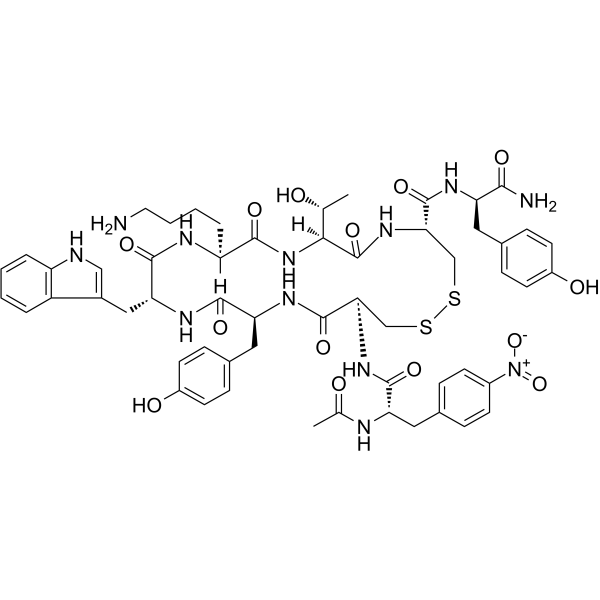
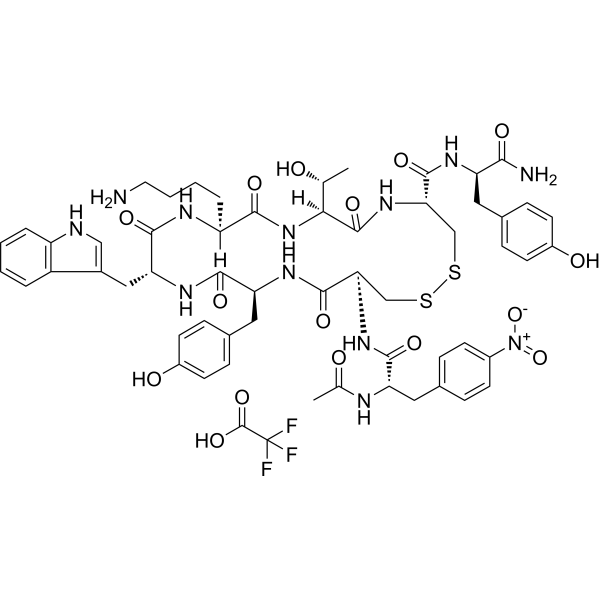
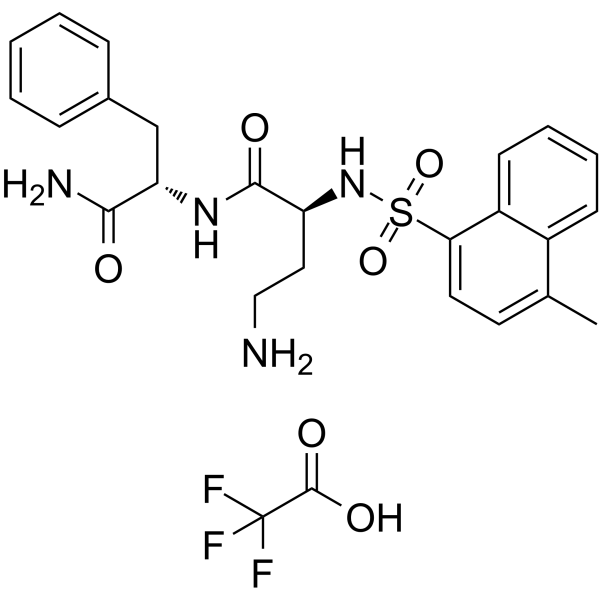
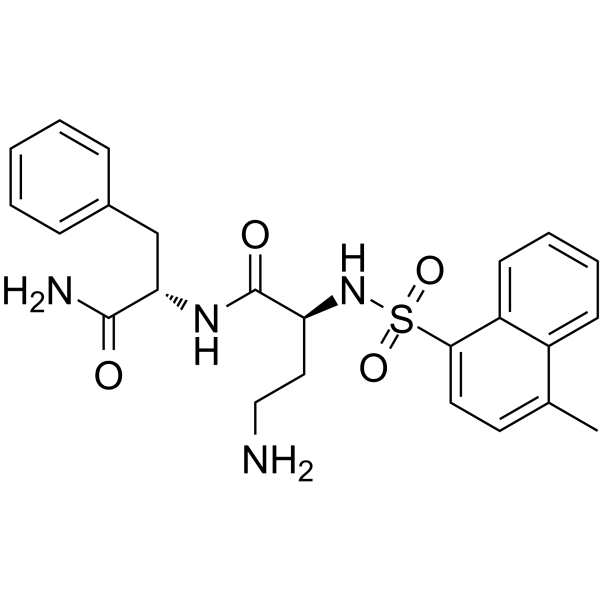
J-2156 TFA is a high potent, selective somatostatin receptor type 4 (SST4 receptor) agonist with IC50s of 0.05 nM and 0.07 nM for human and rat SST4 receptors, respectively. J-2156 TFA has anti-inflammatory activity and it is used for the relief of mechanical allodynia and mechanical hyperalgesia in the ipsilateral hindpaws in rats .
|
-
-
- HY-16381
-
Pasireotide
Maximum Cited Publications
6 Publications Verification
SOM230
|
Somatostatin Receptor
|
Endocrinology
Cancer
|
|
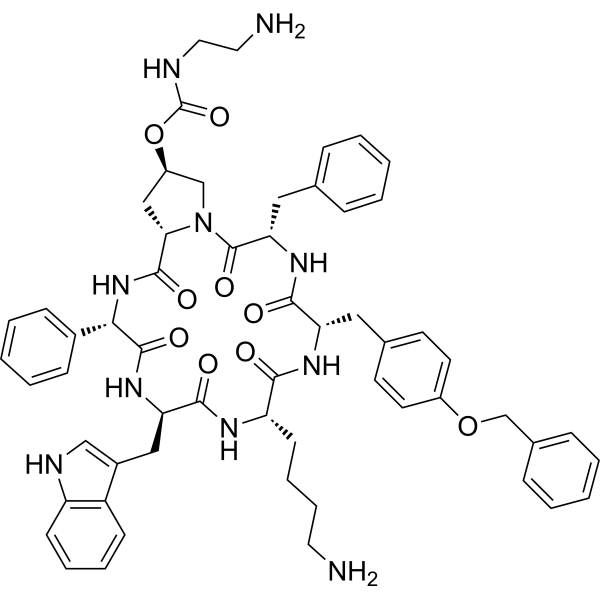
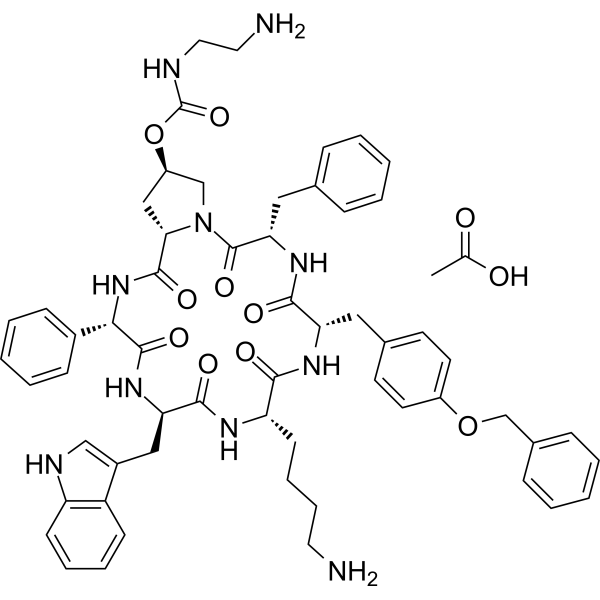
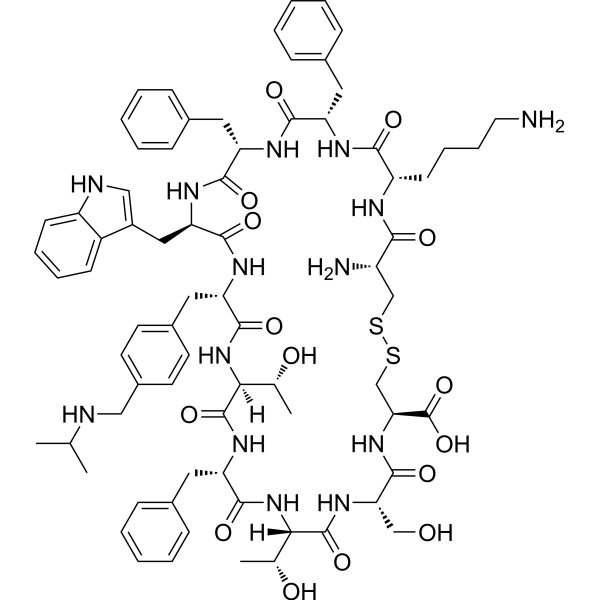
Pasireotide (SOM230), a long-acting cyclohexapeptide somatostatin analogue, can improve agonist activity at somatostatin receptors (subtypes sst1/2/3/4/5, pKi=8.2/9.0/9.1/<7.0/9.9, respectively). Pasireotide can suppress GH, IGF-I and ACTH secretion, indicating potential efficacy in acromegaly and Cushing's disease. Pasireotide also exhibits antisecretory, antiproliferative, and proapoptotic activity .
|
-
-
- HY-P1202
-
|
|
Somatostatin Receptor
|
Endocrinology
|
|
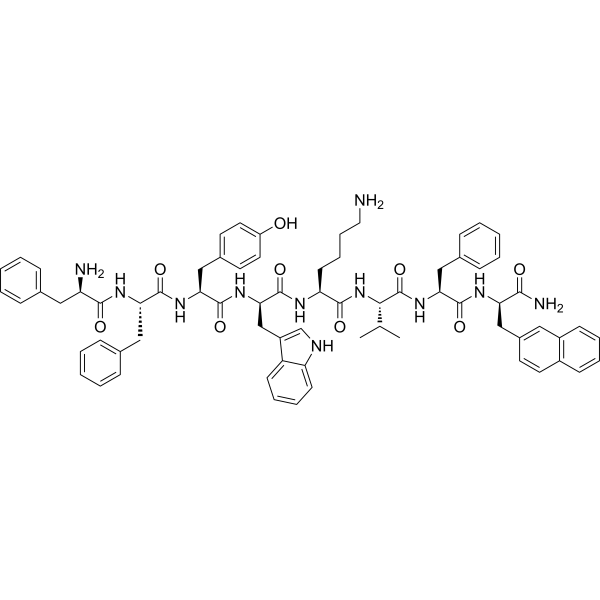
CYN 154806, a cyclic octapeptide, is a potent and selective somatostatin sst2 receptor antagonist, with pIC50 values of 8.58, 5.41, 6.07, 5.76 and 6.48 for human recombinant sst2, sst1, sst3, sst4 and sst5 receptors respectively .
|
-
-
- HY-P1202A
-
|
|
Somatostatin Receptor
|
Endocrinology
|
|
CYN 154806 TFA, a cyclic octapeptide, is a potent and selective somatostatin sst2 receptor antagonist, with pIC50 values of 8.58, 5.41, 6.07, 5.76 and 6.48 for human recombinant sst2, sst1, sst3, sst4 and sst5 receptors respectively .
|
-
-
- HY-111615
-
|
|
Somatostatin Receptor
|
Neurological Disease
|
|
J-2156 is a high potent, selective somatostatin receptor type 4 (SST4 receptor) agonist with IC50s of 0.05 nM and 0.07 nM for human and rat SST4 receptors, respectively. J-2156 is used for the relief of mechanical allodynia and mechanical hyperalgesia in the ipsilateral hindpaws in rats .
|
-
-
- HY-16381A
-
|
SOM230 acetate
|
Somatostatin Receptor
|
Endocrinology
Cancer
|
|
Pasireotide (SOM230) acetate, a long-acting cyclohexapeptide somatostatin analogue, can improve agonist activity at somatostatin receptors (subtypes sst1/2/3/4/5, pKi=8.2/9.0/9.1/<7.0/9.9, respectively). Pasireotide acetate can suppress GH, IGF-I and ACTH secretion, indicating potential efficacy in acromegaly and Cushing's disease. Pasireotide acetate also exhibits antisecretory, antiproliferative, and proapoptotic activity .
|
-
-
- HY-P1206
-
CH 275
1 Publications Verification
|
Somatostatin Receptor
|
Neurological Disease
|
|
CH 275 is a peptide analog of somatostatin and binds preferably to somatostatin receptor 1 (sst1) with a Ki of 52 nM . CH 275 acts as a potent and selective sst1 agonist (IC50=30.9 nM) and also displays IC50 values of 345 nM, >1 μM, >10 μM, >10 μM for human sst3, sst4, sst2 and sst5, respectively . CH 275 can be used for the research of alzheimer’s disease .
|
-
-
- HY-P1203
-
-
-
- HY-P1201
-
|
|
Somatostatin Receptor
|
Cancer
|
|
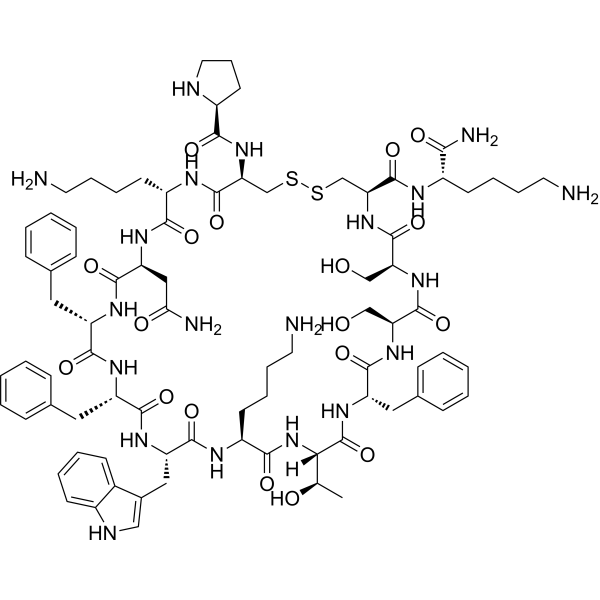
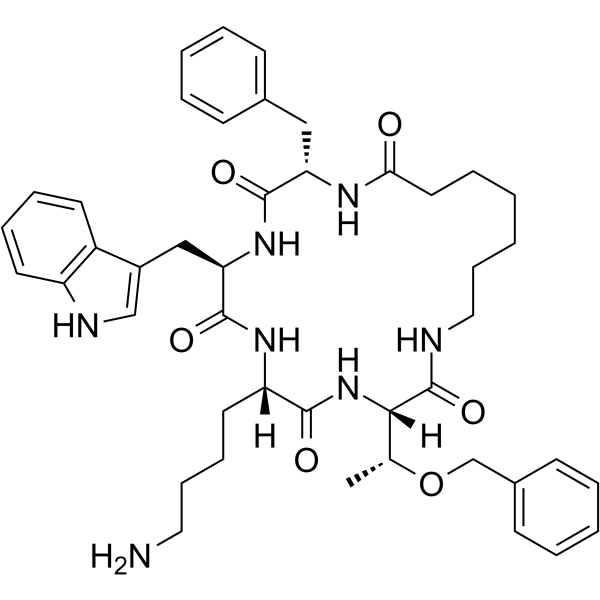
Cyclosomatostatin is a potent somatostatin (SST) receptor antagonist. Cyclosomatostatin can inhibit somatostatin receptor type 1 (SSTR1) signaling and decreases cell proliferation, ALDH+ cell population size and sphere-formation in colorectal cancer (CRC) cells .
|
-
-
- HY-108497
-
|
|
Somatostatin Receptor
|
Neurological Disease
Cancer
|
|
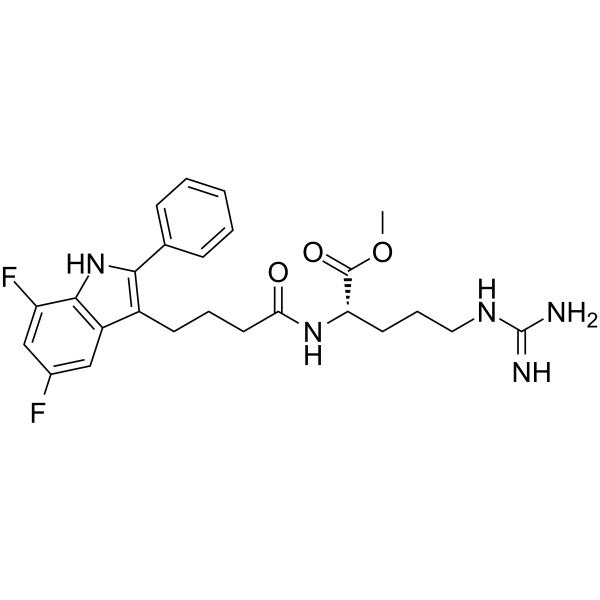
L-803087 is a potent and selective somatostatin sst4 receptor agonist with a Ki of 0.7 nM. L-803087 is >280-fold higher than other somatostatin receptors. L-803087 facilitates AMPA-mediated hippocampal synaptic responses in vitro and increases kainate-induced seizures in mice .
|
-
-
- HY-123499
-
|
|
Somatostatin Receptor
|
Cardiovascular Disease
|
|
SRA880 is a non-peptide and selective somatostatin sst(1) receptor antagonist. SRA880 exhibits antidepressant-like effects when in combination with Imipramine (HY-B1490A) .
|
-
-
- HY-79135
-
|
SOM230 ditrifluoroacetate; Pasireotide TFA salt
|
Somatostatin Receptor
|
Endocrinology
Cancer
|
|
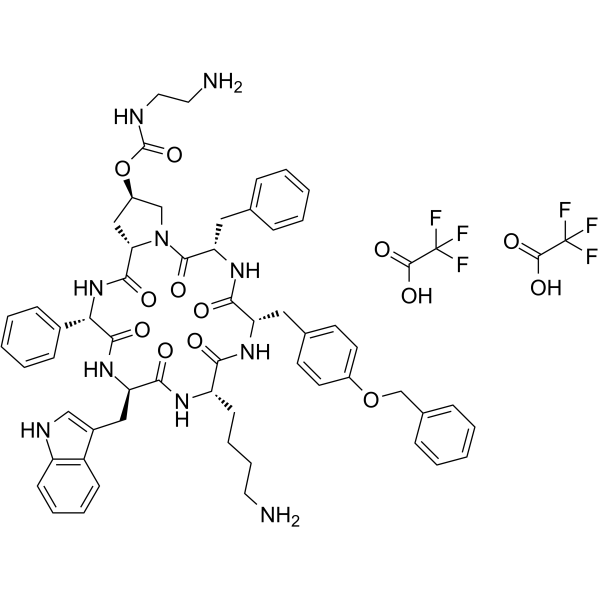
Pasireotide (SOM230) ditrifluoroacetate, a long-acting cyclohexapeptide somatostatin analogue, can improve agonist activity at somatostatin receptors (subtypes sst1/2/3/4/5, pKi=8.2/9.0/9.1/<7.0/9.9, respectively). Pasireotide ditrifluoroacetate exhibits antisecretory, antiproliferative, and proapoptotic activity .
|
-
-
- HY-79136
-
|
SOM230 L-aspartate
|
Somatostatin Receptor
|
Endocrinology
Cancer
|
|
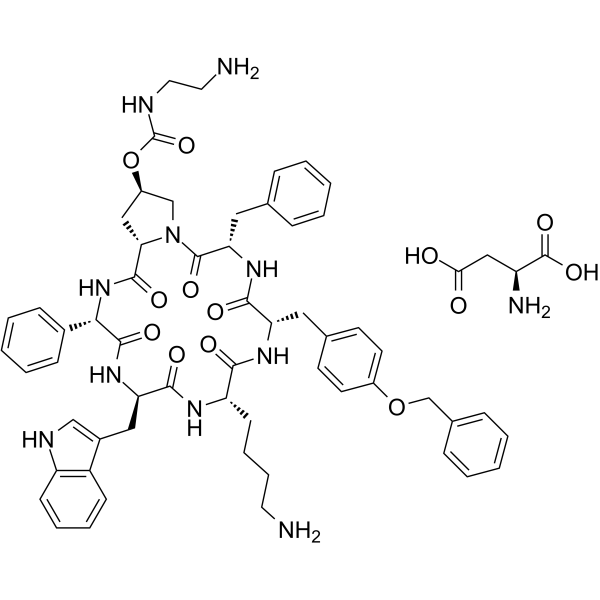
Pasireotide (SOM230) L-aspartate salt, a long-acting cyclohexapeptide somatostatin analogue, can improve agonist activity at somatostatin receptors (subtypes sst1/2/3/4/5, pKi=8.2/9.0/9.1/<7.0/9.9, respectively). Pasireotide L-aspartate salt exhibits antisecretory, antiproliferative, and proapoptotic activity .
|
-
-
- HY-P10239
-
|
|
Somatostatin Receptor
Radionuclide-Drug Conjugates (RDCs)
|
Cancer
|
|
Tyr3-Octreotate is a ligand for somatostatin receptor subtype 2 (sst2), with an IC50 value of 1.3 nM against sst2 when labeled with [ 111In-DTPA], and an IC50 value of 1.6 nM against sst2 when labeled with [ 90Y-DOTA]. Radiolabeled Tyr3-Octreotate generates cell-associated radioactivity, and acts as both a tumor growth inhibitor and a tumor cytotoxic agent. When radiolabeled with 177Lu or 90Y, Tyr3-Octreotate serves as a peptide receptor radionuclide therapy (PRRT) analog. Tyr3-Octreotate can be used in studies related to pancreatic tumors .
|
-
-
- HY-123335A
-
|
|
Somatostatin Receptor
|
Neurological Disease
|
|
L-796778 acetate is a selective agonist of the sst3 receptor. In CHO-K1 cells expressing the hsst3 receptor, L-796778 acetate is a partial agonist that inhibits Forskolin (HY-15371)-stimulated cAMP production with an IC50 value of 18 nM. L-796778 acetate has anticonvulsant effect .
|
-
-
- HY-155193
-
|
|
Interleukin Related
|
Inflammation/Immunology
|
|
XY-52 (Compound 32) is a Stimulation-2 (ST2) inhibitor, with an IC50 value of 5.68 μM in AlphaLISA assay, and 4.59 μM in HEK-Blue assay. XY-52 increases proinflammatory T-cell proliferation. XY-52 reduces the plasma sST2 and IFNγ biomarkers in the graft versus host disease (GVHD) mice model .
|
-
-
- HY-P10741
-
-
-
- HY-P10758
-
-
-
- HY-108499
-
-
-
- HY-P1139
-
|
PCFWKTCK
|
GHSR
|
Metabolic Disease
|
|
Cortistatin-8 (CST-8; PCFWKTCK), a neuropeptide, is a GHS-R1a antagonist by counteracting the response of ghrelin on gastric acid secretion. Cortistatin-8 can modulate GH release from somatotroph cells. Cortistatin-8 is a synthetic CST-analogue devoid of any binding affinity to SST-R but capable to bind the GHS-R1a. Cortistatin-8 can exert antagonistic effects on ghrelin actions either in vitro or in vivo in animals .
|
-
-
- HY-164399
-
|
|
HSP
EGFR
CDK
Akt
|
Cancer
|
|
SST0116CL1 is a HSP90 inhibitor (IC50: 0.21 μM). SST0116CL1 binds to the ATP binding pocket of Hsp90, and interferes with Hsp90 chaperone function thus resulting in client protein (EGFR, CDK4 and AKT) degradation. SST0116CL1 induces degradation of Her2 in BT-474 cell (IC50: 0.2 μM). SST0116CL1 has antiproliferative activity and inhibits tumor growth. SST0116CL1 can be used for the study of leukemia, gastric and ovarian carcinoma .
|
-
-
- HY-P1932A
-
-
-
- HY-P4469
-
-
-
- HY-P2090A
-
|
|
Somatostatin Receptor
Adenylate Cyclase
|
Cardiovascular Disease
|
|
Angiopeptin TFA, a cyclic octapeptide analogue of somatostatin, is a weak sst2/sst5 receptor partial agonist with IC50 values of 0.26 nM and 6.92 nM, respectively. Angiopeptin TFA is a potent inhibitor of growth hormone release and insulin-like growth factor-1 (IGF-1) production. Angiopeptin TFA inhibits adenylate cyclase or stimulates extracellular acidification. Angiopeptin TFA has the potential for coronary atherosclerosis research .
|
-
-
- HY-108768
-
|
SOM230 pamoate
|
Somatostatin Receptor
|
Endocrinology
Cancer
|
|
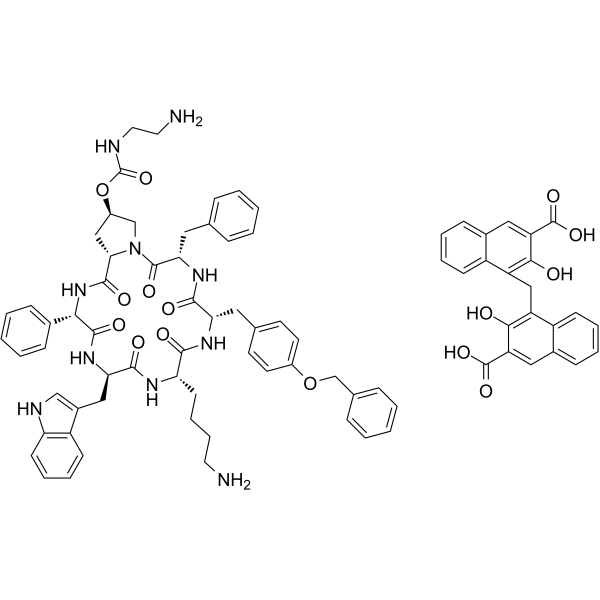
Pasireotide (SOM230) pamoate, a long-acting cyclohexapeptide somatostatin analogue, can improve agonist activity at somatostatin receptors (subtypes sst1/2/3/4/5, pKi=8.2/9.0/9.1/<7.0/9.9, respectively). Pasireotide pamoate exhibits antisecretory, antiproliferative, and proapoptotic activity .
|
-
-
- HY-P3294
-
-
-
- HY-125382
-
|
|
Somatostatin Receptor
|
Metabolic Disease
|
|
L-797591 is a selective sst1 agonist. L-797591 mimicks the effects of SRIF-14 and SRIF-28 by potently inhibiting either Forskolin (HY-15371)-stimulated or CRH-stimulated cAMP accumulation .
|
-
-
- HY-177282
-
-
-
- HY-110161
-
|
|
Somatostatin Receptor
|
Cardiovascular Disease
Endocrinology
|
|
sst2 Receptor agonist-1 is a potent somatostatin receptor subtype 2 (sst2) agonist with a Ki value of 0.025 nM and a cAMP IC50 value of 4.8 nM. sst2 Receptor agonist-1 can inhibit rat growth hormone (GH) secretion and ocular neovascular lesion formation. Antiangiogenic effect .
|
-
-
- HY-16381B
-
|
SOM230 (diaspartate)
|
Somatostatin Receptor
|
Neurological Disease
Cancer
|
|
Pasireotide (SOM230) diaspartate, a long-acting cyclohexapeptide somatostatin analogue, can improve agonist activity at somatostatin receptors (subtypes sst1/2/3/4/5, pKi=8.2/9.0/9.1/<7.0/9.9, respectively). Pasireotide diaspartate exhibits antisecretory, antiproliferative, and proapoptotic activity .
|
-
-
- HY-164040
-
|
|
Somatostatin Receptor
|
Metabolic Disease
|
|
Zavolosotine (Compound 1) is an orally active agonist for somatostatin receptor type 5 (SST5) with EC50 <1 nM. Zavolosotine inhibits insulin and glucagon secretion, increases levels of glucagon in blood in rat model .
|
-
-
- HY-125382A
-
|
|
Somatostatin Receptor
|
Neurological Disease
|
|
L-797591 hydrochloride is a selective sst1 agonist. L-797591 hydrochloride mimicks the effects of SRIF-14 and SRIF-28 by potently inhibiting either Forskolin (HY-15371)-stimulated or CRH-stimulated cAMP accumulation .
|
-
-
- HY-P3958
-
-
-
- HY-108501
-
|
|
Somatostatin Receptor
|
Neurological Disease
|
|
(1R,1'S,3'R/1R,1'R,3'S)-L-054,264 is a selective non-peptide human somatostatin receptor subtype 2 (sst2) agonist. (1R,1'S,3'R/1R,1'R,3'S)-L-054,264 can be used in the study of retinal neuromodulation .
|
-
-
- HY-177278
-
|
|
Somatostatin Receptor
|
Neurological Disease
Endocrinology
Cancer
|
|
SST1 receptor antagonist-1 (Compound 23) is a selective Somatostatin receptor 1 (SST1) antagonist with pKds of 9.11 and 8.79 for rSST1 and hSST1, respectively. SST1 receptor antagonist-1 can be used for retinal and endocrine dysfunctions, cancer and neuropsychiatric disorders research .
|
-
-
- HY-164399A
-
|
|
HSP
ERK
CDK
Akt
|
Cancer
|
|
SST0116CL1 free base is a HSP90 inhibitor (IC50: 0.21 μM). SST0116CL1 free base binds to the ATP binding pocket of Hsp90, and interferes with Hsp90 chaperone function thus resulting in client protein (EGFR, CDK4 and AKT) degradation. SST0116CL1 free base induces degradation of Her2 in BT-474 cell (IC50: 0.2 μM). SST0116CL1 free base has antiproliferative activity and inhibits tumor growth. SST0116CL1 free base has antiproliferative activity and inhibits tumor growth. SST0116CL1 free base can be used for the study of leukemia, gastric and ovarian carcinoma .
|
-
-
- HY-RS18024
-
|
|
Small Interfering RNA (siRNA)
|
Others
|
|
Sst Mouse Pre-designed siRNA Set A contains three designed siRNAs for Sst gene (Mouse), as well as a negative control, a positive control, and a FAM-labeled negative control.
|
-
Sst Mouse Pre-designed siRNA Set A
-
- HY-RS13819
-
|
|
Small Interfering RNA (siRNA)
|
Others
|
|
SST Human Pre-designed siRNA Set A contains three designed siRNAs for SST gene (Human), as well as a negative control, a positive control, and a FAM-labeled negative control.
|
-
SST Human Pre-designed siRNA Set A
-
- HY-P2090
-
|
|
Somatostatin Receptor
Adenylate Cyclase
|
Cardiovascular Disease
|
|
Angiopeptin, a cyclic octapeptide analogue of somatostatin, is a weak sst2/sst5 receptor partial agonist with IC50 values of 0.26 nM and 6.92 nM, respectively. Angiopeptin is a potent inhibitor of growth hormone release and insulin-like growth factor-1 (IGF-1) production. Angiopeptin inhibits adenylate cyclase or stimulates extracellular acidification. Angiopeptin has the potential for coronary atherosclerosis research .
|
-
-
- HY-P1203A
-
-
-
- HY-123460
-
|
|
Somatostatin Receptor
|
Cancer
|
|
BN-81674 is a somatostatin analogue and a selective antagonist of the non-peptide human somatostatin sst3 receptor (Ki=0.92 nM). In addition, BN-81674 reversed the inhibition of cyclic AMP accumulation induced by 1 nM somatostatin through the sst3 receptor with an IC50 value of 0.84 nM. BN-81674 can be used in cancer research .
|
-
-
- HY-108497A
-
|
|
Somatostatin Receptor
|
Neurological Disease
Cancer
|
|
L-803087 TFA is a potent and selective somatostatin sst4 receptor agonist with a Ki of 0.7 nM. L-803087 TFA is >280-fold more selective for sst4 receptor than other somatostatin receptors. L-803087 TFA facilitates AMPA-mediated hippocampal synaptic responses in vitro and increases kainate-induced seizures in mice .
|
-
-
- HY-175053
-
|
SOM230 (aspartate) TFA
|
Somatostatin Receptor
Apoptosis
|
Metabolic Disease
|
|
Pasireotide (aspartate) TFA, a long-acting cyclohexapeptide somatostatin analogue, can improve agonist activity at somatostatin receptors (subtypes sst1/2/3/4/5, pKi=8.2/9.0/9.1/<7.0/9.9, respectively). Pasireotide (aspartate) TFA can suppress GH, IGF-I and ACTH secretion, indicating potential efficacy in acromegaly and Cushing's disease. Pasireotide (aspartate) TFA also exhibits antisecretory, antiproliferative, and proapoptotic activity .
|
-
-
- HY-P1201A
-
|
|
Somatostatin Receptor
|
Cancer
|
|
Cyclosomatostatin TFA is a potent somatostatin (SST) receptor antagonist. Cyclosomatostatin TFA can inhibit somatostatin receptor type 1 (SSTR1) signaling and decreases cell proliferation, ALDH+ cell population size and sphere-formation in colorectal cancer (CRC) cells .
|
-
-
- HY-P1384
-
|
|
Somatostatin Receptor
|
Neurological Disease
|
|
L803 is a selective Somatostatin Receptor Subtype 4 (SST4) agonist. L803 inhibits L-type calcium channel currents (ICa). L803 is promising for research of retinal ganglion cell (RGC) degenerative diseases (e.g., glaucoma) .
|
-
-
- HY-RS24497
-
|
|
Small Interfering RNA (siRNA)
|
Others
|
|
Sst Rat Pre-designed siRNA Set A contains three designed siRNAs for Sst gene (Rat), as well as a negative control, a positive control, and a FAM-labeled negative control.
|
-
Sst Rat Pre-designed siRNA Set A
-
- HY-P0042
-
|
|
Somatostatin Receptor
Calcium Channel
|
Metabolic Disease
|
|
BIM-23197 is a selective SST2 (IC50 = 0.19 nM) agonist. BIM-23197 can effectively stimulate intracellular calcium mobilization in cells expressing SST2. BIM-23197 can be used for research on endocrine related conditions .
|
-
-
- HY-108497R
-
|
|
Reference Standards
Somatostatin Receptor
|
Neurological Disease
Cancer
|
|
L-803087 (Standard) is the analytical standard of L-803087 (HY-108497). This product is intended for research and analytical applications. L-803087 is a potent and selective somatostatin sst4 receptor agonist with a Ki of 0.7 nM. L-803087 is >280-fold higher than other somatostatin receptors. L-803087 facilitates AMPA-mediated hippocampal synaptic responses in vitro and increases kainate-induced seizures in mice .
|
-
| Cat. No. |
Product Name |
Target |
Research Area |
-
- HY-P1932
-
-
- HY-111615A
-
|
|
Somatostatin Receptor
|
Neurological Disease
Inflammation/Immunology
|
|
J-2156 TFA is a high potent, selective somatostatin receptor type 4 (SST4 receptor) agonist with IC50s of 0.05 nM and 0.07 nM for human and rat SST4 receptors, respectively. J-2156 TFA has anti-inflammatory activity and it is used for the relief of mechanical allodynia and mechanical hyperalgesia in the ipsilateral hindpaws in rats .
|
-
- HY-16381
-
Pasireotide
Maximum Cited Publications
6 Publications Verification
SOM230
|
Somatostatin Receptor
|
Endocrinology
Cancer
|
|
Pasireotide (SOM230), a long-acting cyclohexapeptide somatostatin analogue, can improve agonist activity at somatostatin receptors (subtypes sst1/2/3/4/5, pKi=8.2/9.0/9.1/<7.0/9.9, respectively). Pasireotide can suppress GH, IGF-I and ACTH secretion, indicating potential efficacy in acromegaly and Cushing's disease. Pasireotide also exhibits antisecretory, antiproliferative, and proapoptotic activity .
|
-
- HY-P1202
-
|
|
Somatostatin Receptor
|
Endocrinology
|
|
CYN 154806, a cyclic octapeptide, is a potent and selective somatostatin sst2 receptor antagonist, with pIC50 values of 8.58, 5.41, 6.07, 5.76 and 6.48 for human recombinant sst2, sst1, sst3, sst4 and sst5 receptors respectively .
|
-
- HY-P1202A
-
|
|
Somatostatin Receptor
|
Endocrinology
|
|
CYN 154806 TFA, a cyclic octapeptide, is a potent and selective somatostatin sst2 receptor antagonist, with pIC50 values of 8.58, 5.41, 6.07, 5.76 and 6.48 for human recombinant sst2, sst1, sst3, sst4 and sst5 receptors respectively .
|
-
- HY-111615
-
|
|
Somatostatin Receptor
|
Neurological Disease
|
|
J-2156 is a high potent, selective somatostatin receptor type 4 (SST4 receptor) agonist with IC50s of 0.05 nM and 0.07 nM for human and rat SST4 receptors, respectively. J-2156 is used for the relief of mechanical allodynia and mechanical hyperalgesia in the ipsilateral hindpaws in rats .
|
-
- HY-16381A
-
|
SOM230 acetate
|
Somatostatin Receptor
|
Endocrinology
Cancer
|
|
Pasireotide (SOM230) acetate, a long-acting cyclohexapeptide somatostatin analogue, can improve agonist activity at somatostatin receptors (subtypes sst1/2/3/4/5, pKi=8.2/9.0/9.1/<7.0/9.9, respectively). Pasireotide acetate can suppress GH, IGF-I and ACTH secretion, indicating potential efficacy in acromegaly and Cushing's disease. Pasireotide acetate also exhibits antisecretory, antiproliferative, and proapoptotic activity .
|
-
- HY-P4917
-
|
Sst 14
|
Peptides
|
Others
|
|
Somatostatin-14 (reduced) (SST 14) is a polypeptide that can be found by peptide screening .
|
-
- HY-P1206
-
CH 275
1 Publications Verification
|
Somatostatin Receptor
|
Neurological Disease
|
|
CH 275 is a peptide analog of somatostatin and binds preferably to somatostatin receptor 1 (sst1) with a Ki of 52 nM . CH 275 acts as a potent and selective sst1 agonist (IC50=30.9 nM) and also displays IC50 values of 345 nM, >1 μM, >10 μM, >10 μM for human sst3, sst4, sst2 and sst5, respectively . CH 275 can be used for the research of alzheimer’s disease .
|
-
- HY-P1203
-
-
- HY-P1201
-
|
|
Somatostatin Receptor
|
Cancer
|
|
Cyclosomatostatin is a potent somatostatin (SST) receptor antagonist. Cyclosomatostatin can inhibit somatostatin receptor type 1 (SSTR1) signaling and decreases cell proliferation, ALDH+ cell population size and sphere-formation in colorectal cancer (CRC) cells .
|
-
- HY-79136
-
|
SOM230 L-aspartate
|
Somatostatin Receptor
|
Endocrinology
Cancer
|
|
Pasireotide (SOM230) L-aspartate salt, a long-acting cyclohexapeptide somatostatin analogue, can improve agonist activity at somatostatin receptors (subtypes sst1/2/3/4/5, pKi=8.2/9.0/9.1/<7.0/9.9, respectively). Pasireotide L-aspartate salt exhibits antisecretory, antiproliferative, and proapoptotic activity .
|
-
- HY-P10239
-
|
|
Somatostatin Receptor
Radionuclide-Drug Conjugates (RDCs)
|
Cancer
|
|
Tyr3-Octreotate is a ligand for somatostatin receptor subtype 2 (sst2), with an IC50 value of 1.3 nM against sst2 when labeled with [ 111In-DTPA], and an IC50 value of 1.6 nM against sst2 when labeled with [ 90Y-DOTA]. Radiolabeled Tyr3-Octreotate generates cell-associated radioactivity, and acts as both a tumor growth inhibitor and a tumor cytotoxic agent. When radiolabeled with 177Lu or 90Y, Tyr3-Octreotate serves as a peptide receptor radionuclide therapy (PRRT) analog. Tyr3-Octreotate can be used in studies related to pancreatic tumors .
|
-
- HY-P10741
-
-
- HY-P10758
-
-
- HY-P1139
-
|
PCFWKTCK
|
GHSR
|
Metabolic Disease
|
|
Cortistatin-8 (CST-8; PCFWKTCK), a neuropeptide, is a GHS-R1a antagonist by counteracting the response of ghrelin on gastric acid secretion. Cortistatin-8 can modulate GH release from somatotroph cells. Cortistatin-8 is a synthetic CST-analogue devoid of any binding affinity to SST-R but capable to bind the GHS-R1a. Cortistatin-8 can exert antagonistic effects on ghrelin actions either in vitro or in vivo in animals .
|
-
- HY-P4917A
-
-
- HY-P1932A
-
-
- HY-P4469
-
-
- HY-P2090A
-
|
|
Somatostatin Receptor
Adenylate Cyclase
|
Cardiovascular Disease
|
|
Angiopeptin TFA, a cyclic octapeptide analogue of somatostatin, is a weak sst2/sst5 receptor partial agonist with IC50 values of 0.26 nM and 6.92 nM, respectively. Angiopeptin TFA is a potent inhibitor of growth hormone release and insulin-like growth factor-1 (IGF-1) production. Angiopeptin TFA inhibits adenylate cyclase or stimulates extracellular acidification. Angiopeptin TFA has the potential for coronary atherosclerosis research .
|
-
- HY-108768
-
|
SOM230 pamoate
|
Somatostatin Receptor
|
Endocrinology
Cancer
|
|
Pasireotide (SOM230) pamoate, a long-acting cyclohexapeptide somatostatin analogue, can improve agonist activity at somatostatin receptors (subtypes sst1/2/3/4/5, pKi=8.2/9.0/9.1/<7.0/9.9, respectively). Pasireotide pamoate exhibits antisecretory, antiproliferative, and proapoptotic activity .
|
-
- HY-P3294
-
-
- HY-P3958
-
-
- HY-P2090
-
|
|
Somatostatin Receptor
Adenylate Cyclase
|
Cardiovascular Disease
|
|
Angiopeptin, a cyclic octapeptide analogue of somatostatin, is a weak sst2/sst5 receptor partial agonist with IC50 values of 0.26 nM and 6.92 nM, respectively. Angiopeptin is a potent inhibitor of growth hormone release and insulin-like growth factor-1 (IGF-1) production. Angiopeptin inhibits adenylate cyclase or stimulates extracellular acidification. Angiopeptin has the potential for coronary atherosclerosis research .
|
-
- HY-P1203A
-
-
- HY-P5085
-
|
|
Peptides
|
Others
|
|
Acetyl-octreotide is a reduced linear peptide. Acetyl-octreotide can synthesize Re(V)-cyclized peptides in aqueous methanol solutions with low Sst receptor binding affinities .
|
-
- HY-175053
-
|
SOM230 (aspartate) TFA
|
Somatostatin Receptor
Apoptosis
|
Metabolic Disease
|
|
Pasireotide (aspartate) TFA, a long-acting cyclohexapeptide somatostatin analogue, can improve agonist activity at somatostatin receptors (subtypes sst1/2/3/4/5, pKi=8.2/9.0/9.1/<7.0/9.9, respectively). Pasireotide (aspartate) TFA can suppress GH, IGF-I and ACTH secretion, indicating potential efficacy in acromegaly and Cushing's disease. Pasireotide (aspartate) TFA also exhibits antisecretory, antiproliferative, and proapoptotic activity .
|
-
- HY-P1201A
-
|
|
Somatostatin Receptor
|
Cancer
|
|
Cyclosomatostatin TFA is a potent somatostatin (SST) receptor antagonist. Cyclosomatostatin TFA can inhibit somatostatin receptor type 1 (SSTR1) signaling and decreases cell proliferation, ALDH+ cell population size and sphere-formation in colorectal cancer (CRC) cells .
|
-
- HY-P1384
-
|
|
Somatostatin Receptor
|
Neurological Disease
|
|
L803 is a selective Somatostatin Receptor Subtype 4 (SST4) agonist. L803 inhibits L-type calcium channel currents (ICa). L803 is promising for research of retinal ganglion cell (RGC) degenerative diseases (e.g., glaucoma) .
|
-
- HY-P0042
-
|
|
Somatostatin Receptor
Calcium Channel
|
Metabolic Disease
|
|
BIM-23197 is a selective SST2 (IC50 = 0.19 nM) agonist. BIM-23197 can effectively stimulate intracellular calcium mobilization in cells expressing SST2. BIM-23197 can be used for research on endocrine related conditions .
|
-
- HY-KE7033
-
|
|
|
MCE Sac I is a restriction enzyme for rapid DNA digestion, including plasmid, genomic DNA as well as PCR products. Isoschizomers: Psp124B I, Sst I, Ecl136 II, EcoICR I.
|
| Cat. No. |
Product Name |
|
Classification |
-
- HY-P10758
-
|
|
|
Alkynes
|
|
Alkyne-βAG-TOCA, an octreotide derivative, targets somatostatin receptor type 2 (SST2) . Alkyne-βAG-TOCA can be used for the synthesis/research of Radionuclide-Drug Conjugates (RDCs).
|
| Cat. No. |
Product Name |
|
Classification |
Your information is safe with us. * Required Fields.
Inquiry Information
- Product Name:
- Cat. No.:
- Quantity:
- MCE Japan Authorized Agent:

