1. Search Result
Search Result
Results for "

Suzuki

" in MedChemExpress (MCE) Product Catalog:

39

Inhibitors & Agonists

2

Fluorescent Dye

22

Biochemical Assay Reagents

1

Isotope-Labeled Compounds

Cat. No. Product Name Target Research Areas Chemical Structure
  • HY-21623

    Biochemical Assay Reagents Others
    Dichloro[1,1'-bis(diphenylphosphino)ferrocene]palladium(II) dichloromethane adduct is a common dichloromethane solvate of the palladium catalyst Pd(dppf)Cl2, a phosphine ligand palladium(II) complex, which can be used as a versatile precatalyst for various cross-coupling reactions. Dichloro[1,1'-bis(diphenylphosphino)ferrocene]palladium(II) dichloromethane adduct can stabilize reaction intermediates and lower the reaction activation energy in coupling reactions, and can be used in Suzuki-Miyaura coupling reaction studies .
    Dichloro[1,1'-bis(diphenylphosphino)ferrocene]palladium(II) dichloromethane adduct
  • HY-W007432

    Biochemical Assay Reagents Others
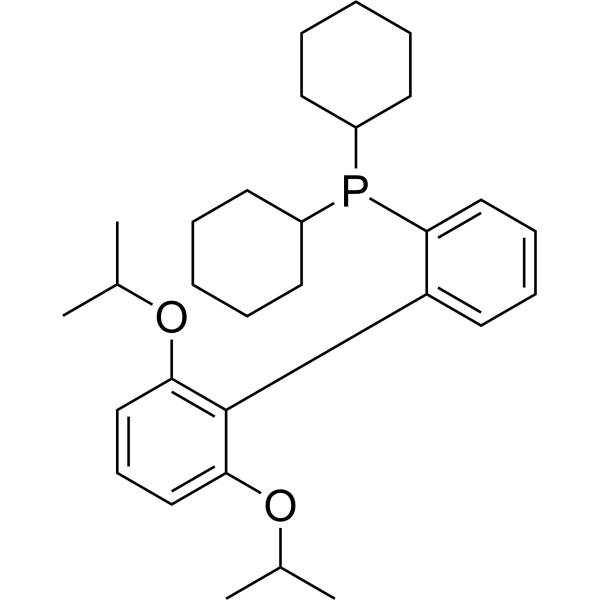
    RuPhos is a Buchwald ligand. In aqueous Suzuki-Miyaura catalytic transfer polymerization, RuPhos forms inactive Pd (RuPhos)2 with palladium and inhibits diffusion to improve polymerization controllability. RuPhos additional addition in anhydrous Kumada polymerization exacerbates catalyst deactivation and chain transfer, significantly impairing polymerization control .
    RuPhos
  • HY-114362

    TPGS-750-M

    Biochemical Assay Reagents Others
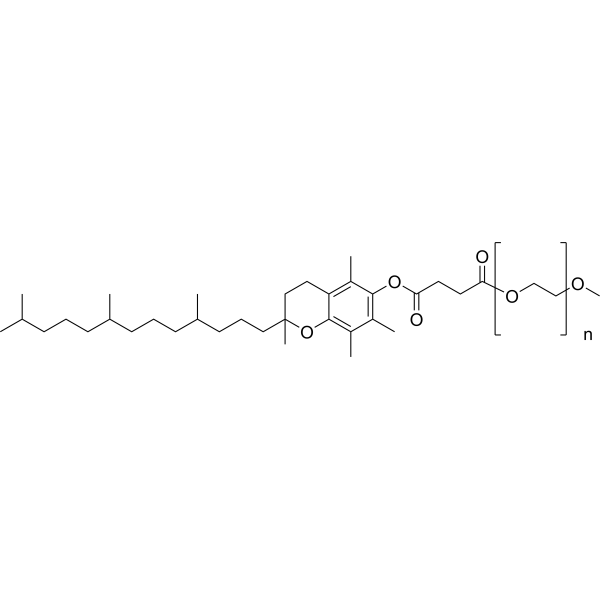
    DL-alpha-Tocopherol methoxypolyethylene glycol succinate (TPGS-750-M) is an amphiphile, acts as a surfactant. DL-alpha-Tocopherol methoxypolyethylene glycol succinate has a positive effect on Suzuki-Miyaura cross coupling. DL-alpha-Tocopherol methoxypolyethylene glycol succinate increases the styrene titer. DL-alpha-Tocopherol methoxypolyethylene glycol succinate is used in the stability test of NPYM-modified drugs in biological fluids .
    DL-alpha-Tocopherol methoxypolyethylene glycol succinate
  • HY-40249

    Drug Intermediate Others
    1-Boc-1,2,3,6-tetrahydropyridine-4-boronic acid pinacol ester is a drug intermediate that can be used for the preparation of SMARCA bromodomain ligands .
    1-Boc-1,2,3,6-tetrahydropyridine-4-boronic acid pinacol ester
  • HY-Y0747

    1-Iodobenzene

    Biochemical Assay Reagents Others
    Iodobenzene can undergo Ullmann coupling reaction on copper catalyst to generate biphenyl. Iodobenzene can undergo Suzuki reaction with phenylboronic acid to generate biphenyl .
    Iodobenzene
  • HY-W002849

    2-(Dicyclohexylphosphino)biphenyl

    Biochemical Assay Reagents Others
    Cyjohnphos is a biochemical reagent that can be used as a biological material or organic compound for life science related research. Cyjohnphos can be used in combination with a nickel catalyst for the Suzuki-Miyaura arylation of tertiary benzylic acetates with aryl boroxines to produce diaryl and triaryl quaternary stereocenters .
    Cyjohnphos
  • HY-W002570

    Biochemical Assay Reagents Others
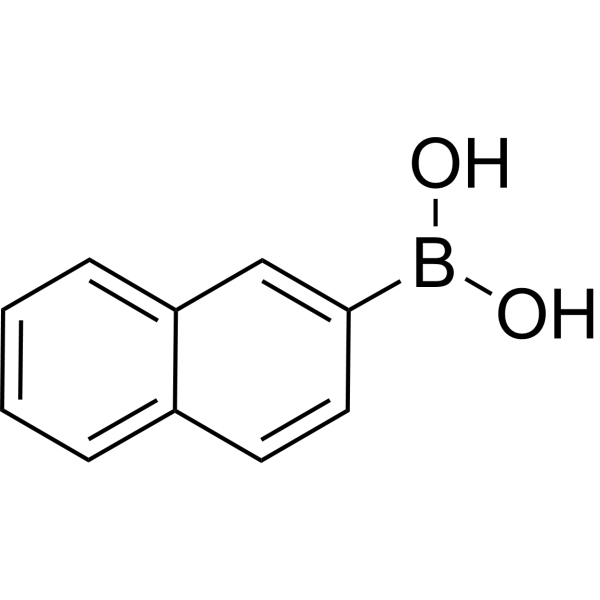
    2-Naphthylboronic acid is a biochemical reagent that can be used as a biological material or organic compound for life science related research. 2-Naphthylboronic acid can undergo silylation reaction. 2-Naphthylboronic acid also readily undergo Suzuki-Miyaura cross-coupling .
    2-Naphthylboronic acid
  • HY-W003601

    Biochemical Assay Reagents Others
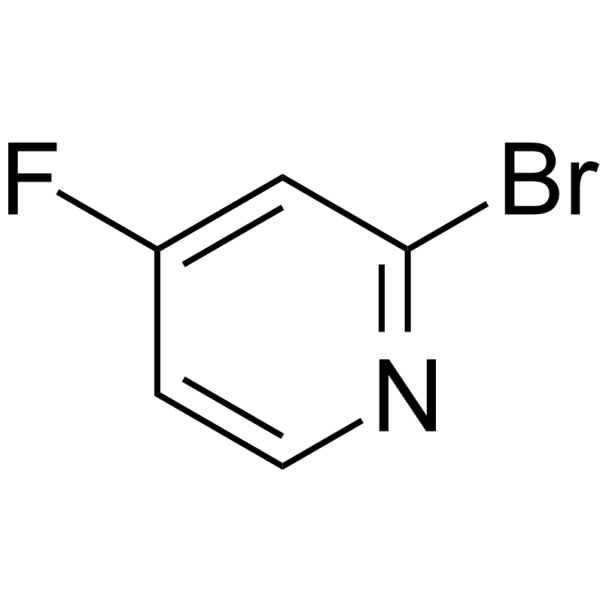
    2-Bromo-4-fluoropyridine is a synthetic halogenated heterocyclic organic compound and a key intermediate in the pharmaceutical and agrochemical industries. 2-Bromo-4-fluoropyridine can be used to synthesize bioactive molecules through cross-coupling reactions, such as Suzuki coupling or Buchwald-Hartwig amination.
    2-Bromo-4-fluoropyridine
  • HY-32748

    Biochemical Assay Reagents Drug Intermediate Others
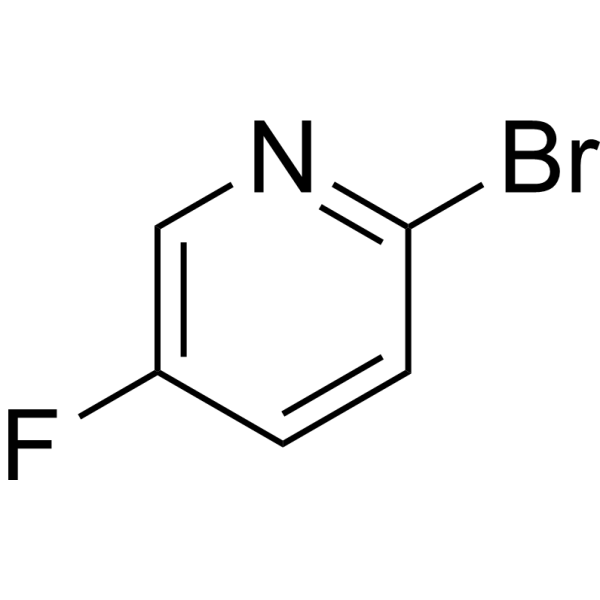
    2-Bromo-5-fluoropyridine is an intermediate. 2-Bromo-5-fluoropyridine can undergo Suzuki coupling reaction with Boronic acid (HY-41551). 2-Bromo-5-fluoropyridine can be used in the synthesis of GSK1292263A (a GPR119 receptor agonist) .
    2-Bromo-5-fluoropyridine
  • HY-75129

    Biochemical Assay Reagents Others
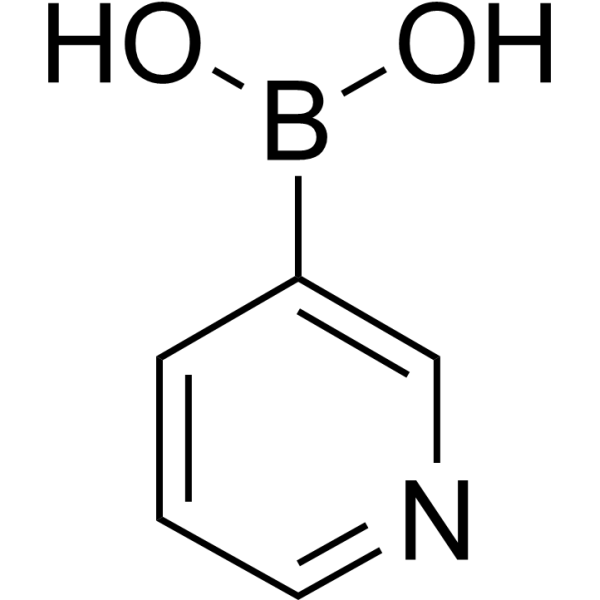
    Pyridin-3-ylboronic acid is an organic compound. Pyridin-3-ylboronic acid is a key reagent in the Suzuki-Miyaura cross-coupling reaction. Pyridin-3-ylboronic acid is used in organic synthesis to construct oligopyridine compounds, and then as an α-helix mimetic to study protein-protein interactions .
    Pyridin-3-ylboronic acid
  • HY-W003129

    Drug Intermediate Bacterial Infection
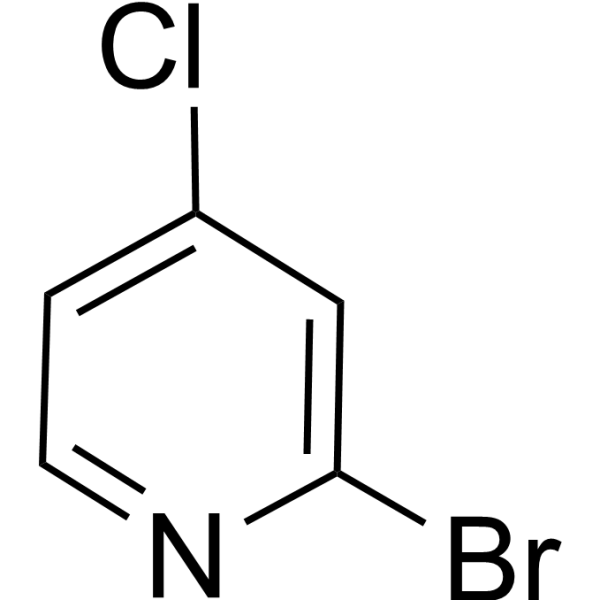
    2-Bromo-4-chloropyridine is a halogenated pyridine derivative that serves as a synthetic intermediate. 2-Bromo-4-chloropyridine undergoes Suzuki-Miyaura coupling with 4-tert-butylphenylboronic acid (HY-W007389). 2-Bromo-4-chloropyridine facilitates the construction of compounds with broad-spectrum antibacterial activity .
    2-Bromo-4-chloropyridine
  • HY-32959

    Biochemical Assay Reagents Others
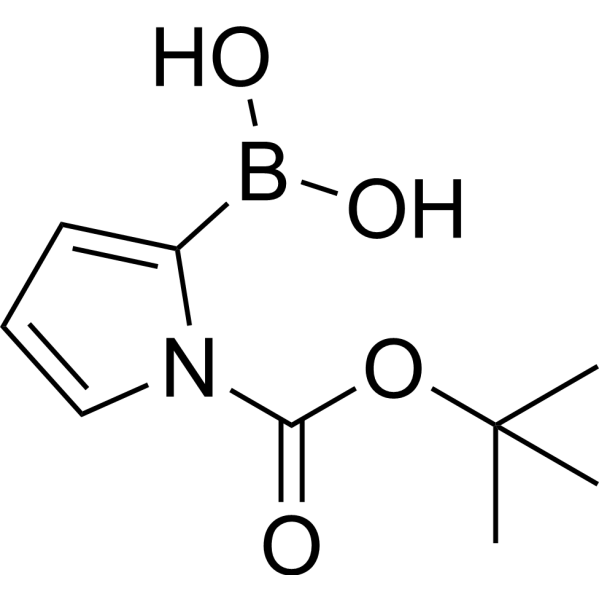
    N-Boc-2-pyrroleboronic acid is an organic synthesis intermediate used primarily in the synthesis of chiral pharmaceutical molecules and biologically active molecules. The boronic acid on the pyrrole ring can participate in Suzuki coupling reactions. The boronic acid can be oxidized to a hydroxyl group under the action of nitrogen oxides, and after tautomerization, it can be further transformed into 2-oxo-2,5-dihydro-1-pyrrolecarboxylic acid tert-butyl ester .
    N-Boc-2-pyrroleboronic acid
  • HY-101974

    Biochemical Assay Reagents Others
    Biotin-PEG3-Bromide is a short PEG linker featuring a biotin group and a bromide. The bromide is a halogen which is easily displaced by nucleophiles such as alcohols or amines. Alternatively, bromide can be applied in a number of cross-coupling reactions such as in a Suzuki reaction. Biotin is useful for affinity-based applications such as pull-down assays or for ligating with streptavidin proteins.
    Biotin-PEG3-Bromide
  • HY-75637

    Drug Intermediate Others
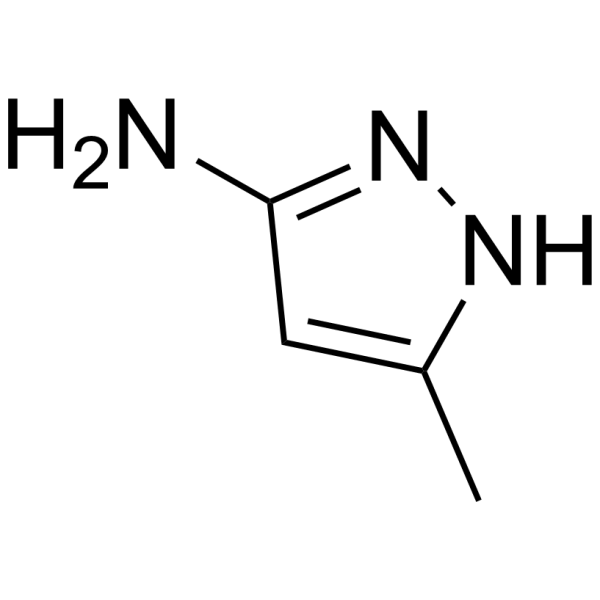
    5-Methyl-1H-pyrazol-3-amine is a pyrazole heterocyclic compound and can be used as a key intermediate for the synthesis of pyrazolylamide derivatives.
    3-Amino-5-methylpyrazole
  • HY-W002734

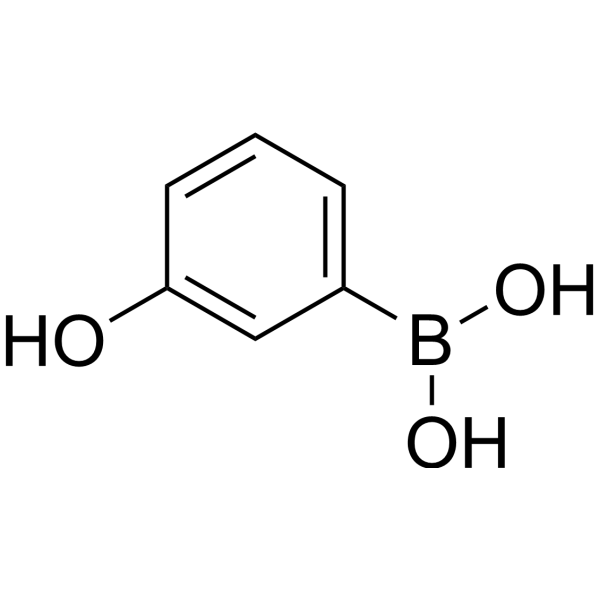
    3-Hydroxybenzeneboronic acid

    Drug Intermediate Endocrinology
    (3-Hydroxyphenyl)boronic acid (3-Hydroxybenzeneboronic acid) is a drug intermediate that can be used for the synthesis of 17β-hydroxysteroid dehydrogenase type 1 inhibitors .
    (3-Hydroxyphenyl)boronic acid
  • HY-42045

    Drug Derivative Others
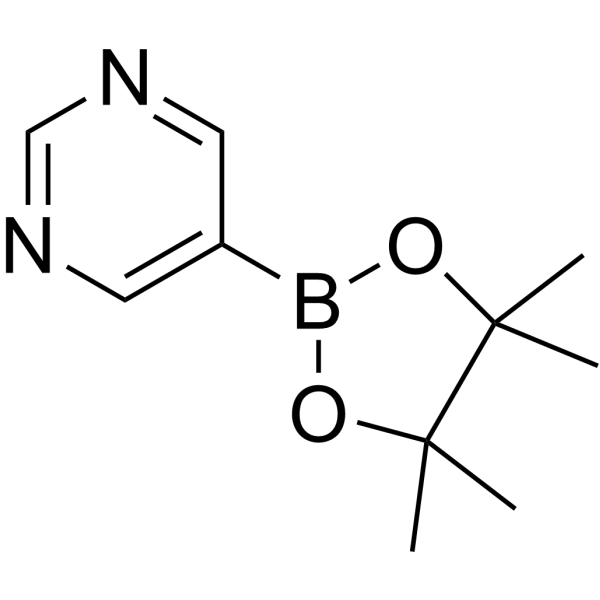
    Pyrimidine-5-boronic acid pinacol ester is a derivative of Boronic acid. Boronic acid is an intermediate commonly used in organic synthesis reactions and can be used as a key reagent in the Suzuki-Miyaura reaction. It generates organic free radicals through oxygen-mediated oxidation and exhibits potential mutagenic activity. Boronic acid is mainly used in research in the fields of drug synthesis and catalytic reactions. Pyrimidine-5-boronic acid pinacol ester serves as a building block in DNA-compatible one-pot click chemistry for synthesis of DNA-encoded libraries .
    Pyrimidine-5-boronic acid pinacol ester
  • HY-Y0747S

    1-Iodobenzene-d5

    Isotope-Labeled Compounds Others
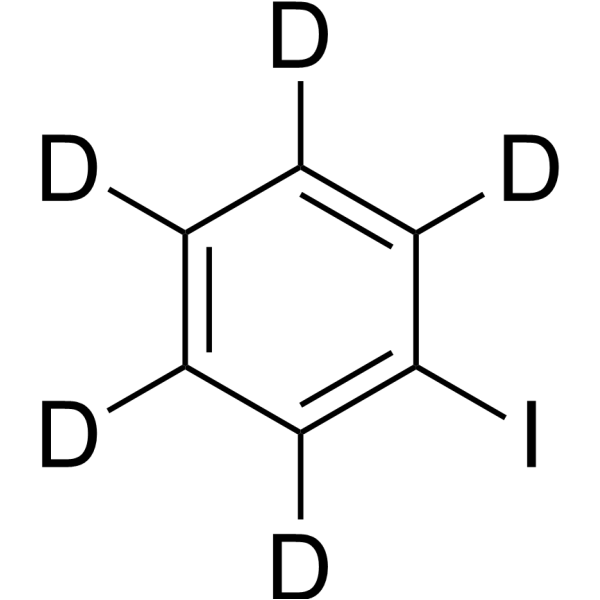
    Iodobenzene-d5 is the deuterium labeled 1-Iodobenzene. Iodobenzene can undergo Ullmann coupling reaction on copper catalyst to generate biphenyl. Iodobenzene can undergo Suzuki reaction with phenylboronic acid to generate biphenyl .
    Iodobenzene-d5
  • HY-D2262

    Fluorescent Dye Metabolic Disease
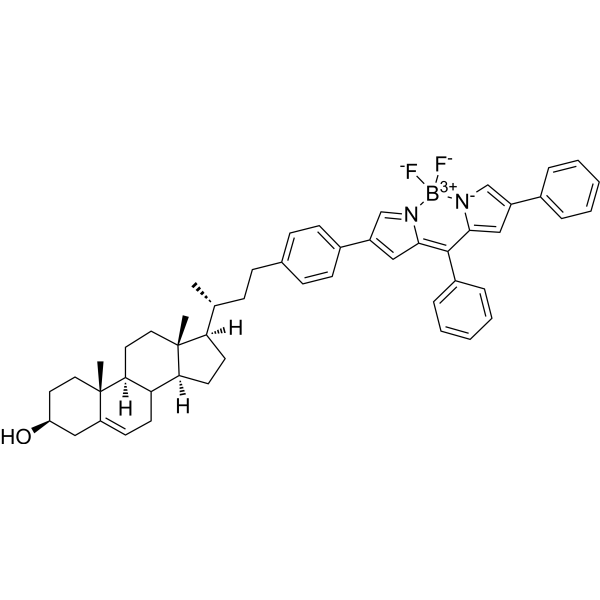
    BODIPY-cholesterol conjugate-2 (compound 6) is a BODIPY-cholesterol conjugate. BODIPY-cholesterol conjugate-2 is a useful probe for simultaneous visualization of intracellular cholesterol pools and for monitoring cholesterol efflux from cells to extracellular acceptors. (λex=589 nm, λem=638 nm) .
    BODIPY-cholesterol conjugate-2
  • HY-W002801

    Biochemical Assay Reagents Others
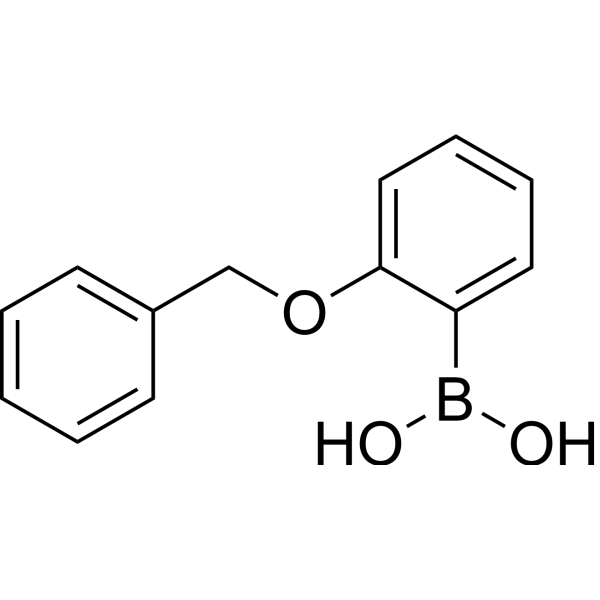
    2-Benzyloxyphenylboronic acid is a biochemical reagent that can be used as a biological material or organic compound for life science related research. 2-Benzyloxyphenylboronic acid is also a substrate used in asymmetric Suzuki coupling reactions. 2-Benzyloxyphenylboronic acid can be utilized in the synthesis of other active compounds .
    2-Benzyloxyphenylboronic acid
  • HY-171854

    G2A (GPR132) Neurological Disease Inflammation/Immunology
    SB-583355 (Compound 56) is a potent G2A antagonist. SB-583355 can be prepared by a Suzuki reaction between 4-methoxyphenyl boronic acid and 3-bromo-4-hydroxybenzoic acid following the conditions followed by an amide coupling reaction. SB-583355 blocks the activation of G2A mediated either by 9-HOPE or T-10148 in human G2A expressing CHO-K1 cells. SB-583355 can be studied in research for inflammation, myeloid leukemia, and neuropathic pain .
    SB-583355
  • HY-20176

    Drug Intermediate Adenosine Receptor PI3K Infection
    2,4-Dichlorothieno[3,2-d]pyrimidine is a thienopyrimidine scaffold and a key synthetic precursor, which is widely used for constructing 4-arylthieno[3,2-d]pyrimidine compounds. 2,4-Dichlorothieno[3,2-d]pyrimidine serves for the development of 4-arylthieno[3,2-d]pyrimidine-based human adenosine A2a receptor antagonists, as well as thienopyrimidine-based PI3K-α inhibitors. In addition, 2,4-Dichlorothieno[3,2-d]pyrimidine has potential application value in studies related to whipworm disease .
    2,4-Dichlorothieno[3,2-d]pyrimidine
  • HY-32928

    Biochemical Assay Reagents Others
    4-Cyanobenzeneboronic acid is a Boronic acid derivative. 4-Cyanobenzeneboronic acid can be used in Suzuki-Miyaura cross-coupling reactions .
    4-Cyanobenzeneboronic acid
  • HY-W001987

    Biochemical Assay Reagents Others
    Organic ligands can be prepared through Suzuki cross-coupling reaction between 4,6-Dichloropyrimidin-5-amine and dimethyl(5-pinyl)isophthalate .
    4,6-Dichloropyrimidin-5-amine
  • HY-W004698

    Drug Intermediate Others
    (2-Methoxypyrimidin-5-yl)boronic acid is a drug intermediate that can serve as a key reactant in the Suzuki-Miyaura coupling reaction, and is used for the synthesis of isoquinoline ketone derivatives with anti-tumor activity .
    (2-Methoxypyrimidin-5-yl)boronic acid
  • HY-77642

    Biochemical Assay Reagents Drug Intermediate Metabolic Disease
    4-(Methylsulfonyl)phenylboronic acid is an intermediate. 4-(Methylsulfonyl)phenylboronic acid can be used to synthesize GPR119 agonists via Suzuki coupling reaction. 4-(Methylsulfonyl)phenylboronic acid can be used in the research of type 2 diabetes .
    4-(Methylsulfonyl)phenylboronic acid
  • HY-W001222

    Biochemical Assay Reagents Others
    3-Furanboronic acid is a biochemical reagent. 3-Furanboronic acid can be smoothly coupled with a variety of active and inactive 2-chloropyridines, 2-chloroquinolines, and 2-chloropyrimidine .
    3-Furanboronic acid
  • HY-W002463

    Biochemical Assay Reagents Others
    3-Chlorophenylboronic acid is employed as a reactant involved in 1,4-conjugate addition reactions with ethenesulfonamides to form arylethanesulfonamides, Suzuki-Miyaura reactions with dibromotrifluoromethylbenzene, cross-coupling reactions with diazoesters3 or potassium cyanate. 3-Chlorophenylboronic acid is involved in the synthesis of biarylketones and phthalides and synthesis of inhibitors including PDE4 inhibitors among others. 3-Chlorophenyl boronic acid can affect cell migration. 3-Chlorophenyl boronic acid can be used to study wound healing .
    3-Chlorophenyl boronic acid
  • HY-206852

    Drug Intermediate Phosphodiesterase (PDE) Neurological Disease
    PF-06445974 precursor (Compound 28) is a nitro precursor and synthetic intermediate. PF-06445974 precursor can be used for the synthesis of PF-06445974 (HY-119190). PF-06445974 is a positron emission tomography (PET) compound that acts potently on PDE4B .
    PF-06445974 precursor
  • HY-W020985

    Pd(DIPHOS)2

    Biochemical Assay Reagents Others
    Bis[1,2-bis(diphenylphosphino)ethane]palladium(0), often abbreviated as Pd(PPh3)2 or Pd(dppf), is an organometallic compound. This compound is widely used as a catalyst for organic chemical reactions, especially cross-coupling reactions such as Suzuki-Miyaura reaction and Heck reaction, and its high catalytic activity, selectivity and stability make it a versatile tool for the synthesis of complex organic compounds , in addition, the potential application of Pd(PPh3)2 in the production of electronic materials and in medical and biochemical research has also been investigated.
    Bis[1,2-bis(diphenylphosphino)ethane]palladium(0)
  • HY-W019633

    Biochemical Assay Reagents Others
    Benzothiazole-5-boronic acid pinacol ester is a compound that can be used in the boronate part of Suzuki coupling reactions .
    Benzothiazole-5-boronic acid pinacol ester
  • HY-W244282

    Ligands for E3 Ligase Cancer
    Thalidomide-pinacolborane is a Thalidomide analogue featuring a boronic pinacol ester, otherwise known as a Bpin group, and they are most frequently used in Suzuki reactions. This molecule is an activator for E3 ligase, which ubiquitinylates proteins, thus committing their fate to proteolytic destruction.
    Thalidomide-pinacolborane
  • HY-D2261

    Fluorescent Dye Metabolic Disease
    BODIPY-cholesterol conjugate-1 (compound 5) is a BODIPY-cholesterol conjugate. BODIPY-cholesterol conjugate-1 is a useful probe for simultaneous visualization of intracellular cholesterol pools and for monitoring cholesterol efflux from cells to extracellular acceptors . (λex 541 nm, λem 615 nm).
    BODIPY-cholesterol conjugate-1
  • HY-W005558

    Biochemical Assay Reagents Others
    6-Aminopyridine-3-boronic acid is a boronic acid derivative. Boronic acid derivatives are widely used in organic synthesis for carbon-carbon bond formation. In Suzuki coupling, aryl halides and boronic acid aryl or vinyl esters or boronic acid are coupled using Pd(PPh3)4. It can be used as a pharmaceutical intermediate [1] .
    6-Aminopyridine-3-boronic acid
  • HY-175553

    VEGFR Apoptosis Cancer
    VEGFR-2-IN-72 is a selective VEGFR-2 inhibitor with an IC50 of 22.2 nM. VEGFR-2-IN-72 exhibits anticancer activity against HepG2 and Hep3B human HCC cell lines with IC50s of 15.7 and 2.4 μM. VEGFR-2-IN-72 can cause a mild blockage of the cell cycle and induce cell aopoptosis. VEGFR-2-IN-72 can used for the study of hepatocellular carcinoma (HCC) .
    VEGFR-2-IN-72
  • HY-146489

    Bacterial Parasite Infection
    Anti-infective agent 3 (compound 3l) shows antiparasitic activity against P. falciparum and T. brucei rhodesiense, with IC50 values of 0.47 and 0.13 μM, respectively. Anti-infective agent 3 shows antimycobacterial activity against Mycobacterium smegmatis with a MIC of 4 μg/mL .
    Anti-infective agent 3
  • HY-146488

    Parasite Bacterial Infection
    Anti-infective agent 2 (compound 3k) shows antiparasitic activity against P. falciparum and T. brucei rhodesiense, with IC50 values of 0.07 and 2.20 μM, respectively. Anti-infective agent 2 shows antimycobacterial activity against Mycobacterium smegmatis with a MIC of 32 μg/mL .
    Anti-infective agent 2
  • HY-146487

    Bacterial Parasite Infection
    Anti-infective agent 1 (compound 3a) is a potent and selective antiprotozoal and antimycobacterial agent. Anti-infective agent 1 shows antiparasitic activity against P. falciparum and T. brucei rhodesiense, with IC50 values of 10.95 and 0.06 μM, respectively. Anti-infective agent 1 shows antimycobacterial activity against Mycobacterium smegmatis with a MIC of 8 μg/mL .
    Anti-infective agent 1
  • HY-Y0747S1

    1-Iodobenzene-d2

    Isotope-Labeled Compounds Others
    Iodobenzene-d2 is the deuterium labeled 1-Iodobenzene. Iodobenzene can undergo Ullmann coupling reaction on copper catalyst to generate biphenyl. Iodobenzene can undergo Suzuki reaction with phenylboronic acid to generate biphenyl .
    Iodobenzene-d2
  • HY-W714973

    Herbicide Others
    Halauxifen-methyl is a 6-arylpicolinic acid herbicide. As a synthetic auxin, Halauxifen-methyl interferes with the normal growth and development of sensitive weeds by mimicking the action of endogenous plant auxins, causing malformation, uncontrolled growth and eventual death .
    Halauxifen-methyl

Inquiry Online

Your information is safe with us. * Required Fields.

Salutation


Country or Region *

Applicant Name *


Organization Name *

Department *


Email Address *


Product Name *

Cat. No.


Requested quantity *

Phone Number *


Remarks

Inquiry Online

Inquiry Information

Product Name:
Cat. No.:
Quantity:
MCE Japan Authorized Agent: