







224 Results for "

Synthetic peptide

" in MedChemExpress (MCE) Product Catalog:
Products (224)

224 Results for "Synthetic peptide" in MCE Product Catalog:

11
11 Publications Verification
Cat. No.: HY-127090
CAS No.: 53678-77-6
Purity:  ≥98.0%
Synonyms: MDP
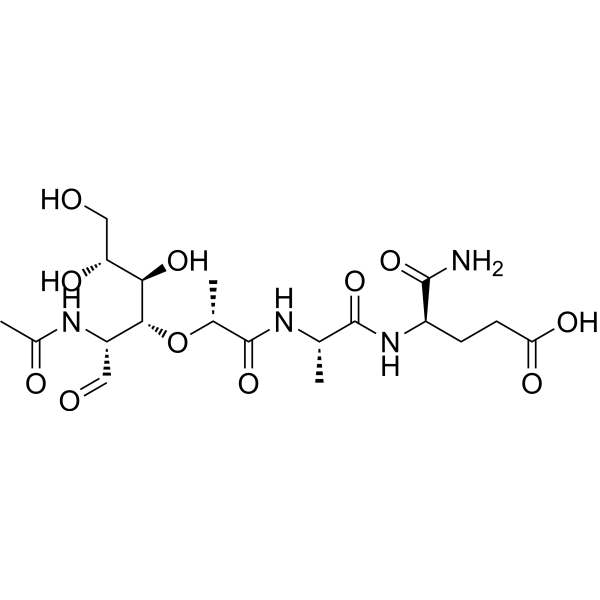
Muramyl dipeptide (MDP) is a synthetic immunoreactive peptide, consisting of N-acetyl muramic acid attached to a short amino acid chain of L-Ala-D-isoGln. Muramyl dipeptide is an inducer of bone formation through induction of Runx2. Muramyl dipeptide directly enhances osteoblast differentiation by up-regulating Runx2 gene expression through MAPK pathways. Muramyl dipeptide is a NLRP1 agonist .
loading...
    loading...
10
10 Cited Publications
Cat. No.: HY-P0202
CAS No.: 117399-94-7
Synonyms: ET-1 (swine, human)
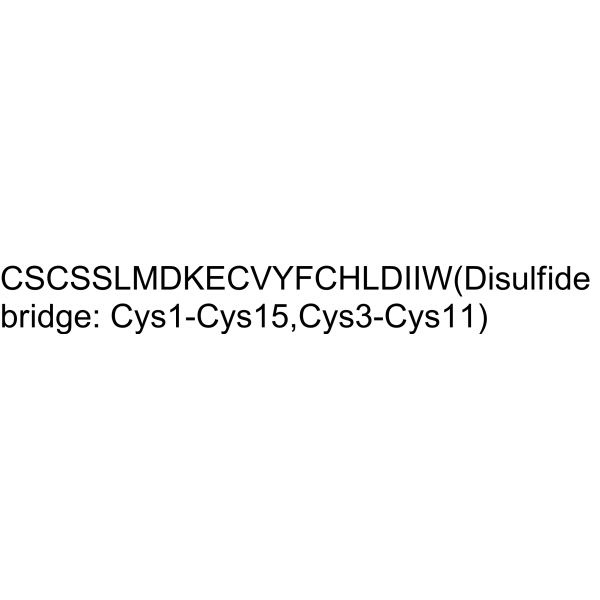
Endothelin 1 (swine, human) (ET-1) is a synthetic peptide with the sequence of human and swine Endothelin 1, which is a potent endogenous vasoconstrictor. Endothelin 1 acts through two types of receptors ETA and ETB .
loading...
    loading...
10
10 Cited Publications
Cat. No.: HY-P0202A
CAS No.: 394693-38-0
Synonyms: ET-1 (swine, human) TFA
Target:  

Endothelin Receptor

Research Areas:  

Cardiovascular Disease

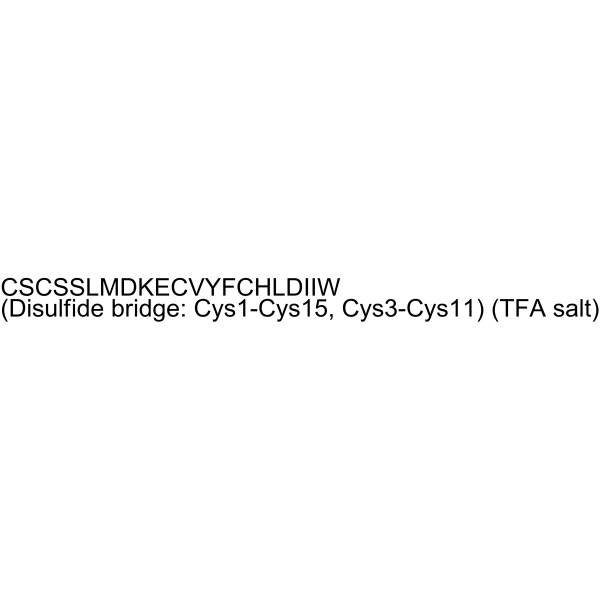
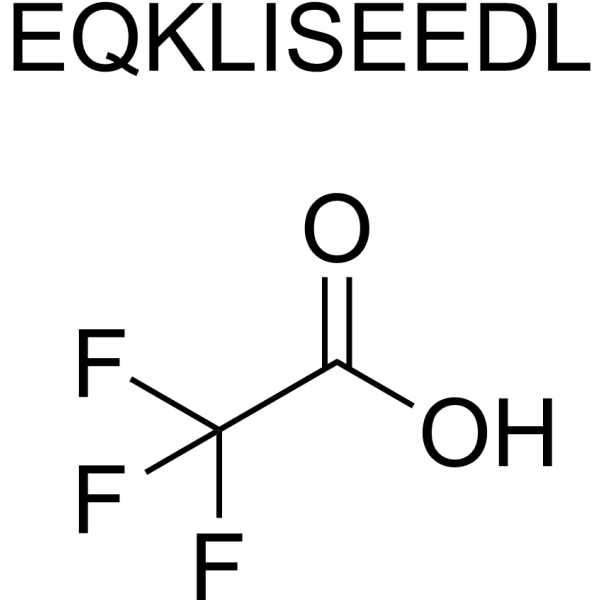
Endothelin 1 (swine, human) (ET-1) TFA is a synthetic peptide with the sequence of human and swine Endothelin 1, which is a potent endogenous vasoconstrictor. Endothelin 1 TFA acts through two types of receptors ETA and ETB .
loading...
    loading...
8
8 Cited Publications
Cat. No.: HY-P3211
CAS No.: 2014384-91-7
Synonyms: LR12
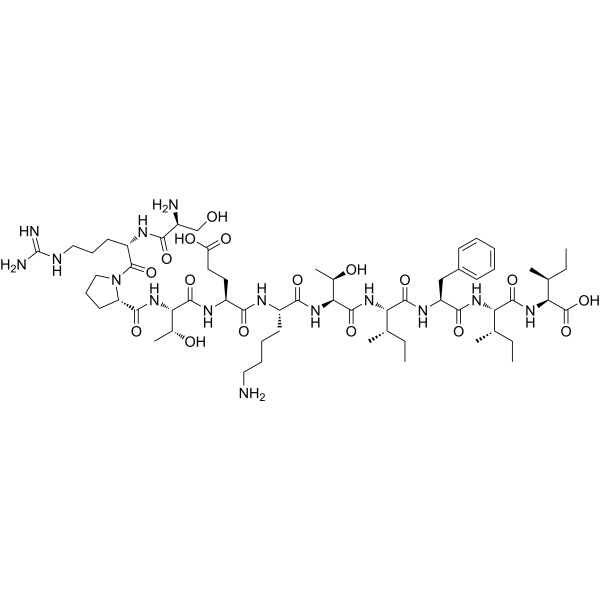
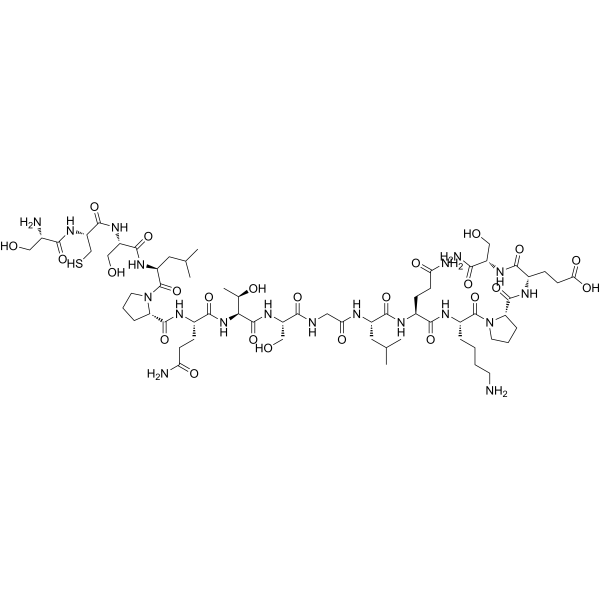
Nangibotide (LR12) is a synthetic peptide and TREM-1 receptor inhibitor. Nangibotide inhibits NF-κB and NLRP3 inflammasome activation and reduces the release of pro-inflammatory factors (such as IL-1β, IL-8). Nangibotide inhibits Apoptosis. Nangibotide reduces excessive inflammatory responses and protects tissues (liver, lung) from damage. Nangibotide can be used in the researches for myocardial ischemia-reperfusion injury, septic shock, acute lung injury, osteoarthritis, and acute liver failure .
loading...
    loading...
8
8 Cited Publications
Cat. No.: HY-P3211A
Synonyms: LR12 TFA
Nangibotide TFA (LR12 TFA) is a synthetic peptide and TREM-1 receptor inhibitor. Nangibotide TFA inhibits NF-κB and NLRP3 inflammasome activation and reduces the release of pro-inflammatory factors (such as IL-1β, IL-8). Nangibotide TFA inhibits Apoptosis. Nangibotide TFA reduces excessive inflammatory responses and protects tissues (liver, lung) from damage. Nangibotide TFA can be used in the researches for myocardial ischemia-reperfusion injury, septic shock, acute lung injury, osteoarthritis, and acute liver failure .
loading...
    loading...
7
7 Cited Publications
Cat. No.: HY-P0139
CAS No.: 198284-64-9
Target:  

Gap Junction Protein

Research Areas:  

Cardiovascular Disease

Gap 27, a synthetic connexin43 mimetic peptide, is a gap junction inhibitor. Gap 27 possesses conserved sequence homology to a portion of the second extracellular loop leading into the fourth transmembrane connexin segment .
loading...
    loading...
5
5 Cited Publications
Cat. No.: HY-P0290
CAS No.: 91037-75-1
Target:  

Integrin

Research Areas:  

Cancer

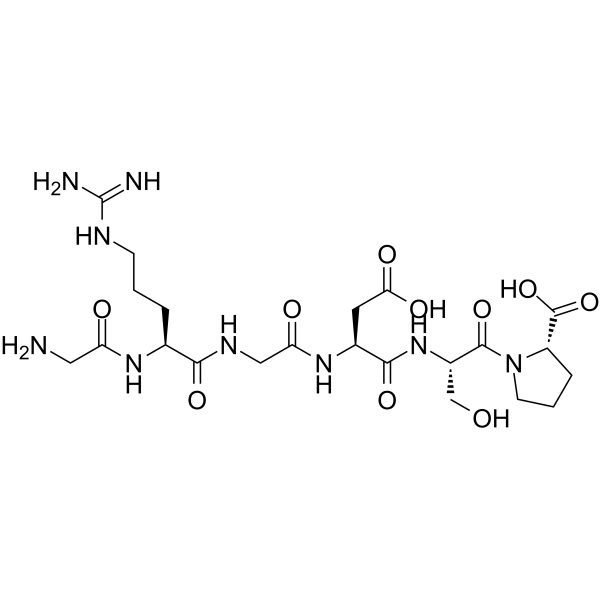
GRGDSP, a synthetic linear RGD peptide, is an integrin inhibitor.
loading...
    loading...
4
4 Cited Publications
Cat. No.: HY-P1034
CAS No.: 106362-34-9
Synonyms: D-Ala-peptide T-amide; Adaptavir
Target:  

CCR HIV

Research Areas:  

Infection Endocrinology

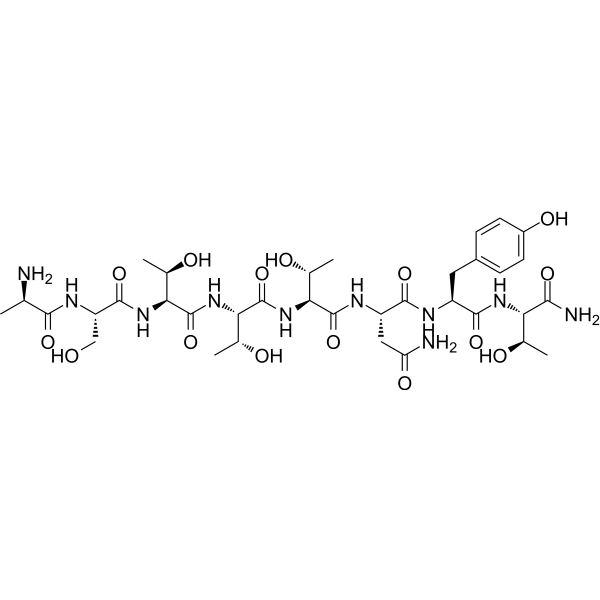
DAPTA is a synthetic peptide, functions as a viral entry inhibitor by targeting selectively CCR5, and shows potent anti-HIV activities.
loading...
    loading...
3
3 Cited Publications
Cat. No.: HY-P0222
CAS No.: 99534-03-9
Target:  

PKA

Research Areas:  

Others

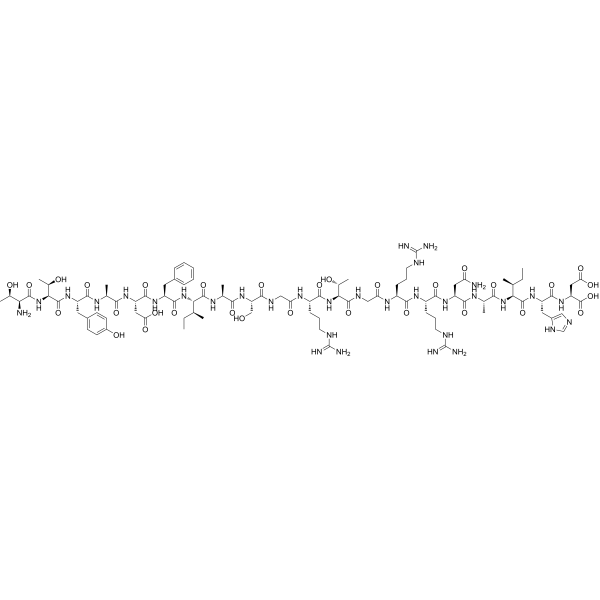
PKI(5-24) is a potent, competitive, and synthetic peptide inhibitor of PKA (cAMP-dependent protein kinase), with a Ki of 2.3 nM. PKI(5-24) corresponds to residues 5-24 in the naturally occurring heat-stable protein kinase inhibitor .
loading...
    loading...
2
2 Cited Publications
Cat. No.: HY-P1821
CAS No.: 126768-94-3
Synonyms: MHP4-14
Target:  

PKC

Research Areas:  

Neurological Disease

Myelin Basic Protein (MHP4-14), a synthetic peptide comprising residues 4-14 of myelin basic protein, is a very selective PKC substrate (Km=7 μM). Myelin Basic Protein is not phosphorylated by cyclic AMP-dependent protein kinase, casein kinases I and II, Ca 2+/calmodulin-dependent protein kinase II, or phosphorylase kinase, and can be routinely used for the assay of protein kinase C with low background in the crude tissue extracts .
loading...
    loading...
2
2 Cited Publications
Cat. No.: HY-P1821A
Synonyms: MHP4-14 TFA
Target:  

PKC

Research Areas:  

Neurological Disease

Myelin Basic Protein (MHP4-14) TFA, a synthetic peptide comprising residues 4-14 of myelin basic protein, is a very selective PKC substrate (Km=7 μM). Myelin Basic Protein TFA is not phosphorylated by cyclic AMP-dependent protein kinase, casein kinases I and II, Ca 2+/calmodulin-dependent protein kinase II, or phosphorylase kinase, and can be routinely used for the assay of protein kinase C with low background in the crude tissue extracts .
loading...
    loading...
1
1 Cited Publications
Cat. No.: HY-139201A
CAS No.: 27964-99-4
Synonyms: PDLHB (MW 70000-150000)
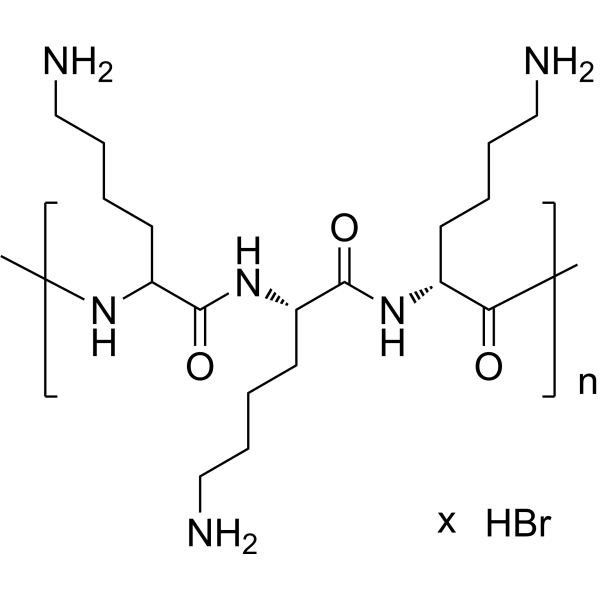
Poly-D-lysine hydrobromide (MW 70000-150000) is a synthetic polymeric substrate and is one of the most widely used substrate in neural cell culture. Poly-D-lysine hydrobromide is a CaSR agonist peptide .
loading...
    loading...
1
1 Cited Publications
Cat. No.: HY-P1155
CAS No.: 91826-20-9
Synonyms: rGHRH(1-29)NH2
Target:  

GHSR

Research Areas:  

Cancer

GRF (1-29) amide (rat) is a synthetic peptide which can stimulate the growth hormone (GH) secretion.
loading...
    loading...
1
1 Cited Publications
Cat. No.: HY-P0312
CAS No.: 2918768-02-0
Target:  

c-Myc

Research Areas:  

Cancer

c-Myc Peptide (TFA) is a synthetic peptide corresponding to the C-terminal amino acids (410-419) of human c-myc protein, and participates in regulation of growth-related gene transcription.
loading...
    loading...
1
1 Cited Publications
Cat. No.: HY-P2171A
Target:  

Peptides

Research Areas:  

Inflammation/Immunology

CCP peptide TFA is a synthetic cyclic citrullinated peptide (CCP) and used as the substrate for detecting anti-CCP antibodies serologically. CCP peptide TFA functions as a target for autoantibodies with a very high specificity for rheumatoid arthritis (RA) .
loading...
    loading...
1
1 Cited Publications
Cat. No.: HY-P1027
CAS No.: 258276-95-8
Target:  

Peptides

Research Areas:  

Others

LEP(116-130)(mouse) is a synthetic leptin peptide fragment.
loading...
    loading...
1
1 Cited Publications
Cat. No.: HY-P4106A
Research Areas:  

Neurological Disease

Tat-GluR23Y, scrambled TFA is the scrambled peptide of Tat-GluR23Y (HY-P2259). Tat-GluR23Y is a synthetic peptide containing tyrosine residues that inhibit AMPAR endocytosis and is effective in the research of long-term depression (LTD) .
loading...
    loading...
1
1 Cited Publications
Cat. No.: HY-P1146
CAS No.: 80714-61-0
Semax is a BBB-penetrable adrenocorticotropic hormone-like peptide and can form stable complexes with Cu 2+. Semax is a synthetic peptide analog of Adrenocorticotropic hormone (ACTH) (4-10). Semax has immunomodulatory, nootropic and neuroprotective activities. Semax can be used in the research of central nervous system diseases such as Alzheimer's disease and cerebral ischemia .
loading...
    loading...
1
1 Cited Publications
Cat. No.: HY-P1146A
CAS No.: 2828433-33-4
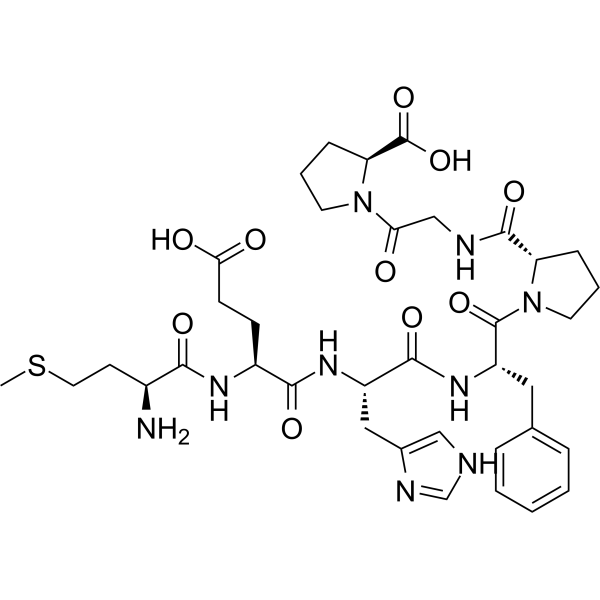
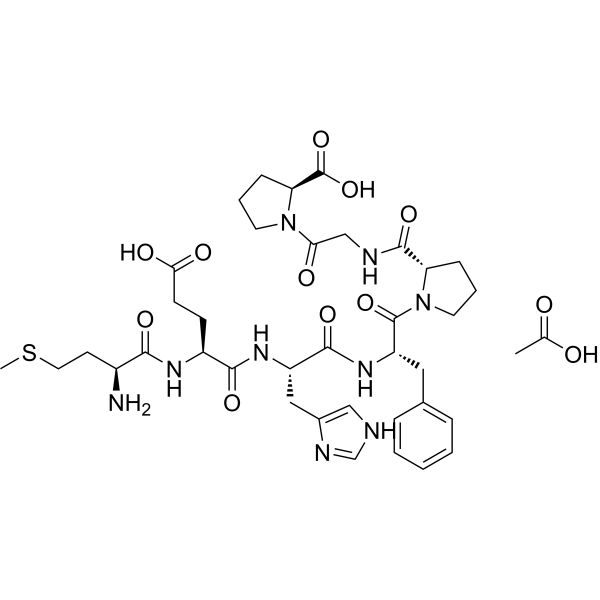
Semax acetate is a BBB-penetrable adrenocorticotropic hormone-like peptide and can form stable complexes with Cu 2+. Semax acetate is a synthetic peptide analog of Adrenocorticotropic hormone (ACTH) (4-10). Semax acetate has immunomodulatory, nootropic and neuroprotective activities. Semax acetate can be used in the research of central nervous system diseases such as Alzheimer's disease and cerebral ischemia .
loading...
    loading...
1
1 Cited Publications
Cat. No.: HY-P3496
CAS No.: 1322711-38-5
Target:  

Pyroptosis

Research Areas:  

Inflammation/Immunology

Pep19-2.5 is an synthetic and antitoxin peptide, blocks the intracellular endotoxin signaling cascade. Pep19-2.5 inhibits signaling of lipopeptides (LP) and lipopolysaccharides (LPS) mediated by transmembrane and cytosolic pattern recognition receptors (PRRs). The signaling cascades lead to inflammation and cell pyroptosis .
loading...
    loading...

