1. Search Result
Search Result
Results for "

Trichothecene

" in MedChemExpress (MCE) Product Catalog:

23

Inhibitors & Agonists

18

Natural
Products

4

Isotope-Labeled Compounds

Cat. No. Product Name Target Research Areas Chemical Structure
  • HY-N6684
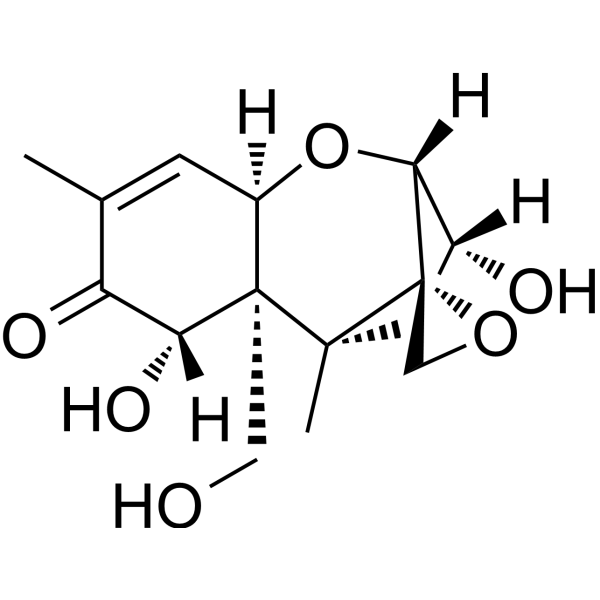
    Deoxynivalenol
    15+ Cited Publications

    Vomitoxin

    P-glycoprotein Metabolic Disease
    Deoxynivalenol, an orally active mycotoxin of the trichothecenes family, crosses the intestinal mucosa by a paracellular pathway through the tight junctions. The Deoxynivalenol transport is not affected by P-glycoprotein (PgP) or multidrug resistance-associated proteins (MRPs) inhibitors .
    Deoxynivalenol
  • HY-N7432

    Antibiotic Bacterial Fungal Infection
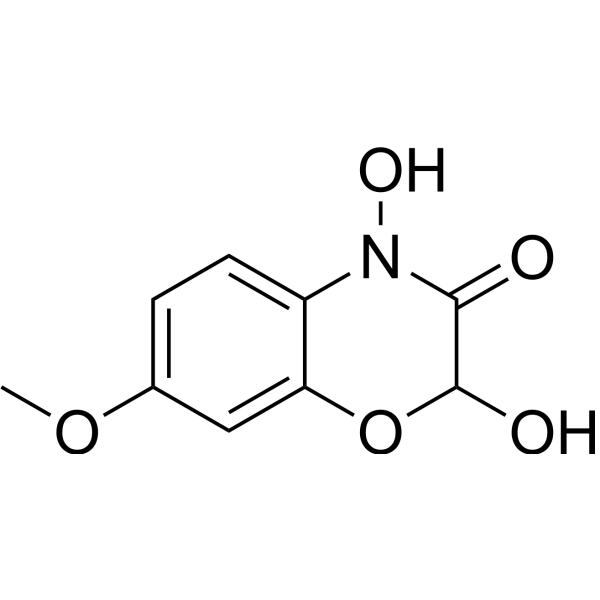
    DIMBOA, an antibiotic, has antibacterial properties and inhibits bacteria such as Staphylococcus aureus and the mycotoxin-producing fungus Fusarium graminearum (which causes scab). DIMBOA exhibits strong free radical scavenging activity and weak iron(III) ion reducing activity, and has antioxidant activity. DIMBOA inhibits the biosynthesis and accumulation of toxic trichothecenes by affecting the expression of Tri6 and Tri5. DIMBOA reduces plant susceptibility to scab. DIMBOA also exhibits cytotoxicity to plant cells, causing plasmolysis, cell collapse, and cell rupture .
    DIMBOA
  • HY-N6801

    Caspase Apoptosis Bcl-2 Family Infection Inflammation/Immunology Cancer
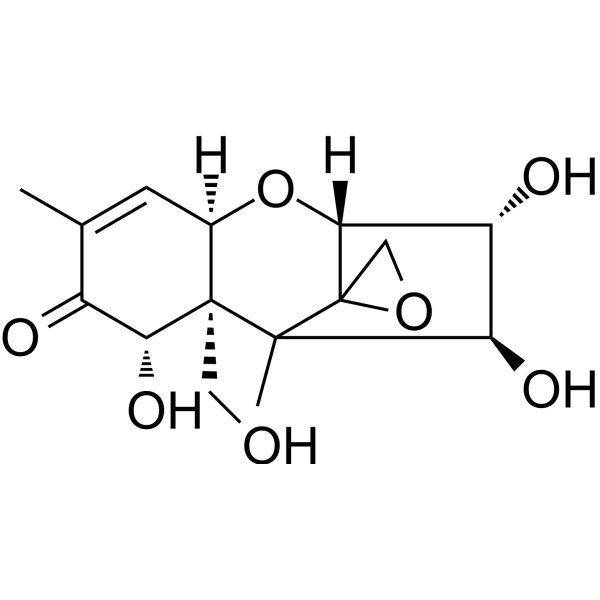
    Nivalenol, a trichothecene mycotoxin that can be produced by Fusarium graminearum, is a fungal metabolite present in agricultural product. Nivalenol modulates apoptotic pathway, cell cycle regulation, Bax, ERK, caspase-3, and poly-ADP-ribose synthase activity in macrophages. Nivalenol inhibits ribosomal peptidyltransferase site, protein synthesis, DNA synthesis, and cell proliferation. Nivalenol induces late-stage apoptotic morphological changes, reduces cellular metabolism, and decreases cell proliferation in erythroleukemia cells. Nivalenol induces lymphocyte apoptosis in murine thymus, spleen, and Peyer's patches. Nivalenol can be used for the research of erythroleukemia .
    Nivalenol
  • HY-N6683

    Drug Metabolite Cancer
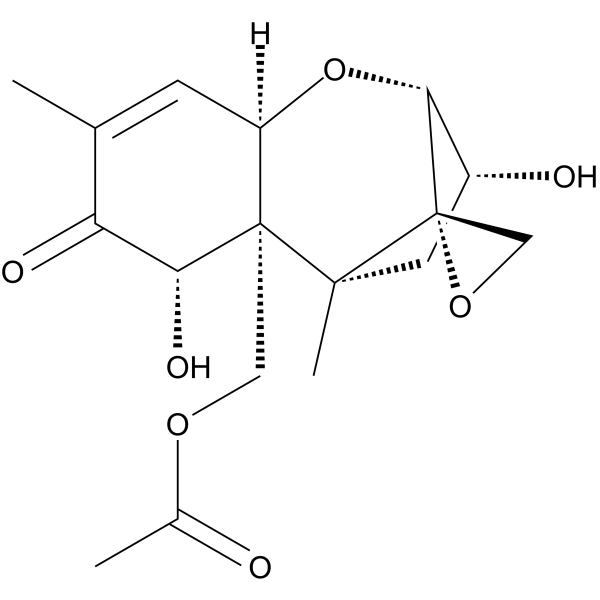
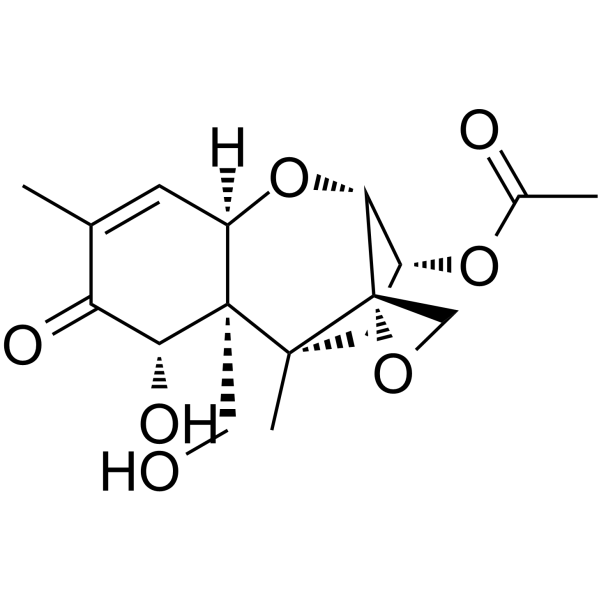
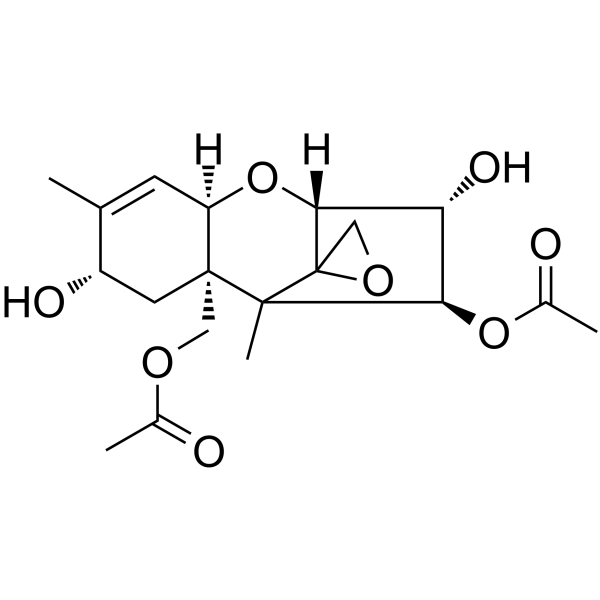
    15-Acetyl-deoxynivalenol is a highly toxic trichothecene found in cereals, and a metabolite of deoxynivalenol, exhibits toxicity to HepG2 cells .
    15-Acetyl-deoxynivalenol
  • HY-N6801S

    Isotope-Labeled Compounds Caspase Apoptosis Bcl-2 Family Infection Inflammation/Immunology Cancer
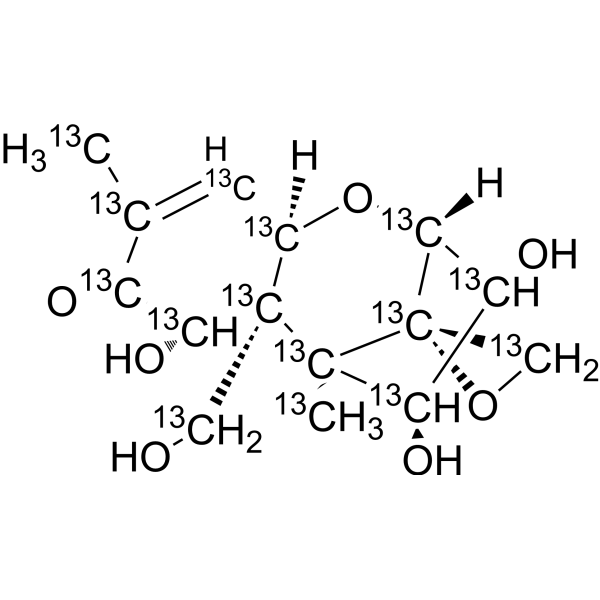
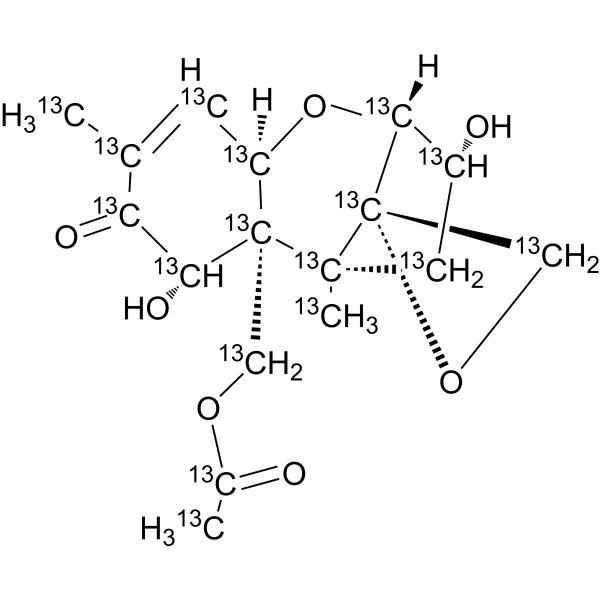
    Nivalenol- 13C15 is the 13C labeled Nivalenol (HY-N6801) . Nivalenol, a trichothecene mycotoxin that can be produced by Fusarium graminearum, is a fungal metabolite present in agricultural product. Nivalenol modulates apoptotic pathway, cell cycle regulation, Bax, ERK, caspase-3, and poly-ADP-ribose synthase activity in macrophages. Nivalenol inhibits ribosomal peptidyltransferase site, protein synthesis, DNA synthesis, and cell proliferation. Nivalenol induces late-stage apoptotic morphological changes, reduces cellular metabolism, and decreases cell proliferation in erythroleukemia cells. Nivalenol induces lymphocyte apoptosis in murine thymus, spleen, and Peyer's patches. Nivalenol can be used for the research of erythroleukemia.
    Nivalenol-13C15
  • HY-N6799

    Others Infection
    Neosolaniol is a type A trichothecene mycotoxin from Fusarium sp . Neosolaniol evokes robust anorectic response .
    Neosolaniol
  • HY-N6685

    3-AcDON; 3-ADON

    Endogenous Metabolite Interleukin Related Infection Inflammation/Immunology
    3-Acetyldeoxynivalenol (3-AcDON; 3ADON), a trichothecene mycotoxin deoxynivalenol (DON) acetylated derivative, is a brain-penetrant Fusarium mycotoxin. 3-Acetyldeoxynivalenol induces mRNA expression and production of inflammatory chemokine IL-8 in intestinal cells .
    3-Acetyldeoxynivalenol
  • HY-N10229

    Fungal Infection
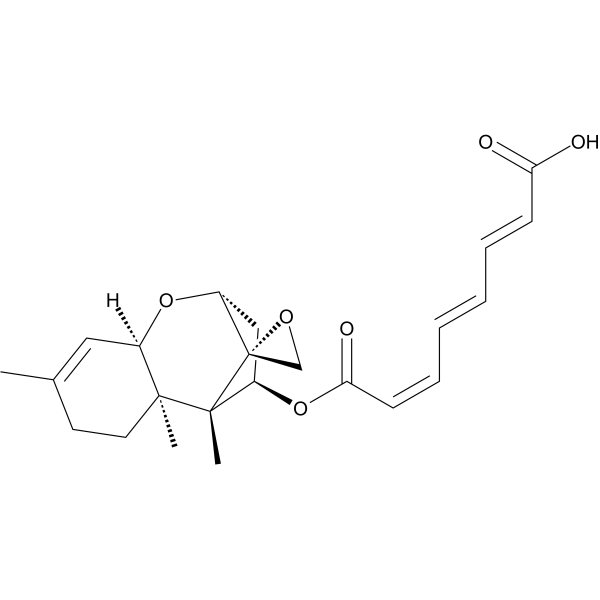
    Harzianum A is a trichothecene compound. Harzianum A has no antibacterial activity against Gram-negative and Gram-positive bacteria, but has antifungal activity. In addition, Harzianum A is cytotoxic to tumor cells .
    Harzianum A
  • HY-131055

    ADC Payload PI3K Apoptosis Cancer
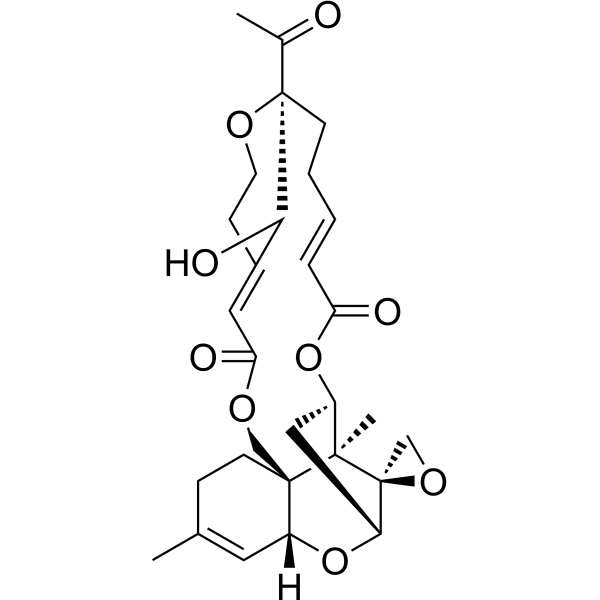
    Mytoxin B is an ADC cytotoxin. Mytoxin B is a satratoxin-type trichothecene macrolide and is similar to the effect of LY294002 (HY-10108). Mytoxin B induces cell apoptosis via PI3K/Akt pathway .
    Mytoxin B
  • HY-N6684R

    Vomitoxin (Standard)

    P-glycoprotein Reference Standards Metabolic Disease
    Deoxynivalenol (Standard) is the analytical standard of Deoxynivalenol. This product is intended for research and analytical applications. Deoxynivalenol, an orally active mycotoxin of the trichothecenes family, crosses the intestinal mucosa by a paracellular pathway through the tight junctions. The Deoxynivalenol transport is not affected by P-glycoprotein (PgP) or multidrug resistance-associated proteins (MRPs) inhibitors .
    Deoxynivalenol (Standard)
  • HY-N6692S

    Endogenous Metabolite Isotope-Labeled Compounds Inflammation/Immunology
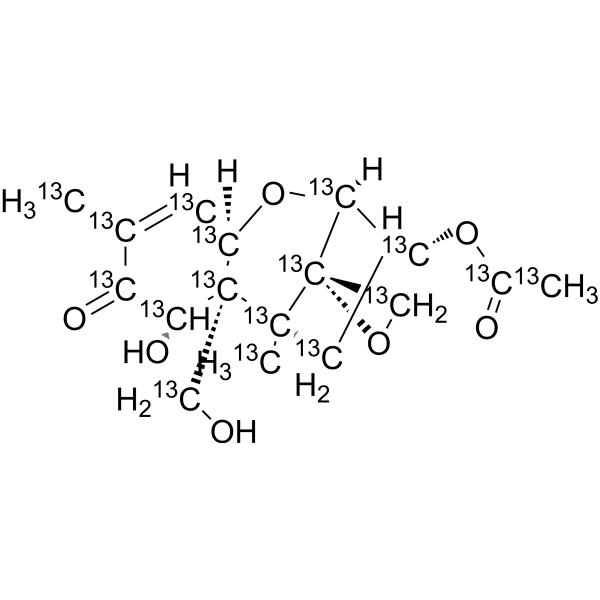
    Diacetoxyscirpenol- 13C19 is 13C labeled Diacetoxyscirpenol (HY-N6692). Diacetoxyscirpenol (DAS) is a trichothecene mycotoxin, a secondary metabolite product of fungi. Diacetoxyscirpenol (DAS) consumption induces haematological disorders (neutropenia, aplastic anemia) in human and animals .
    Diacetoxyscirpenol-13C19
  • HY-N6720

    Endogenous Metabolite Metabolic Disease
    T-2 Triol is a trichothecene mycotoxin derived by the metabolism of T-2 toxin. It is less toxic than T-2 toxin . T-2 Triol major metabolites are evaluated in broiler chickens with Half-lives (t1/2λz), Peak plasma concentrations (Cmax) and Tmax values of 9.6 mins, 563 ng/ml , 2.5 mins, respectively .
    T-2 Triol
  • HY-N6801R

    Reference Standards Caspase Apoptosis Bcl-2 Family Infection Inflammation/Immunology Cancer
    Nivalenol (Standard) is the analytical standard of Nivalenol (HY-N6801). This product is intended for research and analytical applications. Nivalenol, a trichothecene mycotoxin that can be produced by Fusarium graminearum, is a fungal metabolite present in agricultural product. Nivalenol modulates apoptotic pathway, cell cycle regulation, Bax, ERK, caspase-3, and poly-ADP-ribose synthase activity in macrophages. Nivalenol inhibits ribosomal peptidyltransferase site, protein synthesis, DNA synthesis, and cell proliferation. Nivalenol induces late-stage apoptotic morphological changes, reduces cellular metabolism, and decreases cell proliferation in erythroleukemia cells. Nivalenol induces lymphocyte apoptosis in murine thymus, spleen, and Peyer's patches. Nivalenol can be used for the research of erythroleukemia.
    Nivalenol (Standard)
  • HY-N6799R

    Reference Standards Others Infection
    Neosolaniol (Standard) is the analytical standard of Neosolaniol. This product is intended for research and analytical applications. Neosolaniol is a type A trichothecene mycotoxin from Fusarium sp . Neosolaniol evokes robust anorectic response .
    Neosolaniol (Standard)
  • HY-N14586

    Others Cancer
    Roridin J is a macrocyclic trichothecene and has anti-leukemia effect in mice .
    Roridin J
  • HY-N15066

    Antibiotic Bacterial Infection Cancer
    16-Hydroxyroridin L-2 is a trichothecene group antibiotic. 16-Hydroxyroridin L-2 is a mycotoxin with anti-tumor activity .
    16-Hydroxyroridin L-2
  • HY-N6683R

    Reference Standards Drug Metabolite Cancer
    15-Acetyl-deoxynivalenol (Standard) is the analytical standard of 15-Acetyl-deoxynivalenol. This product is intended for research and analytical applications. 15-Acetyl-deoxynivalenol is a highly toxic trichothecene found in cereals, and a metabolite of deoxynivalenol, exhibits toxicity to HepG2 cells .
    15-Acetyl-deoxynivalenol (Standard)
  • HY-N6683S1

    Isotope-Labeled Compounds Cancer
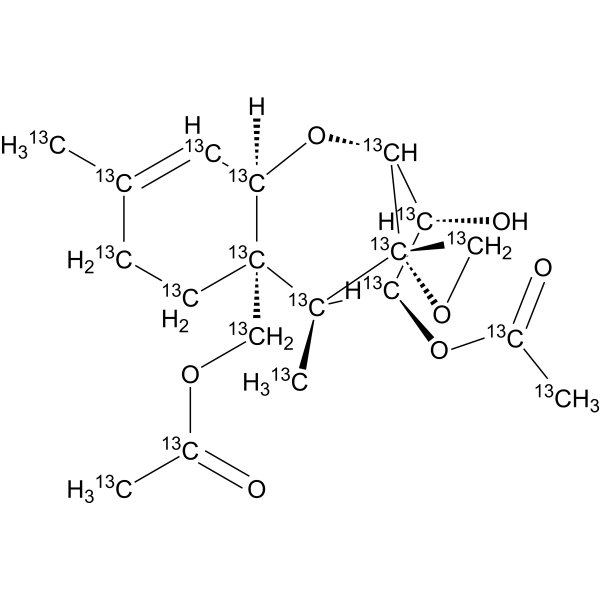
    15-Acetyl-deoxynivalenol- 13C17 is the 13C labeled 15-Acetyl-deoxynivalenol (HY-N6683) . 15-Acetyl-deoxynivalenol is a highly toxic trichothecene found in cereals, and a metabolite of deoxynivalenol, exhibits toxicity to HepG2 cells .
    15-Acetyl-deoxynivalenol-13C17
  • HY-N11422R

    Reference Standards Antibiotic Bacterial Infection
    Deoxynivalenol (Standard) is the analytical standard of Deoxynivalenol. This product is intended for research and analytical applications. Deoxynivalenol, an orally active mycotoxin of the trichothecenes family, crosses the intestinal mucosa by a paracellular pathway through the tight junctions. The Deoxynivalenol transport is not affected by P-glycoprotein (PgP) or multidrug resistance-associated proteins (MRPs) inhibitors .
    Mycaminosyltylonolide (Standard)
  • HY-N6685S1

    3-AcDON-13C17; 3-ADON-13C17

    Isotope-Labeled Compounds Endogenous Metabolite Interleukin Related Infection Inflammation/Immunology
    3-Acetyldeoxynivalenol (3-AcDON; 3ADON)- 13C17 is the 13C labeled 3-Acetyldeoxynivalenol (HY-N6685). 3-Acetyldeoxynivalenol, a trichothecene mycotoxin deoxynivalenol (DON) acetylated derivative, is a brain-penetrant Fusarium mycotoxin. 3-Acetyldeoxynivalenol induces mRNA expression and production of inflammatory chemokine IL-8 in intestinal cells .
    3-Acetyldeoxynivalenol-13C17
  • HY-N6685R

    3-AcDON (Standard); 3-ADON (Standard)

    Reference Standards Endogenous Metabolite Interleukin Related Infection Inflammation/Immunology
    3-Acetyldeoxynivalenol (3-AcDON; 3ADON) (Standard) is the analytical standard of 3-Acetyldeoxynivalenol (HY-N6685). This product is intended for research and analytical applications. 3-Acetyldeoxynivalenol, a trichothecene mycotoxin deoxynivalenol (DON) acetylated derivative, is a brain-penetrant Fusarium mycotoxin. 3-Acetyldeoxynivalenol induces mRNA expression and production of inflammatory chemokine IL-8 in intestinal cells .
    3-Acetyldeoxynivalenol (Standard)
  • HY-N8508

    Apoptosis Cytochrome P450 PARP JNK Bcl-2 Family Caspase Cancer
    Myrothecine A is a trichothecene mycotoxin found in M. roridum. Myrothecine A induces apoptosis, promotes the cytochrome c release, PARP-cleavage and phosphorylation of JNK, increases Bax and cleaved caspase-3, -5, and -8 levels. Myrothecine A has anticancer activities and promotes the maturation of DC cells in the microenvironment. Myrothecine A inhibits proliferation of A549, MCF-7, HepG2, and SMMC-7721 cancer cells with IC50s of 95, 70, 60, and 25 µM, respectively .
    Myrothecine A
  • HY-N7432R

    Antibiotic Bacterial Fungal Reference Standards Infection
    DIMBOA (Standard) is the analytical standard of DIMBOA. This product is intended for research and analytical applications. DIMBOA, an antibiotic, has antibacterial properties and inhibits bacteria such as Staphylococcus aureus and the mycotoxin-producing fungus Fusarium graminearum (which causes scab). DIMBOA exhibits strong free radical scavenging activity and weak iron(III) ion reducing activity, and has antioxidant activity. DIMBOA inhibits the biosynthesis and accumulation of toxic trichothecenes by affecting the expression of Tri6 and Tri5. DIMBOA reduces plant susceptibility to scab. DIMBOA also exhibits cytotoxicity to plant cells, causing plasmolysis, cell collapse, and cell rupture[1][2][3][4][5].
    DIMBOA (Standard)

Inquiry Online

Your information is safe with us. * Required Fields.

Salutation


Country or Region *

Applicant Name *


Organization Name *

Department *


Email Address *


Product Name *

Cat. No.


Requested quantity *

Phone Number *


Remarks

Inquiry Online

Inquiry Information

Product Name:
Cat. No.:
Quantity:
MCE Japan Authorized Agent:

