

Search Result
Results for "
VCaP
" in MedChemExpress (MCE) Product Catalog:
4
Isotope-Labeled Compounds
| Cat. No. |
Product Name |
Target |
Research Areas |
Chemical Structure |
-
- HY-16985
-
|
ODM-201; BAY-1841788
|
Androgen Receptor
|
Cancer
|
|
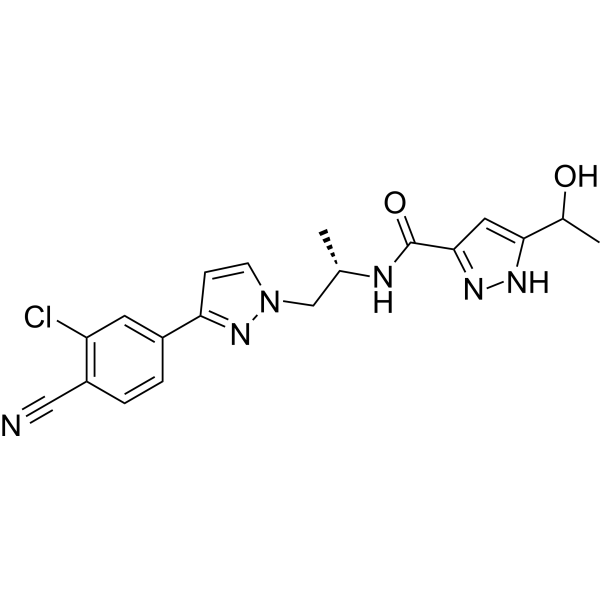
Darolutamide (ODM-201) is an orally active competitive androgen receptor (AR) antagonist. Darolutamide has a Ki of 11 nM for rat wild-type AR (wtAR) and IC50 of 26 nM for human wild-type AR (hAR)-mediated transcriptional activation . Darolutamide inhibits testosterone-induced AR nuclear translocation and transcriptional activation . Darolutamide exerts selective effects on AR-positive cells by inhibiting AR-dependent signaling pathways, and its active metabolite retains full antagonistic activity against AR mutants . Darolutamide can be used for the research of prostate cancer, including androgen receptor-dependent prostate cancer .
|
-
-
- HY-112083
-
BAY-3827
Maximum Cited Publications
15 Publications Verification
|
AMPK
|
Cancer
|
|
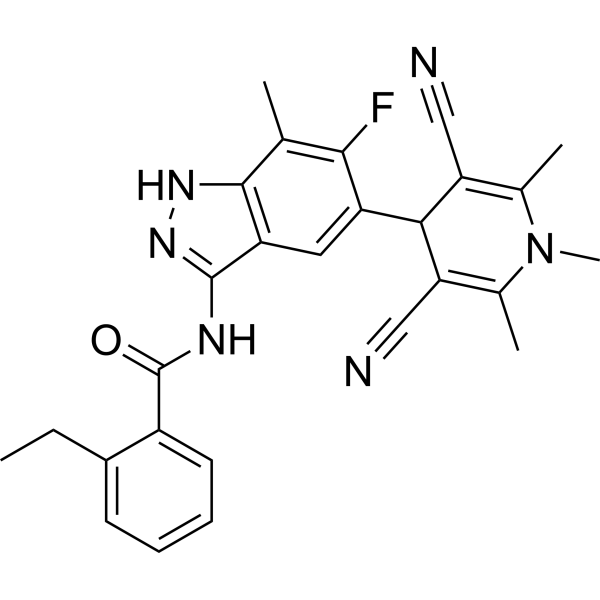
BAY-3827, a chemical probe, is a potent and selective AMPK inhibitor with IC50 values of 1.4 nM at low (10 μM ATP concentration) and 15 nM at high (2 mM ATP concentration). BAY-3827 shows over 500-fold selectivity for most of the 331 kinases. BAY-3827 prevents phosphorylation of acetyl-CoA carboxylase 1 and shows strongest anti-proliferative activity in androgen-dependent prostate cancer cell lines .
|
-
-
- HY-158113
-
|
|
Histone Acetyltransferase
PROTACs
|
Cancer
|
|
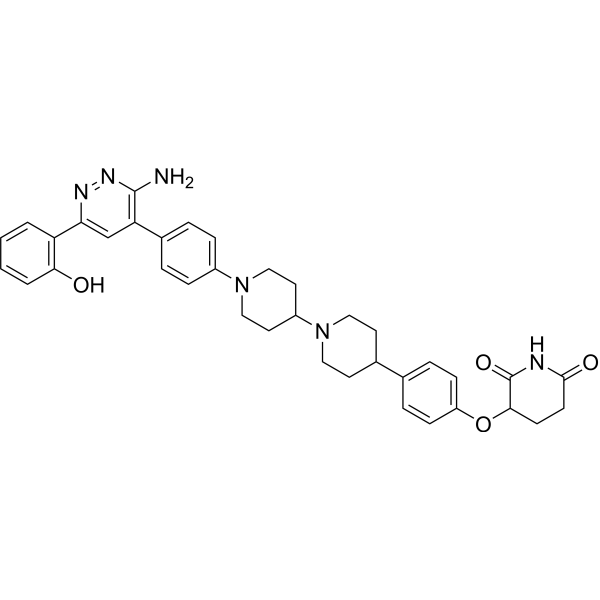
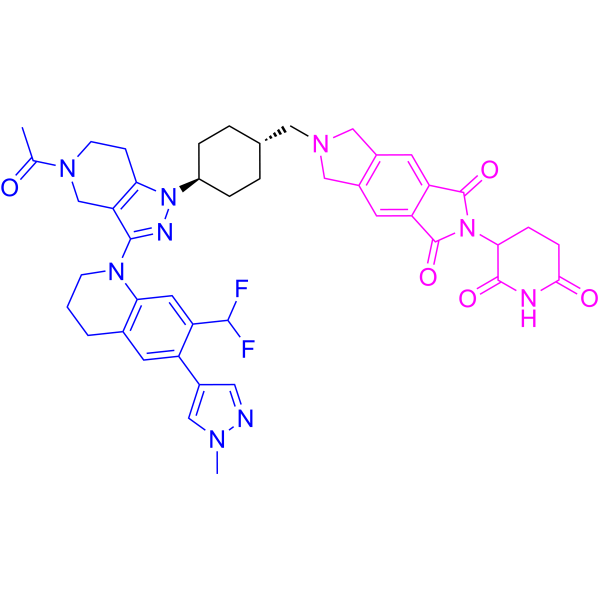
CBPD-409 is an orally active PROTAC degrader for CBP/p300, with DC50 of 0.2–0.4 nM. CBPD-409 exhibits antiproliferative effects in AR+ prostate cancer cell lines VCaP, LNCaP and 22Rv1, with IC50s of 1.2–2.0 nM. CBPD-409 exhibits antitumor efficacy (Red: CBP inhibitor GNE049 (HY-108435); Blue: CRBN/cullin 4A Thalidomide (HY-14658); Black: Linker) .
|
-
-
- HY-130845A
-
-
-
- HY-P99274
-
|
BI 836845; Anti-Human IGF1 and IGF2 Recombinant Antibody
|
IGF-1R
|
Cancer
|
|
Xentuzumab (Anti-Human IGF1 and IGF2 Recombinant Antibody; BI836845) is a recombinant a human monoclonal antibody that targets IGF ligands IGF1 and IGF2. Xentuzumab inhibits both of IGF1 and IGF2 growth-promoting signalling and suppresses AKT activation .
|
-
-
- HY-P99183
-
|
EMD 525797; DI17E6
|
Integrin
|
Cancer
|
|
Abituzumab (DI17E6) is a humanised anti-integrin αV monoclonal antibody (IgG2 type). Abituzumab effectively reduces the phosphorylation of FAK, Akt and ERK. Abituzumab can be used in cancer research, particularly in prostate cancer .
|
-
-
- HY-168555
-
|
|
PROTACs
CDK
Apoptosis
Akt
mTOR
|
Cancer
|
|
YJ1206 is an orally active selective CDK12/CDK13 PROTAC degrader. YJ1206 induces DNA damage and genomic instability, activates the AKT pathway, and triggers apoptosis. YJ1206 reduces tumor cell viability, inhibits tumor growth, and attenuates tumor cell dissemination. YJ1206 is applicable to research related to prostate cancer and high-grade serous tubo-ovarian cancer .
|
-
-
- HY-19337
-
|
BAY 1896953; ORM-15341
|
Androgen Receptor
|
Cancer
|
|
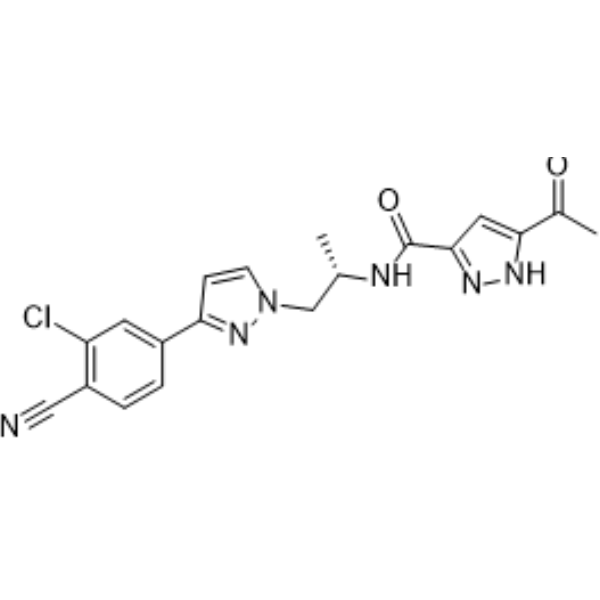
Ketodarolutamide (ORM-15341) is a potent, high-affinity nonsteroidal competitive full antagonist of androgen receptor (AR). Ketodarolutamide displays a Ki value of 8 nM for rat wild-type AR and an IC50 value of 38 nM in AR-HEK293 cells . Ketodarolutamide inhibits testosterone-induced nuclear translocation of the AR and antagonizes both overexpressed and mutant ARs . Ketodarolutamide specifically suppresses the proliferation of AR-dependent prostate cancer cells and exhibits antitumor activity in models of castration-resistant prostate cancer (CRPC) . Ketodarolutamide is suitable for the mechanistic and therapeutic research of prostate cancer .
|
-
-
- HY-156111
-
|
|
PROTACs
Androgen Receptor
|
Cancer
|
|
ARD-1676 is an orally available androgen receptor (AR) PROTAC degrader, consisting of AR ligand and cereblon ligand. ARD-1676 has AR-degrading activity in vitro and in vivo and inhibits VCaP tumor growth in mouse xenograft tumor models .
|
-
-
- HY-133045
-
|
|
Ligands for E3 Ligase
|
Cancer
|
|
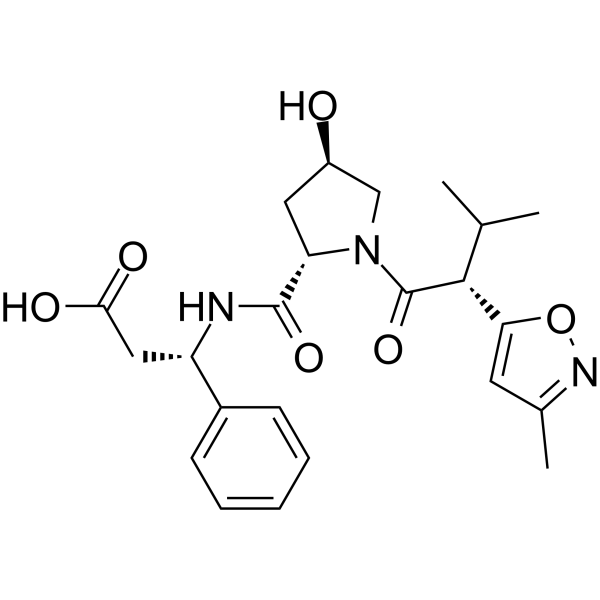
VHL Ligand 8 is a VHL ligand. VHL Ligand 8 can be used to synthesize ARD-266 (HY-133020), a highly potent and VHL E3 ligase-based androgen receptor (AR) PROTAC degrader. ARD-266 effectively induces degradation of AR protein in AR-positive LNCaP, VCaP, and 22Rv1 prostate cancer cell lines with DC50 values of 0.2-1 nM .
|
-
-
- HY-161369
-
|
|
PROTACs
Histone Acetyltransferase
|
Cancer
|
|
CBPD-268 is a potent and orally active CBP/p300 PROTAC degrader with an DC50 value of ≤ 0.03 nM. CBPD-268 induces CBP/p300 degradation and inhibits cell growth. CBPD-268 shows antitumor activity. CBPD-268 has the potential for the research of AR-positive prostate cancer (Structure Note: Red, Androgen receptor degrader (HY-W248665A); Blue, CBP/p300 ligand (HY-161483); Black, Linker) .
|
-
-
- HY-149433
-
|
|
PROTACs
Androgen Receptor
Apoptosis
|
Cancer
|
|
BWA-522 is an orally active PROTAC degrader targeting full-length androgen receptor (AR-FL) and androgen receptor splice variant 7 (AR-V7). BWA-522 antagonizes the N-terminal domain (AR-NTD) of the androgen receptor, suppresses AR downstream signaling proteins and induces cancer cells apoptosis. BWA-522 inhibits tumor growth in LNCaP xenograft mouse model. BWA-522 can be used for the research of prostate cancer .
|
-
-
- HY-149862
-
|
|
PROTACs
Androgen Receptor
|
Cancer
|
|
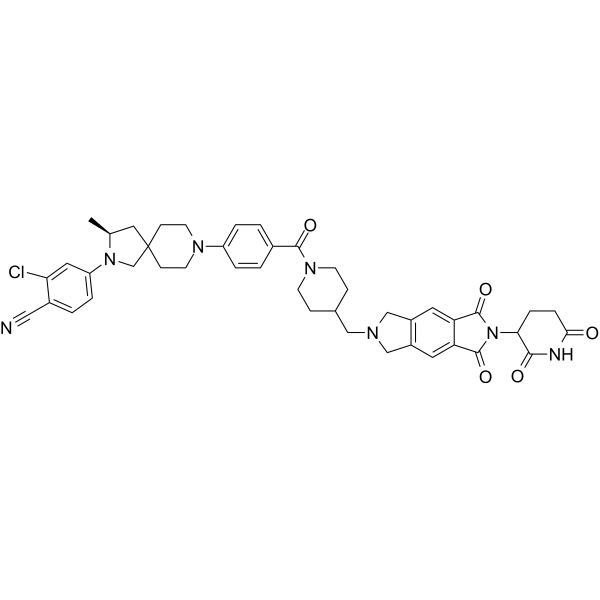
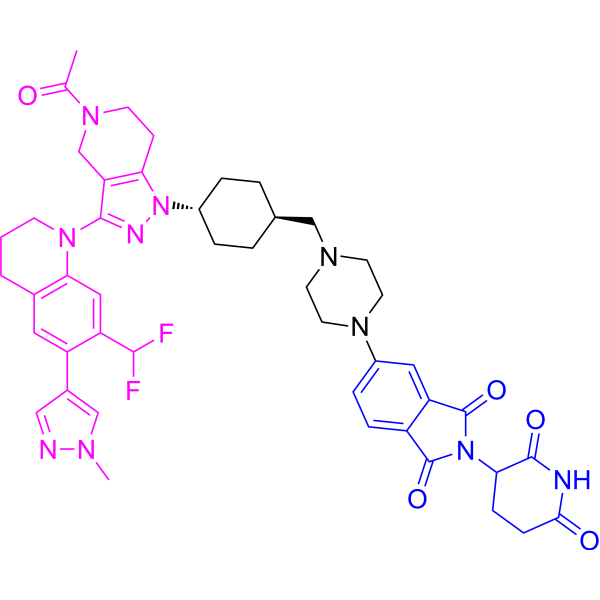
ARD-2051 is a selective and orally active androgen receptor (AR) proteolysis-targeting chimera degrader. ARD-2051 achieves DC50 values of 0.6 nM for AR protein degradation in both the LNCaP and VCaP prostate cancer cell lines. ARD-2051 exhibits effective anti-tumor activity in VCaP xenograft mice model. ARD-2051 can be used for the research of prostate cancer (Pink: AR ligand (HY-400666), Blue: CRBN Ligand (HY-14658), Black: Linker) .
|
-
-
- HY-133020
-
|
|
PROTACs
Androgen Receptor
|
Cancer
|
|
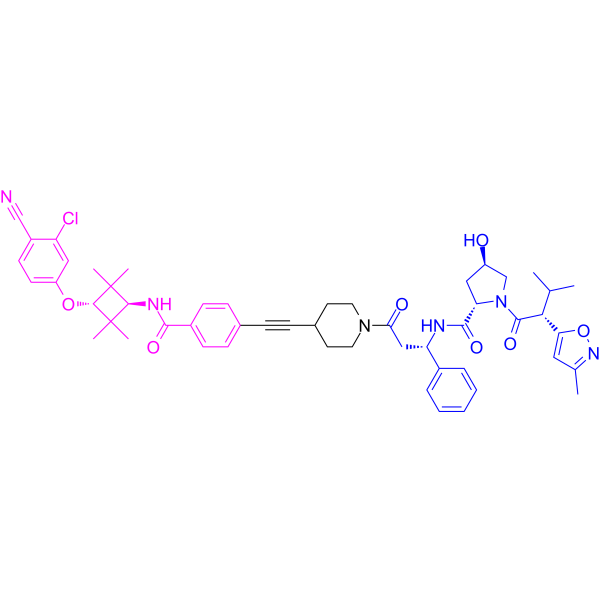
ARD-266 is a highly potent and von Hippel-Lindau E3 ligase-based Androgen Receptor (AR) PROTAC degrader. ARD-266 effectively induces degradation of AR protein in AR-positive LNCaP, VCaP, and 22Rv1 prostate cancer cell lines with DC50 values of 0.2-1 nM . ARD-266 is a click chemistry reagent, it contains an Alkyne group and can undergo copper-catalyzed azide-alkyne cycloaddition (CuAAc) with molecules containing Azide groups.
|
-
-
- HY-139893
-
|
|
RIO Kinase
|
Cancer
|
|
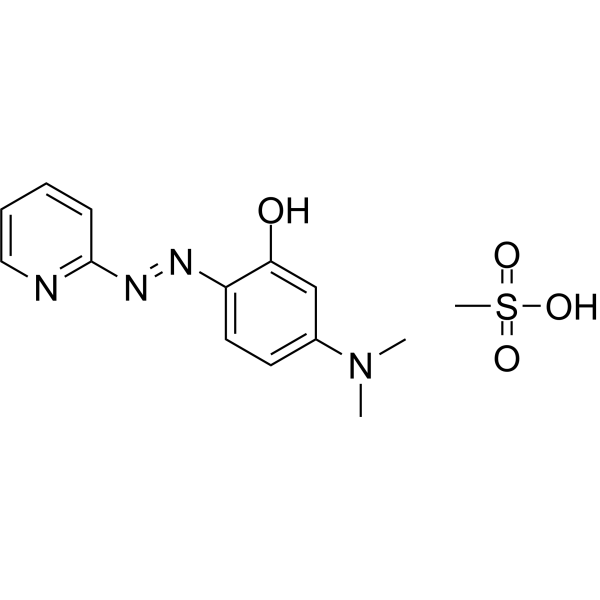
ERGi-USU-6 mesylate (Compound 7b) is an inhibitor of ERG and RIOK2 (IC50 values: 0.17 and 0.13 μM in VCaP cells, respectively). ERGi-USU-6 mesylate exhibits anticancer activity against ERG-positive prostate cancer .
|
-
-
- HY-16985S
-
|
ODM-201-d4; BAY-1841788-d4
|
Isotope-Labeled Compounds
Androgen Receptor
|
Cancer
|
|
Darolutamide-d4 (ODM-201-d4) is deuterium labeled Darolutamide (HY-16985). Darolutamide (ODM-201) is an orally active competitive androgen receptor (AR) antagonist, with a Ki of 11 nM for rat wild-type AR (wtAR) and an IC50 of 26 nM for human wild-type AR (hAR)-mediated transcriptional activation . Darolutamide inhibits testosterone-induced AR nuclear translocation and transcriptional activation . Darolutamide exerts selective effects on AR-positive cells by inhibiting AR-dependent signaling pathways, and its active metabolite retains full antagonistic activity against AR mutants . Darolutamide can be used for the research of prostate cancer, including androgen receptor-dependent prostate cancer .
|
-
-
- HY-168556
-
|
|
CDK
PROTACs
DNA/RNA Synthesis
|
Cancer
|
|
YJ9069 is a selective CDK12/CDK13 PROTAC degrader with an IC50 of 22.22 nM for in VCaP cells. CDK12/13 degradation rapidly triggers gene-length-dependent transcriptional elongation defects, leading to DNA damage and cell-cycle arrest. YJ9069 effectively inhibits proliferation in subsets of prostate cancer cells and significantly suppresses prostate tumor growth. (Pink: CDK12/CDK13 degradation agent (HY-168658); Black: Linker (HY-W015967); Blue: ligand for E3 ligase (HY-103596)) .
|
-
-
- HY-175455
-
|
|
PROTACs
Androgen Receptor
Akt
|
Cancer
|
|
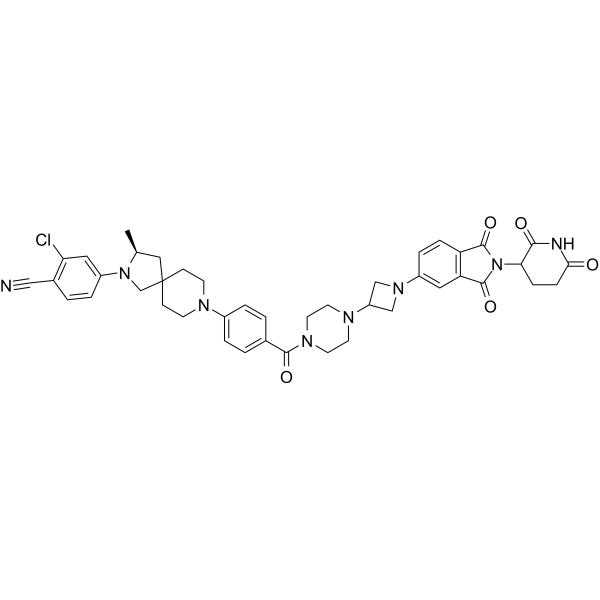
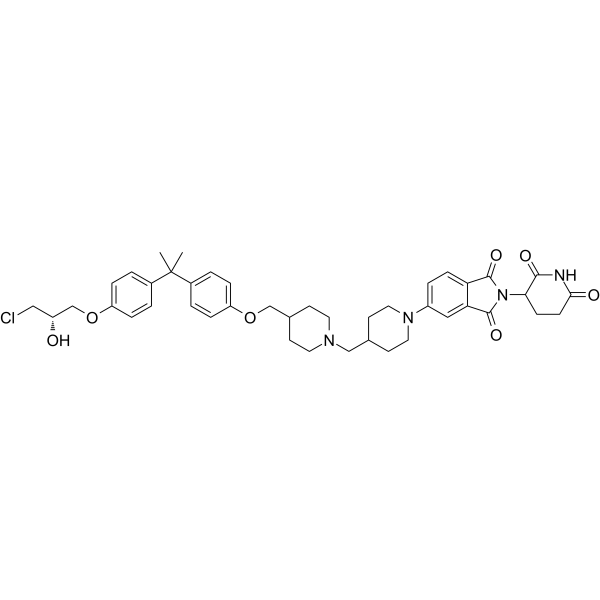
LYA914 is an orally active AR/AR-V7 PROTAC degrader. LYA914 targets the proteolytic degradation of the conserved DNA binding domain (DBD) of the androgen receptor (AR). LYA914 exhibits potent antiproliferative effects in Enzalutamide (HY-70002)-insensitive/resistant cells. LYA914 inhibits tumor growth in VCaP/LNCaP tumor mouse models. LYA914 can be used to study castration-resistant prostate cancer (CRPC). (Pink: AR-DBD ligand-1: HY-175456, Blue: Thalidomide: HY-14658, Pink + Black: AR-DBD ligand-Linker Conjugate 1: HY-175457, Black: Boc-piperidine-oxopiperidin: HY-175458) .
|
-
-
- HY-175592
-
|
|
3β-HSD
|
Cancer
|
|
HEAL-116 is a potent, specific and orally active 3β-hydroxysteroid dehydrogenase type 1 (3βHSD1) inhibitor with an IC50 of 1.18 μM and a KD of 1.32 μM. HEAL-116 inhibits DHEA (HY-14650) metabolism and DHEA-induced target gene expression and cell proliferation. HEAL-116 can be used for cancer research, such as prostate cancer .
|
-
-
- HY-16985R
-
|
ODM-201 (Standard); BAY-1841788 (Standard)
|
Reference Standards
Androgen Receptor
|
Cancer
|
|
Darolutamide (Standard) is the analytical standard of Darolutamide (HY-16985). This product is intended for research and analytical applications. Darolutamide (ODM-201) is an orally active competitive androgen receptor (AR) antagonist, with a Ki of 11 nM for rat wild-type AR (wtAR) and an IC50 of 26 nM for human wild-type AR (hAR)-mediated transcriptional activation . Darolutamide inhibits testosterone-induced AR nuclear translocation and transcriptional activation . Darolutamide exerts selective effects on AR-positive cells by inhibiting AR-dependent signaling pathways, and its active metabolite retains full antagonistic activity against AR mutants . Darolutamide can be used for the research of prostate cancer, including androgen receptor-dependent prostate cancer .
|
-
-
- HY-148777
-
|
|
PROTACs
Androgen Receptor
|
Cancer
|
|
A031 is a highly effective PROTAC androgen receptor (AR) degrader with an IC50 value less than 0.25 μM for AR protein degradation. A031 has an inhibitory effect on tumor growth in zebrafish with human prostate cancer (VCaP) .
|
-
-
- HY-130845
-
-
-
- HY-149434
-
|
|
Androgen Receptor
PROTACs
Apoptosis
|
Cancer
|
|
PROTAC AR-NTD antagonist 1 (compound 18) is a small molecule protein-targeting chimera (PROTACs) targeting the Androgen Receptor AR-V7. PROTAC AR-NTD antagonist 1 antagonizes the N-terminal domain of AR (AR-NTD), degrades AR-V7 protein, and induces apoptosis in prostate cancer (PC) cells. The efficiencies of PROTAC AR-NTD antagonist 1 in degrading AR-V7 in VCaP cells were 62.2% (1 μM) and 71.1% (5 μM), respectively .
|
-
-
- HY-177694
-
|
|
PROTACs
Androgen Receptor
|
Cancer
|
|
PROTAC AR Degrader-11 is a potent androgen receptor and androgen receptor splice variant-7 PROTAC degrader. PROTAC AR Degrader-11 shows potent cytotoxicity against both CWR22RV1 cells and VCaP cells. PROTAC AR Degrader-11 can be used in prostate cancer research . (Structure Note: Pink: Androgen Receptor ligand (HY-171809); Blue: CRBN ligand (HY-A0003); Black: linker (HY-169966))
|
-
-
- HY-168201
-
|
|
PROTACs
Histone Acetyltransferase
|
Cancer
|
|
MJP6412 is a potent degrader histone acetyltransferases p300/CBP, with DC50 of 1.6 and 1.2 nM for p300 and CBP, respectively. MJP6412 plays an important role in cancer research .
|
-
-
- HY-156751
-
|
(Rac)-RO7656594; PROTAC AR Degrader-6
|
PROTACs
Androgen Receptor
|
Cancer
|
|
(Rac)-GDC-2992 (Compound 1) is a PROTAC androgen receptor degrader (DC50: 10 nM in VCaP cell). (Rac)-GDC-2992 blocks the process of androgen receptor transduction and also degrades the receptor itself. (Rac)-GDC-2992 can be used for prostate cancer research. Pink: AR ligand (HY-130845); Blue: E3 ligase ligand (HY-W1003189); Black: linker (HY-169975) .
|
-
-
- HY-111145
-
|
|
Androgen Receptor
|
Cancer
|
|
RD162, a diarylthiohydantoin, is an orally active non-steroidal antiandrogen (NSAA). RD162 specifically binds to androgen receptor (AR). RD162 induces tumor regression in mouse models of castration-resistant human prostate cancer .
|
-
-
- HY-133044
-
|
|
PROTAC Linkers
|
Cancer
|
|
Boc-Pip-alkyne-Ph-COOH is a PROTAC linker, which refers to the alkyl/ether composition. Boc-Pip-alkyne-Ph-COOH can be used in the synthesis of a series of PROTACs, such as ARD-266 (HY-133020). ARD-266 effectively induces degradation of androgen receptor (AR) protein in AR-positive LNCaP, VCaP, and 22Rv1 prostate cancer cell lines with DC50 values of 0.2-1 nM . Boc-Pip-alkyne-Ph-COOH is a click chemistry reagent, it contains an Alkyne group and can undergo copper-catalyzed azide-alkyne cycloaddition (CuAAc) with molecules containing Azide groups.
|
-
-
- HY-163813
-
-
-
- HY-169278
-
|
|
Epigenetic Reader Domain
PROTACs
|
Cancer
|
|
PROTAC SMARCA2 degrader-26 (compound 45) is a potent SMARCA2 PROTAC degrader. PROTAC SMARCA2 degrader-26 induces SMARCA2 and SMARCA4 degradation in VCaP cells with the percent degradation of 94% and 57% for SMARCA2 and SMARCA4, respectively. PROTAC SMARCA2 degrader-26 shows antiproliferative activity .
|
-
-
- HY-169273
-
|
|
PROTACs
SWI/SNF Complex
|
Cancer
|
|
PROTAC SMARCA2 degrader-22 (Compound 5) is a PROTAC degrader for SMARCA2 with a degradation efficacy of 94% at 100 nM. PROTAC SMARCA2 degrader-22 inhibits the proliferation of cell A549 with an EC50 < 250 nM .
|
-
-
- HY-160263S
-
-
-
- HY-152512
-
|
|
Androgen Receptor
|
Cancer
|
|
RLA-4842 is an iron activator containing anti-androgen. RLA-4842 has anti-proliferative activity on metastatic castration-resistant prostate cancer (mCRPC) cell line .
|
-
-
- HY-152520
-
|
|
Androgen Receptor
|
Cancer
|
|
RLA-5331 is an iron activator containing anti-androgen. RLA-5331 has anti-proliferative activity on metastatic castration-resistant prostate cancer (mCRPC) cell line .
|
-
-
- HY-173640
-
|
|
Androgen Receptor
Phosphodiesterase (PDE)
|
Cancer
|
|
ID11916 is an orally active androgen receptor (AR) antagonist and a phosphodiesterase 5 (PDE5) inhibitor. ID11916 blocks androgen binding to AR, nuclear translocation, and androgen-dependent transcriptional activity of AR, while increasing intracellular cGMP levels and activating PKG via inhibition. ID11916 shows potent anti-cancer effect in prostate cancer cell lines VCaP and 22Rv1 and in AR-positive breast cancer cell lines SK-BR-3 .
|
-
-
- HY-181727
-
|
|
Androgen Receptor
HSP
CDK
|
Cancer
|
|
AR/AR-V7 degrader-1 is an orally active AR and AR-V7 degrader. AR/AR-V7 degrader-1 disrupts the interaction between AR/AR-V7 and HSP90, leading to their ubiquitination and degradation in castration-resistant prostate cancer cells. AR/AR-V7 degrader-1 regulates the expression of cell cycle-related proteins in prostate cancer cells (downregulates CDK4, CDK6, Cyclin D1, Cyclin E1; upregulates P21) and induces G0/G1 phase arrest. AR/AR-V7 degrader-1 inhibits the proliferation and migration of prostate cancer cells. AR/AR-V7 degrader-1 suppresses the growth of castration-resistant prostate cancer tumors in nude mice and induces the degradation of AR and AR-V7 in tumor tissues. AR/AR-V7 degrader-1 is applicable to the research of castration-resistant prostate cancer .
|
-
-
- HY-19337S1
-
|
BAY 1896953-d6; ORM-15341-d6
|
Isotope-Labeled Compounds
Androgen Receptor
|
Cancer
|
|
Ketodarolutamide-d6 (BAY 1896953-d6) is the deuterium labeled Ketodarolutamide (HY-19337). Ketodarolutamide (ORM-15341) is a potent, high-affinity nonsteroidal competitive full antagonist of androgen receptor (AR). Ketodarolutamide displays a Ki value of 8 nM for rat wild-type AR and an IC50 value of 38 nM in AR-HEK293 cells . Ketodarolutamide inhibits testosterone-induced nuclear translocation of the AR and antagonizes both overexpressed and mutant ARs . Ketodarolutamide specifically suppresses the proliferation of AR-dependent prostate cancer cells and exhibits antitumor activity in models of castration-resistant prostate cancer (CRPC) . Ketodarolutamide is suitable for the mechanistic and therapeutic research of prostate cancer .
|
-
-
- HY-19337S
-
|
BAY 1896953-d3; ORM-15341-d3
|
Isotope-Labeled Compounds
Androgen Receptor
|
Cancer
|
|
Ketodarolutamide-d3 (BAY 1896953-d3) is the deuterium labeled Ketodarolutamide (HY-19337). Ketodarolutamide (ORM-15341) is a potent, high-affinity nonsteroidal competitive full antagonist of androgen receptor (AR). Ketodarolutamide displays a Ki value of 8 nM for rat wild-type AR and an IC50 value of 38 nM in AR-HEK293 cells . Ketodarolutamide inhibits testosterone-induced nuclear translocation of the AR and antagonizes both overexpressed and mutant ARs . Ketodarolutamide specifically suppresses the proliferation of AR-dependent prostate cancer cells and exhibits antitumor activity in models of castration-resistant prostate cancer (CRPC) . Ketodarolutamide is suitable for the mechanistic and therapeutic research of prostate cancer .
|
-
| Cat. No. |
Product Name |
Target |
Research Area |
Image |
-
- HY-P99274
-
|
BI 836845; Anti-Human IGF1 and IGF2 Recombinant Antibody
|
IGF-1R
|
Cancer
|
|
Xentuzumab (Anti-Human IGF1 and IGF2 Recombinant Antibody; BI836845) is a recombinant a human monoclonal antibody that targets IGF ligands IGF1 and IGF2. Xentuzumab inhibits both of IGF1 and IGF2 growth-promoting signalling and suppresses AKT activation .
|
-
(5)
-
- HY-P99183
-
|
EMD 525797; DI17E6
|
Integrin
|
Cancer
|
|
Abituzumab (DI17E6) is a humanised anti-integrin αV monoclonal antibody (IgG2 type). Abituzumab effectively reduces the phosphorylation of FAK, Akt and ERK. Abituzumab can be used in cancer research, particularly in prostate cancer .
|
-
(5)
| Cat. No. |
Product Name |
Chemical Structure |
-
- HY-16985S
-
|
|
|
Darolutamide-d4 (ODM-201-d4) is deuterium labeled Darolutamide (HY-16985). Darolutamide (ODM-201) is an orally active competitive androgen receptor (AR) antagonist, with a Ki of 11 nM for rat wild-type AR (wtAR) and an IC50 of 26 nM for human wild-type AR (hAR)-mediated transcriptional activation . Darolutamide inhibits testosterone-induced AR nuclear translocation and transcriptional activation . Darolutamide exerts selective effects on AR-positive cells by inhibiting AR-dependent signaling pathways, and its active metabolite retains full antagonistic activity against AR mutants . Darolutamide can be used for the research of prostate cancer, including androgen receptor-dependent prostate cancer .
|
-
-
- HY-160263S
-
|
|
|
BET-IN-22 (compound 231) has anti-tumor effect .
|
-
-
- HY-19337S1
-
|
|
|
Ketodarolutamide-d6 (BAY 1896953-d6) is the deuterium labeled Ketodarolutamide (HY-19337). Ketodarolutamide (ORM-15341) is a potent, high-affinity nonsteroidal competitive full antagonist of androgen receptor (AR). Ketodarolutamide displays a Ki value of 8 nM for rat wild-type AR and an IC50 value of 38 nM in AR-HEK293 cells . Ketodarolutamide inhibits testosterone-induced nuclear translocation of the AR and antagonizes both overexpressed and mutant ARs . Ketodarolutamide specifically suppresses the proliferation of AR-dependent prostate cancer cells and exhibits antitumor activity in models of castration-resistant prostate cancer (CRPC) . Ketodarolutamide is suitable for the mechanistic and therapeutic research of prostate cancer .
|
-
-
- HY-19337S
-
|
|
|
Ketodarolutamide-d3 (BAY 1896953-d3) is the deuterium labeled Ketodarolutamide (HY-19337). Ketodarolutamide (ORM-15341) is a potent, high-affinity nonsteroidal competitive full antagonist of androgen receptor (AR). Ketodarolutamide displays a Ki value of 8 nM for rat wild-type AR and an IC50 value of 38 nM in AR-HEK293 cells . Ketodarolutamide inhibits testosterone-induced nuclear translocation of the AR and antagonizes both overexpressed and mutant ARs . Ketodarolutamide specifically suppresses the proliferation of AR-dependent prostate cancer cells and exhibits antitumor activity in models of castration-resistant prostate cancer (CRPC) . Ketodarolutamide is suitable for the mechanistic and therapeutic research of prostate cancer .
|
-
| Cat. No. |
Product Name |
|
Classification |
-
- HY-133020
-
|
|
|
PROTAC Synthesis
|
|
ARD-266 is a highly potent and von Hippel-Lindau E3 ligase-based Androgen Receptor (AR) PROTAC degrader. ARD-266 effectively induces degradation of AR protein in AR-positive LNCaP, VCaP, and 22Rv1 prostate cancer cell lines with DC50 values of 0.2-1 nM . ARD-266 is a click chemistry reagent, it contains an Alkyne group and can undergo copper-catalyzed azide-alkyne cycloaddition (CuAAc) with molecules containing Azide groups.
|
Your information is safe with us. * Required Fields.
Inquiry Information
- Product Name:
- Cat. No.:
- Quantity:
- MCE Japan Authorized Agent:

