
66 Results for "

Virulence factor

" in MedChemExpress (MCE) Product Catalog:
Products (66)

66 Results for "Virulence factor" in MCE Product Catalog:

15
15 Publications Verification
Cat. No.: HY-B1455
CAS No.: 18323-44-9
Research Areas:  

Infection Cancer

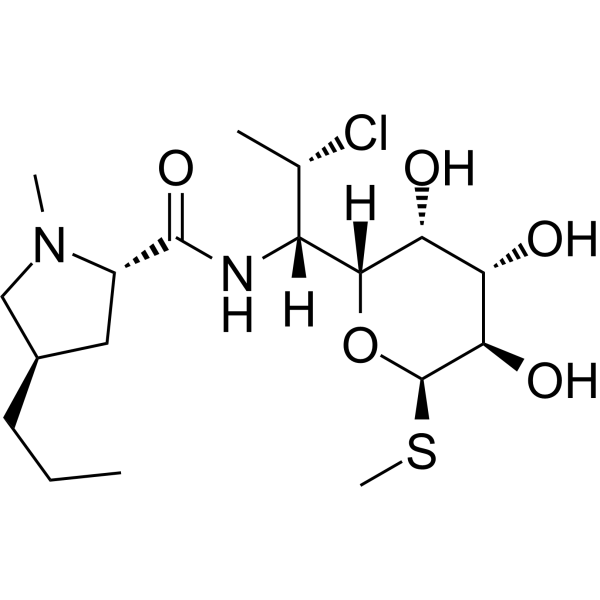
Clindamycin is an orally active and broad-spectrum bacteriostatic lincosamide antibiotic. Clindamycin can inhibit bacterial protein synthesis, possessing the ability to suppress the expression of virulence factors in Staphylococcus aureus at sub-inhibitory concentrations (sub-MICs). Clindamycin resistance results from enzymatic methylation of the antibiotic binding site in the 50S ribosomal subunit (23S rRNA). Clindamycin decreases the production of Panton-Valentine leucocidin (PVL), toxic-shock-staphylococcal toxin (TSST-1) or alpha-haemolysin (Hla). Clindamycin also can be used for researching malaria .
loading...
    loading...
3
3 Cited Publications
Cat. No.: HY-D1056D
Synonyms: LPS, from Porphyromonas gingivalis
Lipopolysaccharides, from P. gingivalis (LPS, from Porphyromonas gingivalis) are endotoxins and TLR4 activators extracted from Porphyromonas gingivalis (P. gingivalis) and are classified as S (smooth) type LPS. Lipopolysaccharides, from P. gingivalis possess the typical three-part structure: O-antigen, core oligosaccharide, and lipid A. Lipopolysaccharides, from P. gingivalis activate TLR-4 in immune cells and are important virulence factors in the mechanism of periodontal disease. Lipopolysaccharides, from P. gingivalis can be used in research related to periodontitis .
It is recommended to prepare a solution with concentration ≥2 mg/mL. Vortex thoroughly for more than 10 minutes. Due to the adsorption characteristics of LPS, silanized container or low adsorption centrifuge tubes should be used for aliquoting and storage, and mix thoroughly before use.
loading...
    loading...
1
1 Cited Publications
Cat. No.: HY-P2988
CAS No.: 9001-67-6
Synonyms: Exo-α-sialidase
Target:  

Sialyltransferase

Research Areas:  

Infection

Neuraminidase, Microorganism (Exo-α-sialidase) is an exosialidase, is often used in biochemical studies. Neuraminidase cleaves α-ketosidic linkage between the sialic (N-acetylneuraminic) acid and an adjacent sugar residue. Neuraminidase, derived from mucosal pathogens, is a virulence factor that modifies the host's response to infection .
loading...
    loading...
1
1 Cited Publications
Cat. No.: HY-W007390
CAS No.: 52727-57-8
Research Areas:  

Infection

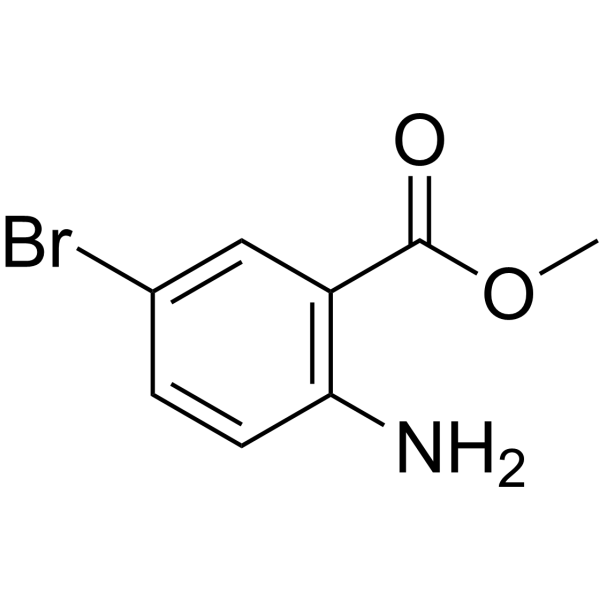
Methyl 2-amino-5-bromobenzoate (Compound 8/12) is a biochemical reagent. Methyl 2-amino-5-bromobenzoate can be used to synthesize 2-benzamidobenzoic acid, a known FabH inhibitor. Derivatives of methyl 2-amino-5-bromobenzoate also inhibit PqsD, the pqs quorum sensing (QS) system, of Pseudomonas aeruginosa .
loading...
    loading...
Cat. No.: HY-W008806
CAS No.: 143537-62-6
Synonyms: OHHL; N-(3-Oxohexanoyl)homoserine lactone
Target:  

Bacterial

Research Areas:  

Infection Inflammation/Immunology

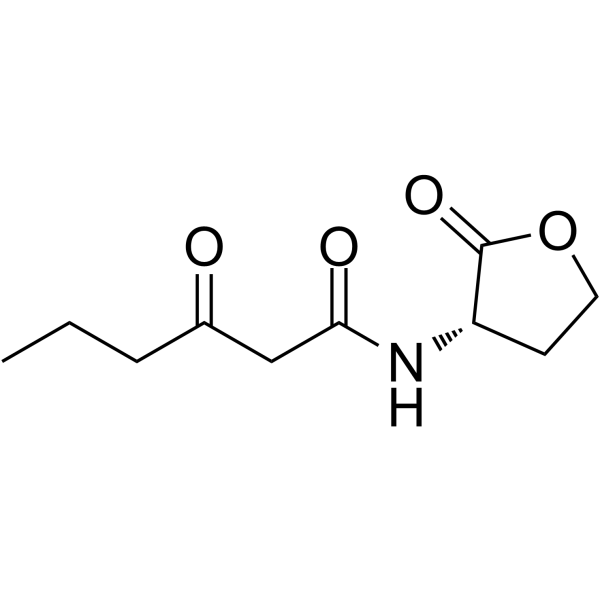
N-(3-Oxohexanoyl)-L-homoserine lactone (OHHL; N-(3-Oxohexanoyl)homoserine lactone) is a specific agonist of LuxR-type transcription factor CarR with a Kd of 1.8 μM. N-(3-Oxohexanoyl)-L-homoserine lactone activates CarR by inducing protein multimerization, promoting its binding to target DNA sequences in the carR-carA intergenic region, thereby upregulating the transcription of carbapenem biosynthesis genes. N-(3-Oxohexanoyl)-L-homoserine lactone acts as a quorum sensing signal molecule, enabling bacteria to coordinate the production of carbapenem antibiotics in a cell density-dependent manner. N-(3-Oxohexanoyl)-L-homoserine lactone is used to study bacterial quorum sensing mechanisms, especially the secondary metabolism and virulence factor regulatory pathways of Erwinia carotovora and Yersinia enterocolitica .
loading...
    loading...
Cat. No.: HY-P99583
CAS No.: 1629620-18-3
Synonyms: MEDI4893

Target:  

Bacterial

Research Areas:  

Infection Inflammation/Immunology

Suvratoxumab (MEDI4893) is a long-acting, high-affinity human anti-α-toxin monoclonal antibody (IgG1κ type). Suvratoxumab potently neutralizes α-toxin, a key S. aureus virulence factor. Suvratoxumab improves survival and reduces lung injury in an immunocompromised mice model of pneumonia. Suvratoxumab also enhances the antibacterial activity of Vancomycin (HY-B0671) or Linezolid (HY-10394) .
loading...
    loading...
Cat. No.: HY-P2866
CAS No.: 9012-33-3
β-N-Acetylhexosaminidase, Streptococcus pneumoniae is a cell surface virulence factor of Streptococcus pneumoniae, which contains two synergistically acting GH20 domains (with higher activity in GH20-2). β-N-Acetylhexosaminidase, Streptococcus pneumoniae specifically recognizes and hydrolyzes substrates with β(1,2) glycosidic bonds via Trp-443 and Tyr-482 residues. β-N-Acetylhexosaminidase, Streptococcus pneumoniae catalyzes the hydrolysis of β(1,2)-linked N-acetylglucosamine groups and related disaccharides, and promotes persistent colonization of bacteria in the airway by modifying host defense molecules and releasing monosaccharides for bacterial growth. β-N-Acetylhexosaminidase, Streptococcus pneumoniae can be used in studies related to Streptococcus pneumoniae infection, acute pneumonia, otitis media and meningitis .
loading...
    loading...
Cat. No.: HY-W012572
CAS No.: 351-50-8
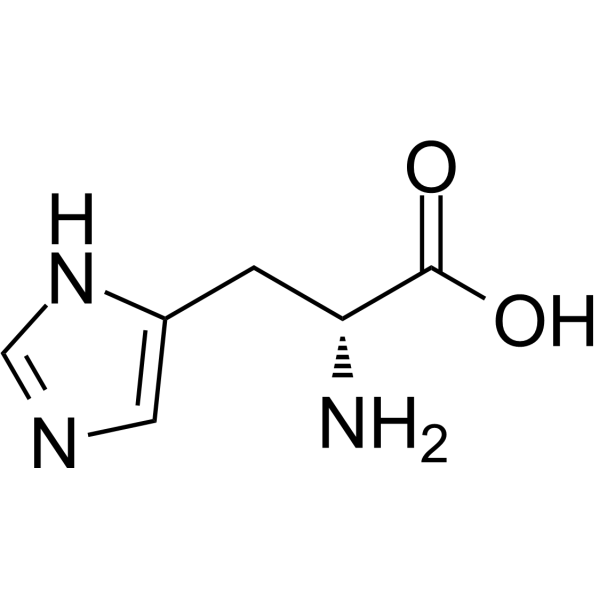
D-Histidine is an anti-biofilm agent that targets bacterial quorum sensing systems (such as RhlI/RhlR pathway) and has antibacterial activity. D-Histidine works by non-covalently binding to bacterial regulatory factors or copper ion complexes, selectively inhibiting bacterial biofilm formation and motility. D-Histidine downregulates quorum sensing-related gene expression, reduces the synthesis of virulence factors (such as alginate and proteases), and interferes with bacterial membrane stability, inhibiting biofilm formation, promoting the disintegration of mature biofilms, and enhancing antibiotic sensitivity. D-Histidine is also an efficient catalyst for the salt-induced peptide formation (SIPF) reaction, which promotes the condensation of amino acids to form dipeptides (such as dialanine and dilysine) by forming a complex with copper ions (Cu 2+) .
loading...
    loading...
Cat. No.: HY-P5481
CAS No.: 1807943-24-3
Target:  

Peptides

Research Areas:  

Others

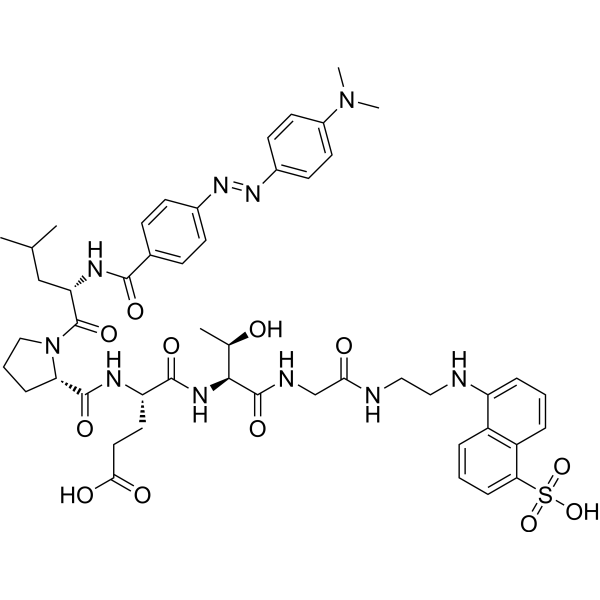
DABCYL-LPETG-EDANS is a biological active peptide. (This 5-amino acid peptide is a sortase substrate, C-terminal sorting signal. Sortase cleaves surface proteins at the LPXTG motif and catalyzes the formation of an amide bond between the carboxyl group of threonine and the amino group of cell-wall crossbridges. Sortases are a family of Gram-positive transpeptidases responsible for anchoring surface protein virulence factors to the peptidoglycan cell wall layer. Cleavage of this FRET substrate by sortase reveals the fluorescent signal, Abs/Em = 340/490 nm.)
loading...
    loading...
Cat. No.: HY-W017187
CAS No.: 3602-55-9
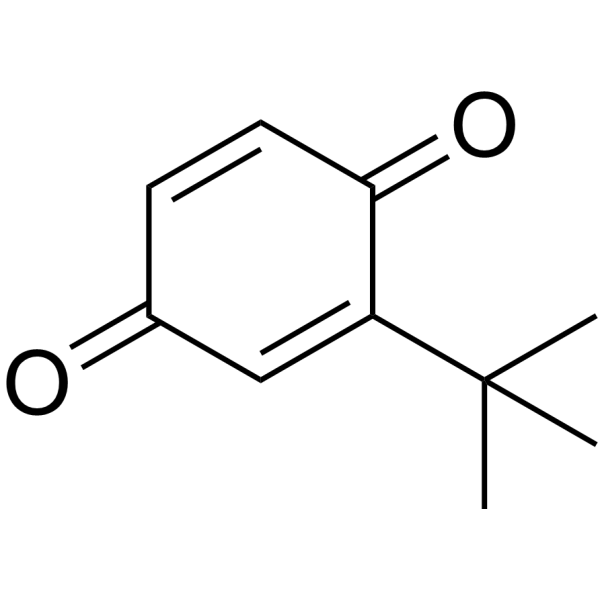
2-tert-Butyl-1,4-benzoquinone is a food additive oxidant, an electrophilic metabolite of Butylated hydroxyanisole (HY-B1066), and an antibacterial agent. 2-tert-Butyl-1,4-benzoquinone reduces virulence factors, activates Nrf2, and induces S-arylation of its negative regulator Keap1. 2-tert-Butyl-1,4-benzoquinone induces HO-1. 2-tert-Butyl-1,4-benzoquinone exhibits quorum sensing inhibitory activity against Chromobacterium violaceum .
loading...
    loading...
Cat. No.: HY-163542
CAS No.: 330842-49-4
Target:  

Bacterial

Research Areas:  

Inflammation/Immunology

Pneumolysin-IN-1 (compound PB-3) is a targeted small molecule inhibitor of Pneumolysin (PLY) (IC50=3.1 µM). Pneumolysin-IN-1 is a pore blocking agent and an anti-virulence factor. Pneumolysin-IN-1 can be used to study the infection caused by Streptococcus pneumoniae .
loading...
    loading...
Cat. No.: HY-134215
CAS No.: 677354-23-3
Target:  

Bacterial Fungal

Research Areas:  

Infection

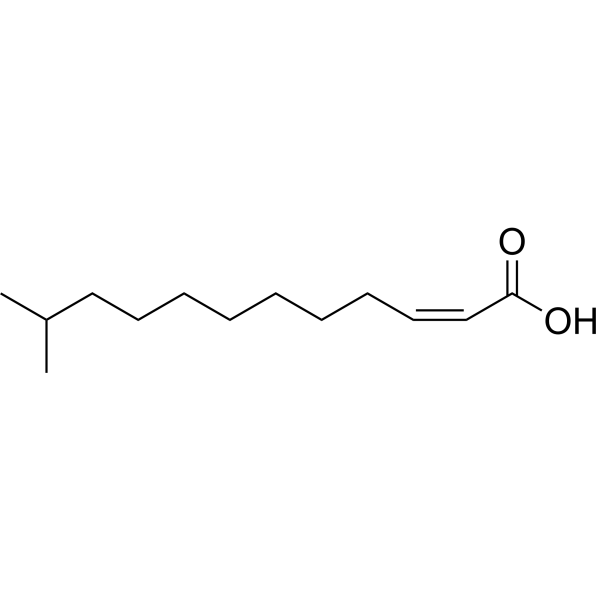
cis-11-Methyl-2-dodecenoic acid is a quorum sensing (QS) signal that acts as a diffusion signaling factor (DSF) in extracellular microbial and fungal communication systems. DSF is involved in the regulation of virulence and biofilm formation of a variety of bacterial pathogens .
loading...
    loading...
Cat. No.: HY-114818
CAS No.: 62034-73-5
Purity:  99.49%
Target:  

Bacterial

Research Areas:  

Infection

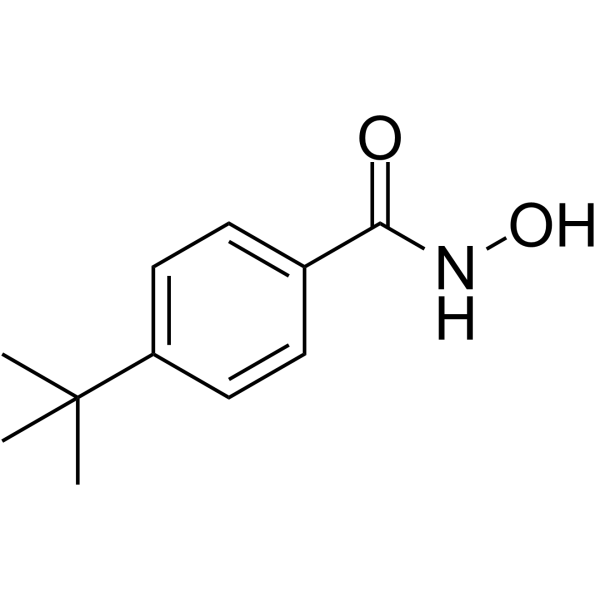
4-(tert-Butyl)-benzhydroxamic Acid is a PqsR antagonist with IC50s of 12.5 μM and 23.6 μM for E. coli and P. aeruginosa, respectively. 4-(tert-Butyl)-benzhydroxamic Acid reduces the production of the virulence factor pyocyanin in P. aeruginosa with an IC50 of 87.2 μM .
loading...
    loading...
Cat. No.: HY-N7118
CAS No.: 58207-19-5
Target:  

Bacterial Antibiotic

Research Areas:  

Infection Cancer

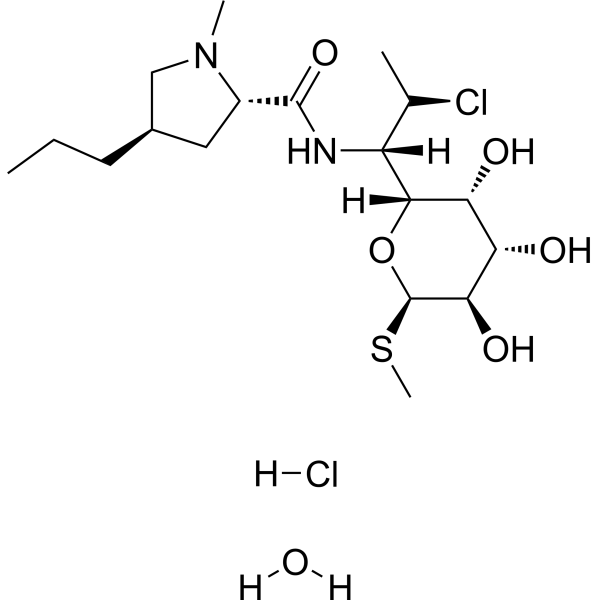
Clindamycin hydrochloride monohydrate is an oral protein synthesis inhibitory agent that has the ability to suppress the expression of virulence factors in Staphylococcus aureus at sub-inhibitory concentrations (sub-MICs). Clindamycin hydrochloride monohydrate resistance results from enzymatic methylation of the antibiotic binding site in the 50S ribosomal subunit (23S rRNA). Clindamycin hydrochloride monohydrate decreases the production of Panton-Valentine leucocidin (PVL), toxic-shock-staphylococcal toxin (TSST-1) or alpha-haemolysin (Hla) .
loading...
    loading...
Cat. No.: HY-108988
CAS No.: 1622253-00-2
Albicidin is a peptide antibiotic with phytotoxic activity. Albicidin potently inhibits bacterial and plant DNA gyrase at nanomolar concentrations, blocks DNA replication, and exhibits excellent antibacterial efficacy against multidrug-resistant bacteria. Albicidin possesses bactericidal activity against Gram-positive and Gram-negative microorganisms, and acts as a virulence factor for the systemic plant infection by Xanthomonas albilineans. Albicidin can be used in studies related to bacterial infections and sugarcane leaf blight .
loading...
    loading...
Cat. No.: HY-B1455S1
CAS No.: 2140264-63-5
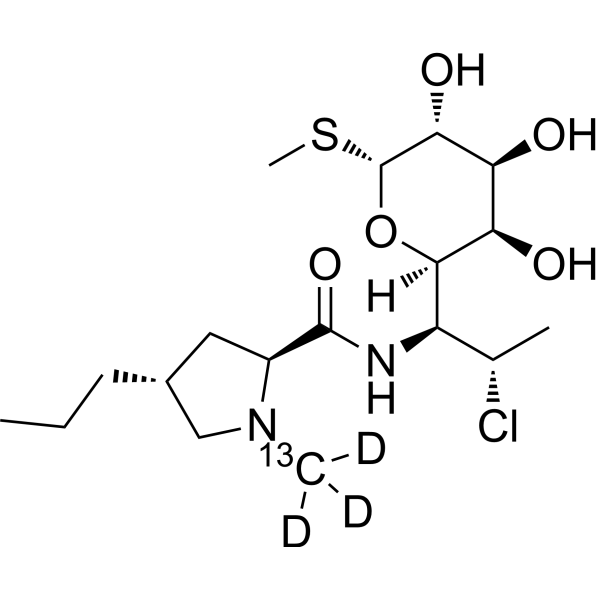
Clindamycin- 13C,d3 is the 13C- and deuterium labeled Clindamycin. Clindamycin is an orally active and broad-spectrum bacteriostatic lincosamide antibiotic. Clindamycin can inhibit bacterial protein synthesis, possessing the ability to suppress the expression of virulence factors in Staphylococcus aureus at sub-inhibitory concentrations (sub-MICs). Clindamycin resistance results from enzymatic methylation of the antibiotic binding site in the 50S ribosomal subunit (23S rRNA). Clindamycin decreases the production of Panton-Valentine leucocidin (PVL), toxic-shock-staphylococcal toxin (TSST-1) or alpha-haemolysin (Hla). Clindamycin also can be used for researching malaria .
loading...
    loading...
Cat. No.: HY-N11102
CAS No.: 2147-59-3
Synonyms: dTDP-L-Rhamnose
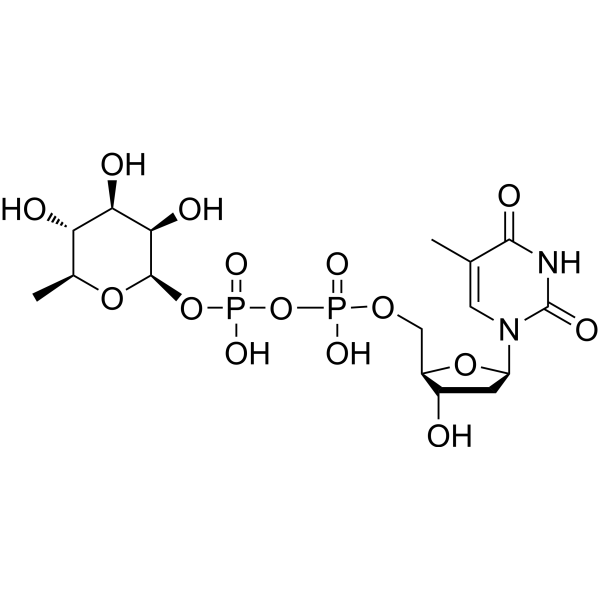
Thymidine-5'-diphosphate-L-rhamnose (dTDP-L-Rhamnose) is a key activated nucleotide sugar in bacteria, with a KD value of 13 μM for Listeria monocytogenes RmlT. Thymidine-5'-diphosphate-L-rhamnose acts as a high-energy donor for L-Rhamnose (HY-N1420), and is specifically used for the synthesis of bacterial cell wall polysaccharides, capsules and virulence factors .
loading...
    loading...
Cat. No.: HY-144694
CAS No.: 2700035-54-5
Target:  

HSP HDAC Fungal

Research Areas:  

Infection

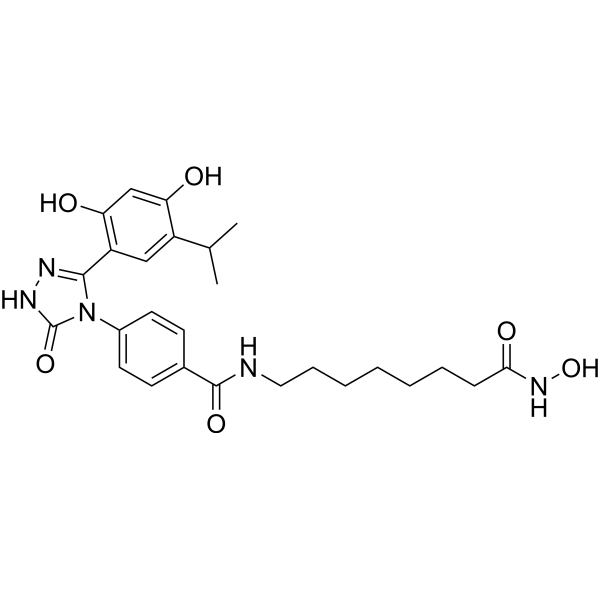
HDAC/HSP90-IN-3 (compound J5) is a potent and selective fungal Hsp90 and HDAC dual inhibitor, with IC50 values of 0.83 and 0.91 μM, respectively. HDAC/HSP90-IN-3 shows antifungal activity against azole resistant C. albicans. HDAC/HSP90-IN-3 can suppress important virulence factors and down-regulate drug-resistant genes ERG11 and CDR1 .
loading...
    loading...
Cat. No.: HY-W012572A
CAS No.: 328526-86-9
D-Histidine hydrochloride hydrate is an anti-biofilm agent that targets bacterial quorum sensing systems (such as RhlI/RhlR pathway) and has antibacterial activity. D-Histidine hydrochloride hydrate works by non-covalently binding to bacterial regulatory factors or copper ion complexes, selectively inhibiting bacterial biofilm formation and motility. D-Histidine hydrochloride hydrate downregulates quorum sensing-related gene expression, reduces the synthesis of virulence factors (such as alginate and proteases), and interferes with bacterial membrane stability, inhibiting biofilm formation, promoting the disintegration of mature biofilms, and enhancing antibiotic sensitivity. D-Histidine hydrochloride hydrate is also an efficient catalyst for the salt-induced peptide formation (SIPF) reaction, which promotes the condensation of amino acids to form dipeptides (such as dialanine and dilysine) by forming a complex with copper ions (Cu 2+) .
loading...
    loading...
Cat. No.: HY-W127393
CAS No.: 177158-21-3
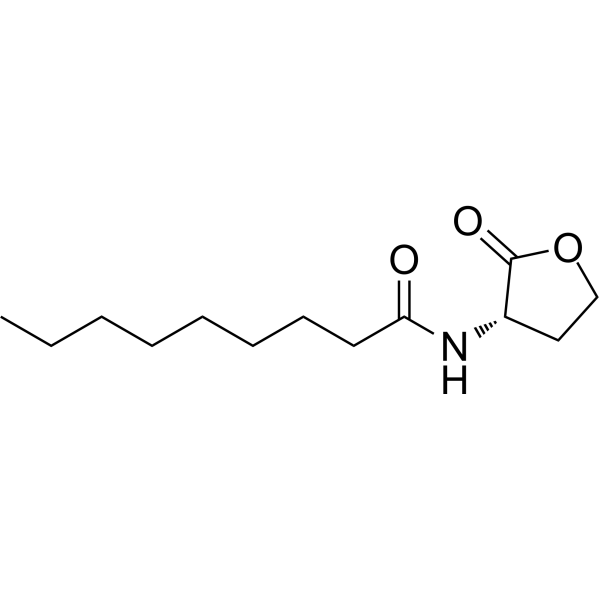
Quorum sensing is a regulatory system used by bacteria to control gene expression in response to increased cell density. This regulatory process manifests itself in a variety of phenotypes, including biofilm formation and virulence factor production. Coordinated gene expression is achieved through the production, release and detection of small diffusible signaling molecules called autoinducers. N-acylated homoserine lactones (AHLs) comprise a class of such autoinducers, each of which generally consists of a fatty acid coupled to a homoserine lactone (HSL). Modulation of bacterial quorum-sensing signaling systems to suppress pathogenesis represents a new approach to antimicrobial research for infectious diseases. AHLs differ in acyl length (C4-C18), C3 substitution (hydrogen, hydroxyl, or oxo group), and the presence or absence of one or more carbon-carbon double bonds in the fatty acid chain. These differences confer signaling specificity through the affinity of the LuxR family of transcriptional regulators. C9-HSL is a rare odd-numbered acyl carbon chain produced by wild-type Erwinia carotovora strain SCC 3193 grown in nutrient-rich Luria-Bertani broth (LB) medium.
loading...
    loading...

