1. Search Result
Search Result
Results for "

basic pH

" in MedChemExpress (MCE) Product Catalog:

11

Inhibitors & Agonists

5

Fluorescent Dyes

4

Biochemical Assay Reagents

Targets Recommended:
Cat. No. Product Name Target Research Areas Chemical Structure
  • HY-D0227F

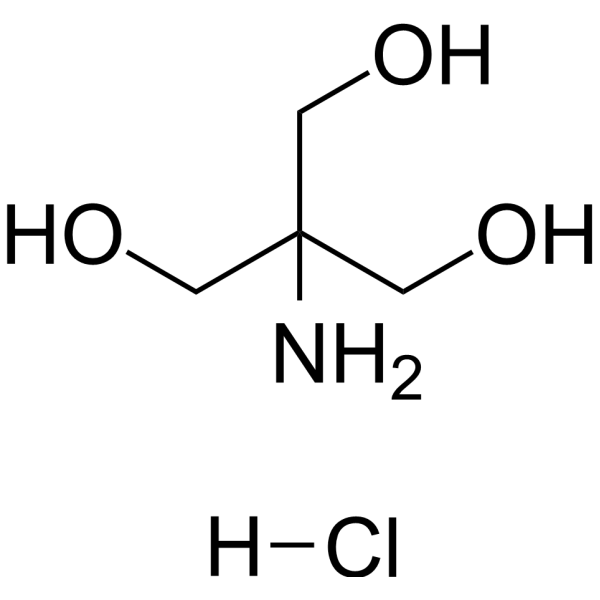
    Tris HCl (≥99%, reagent grade); Tris hydrochloride (≥99%, reagent grade)

    Biochemical Assay Reagents Others
    THAM hydrochloride (≥99%, reagent grade), also known as Tris-HCl, is a buffer commonly used in various biochemical and molecular biology applications to maintain a stable pH environment. Tris-HCl has unique chemical properties that allow it to resist changes in pH when acidic or basic substances are added, which makes it useful for stabilizing biological samples or reagents. It is commonly used in electrophoresis and protein purification procedures.
    THAM hydrochloride (≥99%, reagent grade)
  • HY-D1094
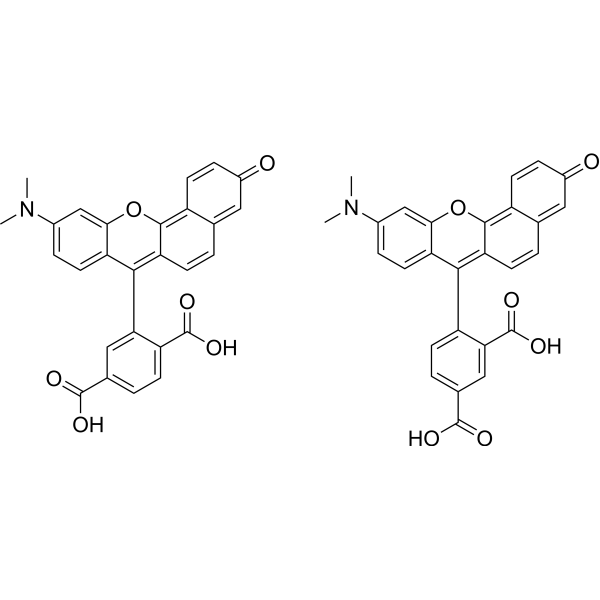
    Carboxy-SNARF 1 (5/6-mixture)
    1 Publications Verification

    SNARF 1

    Fluorescent Dye Others
    Carboxy-SNARF 1 (5/6-mixture) (SNARF 1) is a fluorescent probe that is sensitive to pH (Ex: 488 nm). Carboxy-SNARF 1 (5/6-mixture) can be used for measurement pH. Carboxy-SNARF 1 (5/6-mixture) exhibits a significant emission shift from yellow-orange (Em: 580 nm) to deep red fluorescence (Em: 640 nm) under acidic and basic conditions (pH=7-8), respectively .
    Carboxy-SNARF 1 (5/6-mixture)
  • HY-W110798
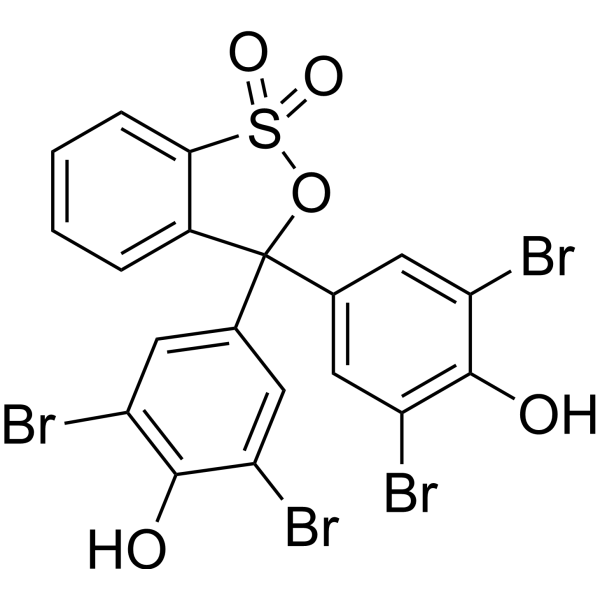
    Bromophenol blue indicator (3.0-4.6)
    1 Publications Verification

    Environmental Pollutants Biochemical Assay Reagents Others
    Bromophenol blue indicator (3.0-4.6) is a synthetic dye commonly used as an acid-base indicator with a transition range of pH 3.0-4.6. Bromophenol blue indicator (3.0-4.6) is water soluble and changes color from yellow to blue as the pH of the solution changes from acidic to basic. Its unique chemical properties make it an important ingredient in a variety of scientific applications, especially in biochemistry and molecular biology. In addition, it can be used as a stain in microbiology and histology. However, Bromophenol blue indicator (3.0-4.6) has potential irritating and staining properties.
    Bromophenol blue indicator (3.0-4.6)
  • HY-W040144

    Fluorescent Dye Others
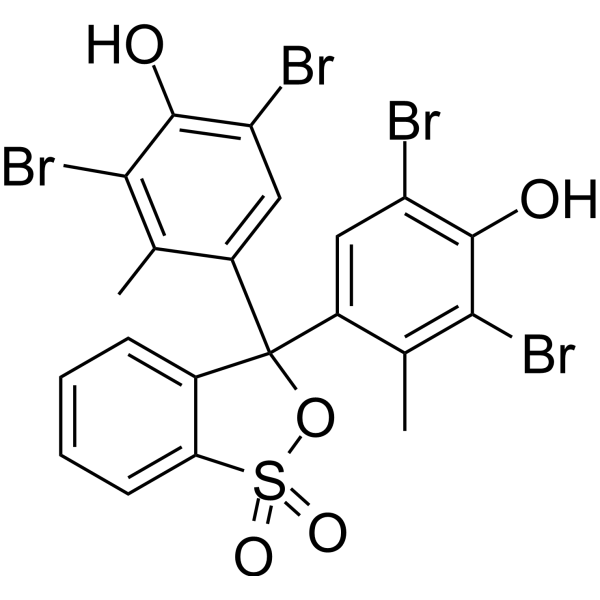
    Bromocresol green is a pH-sensitive triphenylmethane dye commonly used for the determination of protein and albumin in serum. Bromocresol green is a bio-based dye with a yellow-green to blue-green color. Bromocresol green turns yellow (λmax=435 nm, protonated form) when placed in acidic solution (e.g. pH=4.15), and turns blue in basic solution (λmax=615 nm, deprotonated form). Bromocresol green is widely used as a pH indicator in the field of biochemical analysis. In addition, Bromocresol green is also used to detect the concentration of molecules such as creatinine, and to judge the viability of cells .
    Bromocresol green
  • HY-D1694

    Fluorescent Dye Others
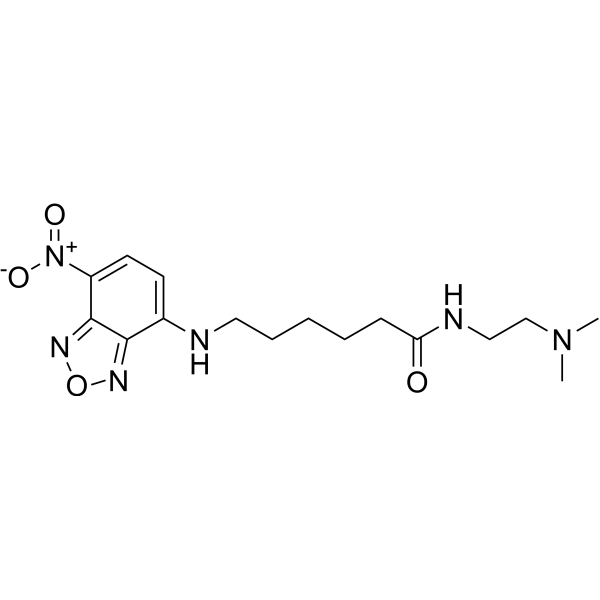
    LysoTracker Yellow HCK 123 is a potent yellow membrane-permeable fluorescent probe. LysoTracker Yellow HCK 123 is a weakly basic amine that selectively accumulates in cellular compartments with low luminal pH .
    LysoTracker Yellow HCK 123
  • HY-W127770

    basic red 9

    Fluorescent Dye Infection
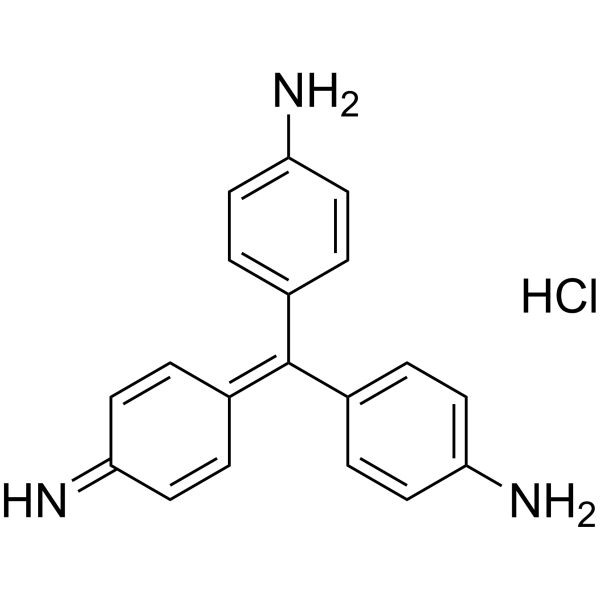
    Pararosaniline hydrochloride (Basic red 9) is a pH-responsive basic dye, as a biological stain to track certain proteins. The pH of the acidified Pararosaniline hydrochloride reagent has a significant effect on the color and the maximum absorption wavelength (λmax) of the reaction system, with its optimum pH 0.48 and a λmax at 549 nm. Pararosaniline hydrochloride is also a strong modifier of RNA splicing. Pararosaniline hydrochloride has been used in the analysis of SO2 and formaldehyde and staining of bacteria or other organisms. Pararosaniline hydrochloride is extensively used in industries like textile, printing, paper, cosmetic, and leather .
    Pararosaniline hydrochloride
  • HY-W133967

    Environmental Pollutants Biochemical Assay Reagents Inflammation/Immunology
    Calcium alginate is a biopolymer that can be used for developing oral agent-delivery systems . Calcium alginate is a pH sensitive hydrogel stable in acidic media and soluble in basic media .
    Calcium alginate
  • HY-P2818B
    Alkaline phosphatase, Chicken Intestine
    1 Publications Verification

    Apase, Chicken Intestine

    Endogenous Metabolite Phosphatase Glutathione Peroxidase Bacterial Infection Inflammation/Immunology
    Alkaline Phosphatase (Apase), Chicken Intestine is an alkaline phosphatase from Chicken Intestine, and is one of the most active alkaline phosphatases. Alkaline phosphatase, Chicken Intestine is an orally active membrane-bound glycoprotein that catalyzes the hydrolysis of phosphate monoesters at alkaline pH. Alkaline phosphatase, Chicken Intestine reduces myeloperoxidase activity and bacterial translocation. Alkaline phosphatase, Chicken Intestine improves survival rate of mice infected with E. coli. Alkaline phosphatase, Chicken Intestine improves TNBS-induced colon inflammation .
    Alkaline phosphatase, Chicken Intestine
  • HY-D0265

    Environmental Pollutants Fluorescent Dye Others
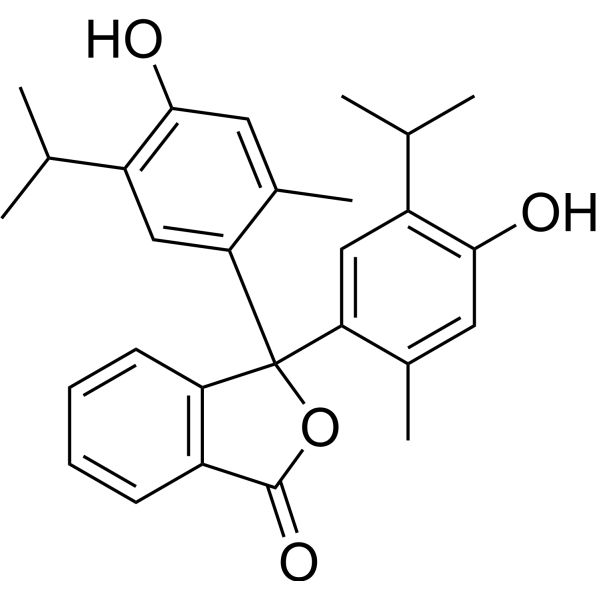
    Thymolphthalein is an electrochemically active dye due to the presence of thymol fragments. Thymolphthalein is a Phthalein dye used as an acid-base indicator. It is colourless in acid pH and is blue in basic pH .
    Thymolphthalein
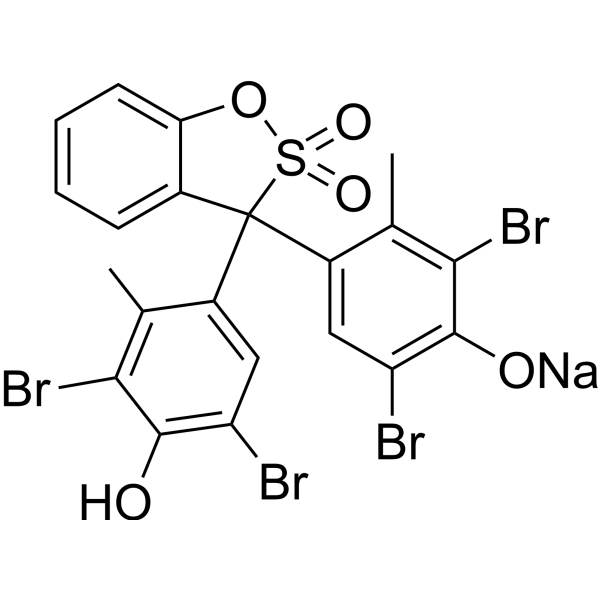
  • HY-D0009

    Fluorescent Dye Others
    Bromocresol green sodium is an anionic dye. Bromocresol green sodium can be used for pH indication and DNA agarose gel electrophoresis. Bromocresol green sodium is also used in mammalian albumin measurement. Bromocresol green sodium deprotonates and produces the monoanionic form of yellow colour at lower pH (acidic condition), and produces dianionic blue colour at the basic condition .
    Bromocresol green sodium
  • HY-172754

    Fluorescent Dye Cancer
    ICAAc is a solvatochromic fluorophore with reduced basicity. ICAAc demonstrates significant solvatochromic behavior across solvents of varying polarity, with a large dipole moment difference and low quantum yield in water, making it a tunable solvatochromic fluorophore. ICAAc enables pH sensing via UV-vis/fluorescence detection and in microenvironments including sodium lauryl sulfate micelle Stern layers. ICAAc acts as a supravital cell stain for epifluorescence imaging of live cancer cells .
    ICAAc

Inquiry Online

Your information is safe with us. * Required Fields.

Salutation


Country or Region *

Applicant Name *


Organization Name *

Department *


Email Address *


Product Name *

Cat. No.


Requested quantity *

Phone Number *


Remarks

Inquiry Online

Inquiry Information

Product Name:
Cat. No.:
Quantity:
MCE Japan Authorized Agent:

