1. Search Result
Search Result
Results for "

black teas

" in MedChemExpress (MCE) Product Catalog:

24

Inhibitors & Agonists

21

Natural
Products

2

Isotope-Labeled Compounds

Cat. No. Product Name Target Research Areas Chemical Structure
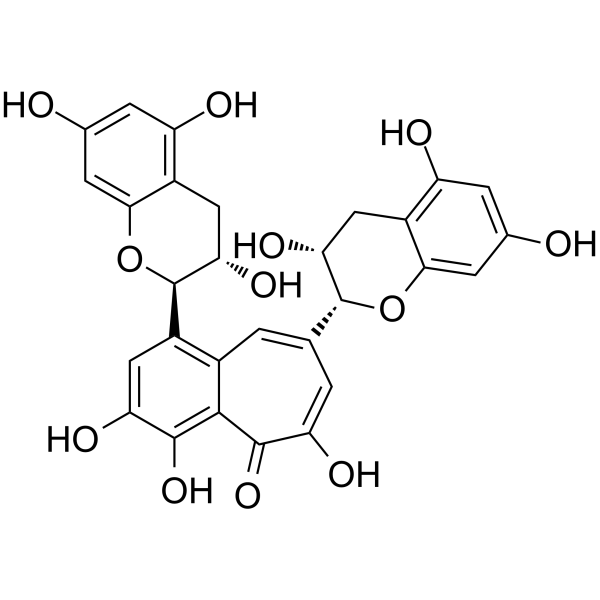
  • HY-N1992
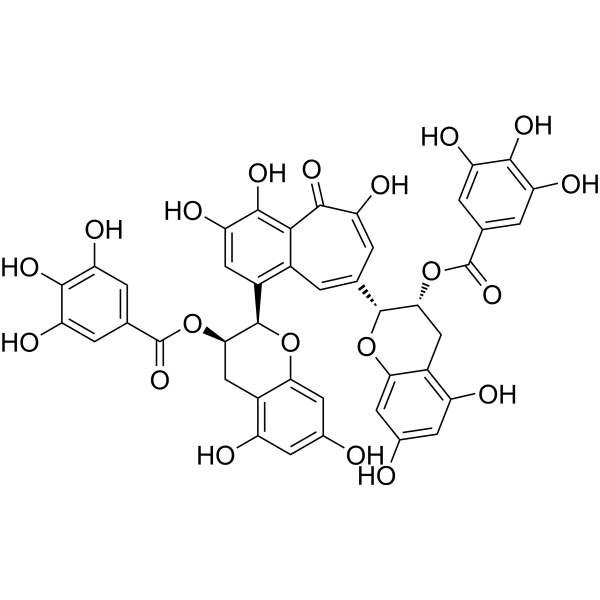
    Theaflavin 3,3'-digallate
    5+ Cited Publications

    TF-3; ZP10

    Virus Protease HSV HIV Flavivirus Infection Cancer
    Theaflavin 3,3'-digallate (TF-3) is a potent Zika virus (ZIKV) protease inhibitor with an IC50 of 2.3 μM. Theaflavin 3,3'-digallat directly binds to ZIKVpro (Kd=8.86 μM) and inhibits ZIKV replication. Theaflavin 3,3'-digallat inhibits the activity of gp41 and NS2B-3 protease and has antiviral activity against HSV and HIV-1 . Theaflavin 3,3'-digallate, the typical pigment in black tea, is a potent antitumor agent .
    Theaflavin 3,3'-digallate
  • HY-N0245

    Apoptosis MDM-2/p53 ATM/ATR Checkpoint Kinase (Chk) Cancer
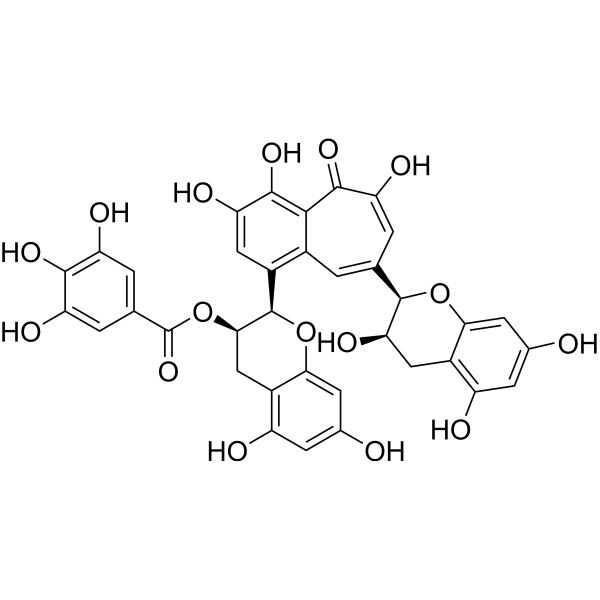
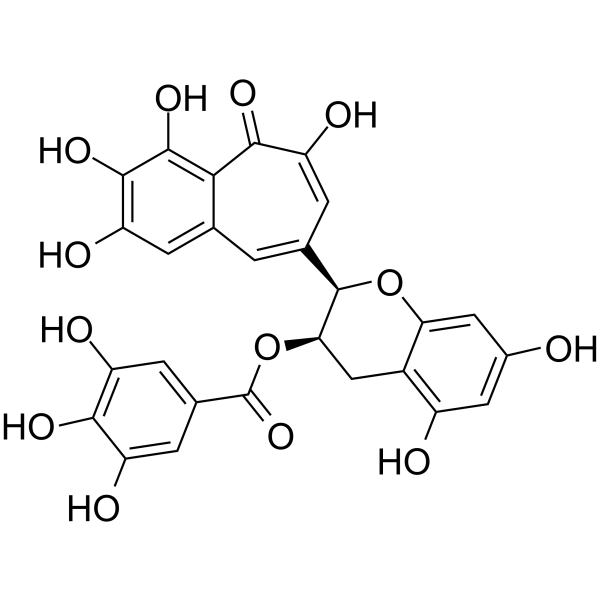
    Theaflavin-3-gallate, a black tea theaflavin monomer, is regarded as the biologically important active component of black tea and provides health benefits. Theaflavin-3-gallate acts as prooxidants and induces oxidative stress in the carcinoma cells. Theaflavin-3-gallate reacts directly with reduced glutathione (GSH) in a time- and concentration-dependent manner. Theaflavin-3-gallate induces apoptosis and G1 cell cycle arrest in ovarian cancer A2780/CP70 cells through p53-dependent pathways. Theaflavin-3-gallate induces DNA damage through ATM/Chk/p53 pathway .
    Theaflavin-3-gallate
  • HY-N0244
    Theaflavin-3'-gallate
    2 Publications Verification

    Xanthine Oxidase Apoptosis Necroptosis Cancer
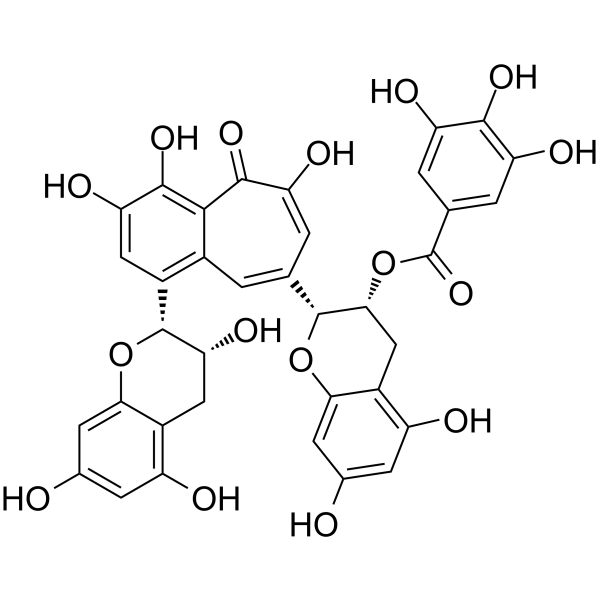
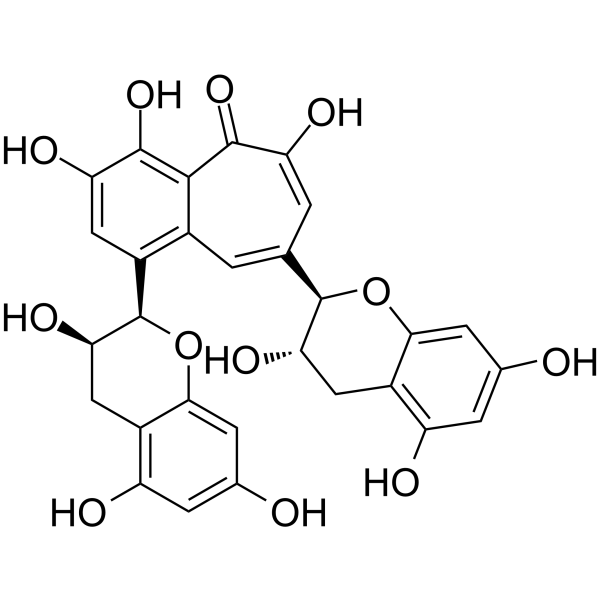
    Theaflavin-3'-gallate is a monomer of theaflavins found in black tea, which has anti-UVB damage activity and inhibits cell apoptosis and necroptosis. Theaflavin-3'-gallate acts as a pro-oxidant and induces oxidative stress in cancer cells, inhibiting xanthine oxidase (OX), with an IC50 of 7.6 μM .
    Theaflavin-3'-gallate
  • HY-W041301

    Drug Isomer Inflammation/Immunology
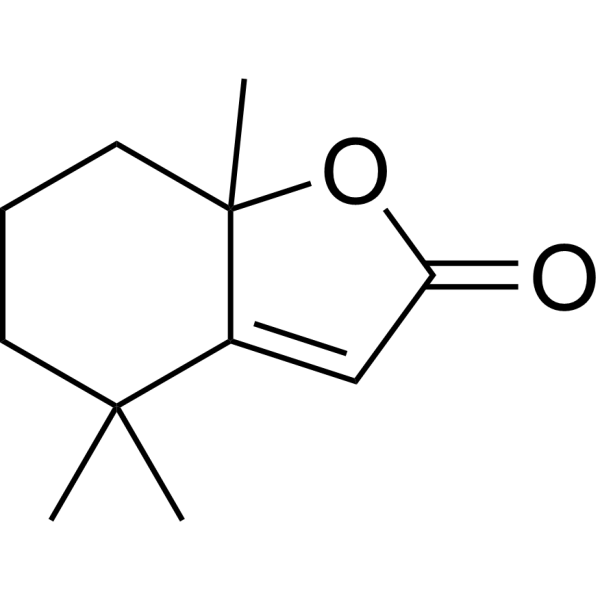
    (±)-Dihydroactinidiolide is the dextrorotatory form of Dihydroactinidiolide (HY-107805). (±)-Dihydroactinidiolide has a strong, pleasant musky, tea-like and tobacco-like aroma and is mainly found in black tea, tobacco and fruits. (±)-Dihydroactinidiolide has antioxidant activity and can be derived from β-carotene.or light adaptation in Arabidopsis .
    (±)-Dihydroactinidiolide
  • HY-Y1426

    o-Hydroxyacetophenone; o-Acetylphenol

    Drug Intermediate Others
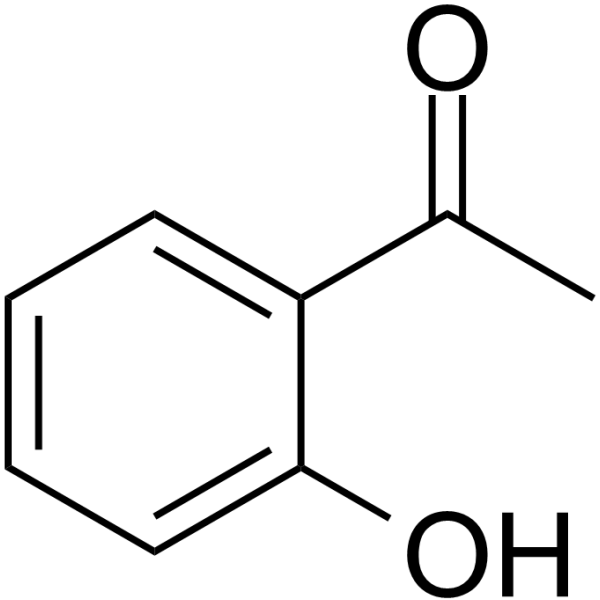
    2'-Hydroxyacetophenone is found in alcoholic beverages. 2'-Hydroxyacetophenone is present in tomato, cassia, fried beef, rum, whiskey, cocoa, coffee and black tea. 2'-Hydroxyacetophenone is a flavouring ingredient. Building block in chemical synthesis.
    2'-Hydroxyacetophenone
  • HY-W012657

    Environmental Pollutants Parasite Infection
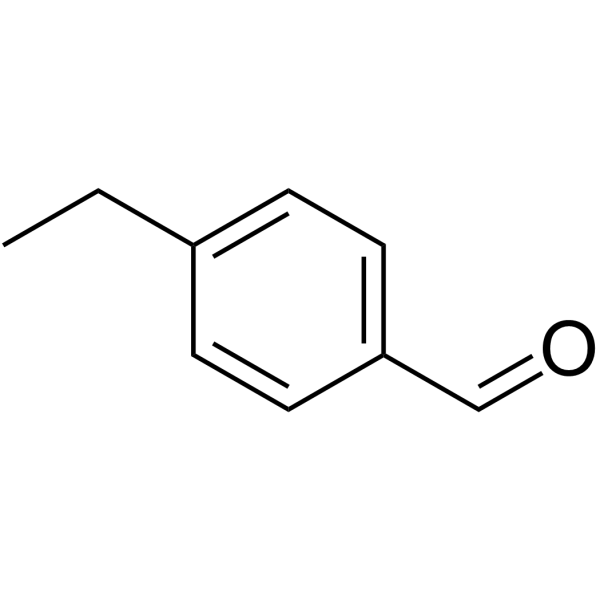
    4-Ethylbenzaldehyde is an aldehyde type organic compound with an almond-like odor. 4-Ethylbenzaldehyde is naturally present in various foods such as grilled meat, black tea, peanuts, etc. 4-Ethylbenzaldehyde has significant effects in controlling plant parasitic nematodes. 4-Ethylbenzaldehyde has genotoxicity and potential for liver damage in zebrafish models .
    4-Ethylbenzaldehyde
  • HY-N7664

    Others Others
    Isotheaflavin is one of antioxidant polyphenols in black tea .
    Isotheaflavin
  • HY-N4298

    MMP Metabolic Disease Inflammation/Immunology
    Epitheaflagallin 3-O-gallate is a minor polyphenol in black tea. Epitheaflagallin 3-O-gallate exhibits versatile physiological functions in vivo and in vitro, including antioxidative activity, pancreatic lipase inhibition, Streptococcus sorbinusglycosyltransferase inhibition, and an inhibiting effect on the activity of matrix metalloprotease-1 and -3 and their synthesis by human gingival fibroblasts .
    Epitheaflagallin 3-O-gallate
  • HY-125678

    Others Others
    Jasmine lactone, a volatile substance produced by plants under stress, has a strong odor and is known for its unique jasmine-like floral and fruity scent which is very popular in tea, especially in oolong and black tea. The biosynthesis mechanism of Jasmine lactone in tea is regulated by various stresses, including mechanical damage and low temperature stress. Continuous mechanical damage and low temperature and mechanical damage can enhance the accumulation of Jasmine lactone in tea .
    Jasmine lactone
  • HY-Y1426R

    o-Hydroxyacetophenone (Standard); o-Acetylphenol (Standard)

    Reference Standards Others Others
    2'-Hydroxyacetophenone (Standard) is the analytical standard of 2'-Hydroxyacetophenone. This product is intended for research and analytical applications. 2'-Hydroxyacetophenone is found in alcoholic beverages. 2'-Hydroxyacetophenone is present in tomato, cassia, fried beef, rum, whiskey, cocoa, coffee and black tea. 2'-Hydroxyacetophenone is a flavouring ingredient. Building block in chemical synthesis.
    2'-Hydroxyacetophenone (Standard)
  • HY-W041301R

    Reference Standards Drug Isomer Inflammation/Immunology
    (±)-Dihydroactinidiolide (Standard) is the analytical standard of (±)-Dihydroactinidiolide (HY-W041301). This product is intended for research and analytical applications. (±)-Dihydroactinidiolide is the dextrorotatory form of Dihydroactinidiolide (HY-107805). (±)-Dihydroactinidiolide has a strong, pleasant musky, tea-like and tobacco-like aroma and is mainly found in black tea, tobacco and fruits. (±)-Dihydroactinidiolide has antioxidant activity and can be derived from β-carotene.
    (±)-Dihydroactinidiolide (Standard)
  • HY-N7402

    Others Others
    Hexyl hexanoate is a fruit aroma component with potential food and beverage additive activity. Hexyl hexanoate is found in alcoholic beverages and is used to blend fruit flavors. Hexyl hexanoate is present in many fruits, Parmesan cheese, alcoholic beverages, and black tea. Hexyl hexanoate is a volatile component produced as a result of fruit ripening. Toxicity assessments of hexyl hexanoate showed that it is not mutagenic and that exposure is below safety thresholds for repeated dose, reproduction, and local respiratory toxicity. Hexyl hexanoate is also below thresholds in skin sensitization assessments, and for phototoxicity and photosensitization, the results showed that it does not present a relevant risk. Hexyl hexanoate is considered non-persistent, non-bioaccumulative, and non-toxic according to the environmental criteria of the International Fragrance Association .
    Hexyl hexanoate
  • HY-N1992R

    TF-3 (Standard); ZP10 (Standard)

    Reference Standards Virus Protease HSV HIV Flavivirus Infection Cancer
    Theaflavin 3,3'-digallate (Standard) is the analytical standard of Theaflavin 3,3'-digallate. This product is intended for research and analytical applications. Theaflavin 3,3'-digallate (TF-3) is a potent Zika virus (ZIKV) protease inhibitor with an IC50 of 2.3 μM. Theaflavin 3,3'-digallat directly binds to ZIKVpro (Kd=8.86 μM) and inhibits ZIKV replication. Theaflavin 3,3'-digallat inhibits the activity of gp41 and NS2B-3 protease and has antiviral activity against HSV and HIV-1 . Theaflavin 3,3'-digallate, the typical pigment in black tea, is a potent antitumor agent .
    Theaflavin 3,3'-digallate (Standard)
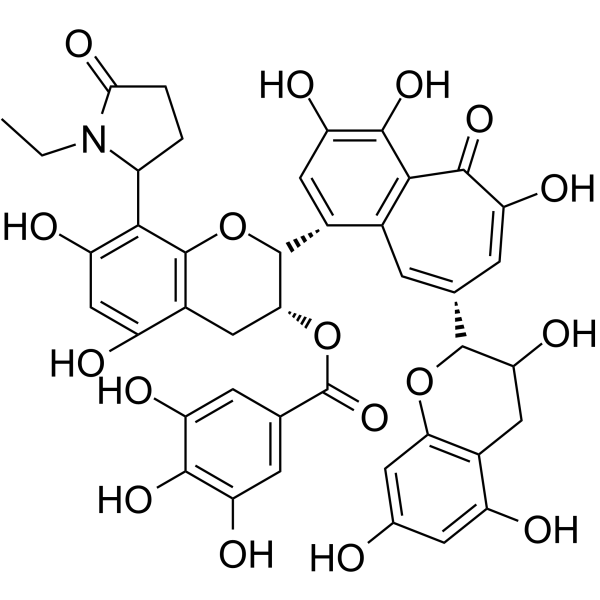
  • HY-N16399

    Reactive Oxygen Species (ROS) Cadherin Cancer
    Black tea extract is the extract of Black tea. Black tea extract prevents inorganic arsenic (iAs) induced ROS generation, inhibiting uncontrolled proliferation, epithelial to mesenchymal transition (EMT) and metastasis in HaCaT cells. Black tea extract has an anti-fibrotic activity. Black tea extract can be used for skin cancers research .
    Black tea extract
  • HY-N7668

    Lipase Metabolic Disease
    Neotheaflavin, from black tea, inhibits pancreatic lipase .
    Neotheaflavin
  • HY-N10310

    Others Others
    TF-3-G-cThea is a storage-related marker compound in black tea.
    TF-3-G-cThea
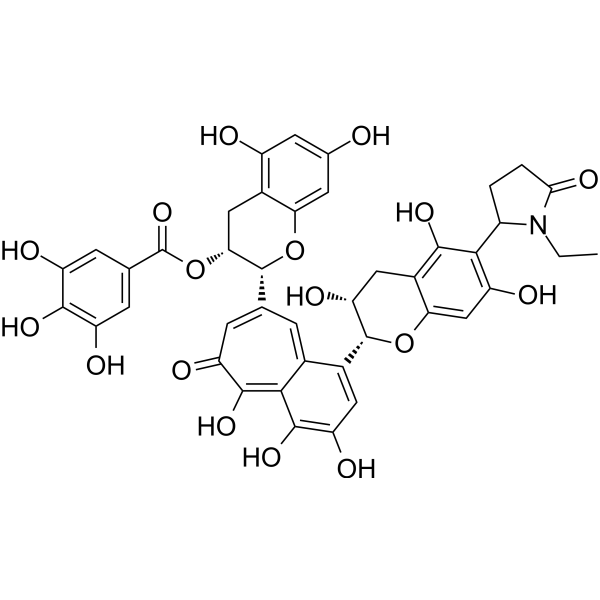
  • HY-N10309

    Others Others
    TF-3ʹ-G-cThea is a storage-related marker compound in black tea.
    TF-3ʹ-G-cThea
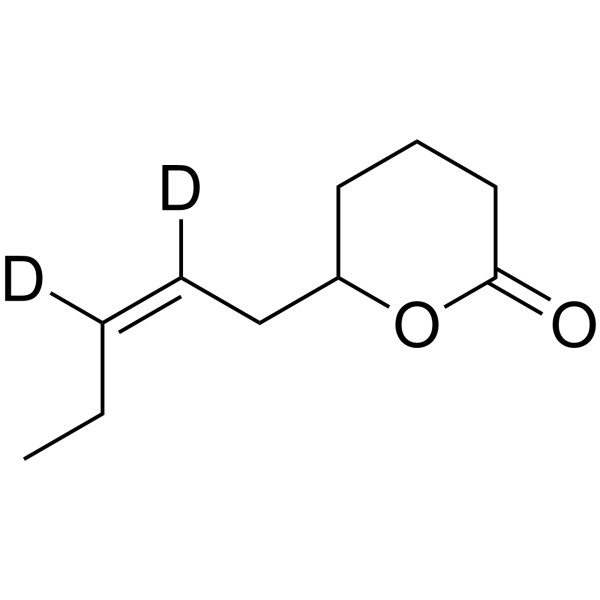
  • HY-125678S

    Isotope-Labeled Compounds Others
    Jasmine lactone-d2 is deuterated labeled Jasmine lactone (HY-125678). Jasmine lactone, a volatile substance produced by plants under stress, has a strong odor and is known for its unique jasmine-like floral and fruity scent which is very popular in tea, especially in oolong and black tea. The biosynthesis mechanism of Jasmine lactone in tea is regulated by various stresses, including mechanical damage and low temperature stress. Continuous mechanical damage and low temperature and mechanical damage can enhance the accumulation of Jasmine lactone in tea .
    Jasmine lactone-d2
  • HY-N0244R

    Reference Standards Others Cancer
    Theaflavin-3'-gallate (Standard) is the analytical standard of Theaflavin-3'-gallate. This product is intended for research and analytical applications. Theaflavin-3'-gallate, a black tea theaflavin monomer, is regarded as the biologically important active component of black tea and provides health benefits. Theaflavin-3'-gallate acts as prooxidants and induces oxidative stress in the carcinoma cells. Theaflavin-3'-gallate reacts directly with reduced glutathione (GSH) in a time-and concentration-dependent manner .
    Theaflavin-3'-gallate (Standard)
  • HY-B1686

    Biochemical Assay Reagents Others
    Menthyl salicylate is a flavor ingredient and a volatile flavor compound. Menthyl salicylate imparts a fresh mint-like aroma to black tea. Menthyl salicylate can be used in studies related to the aroma of black tea and the behavior of ingredients in cosmetic formulations [1] .
    Menthyl salicylate
  • HY-N0245R

    Reference Standards Apoptosis MDM-2/p53 ATM/ATR Checkpoint Kinase (Chk) Cancer
    Theaflavin-3-gallate (Standard) is the analytical standard of Theaflavin-3-gallate. This product is intended for research and analytical applications. Theaflavin-3-gallate, a black tea theaflavin monomer, is regarded as the biologically important active component of black tea and provides health benefits. Theaflavin-3-gallate acts as prooxidants and induces oxidative stress in the carcinoma cells. Theaflavin-3-gallate reacts directly with reduced glutathione (GSH) in a time- and concentration-dependent manner. Theaflavin-3-gallate induces apoptosis and G1 cell cycle arrest in ovarian cancer A2780/CP70 cells through p53-dependent pathways. Theaflavin-3-gallate induces DNA damage through ATM/Chk/p53 pathway .
    Theaflavin-3-gallate (Standard)
  • HY-W012657R

    Reference Standards Parasite Infection
    4-Ethylbenzaldehyde (Standard) is the analytical standard of 4-Ethylbenzaldehyde (HY-W012657). This product is intended for research and analytical applications. 4-Ethylbenzaldehyde is an aldehyde type organic compound with an almond-like odor. 4-Ethylbenzaldehyde is naturally present in various foods such as grilled meat, black tea, peanuts, etc. 4-Ethylbenzaldehyde has significant effects in controlling plant parasitic nematodes. 4-Ethylbenzaldehyde has genotoxicity and potential for liver damage in zebrafish models.
    4-Ethylbenzaldehyde (Standard)
  • HY-W739751

    o-Hydroxyacetophenone-d7; o-Acetylphenol-d7

    Isotope-Labeled Compounds Drug Intermediate Others
    2'-Hydroxyacetophenone-d7 (o-Hydroxyacetophenone-d7; o-Acetylphenol-d7) is the deuterium labeled 2'-Hydroxyacetophenone (HY-Y1426). 2'-Hydroxyacetophenone is found in alcoholic beverages. 2'-Hydroxyacetophenone is present in tomato, cassia, fried beef, rum, whiskey, cocoa, coffee and black tea. 2'-Hydroxyacetophenone is a flavouring ingredient. Building block in chemical synthesis.
    2'-Hydroxyacetophenone-d7
  • HY-E71324

    Biochemical Assay Reagents Others
    β-Primeverosidase (EC 3.2.1.149) is responsible for the formation of the alcoholic aroma in oolong and black tea. In addition to β-primeverosides [i.e. 6-O-(β-D-xylopyranosyl)-β-D-glucopyranosides], it also hydrolyses 6-O-(β-D-apiofuranosyl)-β-D-glucopyranosides and, less rapidly, β-vicianosides and 6-O-(α-L-arabinofuranosyl)-β-D-glucopyranosides, but not β-glucosides. Geranyl-, linaloyl-, benzyl-and p-nitrophenol glycosides are all hydrolysed.
    β-Primeverosidase

Inquiry Online

Your information is safe with us. * Required Fields.

Salutation


Country or Region *

Applicant Name *


Organization Name *

Department *


Email Address *


Product Name *

Cat. No.


Requested quantity *

Phone Number *


Remarks

Inquiry Online

Inquiry Information

Product Name:
Cat. No.:
Quantity:
MCE Japan Authorized Agent:

