

1. Search Result
Search Result
Results for "

body fluids

" in MedChemExpress (MCE) Product Catalog:

15

Inhibitors & Agonists

1

Screening Libraries

1

Biochemical Assay Reagents

3

Peptides

5

Natural
Products

3

Isotope-Labeled Compounds

Cat. No. Product Name Target Research Areas Chemical Structure
  • HY-111355B

    Sirtuin Endogenous Metabolite PKC AMPK DOCK Metabolic Disease Inflammation/Immunology Cancer
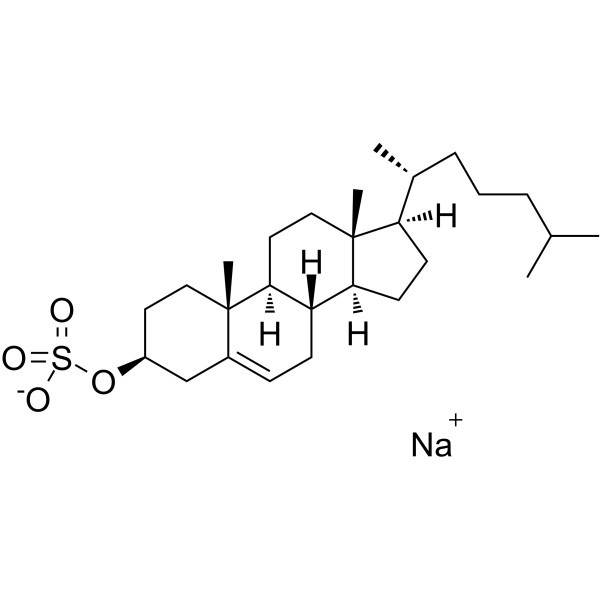
    Cholesterol sulfate sodium is a naturally occurring, orally active cholesterol derivative that is widely distributed in various tissues and body fluids. Cholesterol sulfate sodium acts as a DOCK2 inhibitor, with IC50 values of 2 μM and 2.9 μM against mouse and human targets, respectively. Cholesterol sulfate sodium restricts excessive neutrophil infiltration and alleviates intestinal inflammation and damage. Cholesterol sulfate sodium serves as an activator of protein kinase C (PKC), which promotes squamous cell differentiation and inhibits skin carcinogenesis. Cholesterol sulfate sodium regulates cholesterol homeostasis and cellular metabolism by activating the AMPK-Sirt1 pathway. Cholesterol sulfate sodium can be used in research related to actinic keratitis, ulcerative colitis, skin cancer, and other conditions .
    Cholesteryl sulfate sodium
  • HY-P2767
    Urease, Jack bean
    1 Publications Verification

    Bacterial Others
    Urease, Jack bean is derived from jack bean and Catalyzes hydrolysis of urea to carbon dioxide and ammonia. Urease, Jack bean is useful in the determination of urea in body fluids.
    Urease, Jack bean
  • HY-W010589

    H-Abu-OH

    Endogenous Metabolite Drug Intermediate Metabolic Disease
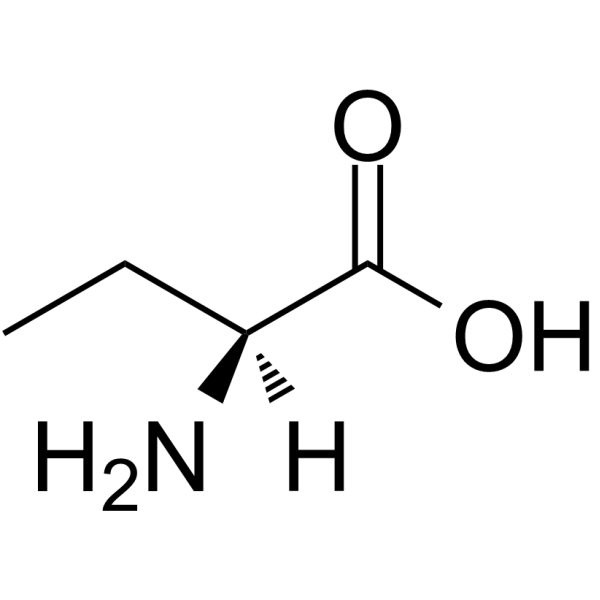
    L-2-Aminobutyric acid (H-Abu-OH) is a non-proteinogenic amino acid that exists in human tissues and body fluids. L-2-Aminobutyric acid is formed by the transamination of oxobutyric acid. L-2-Aminobutyric acid can serve as a precursor for anticonvulsant and anti-tuberculosis agents and is a key intermediate in the chemical and pharmaceutical industries.
    L-2-Aminobutyric acid
  • HY-111355

    Endogenous Metabolite DOCK PKC AMPK Sirtuin Metabolic Disease Inflammation/Immunology Cancer
    Cholesterol sulfate is a naturally occurring, orally active cholesterol derivative that is widely distributed in various tissues and body fluids. Cholesterol sulfate acts as a DOCK2 inhibitor, with IC50 values of 2 μM and 2.9 μM against mouse and human targets, respectively. Cholesterol sulfate restricts excessive neutrophil infiltration and alleviates intestinal inflammation and damage. Cholesterol sulfate serves as an activator of protein kinase C (PKC), which promotes squamous cell differentiation and inhibits skin carcinogenesis. Cholesterol sulfate regulates cholesterol homeostasis and cellular metabolism by activating the AMPK-Sirt1 pathway. Cholesterol sulfate can be used in research related to actinic keratitis, ulcerative colitis, skin cancer, and other conditions .
    Cholesterol sulfate
  • HY-W115727D

    PAM,average Mn 40000

    Biochemical Assay Reagents Others
    Polyacrylamide (PAM), average Mn 40000 is a versatile, high-molecular-weight polyacrylamide copolymer. Polyacrylamide series materials can maintain enzyme activity in enzyme immobilization, act as drug carriers to achieve controlled release, serve as smart materials responding to temperature/pH stimuli, and be used for in vitro toxin adsorption and soft tissue filling through mechanisms such as physical entrapment, covalent binding or chemical crosslinking. Polyacrylamide finds applications in biomedical engineering, environmental management and industrial applications .
    Polyacrylamide,average Mn 40000
  • HY-W002450

    Drug Derivative Cardiovascular Disease
    L-Cyclohexylalanine is an amino acid derivative. L-Cyclohexylalanine modifies an atrial natriuretic peptide, regulates homeostasis of body fluid and blood pressure homeostasis and vasodilation activity .
    L-Cyclohexylalanine
  • HY-111355S

    Isotope-Labeled Compounds Sirtuin Endogenous Metabolite PKC AMPK DOCK Metabolic Disease Inflammation/Immunology Cancer
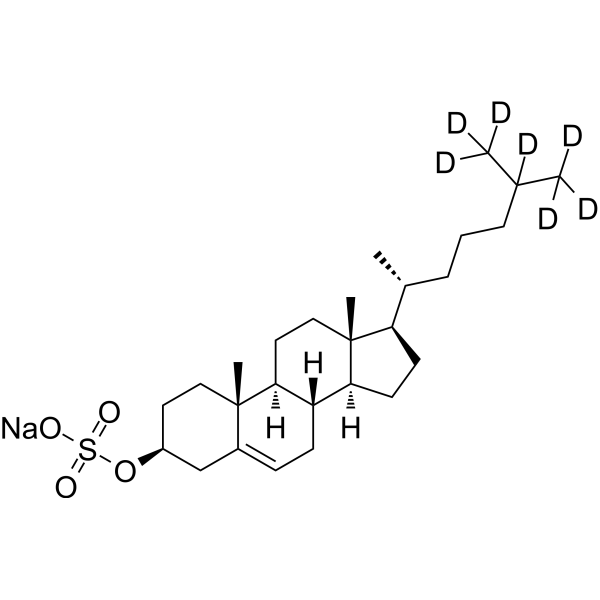
    Cholesterol sulfate sodium-d7 is the deuterium labeled Cholesterol sulfate sodium. Cholesterol sulfate sodium is a naturally occurring, orally active cholesterol derivative that is widely distributed in various tissues and body fluids. Cholesterol sulfate sodium acts as a DOCK2 inhibitor, with IC50 values of 2 μM and 2.9 μM against mouse and human targets, respectively. Cholesterol sulfate sodium restricts excessive neutrophil infiltration and alleviates intestinal inflammation and damage. Cholesterol sulfate sodium serves as an activator of protein kinase C (PKC), which promotes squamous cell differentiation and inhibits skin carcinogenesis. Cholesterol sulfate sodium regulates cholesterol homeostasis and cellular metabolism by activating the AMPK-Sirt1 pathway. Cholesterol sulfate sodium can be used in research related to actinic keratitis, ulcerative colitis, skin cancer, and other conditions.
    Cholesterol sulfate-d7 sodium
  • HY-P2537
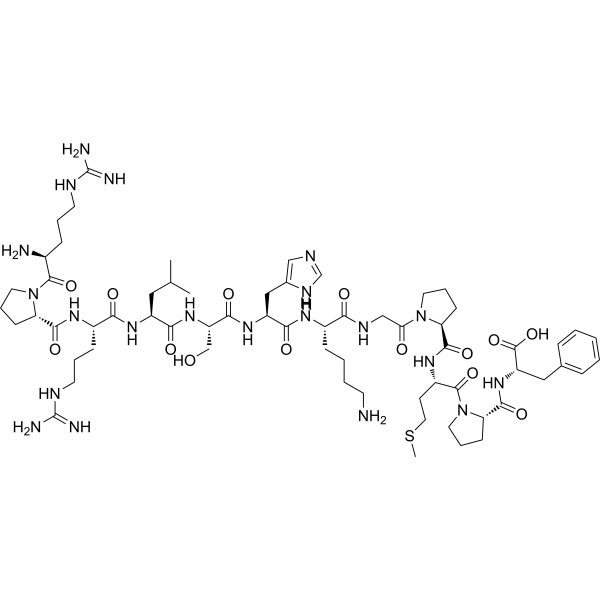
    Apelin-12
    2 Publications Verification

    HIV Apelin Receptor (APJ) Others
    Apelin-12 is one of the most potent C-terminal fragments of the polypeptide that possesses a high affinity to orphan receptor APJ receptor. Apelin-12 is involved in the regulation of body fluid homeostasis and in the central control of feeding. Apelin-12 blocks HIV-1 entry through APJ receptor. Apelin-12 exerts neuroprotective effect .
    Apelin-12
  • HY-W009123R

    cis-13-Docosenamide (Standard)

    Endogenous Metabolite Reference Standards Others
    Erucamide (Standard) is the analytical standard of Erucamide. This product is intended for research and analytical applications. Erucamide inhibits intestinal diarrhea.Erucamide also regulates the volume of body fluids in other organs. Erucamide has the ability to promote angiogenesis .
    Erucamide (Standard)
  • HY-W010589S2

    H-Abu-OH-d6

    Isotope-Labeled Compounds Endogenous Metabolite Drug Intermediate Metabolic Disease
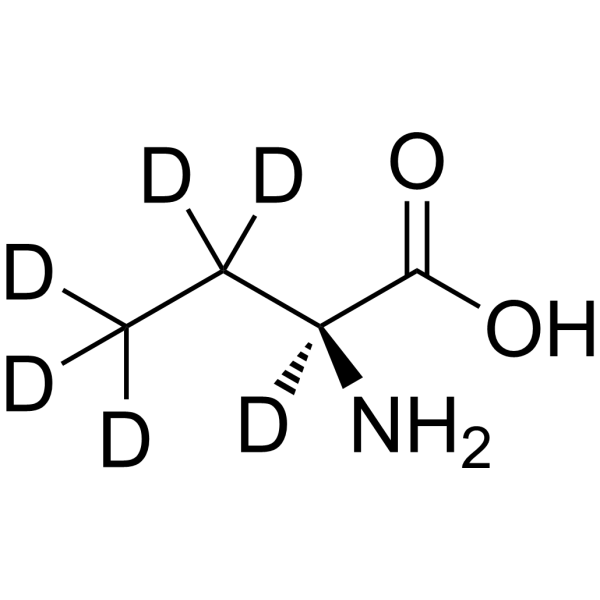
    L-2-Aminobutyric acid-d6 is the deuterium labeled L-2-Aminobutyric acid. L-2-Aminobutyric acid is a non-proteinogenic amino acid that exists in human tissues and body fluids. L-2-Aminobutyric acid is formed by the transamination of oxobutyric acid. L-2-Aminobutyric acid can serve as a precursor for anticonvulsant and anti-tuberculosis agents and is a key intermediate in the chemical and pharmaceutical industries.
    L-2-Aminobutyric acid-d6
  • HY-W010589S

    H-Abu-OH-d3

    Isotope-Labeled Compounds Endogenous Metabolite Drug Intermediate Metabolic Disease
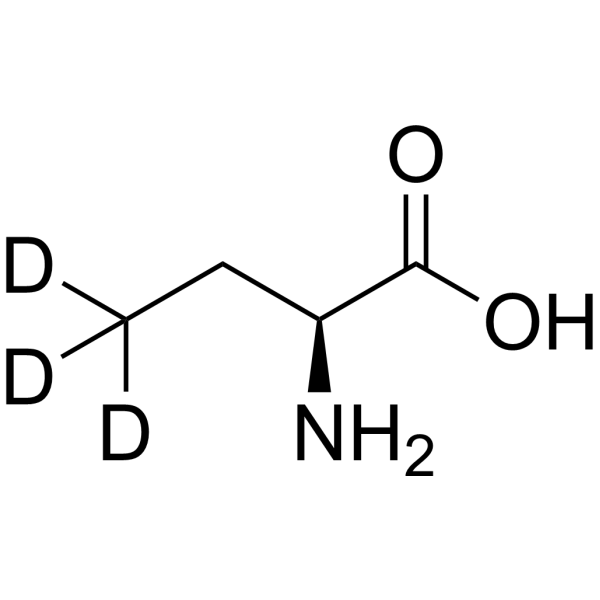
    L-2-Aminobutyric acid-d3 is the deuterium labeled L-2-Aminobutyric acid. L-2-Aminobutyric acid is a non-proteinogenic amino acid that exists in human tissues and body fluids. L-2-Aminobutyric acid is formed by the transamination of oxobutyric acid. L-2-Aminobutyric acid can serve as a precursor for anticonvulsant and anti-tuberculosis agents and is a key intermediate in the chemical and pharmaceutical industries.
    L-2-Aminobutyric acid-d3
  • HY-W010589R

    H-Abu-OH (Standard)

    Reference Standards Endogenous Metabolite Drug Intermediate Metabolic Disease
    L-2-Aminobutyric acid (Standard) is the analytical standard of L-2-Aminobutyric acid. This product is intended for research and analytical applications. L-2-Aminobutyric acid is a non-proteinogenic amino acid that exists in human tissues and body fluids. L-2-Aminobutyric acid is formed by the transamination of oxobutyric acid. L-2-Aminobutyric acid can serve as a precursor for anticonvulsant and anti-tuberculosis agents and is a key intermediate in the chemical and pharmaceutical industries.
    L-2-Aminobutyric acid (Standard)
  • HY-P10065

    Cathepsin Inflammation/Immunology
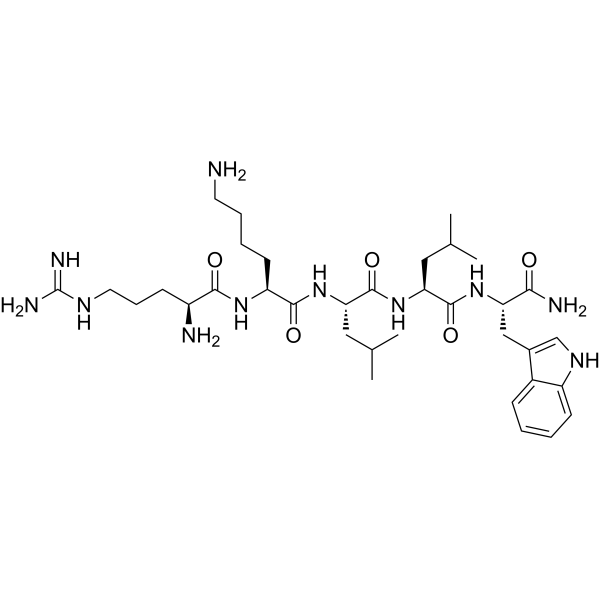
    RKLLW-NH2 is a Cathepsin L inhibitor .
    RKLLW-NH2
  • HY-W587755

    Sodium Channel Cardiovascular Disease
    Benzylhydrochlorothiazide is an orally active thiazide diuretic. Benzylhydrochlorothiazide acts on the distal convoluted tubules of the kidneys, inhibiting the reabsorption of sodium chloride, thereby increasing urine output and reducing the body's fluid volume. Benzylhydrochlorothiazide has phototoxicity and a potential risk of skin reactions. Benzylhydrochlorothiazide can cause cell death when exposed to UVA radiation. Benzylhydrochlorothiazide is used in research on hypertension and edema .
    Benzylhydrochlorothiazide
  • HY-N18676

    Others Metabolic Disease
    Dolichos Biflorus Extract, derived from the seeds of the Dolichos biflorus plant (commonly known as horse gram), is a nutrient-dense herb widely used in Ayurvedic and traditional medicine for its numerous health benefits. Dolichos biflorus extract contains alkaloids, saponins, flavonoids, carbohydrates, proteins, and tannins. It is known for its digestive support, as it promotes healthy digestion, alleviates bloating, and helps with constipation, along with mild diuretic effects that aid detoxification by eliminating excess fluids and waste products from the body.
    Dolichos biflorus extract

Inquiry Online

Your information is safe with us. * Required Fields.

Salutation


Country or Region *

Applicant Name *


Organization Name *

Department *


Email Address *


Product Name *

Cat. No.


Requested quantity *

Phone Number *


Remarks

Inquiry Online

Inquiry Information

Product Name:
Cat. No.:
Quantity:
MCE Japan Authorized Agent:

