1. Search Result
Search Result
Results for "

c-di-GMP

" in MedChemExpress (MCE) Product Catalog:

13

Inhibitors & Agonists

5

Natural
Products

1

Isotope-Labeled Compounds

Cat. No. Product Name Target Research Areas Chemical Structure
  • HY-110382
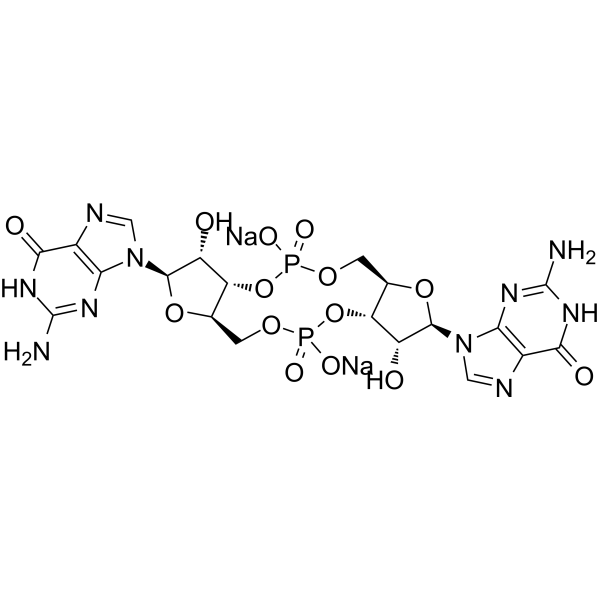
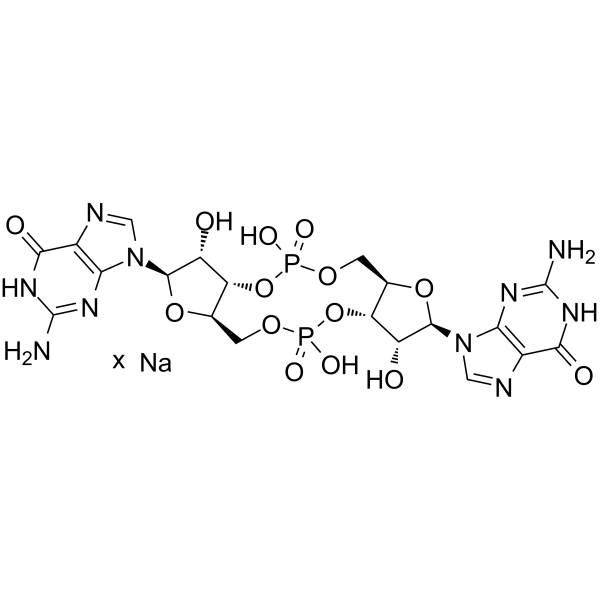
    Cyclic-di-GMP disodium
    5+ Cited Publications

    c-di-GMP disodium; cyclic diguanylate disodium; 5GP-5GP disodium

    STING Endogenous Metabolite Cancer
    Cyclic-di-GMP disodium is a STING agonist and a bacterial second messenger that coordinates different aspects of bacterial growth and behavior, including motility, virulence, biofilm formation, and cell cycle progression. Cyclic-di-GMP disodium has anti-cancer cell proliferation activity and also induces elevated CD4 receptor expression and cell cycle arrest. Cyclic-di-GMP disodium can be used in cancer research .
    Cyclic-di-GMP disodium
  • HY-N1938

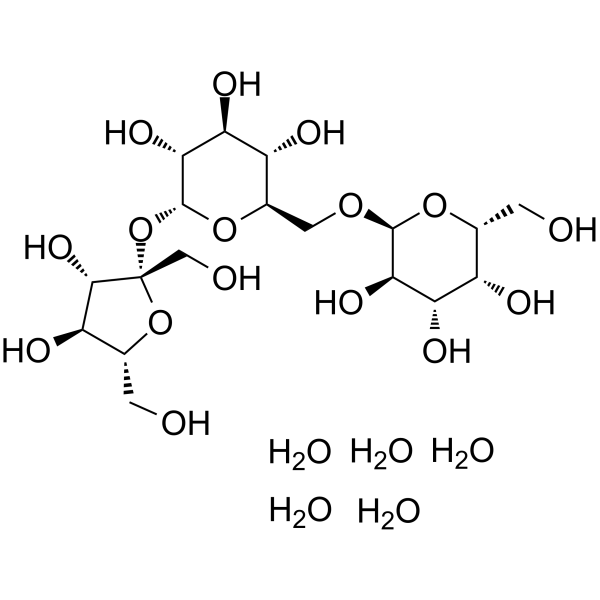
    D-Raffinose pentahydrate

    Endogenous Metabolite Glucosylceramide Synthase (GCS) Bacterial Phosphodiesterase (PDE) Interleukin Related Infection Inflammation/Immunology
    D(+)-Raffinose pentahydrate is an orally active inhibitor of LecA (Kd = 32 μM) and GtfC. D(+)-Raffinose pentahydrate reduces cyclic diguanylate (c-di-GMP) by increased activity of a c-di-GMP specific phosphodiesterase. D(+)-Raffinose pentahydrate interferes with GTF function. D(+)-Raffinose pentahydrate decreases IL-4 and IL-5 mRNA. D(+)-Raffinose pentahydrate exhibits biofilm-inhibitory activity against Pseudomonas aeruginosa and Streptococcus mutans and inhibits allergic airway eosinophilia .
    D(+)-Raffinose pentahydrate
  • HY-137662

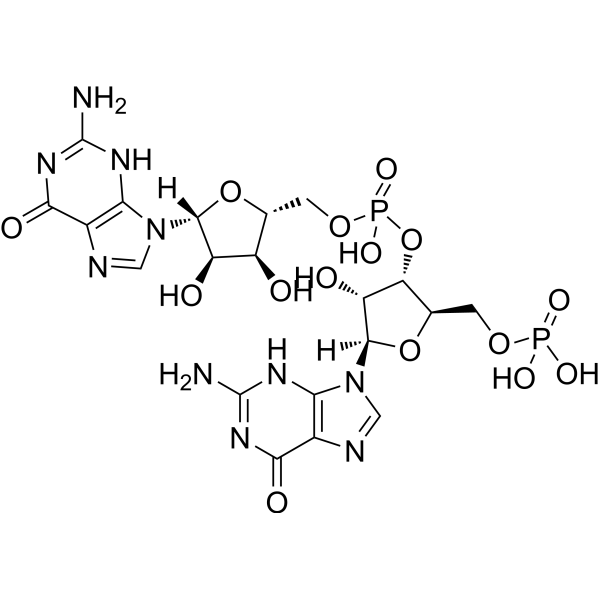
    pGpG

    STING Metabolic Disease
    5'-Phosphoguanylyl-(3',5')-guanosine (pGpG) is an intermediate molecule produced by the pathway for enzymatic cyclic diguanylate (c-di-GMP) degradation. 5'-Phosphoguanylyl-(3',5')-guanosine can be used to detect the metabolism of nucleic acids .
    5'-Phosphoguanylyl-(3',5')-guanosine
  • HY-107780

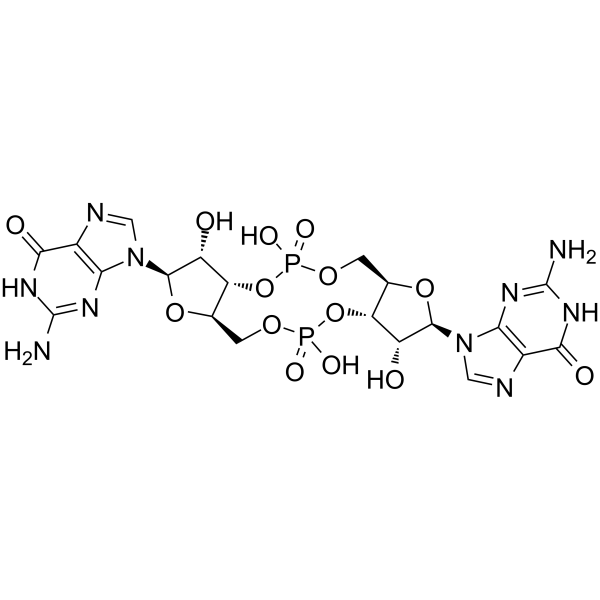
    c-di-GMP; cyclic diguanylate; 5GP-5GP

    STING Endogenous Metabolite Cancer
    Cyclic-di-GMP is a STING agonist and a bacterial second messenger that coordinates different aspects of bacterial growth and behavior, including motility, virulence, biofilm formation, and cell cycle progression. Cyclic-di-GMP has anti-cancer cell proliferation activity and also induces elevated CD4 receptor expression and cell cycle arrest. Cyclic-di-GMP can be used in cancer research .
    Cyclic-di-GMP
  • HY-119808

    Melanocortin Receptor Apoptosis Antibiotic Cancer
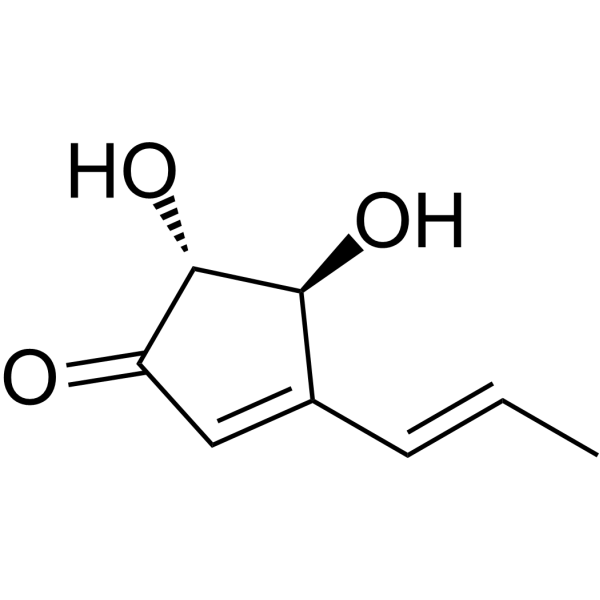
    Terrein is a melanogenesis inhibitor . Terrein induces apoptosis in breast cancer cell lines . Terrein is an inhibitor of quorum sensing and c-di-GMP in Pseudomonas aeruginosa .
    Terrein
  • HY-107780B
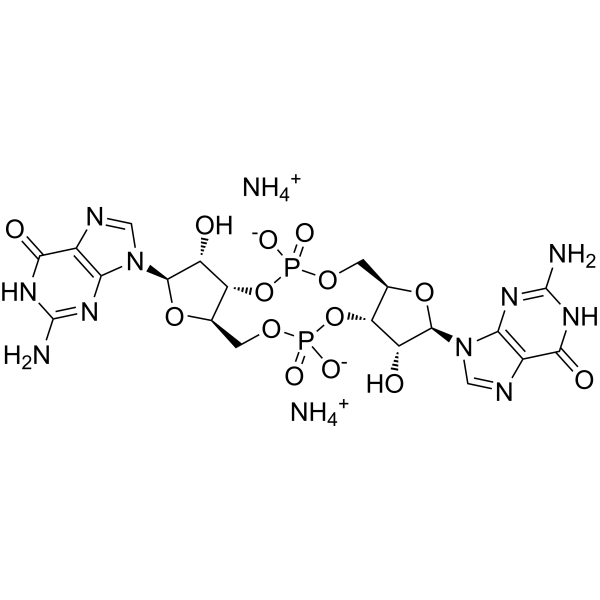
    Cyclic-di-GMP diammonium
    5+ Cited Publications

    c-di-GMP diammonium; cyclic diguanylate diammonium; 5GP-5GP diammonium

    STING Endogenous Metabolite Cancer
    Cyclic-di-GMP diammonium is a STING agonist and a bacterial second messenger that coordinates different aspects of bacterial growth and behavior, including motility, virulence, biofilm formation, and cell cycle progression. Cyclic-di-GMP diammonium has anti-cancer cell proliferation activity and also induces elevated CD4 receptor expression and cell cycle arrest. Cyclic-di-GMP diammonium can be used in cancer research .
    Cyclic-di-GMP diammonium
  • HY-107780A

    c-di-GMP sodium; cyclic diguanylate sodium; 5GP-5GP sodium

    STING Endogenous Metabolite Cancer
    Cyclic-di-GMP sodium is a STING agonist and a bacterial second messenger that coordinates different aspects of bacterial growth and behavior, including motility, virulence, biofilm formation, and cell cycle progression. Cyclic-di-GMP sodium has anti-cancer cell proliferation activity and also induces elevated CD4 receptor expression and cell cycle arrest. Cyclic-di-GMP sodium can be used in cancer research .
    Cyclic-di-GMP sodium
  • HY-114548

    Guanylate Cyclase Infection
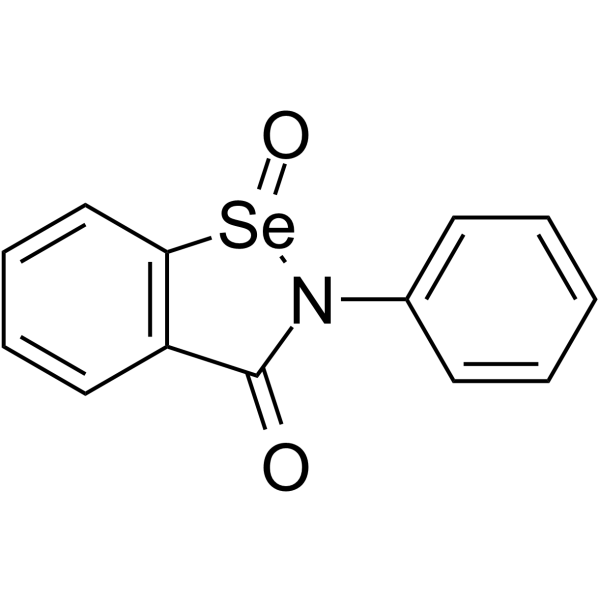
    Ebselen oxide, the selenone analogue of Ebselen, covalently modifies diguanylate cyclase (DGC) to inhibit c-di-GMP-receptor interactions and reduces DGC activity. Ebselen oxide also inhibits alginate production (IC50=14 μM) by Pseudomonas aeruginosa. Ebselen oxide inhibits HDAC1, HDAC3, HDAC4, HDAC5, HDAC6, HDAC7, HDAC8, and HDAC9 (IC50 ranging from 0.2 to 4.7 μM) .
    Ebselen oxide
  • HY-172533

    STING Cancer
    3’,5’-DiOA-dC is a hydrophobic nucleotide lipid and a ligand for the STING agonist c-di-GMP (CDG). 3’,5’-DiOA-dC can assemble with CDG and form stable cyclic dinucleotide nanoparticles via various supramolecular forces driven by molecular recognition. 3’,5’-DiOA-dC can decrease tumor weight and volume, increase CD8 T cell, neutrophils as well as NK cell counts in tumor microenvironment in combination with CDG. 3’,5’-DiOA-dC also increases the levels of TNF-α and IFN-γ in murine melanoma model .
    3′,5′-DiOA-dC
  • HY-110382S

    c-di-GMP-13C20,15N10 disodium; cyclic diguanylate-13C20,15N10 disodium; 5GP-5GP-13C20,15N10 disodium

    Isotope-Labeled Compounds Endogenous Metabolite STING Cancer
    13C20, 15N10-Cyclic di-GMP ( 13C20, 15N10-c-di-GMP) is 13C and 15N labeled Cyclic-di-GMP (disodium). Cyclic-di-GMP disodium is a STING agonist and a bacterial second messenger that coordinates different aspects of bacterial growth and behavior, including motility, virulence, biofilm formation, and cell cycle progression. Cyclic-di-GMP disodium has anti-cancer cell proliferation activity and also induces elevated CD4 receptor expression and cell cycle arrest. Cyclic-di-GMP disodium can be used in cancer research .
    Cyclic-di-GMP-13C20,15N10 disodium
  • HY-137662A

    pGpG trisodium

    STING Metabolic Disease
    5'-Phosphoguanylyl-(3',5')-guanosine trisodium (pGpG trisodium) is an intermediate molecule produced by the pathway for enzymatic cyclic diguanylate (c-di-GMP) degradation. 5'-Phosphoguanylyl-(3',5')-guanosine trisodium can be used to detect the metabolism of nucleic acids .
    5'-Phosphoguanylyl-(3',5')-guanosine trisodium
  • HY-181713

    Bacterial G-quadruplex Infection
    Antibiofilm agent-19 is an antibiofilm agent with iron-chelating activity. Antibiofilm agent-19 potently inhibits biofilm formation by wild-type PAO1 and the hyper-biofilm mutant strain PAO1-ΔwspF. Antibiofilm agent-19 promotes the formation of c-di-GMP G-quadruplexes and disrupts iron acquisition systems. It can be used in studies on antibacterial adjuvants .
    Antibiofilm agent-19
  • HY-180539

    Bacterial Infection
    JT71 is an inhibitor of the transcriptional activator MrkH of type III fimbriae in Klebsiella pneumoniae. JT71 reduces the activity of the mrkA promoter in Klebsiella pneumoniae, effectively inhibiting the formation of biofilms by Klebsiella pneumoniae, while not affecting the cell's viability. JT71 can be used for research on Klebsiella pneumoniae infections .
    JT71

Inquiry Online

Your information is safe with us. * Required Fields.

Salutation


Country or Region *

Applicant Name *


Organization Name *

Department *


Email Address *


Product Name *

Cat. No.


Requested quantity *

Phone Number *


Remarks

Inquiry Online

Inquiry Information

Product Name:
Cat. No.:
Quantity:
MCE Japan Authorized Agent:

