68 Results for "

colchicine-binding

" in MedChemExpress (MCE) Product Catalog:
Products (68)

68 Results for "colchicine-binding" in MCE Product Catalog:

3
3 Cited Publications
Cat. No.: HY-14444
CAS No.: 714272-27-2
Purity:  ≥98.0%
Synonyms: NPI-2358
Target:  

Microtubule/Tubulin

Research Areas:  

Cancer

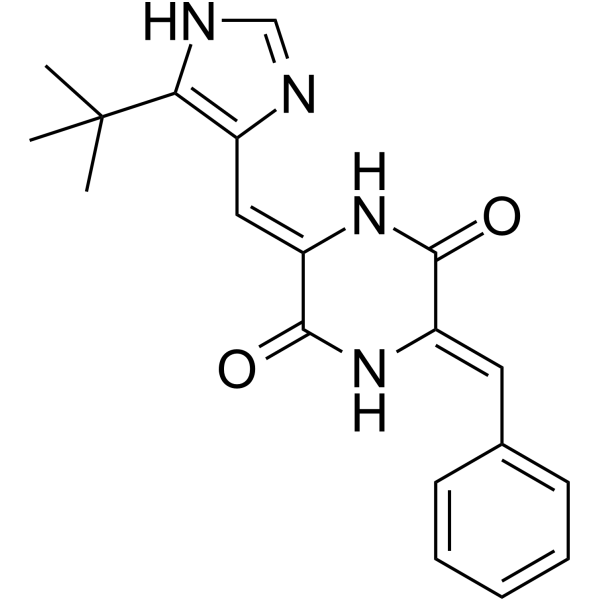
Plinabulin (NPI-2358) is a vascular disrupting agen (VDA) against tubulin-depolymerizing with an IC50 of 9.8 nM against HT-29 cells . Plinabulin binds the colchicine binding site of β-tubulin preventing polymerization and has potent inhibitory to tumor cells .
loading...
    loading...
1
1 Cited Publications
Cat. No.: HY-121993
CAS No.: 109971-63-3
Purity:  97.03%
Target:  

Wnt Microtubule/Tubulin

Research Areas:  

Cancer

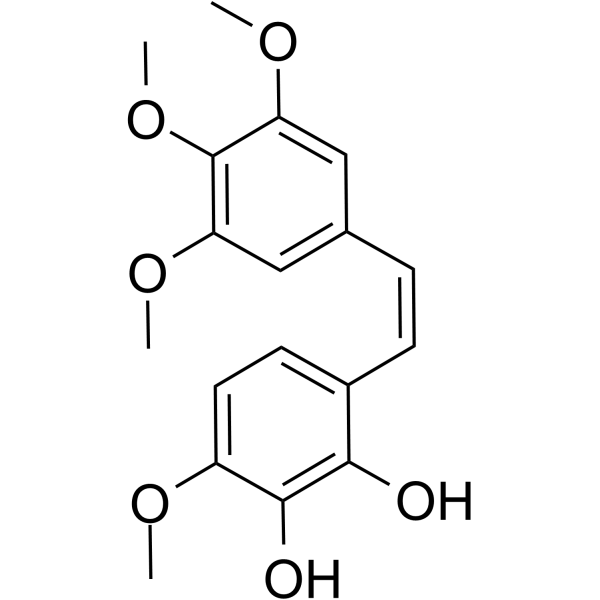
Combretastatin A-1 is a microtubule polymerization inhibitor that binds to the colchicine-binding site of tubulin. Combretastatin A-1 inhibits the Wnt/β-catenin pathway through tubulin depolymerization mediated AKT deactivation. Combretastatin A-1 exhibits anti-tumor and anti-vascular effects .
loading...
    loading...
1
1 Cited Publications
Cat. No.: HY-13603
CAS No.: 1000852-17-4
Purity:  98.96%
Synonyms: EPC2407
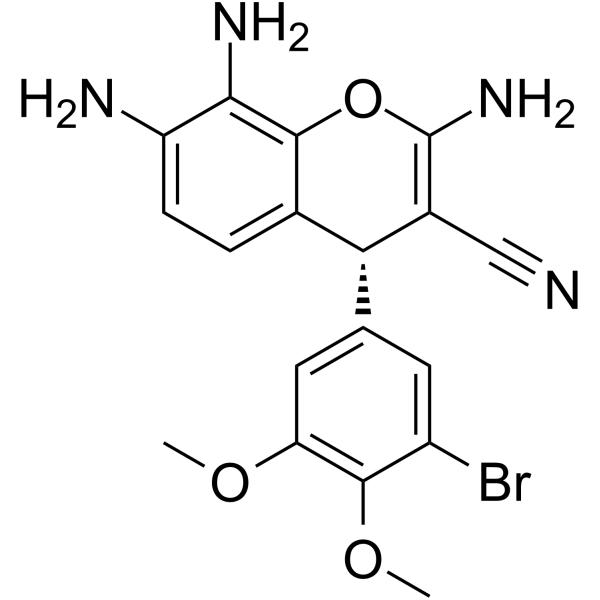
Crolibulin (EPC2407) is a tubulin polymerization inhibitor, with potent apoptosis induction and cell growth inhibition. Crolibulin has anti-tumor activity. Crolibulin also has cardiovascular toxicity and neurotoxicity .
loading...
    loading...
1
1 Cited Publications
Cat. No.: HY-16191
CAS No.: 1233948-35-0
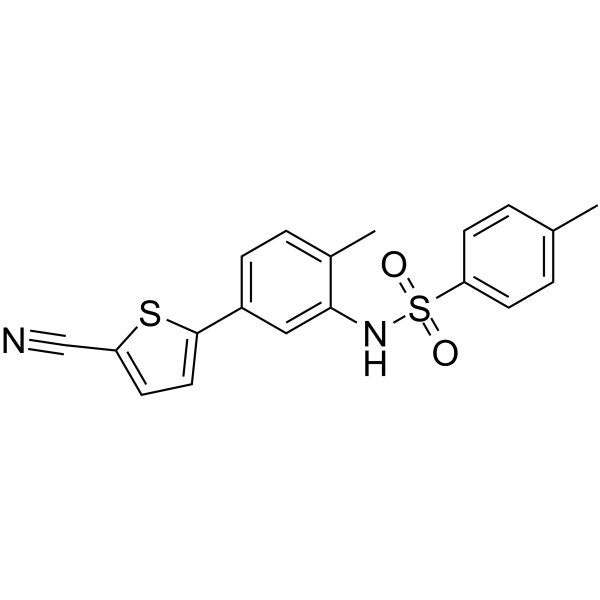
ELR510444 is an orally active tubulin inhibitor with an IC50 of 10 μM. ELR510444 binds to the colchicine-binding site on β-tubulin, inhibits tubulin assembly, depolymerizes microtubules and blocks HIF activity. ELR510444 induces cellular microtubule loss, abnormal mitotic spindle, mitotic arrest, apoptosis, morphological changes in tumor endothelial cells, and inhibits cancer cell proliferation, angiogenesis and tumor growth. ELR510444 can be used in research related to various cancers such as renal cell carcinoma .
loading...
    loading...
1
1 Cited Publications
Cat. No.: HY-137974
CAS No.: 30890-35-8
Purity:  99.61%
Target:  

STAT Apoptosis

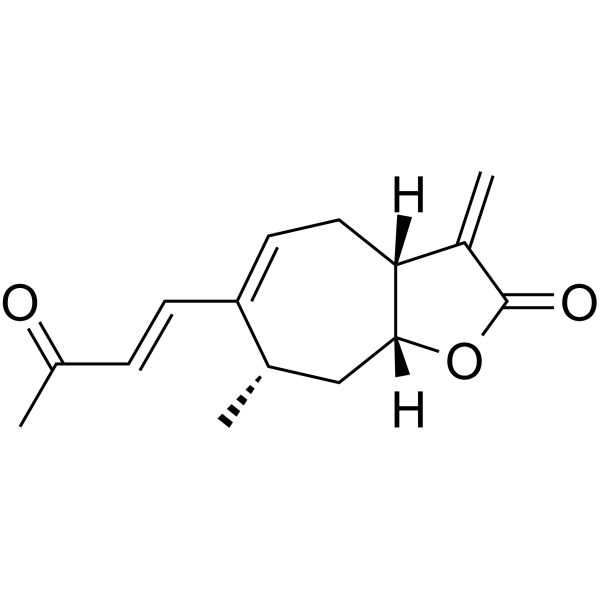
8-Epixanthatin is a potential colchicine binding site inhibitor isolated from Xanthium chinese Mill. 8-Epixanthatin can inhibit the activation of STAT3, induce apoptosis, and has anti-tumor activity .
loading...
    loading...
1
1 Cited Publications
Cat. No.: HY-150761
Purity:  99.56%
Research Areas:  

Cancer

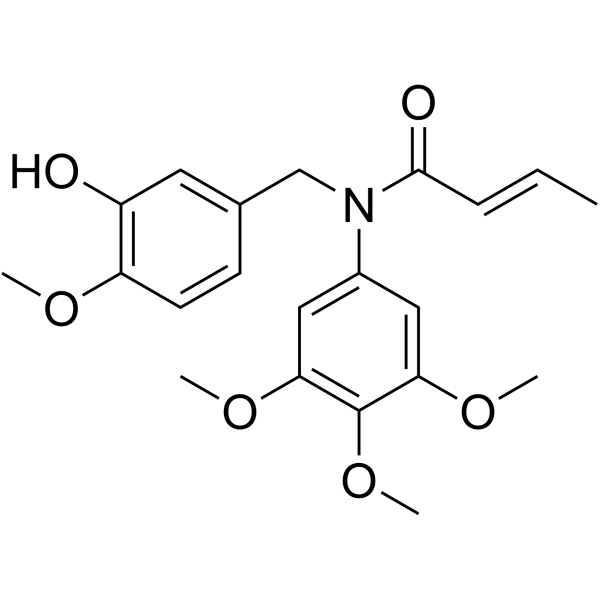
MY-875 is a competitive microtubulin polymerization inhibitor with an IC50 value of 0.92 μM. MY-875 inhibits microtubulin polymerization by targeting colchicine binding sites and activates the Hippo pathway. MY-875 induces apoptosis and has anticancer activity .
loading...
    loading...
Cat. No.: HY-112749
CAS No.: 1374524-68-1
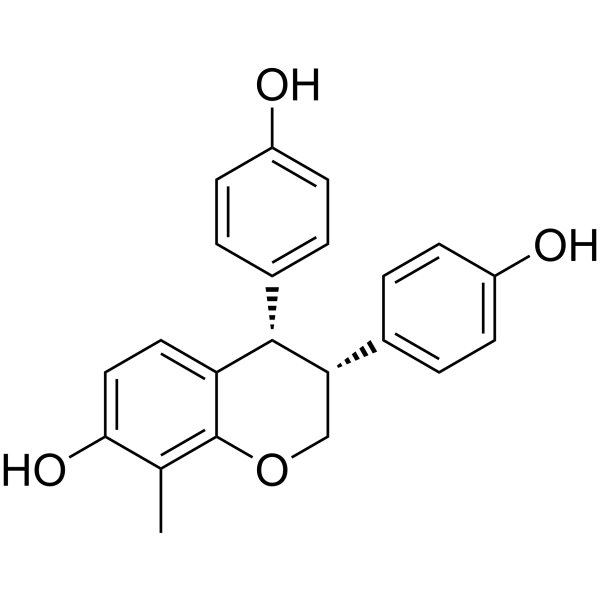
ME-344 is an Isoflavone. ME-344 increases mitochondrial ROS generation. ME-344 inhibits tubulin polymerization. ME-344 inhibits HO-1 and impacts its mitochondrial translocation. ME-344 induces Apoptosis through Caspase 3 activation. ME-344 synergizes with Vinblastine in leukemia cells. ME-344 displays anti-tumor activity against leukemia and lung tumor. ME-344 can be used in the research of lung cancer, acute myeloid leukemia, and HER2-negative breast cancer .
loading...
    loading...
Cat. No.: HY-176537
CAS No.: 3055038-20-2
Target:  

Microtubule/Tubulin

Research Areas:  

Cancer

RGN6024 is a brain-penetrant, orally active and reversible small molecule tubulin destabilizer. RGN6024 inhibits microtubule polymerization both in biochemical and cellular assays, binds to the colchicine binding pocket of β-tubulin (SPR: Kd = 6.7 μM; tryptophan assay: Kd = 7.4 μM), and triggers G2/M arrest in glioblastoma (GB) cells. RGN6024 retains activity in βIII-tubulin overexpressing cells. RGN6024 inhibits tumor growth in a GB xenograft mouse model. RGN6024 can be used for the study of glioblastoma (GB) .
loading...
    loading...
Cat. No.: HY-121524
CAS No.: 1803242-21-8
Purity:  99.36%
Target:  

Microtubule/Tubulin

Research Areas:  

Cancer

DJ101 is a potent and metabolically stable tubulin inhibitor. DJ101 targets the colchicine binding site and overcomes taxane resistance. DJ101 also inhibits melanoma tumor growth and lung metastasis. DJ101 can be used for prostate cancer research .
loading...
    loading...
Cat. No.: HY-149414
CAS No.: 2944459-96-3
Purity:  98.60%
Research Areas:  

Cancer

MY-673 is a colchicine binding site inhibitor (CBSI), that inhibits tubulin polymerization. MY-673 inhibits the ERK signaling pathway, which in turn affects SMAD4 protein expression levels in the TGF-β/SMAD pathway. MY-673 inhibited cell proliferation, migration and induced apoptosis in vivo and in vitro .
loading...
    loading...
Cat. No.: HY-106825
CAS No.: 51213-99-1
Purity:  99.53%
Target:  

Microtubule/Tubulin

Research Areas:  

Cancer

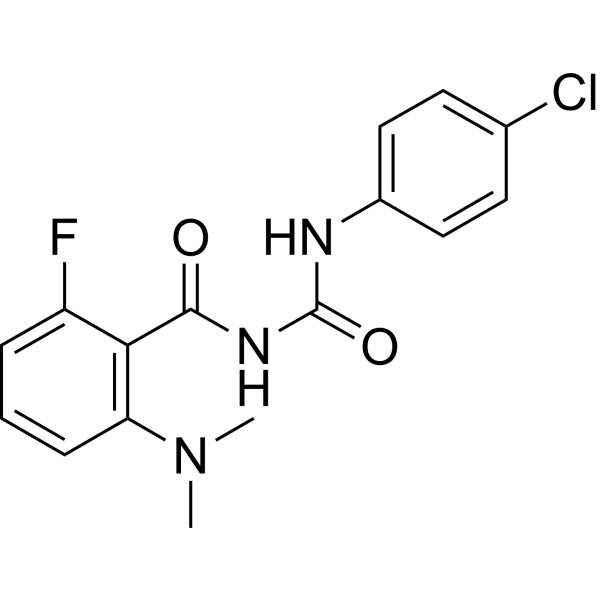
Clanfenur is a substituted benzoylphenylurea, an analogue of the pesticide fenfluramide, with potential antineoplastic activity. Clanfenur can bind to the colchicine-binding site on β-tubulin, inhibit microtubule polymerization, and thus prevent tumor cell replication .
loading...
    loading...
Cat. No.: HY-Z8644
CAS No.: 7411-12-3
Synonyms: N-Formyl-N-deacetylcolchicine
Research Areas:  

Cancer

N-Deacetyl-N-formylcolchicine (N-Formyl-N-deacetylcolchicine, Compound 11) is a selective inhibitor targeting the colchicine-binding site of tubulin. N-Deacetyl-N-formylcolchicine shows antiproliferative activity against various cancer cell lines with IC50 values of 32.61-100.28 nM. N-Deacetyl-N-formylcolchicine inhibits microtubule polymerization to block cell division, induces cancer cell apoptosis and suppresses migration. N-Deacetyl-N-formylcolchicine is promising for research of cancers such as lung cancer and various solid tumors .
loading...
    loading...
Cat. No.: HY-101741
CAS No.: 256934-83-5
Synonyms: A-289099
Research Areas:  

Cancer

A-259745 is an orally active antimitotic agent that binds to the colchicine-binding site of tubulin. A-259745 exhibits potent in vitro cytotoxic activity against both multi-drug-resistant and non-multi-drug-resistant cancer cell lines, with ED50 values of 0.018 μM against HCT-15 and 0.028 μM against NCI-H460 cell lines. A-259745 inhibits tubulin polymerization, disrupts the dynamic equilibrium of the mitotic spindle, arrests dividing cells in metaphase, and subsequently induces apoptosis. A-259745 shows dose-dependent antitumor efficacy in murine tumor models. A-259745 can be used for the study of cancer .
loading...
    loading...
Cat. No.: HY-152156
CAS No.: 2366260-33-3
Purity:  99.92%
Research Areas:  

Cancer

Tubulin inhibitor 11 is a potent and orally active tubulin inhibitor. Tubulin inhibitor 11 targets the Colchicine binding site on tubulin, inhibits tubulin polymerization, promotes mitotic blockade and apoptosis .
loading...
    loading...
Cat. No.: HY-W674149
CAS No.: 1253697-93-6
Target:  

Microtubule/Tubulin

Research Areas:  

Cancer

ABI-274 is a tubulin and colchicine binding site inhibitor. ABI-274 significantly promotes cancer cell apoptosis in vitro when combined with vemurafenib (HY-12057). ABI-274 exhibits potent synergistic efficacy in the vemurafenib-resistant xenograft model in nude mice. ABI-274 can be studied in research on melanoma .
loading...
    loading...
Cat. No.: HY-162594
CAS No.: 2757188-21-7
Target:  

Microtubule/Tubulin

Research Areas:  

Cancer

Antitumor agent-164 (compound 60c) is a colchicine-binding site inhibitor (CBSI) with potency against taxane-sensitive TNBC. Antitumor agent-164 is a next-generation derivative of VERU-111 .
loading...
    loading...
Cat. No.: HY-118748
CAS No.: 1477482-50-0
Purity:  ≥98.0%
Synonyms: SRF
Target:  

Microtubule/Tubulin

Research Areas:  

Cancer

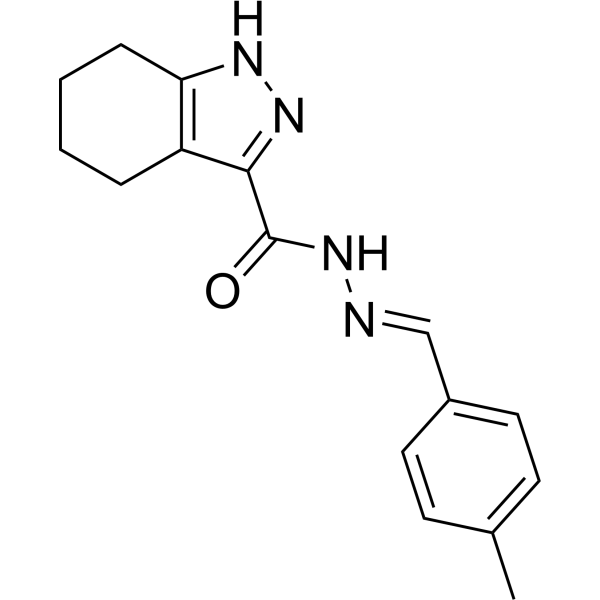
Suprafenacine is a cell permeable, tubulin-destabilizing molecule which bind microtubules at the colchicine-binding site and inhibit polymerization. Suprafenacine can induce G2/M cell cycle arrest and apoptosis, and can be used for cancer research .
loading...
    loading...
Cat. No.: HY-175698
Ferroptosis inducer-9 is a ferroptosis inducer and colchicine site tubulin polymerization inhibitor. Ferroptosis inducer-9 inhibits MCF-7 cell growth with an IC50 of 14 nM and inhibits [ 3H]colchicine binding. Ferroptosis inducer-9 reduces expression of GPX4 and FTH, increases COX2 and ACSL4, lowers GSH, NADP+, and NADPH levels, increases LPO, MDA, and Fe(II) levels, and decreases SOD concentrations. Ferroptosis inducer-9 demonstrates significant anti-tumor efficacy in HCT116 CRC xenograft model. Ferroptosis inducer-9 can be used for the study of triple negative breast cancer (TNBC) and colorectal cancer (CRC) .
loading...
    loading...
Cat. No.: HY-176283
Tubulin/LSD1-IN-1 is an effective dual inhibitor of Tubulin polymerization and LSD1 (IC50 = 1.72 μM). Tubulin/LSD1-IN-1 has broad-spectrum antiproliferative activity against cancer cell lines. Tubulin/LSD1-IN-1 inhibits tubulin polymerization by targeting colchicine binding sites, thereby disrupting the microtubule network in gastric cancer cells. Tubulin/LSD1-IN-1 increases the methylation levels of H3K4me1/2 and H3K9me2/3, thereby achieving epigenetic regulation. Tubulin/LSD1-IN-1 induces G2/M arrest, promotes apoptosis, and effectively inhibits colony formation of gastric cancer cells .
loading...
    loading...
Cat. No.: HY-162227
CAS No.: 2975168-22-8
Research Areas:  

Cancer

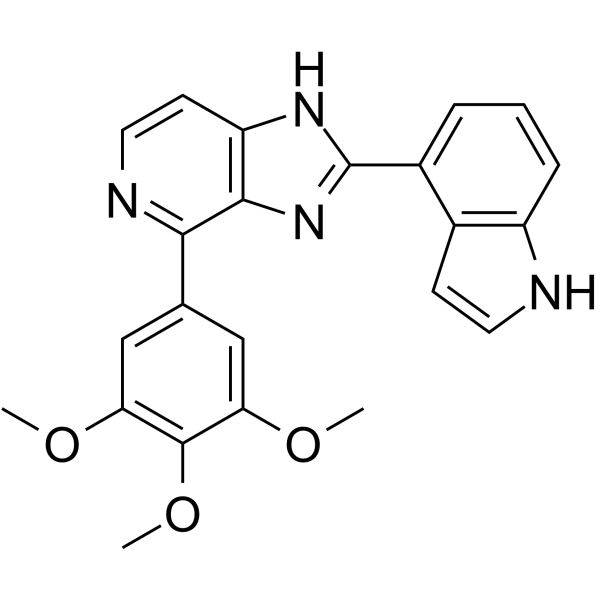
Antitumor agent-138 (compound 5b) is an inhibitor against tubulin polymerization at tubulin colchicine-binding sites, with IC50 of 1.87 μM. Antitumor agent-138 arrests the cell cycle at G2/M phase and induces an apoptosis in MCF-7 cells. Antitumor agent-138 inhibits cells migration and angiogenesis .
loading...
    loading...

