15 Results for "

coordination chemistry

" in MedChemExpress (MCE) Product Catalog:
Products (15)

15 Results for "coordination chemistry" in MCE Product Catalog:

Cat. No.: HY-W027592
CAS No.: 61-82-5
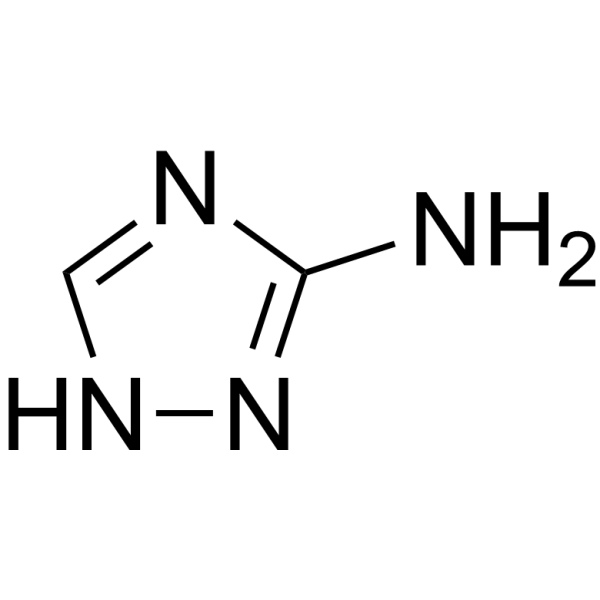
1H-1,2,4-Triazol-3-amine consists of a triazole ring system and an amino group attached to carbon atom 3. The compound has potential applications in various fields such as medicinal chemistry, agrochemicals and material science. In medicinal chemistry, 1H-1,2,4-Triazol-3-amine is used as a starting material for the synthesis of pharmaceutical compounds such as antifungal agents, anticancer agents, and enzyme inhibitors associated with cardiovascular disease. In agrochemicals, it can be used as a raw material for the synthesis of herbicides, fungicides and insecticides. Furthermore, 1H-1,2,4-Triazol-3-amine is used as a ligand in coordination chemistry and as a precursor for the production of new functional materials such as polymers and metal-organic frameworks.
loading...
    loading...
Cat. No.: HY-118159
CAS No.: 110231-30-6
Purity:  99.68%
Synonyms: DPPP
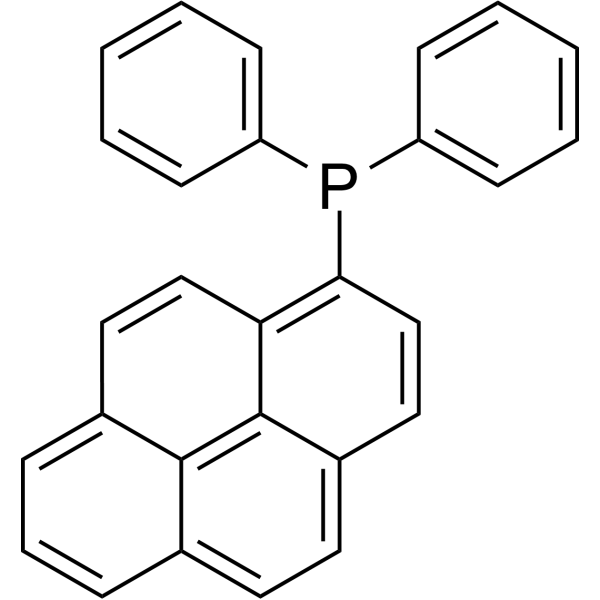
Diphenyl-1-pyrenylphosphine (DPPP) is a functional organic molecule with both fluorescent properties and metal coordination ability, which is commonly used in materials and coordination chemistry research. Upon exposure to ultraviolet light, Diphenyl-1-pyrenylphosphine undergoes photoinduced phosphorus atom oxidation to form O-DPPP, triggering a transition from aggregation-induced emission (AIE) to aggregation-caused quenching (ACQ). Diphenyl-1-pyrenylphosphine reacts stoichiometrically with lipid hydroperoxides to produce fluorescent diphenyl-1-pyrenylphosphine oxide. Diphenyl-1-pyrenylphosphine can insert into cell membranes to monitor lipid peroxidation processes in living cells .
loading...
    loading...
Cat. No.: HY-W012683
CAS No.: 142-73-4
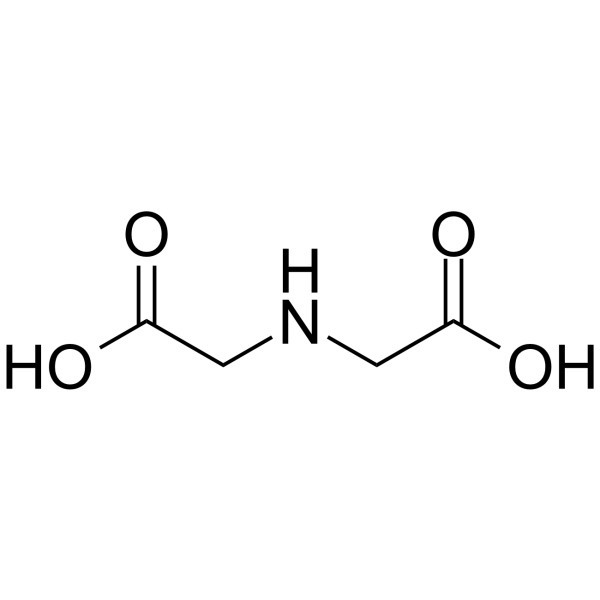
Iminodiacetic acid is a metal ion chelator targeting Cr 6+, Cd 2+, Ni 2+, and Pb 2+. Iminodiacetic acid selectively and irreversibly binds metal ions through the coordination of carboxyl and imino groups, reduces the toxicity of metal ions and promotes their adsorption and separation. Iminodiacetic acid has the functions of heavy metal ion removal and coordination complex stabilization. Iminodiacetic acid is often used in environmental pollution control (such as heavy metal adsorption in water) and coordination chemistry (such as metal ion detection and separation) research .
loading...
    loading...
Cat. No.: HY-W010341
CAS No.: 1452-63-7
Research Areas:  

Others

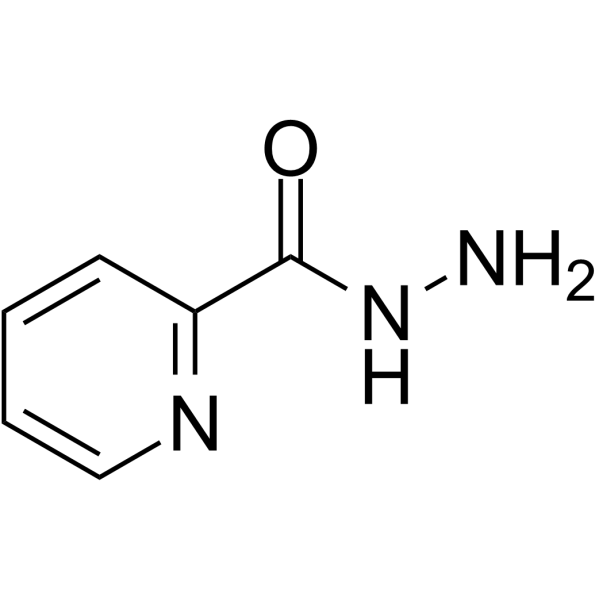
2-Pyridinecarbohydrazide is a versatile heterocyclic building block widely used in medicinal chemistry and coordination chemistry, and it finds extensive applications in various synthetic fields. 2-Pyridinecarbohydrazide reacts with the reducing end of carbohydrates to enhance mass spectrometry ionization efficiency, enabling isomer-specific identification of monosaccharides, disaccharides, ketoses/aldoses, and quantitative mass spectrometry imaging of biological tissues .
loading...
    loading...
Cat. No.: HY-W244398
CAS No.: 13239-97-9
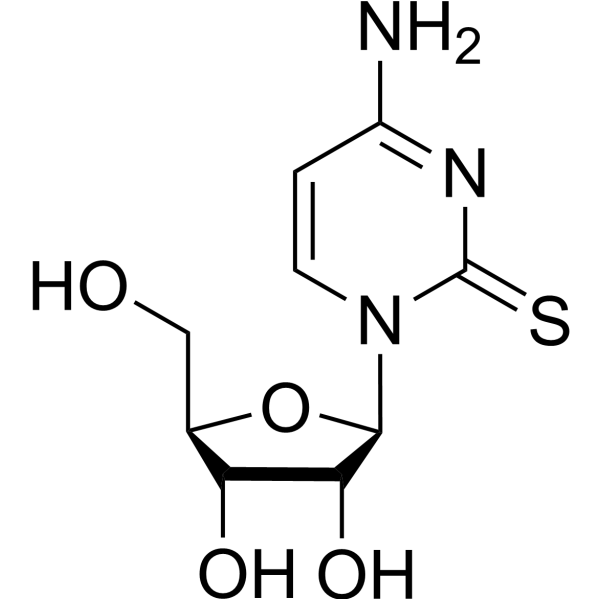
2-Thiocytidine is a natural thionucleoside in prokaryotic tRNA, which is biosynthesized under the catalysis of intracellular sulfur transferase systems and possesses multiple activities such as metal coordination and nucleic acid conformation regulation. 2-Thiocytidine forms stable Zn 2+ and Cd 2+ complexes via its (C2) S group, with partial involvement of N3; metal binding acidifies the deprotonation process of (C4) NH2. 2-Thiocytidine can be used in related research in various fields including nanotechnology and click chemistry for interstrand DNA crosslinking .
loading...
    loading...
Cat. No.: HY-164574
CAS No.: 2565792-45-0
BCN-DOTA is a cyclooctyne-linked DOTA chelator. BCN-DOTA integrates BCN and DOTA, enabling conjugation with azide-functionalized groups via the click chemistry properties of BCN, while binding to metal ions through the coordination capacity of DOTA. BCN-DOTA can serve as a radionuclide-drug conjugate (RDC) to target specific biomolecules, cells or tissues after radiolabeling with zirconium-89. BCN-DOTA is applicable to research related to PET imaging and targeted therapy .
loading...
    loading...
Cat. No.: HY-70026
CAS No.: 6163-58-2
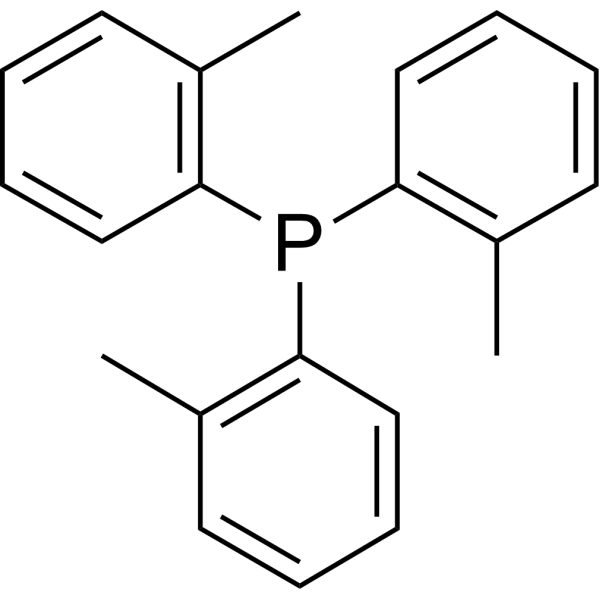
Tri (2-methylphenyl) phosphine is a sterically hindered tertiary phosphine ligand. Tri (2-methylphenyl) phosphine forms a 1:1 crystalline adduct with copper (I) halides CuX (X = Cl, Br, I), yielding a centrosymmetric dinuclear copper (I) complex bridged by dihalides. Tri (2-methylphenyl) phosphine is applicable to coordination chemistry, synthesis of copper (I) halide complexes, and structural and spectral studies of phosphine-metal halide complexes .
loading...
    loading...
Cat. No.: HY-21626
CAS No.: 5720-05-8
Synonyms: p-Tolylboronic acid
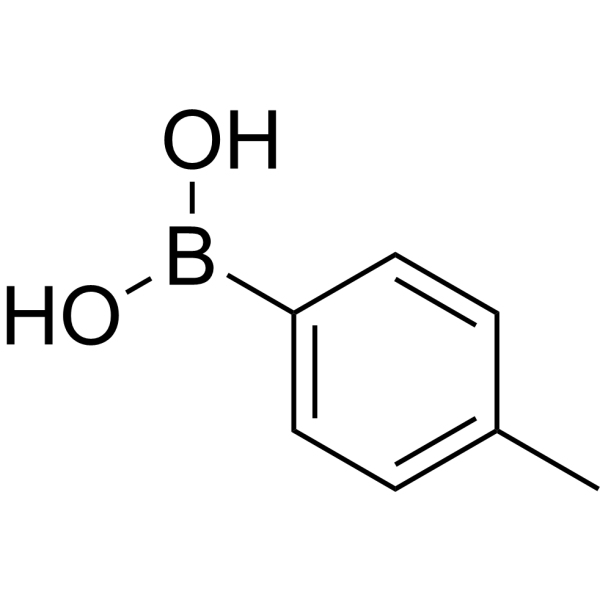
4-Tolylboronic acid is an organoboron compound with important chemical applications. It can be used as an important intermediate in organic synthesis for the synthesis of organic compounds such as drugs, pesticides, and cosmetics, as well as for the research of coordination chemistry and material science. Due to its high chemical reactivity, 4-Tolylboronic acid has become a widely used reagent in organic synthesis.
loading...
    loading...
Cat. No.: HY-W124377
CAS No.: 581-46-4
Synonyms: 3,3'-Dipyridyl
Target:  

MOFs Drug Intermediate

Research Areas:  

Others

3,3'-Bipyridine (3,3'-Dipyridyl) is a ligand used in coordination chemistry. 3,3'-Bipyridine can combine with BINOL to facilitate catalytic reactions .
loading...
    loading...
Cat. No.: HY-W012683R
CAS No.: 142-73-4
Iminodiacetic acid is a metal ion chelator targeting Cr6+, Cd2+, Ni2+, and Pb2+. Iminodiacetic acid selectively and irreversibly binds metal ions through the coordination of carboxyl and imino groups, reduces the toxicity of metal ions and promotes their adsorption and separation. Iminodiacetic acid has the functions of heavy metal ion removal and coordination complex stabilization. Iminodiacetic acid is often used in environmental pollution control (such as heavy metal adsorption in water) and coordination chemistry (such as metal ion detection and separation) research .
loading...
    loading...
Cat. No.: HY-176858
CAS No.: 35514-17-1
Research Areas:  

Others

N,N'-Bis(3-aminopropyl)oxamide is an oxamide-bridged ligand compound typically utilized as a biocuring agent, a chemical building block for bio-based curing agents, and a coordination ligand in organometallic and supramolecular chemistry .
loading...
    loading...
Cat. No.: HY-W013327
CAS No.: 6372-42-5
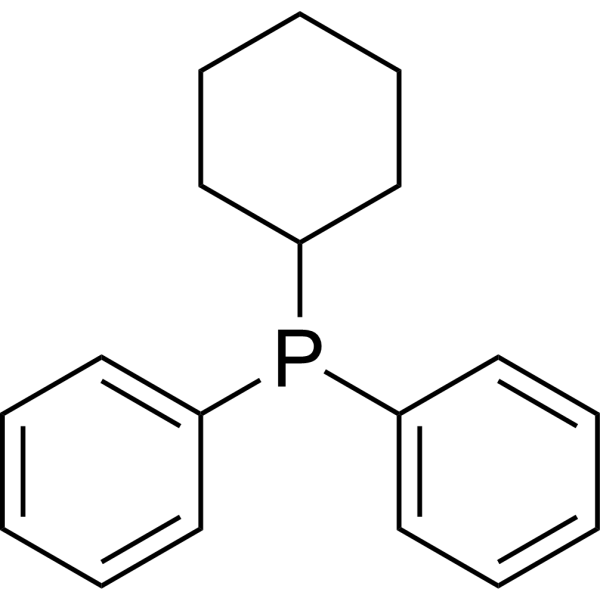
Cyclohexyldiphenylphosphine is a chemical compound commonly used as a ligand in coordination chemistry and organometallic synthesis. Cyclohexyldiphenylphosphine facilitates various catalytic reactions through acting as a stabilizing agent. Cyclohexyldiphenylphosphine is a ligand for some nickel(II) complexes. Cyclohexyldiphenylphosphine exhibits anti-cancer properties against SNO cancer cells when formed complex with silver .
loading...
    loading...
Cat. No.: HY-W027592R
CAS No.: 61-82-5
1H-1,2,4-Triazol-3-amine (Standard) is the analytical standard of 1H-1,2,4-Triazol-3-amine. This product is intended for research and analytical applications. 1H-1,2,4-Triazol-3-amine consists of a triazole ring system and an amino group attached to carbon atom 3. The compound has potential applications in various fields such as medicinal chemistry, agrochemicals and material science. In medicinal chemistry, 1H-1,2,4-Triazol-3-amine is used as a starting material for the synthesis of pharmaceutical compounds such as antifungal agents, anticancer agents, and enzyme inhibitors associated with cardiovascular disease. In agrochemicals, it can be used as a raw material for the synthesis of herbicides, fungicides and insecticides. Furthermore, 1H-1,2,4-Triazol-3-amine is used as a ligand in coordination chemistry and as a precursor for the production of new functional materials such as polymers and metal-organic frameworks.
loading...
    loading...
Cat. No.: HY-185401
CAS No.: 63618-91-7
Target:  

MOFs

Research Areas:  

Cancer

ATSM is a ligand that forms complexes with Cu 2+, Ni 2+, Zn 2+, and Fe 2+, with the highest affinity for Cu 2+. ATSM forms Cu-ATSM with copper, which is used for PET imaging to detect tumor hypoxia. ATSM is commonly used in coordination chemistry and radiopharmaceutical research .
loading...
    loading...
Cat. No.: HY-L167
163 compounds

Boric acid is a stable and usually non-toxic group widely used in modern synthesis to form C-C and C-heteroatom bonds. Boric acid exhibits exquisite reversible coordination characteristics and can be explored as a molecular construction tool, with specific mechanisms for controlling the structure and biological characteristics of bioconjugates. Boric acid has various activities, such as anticancer, antibacterial, and antiviral activities. In drugs, boric acid mainly exists in the form of arylboronic acid. In addition to this form, heterocycles containing boric acid, such as pyridine, pyrrole, and indole derivatives, are also very useful in pharmaceutical chemistry. Molecular modification by introducing boric acid groups into bioactive molecules has been shown to alter selectivity, physicochemical, and pharmacokinetic characteristics, and improve existing activity.

MCE designs a unique collection of 163 boronic acid compounds. It is a good tool to be used for research on cancer and other diseases.

  • 1

