From 11:00 pm to 12:00 pm EST ( 8:00 pm to 9:00 pm PST ) on January 6th, the website will be under maintenance. We are sorry for the inconvenience. Please arrange your schedule properly.
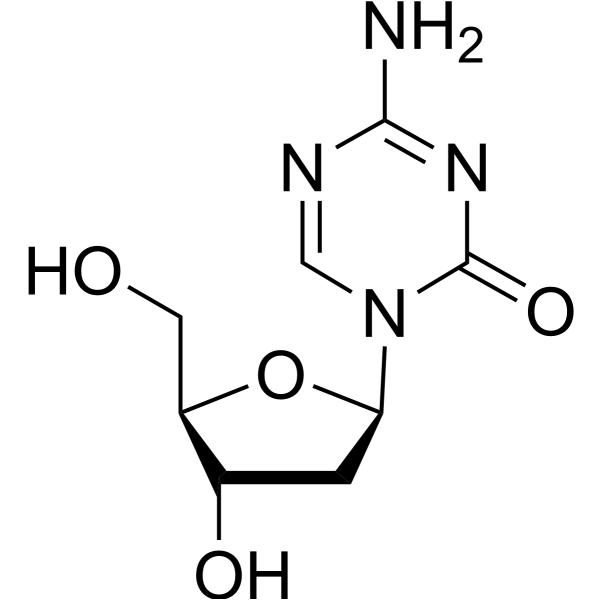
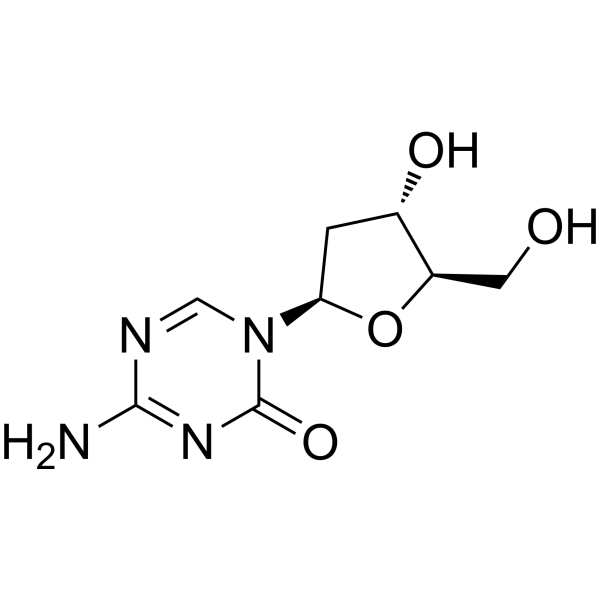
Decitabine (NSC 127716) is an orally active deoxycytidine analogue antimetabolite and a DNA methyltransferase inhibitor. Decitabine incorporates into DNA in place of cytosine can covalently trap DNA methyltransferase to DNA causing irreversible inhibition of the enzyme. Decitabine induces cell G2/M arrest and cell apoptosis. Decitabine has potent anticancer activity .
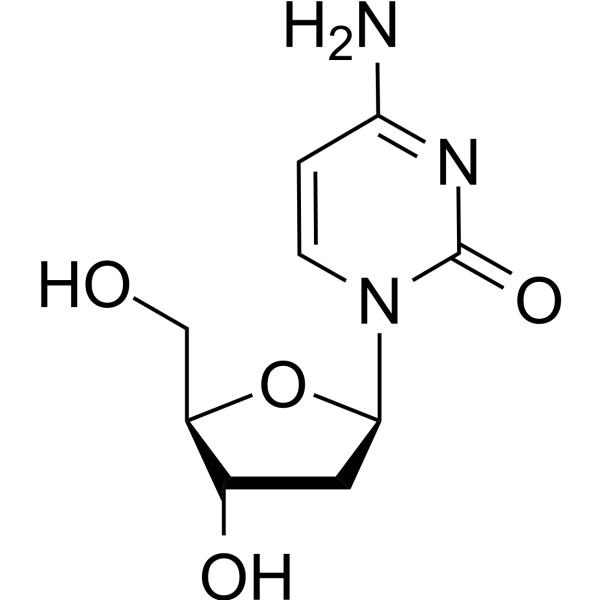
2'-Deoxycytidine, a deoxyribonucleoside, can inhibit biological effects of Bromodeoxyuridine (Brdu). 2'-Deoxycytidine is essential for the synthesis of nucleic acids, that can be used for the research of cancer .
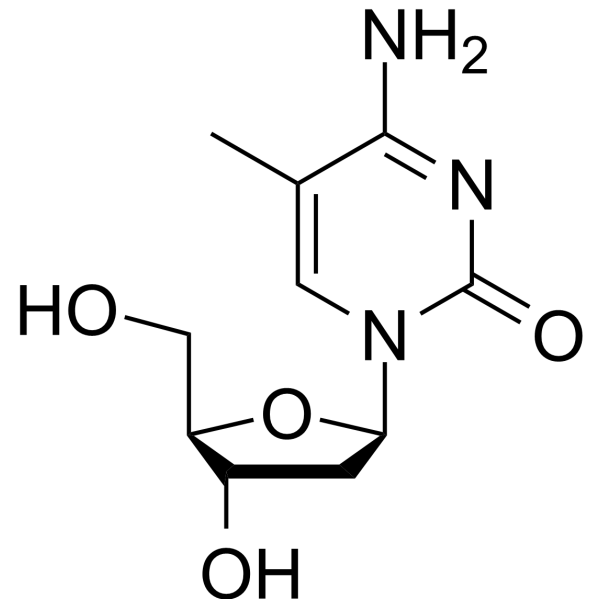
5-Methyl-2'-deoxycytidine (5mdC) is an endogenous substrate of DNA methyltransferases (such as mammalian 5-C-MTase) and binds to DNA dependent on the formation of DNA stem-loop structures. 5-Methyl-2'-deoxycytidine guides de novo DNA methylation by acting as a methylation mark and activates the methylation of adjacent CpG sites in single-stranded DNA through cis action. 5-Methyl-2'-deoxycytidine regulates DNA methylation patterns by recruiting methyltransferases to specific chromatin regions, affecting chromatin condensation and gene expression. Its distribution in plant cells is related to cell proliferation and differentiation stages. The methylation level of 5-Methyl-2'-deoxycytidine is low in proliferating cells and high in differentiated cells .
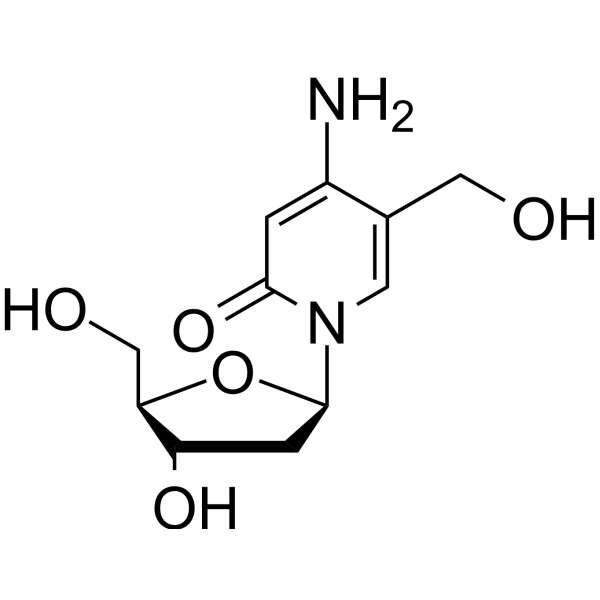
5-Hydroxymethyl-2’-deoxycytidine (5hmdC) is an oxidation derivative of 5-methyl-2'-deoxycytidine (5-mdC) in DNA. 5-Hydroxymethyl-2’-deoxycytidine may serve as a marker of irreversibly damaged cells .
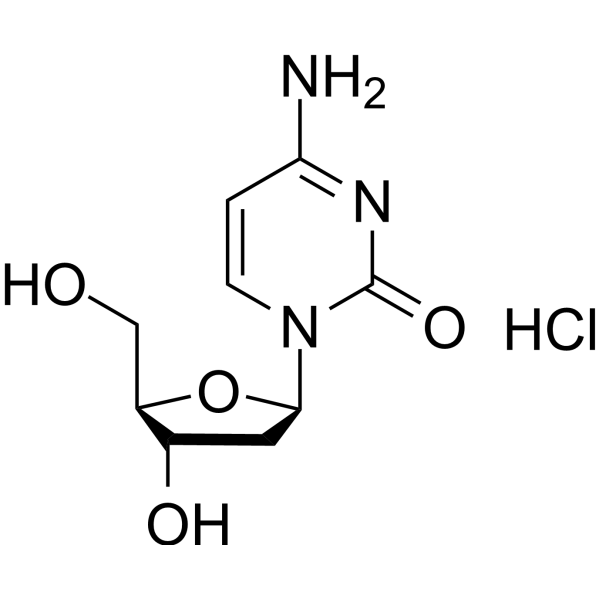
2'-Deoxycytidine hydrochloride is an orally effective nucleic acid biosynthesis enzyme inhibitor. 2'-Deoxycytidine hydrochloride competes with nucleic acid biosynthesis enzymes and nucleoside transporters, thereby reducing the toxicity of cytarabine. 2'-Deoxycytidine (hydrochloride) can be used in the research of L1210 lymphoblastic leukemia .
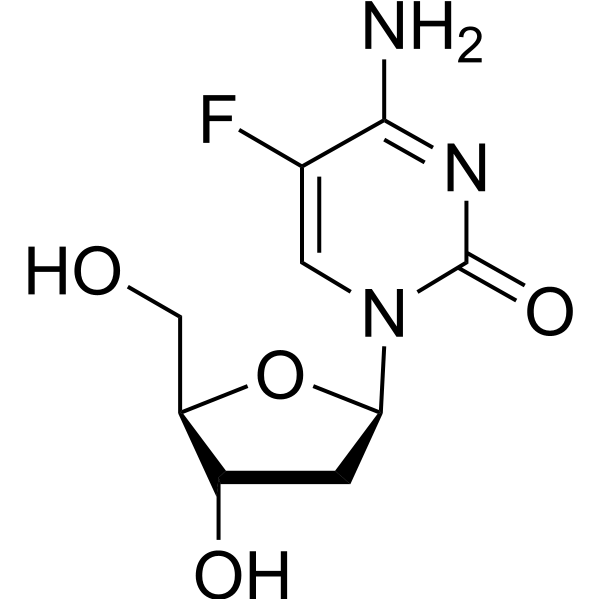
5-Fluoro-2'-deoxycytidine (FdCyd), a fluoropyrimidine nucleoside analogue, is a DNA methyltransferase (DNMT) inhibitor. 5-Fluoro-2'-deoxycytidine is a tumor-selective proagent of thymidylate synthase inhibitor 5-fluoro-2′-dUMP. 5-Fluoro-2'-deoxycytidine can induce cell cycle arrest in tumor cells through the DNA damage response, and it has anti-tumor activity .
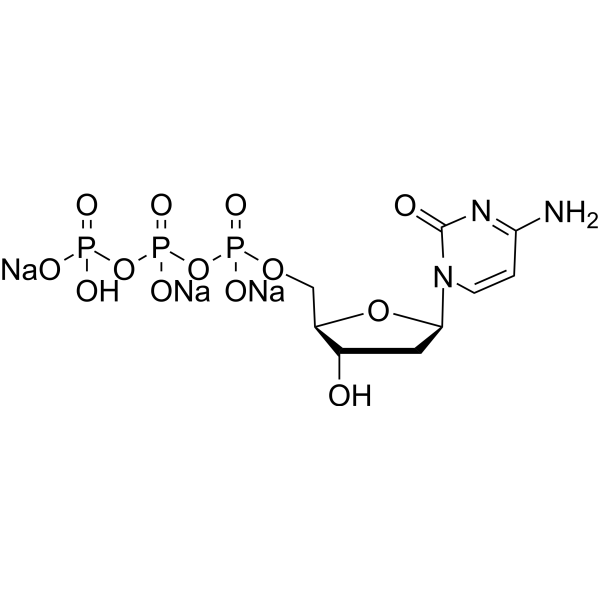
Deoxycytidine triphosphate trisodium (dCTP trisodium) solution (100 mM) is a nucleoside triphosphate that can be used for DNA synthesis. Deoxycytidine triphosphate trisodium salt has many applications, such as real-time PCR, cDNA synthesis, and DNA sequencing .
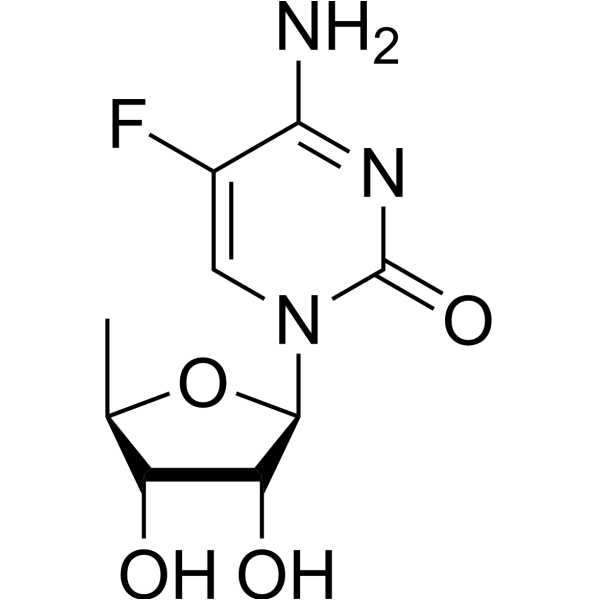
5'-Deoxy-5-fluorocytidine (5-Fluoro-5'-deoxycytidine) is a cytidine analog and metabolite of Capecitabine (HY-B0016). 5'-Deoxy-5-fluorocytidine is converted from Capecitabine by carboxylesterase in the liver. 5'-Deoxy-5-fluorocytidine is deaminated by cytidine deaminase to generate 5'-deoxy-5-fluorouridine, which is finally converted into 5-fluorouracil (HY-90006) by thymidine phosphorylase in tumor tissues to exert anti-tumor effects. 5'-Deoxy-5-fluorocytidine is used in the researches for solid tumors such as colorectal cancer, non-small cell lung cancer and breast cancer .
3′-Deoxyuridine is a 3'-deoxynucleoside analog and a 2',3'-dideoxynucleoside. 3′-Deoxyuridine does not inhibit the replication of HCV-like RNA templates or luciferase levels in human cells at the tested concentrations. 3′-Deoxyuridine serves as a substrate for microbial dideoxyribosylation reactions to generate various 2',3'-dideoxynucleosides, but cannot be converted into 2',3'-dideoxycytidine by resting E. coli AJ 2595 cells. 3′-Deoxyuridine can be formed by the deamination of 3'-deoxycytidine by E. coli BM-11 cytidine deaminase, and can also undergo phosphorolytic cleavage to produce uracil and the corresponding pentose phosphate. 3′-Deoxyuridine has been used in research related to HCV and other relevant fields .
Cidofovir diphosphate tri triethylamine is an active intracellular metabolite of Cidofovir. Cidofovir diphosphate tri triethylamine is a selective inhibitor of viral DNA polymerases with Ki values of 6.6, 0.86 and 1.4 μM for HCMV, HSV-1 and HSV-2 DNA polymerase, respectively .
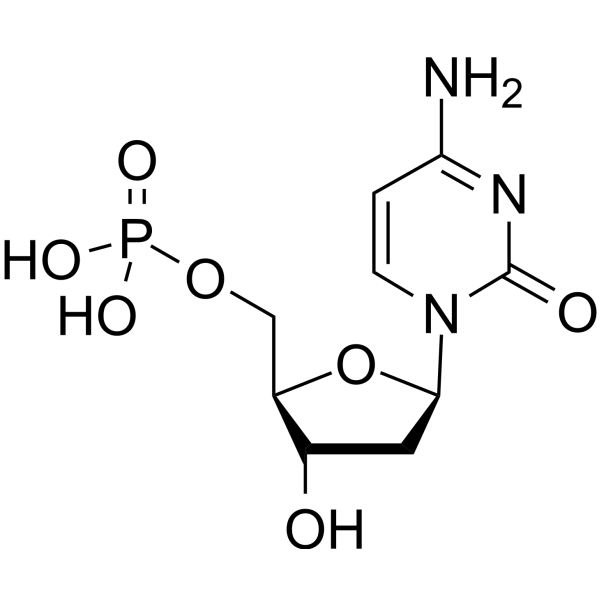
2'-Deoxycytidine-5'-monophosphate (5'-dCMP) is a compound that binds to the adenovirus terminal protein with a molecular weight of 80000 daltons. 2'-Deoxycytidine-5'-monophosphate forms a covalent complex with this protein and is associated with adenovirus DNA replication .
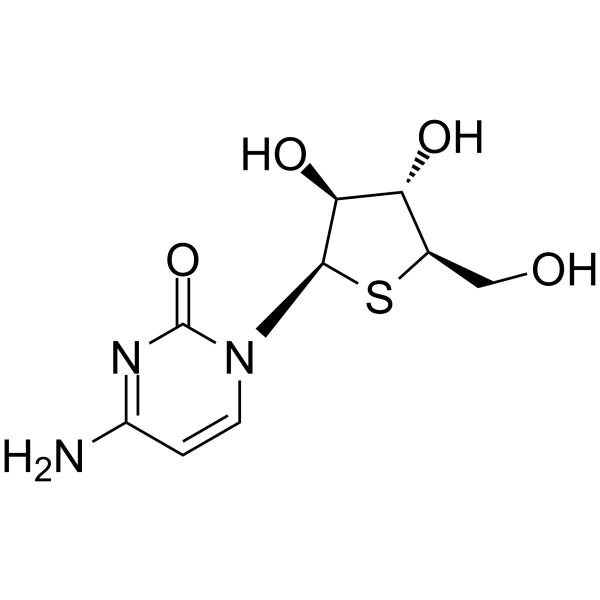
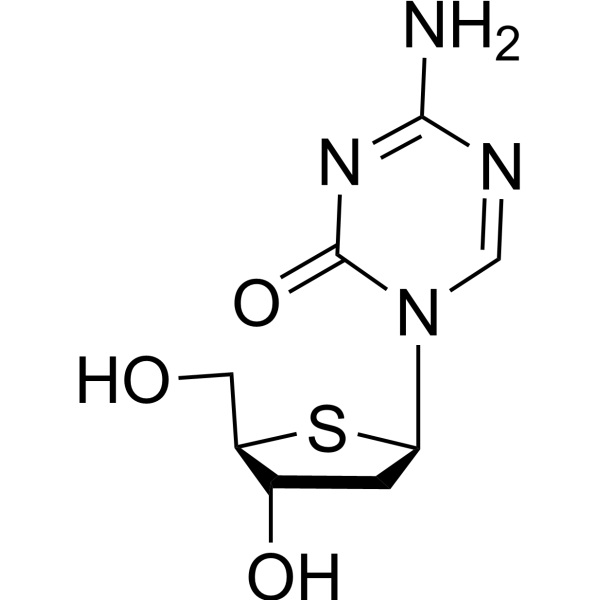
5-Aza-4'-thio-2'-deoxycytidine (5-Aza-T-dCyd) is an orally active DNA methyltransferase I (DNMT1) inhibitor. 5-Aza-4'-thio-2'-deoxycytidine, a sulfur-containing deoxy-cytidine analog, has the potential for DNA hypomethylating and has antitumor effects .
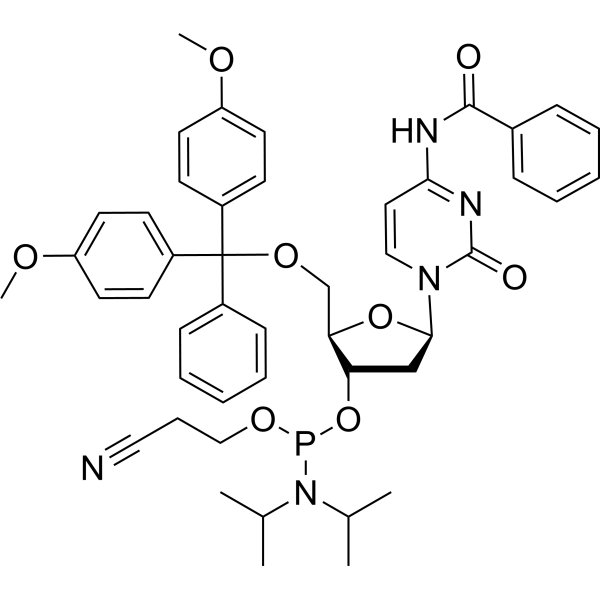
DMT-dC (bz) Phosphoramidite is a protected deoxycytidine phosphoramidite monomer, as well as a building block for mechanochemical DNA synthesis. DMT-dC (bz) Phosphoramidite serves as a reagent for oligonucleotide synthesis.
Decitabine (Standard) is the analytical standard of Decitabine. This product is intended for research and analytical applications. Decitabine (NSC 127716) is an orally active deoxycytidine analogue antimetabolite and a DNA methyltransferase inhibitor. Decitabine incorporates into DNA in place of cytosine can covalently trap DNA methyltransferase to DNA causing irreversible inhibition of the enzyme. Decitabine induces cell G2/M arrest and cell apoptosis. Decitabine has potent anticancer activity .
Deoxycytidine triphosphate (dCTP; 2′-Deoxycytidine-5′-triphosphate) disodium is a nucleoside triphosphate that can be used for DNA synthesis. Deoxycytidine triphosphate has many applications, such as real-time PCR, cDNA synthesis, and DNA sequencing .
5-Methyl-2'-deoxycytidine-d3 (5-Methyldeoxycytidine-d3) is the deuterium labeled Methyl-2'-deoxycytidine (HY-W012078). 5-Methyl-2'-deoxycytidine (5mdC) is an endogenous substrate of DNA methyltransferases (such as mammalian 5-C-MTase) and binds to DNA dependent on the formation of DNA stem-loop structures. 5-Methyl-2'-deoxycytidine guides de novo DNA methylation by acting as a methylation mark and activates the methylation of adjacent CpG sites in single-stranded DNA through cis action. 5-Methyl-2'-deoxycytidine regulates DNA methylation patterns by recruiting methyltransferases to specific chromatin regions, affecting chromatin condensation and gene expression. Its distribution in plant cells is related to cell proliferation and differentiation stages. The methylation level of 5-Methyl-2'-deoxycytidine is low in proliferating cells and high in differentiated cells .
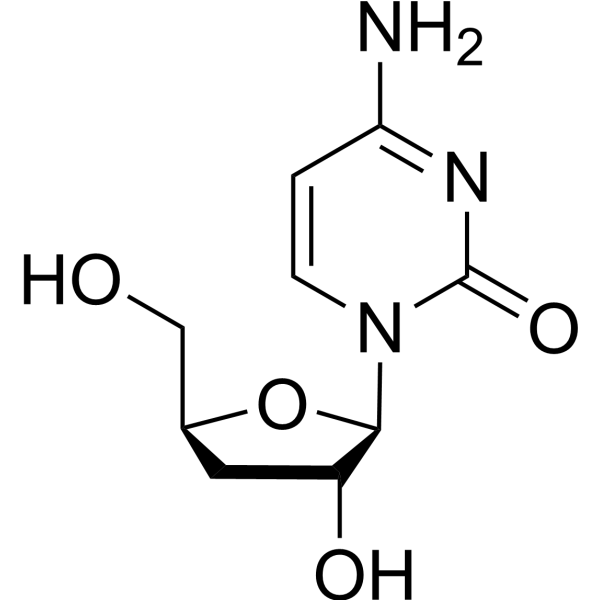
4-Amino-1-((2R,3R,5S)-3-hydroxy-5-(hydroxymethyl)tetrahydrofuran-2-yl)pyrimidin-2(1H)-one (3'-Deoxycytidine) is a purine nucleoside analogue. Purine nucleoside analogs have broad antitumor activity targeting indolent lymphoid malignancies. Anticancer mechanisms in this process rely on inhibition of DNA synthesis, induction of apoptosis, etc .
Cefaclor (monohydrate) (Standard) is the analytical standard of Cefaclor (monohydrate). This product is intended for research and analytical applications. Cefaclor is a well-absorbed orally active cephalosporin antibiotic. Cefaclor can specifically bind to specific for penicillin-binding protein 3 (PBP3). Cefaclor can be used for the research of depression and kinds of infections caused by bacteria, such as respiratory tract infections, bacterial bronchitis, pharyngitis and skin infections .
5-Bromo-2'-deoxycytidine is a DNA photosensitizer. 5-Bromo-2'-deoxycytidine modifies the double-stranded DNA, and determinate the DNA damage 300 nm photon .
2'-Deoxycytidine- 15N3 is the 15N labeled 2'-Deoxycytidine . 2'-Deoxycytidine, a deoxyribonucleoside, could inhibit biological effects of Bromodeoxyuridine (Brdu) .
5-Hydroxymethyl-2'-deoxycytidine-d3 (5hmdC-d3) is the deuterium labeled 5-Hydroxymethyl-2'-deoxycytidine (HY-131394). 5-Hydroxymethyl-2’-deoxycytidine (5hmdC) is an oxidation derivative of 5-methyl-2'-deoxycytidine (5-mdC) in DNA. 5-Hydroxymethyl-2’-deoxycytidine may serve as a marker of irreversibly damaged cells .
N4-Benzoyl-5'-O-(4,4'-dimethoxytrityl)-2'-deoxycytidine (5'-O-DMT-N4-Bz-dC) can be used for synthesis oligodeoxynucleotides containing a 3'-S-phosphorothiolate (3'-PS) linkage. N4-Benzoyl-5'-O-(4,4'-dimethoxytrityl)-2'-deoxycytidine is an useful tool for probing enzyme-catalyzed cleavage processes in DNA .
5-Formyl-dCTP (5-Formyl-deoxycytidine) lithium is a DCTPP1 substrate. 5-Formyl-dCTP lithium acts as a mutagen/epigenetic disruptor via DNA polymerase incorporation, mutagenic mispairings, and disturbed epigenetic programming. 5-Formyl-dCTP lithium can be used for research on genotoxicity .
5-Hydroxy-2'-deoxyuridine (5-OHdU) is a major stable oxidation product of 2'-Deoxycytidine. 5-Hydroxy-2'-deoxyuridine can be incorporated into DNA in vitro by DNA polymerase .
4-OHE ((E)-4-Oxo-2-hexenal) is a mutagen formed by omega-3 lipid peroxidation. 4-OHE reacts with deoxyguanosine, deoxycytidine and 5-methyldeoxycytidine to form covalent adducts. 4-OHE induces apoptosis and exhibits genotoxicity. 4-OHE inhibits the growth of Gram-positive and Gram-negative bacteria, which correlates with its electrophilic reactivity towards nucleophilic biomolecules. 4-OHE is a chemical defense component of Dolycoris baccarum (sloe bug), and acts as a deterrent and toxin against insect predators .
5'-Ethynyl-2'-deoxycytidine is an inhibitor for HSV, that inhibits the cytopathic effect of HSV-1 in primary rabbit kidney cell with a MIC of 0.2 μg/mL. 5'-Ethynyl-2'-deoxycytidine inhibits the proliferation of leukemia L1210 cell with an IC50 of 64.5 μg/mL .
2’-Azido-2’-deoxycytidine is a purine nucleoside analogue. Purine nucleoside analogs have broad antitumor activity targeting indolent lymphoid malignancies. Anticancer mechanisms in this process rely on inhibition of DNA synthesis, induction of apoptosis, etc . 2’-Azido-2’-deoxycytidine is a click chemistry reagent, it contains an Azide group and can undergo copper-catalyzed azide-alkyne cycloaddition reaction (CuAAc) with molecules containing Alkyne groups. It can also undergo strain-promoted alkyne-azide cycloaddition (SPAAC) reactions with molecules containing DBCO or BCN groups. 2’-Azido-2’-deoxycytidine is an azidonucleoside,and it should be phosphorylated twice to become an inhibitor of the nucleotide reductase.
N-Acetyl-2′-deoxycytidine is a purine nucleoside analog. Purine nucleoside analogs have broad antitumor activity targeting indolent lymphoid malignancies. Anticancer mechanisms in this process rely on inhibition of DNA synthesis, induction of apoptosis, etc .
Cidofovir diphosphate is an active intracellular metabolite of Cidofovir. Cidofovir diphosphate is a selective inhibitor of viral DNA polymerases with Ki values of 6.6, 0.86 and 1.4 μM for HCMV, HSV-1 and HSV-2 DNA polymerase, respectively .
2'-Deoxycytidine-5'-monophosphoric acid (Standard) is the analytical standard of 2'-Deoxycytidine-5'-monophosphoric acid. This product is intended for research and analytical applications. 2'-Deoxycytidine-5'-monophosphate (2'-Deoxycytidine-5'-monophosphoric acid) is an endogenous metabolite. 2'-Deoxycytidine-5'-monophosphate is a deoxynucleotide building block of which DNA is made. 2'-Deoxycytidine-5'-monophosphate can be used as a substrate of UMP/CMP kinase to form dCDP upon phosphorylation to dCTP and supports DNA biosynthesis .
2-Chloro-2'-deoxycytidine is a cytidine nucleoside analog. Cytidine analogs have a mechanism of inhibiting DNA methyltransferases (such as Zebularine, HY-13420), and have potential anti-metabolic and anti-tumor activities .
2'-Deoxycytidine-5'-monophosphoric acid- 15N3 is the 15N labeled 2'-Deoxycytidine-5'-monophosphoric acid . 2'-Deoxycytidine-5'-monophosphoric acid is an endogenous metabolite.
Deoxycytidine triphosphate (dCTP; 2′-Deoxycytidine-5′-triphosphate) trisodium,100 mM Solution,PCR Grade is a nucleoside triphosphate that can be used for DNA synthesis. Deoxycytidine triphosphate trisodium,100 mM Solution,PCR Grade has many applications, such as real-time PCR, cDNA synthesis, and DNA sequencing. This product is supplied as an aqueous solution .
N4-Acetyl-5’-O-(4,4’-dimethoxytrityl)-2’-deoxycytidine is a purine nucleoside analog. Purine nucleoside analogs have broad antitumor activity targeting indolent lymphoid malignancies. Anticancer mechanisms in this process rely on inhibition of DNA synthesis, induction of apoptosis, etc .
5'-Deoxy-5-fluorocytidine (Standard) is the analytical standard of 5'-Deoxy-5-fluorocytidine (HY-W009538). This product is intended for research and analytical applications. 5'-Deoxy-5-fluorocytidine (5-Fluoro-5'-deoxycytidine) is a cytidine analog and metabolite of Capecitabine (HY-B0016). 5'-Deoxy-5-fluorocytidine is converted from Capecitabine by carboxylesterase in the liver. 5'-Deoxy-5-fluorocytidine is deaminated by cytidine deaminase to generate 5'-deoxy-5-fluorouridine, which is finally converted into 5-fluorouracil (HY-90006) by thymidine phosphorylase in tumor tissues to exert anti-tumor effects. 5'-Deoxy-5-fluorocytidine is used in the researches for solid tumors such as colorectal cancer, non-small cell lung cancer and breast cancer .
Dexelvucitabine (Reverset; d-d4FC), a Cytidine (HY-B0158) analog, is an orally active nucleoside reverse transcriptase inhibitor. Dexelvucitabine is a powerful agent against HIV-1-resistant viruses containing a thymidine analog and/or M184V mutation in the viral polymerase. Dexelvucitabine is a 2′-Deoxycytidineantiretroviral agent .
2'-Deoxycytidine-5'-monophosphoric acid- 13C9 dilithium is the 13C-labeled 2'-Deoxycytidine-5'-monophosphoric acid (HY-W009216). 2'-Deoxycytidine-5'-monophosphoric acid is an endogenous metabolite .
5-Methyl-2'-deoxycytidine (5mdC) is an endogenous substrate of DNA methyltransferases (such as mammalian 5-C-MTase) and binds to DNA dependent on the formation of DNA stem-loop structures. 5-Methyl-2'-deoxycytidine guides de novo DNA methylation by acting as a methylation mark and activates the methylation of adjacent CpG sites in single-stranded DNA through cis action. 5-Methyl-2'-deoxycytidine regulates DNA methylation patterns by recruiting methyltransferases to specific chromatin regions, affecting chromatin condensation and gene expression. Its distribution in plant cells is related to cell proliferation and differentiation stages. The methylation level of 5-Methyl-2'-deoxycytidine is low in proliferating cells and high in differentiated cells .
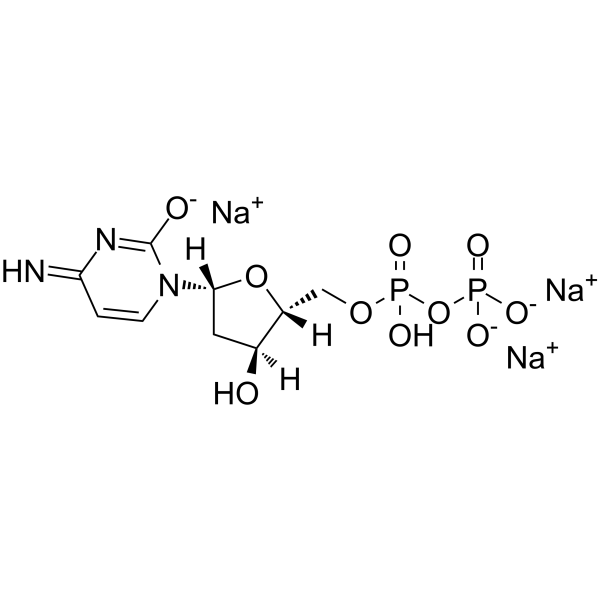
dCTPαS sodium is a labeled modified deoxyoligonucleotide (dNTP) that can release pyrophosphate to produce fluorescence and has special applications in gene synthesis and sequencing .
5-fluoro-dCTP is a fluorinated pyrimidine dNTP that can be used as a substrate for the incorporation of fluorine modification into specific DNA sequences by primer extension (PEX) catalyzed by Pwo polymerase .
2'-Deoxycytidine (hydrochloride) (Standard) is an analytical standard for 2'-Deoxycytidine (hydrochloride). This product is intended for research and analytical applications. 2'-Deoxycytidine hydrochloride is composed of the purine nucleoside guanine linked by its N9 nitrogen to the C1 carbon of deoxyribose.
4'-Ethynyl-2'-deoxycytidine is an anticancer nucleoside. 4'-Ethynyl-2'-deoxycytidine can used in study acute lymphoblastic leukemia and diffuse large B-cell lymphoma .
2'-Deoxycytidine-d13(Deoxycytidine-d13; Cytosine deoxyriboside-d13; Deoxyribose cytidine-d13) is deuterium labeled 2'-Deoxycytidine (HY-D0184). 2'-Deoxycytidine, a deoxyribonucleoside, could inhibit biological effects of Bromodeoxyuridine (Brdu).
Deoxycytidine triphosphate-d14 (dCTP-d14 dilithium; 2′-Deoxycytidine-5′-triphosphate-d14) dilithium is deuterium labeled Deoxycytidine triphosphate (HY-101400). Deoxycytidine triphosphate (dCTP) is a nucleoside triphosphate that can be used for DNA synthesis. Deoxycytidine triphosphate has many applications, such as real-time PCR, cDNA synthesis, and DNA sequencing.
2'-Deoxycytidine-2'- 13C is 13C labeled 2'-Deoxycytidine. 2'-Deoxycytidine, a deoxyribonucleoside, can inhibit biological effects of Bromodeoxyuridine (Brdu). 2'-Deoxycytidine is essential for the synthesis of nucleic acids, that can be used for the research of cancer .
Deoxycytidine triphosphate- 15N3 (dCTP- 15N3 dilithium; 2′-Deoxycytidine-5′-triphosphate- 15N3) dilithium is 15N labeled Deoxycytidine triphosphate (HY-101400). Deoxycytidine triphosphate (dCTP) is a nucleoside triphosphate that can be used for DNA synthesis. Deoxycytidine triphosphate has many applications, such as real-time PCR, cDNA synthesis, and DNA sequencing.
Deoxycytidine triphosphate- 13C9 (dCTP- 13C9 dilithium; 2′-Deoxycytidine-5′-triphosphate- 13C9) dilithium is 13C-labeled Deoxycytidine triphosphate (HY-101400). Deoxycytidine triphosphate (dCTP) is a nucleoside triphosphate that can be used for DNA synthesis. Deoxycytidine triphosphate has many applications, such as real-time PCR, cDNA synthesis, and DNA sequencing.
2'-Deoxycytidine-5'-monophosphoric acid-d12 dilithium is deuterium labeled 2'-Deoxycytidine-5'-monophosphoric acid (HY-W009216). 2'-Deoxycytidine-5'-monophosphoric acid is an endogenous metabolite.
5-O-TBDMS-N4-Benzoyl-2-deoxycytidine is a modified nucleoside. 5-O-TBDMS-N4-Benzoyl-2-deoxycytidine can be used in the synthesis of deoxyribonucleic acid or nucleic acid.
5-Fluoro-2'-deoxycytidine (Standard) is the analytical standard of 5-Fluoro-2'-deoxycytidine. This product is intended for research and analytical applications. 5-Fluoro-2'-deoxycytidine (FdCyd), a fluoropyrimidine nucleoside analogue, is a DNA methyltransferase (DNMT) inhibitor. 5-Fluoro-2'-deoxycytidine is a tumor-selective proagent of thymidylate synthase inhibitor 5-fluoro-2′-dUMP. 5-Fluoro-2'-deoxycytidine can induce cell cycle arrest in tumor cells through the DNA damage response, and it has anti-tumor activity .
3’-Azido-3’-deoxycytidine is a purine nucleoside analogue. Purine nucleoside analogs have broad antitumor activity targeting indolent lymphoid malignancies. Anticancer mechanisms in this process rely on inhibition of DNA synthesis, induction of apoptosis, etc . 3’-Azido-3’-deoxycytidine is a click chemistry reagent, it contains an Azide group and can undergo copper-catalyzed azide-alkyne cycloaddition reaction (CuAAc) with molecules containing Alkyne groups. It can also undergo strain-promoted alkyne-azide cycloaddition (SPAAC) reactions with molecules containing DBCO or BCN groups.
2′-Amino-2′-deoxycytidine is a purine nucleoside analogue. Purine nucleoside analogs have broad antitumor activity targeting indolent lymphoid malignancies. Anticancer mechanisms in this process rely on inhibition of DNA synthesis, induction of apoptosis, etc .
3’-Amino-3’-deoxycytidine is a purine nucleoside analogue. Purine nucleoside analogs have broad antitumor activity targeting indolent lymphoid malignancies. Anticancer mechanisms in this process rely on inhibition of DNA synthesis, induction of apoptosis, etc .
5-Aza-3’-deoxycytidine is a purine nucleoside analog. Purine nucleoside analogs have broad antitumor activity targeting indolent lymphoid malignancies. Anticancer mechanisms in this process rely on inhibition of DNA synthesis, induction of apoptosis, etc .
Deoxycytidine triphosphate- 15N3,d14 (dCTP- 15N3,d14 dilithium; 2′-Deoxycytidine-5′-triphosphate- 15N3,d14) dilithium is deuterium and 15N labeled Deoxycytidine triphosphate (HY-101400). Deoxycytidine triphosphate (dCTP) is a nucleoside triphosphate that can be used for DNA synthesis. Deoxycytidine triphosphate has many applications, such as real-time PCR, cDNA synthesis, and DNA sequencing.
Deoxycytidine triphosphate- 13C9, 15N3 (dCTP- 13C9, 15N3 dilithium; 2′-Deoxycytidine-5′-triphosphate- 13C9, 15N3) dilithium is 13C and 15N-labeled Deoxycytidine triphosphate (HY-101400). Deoxycytidine triphosphate (dCTP) is a nucleoside triphosphate that can be used for DNA synthesis. Deoxycytidine triphosphate has many applications, such as real-time PCR, cDNA synthesis, and DNA sequencing.
N4-Benzoyl-3’-deoxycytidine is a purine nucleoside analog. Purine nucleoside analogs have broad antitumor activity targeting indolent lymphoid malignancies. Anticancer mechanisms in this process rely on inhibition of DNA synthesis, induction of apoptosis, etc .
N4-Ethyl-2’-deoxycytidine is a purine nucleoside analog. Purine nucleoside analogs have broad antitumor activity targeting indolent lymphoid malignancies. Anticancer mechanisms in this process rely on inhibition of DNA synthesis, induction of apoptosis, etc .
2'-Deoxycytidine- 13C, 15N3 (Deoxycytidine- 13C, 15N3) is 13C and 15N labeled 2'-Deoxycytidine. 2'-Deoxycytidine, a deoxyribonucleoside, can inhibit biological effects of Bromodeoxyuridine (Brdu). 2'-Deoxycytidine is essential for the synthesis of nucleic acids, that can be used for the research of cancer .
2'-Deoxycytidine-5'-monophosphoric acid- 15N3,d12 dilithium is deuterium and 15N labeled 2'-Deoxycytidine-5'-monophosphoric acid (HY-W009216). 2'-Deoxycytidine-5'-monophosphoric acid is an endogenous metabolite.
2'-Deoxycytidine-5'-monophosphoric acid- 13C9, 15N3 dilithium is 13C and 15N-labeled 2'-Deoxycytidine-5'-monophosphoric acid (HY-W009216). 2'-Deoxycytidine-5'-monophosphoric acid is an endogenous metabolite.
3'-O-Acetyl-2'-deoxycytidine-5'-O-triphosphate (3'-O-Ac-dCTP) tetrasodium is a nucleoside triphosphate derivative with potential applications in DNA synthesis and nucleoside drug design. 3'-O-Acetyl-2'-deoxycytidine-5'-O-triphosphate tetrasodium can be used to inhibit chain elongation reactions and as a terminator or biochemical probe .
N4-Acetyl-5’-O-(4,4’-dimethoxytrityl)-5-methyl-2’-deoxycytidine is a purine nucleoside analog. Purine nucleoside analogs have broad antitumor activity targeting indolent lymphoid malignancies. Anticancer mechanisms in this process rely on inhibition of DNA synthesis, induction of apoptosis, etc .
Decitabine- 13C5 (5-Aza-2'-deoxycytidine- 13C5) is 13C labeled Decitabine. Decitabine (NSC 127716) is an orally active deoxycytidine analogue antimetabolite and a DNA methyltransferase inhibitor. Decitabine incorporates into DNA in place of cytosine can covalently trap DNA methyltransferase to DNA causing irreversible inhibition of the enzyme. Decitabine induces cell G2/M arrest and cell apoptosis. Decitabine has potent anticancer activity .
5'-Deoxy-5-fluorocytidine-d3 is deuterated labeled 5'-Deoxy-5-fluorocytidine (HY-W009538). 5'-Deoxy-5-fluorocytidine (5-Fluoro-5'-deoxycytidine) is a cytidine analog and metabolite of Capecitabine (HY-B0016). 5'-Deoxy-5-fluorocytidine is converted from Capecitabine by carboxylesterase in the liver. 5'-Deoxy-5-fluorocytidine is deaminated by cytidine deaminase to generate 5'-deoxy-5-fluorouridine, which is finally converted into 5-fluorouracil (HY-90006) by thymidine phosphorylase in tumor tissues to exert anti-tumor effects. 5'-Deoxy-5-fluorocytidine is used in the researches for solid tumors such as colorectal cancer, non-small cell lung cancer and breast cancer .
5'-Deoxy-5-fluorocytidine-13C5 is the 13C labeled isotope of 5'-Deoxy-5-fluorocytidine (HY-W009538). 5'-Deoxy-5-fluorocytidine (5-Fluoro-5'-deoxycytidine) is a cytidine analog and metabolite of Capecitabine (HY-B0016). 5'-Deoxy-5-fluorocytidine is converted from Capecitabine by carboxylesterase in the liver. 5'-Deoxy-5-fluorocytidine is deaminated by cytidine deaminase to generate 5'-deoxy-5-fluorouridine, which is finally converted into 5-fluorouracil (HY-90006) by thymidine phosphorylase in tumor tissues to exert anti-tumor effects. 5'-Deoxy-5-fluorocytidine is used in the researches for solid tumors such as colorectal cancer, non-small cell lung cancer and breast cancer .
Dexelvucitabine (Standard) is the analytical standard of Dexelvucitabine. This product is intended for research and analytical applications. Dexelvucitabine (Reverset; d-d4FC), a Cytidine (HY-B0158) analog, is an orally active nucleoside reverse transcriptase inhibitor. Dexelvucitabine is a powerful agent against HIV-1-resistant viruses containing a thymidine analog and/or M184V mutation in the viral polymerase. Dexelvucitabine is a 2′-Deoxycytidine antiretroviral agent .
5-fluoro-dCTP sodium is a fluorinated pyrimidine dNTP that can be used as a substrate for the incorporation of fluorine modification into specific DNA sequences by primer extension (PEX) catalyzed by Pwo polymerase .
Clofarabine-5'-triphosphate is the metabolite of Clofarabine (HY-A0005) by deoxycytidine kinase (dCK) phosphorylation. Clofarabine-5'-triphosphate exhibits cytotoxicity in cancer cells through inhibition of DNA synthesis and DNA repair .
Antitumor agent-152 (Compound 5) is a specific substrate and inhibitor of deoxycytidine kinase (dCK) with anticancer activity. Antitumor agent-152 can inhibit the uptake of 3H-dC in L1210 leukemia cells with an IC50 value of 1.12 μM .
Deoxycytidine Kinase, Human (EC 2.7.1.74) is a rate-limiting enzyme in the de novo pathway. Deoxycytidine Kinase, Human captures extracellular deoxyribonucleosides for use in intracellular deoxyribonucleotide metabolism. Deoxycytidine Kinase, Human functions as a dimer in cells to phosphorylate deoxycytidine as its major substrate as well as deoxyadenosine and deoxyguanosine and can activate various nucleoside analogue therapeutics .
3',5'-O-Bis(isobutyryl)-4'-azido-2'-β-C-methyl-2'-deoxycytidine functions as an NS5B inhibitor of RNA polymerase, and is utilized in the treatment of HCV infection.
Cytidine deaminase, Human (EC 3.5.4.5) is an enzyme that scavenges exogenous and endogenous cytidine and 2'-deoxycytidine for UMP synthesis. This protein is one of several deaminases responsible for maintaining the cellular pyrimidine pool.
dCTPase-IN-1 is a highly selective deoxycytidine triphosphate pyrophosphatase 1 (dCTPase) inhibitor with an IC50 of 20 nM. dCTPase-IN-1 functionally inhibits dCTPase, exhibits a synergistic effect in enhancing cytotoxicity, and has no inherent cytotoxicity. dCTPase-IN-1 can be used for the research of leukemia .
Cidofovir diphosphate- 13C3 is the 13C-labeled Cidofovir diphosphate (HY-131606). Cidofovir diphosphate is the intracellular active metabolite of Cidofovir (HY-17438) and its oral prodrug Brincidofovir (HY-14532). By inhibiting viral DNA polymerase (Ki ≈ 76.3 μM), cidofovir diphosphate is widely used in studies on double-stranded DNA virus infections, including cytomegalovirus (CMV), adenovirus (AdV), and poxviruses (such as monkeypox and molluscum contagiosum virus, MCV) .
Clofarabine-5'-diphosphate (Clofarabine-DP) is the metabolite of Clofarabine (HY-A0005) by deoxycytidine kinase (dCK) phosphorylation. Clofarabine-5'-diphosphate can be further phorphorylated into Clofarabine-5'-triphosphate, and exhibits cytotoxicity in cancer cells through inhibition of DNA synthesis and DNA repair .
Clofarabine-5'-triphosphate trisodium is the trisodium salt form of Clofarabine-5'-triphosphate (HY-164840). Clofarabine-5'-triphosphate trisodium is the metabolite of Clofarabine (HY-A0005) by deoxycytidine kinase (dCK) phosphorylation. Clofarabine-5'-triphosphate trisodium exhibits cytotoxicity in cancer cells through inhibition of DNA synthesis and DNA repair .
Clofarabine-5'-diphosphate trisodium (Clofarabine-DP trisodium) is the trisodium salt form of Clofarabine-5'-diphosphate (HY-164839). Clofarabine-5'-diphosphate trisodium is the metabolite of Clofarabine (HY-A0005) by deoxycytidine kinase (dCK) phosphorylation. Clofarabine-5'-diphosphate trisodium can be further phorphorylated into Clofarabine-5'-triphosphate, and exhibits cytotoxicity in cancer cells through inhibition of DNA synthesis and DNA repair .
Cytarabine 5′-monophosphate is a metabolite of the nucleoside analog Cytarabine (HY-13605), catalyzed by deoxycytidine kinase. Cytarabine 5′-monophosphate is incorporated into DNA by DNA polymerase α, which reduces the rate of DNA synthesis. At a concentration of 15 mM, Cytarabine 5′-monophosphate inhibits nuclear and mitochondrial DNA replication in Saccharomyces cerevisiae (S. cerevisiae). Additionally, Cytarabine 5′-monophosphate (3.5-75.1 mg/kg) improves survival in leukemia mice (L1210 mice). Cytarabine 5′-monophosphate can be used in cancer research .
Biotin-16-dCTP is a biotinylated deoxycytidine triphosphate that serves as an important DNA labeling substrate. Biotin-16-dCTP can be enzymatically incorporated into the 3' end of DNA probes via terminal deoxynucleotidyl transferase, forming a 1-3 nucleotide-long tail to achieve biotinylation of the probes. Biotin-16-dCTP enhances chemiluminescent detection of low-abundance targets such as specific tRNA isoacceptors through Northern blotting. Biotin-16-dCTP can also replace conventional dCTP to be integrated into single-stranded DNA generated by asymmetric polymerase chain reaction, which is applicable for bioconjugation or pull-down assays. Repeated freeze-thaw cycles of Biotin-16-dCTP should be avoided to prevent degradation of its function for probe biotinylation .
Cy3-dCTP is a directly fluorescently labeled deoxyribonucleotide, in which Cy3 is a cyanine fluorescent dye. Cy3-dCTP is used for direct enzymatic labeling of DNA and cDNA: with the aid of DNA polymerases, this modified nucleotide is incorporated into the extending DNA strand during processes such as reverse transcription, PCR, nick translation or random primer labeling .
Metuzumab (Licartin) is a human-mouse chimeric IgG1 monoclonal antibody targeting CD147. Metuzumab induces Apoptosis, reduces levels of Cyclin D1, full-length Caspase-3, and Bcl-2, and increases Bax expression. Metuzumab enhances the sensitivity of non-small cell lung cancer (NSCLC) cells to Gemcitabine (HY-17026). Metuzumab is applicable for research on hepatocellular carcinoma and non-small cell lung cancer [1][2].
Cy3-dCTP is a directly fluorescently labeled deoxyribonucleotide, in which Cy3 is a cyanine fluorescent dye. Cy3-dCTP is used for direct enzymatic labeling of DNA and cDNA: with the aid of DNA polymerases, this modified nucleotide is incorporated into the extending DNA strand during processes such as reverse transcription, PCR, nick translation or random primer labeling .
Deoxycytidine triphosphate trisodium (dCTP trisodium) solution (100 mM) is a nucleoside triphosphate that can be used for DNA synthesis. Deoxycytidine triphosphate trisodium salt has many applications, such as real-time PCR, cDNA synthesis, and DNA sequencing .
DMT-dC (bz) Phosphoramidite is a protected deoxycytidine phosphoramidite monomer, as well as a building block for mechanochemical DNA synthesis. DMT-dC (bz) Phosphoramidite serves as a reagent for oligonucleotide synthesis.
Deoxycytidine triphosphate (dCTP; 2′-Deoxycytidine-5′-triphosphate) disodium is a nucleoside triphosphate that can be used for DNA synthesis. Deoxycytidine triphosphate has many applications, such as real-time PCR, cDNA synthesis, and DNA sequencing .
5-Bromo-2'-deoxycytidine is a DNA photosensitizer. 5-Bromo-2'-deoxycytidine modifies the double-stranded DNA, and determinate the DNA damage 300 nm photon .
Deoxycytidine triphosphate (dCTP; 2′-Deoxycytidine-5′-triphosphate) trisodium,100 mM Solution,PCR Grade is a nucleoside triphosphate that can be used for DNA synthesis. Deoxycytidine triphosphate trisodium,100 mM Solution,PCR Grade has many applications, such as real-time PCR, cDNA synthesis, and DNA sequencing. This product is supplied as an aqueous solution .
dCTPαS sodium is a labeled modified deoxyoligonucleotide (dNTP) that can release pyrophosphate to produce fluorescence and has special applications in gene synthesis and sequencing .
Metuzumab (Licartin) is a human-mouse chimeric IgG1 monoclonal antibody targeting CD147. Metuzumab induces Apoptosis, reduces levels of Cyclin D1, full-length Caspase-3, and Bcl-2, and increases Bax expression. Metuzumab enhances the sensitivity of non-small cell lung cancer (NSCLC) cells to Gemcitabine (HY-17026). Metuzumab is applicable for research on hepatocellular carcinoma and non-small cell lung cancer [1][2].
5-Methyl-2'-deoxycytidine (5mdC) is an endogenous substrate of DNA methyltransferases (such as mammalian 5-C-MTase) and binds to DNA dependent on the formation of DNA stem-loop structures. 5-Methyl-2'-deoxycytidine guides de novo DNA methylation by acting as a methylation mark and activates the methylation of adjacent CpG sites in single-stranded DNA through cis action. 5-Methyl-2'-deoxycytidine regulates DNA methylation patterns by recruiting methyltransferases to specific chromatin regions, affecting chromatin condensation and gene expression. Its distribution in plant cells is related to cell proliferation and differentiation stages. The methylation level of 5-Methyl-2'-deoxycytidine is low in proliferating cells and high in differentiated cells .
2'-Deoxycytidine hydrochloride is an orally effective nucleic acid biosynthesis enzyme inhibitor. 2'-Deoxycytidine hydrochloride competes with nucleic acid biosynthesis enzymes and nucleoside transporters, thereby reducing the toxicity of cytarabine. 2'-Deoxycytidine (hydrochloride) can be used in the research of L1210 lymphoblastic leukemia .
Deoxycytidine triphosphate trisodium (dCTP trisodium) solution (100 mM) is a nucleoside triphosphate that can be used for DNA synthesis. Deoxycytidine triphosphate trisodium salt has many applications, such as real-time PCR, cDNA synthesis, and DNA sequencing .
Cefaclor (monohydrate) (Standard) is the analytical standard of Cefaclor (monohydrate). This product is intended for research and analytical applications. Cefaclor is a well-absorbed orally active cephalosporin antibiotic. Cefaclor can specifically bind to specific for penicillin-binding protein 3 (PBP3). Cefaclor can be used for the research of depression and kinds of infections caused by bacteria, such as respiratory tract infections, bacterial bronchitis, pharyngitis and skin infections .
5-Hydroxy-2'-deoxyuridine (5-OHdU) is a major stable oxidation product of 2'-Deoxycytidine. 5-Hydroxy-2'-deoxyuridine can be incorporated into DNA in vitro by DNA polymerase .
4-OHE ((E)-4-Oxo-2-hexenal) is a mutagen formed by omega-3 lipid peroxidation. 4-OHE reacts with deoxyguanosine, deoxycytidine and 5-methyldeoxycytidine to form covalent adducts. 4-OHE induces apoptosis and exhibits genotoxicity. 4-OHE inhibits the growth of Gram-positive and Gram-negative bacteria, which correlates with its electrophilic reactivity towards nucleophilic biomolecules. 4-OHE is a chemical defense component of Dolycoris baccarum (sloe bug), and acts as a deterrent and toxin against insect predators .
2'-Deoxycytidine-5'-monophosphoric acid (Standard) is the analytical standard of 2'-Deoxycytidine-5'-monophosphoric acid. This product is intended for research and analytical applications. 2'-Deoxycytidine-5'-monophosphate (2'-Deoxycytidine-5'-monophosphoric acid) is an endogenous metabolite. 2'-Deoxycytidine-5'-monophosphate is a deoxynucleotide building block of which DNA is made. 2'-Deoxycytidine-5'-monophosphate can be used as a substrate of UMP/CMP kinase to form dCDP upon phosphorylation to dCTP and supports DNA biosynthesis .
5-Methyl-2'-deoxycytidine (5mdC) is an endogenous substrate of DNA methyltransferases (such as mammalian 5-C-MTase) and binds to DNA dependent on the formation of DNA stem-loop structures. 5-Methyl-2'-deoxycytidine guides de novo DNA methylation by acting as a methylation mark and activates the methylation of adjacent CpG sites in single-stranded DNA through cis action. 5-Methyl-2'-deoxycytidine regulates DNA methylation patterns by recruiting methyltransferases to specific chromatin regions, affecting chromatin condensation and gene expression. Its distribution in plant cells is related to cell proliferation and differentiation stages. The methylation level of 5-Methyl-2'-deoxycytidine is low in proliferating cells and high in differentiated cells .
2'-Deoxycytidine (hydrochloride) (Standard) is an analytical standard for 2'-Deoxycytidine (hydrochloride). This product is intended for research and analytical applications. 2'-Deoxycytidine hydrochloride is composed of the purine nucleoside guanine linked by its N9 nitrogen to the C1 carbon of deoxyribose.
DCK/deoxycytidine kinase protein can effectively phosphorylate deoxyribonucleosides, including deoxycytidine, deoxyguanosine and deoxyadenosine, showing broad substrate specificity and no chiral selectivity. As an indispensable enzyme, DCK plays a crucial role in phosphorylating nucleoside analogues, which is critical in antiviral and chemotherapeutic treatments. DCK/Deoxycytidine kinase Protein, Human (His-T7) is the recombinant human-derived DCK/Deoxycytidine kinase protein, expressed by E. coli , with N-6*His, N-T7 labeled tag.
DCK/deoxycytidine kinase protein can effectively phosphorylate deoxyribonucleosides, including deoxycytidine, deoxyguanosine and deoxyadenosine, showing broad substrate specificity and no chiral selectivity. As an indispensable enzyme, DCK plays a crucial role in phosphorylating nucleoside analogues, which is critical in antiviral and chemotherapeutic treatments. DCK/Deoxycytidine kinase Protein, Human (P. pastoris, His) is the recombinant human-derived DCK/Deoxycytidine kinase protein, expressed by P. pastoris , with C-6*His labeled tag.
5-Methyl-2'-deoxycytidine-d3 (5-Methyldeoxycytidine-d3) is the deuterium labeled Methyl-2'-deoxycytidine (HY-W012078). 5-Methyl-2'-deoxycytidine (5mdC) is an endogenous substrate of DNA methyltransferases (such as mammalian 5-C-MTase) and binds to DNA dependent on the formation of DNA stem-loop structures. 5-Methyl-2'-deoxycytidine guides de novo DNA methylation by acting as a methylation mark and activates the methylation of adjacent CpG sites in single-stranded DNA through cis action. 5-Methyl-2'-deoxycytidine regulates DNA methylation patterns by recruiting methyltransferases to specific chromatin regions, affecting chromatin condensation and gene expression. Its distribution in plant cells is related to cell proliferation and differentiation stages. The methylation level of 5-Methyl-2'-deoxycytidine is low in proliferating cells and high in differentiated cells .
2'-Deoxycytidine- 15N3 is the 15N labeled 2'-Deoxycytidine . 2'-Deoxycytidine, a deoxyribonucleoside, could inhibit biological effects of Bromodeoxyuridine (Brdu) .
5-Hydroxymethyl-2'-deoxycytidine-d3 (5hmdC-d3) is the deuterium labeled 5-Hydroxymethyl-2'-deoxycytidine (HY-131394). 5-Hydroxymethyl-2’-deoxycytidine (5hmdC) is an oxidation derivative of 5-methyl-2'-deoxycytidine (5-mdC) in DNA. 5-Hydroxymethyl-2’-deoxycytidine may serve as a marker of irreversibly damaged cells .
2'-Deoxycytidine-5'-monophosphoric acid- 15N3 is the 15N labeled 2'-Deoxycytidine-5'-monophosphoric acid . 2'-Deoxycytidine-5'-monophosphoric acid is an endogenous metabolite.
2'-Deoxycytidine-5'-monophosphoric acid- 13C9 dilithium is the 13C-labeled 2'-Deoxycytidine-5'-monophosphoric acid (HY-W009216). 2'-Deoxycytidine-5'-monophosphoric acid is an endogenous metabolite .
Cidofovir diphosphate- 13C3 is the 13C-labeled Cidofovir diphosphate (HY-131606). Cidofovir diphosphate is the intracellular active metabolite of Cidofovir (HY-17438) and its oral prodrug Brincidofovir (HY-14532). By inhibiting viral DNA polymerase (Ki ≈ 76.3 μM), cidofovir diphosphate is widely used in studies on double-stranded DNA virus infections, including cytomegalovirus (CMV), adenovirus (AdV), and poxviruses (such as monkeypox and molluscum contagiosum virus, MCV) .
2'-Deoxycytidine-d13(Deoxycytidine-d13; Cytosine deoxyriboside-d13; Deoxyribose cytidine-d13) is deuterium labeled 2'-Deoxycytidine (HY-D0184). 2'-Deoxycytidine, a deoxyribonucleoside, could inhibit biological effects of Bromodeoxyuridine (Brdu).
Deoxycytidine triphosphate-d14 (dCTP-d14 dilithium; 2′-Deoxycytidine-5′-triphosphate-d14) dilithium is deuterium labeled Deoxycytidine triphosphate (HY-101400). Deoxycytidine triphosphate (dCTP) is a nucleoside triphosphate that can be used for DNA synthesis. Deoxycytidine triphosphate has many applications, such as real-time PCR, cDNA synthesis, and DNA sequencing.
2'-Deoxycytidine-2'- 13C is 13C labeled 2'-Deoxycytidine. 2'-Deoxycytidine, a deoxyribonucleoside, can inhibit biological effects of Bromodeoxyuridine (Brdu). 2'-Deoxycytidine is essential for the synthesis of nucleic acids, that can be used for the research of cancer .
Deoxycytidine triphosphate- 15N3 (dCTP- 15N3 dilithium; 2′-Deoxycytidine-5′-triphosphate- 15N3) dilithium is 15N labeled Deoxycytidine triphosphate (HY-101400). Deoxycytidine triphosphate (dCTP) is a nucleoside triphosphate that can be used for DNA synthesis. Deoxycytidine triphosphate has many applications, such as real-time PCR, cDNA synthesis, and DNA sequencing.
Deoxycytidine triphosphate- 13C9 (dCTP- 13C9 dilithium; 2′-Deoxycytidine-5′-triphosphate- 13C9) dilithium is 13C-labeled Deoxycytidine triphosphate (HY-101400). Deoxycytidine triphosphate (dCTP) is a nucleoside triphosphate that can be used for DNA synthesis. Deoxycytidine triphosphate has many applications, such as real-time PCR, cDNA synthesis, and DNA sequencing.
2'-Deoxycytidine-5'-monophosphoric acid-d12 dilithium is deuterium labeled 2'-Deoxycytidine-5'-monophosphoric acid (HY-W009216). 2'-Deoxycytidine-5'-monophosphoric acid is an endogenous metabolite.
Deoxycytidine triphosphate- 15N3,d14 (dCTP- 15N3,d14 dilithium; 2′-Deoxycytidine-5′-triphosphate- 15N3,d14) dilithium is deuterium and 15N labeled Deoxycytidine triphosphate (HY-101400). Deoxycytidine triphosphate (dCTP) is a nucleoside triphosphate that can be used for DNA synthesis. Deoxycytidine triphosphate has many applications, such as real-time PCR, cDNA synthesis, and DNA sequencing.
Deoxycytidine triphosphate- 13C9, 15N3 (dCTP- 13C9, 15N3 dilithium; 2′-Deoxycytidine-5′-triphosphate- 13C9, 15N3) dilithium is 13C and 15N-labeled Deoxycytidine triphosphate (HY-101400). Deoxycytidine triphosphate (dCTP) is a nucleoside triphosphate that can be used for DNA synthesis. Deoxycytidine triphosphate has many applications, such as real-time PCR, cDNA synthesis, and DNA sequencing.
2'-Deoxycytidine- 13C, 15N3 (Deoxycytidine- 13C, 15N3) is 13C and 15N labeled 2'-Deoxycytidine. 2'-Deoxycytidine, a deoxyribonucleoside, can inhibit biological effects of Bromodeoxyuridine (Brdu). 2'-Deoxycytidine is essential for the synthesis of nucleic acids, that can be used for the research of cancer .
2'-Deoxycytidine-5'-monophosphoric acid- 15N3,d12 dilithium is deuterium and 15N labeled 2'-Deoxycytidine-5'-monophosphoric acid (HY-W009216). 2'-Deoxycytidine-5'-monophosphoric acid is an endogenous metabolite.
2'-Deoxycytidine-5'-monophosphoric acid- 13C9, 15N3 dilithium is 13C and 15N-labeled 2'-Deoxycytidine-5'-monophosphoric acid (HY-W009216). 2'-Deoxycytidine-5'-monophosphoric acid is an endogenous metabolite.
Decitabine- 13C5 (5-Aza-2'-deoxycytidine- 13C5) is 13C labeled Decitabine. Decitabine (NSC 127716) is an orally active deoxycytidine analogue antimetabolite and a DNA methyltransferase inhibitor. Decitabine incorporates into DNA in place of cytosine can covalently trap DNA methyltransferase to DNA causing irreversible inhibition of the enzyme. Decitabine induces cell G2/M arrest and cell apoptosis. Decitabine has potent anticancer activity .
5'-Deoxy-5-fluorocytidine-d3 is deuterated labeled 5'-Deoxy-5-fluorocytidine (HY-W009538). 5'-Deoxy-5-fluorocytidine (5-Fluoro-5'-deoxycytidine) is a cytidine analog and metabolite of Capecitabine (HY-B0016). 5'-Deoxy-5-fluorocytidine is converted from Capecitabine by carboxylesterase in the liver. 5'-Deoxy-5-fluorocytidine is deaminated by cytidine deaminase to generate 5'-deoxy-5-fluorouridine, which is finally converted into 5-fluorouracil (HY-90006) by thymidine phosphorylase in tumor tissues to exert anti-tumor effects. 5'-Deoxy-5-fluorocytidine is used in the researches for solid tumors such as colorectal cancer, non-small cell lung cancer and breast cancer .
5'-Deoxy-5-fluorocytidine-13C5 is the 13C labeled isotope of 5'-Deoxy-5-fluorocytidine (HY-W009538). 5'-Deoxy-5-fluorocytidine (5-Fluoro-5'-deoxycytidine) is a cytidine analog and metabolite of Capecitabine (HY-B0016). 5'-Deoxy-5-fluorocytidine is converted from Capecitabine by carboxylesterase in the liver. 5'-Deoxy-5-fluorocytidine is deaminated by cytidine deaminase to generate 5'-deoxy-5-fluorouridine, which is finally converted into 5-fluorouracil (HY-90006) by thymidine phosphorylase in tumor tissues to exert anti-tumor effects. 5'-Deoxy-5-fluorocytidine is used in the researches for solid tumors such as colorectal cancer, non-small cell lung cancer and breast cancer .
Cy3-dCTP is a directly fluorescently labeled deoxyribonucleotide, in which Cy3 is a cyanine fluorescent dye. Cy3-dCTP is used for direct enzymatic labeling of DNA and cDNA: with the aid of DNA polymerases, this modified nucleotide is incorporated into the extending DNA strand during processes such as reverse transcription, PCR, nick translation or random primer labeling .
5'-Ethynyl-2'-deoxycytidine is an inhibitor for HSV, that inhibits the cytopathic effect of HSV-1 in primary rabbit kidney cell with a MIC of 0.2 μg/mL. 5'-Ethynyl-2'-deoxycytidine inhibits the proliferation of leukemia L1210 cell with an IC50 of 64.5 μg/mL .
2’-Azido-2’-deoxycytidine is a purine nucleoside analogue. Purine nucleoside analogs have broad antitumor activity targeting indolent lymphoid malignancies. Anticancer mechanisms in this process rely on inhibition of DNA synthesis, induction of apoptosis, etc . 2’-Azido-2’-deoxycytidine is a click chemistry reagent, it contains an Azide group and can undergo copper-catalyzed azide-alkyne cycloaddition reaction (CuAAc) with molecules containing Alkyne groups. It can also undergo strain-promoted alkyne-azide cycloaddition (SPAAC) reactions with molecules containing DBCO or BCN groups. 2’-Azido-2’-deoxycytidine is an azidonucleoside,and it should be phosphorylated twice to become an inhibitor of the nucleotide reductase.
3’-Azido-3’-deoxycytidine is a purine nucleoside analogue. Purine nucleoside analogs have broad antitumor activity targeting indolent lymphoid malignancies. Anticancer mechanisms in this process rely on inhibition of DNA synthesis, induction of apoptosis, etc . 3’-Azido-3’-deoxycytidine is a click chemistry reagent, it contains an Azide group and can undergo copper-catalyzed azide-alkyne cycloaddition reaction (CuAAc) with molecules containing Alkyne groups. It can also undergo strain-promoted alkyne-azide cycloaddition (SPAAC) reactions with molecules containing DBCO or BCN groups.
2'-Deoxycytidine, a deoxyribonucleoside, can inhibit biological effects of Bromodeoxyuridine (Brdu). 2'-Deoxycytidine is essential for the synthesis of nucleic acids, that can be used for the research of cancer .
5-Hydroxymethyl-2’-deoxycytidine (5hmdC) is an oxidation derivative of 5-methyl-2'-deoxycytidine (5-mdC) in DNA. 5-Hydroxymethyl-2’-deoxycytidine may serve as a marker of irreversibly damaged cells .
2'-Deoxycytidine hydrochloride is an orally effective nucleic acid biosynthesis enzyme inhibitor. 2'-Deoxycytidine hydrochloride competes with nucleic acid biosynthesis enzymes and nucleoside transporters, thereby reducing the toxicity of cytarabine. 2'-Deoxycytidine (hydrochloride) can be used in the research of L1210 lymphoblastic leukemia .
Deoxycytidine triphosphate trisodium (dCTP trisodium) solution (100 mM) is a nucleoside triphosphate that can be used for DNA synthesis. Deoxycytidine triphosphate trisodium salt has many applications, such as real-time PCR, cDNA synthesis, and DNA sequencing .
5'-Deoxy-5-fluorocytidine (5-Fluoro-5'-deoxycytidine) is a cytidine analog and metabolite of Capecitabine (HY-B0016). 5'-Deoxy-5-fluorocytidine is converted from Capecitabine by carboxylesterase in the liver. 5'-Deoxy-5-fluorocytidine is deaminated by cytidine deaminase to generate 5'-deoxy-5-fluorouridine, which is finally converted into 5-fluorouracil (HY-90006) by thymidine phosphorylase in tumor tissues to exert anti-tumor effects. 5'-Deoxy-5-fluorocytidine is used in the researches for solid tumors such as colorectal cancer, non-small cell lung cancer and breast cancer .
2'-Deoxycytidine-5'-monophosphate (5'-dCMP) is a compound that binds to the adenovirus terminal protein with a molecular weight of 80000 daltons. 2'-Deoxycytidine-5'-monophosphate forms a covalent complex with this protein and is associated with adenovirus DNA replication .
DMT-dC (bz) Phosphoramidite is a protected deoxycytidine phosphoramidite monomer, as well as a building block for mechanochemical DNA synthesis. DMT-dC (bz) Phosphoramidite serves as a reagent for oligonucleotide synthesis.
Deoxycytidine triphosphate (dCTP; 2′-Deoxycytidine-5′-triphosphate) disodium is a nucleoside triphosphate that can be used for DNA synthesis. Deoxycytidine triphosphate has many applications, such as real-time PCR, cDNA synthesis, and DNA sequencing .
4-Amino-1-((2R,3R,5S)-3-hydroxy-5-(hydroxymethyl)tetrahydrofuran-2-yl)pyrimidin-2(1H)-one (3'-Deoxycytidine) is a purine nucleoside analogue. Purine nucleoside analogs have broad antitumor activity targeting indolent lymphoid malignancies. Anticancer mechanisms in this process rely on inhibition of DNA synthesis, induction of apoptosis, etc .
5-Bromo-2'-deoxycytidine is a DNA photosensitizer. 5-Bromo-2'-deoxycytidine modifies the double-stranded DNA, and determinate the DNA damage 300 nm photon .
N4-Benzoyl-5'-O-(4,4'-dimethoxytrityl)-2'-deoxycytidine (5'-O-DMT-N4-Bz-dC) can be used for synthesis oligodeoxynucleotides containing a 3'-S-phosphorothiolate (3'-PS) linkage. N4-Benzoyl-5'-O-(4,4'-dimethoxytrityl)-2'-deoxycytidine is an useful tool for probing enzyme-catalyzed cleavage processes in DNA .
2’-Azido-2’-deoxycytidine is a purine nucleoside analogue. Purine nucleoside analogs have broad antitumor activity targeting indolent lymphoid malignancies. Anticancer mechanisms in this process rely on inhibition of DNA synthesis, induction of apoptosis, etc . 2’-Azido-2’-deoxycytidine is a click chemistry reagent, it contains an Azide group and can undergo copper-catalyzed azide-alkyne cycloaddition reaction (CuAAc) with molecules containing Alkyne groups. It can also undergo strain-promoted alkyne-azide cycloaddition (SPAAC) reactions with molecules containing DBCO or BCN groups. 2’-Azido-2’-deoxycytidine is an azidonucleoside,and it should be phosphorylated twice to become an inhibitor of the nucleotide reductase.
N-Acetyl-2′-deoxycytidine is a purine nucleoside analog. Purine nucleoside analogs have broad antitumor activity targeting indolent lymphoid malignancies. Anticancer mechanisms in this process rely on inhibition of DNA synthesis, induction of apoptosis, etc .
2-Chloro-2'-deoxycytidine is a cytidine nucleoside analog. Cytidine analogs have a mechanism of inhibiting DNA methyltransferases (such as Zebularine, HY-13420), and have potential anti-metabolic and anti-tumor activities .
N4-Acetyl-5’-O-(4,4’-dimethoxytrityl)-2’-deoxycytidine is a purine nucleoside analog. Purine nucleoside analogs have broad antitumor activity targeting indolent lymphoid malignancies. Anticancer mechanisms in this process rely on inhibition of DNA synthesis, induction of apoptosis, etc .
4'-Ethynyl-2'-deoxycytidine is an anticancer nucleoside. 4'-Ethynyl-2'-deoxycytidine can used in study acute lymphoblastic leukemia and diffuse large B-cell lymphoma .
5-O-TBDMS-N4-Benzoyl-2-deoxycytidine is a modified nucleoside. 5-O-TBDMS-N4-Benzoyl-2-deoxycytidine can be used in the synthesis of deoxyribonucleic acid or nucleic acid.
3’-Azido-3’-deoxycytidine is a purine nucleoside analogue. Purine nucleoside analogs have broad antitumor activity targeting indolent lymphoid malignancies. Anticancer mechanisms in this process rely on inhibition of DNA synthesis, induction of apoptosis, etc . 3’-Azido-3’-deoxycytidine is a click chemistry reagent, it contains an Azide group and can undergo copper-catalyzed azide-alkyne cycloaddition reaction (CuAAc) with molecules containing Alkyne groups. It can also undergo strain-promoted alkyne-azide cycloaddition (SPAAC) reactions with molecules containing DBCO or BCN groups.
2′-Amino-2′-deoxycytidine is a purine nucleoside analogue. Purine nucleoside analogs have broad antitumor activity targeting indolent lymphoid malignancies. Anticancer mechanisms in this process rely on inhibition of DNA synthesis, induction of apoptosis, etc .
3’-Amino-3’-deoxycytidine is a purine nucleoside analogue. Purine nucleoside analogs have broad antitumor activity targeting indolent lymphoid malignancies. Anticancer mechanisms in this process rely on inhibition of DNA synthesis, induction of apoptosis, etc .
5-Aza-3’-deoxycytidine is a purine nucleoside analog. Purine nucleoside analogs have broad antitumor activity targeting indolent lymphoid malignancies. Anticancer mechanisms in this process rely on inhibition of DNA synthesis, induction of apoptosis, etc .
N4-Benzoyl-3’-deoxycytidine is a purine nucleoside analog. Purine nucleoside analogs have broad antitumor activity targeting indolent lymphoid malignancies. Anticancer mechanisms in this process rely on inhibition of DNA synthesis, induction of apoptosis, etc .
N4-Ethyl-2’-deoxycytidine is a purine nucleoside analog. Purine nucleoside analogs have broad antitumor activity targeting indolent lymphoid malignancies. Anticancer mechanisms in this process rely on inhibition of DNA synthesis, induction of apoptosis, etc .
N4-Acetyl-5’-O-(4,4’-dimethoxytrityl)-5-methyl-2’-deoxycytidine is a purine nucleoside analog. Purine nucleoside analogs have broad antitumor activity targeting indolent lymphoid malignancies. Anticancer mechanisms in this process rely on inhibition of DNA synthesis, induction of apoptosis, etc .
3',5'-O-Bis(isobutyryl)-4'-azido-2'-β-C-methyl-2'-deoxycytidine functions as an NS5B inhibitor of RNA polymerase, and is utilized in the treatment of HCV infection.
Western blot analysis of extracts from THP-1(lane 2(20μg), Jurkat (lane 3(20μg) and NIH3T3(lane 4(20μg) using FOXO1A (HY-P80132) Rabbit mAb. Proteins were transferred
to a PVDF membrane and blocked with 5% non-fat milk in TBST for 2 hour at room temperature. The primary antibody (1/1000) and Loading control antibody (Beta Actin, HY-P80438, 1/10000) was
used in 5% non-fat milk in TBST at 4°C overnight. Goat Anti-Mouse/Rabbit IgG-HRP Secondary Antibody (1/10000) was used for 1 hour at room temperature.
Western blot analysis of extracts from THP-1(lane 2(20μg), Jurkat (lane 3(20μg) and NIH3T3(lane 4(20μg) using FOXO1A (HY-P80132) Rabbit mAb. Proteins were transferred
to a PVDF membrane and blocked with 5% non-fat milk in TBST for 2 hour at room temperature. The primary antibody (1/1000) and Loading control antibody (Beta Actin, HY-P80438, 1/10000) was
used in 5% non-fat milk in TBST at 4°C overnight. Goat Anti-Mouse/Rabbit IgG-HRP Secondary Antibody (1/10000) was used for 1 hour at room temperature.
Western blot analysis of extracts from THP-1(lane 2(20μg), Jurkat (lane 3(20μg) and NIH3T3(lane 4(20μg) using FOXO1A (HY-P80132) Rabbit mAb. Proteins were transferred
to a PVDF membrane and blocked with 5% non-fat milk in TBST for 2 hour at room temperature. The primary antibody (1/1000) and Loading control antibody (Beta Actin, HY-P80438, 1/10000) was
used in 5% non-fat milk in TBST at 4°C overnight. Goat Anti-Mouse/Rabbit IgG-HRP Secondary Antibody (1/10000) was used for 1 hour at room temperature.
Western blot analysis of extracts from THP-1(lane 2(20μg), Jurkat (lane 3(20μg) and NIH3T3(lane 4(20μg) using FOXO1A (HY-P80132) Rabbit mAb. Proteins were transferred
to a PVDF membrane and blocked with 5% non-fat milk in TBST for 2 hour at room temperature. The primary antibody (1/1000) and Loading control antibody (Beta Actin, HY-P80438, 1/10000) was
MedchemExpress Validation 03
Western blot analysis of extracts from THP-1(lane 2(20μg), Jurkat (lane 3(20μg) and NIH3T3(lane 4(20μg) using FOXO1A (HY-P80132) Rabbit mAb. Proteins were transferred
MedchemExpress Validation 04
Western blot analysis of extracts from THP-1(lane 2(20μg), Jurkat (lane 3(20μg) and NIH3T3(lane 4(20μg) using FOXO1A (HY-P80132) Rabbit mAb. Proteins were transferred
to a PVDF membrane and blocked with 5% non-fat milk in TBST for 2 hour at room temperature. The primary antibody (1/1000) and Loading control antibody (Beta Actin, HY-P80438, 1/10000) was
used in 5% non-fat milk in TBST at 4°C overnight. Goat Anti-Mouse/Rabbit IgG-HRP Secondary Antibody (1/10000) was used for 1 hour at room temperature.
MedchemExpress Validation
Western blot analysis of extracts from THP-1(lane 2(20μg), Jurkat (lane 3(20μg) and NIH3T3(lane 4(20μg) using FOXO1A (HY-P80132) Rabbit mAb. Proteins were transferred
to a PVDF membrane and blocked with 5% non-fat milk in TBST for 2 hour at room temperature. The primary antibody (1/1000) and Loading control antibody (Beta Actin, HY-P80438, 1/10000) was
used in 5% non-fat milk in TBST at 4°C overnight. Goat Anti-Mouse/Rabbit IgG-HRP Secondary Antibody (1/10000) was used for 1 hour at room temperature.
Western blot analysis of extracts from THP-1(lane 2(20μg), Jurkat (lane 3(20μg) and NIH3T3(lane 4(20μg) using FOXO1A (HY-P80132) Rabbit mAb. Proteins were transferred
to a PVDF membrane and blocked with 5% non-fat milk in TBST for 2 hour at room temperature. The primary antibody (1/1000) and Loading control antibody (Beta Actin, HY-P80438, 1/10000) was
used in 5% non-fat milk in TBST at 4°C overnight. Goat Anti-Mouse/Rabbit IgG-HRP Secondary Antibody (1/10000) was used for 1 hour at room temperature.
MedchemExpress Validation
Western blot analysis of extracts from THP-1(lane 2(20μg), Jurkat (lane 3(20μg) and NIH3T3(lane 4(20μg) using FOXO1A (HY-P80132) Rabbit mAb. Proteins were transferred
to a PVDF membrane and blocked with 5% non-fat milk in TBST for 2 hour at room temperature. The primary antibody (1/1000) and Loading control antibody (Beta Actin, HY-P80438, 1/10000) was
used in 5% non-fat milk in TBST at 4°C overnight. Goat Anti-Mouse/Rabbit IgG-HRP Secondary Antibody (1/10000) was used for 1 hour at room temperature.
MedchemExpress Validation
Western blot analysis of extracts from THP-1(lane 2(20μg), Jurkat (lane 3(20μg) and NIH3T3(lane 4(20μg) using FOXO1A (HY-P80132) Rabbit mAb. Proteins were transferred
to a PVDF membrane and blocked with 5% non-fat milk in TBST for 2 hour at room temperature. The primary antibody (1/1000) and Loading control antibody (Beta Actin, HY-P80438, 1/10000) was
used in 5% non-fat milk in TBST at 4°C overnight. Goat Anti-Mouse/Rabbit IgG-HRP Secondary Antibody (1/10000) was used for 1 hour at room temperature.
MedchemExpress Validation
Western blot analysis of extracts from THP-1(lane 2(20μg), Jurkat (lane 3(20μg) and NIH3T3(lane 4(20μg) using FOXO1A (HY-P80132) Rabbit mAb. Proteins were transferred
to a PVDF membrane and blocked with 5% non-fat milk in TBST for 2 hour at room temperature. The primary antibody (1/1000) and Loading control antibody (Beta Actin, HY-P80438, 1/10000) was
used in 5% non-fat milk in TBST at 4°C overnight. Goat Anti-Mouse/Rabbit IgG-HRP Secondary Antibody (1/10000) was used for 1 hour at room temperature.
MedchemExpress Validation
Western blot analysis of extracts from THP-1(lane 2(20μg), Jurkat (lane 3(20μg) and NIH3T3(lane 4(20μg) using FOXO1A (HY-P80132) Rabbit mAb. Proteins were transferred
to a PVDF membrane and blocked with 5% non-fat milk in TBST for 2 hour at room temperature. The primary antibody (1/1000) and Loading control antibody (Beta Actin, HY-P80438, 1/10000) was
used in 5% non-fat milk in TBST at 4°C overnight. Goat Anti-Mouse/Rabbit IgG-HRP Secondary Antibody (1/10000) was used for 1 hour at room temperature.
MedchemExpress Validation
Western blot analysis of extracts from THP-1(lane 2(20μg), Jurkat (lane 3(20μg) and NIH3T3(lane 4(20μg) using FOXO1A (HY-P80132) Rabbit mAb. Proteins were transferred
to a PVDF membrane and blocked with 5% non-fat milk in TBST for 2 hour at room temperature. The primary antibody (1/1000) and Loading control antibody (Beta Actin, HY-P80438, 1/10000) was
used in 5% non-fat milk in TBST at 4°C overnight. Goat Anti-Mouse/Rabbit IgG-HRP Secondary Antibody (1/10000) was used for 1 hour at room temperature.
MedchemExpress Validation
Western blot analysis of extracts from THP-1(lane 2(20μg), Jurkat (lane 3(20μg) and NIH3T3(lane 4(20μg) using FOXO1A (HY-P80132) Rabbit mAb. Proteins were transferred
to a PVDF membrane and blocked with 5% non-fat milk in TBST for 2 hour at room temperature. The primary antibody (1/1000) and Loading control antibody (Beta Actin, HY-P80438, 1/10000) was
used in 5% non-fat milk in TBST at 4°C overnight. Goat Anti-Mouse/Rabbit IgG-HRP Secondary Antibody (1/10000) was used for 1 hour at room temperature.
MedChemExpress values your privacy and your trust is important to us. We use cookies to enhance your website experience. Some cookies are necessary to run the website.
Privacy and Cookie Policy

