1. Search Result
Search Result
Results for "

detection rate

" in MedChemExpress (MCE) Product Catalog:

14

Inhibitors & Agonists

1

Screening Libraries

3

Fluorescent Dye

1

Biochemical Assay Reagents

1

Peptides

2

Natural
Products

Cat. No. Product Name Target Research Areas Chemical Structure
  • HY-W018781
    Benzamidine hydrochloride
    3 Publications Verification

    Ser/Thr Protease Cancer
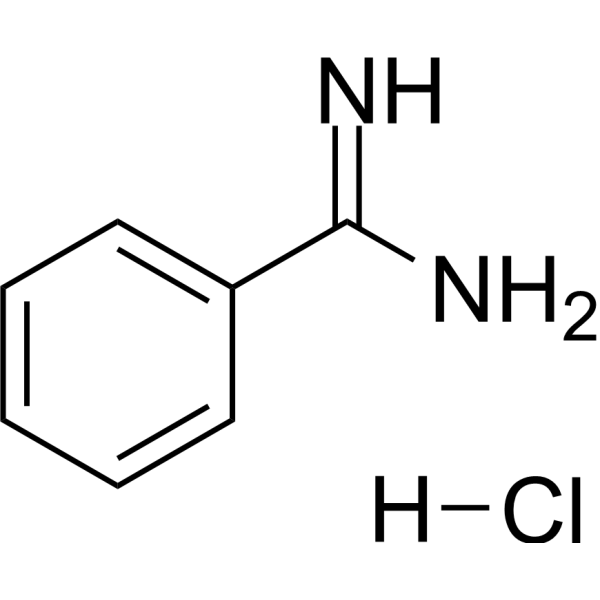
    Benzamidine hydrochloride is a competitive protease inhibitor that blocks the hydrolytic cleavage of glucagon by plasmin, trypsin and thrombin. Benzamidine hydrochloride effectively inhibits the degradation of glucagon by relevant proteases during the collection, storage and analysis of human plasma and blood samples. During in vivo metabolism, Benzamidine hydrochloride undergoes N-hydroxylation and produces multiple metabolites, exhibiting characteristics of delayed excretion or biphasic elimination. Benzamidine hydrochloride only induces slight single-strand DNA breaks at high concentrations and shows no significant genotoxic potential overall. Benzamidine hydrochloride may interfere with the detection of some glucagon antisera, but does not affect key antigen-antibody affinity at specific concentrations. Benzamidine hydrochloride can be used as a stabilizer in glucagon radioimmunoassays to ensure the accuracy and recovery rate of detection results .
    Benzamidine hydrochloride
  • HY-W074143

    Fluorescent Dye Others
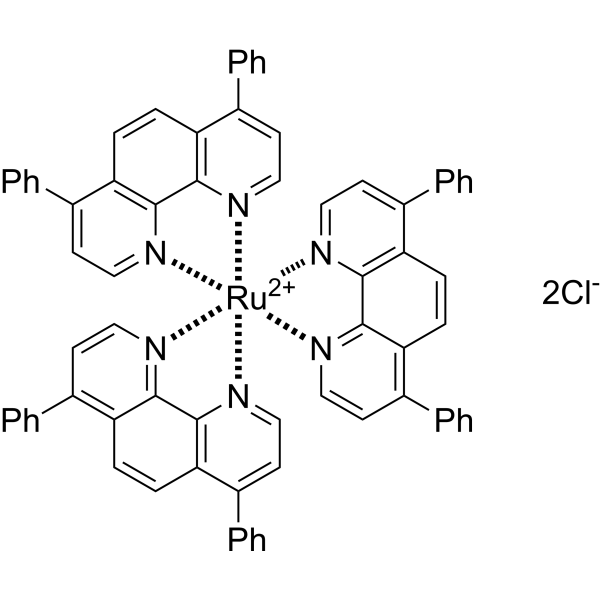
    Tris(4,7-diphenyl-1,10-phenanthroline)ruthenium(II) dichloride ([Ru(dpp)3] 2+) is an electrochemiluminescent (ECL) probe and oxygen-sensitive sensor. Tris(4,7-diphenyl-1,10-phenanthroline)ruthenium(II) dichloride can be used to modify electrode surfaces for the detection of sulfates (S2O8 2-) and oxalates, based on electrochemical reactions that generate excited-state species, releasing photons through irreversible redox reactions. Tris(4,7-diphenyl-1,10-phenanthroline)ruthenium(II) dichloride utilizes the oxygen quenching of fluorescence mechanism, where fluorescence intensity reflects the metabolic rate of living microorganisms or oxygen levels within cells/tumors, allowing for real-time detection. Tris(4,7-diphenyl-1,10-phenanthroline)ruthenium(II) dichloride's main applications include microbial detection, antibacterial activity studies, and tumor microenvironment research .
    Tris(4,7-diphenyl-1,10-phenanthroline)ruthenium(II) dichloride
  • HY-116424

    Anti-dynamin II

    Biochemical Assay Reagents Cancer
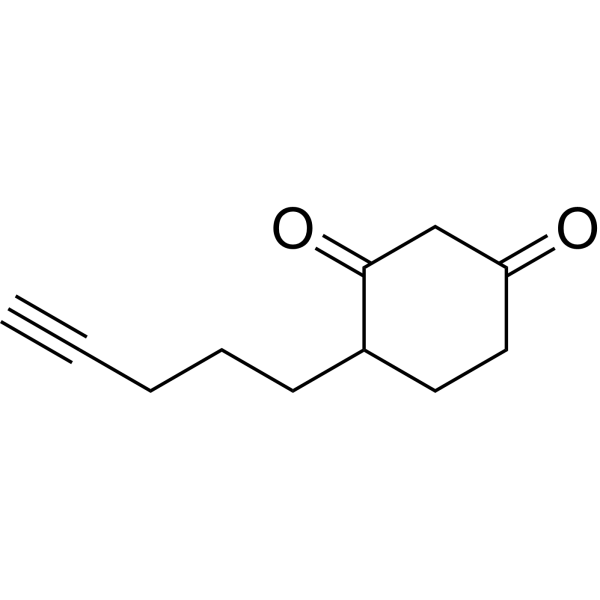
    DYn-2 (Anti-dynamin II) is a chemoselective sulfenylated protein probe. DYn-2 binds to sulfenylated proteins with chemoselectivity, enabling the detection of such proteins. DYn-2 can detect differences in intracellular sulfenylation rates. DYn-2 can be used in human cancer research, including studies on breast cancer and lung cancer .
    DYn-2
  • HY-125913
    Benzamidine
    3 Publications Verification

    Ser/Thr Protease Inflammation/Immunology
    Benzamidine is a competitive protease inhibitor that blocks the hydrolytic cleavage of glucagon by plasmin, trypsin and thrombin. Benzamidine effectively inhibits the degradation of glucagon by relevant proteases during the collection, storage and analysis of human plasma and blood samples. During in vivo metabolism, Benzamidine undergoes N-hydroxylation and produces multiple metabolites, exhibiting characteristics of delayed excretion or biphasic elimination. Benzamidine only induces slight single-strand DNA breaks at high concentrations and shows no significant genotoxic potential overall. Benzamidine may interfere with the detection of some glucagon antisera, but does not affect key antigen-antibody affinity at specific concentrations. Benzamidine can be used as a stabilizer in glucagon radioimmunoassays to ensure the accuracy and recovery rate of detection results .
    Benzamidine
  • HY-Y1097

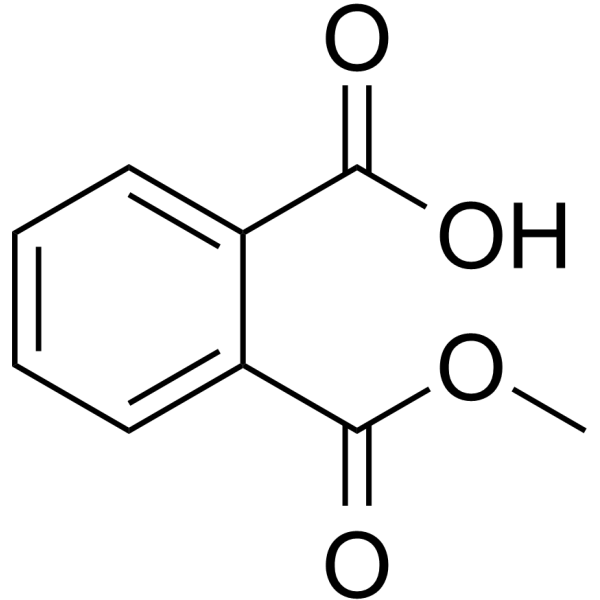
    2-(Methoxycarbonyl)benzoic acid

    Endogenous Metabolite Reactive Oxygen Species (ROS) Cancer
    Monomethyl phthalate is an orally active metabolite of phthalic acid. Monomethyl phthalate, as a urine biomarker after exposure to phthalate, can be used as a detection indicator for thyroid cancer and benign nodules. Monomethyl phthalate reduces the survival rate of young frogs. Monomethyl phthalate induces oxidative damage to red blood cells in rats .
    Monomethyl phthalate
  • HY-W087937
    Benzamidine hydrochloride hydrate
    3 Publications Verification

    Benzenecarboximidamide hydrochloride hydrate

    Ser/Thr Protease Cancer
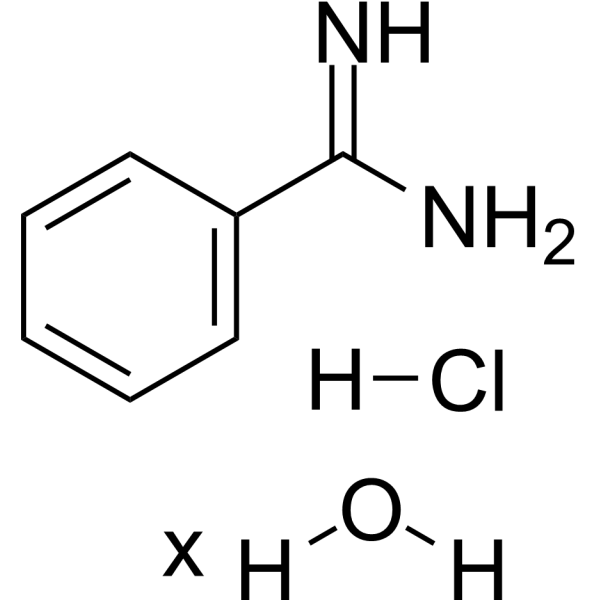
    Benzamidine (Benzenecarboximidamide) hydrochloride hydrate is a competitive protease inhibitor that blocks the hydrolytic cleavage of glucagon by plasmin, trypsin and thrombin. Benzamidine hydrochloride hydrate effectively inhibits the degradation of glucagon by relevant proteases during the collection, storage and analysis of human plasma and blood samples. During in vivo metabolism, Benzamidine hydrochloride hydrate undergoes N-hydroxylation and produces multiple metabolites, exhibiting characteristics of delayed excretion or biphasic elimination. Benzamidine hydrochloride hydrate only induces slight single-strand DNA breaks at high concentrations and shows no significant genotoxic potential overall. Benzamidine hydrochloride hydrate may interfere with the detection of some glucagon antisera, but does not affect key antigen-antibody affinity at specific concentrations. Benzamidine hydrochloride hydrate can be used as a stabilizer in glucagon radioimmunoassays to ensure the accuracy and recovery rate of detection results .
    Benzamidine hydrochloride hydrate
  • HY-34611

    N-Boc-L-2,4-diaminobutyric acid; Boc-Dab-OH

    Drug Intermediate ASCT Neurological Disease Cancer
    Boc-L-2,4-Diaminobutyric acid (N-Boc-L-2,4-diaminobutyric acid; Boc-Dab-OH) is a versatile synthetic starting material with a cleavable protecting group. Boc-L-2,4-Diaminobutyric acid not only reduces the backbone cleavage rate by protecting the side-chain γ-amino group, but also triggers intramolecular cyclization of self-immolative linkers under acidic cleavage conditions, thus constructing stimuli-responsive materials. Boc-L-2,4-Diaminobutyric acid is also an important building block for bioactive molecules. It can be used in the synthesis of ASCT2 (SLC1A5) inhibitors and carboxynorspermine, and can also serve as an internal standard to support the quantitative detection of specific intracellular amino acids by UPLC-QQQ-MS .
    Boc-L-2,4-Diaminobutyric acid
  • HY-35556

    Fluorescent Dye Cardiovascular Disease Metabolic Disease
    9-Aminophenanthrene is a type of polycyclic aromatic amine compound, which can be used as a fluorescent labeling reagent for free fatty acids (FFA) .
    9-Aminophenanthrene
  • HY-W800697

    Fluorescent Dye Others
    BP Fluor 430 Picolyl Azide is an advanced fluorescent probe that incorporatess a copper-chelating motif to raise the effective concentration of Cu(I) at the reaction site. The rate of the CuAAC reaction depends on the concentrations of all reagents, including copper, therefore raising the effective copper concentration at the reaction site will dramatically increase the rate of CuAAC reaction without the need to increase concentration of azide reagent or copper. In addition, the use of BP Fluor 430 Picolyl Azide instead of conventional BP Fluor 430 Azide allows for at least a tenfold reduction in the concentration of the copper catalyst without sacrificing the efficiency of labeling. In summary, the introduction of a picolyl moiety into an azide probe leads to a substantial increase in the sensitivity of alkyne detection. This is of special value for the detection of low abundance targets or where significant increase in signal intensity is desired.
    BP Fluor 430 picolyl azide
  • HY-Y1097R

    2-(Methoxycarbonyl)benzoic acid (Standard)

    Reference Standards Endogenous Metabolite Cancer
    Monomethyl phthalate (Standard) is the analytical standard of Monomethyl phthalate. This product is intended for research and analytical applications. Monomethyl phthalate is an orally active metabolite of phthalic acid. Monomethyl phthalate, as a urine biomarker after exposure to phthalate, can be used as a detection indicator for thyroid cancer and benign nodules. Monomethyl phthalate reduces the survival rate of young frogs. Monomethyl phthalate induces oxidative damage to red blood cells in rats.
    Monomethyl phthalate (Standard)
  • HY-113691

    Lipoxygenase Others
    (E)-L-652343 is a compound with potent cyclooxygenase and 5-lipoxygenase inhibitory activity. (E)-L-652343 can effectively inhibit the synthesis of products of these two pathways in vivo. (E)-L-652343 showed high sensitivity and specificity in the detection of geometric isomers in canine and human plasma. (E)-L-652343 showed selective metabolism in vivo, and the elimination rate of the E isomer was faster than that of the Z isomer .
    (E)-L-652343
  • HY-W018781R

    Reference Standards Ser/Thr Protease Cancer
    Benzamidine hydrochloride (Standard) is the analytical standard of Benzamidine (hydrochloride). This product is intended for research and analytical applications. Benzamidine hydrochloride is a competitive protease inhibitor that blocks the hydrolytic cleavage of glucagon by plasmin, trypsin and thrombin. Benzamidine hydrochloride effectively inhibits the degradation of glucagon by relevant proteases during the collection, storage and analysis of human plasma and blood samples. During in vivo metabolism, Benzamidine hydrochloride undergoes N-hydroxylation and produces multiple metabolites, exhibiting characteristics of delayed excretion or biphasic elimination. Benzamidine hydrochloride only induces slight single-strand DNA breaks at high concentrations and shows no significant genotoxic potential overall. Benzamidine hydrochloride may interfere with the detection of some glucagon antisera, but does not affect key antigen-antibody affinity at specific concentrations. Benzamidine hydrochloride can be used as a stabilizer in glucagon radioimmunoassays to ensure the accuracy and recovery rate of detection results .
    Benzamidine hydrochloride (Standard)
  • HY-W800693

    Fluorescent Dye Others
    BP Fluor 405 Picolyl Azide is an advanced fluorescent probe that incorporatess a copper-chelating motif to raise the effective concentration of Cu(I) at the reaction site. The rate of the CuAAC reaction depends on the concentrations of all reagents, including copper, therefore raising the effective copper concentration at the reaction site dramatically increases the rate of CuAAC reaction without increasing the concentrations of azide reagent or copper. In addition, the use of picolyl azide instead of conventional azides allows for at least a tenfold reduction in the concentration of the copper catalyst without sacrificing the efficiency of labeling. In summary, the introduction of a picolyl moiety into an azide probe leads to a substantial increase in the sensitivity of alkyne detection. This is of special value for the detection of low abundance targets or where significant increase in signal intensity is desired.
    BP Fluor 405 picolyl azide
  • HY-14889

    ASCT Amino acid Transporter Amino Acid Derivatives Cancer
    Fluciclovine is an amino acid analogue that can enter cells by targeting the amino acid transporters on the cell surface (mainly ASCT2 and LAT1). After being labeled with ¹⁸F, ¹⁸F-fluciclovine can be used as an imaging agent for positron emission tomography (PET) for prostate diagnosis imaging .
    Fluciclovine

Inquiry Online

Your information is safe with us. * Required Fields.

Salutation


Country or Region *

Applicant Name *


Organization Name *

Department *


Email Address *


Product Name *

Cat. No.


Requested quantity *

Phone Number *


Remarks

Inquiry Online

Inquiry Information

Product Name:
Cat. No.:
Quantity:
MCE Japan Authorized Agent:

